Before selling, improve curb appeal by clearing the approach, restoring tidy garden edges, and fixing obvious maintenance problems before buying new plants. Your photo date, the condition of the yard, and local quotes should determine how much you spend. Use a $250, $500, or $1,000 spending cap to organize the work, rather than treating a bigger budget as a promise of a higher sale price.
Start with the view buyers actually see
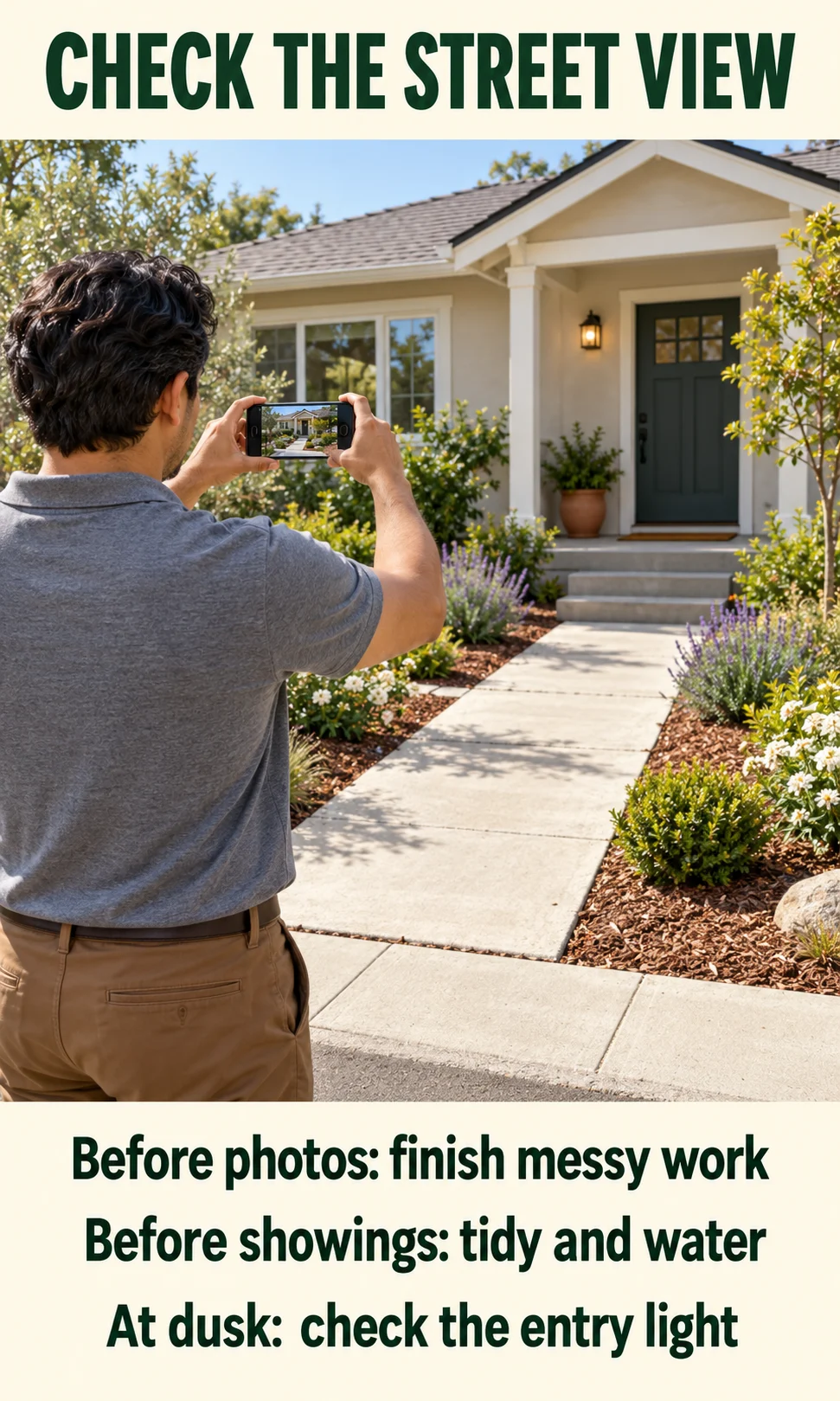
Stand across the street and take an ordinary phone photo without zooming in. Then walk the route from the sidewalk or driveway to the front door. These two views reveal different problems: the street view shows clutter and imbalance, while the approach exposes overhanging plants, dirty surfaces, awkward steps, and an entrance that feels difficult to find.
A small, healthy garden with a clear entrance usually presents a more manageable job than a newly packed bed of thirsty plants. Keep established shrubs that fit their spaces, remove obvious weeds, and repeat a limited palette of materials. If the front door is already clean and easy to see, spending on a second decorative feature may achieve less than finishing the neglected edges.
Swipe horizontally to compare.
| Budget cap | Suitable starting condition | First use of the money |
|---|---|---|
| $250 | Existing beds and lawn are broadly healthy; most work is cleanup. | Weeding, edging, a measured mulch top-up, and basic entry cleaning. |
| $500 | The basics need work and one visible entry detail needs refreshing. | Finish the cleanup, then consider one planter or a small door refresh. |
| $1,000 | The yard needs a defined refresh plus a limited amount of paid help. | Obtain a written cleanup quote, improve existing beds, and keep money uncommitted. |
These are illustrative U.S.-dollar budgets, not a current national price survey. They assume a small frontage, existing tools, DIY labor where stated, and no excavation or major repairs. Sales tax, delivery, disposal, local labor, yard size, and plant availability can change the total substantially; include those costs before choosing a scope.
Fix maintenance before adding decoration
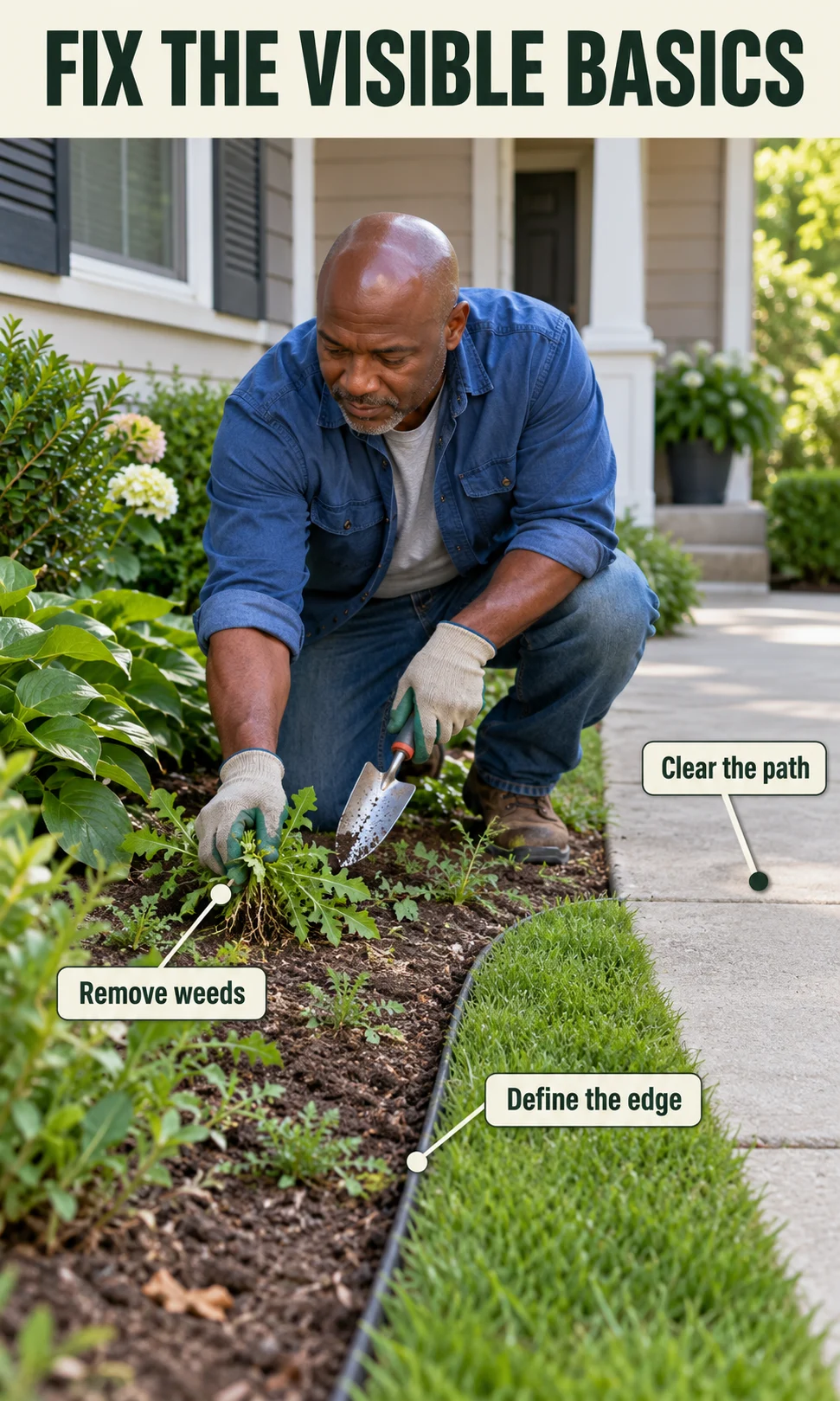
Start where the house appears least cared for. An untidy lawn edge, a weed-filled bed, or a porch crowded with unused pots can distract from otherwise sound landscaping. Work from the entrance outward so the area buyers use first is complete even if the budget does not stretch to every corner.
- Clear the route: move hoses, bins, loose ornaments, and pots out of the walking line.
- Restore the outline: weed beds and create a clean boundary between lawn, planting, and paving.
- Keep healthy structure: remove dead material and make appropriate light pruning cuts; avoid cutting shrubs into bare wood for a photo.
- Clean with the surface in mind: start with sweeping and a suitable gentle wash; high-pressure cleaning can damage finishes.
- Repair the functional defects: unstable steps, unsafe wiring, drainage trouble, and hazardous branches need the right professional.
Do not use plants or mulch to hide defects that need assessment. Water collecting against the building, a leaning retaining wall, or a cracked step belongs in a repair discussion before styling. Cosmetic work should make the property easier to inspect, not obscure its condition.
The $250 cleanup budget
At this level, preserve what already works. Allocate spending to consumables and small visible corrections while doing the straightforward labor yourself. A clean, coherent result matters more than using the full allowance, so return to the street photo before adding another purchase.
| Work or reserve | Spending allowance |
|---|---|
| Mulch top-up for measured existing beds | $80 |
| Weeding and disposal supplies | $25 |
| Entry and path cleaning supplies | $30 |
| Small seasonal-color refresh | $35 |
| Small entry detail, only if needed | $30 |
| Uncommitted allowance for tax, delivery, or overruns | $50 |
| Total spending cap | $250 |
The mulch allowance is a budget line, not a price per bag. Measure the bed and inspect the existing mulch first, because a thin top-up requires much less material than a new layer over bare soil. For example, 120 square feet needing one additional inch takes 10 cubic feet, or five 2-cubic-foot bags before any allowance for irregular edges.
The calculation is area in square feet multiplied by added depth in inches, divided by 12. A 2-cubic-foot bag covers 12 square feet at a two-inch depth, but that does not mean every existing bed needs another two inches. Check the total depth and keep mulch away from trunks, plant crowns, siding, vents, and drainage openings.
For trees and shrubs, the extension guidance on planting and mulching recommends a 2–3-inch mulch layer and keeping it at least four inches away from the trunk. That guidance concerns plant care, not a universal instruction to cover every front-yard surface. Use the appropriate material and depth for the actual planting, and never build a mulch mound against a tree.
The $500 entry refresh budget
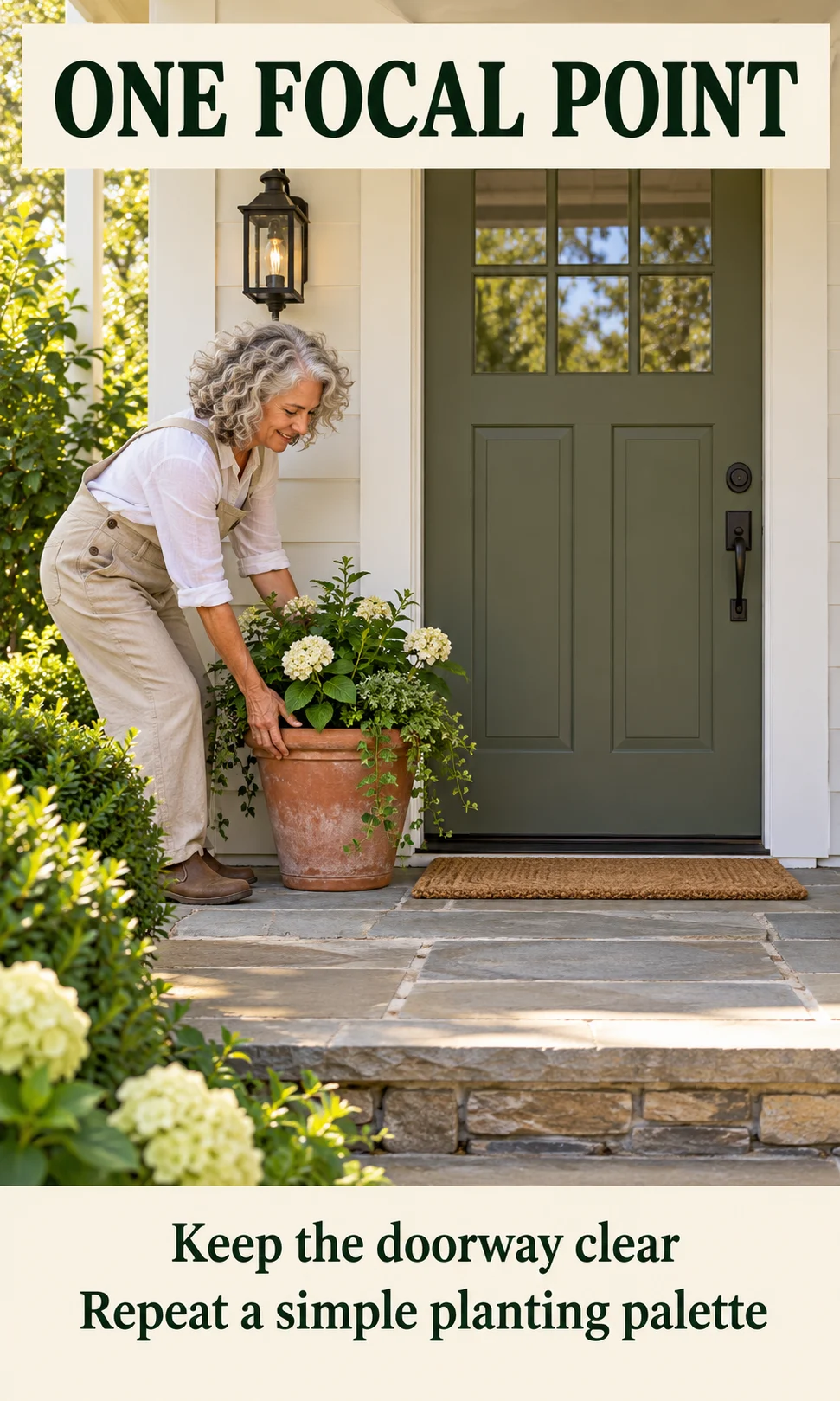
A larger allowance is useful when the existing garden is serviceable but the entrance still looks unfinished. Complete the basic work first, then choose one improvement that makes the door easier to recognize. A planter, refreshed door finish, or clearer house number can serve that role; you do not need all three.
| Work or reserve | Spending allowance |
|---|---|
| DIY weeding, edging, cleaning, and disposal supplies | $75 |
| Measured mulch refresh | $100 |
| One coordinated planter and suitable plants | $90 |
| Door-paint materials, only if the finish needs work | $70 |
| Small replacement plants for visible gaps | $65 |
| Uncommitted allowance for tax, delivery, or overruns | $100 |
| Total spending cap | $500 |
Treat the planter and door-paint lines as choices rather than automatic purchases. If the doorway is already attractive, move that money to a genuine defect or leave it unspent. Before repainting, check the existing finish, preparation requirements, forecast, and manufacturer’s drying and curing instructions so the door is usable for photographs and showings.
The $1,000 focused refresh budget
Use the extra budget to finish work you cannot safely or reliably complete yourself. A tightly scoped cleanup visit may be more useful than buying larger specimens that need intensive aftercare. Ask for separate prices for labor, materials, haul-away, and any minimum visit charge so the service can be compared fairly.
| Work or reserve | Spending allowance |
|---|---|
| Paid cleanup or light garden maintenance: replace with a local quote | $300 |
| Measured mulch refresh | $150 |
| Plants for a few important gaps | $150 |
| One entry refresh | $120 |
| Surface-cleaning materials or equipment allowance | $80 |
| Uncommitted allowance for tax, delivery, disposal, or overruns | $200 |
| Total spending cap | $1,000 |
The $300 labor line does not establish what a contractor must charge or what they can finish. If the actual quote uses most of the cap, reduce the cosmetic additions rather than assuming professional work will fit. Major tree work, grading, drainage, retaining walls, new paving, and electrical installation fall outside these sample refresh budgets.
DIY or professional help: compare the scope
Swipe horizontally to compare.
| Job | DIY when | Obtain professional help when |
|---|---|---|
| Weeding and bed tidying | Plants are identifiable and the work is accessible from ground level. | The scope is too large, disposal is difficult, or hazardous plants are present. |
| Mulch refresh | The bed is measured, existing depth is checked, and delivery is manageable. | Bulk handling or a large site makes a quoted service more practical. |
| Shrub pruning | You understand the species, season, and suitable cuts. | Plants are valuable, neglected, tall, or need corrective pruning. |
| Path and porch cleaning | The surface and approved cleaning method are known. | The finish is delicate, access is risky, or specialist treatment is required. |
| Tree, drainage, wall, or electrical defects | Only observations and photographs are needed. | Assessment or repair needs the relevant qualified provider. |
For general cleanup, compare garden-maintenance providers against the same written task list. For a tree hazard, seek an appropriately qualified arborist; for new fixed wiring, use an electrician with the credentials required locally. Three quotes for different scopes are not a meaningful comparison, even when their headline prices look similar.
Work backward from the listing photographs
The photograph date is the useful deadline for visible work. Avoid opening a new bed, removing a large shrub, or starting a painting job just before the photographer arrives. Weather, contractor availability, plant establishment, and paint curing can all make a nominal weekend project run longer than expected.
Swipe horizontally to compare.
| Time before photographs | Complete now | Do not depend on |
|---|---|---|
| Four to six weeks, if available | Assess defects, obtain quotes, inspect drainage, and decide whether any lawn repair is seasonally appropriate. | New seed producing a finished lawn on a fixed date. |
| About two weeks | Finish messy cleanup, approved pruning, and any suitable paint preparation; confirm materials and collection. | Last-minute deliveries or new construction. |
| Three to five days | Weed again, refresh mulch where needed, place established container plants, and check the entrance. | Freshly planted shrubs being established already. |
| The day before and during showings | Sweep, remove equipment, check soil moisture, and confirm the entry light works. | Heavy watering or major pruning immediately before guests arrive. |
A short deadline changes the objective from transformation to reliable presentation. If photographs are within a week, favor cleaning, tidying, existing containers, and simple maintenance that leaves no unfinished area. Seeded lawn repairs and new planting are weather- and species-dependent; do not promise a green result before a shoot just because the calendar allows several days.
Choose plants that will still look good during showings
Plant selection starts with conditions, not a shopping list. Check the hours of direct sun, soil drainage, local climate, mature width, and who will water the plant after installation. A compact shrub suited to the site is usually easier to keep presentable than a flowering bargain placed where it will struggle.
- For a shady entrance: choose plants rated for the actual light level and avoid assuming a north-facing bed is equally shaded in every climate.
- For a hot exposed frontage: look for locally suitable plants and plan establishment watering; drought tolerance develops after establishment.
- For a narrow path: select by mature spread and keep the walking route clear.
- For a cold-season listing: prioritize sound existing evergreen structure, neat beds, visible address details, and a clean entrance.
- For a short deadline: use healthy established container plants sparingly instead of depending on new growth.
Low maintenance is a design outcome, not a promise of no work. New shrubs and containers may need frequent moisture checks, and fallen leaves, weeds, and spent flowers still affect presentation. Give the person maintaining the property a short repeatable checklist rather than claiming the whole yard will need fewer than 30 minutes every week.
What curb appeal ROI can and cannot tell you
Curb appeal can improve presentation, but a spending allowance cannot predict the selling price. The NAR outdoor remodeling report discusses estimated cost recovery for defined project types, which is different from measuring the return on your individual cleanup. Its figures should not be multiplied by a small planter or mulch budget to forecast profit.
Use resale evidence as context and local advice as a scope check. Ask the selling agent which visible defects buyers are likely to notice at this property and whether proposed upgrades fit nearby comparable homes. If a purchase does not fix a visible problem, improve function, or help maintain a coherent frontage, keeping the money may be the stronger decision.
| Claim or decision | Better interpretation |
|---|---|
| A larger garden budget guarantees a higher sale price | Price also depends on location, condition, comparable sales, and the wider market. |
| A project cost-recovery percentage applies to every small purchase | The published project definition and sample matter; a DIY refresh is not the same project. |
| A particular paint color earns a fixed premium | Averages or survey preferences do not establish the return for this property. |
| Finish every possible upgrade before listing | Complete the necessary scope and keep optional work proportionate to the deadline. |
Build your photo-ready task budget
Use Photo-Ready Curb Studio to select the work the property actually needs and replace the example allowances with local estimates. It totals your selected tasks, includes your chosen reserve, and shows the difference from your spending cap. The result also separates short-deadline maintenance from work that needs time or specialist assessment; it does not assign a property score or forecast resale value.
Photo-Ready Curb Studio
Finish the visible basics. Keep optional spending under control.
Select the maintenance your frontage needs, enter all-in local estimates, and compare the total with your cap. This is a task budget, not a property valuation or a resale-return forecast. No information is sent or saved.
Your task budget
Select tasks and enter estimates to begin.
Find local help and compare written scopes
For general tidying, look for a garden-maintenance provider. Tree hazards, electrical work, and drainage or wall defects need the appropriate qualified specialist.
Compare three real candidates on scope, credentials, insurance, disposal, total price, and availability. Search results are not endorsements; this experience does not retrieve or rank providers.
If you are redesigning the frontage for long-term use, continue with how to design a front garden. For a broader installation project, use the front-yard landscaping budget guide. This page stays focused on the smaller pre-listing refresh so you can decide what to finish before photography.
Frequently asked questions
How much should I spend on curb appeal before selling?
Choose a cap after inspecting the frontage and obtaining any necessary repair quotes. The $250, $500, and $1,000 examples here are allocation exercises for small refreshes, not market prices. Spend first on visible maintenance and a clear entrance, then consider optional decoration only if the condition and deadline justify it.
What is the cheapest way to improve curb appeal?
Begin with work that uses what you already own: declutter the porch, sweep the route, pull weeds, and restore a clean garden edge. Keep healthy planting instead of replacing it for variety. Buy mulch or small entry details only after checking quantities and whether they solve a visible problem.
Should I replace my lawn before listing?
A full lawn replacement is rarely a simple last-minute styling job. Identify why the lawn is thin and check the planting season, watering needs, cost, and available time before committing. With a short photo deadline, tidy the existing lawn and discuss larger defects with the agent instead of expecting new seed to finish immediately.
Does landscaping guarantee a return on investment?
No landscaping budget can guarantee a selling-price increase. Published project estimates describe defined scopes and cannot be transferred directly to every home or small purchase. Use them as context while basing the spending decision on property condition, local comparisons, and real quotes.
Can I improve curb appeal in one weekend?
A small frontage may be tidied in a weekend if the materials, disposal arrangements, and weather cooperate. Keep the scope to cleanup, light appropriate maintenance, and a measured mulch refresh. Repairs, paint curing, large removals, and new planting establishment may need longer.
How do I keep the yard ready between showings?
Repeat a short check of the path, porch, weeds, fallen debris, container moisture, and entry lighting. Water according to the plants and soil rather than a fixed daily rule. Keep equipment stored and avoid starting optional messy work once showings begin.
Decide what to finish, then stop
Choose the smallest scope that leaves the entrance clean, functional, and consistent in photographs and in person. Finish maintenance, confirm any essential repair work, and reassess from the street before spending the reserve. When the yard already looks cared for, the next useful task is maintaining that condition through the sale rather than adding another feature.