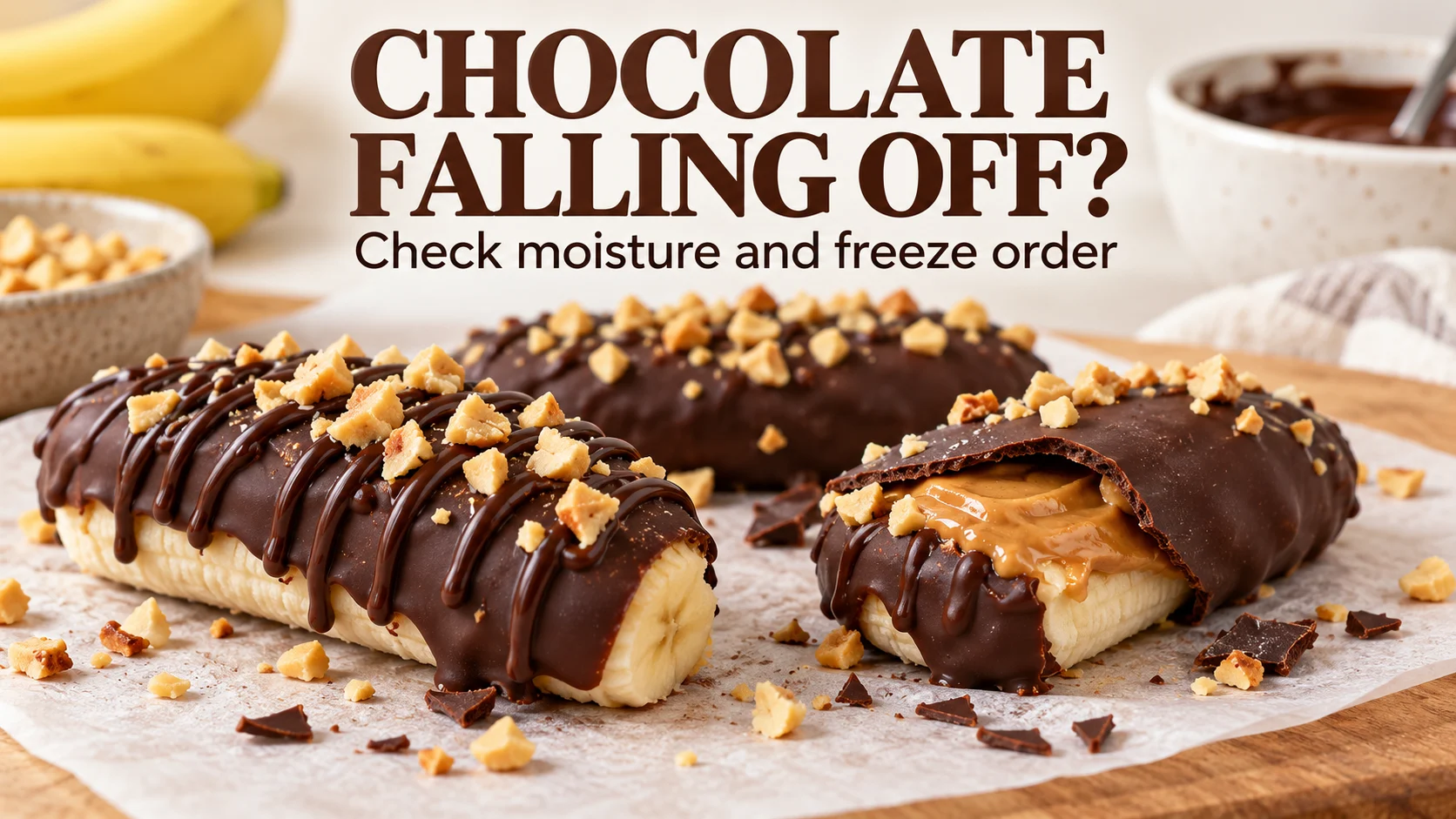
Chocolate can lift off frozen banana bars when the surface is damp, the peanut-butter layer moves underneath it, or a thick coating breaks during biting. Start by firming the base before drizzling, keeping moisture out of the chocolate, and checking whether the shell separates before or only after the bar begins to thaw.
Find the layer that failed
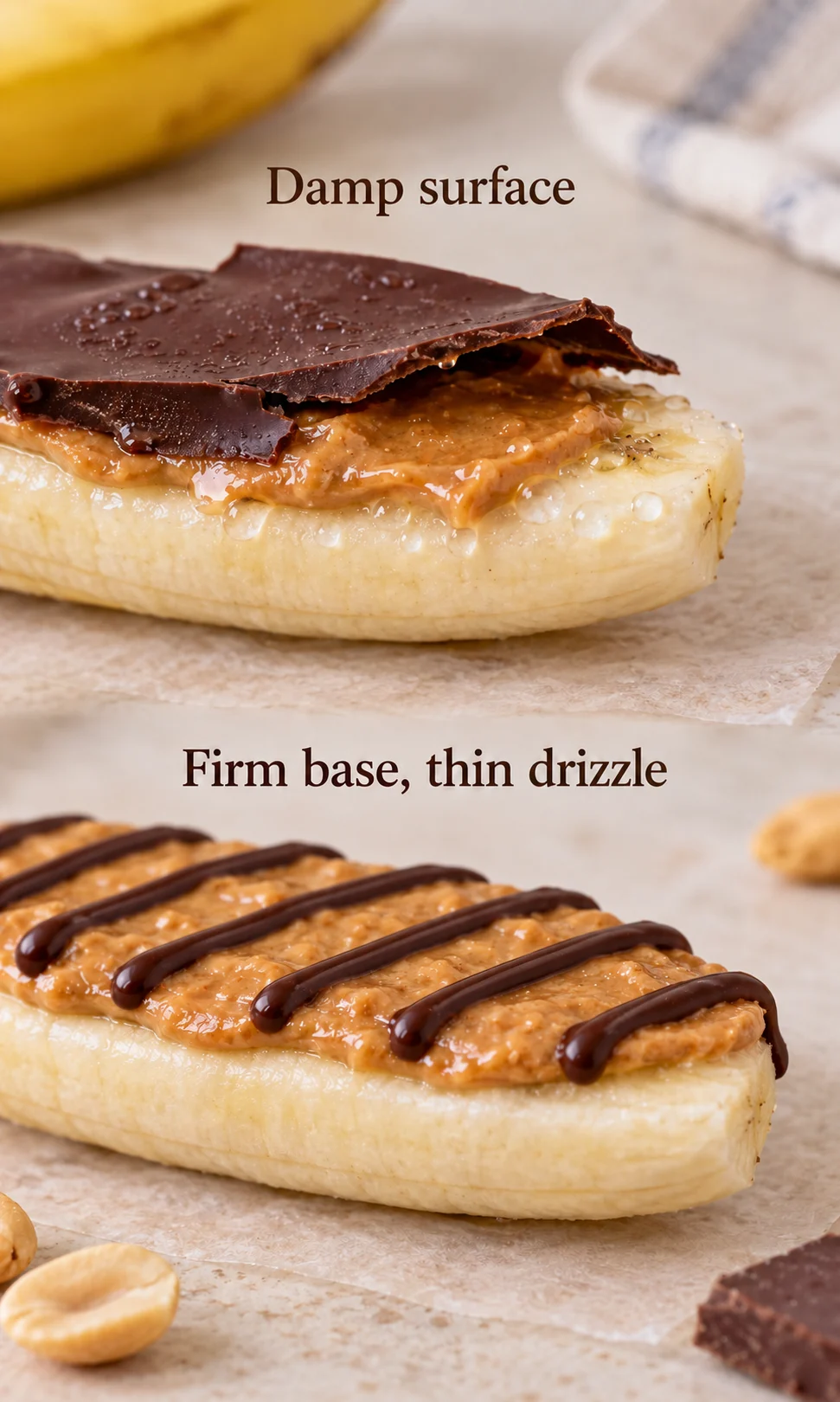
A loose chocolate cap and a sliding peanut-butter topping are different problems. Lift one failed piece and look underneath: a wet fruit surface points toward moisture, while a smear of peanut butter suggests that the supporting layer moved. A shell that stays attached until the first bite may simply be too thick or too cold.
These are practical troubleshooting possibilities, not a laboratory diagnosis. Change one preparation detail on a small batch rather than adding oil, extending freezing time and changing chocolate together. That makes the next result easier to interpret without wasting a whole tray.
Keep the method straight: these bars are not baked
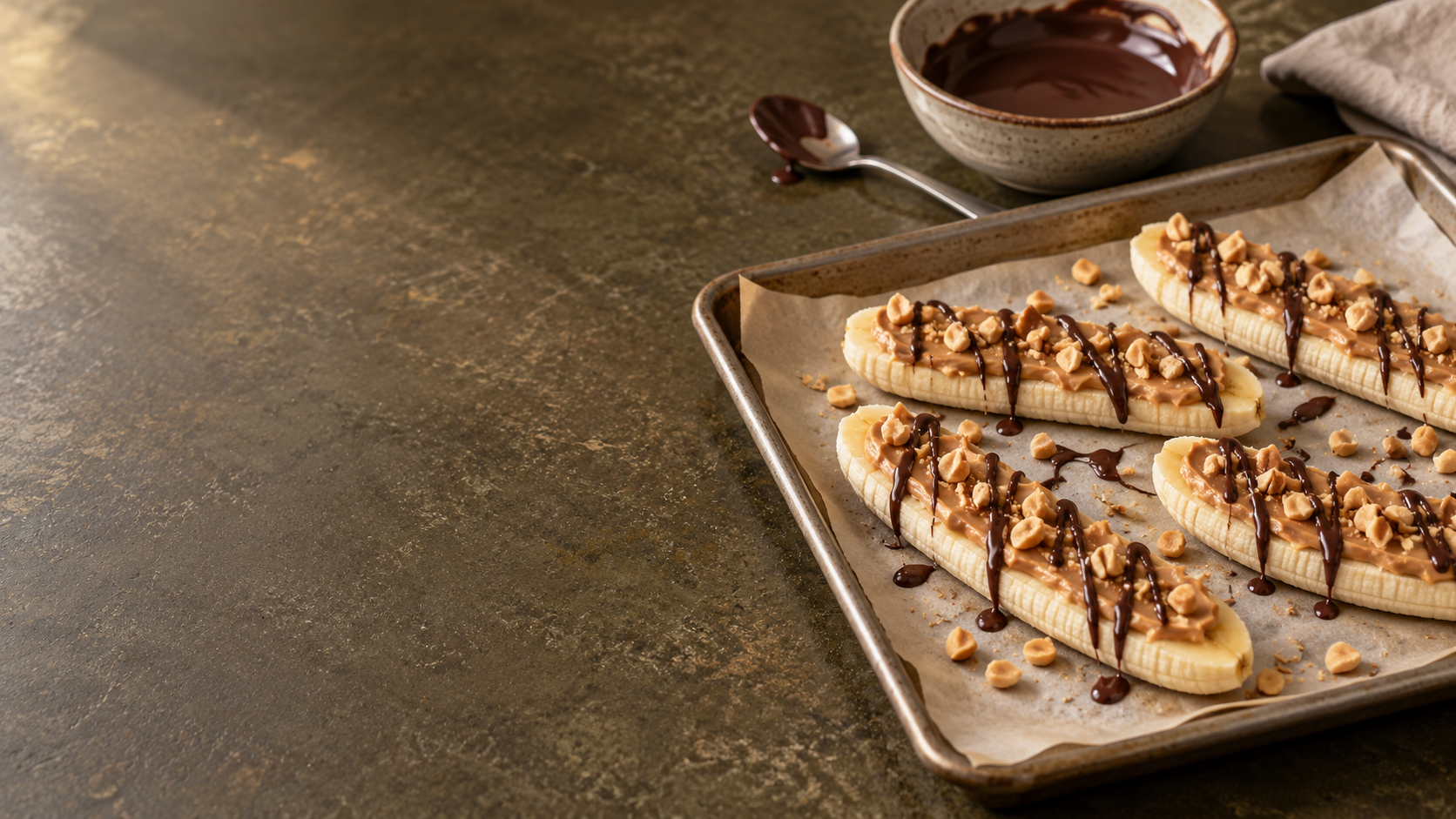
The bars discussed here are cut bananas with peanut butter, chopped peanuts and a chocolate drizzle. There is no oat batter, egg mixture or baking stage. The Clean & Delicious method chills the topped fruit before the drizzle, so the order of assembly matters as much as the ingredients.
Choose ripe bananas that still hold their shape when cut. Very soft fruit gives you a weaker base, and adding a heavier coating will not restore that structure. Before spreading peanut butter, gently blot visible moisture from the cut surface with clean kitchen paper; do not rinse cut pieces and coat them while wet.
Why peanut butter slides before the shell breaks
Oil-separated peanut butter needs thorough stirring before you spread it. Using the oily top of the jar can leave a loose layer that shifts under the chocolate, especially as the banana warms. Spread a modest, even layer and check that it no longer moves readily before adding the drizzle.
A seed-butter substitution can change spreadability and firmness. Do not assume it will behave exactly like the original peanut butter, and check the chocolate and toppings for the allergens you need to avoid. For a peanut allergy, switching to another nut is not automatically an appropriate alternative.
Freeze the supporting layer before you drizzle
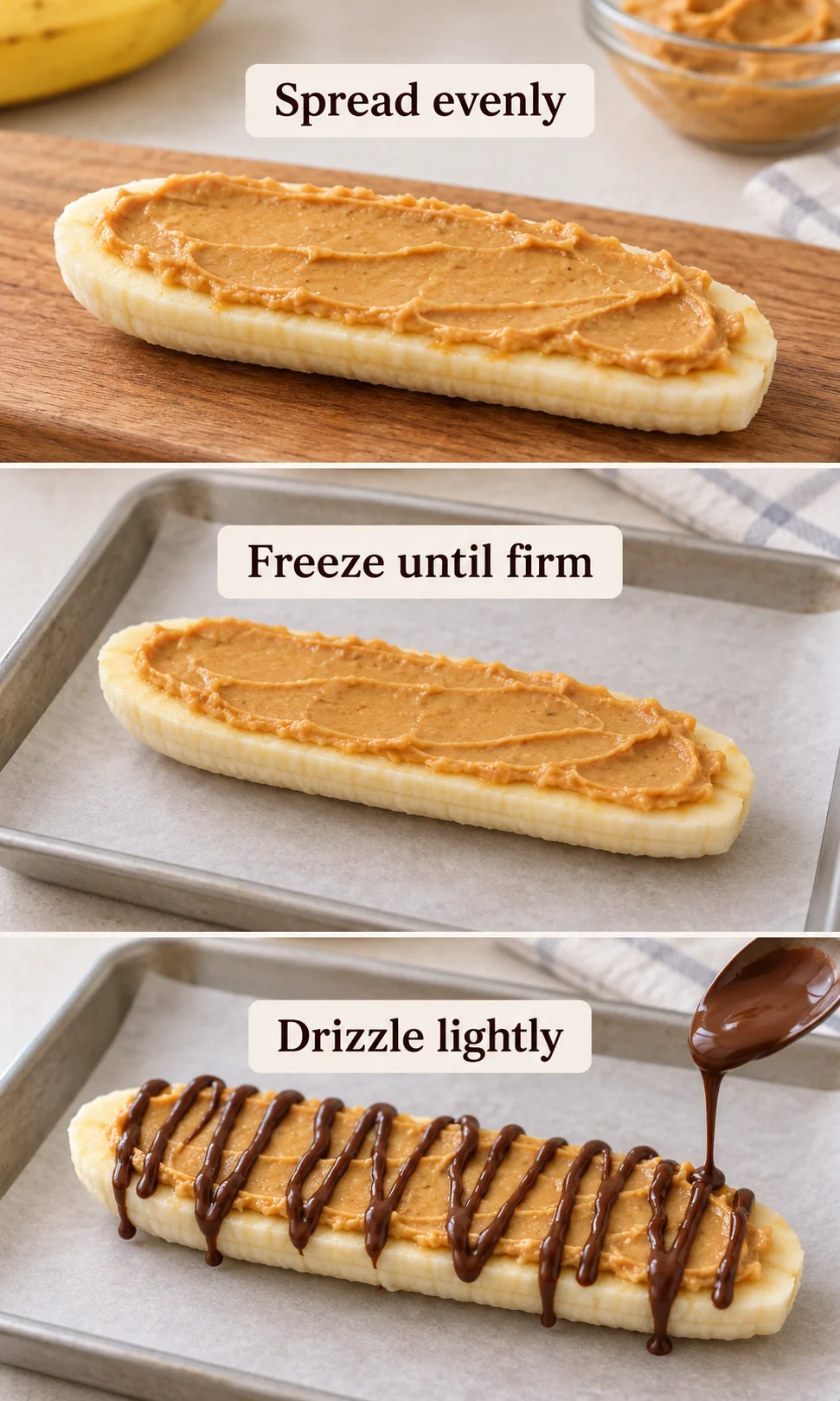
The original recipe gives a 45-minute initial freeze and then a further freeze after decorating. Those times describe that recipe, not a guarantee for every freezer, banana size or tray load. If your layer still slides at the first checkpoint, allow more time and check firmness again rather than pouring chocolate onto a visibly unstable topping.
Melt the chocolate gently with dry equipment and let it lose excessive heat while remaining fluid. A warm, heavy pour can soften the layer beneath it; a thin drizzle places less weight on that layer. Keep the remaining pieces in the freezer while you finish a small group so that the entire tray does not sit out collecting moisture.
- Blot visibly wet cut fruit before spreading.
- Stir separated peanut butter and apply an even layer.
- Freeze until the topping is firm enough to stay in place.
- Use a dry bowl and spoon; melt gently and stir.
- Drizzle a small group, return it to the freezer, then continue.
- Pack only after the chocolate has set.
Coconut oil changes the coating, not the wet surface
Coconut oil can make melted chocolate easier to drizzle, but it does not dry fruit or secure a loose peanut-butter layer. Adding more because a cap fell off may make the coating softer when it warms without addressing the actual separation. Start with the amount specified by the recipe you are following and record any change.
If the chocolate turns thick and grainy in the bowl, pause before coating more pieces. Moisture contamination or overheating may be involved, and extra heating can worsen the result. Keep wet spoons and sweating fruit away from the melting bowl, and follow the chocolate manufacturer’s melting guidance rather than forcing a damaged batch into a shell.
Cracking at the first bite is a separate check
Frozen fruit is firm, and a thick chocolate cap can break into large pieces when you bite through it. Try a lighter drizzle on the next small batch and briefly rest the portion you are about to eat until it is comfortable to bite. Stop the rest before the banana becomes wet or the peanut butter begins to slide.
There is no single serving-rest time that suits every room and bar size. Check the portion rather than leaving the whole container on the counter. The contrast between a crisp coating and softer fruit is part of the appeal; our guide to why food texture matters more than flavor explores that broader distinction.
Ice, condensation and a white film are not interchangeable
Visible ice on the bar can point to moisture exposure and changes during storage. A cold tray also collects condensation when humid room air meets its surface, especially if you repeatedly bring it out and put it back. The explanation of why refrigerators cause food condensation provides useful background, although a chocolate-coated banana has its own texture limits.
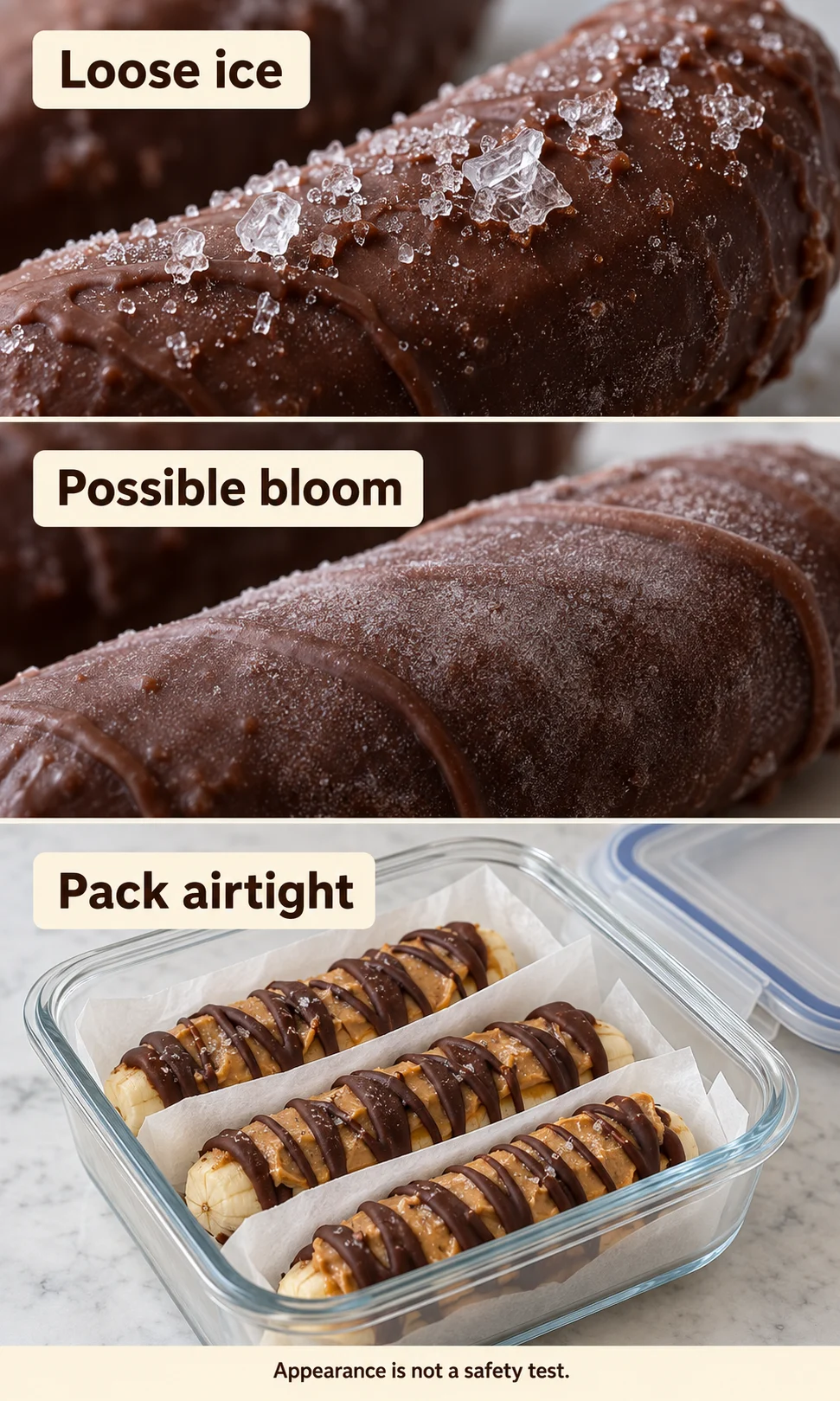
A pale, grainy film on chocolate may be sugar bloom. Callebaut explains that condensation can dissolve surface sugar, which recrystallizes as the moisture evaporates. That mechanism differs from a whole shell lifting, and a white patch should not automatically be identified as harmless bloom if you cannot distinguish it from spoilage.
Match the correction to the observation before making another batch. The table below separates likely preparation checks from serving and storage changes. None of these observations, on its own, proves that a bar has been handled safely.
| What you see | What to check | Next change |
|---|---|---|
| Chocolate lifts as one cap | Damp interface or moving topping | Inspect underneath; blot fruit before assembly and firm the peanut-butter layer. |
| Peanut butter slides too | Loose spread or softened fruit | Stir the jar, use firm fruit and work in small cold batches. |
| Shell cracks only when bitten | Thick, cold coating | Try a thinner drizzle and a brief portion-by-portion rest. |
| Chocolate is grainy in the bowl | Moisture or overheating | Stop coating; use dry equipment and gentle melting. |
| Loose ice or pale surface film | Storage moisture or possible bloom | Limit warm-air exposure and pack airtight; assess spoilage separately. |
Check your next batch in Frozen Banana Shell Studio
Choose the symptom, surface condition and firmness of your topping below. The studio suggests a preparation or storage check and gives you a printable batch checklist. It cannot inspect your food, confirm a cause or clear a thawed batch as safe to eat.
Frozen Banana
Shell Studio
Find the layer that failed.
Choose one change for your next tray.
Preparation guidance only. This cannot inspect food, confirm a cause or establish that a thawed batch is safe.
Inspect the underside of the shell
Look for damp fruit or a moving peanut-butter layer before changing the chocolate.
One change to try
Firm the supporting layer before a thin drizzle.
Watch for
Check whether the shell detaches before the first bite or only during eating.
No safety conclusion is available from coating appearance.
Next-tray checklist
Store for quality; assess thawing separately
Keep set bars in an airtight freezer container, with parchment between layers to reduce sticking. The original recipe suggests up to one month for quality. USDA recommends a freezer temperature of 0°F (about −18°C); a quality window is not a safety deadline, and freezing does not undo unsafe handling before storage.
Do not decide whether to refreeze a fully thawed batch from the presence of sweat alone. Temperature, time outside cold storage, ingredients and contamination all matter; consult USDA freezing and food-safety guidance when the cold chain is uncertain. Discard bars with mold, a fermented smell or unknown unsafe handling, and use clean utensils as described in how to prevent food contamination at home.
Frequently asked questions
Why won’t chocolate stay on a frozen banana?
Check whether the fruit is visibly wet and whether the peanut-butter layer moves under the shell. Either can contribute to separation, while a thick coating can break during biting. Firm the topping before drizzling and change one detail on a small batch.
Does coconut oil stop the shell from falling off?
Coconut oil changes how chocolate flows and softens as it warms. It does not remove moisture or make an unstable topping hold still. Use your recipe’s amount first rather than adding more to solve an unidentified problem.
Why do frozen banana bars get icy?
Moisture exposure and repeated warming can affect the frozen surface. Pack set bars airtight and take out only the portions you need. Ice is a quality observation, not proof of safe handling.
How long do homemade frozen banana snack bars last?
The Clean & Delicious recipe suggests up to one month in an airtight freezer container for quality. Keep the freezer at 0°F, about −18°C. That recommendation does not clear food that was handled unsafely before freezing.
Can I refreeze bars after they sweat?
Sweating is condensation, not a reliable safety test. Refreezing depends on the batch’s temperature, time out of cold storage and handling history, and texture can suffer. If that history is uncertain, do not use this guide or the studio to declare the bars safe.
Why did the peanut butter slide off first?
A loose oily spread, soft fruit or warming during assembly can move the supporting layer. Stir separated peanut butter before use and spread it evenly. Freeze until firm and work in small groups while the rest stays cold.
The decision for your next tray
Start with the layer that actually failed: wet fruit, moving spread, brittle coating or storage damage. Use firm bananas, a stable chilled topping and a controlled drizzle, then compare one small change. If the handling history is uncertain, resolve food safety before trying to rescue the texture.