




Unipolar depression and bipolar depression can feel very similar during a depressive episode, but they belong to different patterns of illness. The decisive distinction is a history of mania or hypomania, which changes assessment and treatment; the severity of sadness alone cannot settle the diagnosis.
A photograph, a difficult week or a symptom checklist cannot show that history. Someone who looks composed can still be severely depressed, while someone who feels better after depression is not automatically hypomanic. What matters is the pattern of changes over time and how those changes affect everyday life.
The term unipolar depression commonly refers to major depressive disorder without a history of manic or hypomanic episodes. Bipolar depression describes a depressive episode within bipolar disorder. Neither label measures character, effort or how deserving someone is of support.
The useful comparison therefore has two layers: what is happening during the current depression, and whether there have been distinct periods of elevated or unusually irritable mood with increased energy or activity. A clinician considers both layers rather than assigning a label from one symptom.
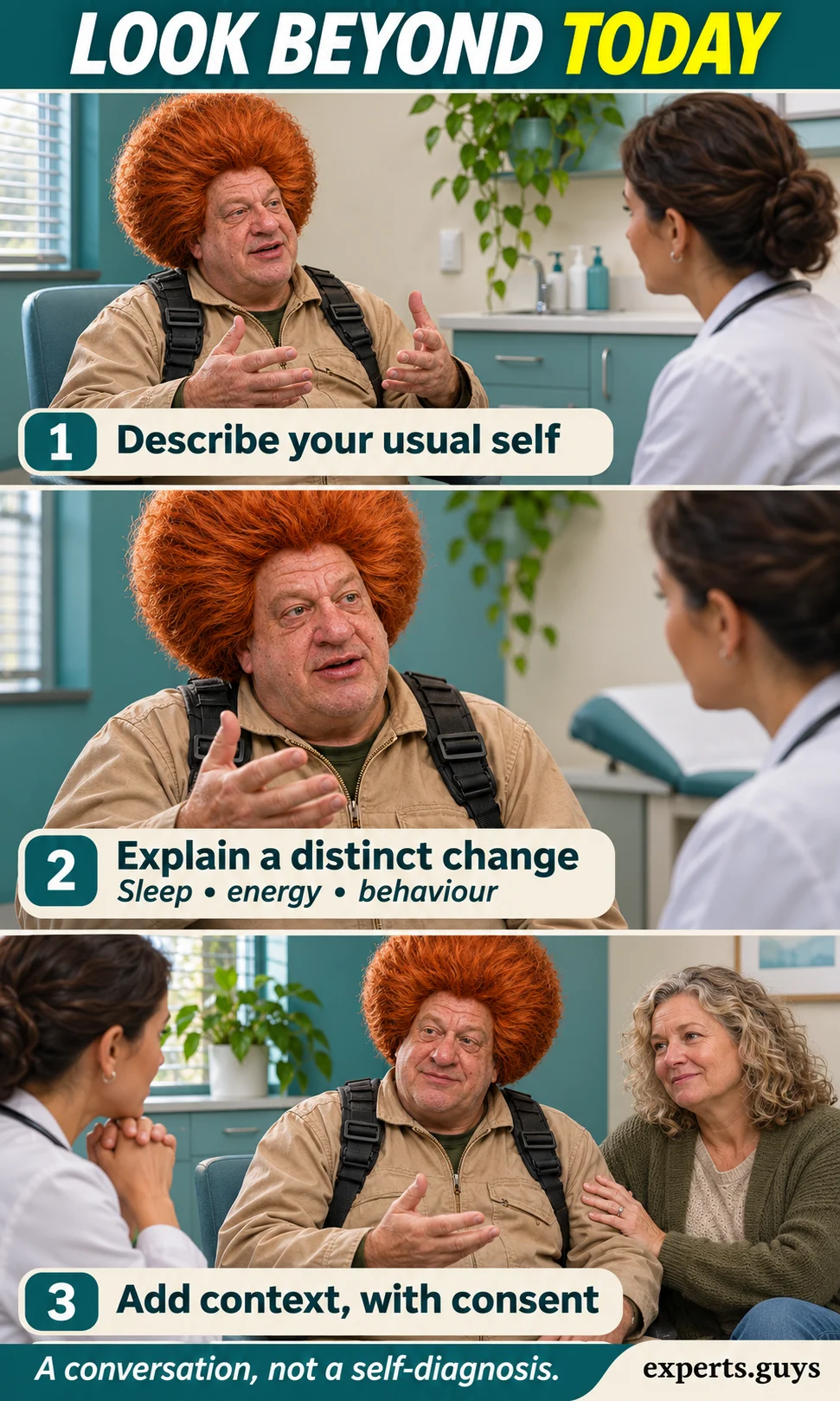
Which differences actually help?
Use the following distinctions to understand the assessment, not to diagnose yourself. The same symptom can have several explanations, and more than one condition can be present.
- Depression intensity: does not separate the two conditions.
- Episode history: mania or hypomania changes the diagnostic picture.
- Sleep and energy together: sleeping less while unusually energized differs from insomnia followed by exhaustion.
- Context: medicines, substances, physical illness and the person’s usual pattern all matter.
Why can the depressive episode look the same?
Both patterns can involve loss of pleasure, persistent low mood, reduced energy, concentration problems and changes in sleep or appetite. Depression can also interfere with work, relationships and basic daily tasks. A person does not need to display every symptom to deserve an assessment, and looking outwardly successful does not rule out significant distress.
Symptoms describe what someone is experiencing; they do not always identify the underlying disorder. This is why comparing the number of depressive symptoms is an incomplete way to compare unipolar and bipolar depression. The broader NIMH depression guide explains the symptom range and the role of professional evaluation.
Does feeling better mean hypomania?
No. Returning to normal energy, enjoying company again or catching up on ordinary responsibilities can be part of recovery. Hypomania involves an unusual change in mood and energy or activity that is distinct from the person’s baseline. The question is not simply whether someone became happier; it is whether their state changed in a sustained, recognizable way.
For example, consider the difference between sleeping poorly and struggling through the next day, and sleeping substantially less while feeling unusually energetic and taking on more activity. The second pattern can be relevant to an assessment, but it still does not establish a diagnosis by itself. A clinician needs the surrounding history and alternative explanations.
What distinguishes bipolar I from bipolar II?
Bipolar I involves a history of mania. Bipolar II involves hypomania and major depression without a history of mania. These names do not create a simple scale from serious to mild: a person with bipolar II can experience disabling depression. The NIMH bipolar disorder guide explains the episode distinctions and why lifetime history matters.
A person may seek care only when depressed and may not initially mention an earlier period that felt productive or unusually confident. That is a reason to explore the history carefully, not a reason to assume that every productive period was an episode. Everyday variability and psychiatric episodes should not be treated as interchangeable.
Compare the diagnostic questions
The table separates useful questions from common shortcuts. Its purpose is to make the clinical reasoning understandable, rather than provide a scoring system.
| Information | What it contributes | Important limit |
|---|---|---|
| Current low mood | Can occur in either pattern | Does not identify the disorder alone |
| Past mania | Supports bipolar I when diagnostic criteria are met | Not ordinary excitement |
| Hypomania plus major depression | Supports bipolar II when criteria are met | Not simply feeling better |
| No identified elevated episode | May fit unipolar depression after assessment | Requires adequate history, not guesswork |
| Family history | Adds context for assessment | Does not determine a diagnosis |
| Medicine response | May prompt reassessment | Not a diagnostic test |
Why does the distinction change treatment?
Treatment planning addresses both the current depression and the risk of future mood episodes. Depression care may include psychotherapy, medication or both. In bipolar disorder, the choice of medication also needs to account for mood elevation. This is a clinical decision that should consider previous episodes, treatment response, side effects and the person’s circumstances.
Antidepressants should not be started, stopped or adjusted as a way to test which diagnosis is correct. Some people with bipolar disorder can experience mood elevation with antidepressant treatment, particularly when used alone. If you develop a striking change in sleep, energy or behavior after a medication change, contact the prescriber promptly. The NIMH medication guide explains why monitoring and individualized prescribing matter.
What should happen when the diagnosis is uncertain?
Uncertainty is a reason for a fuller assessment and follow-up. It does not mean the current depression is imaginary or that support must wait until every historical detail is clear. A clinician can explain what is known, what remains uncertain and what changes should trigger earlier contact. Medical testing may help investigate other causes, but it does not replace the clinical history.
For preparation for that conversation, use the dedicated bipolar disorder assessment and treatment guide. Its practical preparation belongs there; this comparison focuses on interpreting the distinction. You do not need a diary, a completed form or a perfect account of your life before asking for help.
When should help be urgent?
Seek urgent medical assessment for new hallucinations, delusions, severe confusion, rapidly escalating behavior or inability to care for basic needs. If someone may act on suicidal thoughts or cannot stay safe, seek emergency medical help immediately. Do not wait to decide whether the depression is unipolar or bipolar, and do not wait for a symptom-duration threshold before getting necessary care.
Frequently asked questions
Can a diagnosis change later?
Yes. Newly recognized episodes or additional history can change the assessment. That does not mean earlier depressive symptoms were unreal; it means the understanding of the illness has become more complete.
Does a relative with bipolar disorder mean I have it?
No. Family history is relevant context, but diagnosis requires assessment of your own symptoms and course of illness.
Can irritability settle the distinction?
No. Irritability can occur in several conditions. Its relationship to energy, activity, sleep, timing and functioning matters more than the symptom in isolation.
Is an online questionnaire enough?
No. A questionnaire can raise questions for discussion, but it cannot establish episode history, rule out alternative explanations or replace a clinical assessment.
Decision summary
The useful distinction is the whole pattern of illness, especially any history of mania or hypomania. Seek assessment for the depression you are experiencing now, mention relevant periods of changed energy and activity, and let treatment decisions follow a professional evaluation rather than a self-assigned label.










