



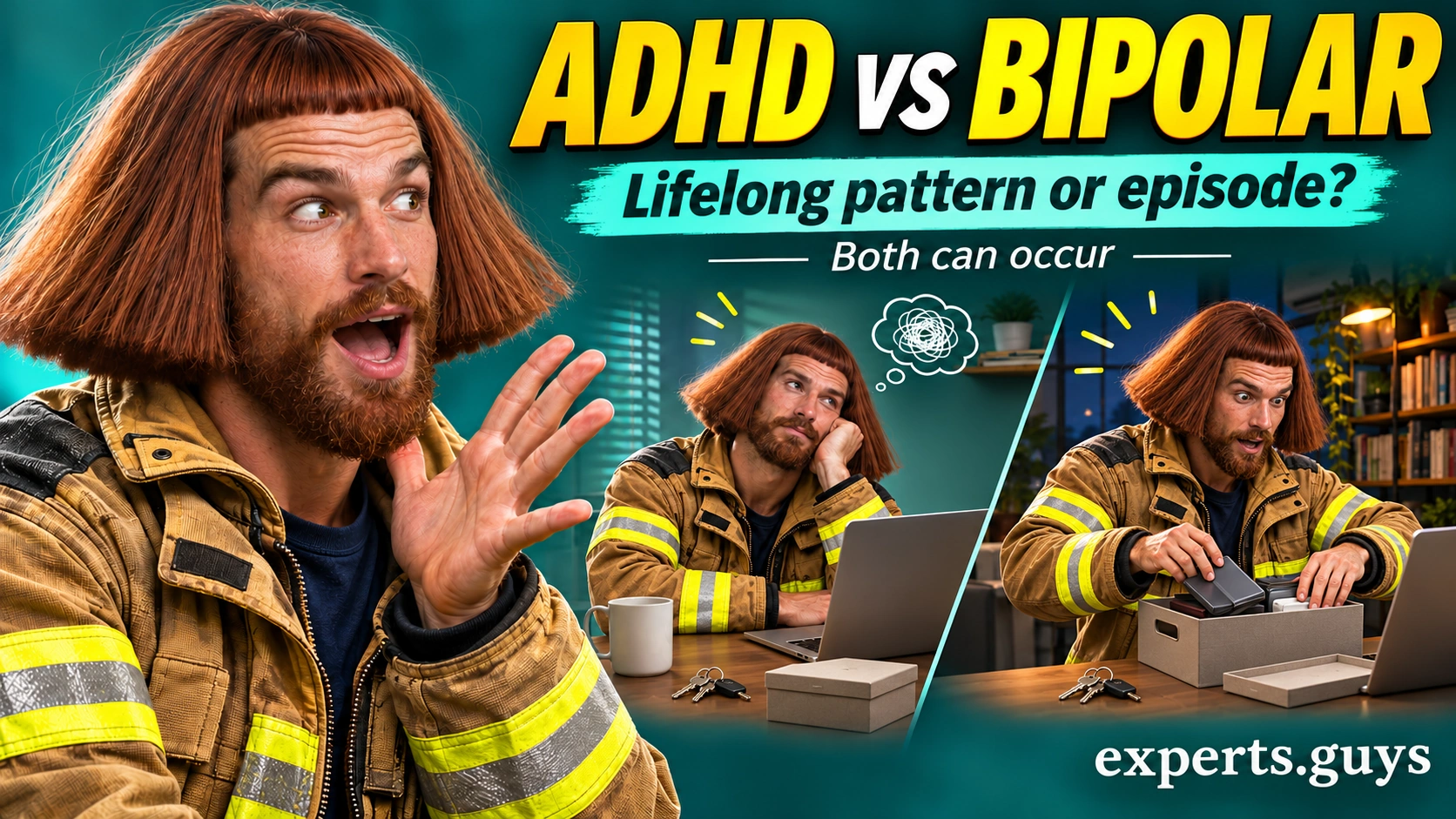
ADHD is a developmental condition involving persistent difficulties with attention, activity or impulse control, while bipolar disorder involves mood episodes with changes in energy and activity. When the same behaviors appear in both, the useful distinction is a longstanding pattern versus a clear change from the person’s usual self. Both can occur together, so this comparison helps explain what to discuss in an assessment rather than identify a diagnosis at home.
Start with the course of the difficulty, not the most dramatic symptom. Losing track of a conversation, interrupting someone or acting impulsively can have several explanations; what happened before, during and after the change gives the behavior meaning.
| Clue | ADHD pattern | Bipolar episode pattern |
|---|---|---|
| Time course | Difficulties begin in childhood and persist, though their visibility varies. | A distinct period of changed mood and energy or activity. |
| Attention | Problems can affect everyday life outside mood episodes. | Concentration may change during an elevated or depressive episode. |
| Sleep | Sleep problems can occur; short sleep alone is not diagnostic. | Feeling unusually energized despite much less sleep can be an important clue to activation. |
| Useful comparison | How has this affected different settings over the years? | How different is this from the person’s ordinary functioning? |
| Limit | A familiar pattern still needs assessment. | A new change is not automatically bipolar disorder. |
How does a lifelong pattern differ from a mood episode?
ADHD assessment looks backward as well as at today. Symptoms must have been present before age 12, persist for at least six months and impair functioning in more than one setting. Diagnosis in adulthood does not mean the condition began in adulthood; earlier difficulties may only become recognizable when responsibilities increase.
Bipolar assessment asks whether there were distinct periods of changed mood and increased energy or activity, not simply whether someone is sometimes distractible. The clinician needs the contrast with the person’s usual functioning. A quieter period between episodes is informative, but ongoing difficulties between episodes do not automatically rule bipolar disorder out.
Consider this illustrative contrast: one adult has needed repeated reminders and lost everyday belongings since school, including during emotionally settled years. Another describes an unfamiliar stretch of much faster activity and changed sleep. Those descriptions raise different questions, but neither story contains enough information to assign a diagnosis.
- Earlier life: Were similar difficulties present before the current mood problem?
- Ordinary periods: What remains difficult when mood and energy are closer to usual?
- Distinct changes: Which behaviors appeared together, and what happened to everyday functioning?
A baseline means your usual pattern, not an ideal version of you. Comparing yourself with the most organized person you know can exaggerate one difficulty and hide another. A more useful reference is a recognizable period of your own life with broadly similar demands, while acknowledging differences in sleep, support, health and workload.
For example, compare an ordinary workweek with the period that concerns you, rather than comparing a vacation with a deadline crisis. If the situations are very different, say so. That does not invalidate the concern; it prevents a change in circumstances from being silently treated as proof of a mood episode.

Duration helps, but it is not a home stopwatch
Clinical episode definitions include duration and severity requirements. Mania generally lasts at least a week, or may be diagnosed sooner when hospitalization is necessary; hypomania generally lasts at least four consecutive days. Major depression generally lasts at least two weeks. These thresholds sit within a full clinical assessment, not a rule to wait for care.
The clinical distinctions between bipolar episodes also depend on severity, functioning and the overall symptom pattern. Hypomania is not simply a productive afternoon, and bipolar II is not a harmless form of illness. For the broader types and treatment context, see the bipolar disorder overview.
Describe time in ordinary language if exact dates are uncertain: “during the week after I returned to work” is more useful than inventing precision. What matters for this comparison is whether there was a sustained departure from usual behavior and what else changed with it. An uncertain recollection is a starting point for questions, not a failed assessment.
| Description | What to clarify |
|---|---|
| “I have always been like this.” | Which difficulties, in which settings, and whether distinct episodes also occurred. |
| “It happened suddenly.” | What changed first, what changed alongside it, and whether medicines, substances or sleep disruption were involved. |
| “I felt normal afterward.” | Which difficulties resolved and which remained. |
| “My moods change every hour.” | The triggers, wider course and impairment; frequent shifts alone do not establish bipolar rapid cycling. |
Which sleep, energy and mood clues are most useful?
The useful sleep distinction is between getting too little sleep and needing unusually little sleep. Someone can stay awake because of a deadline and feel exhausted afterward. Feeling markedly energized despite much less sleep, especially with other changes in mood, speech or activity, deserves a different conversation.
The NIMH description of mood episodes places reduced need for sleep beside changes in energy, thinking and behavior. Do not turn this into a test using one number of hours. Personal sleep needs, circumstances and the wider pattern all matter; neither tiredness nor energy by itself settles the diagnosis.
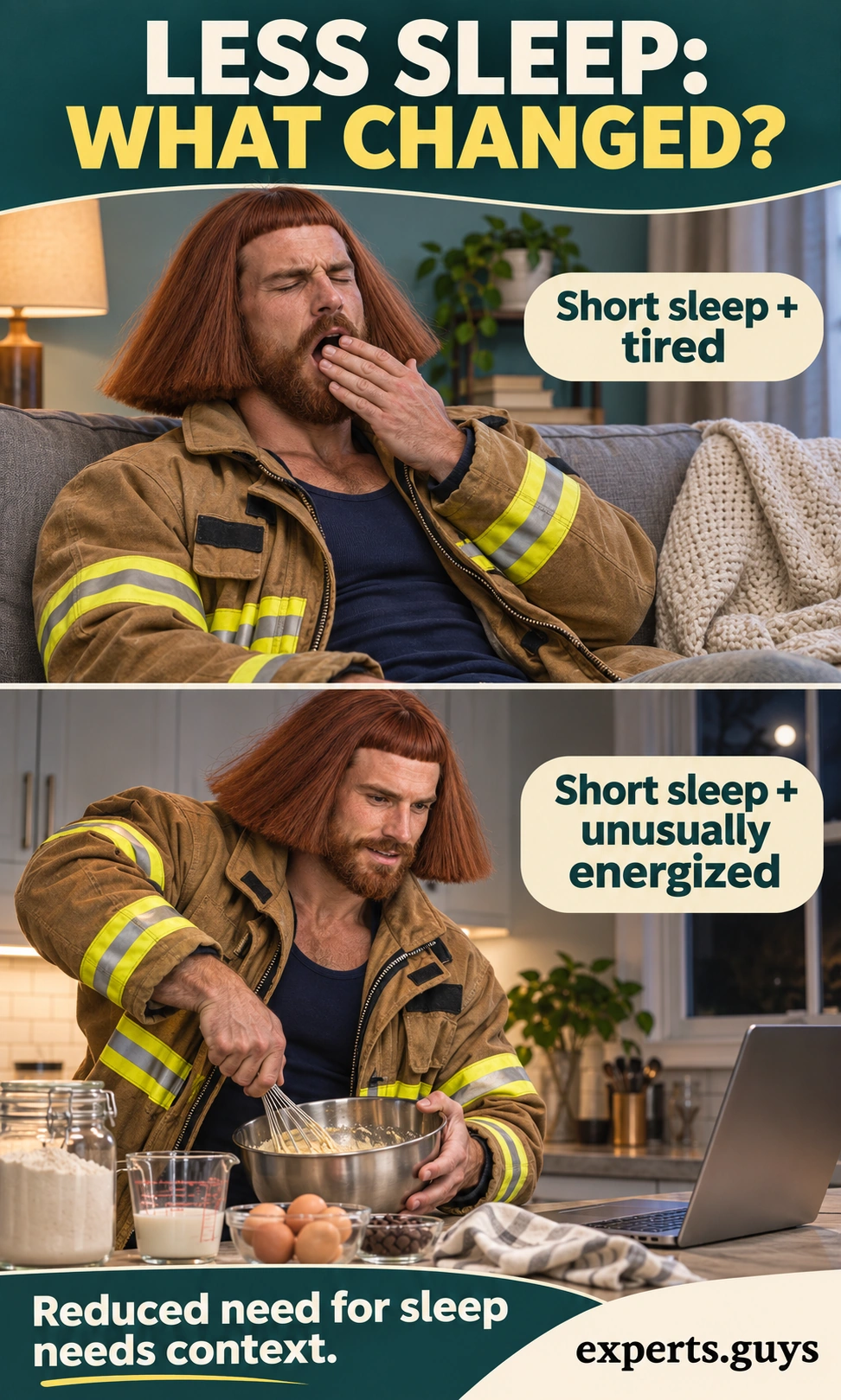
Use concrete observations rather than a conclusion such as “I was manic.” An illustrative description is, “I slept much less than usual, did not feel tired and started several projects that were unlike me.” That gives a clinician something to investigate without asking you to decide which diagnostic label fits.
Frustration is not the same as an episode
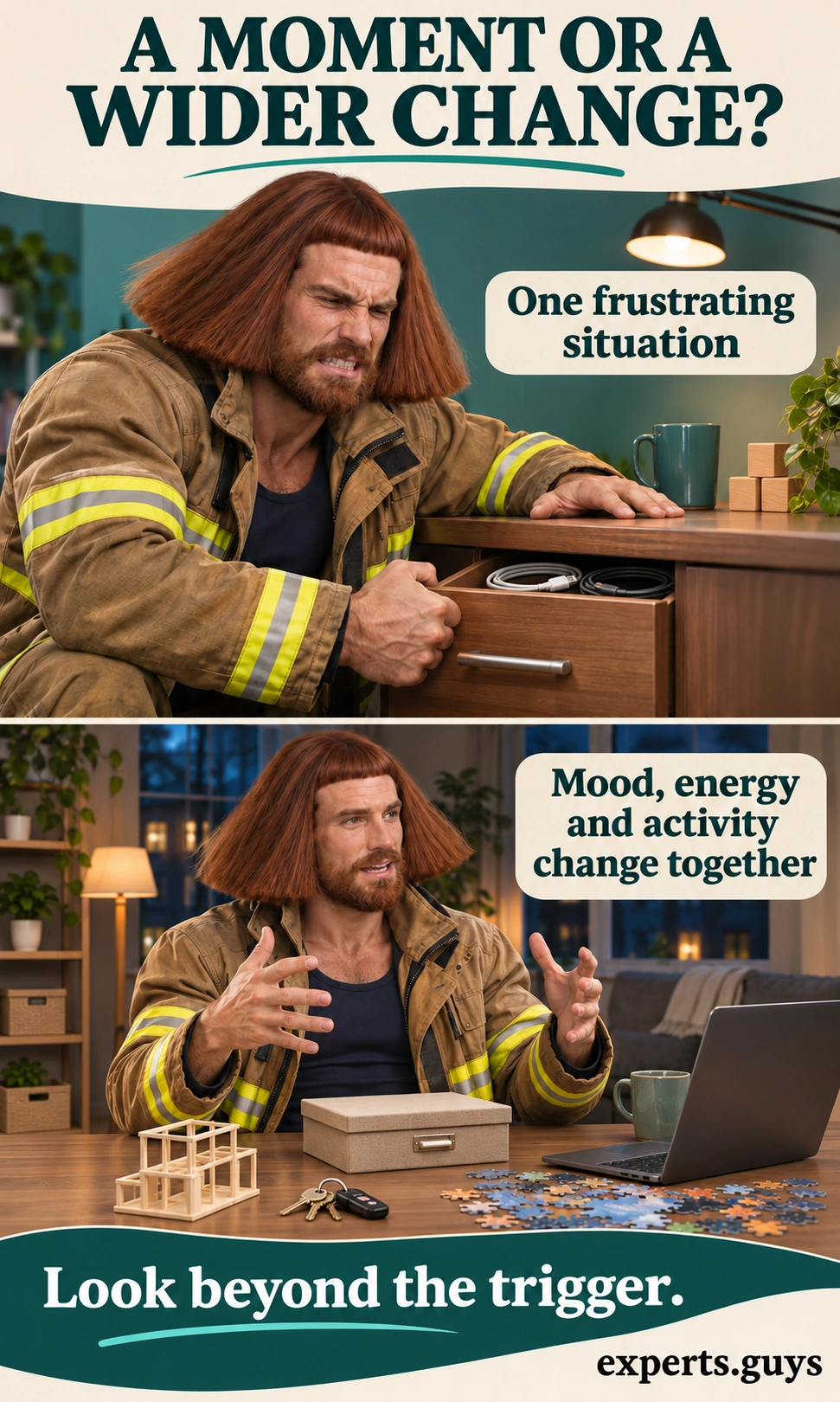
An argument, sensory overload or an interrupted task can explain the immediate setting of frustration. That setting is useful information, but it cannot prove that the reaction is ADHD or exclude a mood episode. Ask whether the problem was limited to that event or accompanied a broader change that continued into other parts of life.
Suppose someone becomes angry when a drawer jams, then returns to their usual activity. Compare that with a period when relatives notice changed sleep, unusual drive and different behavior across several situations. The purpose of comparing these examples is to describe scope, not to diagnose either person from a visible reaction.
Irritability also occurs during depression, and a person can be distressed while appearing activated. Do not assume that smiling, working or speaking energetically means someone is well. When the main concern is irritability within an already identified depressive phase, the article on irritability in bipolar depression addresses that narrower question.
- Describe sleep and its aftermath: less sleep with exhaustion is different from less sleep with unusual energy.
- Describe reach: one task, several situations or a sustained period across daily life.
- Describe consequences: missed responsibilities, unusual commitments or behavior that others noticed.
- Escalate a concerning change: a familiar diagnosis is not a reason to dismiss new symptoms.
Can ADHD and bipolar disorder occur together?
Yes. A person can meet criteria for both conditions, which is why an either-or checklist can mislead. The clinical task is to establish a developmental attention pattern and separately examine possible mood episodes, while considering other explanations. Finding one condition does not automatically explain every later difficulty.
The distinction becomes clearer when the history includes ordinary periods as well as the worst weeks. Attention problems that persist between episodes need consideration, but they do not prove ADHD: sleep problems, anxiety, depression, medication effects and other conditions can also affect concentration. A careful assessment leaves room for more than one explanation.

Why treatment response cannot confirm the label
Feeling better after a medicine, worse after a dose change or calmer after rest is useful information to tell a prescriber. It is not a safe home experiment for choosing a diagnosis. Do not start, stop, borrow or change medication to test whether your symptoms are ADHD or bipolar disorder.
When both conditions are present, treatment needs coordination. A clinician must consider the current mood state, benefits, adverse effects and how symptoms change over time; the same plan will not fit every person. The NHS treatment guidance emphasizes an individualized plan and not stopping prescribed bipolar medicine without medical advice. Contact the treating team promptly about new activation rather than changing treatment yourself.
| Situation | Useful next discussion | Avoid this conclusion |
|---|---|---|
| Attention problems remain after mood improves | Ask which longstanding difficulties still need assessment and support. | “My bipolar diagnosis must be wrong.” |
| Sleep and activity change after treatment changes | Describe the timing to the prescriber promptly. | “This proves I have one particular condition.” |
| No childhood records are available | Ask what history and other information can help. | “Assessment is impossible.” |
| Daily life is getting harder | Describe the impairment and ask about support while assessment continues. | “I must settle the diagnosis before seeking help.” |
Keep this page’s job separate from relapse management. If bipolar disorder is already diagnosed and the concern is a return of low interest, low energy or withdrawal, use the more focused guide to bipolar depression early warning signs. Comparing two conditions should not replace an existing care plan.
How can you make an assessment more useful without a diary?
You do not need a perfect symptom history before asking for help. An assessment can combine a conversation, developmental and medical history, information from people who know you and checks for other causes. Screening questionnaires may contribute, but they do not replace that work. The ADHD assessment explanation from MedlinePlus describes how these pieces fit together.

For an adult, a relative may remember childhood behavior while a partner knows the recent change. Their accounts need not match perfectly because they observed different parts of life. With your agreement, those differences can help the clinician ask better questions; nobody should be expected to supply a complete biography or disclose information they do not want to share.
For children and teenagers, compare behavior with developmental expectations and gather information across settings. A difficult classroom day or an intense outburst cannot establish either condition. A pediatric or child mental health assessment can examine the broader pattern; the CDC guidance on diagnosing ADHD explains why reports from different settings and checks for other causes matter.
What can a symptom checklist miss?
The sentence “I cannot concentrate” describes a problem but leaves out its history. A checklist can flag a concern while missing why it appeared, whether it occurs across settings and what else changed. The following examples are illustrative histories, not shortcuts to a diagnosis.
A longstanding difficulty: Alex loses track of tasks at home and work, and remembers similar problems at school. Those difficulties remain during relatively settled periods. The question is whether this is a developmental attention pattern and what else could contribute; there is no need to invent a recent mood episode to explain why an assessment is worthwhile.
A distinct new change: Jordan usually manages familiar tasks but describes a period of changed sleep, unusual energy and commitments that were out of character. Concentration was one part of that change. The question is what explains the whole period, not whether enough attention symptoms can be counted separately.
A situational change: Morgan struggles to focus after disrupted sleep during travel. That context may be relevant, but it does not prove that sleep is the only explanation or make persistent difficulties unimportant. The question is what happens as circumstances change and whether the problem needs further assessment.
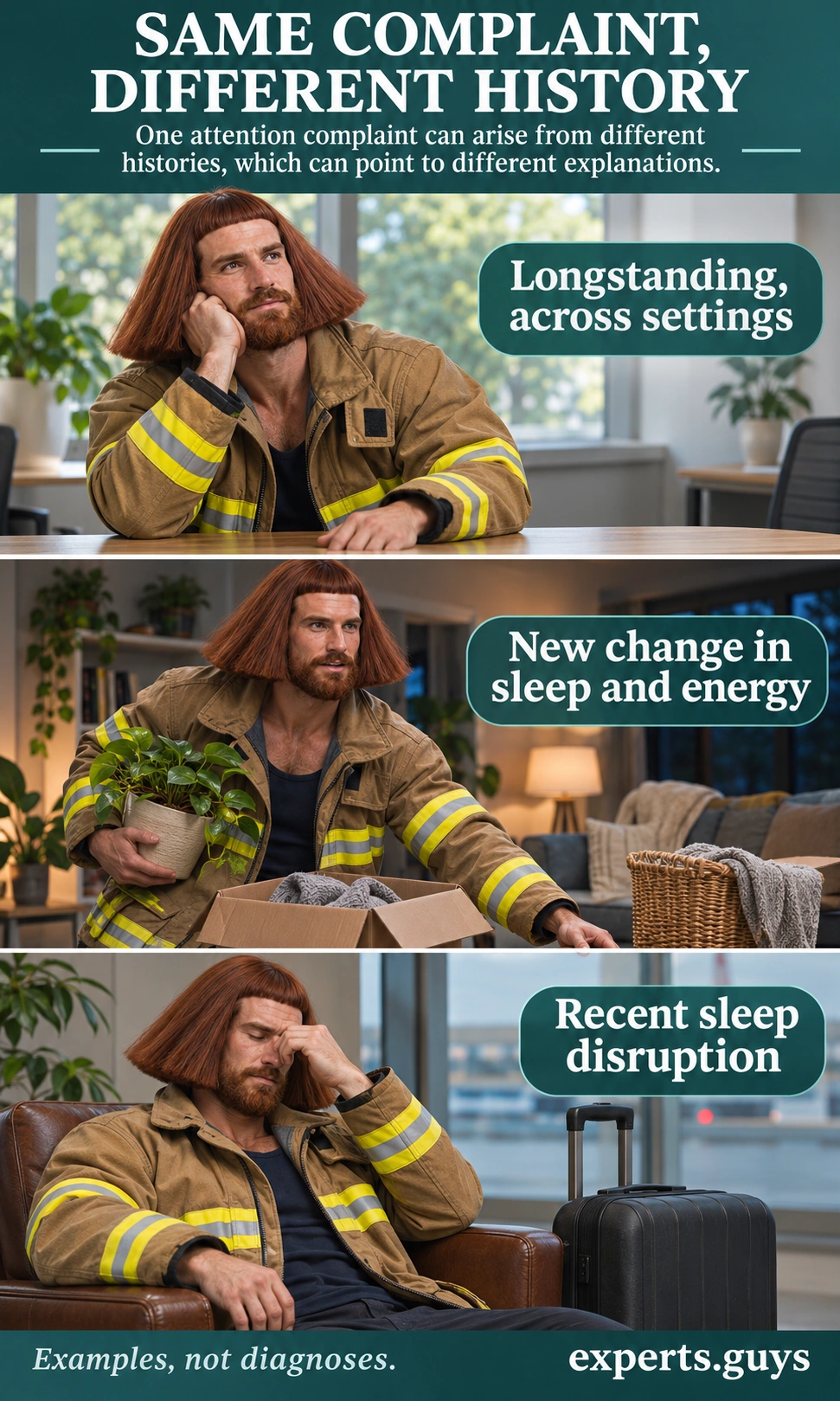
These examples separate the complaint from the explanation. They can all begin with the same words and still lead to different clinical questions. If you want a spoken way to describe an actual episode, use the episode-history conversation in the bipolar overview; its purpose is communication, not self-diagnosis. You do not need to complete a diary or an exercise before seeking care.
Choose care timing from the change, not the label
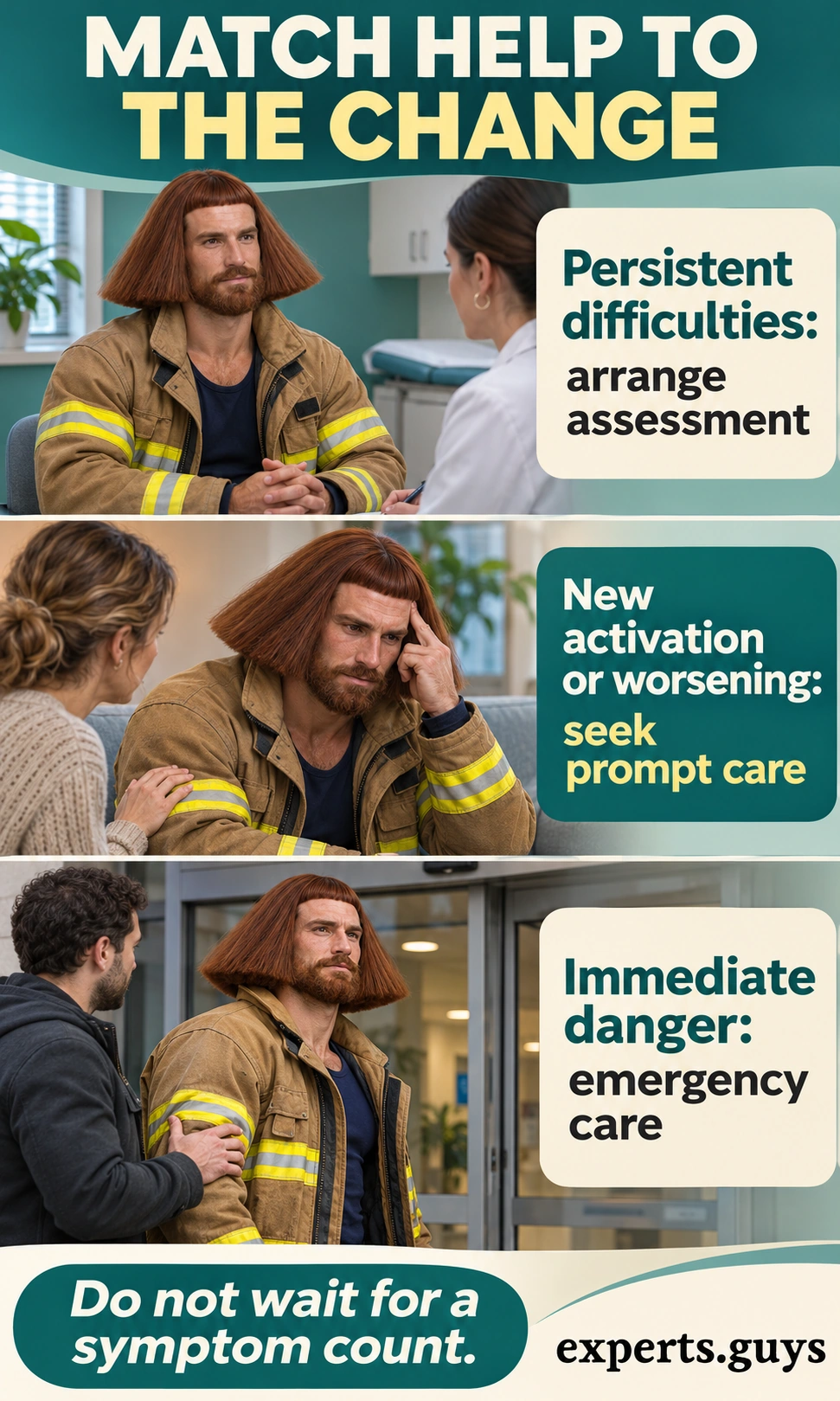
Persistent difficulties that affect work, education, relationships or home life are a reason to arrange an assessment. A new pattern of markedly reduced sleep with unusual energy, rapidly worsening mood or behavior, or a concerning response after a medication change warrants prompt clinical contact. If safety is uncertain, seek urgent help rather than waiting for a routine appointment.
Immediate danger, inability to stay safe, severe confusion or new psychotic symptoms require urgent medical attention; use emergency care when there is immediate risk. A comparison article cannot assess that risk remotely. If you already have a care plan, follow its contact and escalation instructions, and do not postpone help to complete the comparison above.
Frequently asked questions
Does an adult ADHD diagnosis mean the symptoms started recently?
No. Diagnosis can happen late even though symptoms began in childhood. An assessment looks at earlier life as well as current difficulties; increased demands may make a longstanding problem more noticeable.
Does rapid cycling mean moods change several times a day?
Not in its standard bipolar meaning. Rapid cycling refers to four or more mood episodes within a year. Changes within a day still deserve discussion when distressing, but that description alone does not establish bipolar disorder.
Can good grades rule out ADHD?
No. Grades alone do not show the effort, support or difficulties involved, and assessment considers functioning across settings. Equally, struggling academically is not by itself proof of ADHD.
Is there a blood test or brain scan that settles this comparison?
No single blood test or routine brain scan establishes ADHD or bipolar disorder. A clinician may use tests to investigate other possible causes, while the diagnostic assessment relies on the overall clinical history and presentation.
What if I cannot remember childhood clearly?
Say what you remember and where you are uncertain. Ask the clinician what other information might help, such as an existing record or an account from someone who knew you then. Missing records are not a reason to postpone asking for an assessment.
Your next-step checklist
- Use your own usual functioning as the comparison point.
- Separate longstanding attention difficulties from any distinct change in mood, sleep and activity.
- Describe the difficulty and its history; allow the clinician to ask follow-up questions.
- Keep medication decisions with your prescriber; seek prompt or urgent care when the change calls for it.









