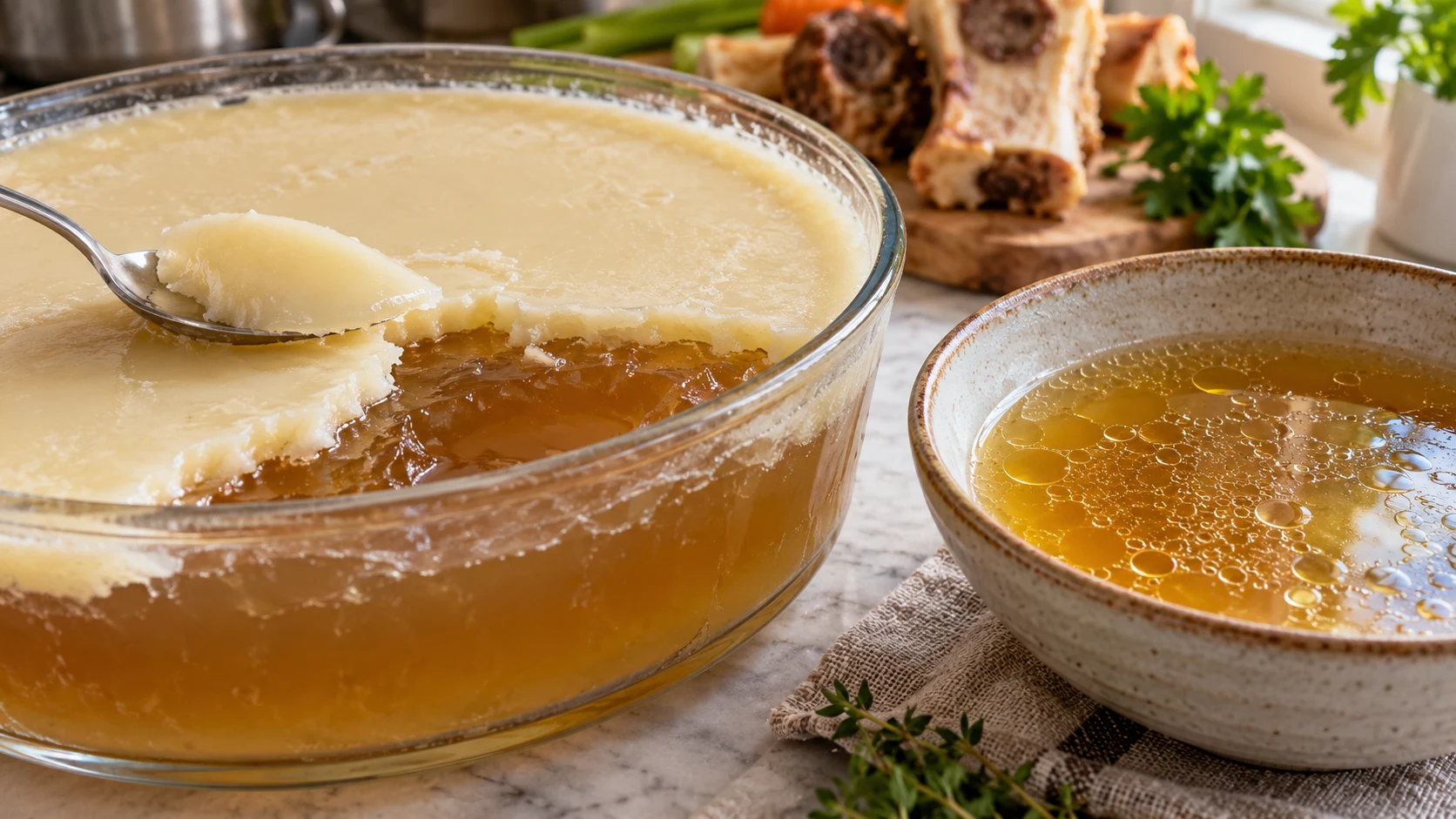
Bone broth is greasy because fat from marrow, skin, and attached meat melts into the cooking liquid. A pale cap on chilled broth is usually fat, while the amber jelly underneath is gelatin; remove the cap if you want a lighter broth, but keep the layer beneath. Before rescuing a batch, check that it was cooled and stored safely.
Why bone broth is greasy: the fat was already there
A broth made mostly from beef marrow bones can produce a substantial fat layer even when you have followed a sensible cooking method. Heating releases the fat, and some of it floats to the surface as shiny droplets or a slick. That oiliness does not tell you how much gelatin the batch contains, and it does not mean the broth has failed.
Think of richness as two separate kitchen effects. Rendered fat can coat the lips and leave an oily film, while gelatin gives the water-based broth body and may make it set when cold. A batch can contain plenty of one and relatively little of the other, so judge them separately before changing the recipe.
What the white layer in the fridge actually is
The cold surface cap is often white, cream, or pale yellow and relatively opaque. Beneath it, the broth may be translucent and jiggly, or it may remain liquid. Color is only a clue: herbs, spices, and suspended particles can change the appearance, so look for a distinct surface layer rather than treating every pale patch as a diagnosis.
Gelatin comes from collagen-rich connective tissue during moist cooking, as the Exploratorium’s meat-science explanation describes. Unlike a separate fat cap, gelatin forms part of the water-based broth and becomes fluid again when warmed. Scraping away the entire jelly removes useful broth, not just grease.
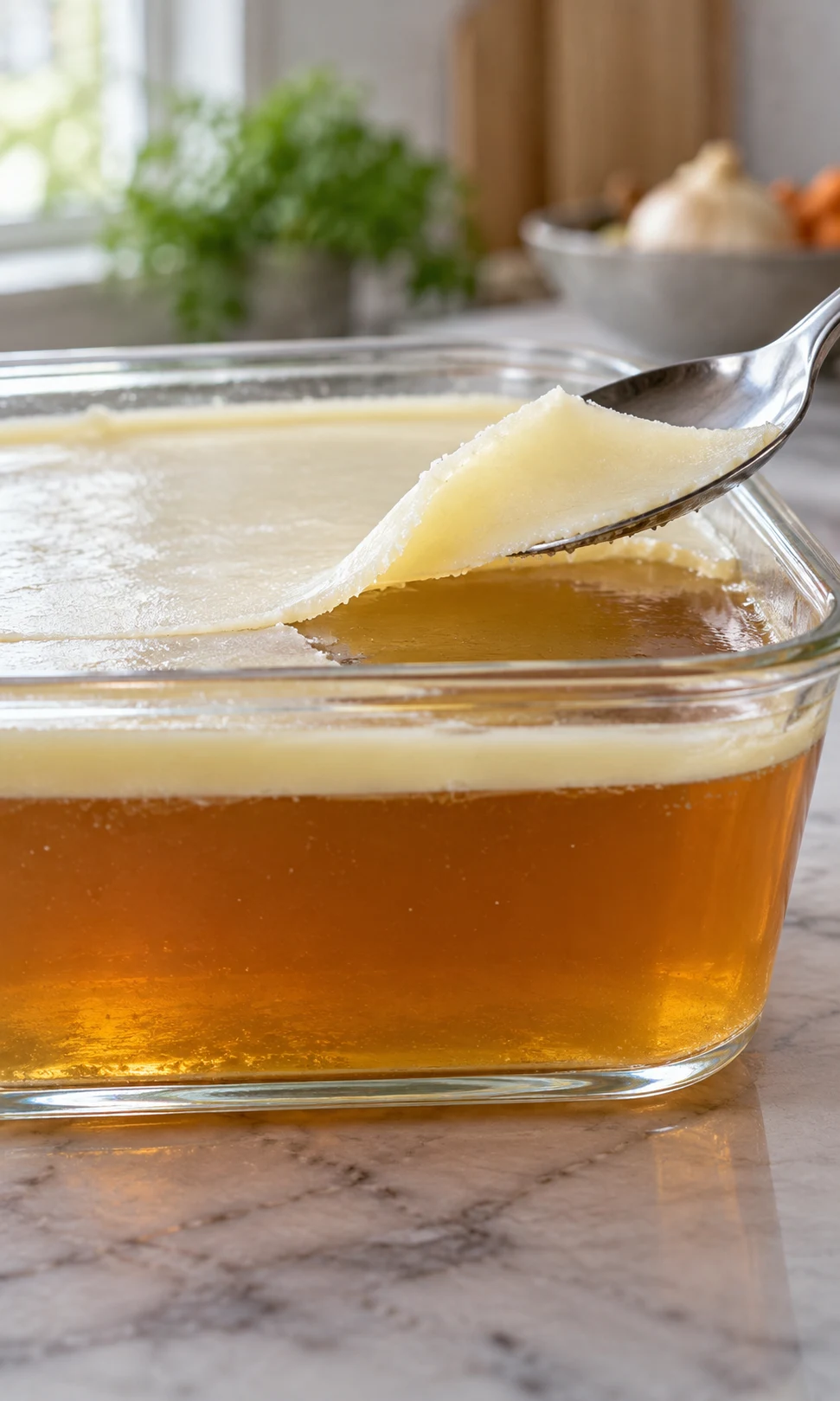
To avoid that mistake, loosen the edge of the opaque surface layer with a clean spoon and lift it gently. Leave the amber material underneath, whether it is firm or runny. If a little gel clings to the underside of the fat, work slowly rather than digging down through the whole container.
Why a hard boil can leave broth cloudy and oily
Vigorous bubbling keeps fat and fine particles moving through the liquid instead of allowing a clean surface separation. Some fat can remain dispersed as small droplets, which makes it harder to skim. Cloudiness can also come from protein particles, so a cloudy batch is not automatically an emulsion and its appearance cannot establish safety.
For a clearer stock, reduce the heat after it comes up to temperature and maintain a gentle simmer rather than a continuous rolling boil. The Culinary Institute of America’s stock guide explains that stronger boiling produces a cloudier result and that chilled fat can be lifted from the top. This is a texture choice during stock-making; it is separate from the final reheating instructions for safely stored leftovers.
The fridge test: cool safely, then lift the cap
Start with the handling history, not the spoon. Broth left in a deep pot to cool overnight should not be rescued just because it smells normal, and reheating does not reliably undo unsafe handling. Follow USDA leftovers guidance: refrigerate within two hours, or within one hour when the surroundings exceed 32°C (90°F).
- Strain the finished broth and divide it into shallow, heat-safe containers. Do not wait for a large pot to reach room temperature.
- Use an ice-water bath if needed, keeping bath water out of the broth; stir with a clean utensil and refrigerate promptly.
- Once cold and the surface fat is firm, lift the opaque cap with a clean spoon. Keep the broth or gel beneath it.
- Label the cooking date. Use refrigerated broth within three to four days, or freeze portions for later.
A probe thermometer is more useful than guessing how warm the center of a large container feels. The FDA’s food-employee cooling guide describes cooling cooked foods from 57°C to 21°C (135°F to 70°F) within two hours, then to 5°C (41°F) within six hours total. Those are measured food-service benchmarks, not permission to leave a pot on the counter for six hours.
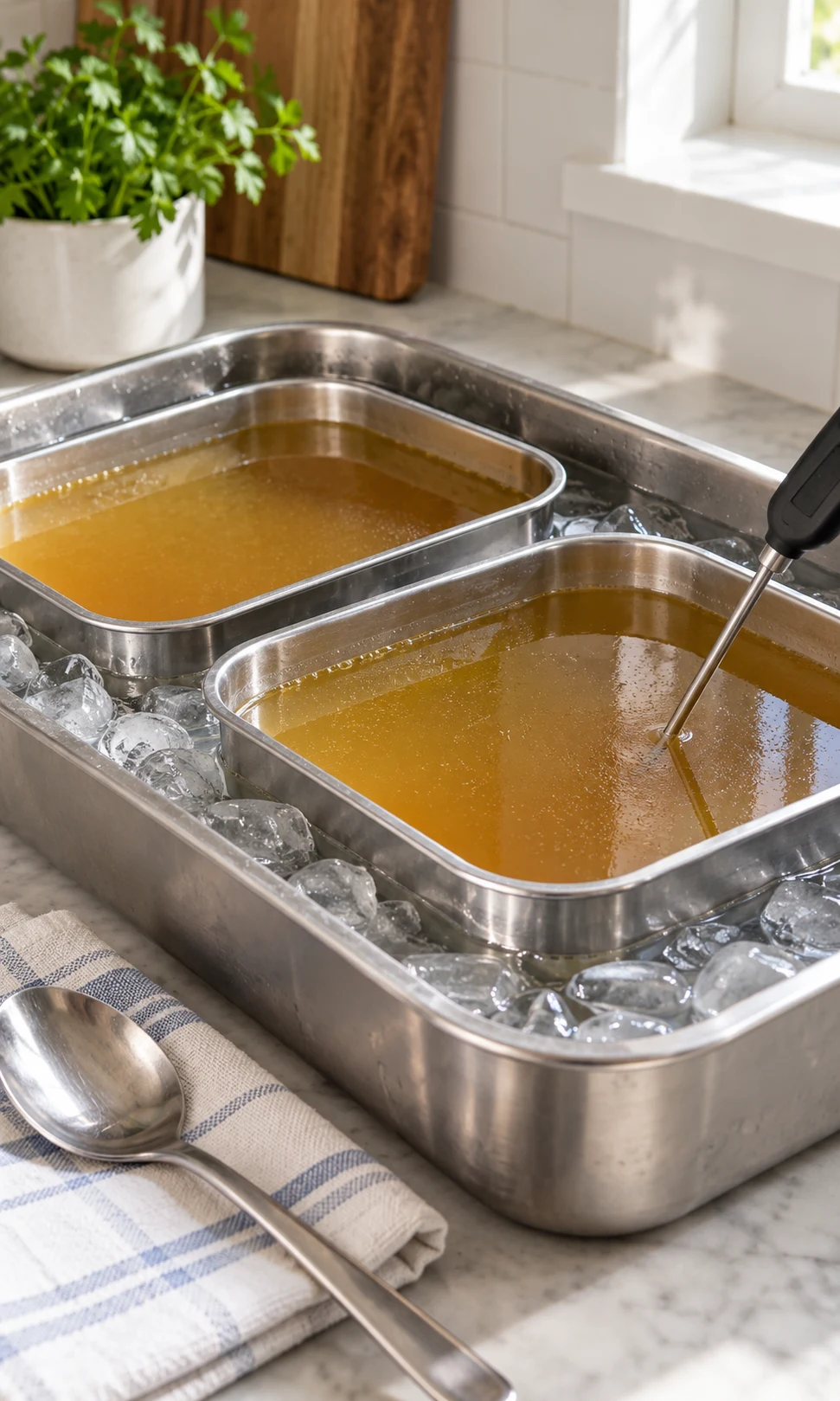
The fridge test identifies a separable fat layer; it does not test bacteria, toxins, freshness, or nutrient content. Unexpected sourness, fizz, mold, or sliminess are reasons to discard the broth without tasting it. Normal smell and a neat fat cap do not cancel an uncertain storage history.
Choose the next step for your batch
Use Broth Rescue Studio below to match the handling history and visible texture to a practical action. It starts with safety questions because a spoon, sieve, or separator cannot solve unsafe storage. The result explains what to lift, what to keep, and how your cooking method may have contributed; it does not issue a safety certificate or a health score.
KEEP THE BROTH. UNDERSTAND THE LAYERS.
Broth Rescue Studio
Choose what you see. Get a practical next step without confusing fat with gelatin.
YOUR NEXT STEP
Check storage history first
Select the cooling history and spoilage observations before using rescue guidance.
Do this next
- Do not use appearance to certify food safety.
What to keep
Gelatin and fat are different materials.
Next batch
Bone choice and heat affect the result.
Use your batch
Guidance appears after the storage checks.
Marrow bones versus joint bones
Beef marrow bones expose a fatty center that can render into the pot, whereas joint pieces bring cartilage and other connective tissue. Wings, feet, and carcass pieces can also contribute gelatin, but attached skin and fat still matter. These are practical ingredient tendencies, not a guarantee that one bone type produces a fat-free broth or a particular nutrient amount.
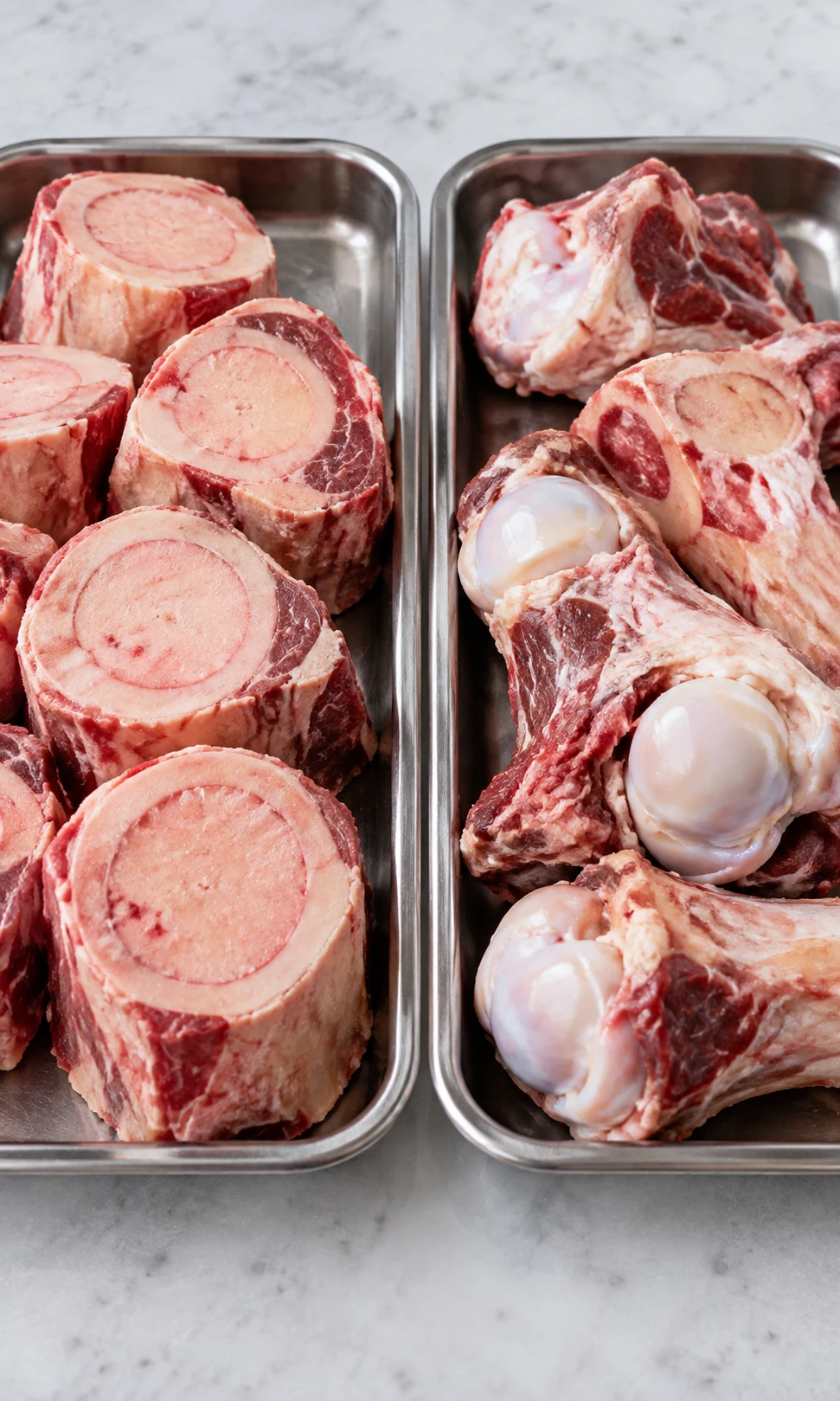
For the next batch, record the actual bones, approximate weights, starting water level, cooking time, and whether the liquid simmered or boiled hard. Cover the ingredients with enough water for your method rather than filling an unnecessarily large pot to the rim. Excess water dilutes the gelatin and flavor, but no single water ratio guarantees a set across different bone mixtures.
A liquid result is still usable when its handling is sound. Bone selection, dilution, extraction, and refrigerator temperature can all affect whether the broth forms a visible gel. Do not add hours of cooking simply to chase a wobble: decide first whether the finished flavor and texture suit the dish you are making.
Match the method to the texture you have
| What you see | Practical next step | What the method cannot tell you |
|---|---|---|
| Pale solid cap over cold broth | Lift the opaque cap; keep the amber layer. | Chilling separates free fat, not all dispersed fat. |
| Warm oil droplets on the surface | Skim gently or use a fat separator. | A separator helps with free surface fat, not a stable emulsion. |
| Cloudy liquid with a thin fat cap | Chill promptly and remove whatever fat rises. | A fine sieve removes solids; it does not reliably remove tiny fat droplets. |
| Amber jelly with no separate cap | Keep the gel and warm it for cooking. | A gel is a texture observation, not a safety or nutrition test. |
| Liquid broth with little visible fat | Use it for flavor if handling was safe. | Failure to gel does not prove that gelatin is completely absent. |
Swipe horizontally to compare on a narrow screen.
How to use the broth you already made
Defat safely handled broth before reducing it for a pan sauce, because reduction concentrates both salt and any fat left in the liquid. Add it gradually and adjust seasoning at the end. If the pan already contains butter or meat drippings, avoid adding a second heavy layer of fat; our guide to why garlic burns before chicken is done explains another timing mistake that can spoil a sauce base.
A soup or stew is often more forgiving of cloudiness than a clear sipping broth. Choose a preparation for its ingredients and cooking method, using autumn soup ideas for inspiration rather than treating them as bone-health treatments. A cloudy broth can contribute flavor without needing to look like consommé.
Broth can also replace part of the cooking liquid in a suitable rice or grain recipe. Keep that recipe’s liquid ratio instead of adding extra broth to use up the batch, and check the salt before serving. When reheating safely stored leftovers, reach 74°C (165°F); USDA also advises bringing soups, sauces, and gravies to a rolling boil.
What greasy broth cannot tell you
A thick fat cap is not proof that broth contains more calcium, minerals, or gelatin. A firm gel is not a measure of how a food will affect joints, skin, digestion, or bone density. This article addresses kitchen texture and handling; it does not recommend broth as treatment for osteoporosis or any other condition.
The useful comparison is the same kind of batch handled consistently: note the bone mixture, water level, heat, and amount of fat removed. The images here are AI-generated illustrations, not photographs of a tested batch. If you document your own cooking, record those details alongside the before-and-after pictures rather than calling a good-looking result proof of a health benefit.
Frequently asked questions
Is the white layer on bone broth fat or gelatin?
A separate opaque white or cream cap is usually fat; the translucent amber layer beneath may be gelatin or liquid broth. Gelatin softens into the broth when warmed. Appearance helps identify texture, but it cannot confirm that the batch is safe to eat.
Can I still cook with greasy bone broth?
You can use broth that was handled safely and has no spoilage signs, removing surface fat if you prefer a lighter texture. Check the cooling and storage history before thinking about flavor. Discard suspect broth without tasting it; skimming and reheating cannot reliably fix unsafe handling.
Does bone broth have to gel to be usable?
No: liquid broth can still provide flavor when its handling is sound. A visible gel depends on the ingredients and concentration, among other conditions. Judge the batch by the dish it needs to serve rather than using a wobble as a safety or nutrition standard.
Why is my bone broth cloudy and oily at the same time?
A rolling boil can disperse fat and fine particles through the broth. Some fat may still rise when the batch is chilled, while dispersed droplets remain in the liquid. Remove the separable fat if desired, but do not expect a fine sieve to make an emulsified broth clear.
How do I remove fat without losing the gel?
Chill promptly in shallow containers, then loosen and lift only the opaque surface cap. Stop when you reach the amber layer beneath, whether it is jelly-like or liquid. Work gently with a clean spoon rather than scraping through the entire container.
Why does beef broth look greasier than chicken broth?
The particular bones and attached tissue matter more than the animal name alone. A marrow-heavy beef batch can render plenty of fat, but chicken skin can also produce an oily broth. Compare the actual ingredients and cooking method before assuming that every beef broth must be greasier.
Keep the useful layer, change the right variable
For a safely handled batch with an opaque fat cap, lift that layer and keep the amber broth or gel below it. For the next pot, adjust the bone mixture and simmering method before changing everything at once. If the storage history is uncertain, stop the rescue attempt: texture troubleshooting begins only after safe handling is established.