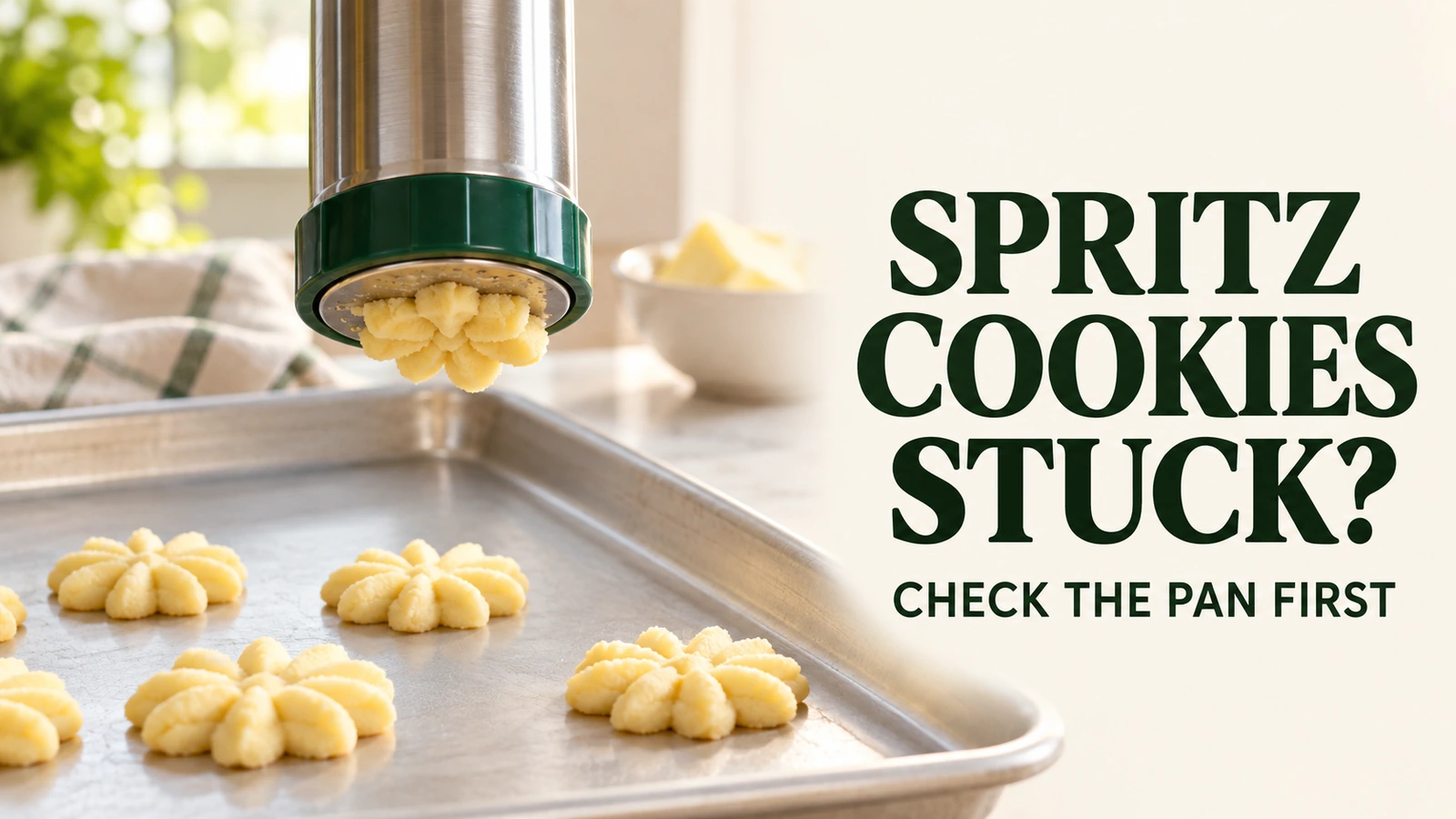
If your spritz cookies stay on the press, start with a cool, clean, ungreased baking sheet and check whether the dough is actually coming through the disc. A cookie that forms but lifts with the barrel needs a different fix from dough that barely moves when you squeeze. Identify that difference before adding flour, milk, or more pressure.
Is the dough stuck inside, or lifting off the pan?
Watch one press cycle closely. If a complete flower or tree appears and then follows the press upward, the sheet contact or release motion is the first place to investigate. If only thin strands emerge, or the lever becomes difficult to move, inspect the dough and the assembled press instead.
Try a small trial rather than covering a whole tray with failed shapes. Keep the recipe, disc, and dough unchanged while you adjust one part of the setup. This is a practical troubleshooting sequence; it does not establish a laboratory result or guarantee that every dough will release.
Give the cookie dough a surface it can grip
Parchment is useful for many cookies, but it can interfere with spritz dough sticking to the sheet during pressing. Remove the liner for a trial if your recipe permits direct pressing onto metal. Wipe away cooking spray, butter residue, and moisture before trying again.
Let a used tray cool fully before refilling it. The OXO cookie-press instructions call for an ungreased sheet that is cold or at room temperature. A hot tray adds another variable while you are trying to work out whether the release problem comes from the sheet, dough, or press.
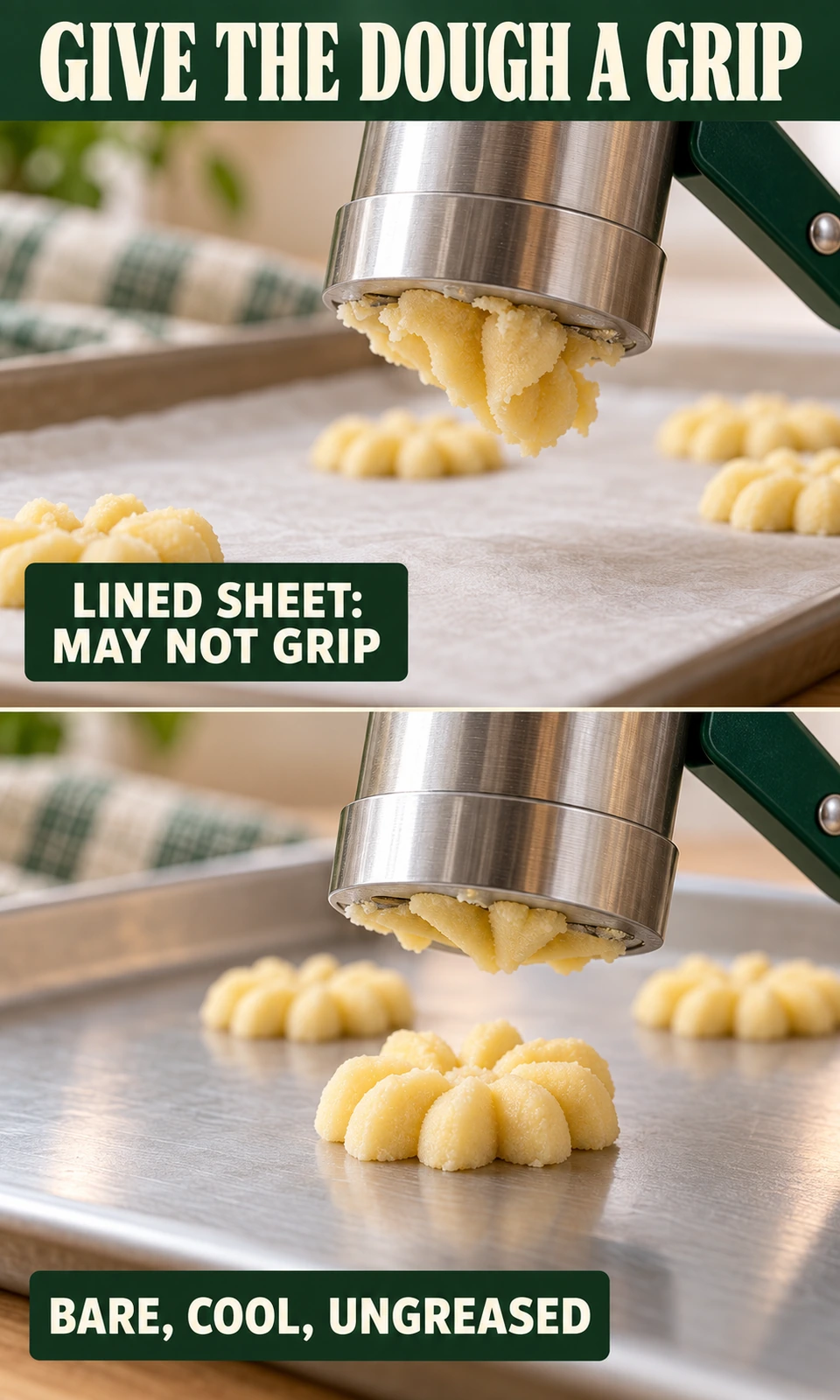
A nonstick sheet is not automatically the wrong pan. Wilton’s spritz guidance specifically uses an ungreased nonstick sheet. If your combination keeps failing, compare it with another recipe-compatible sheet before deciding that the entire batch needs reformulating.
Check the disc, contact, and priming
Unload the press before inspecting its disc and retaining ring. Clear blocked openings and check that the parts seat correctly, using your model’s manual for orientation. Wilton specifies smooth-side-out for its described setup; that detail should not be assumed for every interchangeable disc or press.
A freshly filled barrel may need priming before it dispenses evenly. Hold the base flat against the sheet and use the stroke specified by the manufacturer. Repeatedly pumping at the same spot can pile up dough and conceal the original release problem.
If the first cookie is uneven, inspect the next trial before changing the recipe. A single imperfect start gives you less information than a repeated pattern after priming. Stop immediately if the barrel cracks, parts shift, or the mechanism requires excessive force.
- Remove liners and grease for a recipe-compatible trial; use a cool, dry sheet.
- Check the unloaded press for blocked openings and incorrectly seated parts.
- Prime as directed, hold the base flat, and try one normal stroke.
- Change one condition, then compare the next shape before filling the tray.
Match the dough adjustment to what you see
Cold, firm dough may resist extrusion even when the press is assembled correctly. Let it become workable according to the recipe, then retry a small portion. Forcing a stiff batch through a narrow opening can damage the mechanism without solving the texture problem.
Warm, greasy dough can smear instead of holding the disc pattern. Cooling the sheet is a low-disruption first step. If the dough itself needs cooling, use the recipe’s directions and stop when it becomes workable rather than chilling it until it is hard.
There is no universal rule that spritz dough must never be chilled. King Arthur’s cider-cinnamon formula calls for brief chilling when its dough is very soft. That example matters because a cream-cheese formula and a traditional butter dough may need different handling.
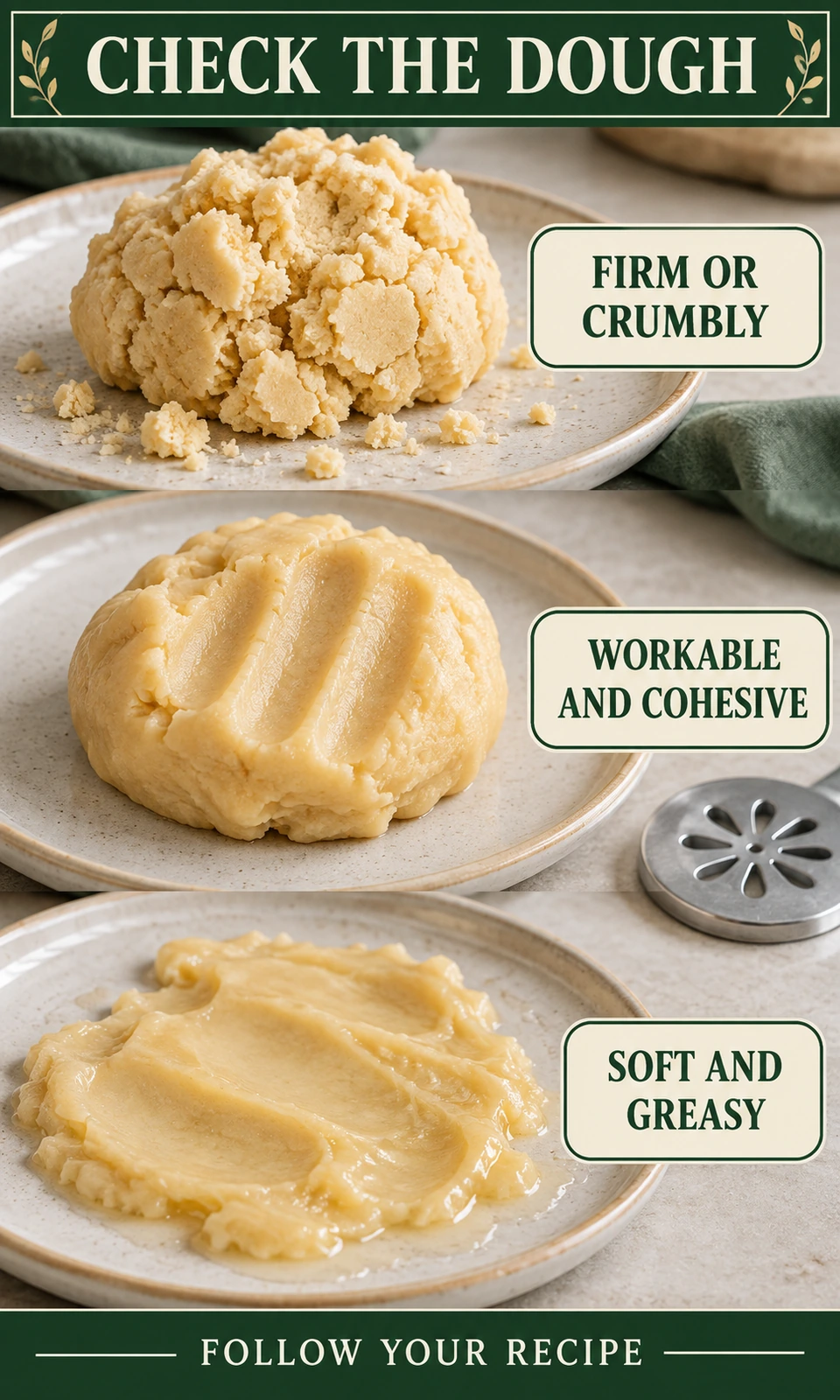
Dry, crumbly dough needs a recipe check before a splash of milk. Verify flour measurement, omitted ingredients, and substitutions; warming cannot replace missing moisture. Likewise, adding flour to a warm batch can create a dry batch once the butter firms again.
Keep a small portion aside if you decide to trial an ingredient adjustment. Record the amount and bake a sample before changing everything. An adjustment that makes the press easier to squeeze may still produce a tougher cookie or a different spread pattern.
Why spritz cookies lose their shape in the oven
A cookie that releases cleanly but spreads in the oven has passed the pressing stage. Check pan heat, butter condition, ingredient measurement, and the recipe’s bake temperature. Avoid changing several ingredients after one tray, because you will lose the ability to tell which change mattered.
Do not remove baking powder simply because the cookies spread. Some established spritz formulas contain it, while others do not. Follow the measured formula first, then investigate handling and measurement before redesigning the dough.
| What happens | What to investigate | Next trial |
|---|---|---|
| Shape follows the press upward | Sheet contact or release motion | Try a cool, dry, ungreased recipe-compatible sheet. |
| Dough barely emerges | Firm dough, blockage, or assembly | Unload and inspect; allow cold dough to become workable. |
| Pattern smears immediately | Dough or sheet may be too warm | Cool the sheet; reassess dough under the recipe directions. |
| Shape disappears during baking | Baking-stage spread | Review heat, measurements, and substitutions. |
| Baked trees snap during lifting | Fragile shape or premature handling | Use the recipe’s cooling interval and a thin spatula. |
Choose your next check in Spritz Rescue Studio
Select what happens, the sheet setup, and the dough texture below. The studio gives a priority check and a retry sequence rather than a score or a promise that the batch can be saved. Its printable report keeps those observations together while you work.
Spritz Rescue Studio
Find the next useful check before changing your dough.
For cookie-press dough. Choose your observations; the result prioritizes checks, not a guaranteed diagnosis. Follow your press manual and measured recipe.
Start with the sheet and the symptom
Submit your observations to see a priority check, retry sequence, and stopping point.
Illustrative guidance, not a kitchen-tested guarantee. No data is sent or stored. Stop using damaged equipment; never taste raw dough.
Lift baked cookies gently and pack them fully cooled
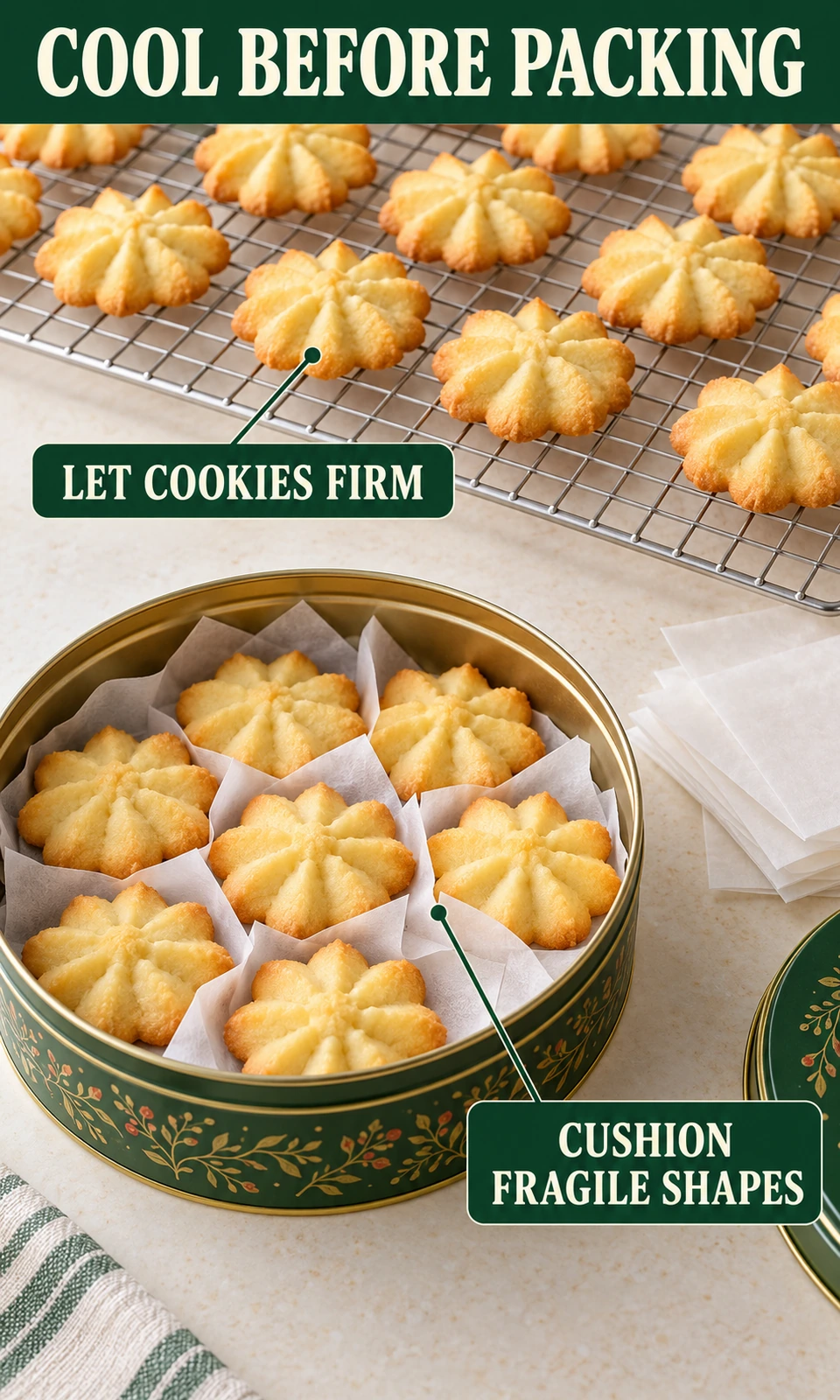
Let baked cookies firm according to the recipe before moving them. OXO’s guide suggests a minute or two, while King Arthur’s Fiori di Sicilia recipe specifies five minutes. Use a thin spatula under the cookie rather than pulling a narrow tree by its branches.
Cool the batch completely before closing the tin so residual warmth does not leave moisture inside. Separate fragile shapes with cushioning layers and keep crisp cookies away from moist fillings or softer cookies. For a different gift bake, see hot chocolate Christmas cookies; follow that recipe’s storage requirements separately.
Storage life depends on the formula, decoration, packaging, and conditions in your kitchen. Follow the recipe’s stated window and freeze for longer storage when it permits. A plain butter cookie and a cookie with a perishable filling do not share an automatic room-temperature storage allowance.
Frequently asked questions
Why won’t my spritz cookies stick to the pan?
If a formed cookie follows the press upward, check the sheet surface and how the base contacts it. Try a cool, dry, ungreased sheet compatible with the recipe. If that fails, inspect assembly and dough texture before changing ingredients.
Can I use parchment paper for spritz cookies?
Parchment can make direct pressing harder because the dough may not grip it. Try pressing onto an unlined sheet if the recipe directs it. Use the recipe’s baking method rather than applying a liner rule from another type of cookie.
Should I chill spritz cookie dough?
Follow the specific formula. Some doughs should remain workable at room temperature, while a very soft dough may need recipe-directed cooling. A cool sheet and cold, stiff dough are different conditions.
Why did my spritz cookies spread into blobs?
Check warm pans, butter condition, measurements, substitutions, and oven temperature. The cause cannot be identified from the final shape alone. Bake a small sample after one change before committing the whole tray.
How long do spritz cookies last in a tin?
Use the storage directions for the recipe and decoration you made. Airtight packing helps preserve texture but does not make perishable fillings shelf stable. Freeze longer-term portions when the recipe allows it.
Can I freeze spritz dough and press it later?
Some formulas allow freezing, but cold thawed dough may still be too stiff to press. Follow the recipe’s thawing instructions and return it to its specified workable texture. Test a small portion rather than forcing the mechanism.
The next batch decision
Start with the least disruptive check that matches the symptom: sheet contact for a lifting cookie, assembly and texture for a blocked press, or baking conditions for spreading. Keep the measured formula intact while you establish whether the equipment and handling are working. If safe, recipe-compatible adjustments still fail, use an alternative shaping method explicitly supported by the recipe, or stop and remake the dough.