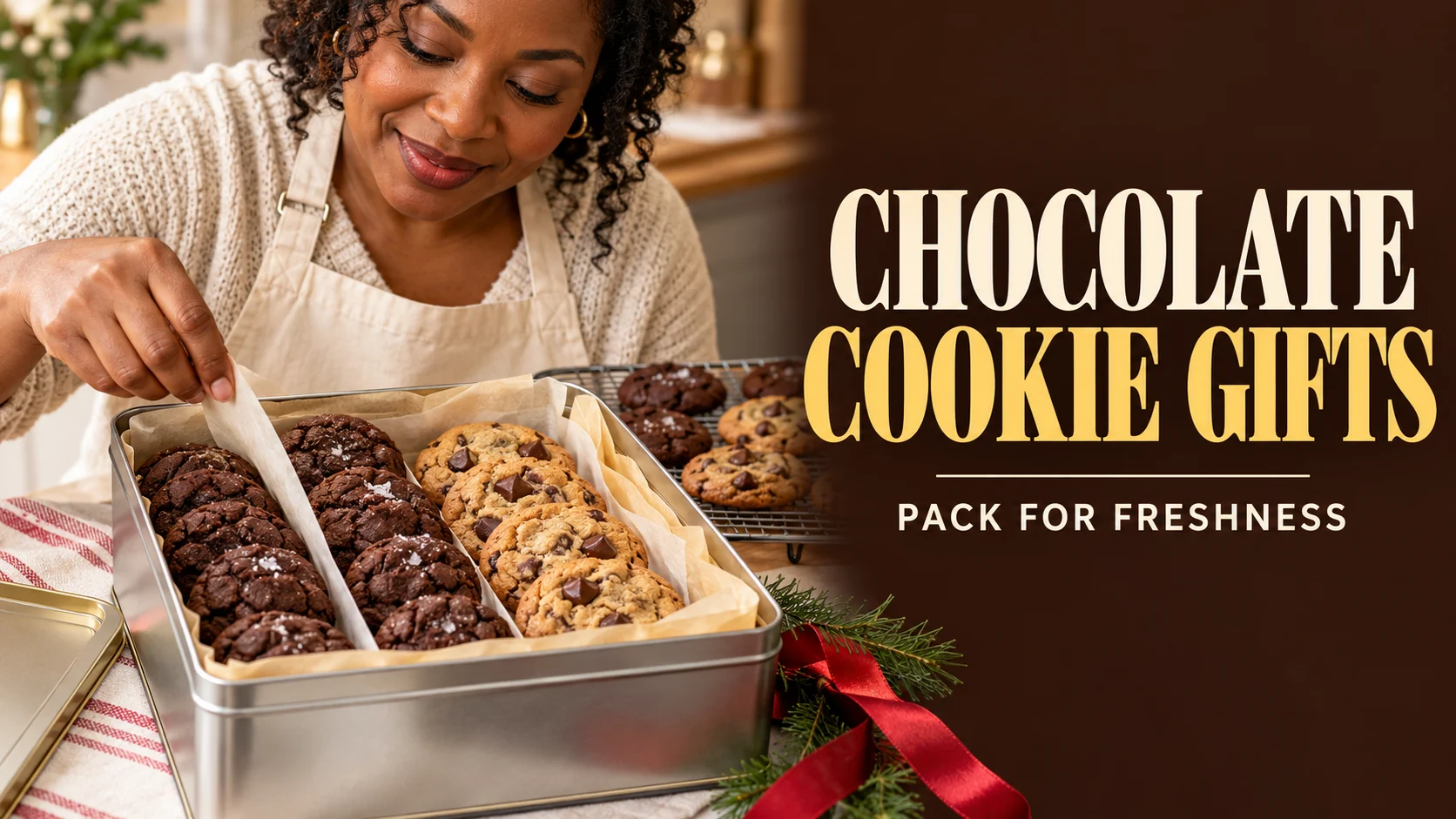
For a homemade chocolate-cookie gift, plan to hand over soft cookies soon after baking and have them eaten within the first few days, rather than treating a closed tin as a freshness guarantee. A roughly 3–5-day window can suit some plain-cookie recipes, but dipped surfaces, sticky toppings, warm journeys, and a loose lid change the decision. Count from the bake date, then follow the actual recipe’s storage instructions.
How long chocolate cookies last in a gift tin
A cookie can still be edible after its best gift texture has gone. The useful question is whether the recipient will get a tender centre, a crisp edge, and a clean chocolate surface when they open the tin. A storage recommendation for one recipe cannot establish that window for every chocolate cookie.
For example, this tested chewy chocolate-chip recipe gives covered room-temperature storage of up to one week, while its freshly baked texture remains a separate consideration. That is recipe-specific guidance, not permission to keep any homemade cookie for a week. For a gift, shorten the wait between baking, delivery, and eating rather than using the longest possible storage period.
| Cookie style | Packing decision |
|---|---|
| Plain soft cocoa or chocolate-chip | Hand over promptly; a few days is a useful quality planning window. Check your recipe before using 3–5 days as a target. |
| Crisp chocolate shortbread or biscotti | Keep dry and separate from soft cookies. A proven crisp recipe may suit preparation farther ahead. |
| Chocolate-dipped | The base cookie and coating have different failure modes. Prefer a cool local journey with the coating completely set. |
| Marshmallow-topped | Choose same-day or next-day local handoff as a presentation preference. Avoid stacking sticky tops or relying on an untested mailing window. |
| Cream, custard, or other perishable filling | Follow that recipe’s refrigeration instructions. An ordinary unrefrigerated gift tin is not suitable when chilling is required. |
Soft cookies: keep the wait short
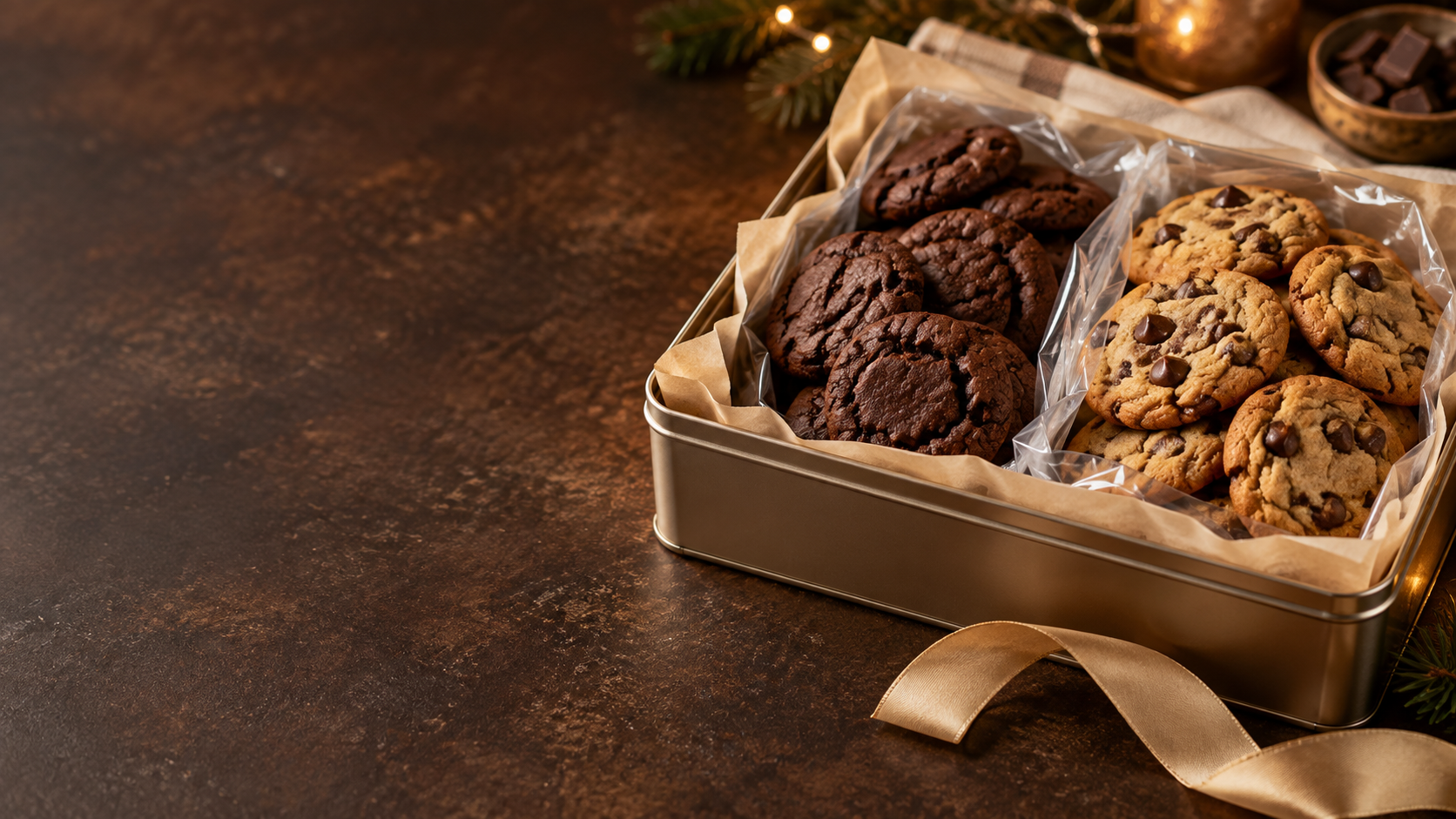
Soft cookies lose appeal when their centre becomes dry or their edges turn tough. Use a clean, well-sealed food container or sealed food-safe bag inside the decorative tin, and keep the batch away from heat. If delivery is several days away, baking nearer the date or freezing an appropriate plain batch is usually a better workflow than packing early and hoping.
Dipped cookies: check the surface as well as the crumb
A good cookie underneath cannot protect a coating that is still tacky. Let the chocolate set before wrapping, then use shallow layers with food-safe separators and protect the box from direct sun. If the planned journey is warm, switch to an uncoated cookie rather than expecting parchment to prevent melting.
Marshmallow cookies: make the handoff the occasion
Marshmallow toppings add a handling problem even when the base recipe keeps well. Pack them in a shallow single layer so the lid cannot press onto the topping, and deliver them close to the time they will be served. Same-day or next-day delivery is a cautious presentation choice here, not a measured safety deadline.
Why a fresh batch can disappoint inside the tin
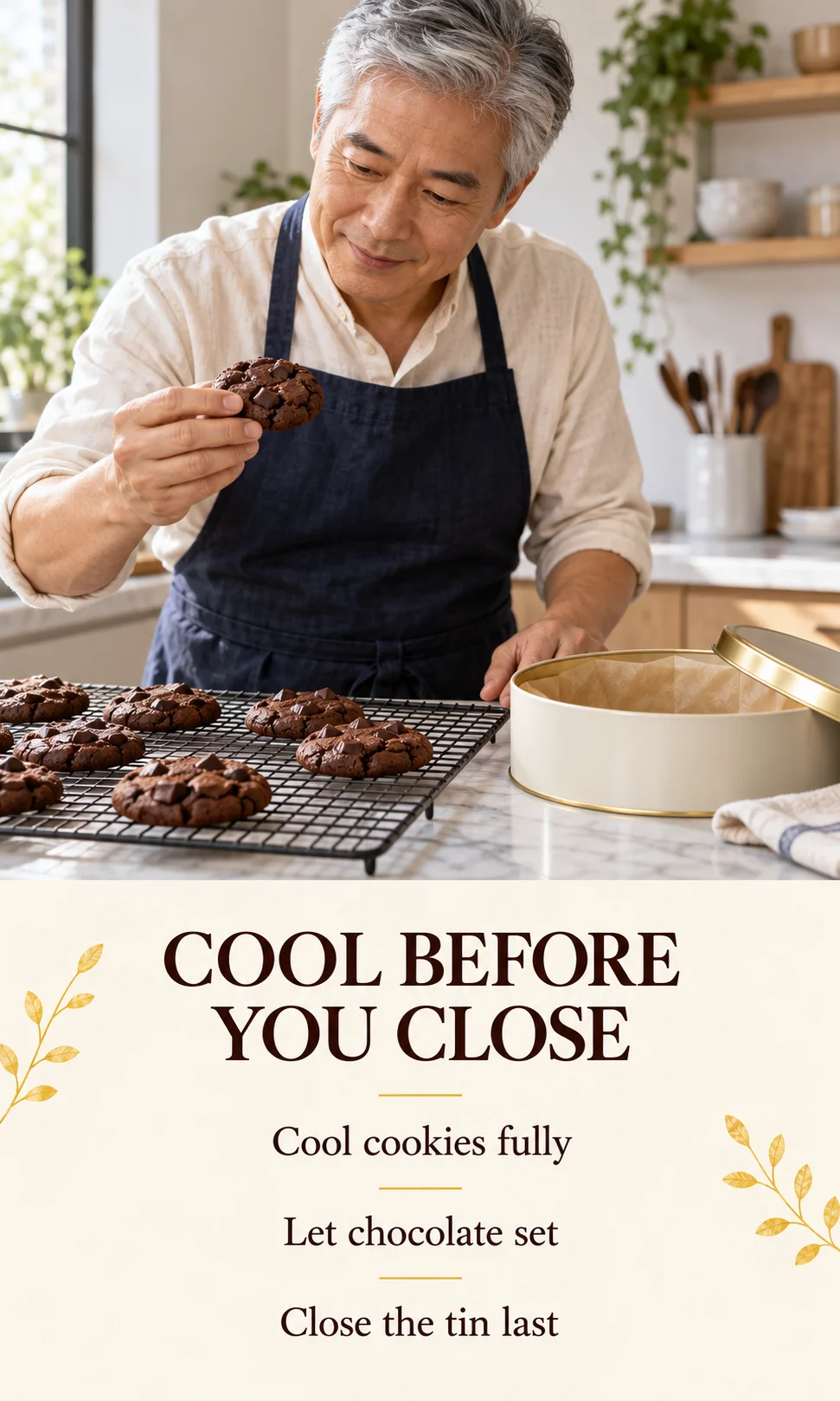
The packing sequence matters as much as the tin itself. Cooling, sorting, sealing, and protecting the cookies each prevent a different problem. Doing those jobs in that order avoids closing a beautiful box around a batch that is not ready to travel.
Closing the lid while the cookies are warm
Warm cookies release moisture into the space under the lid. Water collecting on the lid or liner is a warning to pause packing, and a chocolate coating may also suffer from dampness. Spread the cookies out on a rack until fully cool, use a clean dry liner, and pack only after the surface is firm.
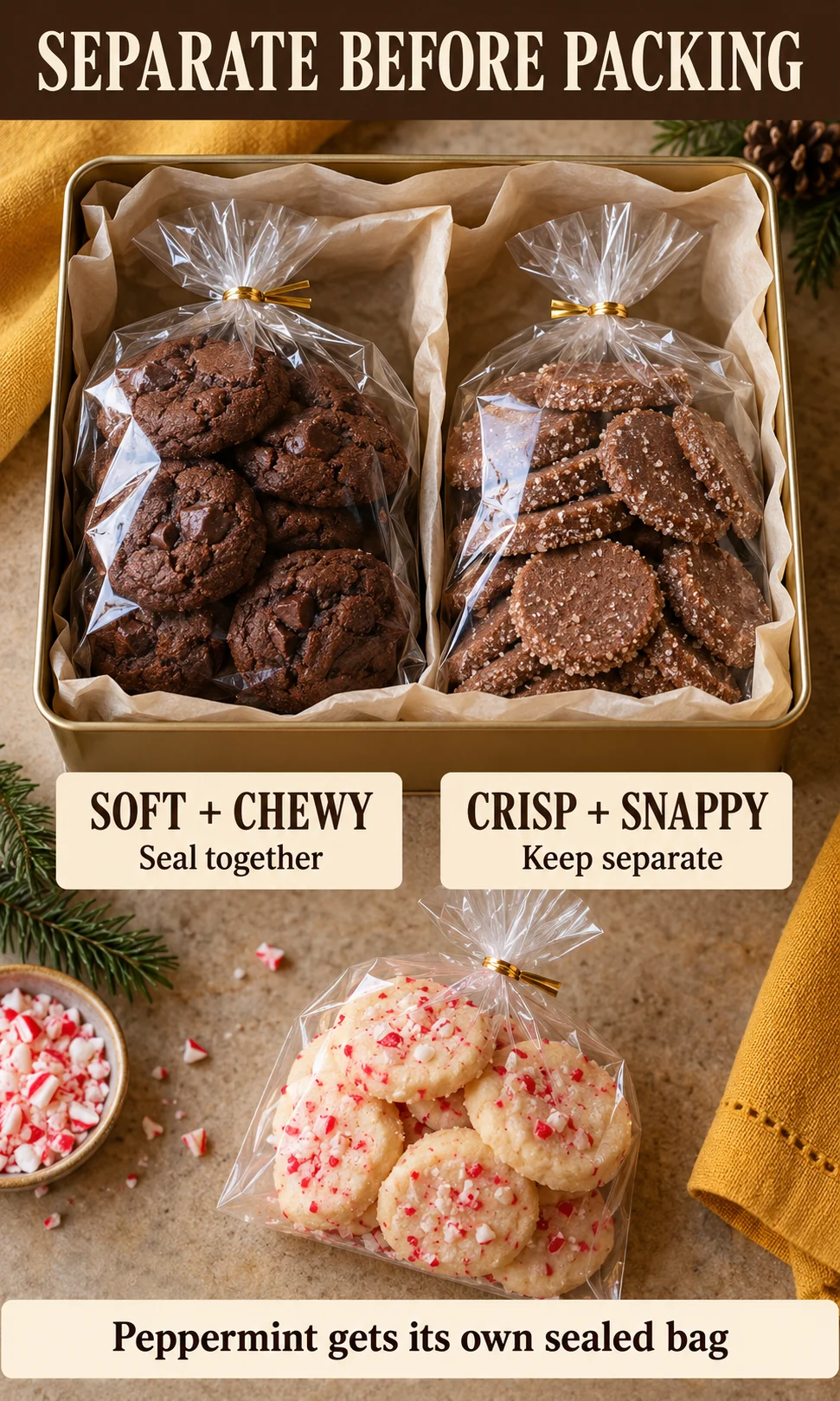
Putting crisp and chewy cookies in one unwrapped layer
A parchment divider stops direct contact but does not seal separate air spaces. Moisture can move between different textures, leaving a crisp cookie softer and a chewy one less tender. King Arthur’s storage guidance recommends separating crisp and chewy cookies and keeping strong flavours apart; use sealed food-safe bags when different styles share one outer tin.
Letting peppermint take over the assortment
A mixed tin can look balanced yet taste less varied after storage. Peppermint is especially worth isolating, since a plain chocolate cookie may pick up that aroma without ever touching it. Seal strongly flavoured cookies separately or give them their own container, rather than relying on paper cups alone.
Choose hand delivery or mail before you pack
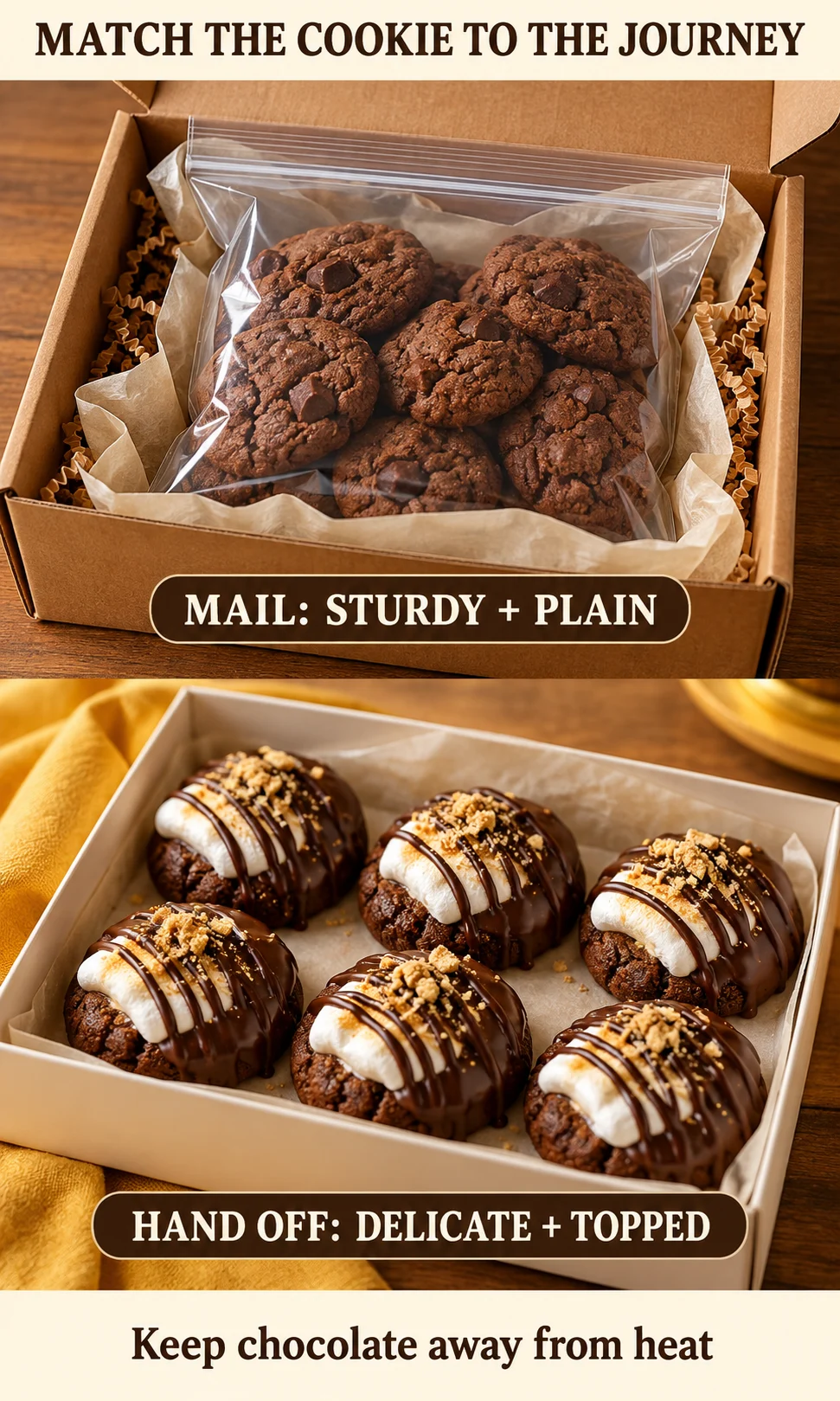
Hand delivery gives you more control over time, stacking, and heat exposure. Mailing adds handling, delays, and conditions you cannot inspect, so the cookie needs to be sturdy before the padding can help. A thick plain drop cookie is a more forgiving candidate than a thin shape, a soft topping, or a finish that smears.
Land O’Lakes’ mailing advice favours durable cookie styles and excludes those that need refrigeration. For an ordinary posted gift, do not choose a cream-filled cookie simply because the outside feels firm. Ask whether the recipient will be available to receive the parcel and whether the route could leave it sitting in a warm place.
| Journey | Useful arrangement | Reason to change course |
|---|---|---|
| Cool local handoff | A lined tin; sealed groups of similar cookies; a single layer for delicate toppings. | Coating is unset, the recipient will store it for days, or the tin will sit in a hot car. |
| Postal delivery | Sturdy plain cookies, sealed small groups, rigid inner container, cushioned outer box. | Refrigeration is needed, cookies are fragile, or heat and delivery delays are likely. |
| Gift date still some way off | Keep preparation separate from final packing; use a recipe that supports freezing. | The recipe gives no freezing guidance or the decoration is likely to become sticky. |
For mail, protect against movement without pressing hard enough to crush the cookies. King Arthur’s shipping test supports packing flat groups in bags and cushioning the outer box. Put food-safe material directly against the food, and keep ordinary shipping fillers outside its sealed wrapping.
Check your gift tin before closing it
Gift Tin Check turns your cookie style, bake date, handoff date, and packing conditions into a short action list. It counts elapsed days without turning them into a laboratory shelf-life estimate, and it flags conditions that need attention first. Use its A4 report as a packing reminder, then add the actual recipe’s storage instructions to your gift label.
Gift Tin Check
Match your cookies to the handoff. Fix packing problems before closing the lid.
A few days can change a soft cookie’s texture. Choose your recipe, dates, and packing conditions to see what needs attention. This is quality and packing guidance, not a food-safety certification or a safe-expiry calculator.
Write a useful label without inventing an expiry date
The recipient needs to know what is in the tin and how to handle it. Give the bake date, cookie names, ingredients or relevant allergens, and storage instructions from the recipe you used. A planned handoff date can help you organise the gift, but it should not be printed as proof that the food is safe until then.
Chocolate cookies
Baked on: add the actual date
Ingredients and allergens: copy from the recipe and ingredient labels
Storage: add the recipe’s instructions
Please enjoy promptly for the best texture.
Check the whole ingredient list, including chocolate, sprinkles, and toppings, before naming allergens. Do not describe a batch as allergen-free because one obvious ingredient was omitted. If you cannot confirm what went into the cookies or how they were handled, make a different gift rather than filling in a reassuring label.
If you bake ahead, freeze before final gift packing
Plan backward from the day the recipient will eat the cookies. King Arthur’s holiday-baking timeline describes using frozen dough or finished cookies to split preparation into stages. Choose the method your particular recipe supports, keep the batch protected, and leave the final tin arrangement until after thawing and checking.
Chocolate coatings need extra care around changes in temperature. A cold surface exposed to humid air can collect moisture, which is one route to the grainy white surface described in Callebaut’s sugar-bloom guidance. Where the recipe allows it, let wrapped plain or dipped cookies return toward serving temperature before opening; do not use room-temperature thawing for a filling that must remain refrigerated.
When to stop and replace the gift
Do not give cookies with visible mould, an unusual rancid smell, contamination, or an uncertain storage history. A clean appearance does not establish safety, and tasting a suspect cookie is not a reliable check. If a filling needed refrigeration and that requirement was not maintained, do not try to solve the problem with a new tin or a shorter label date.
A pale chocolate coating can be bloom rather than mould, but a photograph or quick glance cannot certify the whole cookie. Fat bloom involves changes in the chocolate’s fat structure; sugar bloom can follow moisture exposure. Callebaut’s bloom explanation helps distinguish those quality problems, while uncertain spots, odours, or handling remain reasons not to gift the batch.
Frequently asked questions
How long do homemade chocolate cookies stay fresh in a tin?
Many plain soft-cookie recipes suit a few days of quality planning, and some specify longer covered storage. Use the recipe’s own instructions and count from baking rather than packing. A tin cannot provide a universal safe expiry date.
Do cookie tins need to be airtight?
Soft cookies benefit from a good seal. If your decorative tin has a loose lid, place the cookies in a sealed food-safe bag or container inside it. Keep crisp and soft styles separately wrapped when they share an outer tin.
Why did the chocolate on my gift cookies turn white?
Chocolate can develop fat bloom or sugar bloom, and moisture or temperature changes may contribute. Bloom is a quality change, but the colour alone cannot rule out other problems. Do not gift cookies with uncertain spots, unusual odours, or an unknown storage history.
Can I freeze chocolate cookies and pack them later?
Often you can, particularly with a plain recipe that gives freezing instructions. Protect the cookies during freezing and follow that recipe’s thawing method before arranging the gift. Perishable fillings need their required temperature controls throughout.
Can I mail cookies with marshmallows?
Sticky marshmallow toppings can smear or stick to the wrapping during transit. This guide recommends a shallow box and prompt local hand delivery for that style as a presentation choice. Choose a sturdier uncoated cookie for an ordinary postal gift.
How do I stop chocolate cookies sticking together?
Cool the cookies fully and allow any coating to set before wrapping. Place food-safe parchment between suitable firm layers, and use a single layer for sticky or delicate toppings. Paper cannot compensate for a coating that is still soft.
Your next step: choose the handoff, then pack
Decide when the cookies will be eaten before choosing the assortment. Bake soft cookies close to that date, keep textures and strong flavours separately wrapped, and reserve delicate finishes for a journey you can control. If there is too much waiting or heat between your kitchen and the recipient, change the cookie or the timing before you close the lid.
- Choose a recipe with storage instructions that fit the gift date.
- Confirm the cookies are fully cool and any coating is set.
- Separate textures and strong flavours in sealed food-safe wrapping.
- Use the recipe’s handling instructions and an accurate ingredient label.
- Keep the gift out of heat and arrange a prompt handoff.