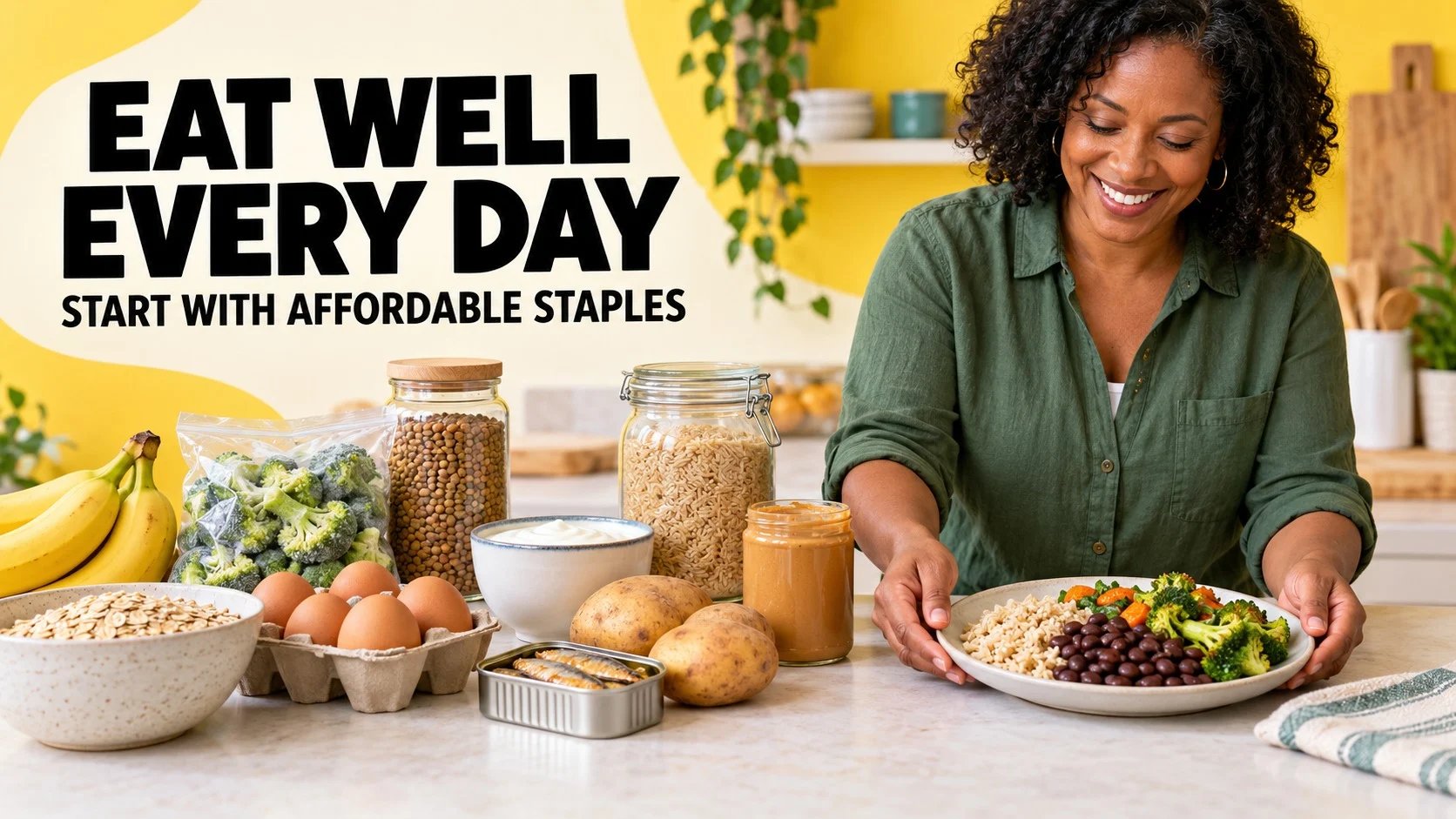
Oats, beans or lentils, frozen vegetables, seasonal fruit and plain yogurt are useful affordable foods to build everyday meals around. Eggs, whole grains, potatoes, peanut butter and canned fish can widen that rotation, but you do not need to eat all ten every day. The best-value choice is one you can prepare, store safely and actually finish.
A daily staple is a reliable ingredient, not a compulsory health prescription. Repeating breakfast can simplify mornings while changing vegetables, protein foods and seasonings keeps the rest of the week varied. No short food list guarantees complete nutrition, and the right quantities depend on appetite, activity, age and health needs.
What makes a food good value for daily meals?
Start with foods that do several jobs in the kitchen: oats for breakfast, lentils for soup or bowls, and vegetables that work in both. Favor products that fit your storage space and the time you have to cook. USDA’s budget meal-planning guidance supports planning around what you already have and mixing fresh, frozen and shelf-stable ingredients.
The price examples below are deliberately illustrative U.S.-dollar inputs, not surveyed store prices, national averages or a promise about your grocery bill. They show how the arithmetic works when comparing everyday foods. Replace every example with a shelf price, receipt and usable yield from your own shop; the method works in other currencies without converting them.
Compare the cost you will actually eat
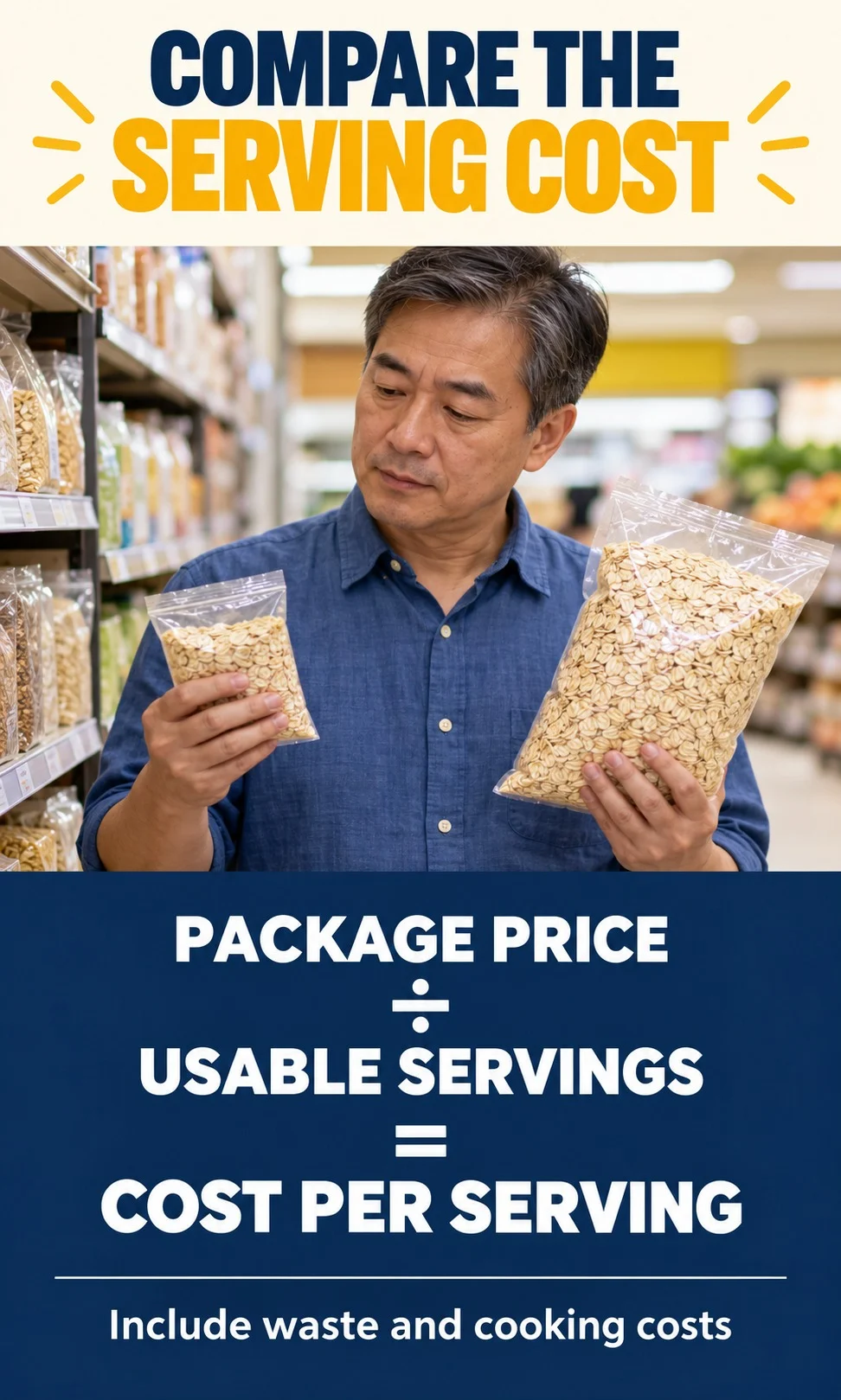
Use package price ÷ usable servings = ingredient cost per serving. A $3 oat package that supplies thirty 40 g portions works out to $0.10 per portion. If a $3.20 yogurt tub supplies four 170 g portions but you discard one, its cost per portion eaten becomes about $1.07, rather than $0.80.
Preparation changes value as well as convenience. Dried beans may have a lower ingredient cost, while canned beans can be the more workable choice when fuel, time or kitchen access is limited. Compare drained quantities for canned foods, cooked yields for dried grains and legumes, and the quantity you will finish before spoilage; do not compare dry and cooked weights as if they were interchangeable.
10 affordable foods worth keeping in rotation
Oats: one package, several breakfasts
Plain rolled oats give you a whole-grain base that works hot, chilled or baked. A 40 g dry portion is a useful costing unit, not a universal breakfast size, and you can increase it or add other foods when hungry. Cook oats with milk or a fortified alternative, add banana and peanut butter, or make savory oats with vegetables and an egg. Compare plain instant and rolled versions by unit price rather than assuming one is always cheaper; choose certified gluten-free oats if needed for celiac disease.
Eggs: convenient protein, without the fiber claim
Eggs provide protein and choline, but they do not provide dietary fiber. Keep the accompanying vegetables, beans or whole grains in the meal instead of expecting an egg to do every nutritional job. The American Heart Association’s discussion of dietary cholesterol describes room for up to one whole egg daily for healthy people within a healthy eating pattern. People with high LDL cholesterol or prescribed dietary limits should get individual advice; an egg with vegetables has a different overall meal profile from eggs served with processed meat and butter.
Beans and lentils: stretch a meal, not just its protein
Beans and lentils contribute fiber and plant protein while giving soups, rice bowls and potato fillings substance. Lentils are useful when you want a quicker dried-legume option, while canned beans reduce preparation and cleanup. Begin with smaller amounts if a sudden increase causes gas, and increase gradually according to tolerance. Cook dried legumes according to reliable instructions; for kidney beans, use properly prepared canned beans or follow official soaking and thorough-boiling advice, rather than placing raw dried beans straight into a slow cooker.
Frozen vegetables: use what you need
Plain frozen broccoli, spinach, carrots and mixed vegetables let you take out a portion and return the remainder to the freezer. That flexibility can matter more than a small difference in shelf price when fresh produce repeatedly goes unused. Stir vegetables into lentil soup, heat them beside a rice bowl, or add them to a potato filling. Follow the package’s cooking instructions, and compare plain products with versions containing sauce because the price, sodium and ingredients may differ.
Bananas and seasonal fruit: keep the choice flexible
Bananas work in oatmeal, yogurt and peanut-butter snacks, but they are only one possible low-cost fruit. Apples, oranges, pears or frozen fruit may be better value where you shop, especially when local supplies change. Buy the ripeness you will use and freeze peeled overripe bananas for later cooking or blending. Fruit contributes useful nutrients and fiber, but one banana does not cover all daily fiber or iron needs; keep different fruits and vegetables in the rotation.
Plain yogurt: compare the label and the portion
Plain yogurt can contribute protein and calcium, with quantities that vary by product. Greek-style yogurt often has more protein per comparable portion, but the larger price does not automatically make it better value for your meals. Compare equal weights, added sugars and the amount you will finish, then use yogurt with oats, fruit or as a savory sauce. Vitamin D depends on fortification, so check the label; if dairy causes symptoms, NIDDK’s lactose-intolerance guidance explains why some people tolerate yogurt and why substitutions need attention to calcium and vitamin D.
Brown rice and other whole grains: choose what gets cooked
Brown rice is a useful base, but oats, whole-wheat pasta, barley or other locally affordable grains can fill a similar kitchen role. Choose the grain your household enjoys and your equipment can cook consistently. For costing, measure the cooked batch and divide it into repeatable portions instead of assuming every brand produces the same yield. Pair the grain with vegetables and a protein food, and refrigerate cooked portions promptly rather than leaving a pot on the counter for later meals.
| Food and costing unit | Example calculation | Useful contribution | Everyday use |
|---|---|---|---|
| Oats, 40 g dry | $3.00 ÷ 30 = $0.10 | Whole grain; fiber | Breakfast or savory bowl |
| Egg, one | $3.60 ÷ 12 = $0.30 | Protein; choline | Vegetable scramble |
| Lentils, ½ cup cooked | $1.60 ÷ 8 = $0.20 | Fiber; plant protein | Soup or rice bowl |
| Vegetables, 1 cup prepared | $2.40 ÷ 4 = $0.60 | Varied vitamins; fiber | Lunch and dinner |
| Banana, one | $1.20 ÷ 6 = $0.20 | Fruit; potassium | Oats or snack |
| Yogurt, 170 g | $3.20 ÷ 4 = $0.80 | Protein; calcium | Breakfast or sauce |
| Rice, ½ cup cooked | $1.80 ÷ 18 = $0.10 | Whole-grain carbohydrate | Meal base |
| Sardines, one small can | $1.60 ÷ 1 = $1.60 | Protein; marine omega-3 fats | Occasional fish meal |
| Potato, one medium | $2.40 ÷ 8 = $0.30 | Carbohydrate; potassium | Baked or boiled |
| Peanut butter, 2 tbsp | $2.40 ÷ 15 = $0.16 | Unsaturated fat; protein | Oats or snack |
Canned fish: a rotation food, not a daily requirement
Sardines, salmon and tuna offer convenient fish options without buying a fresh fillet each time. Sardines and salmon supply marine omega-3 fats; some canned fish with edible bones also contribute calcium, so check the specific product. Rotate fish with beans, eggs or tofu instead of treating canned tuna as an everyday default. The FDA/EPA fish advice distinguishes canned light tuna from albacore and gives specific lower-mercury choices and frequencies for pregnancy, breastfeeding and children; fish is not a vegetarian substitute.
Potatoes and sweet potatoes: useful meal foundations
Potatoes and sweet potatoes give a meal an affordable starchy base and work with several toppings. Bake a potato and add beans and vegetables, simmer cubes in a lentil soup, or serve boiled pieces beside fish. Keeping the edible skin can add fiber, but preparation and toppings still shape the meal. Compare the varieties by usable weight and local price rather than assuming sweet potatoes are always healthier or cheaper; a potato does not replace every type of vegetable in the week.
Peanut butter, plus cabbage and carrots
Peanut butter adds flavor, unsaturated fat and some protein in a small amount. Compare the label and portion size, then stir it into oats, spread it on whole-grain bread or use it in a simple sauce. Cabbage and carrots are useful extra purchases for crunch, cooked vegetables and larger meals when they are good value locally. Avoid peanut butter if you have a peanut allergy, and compare a tolerated seed butter or other alternative without assuming the costs or nutritional profiles are identical.
Three realistic daily meal patterns
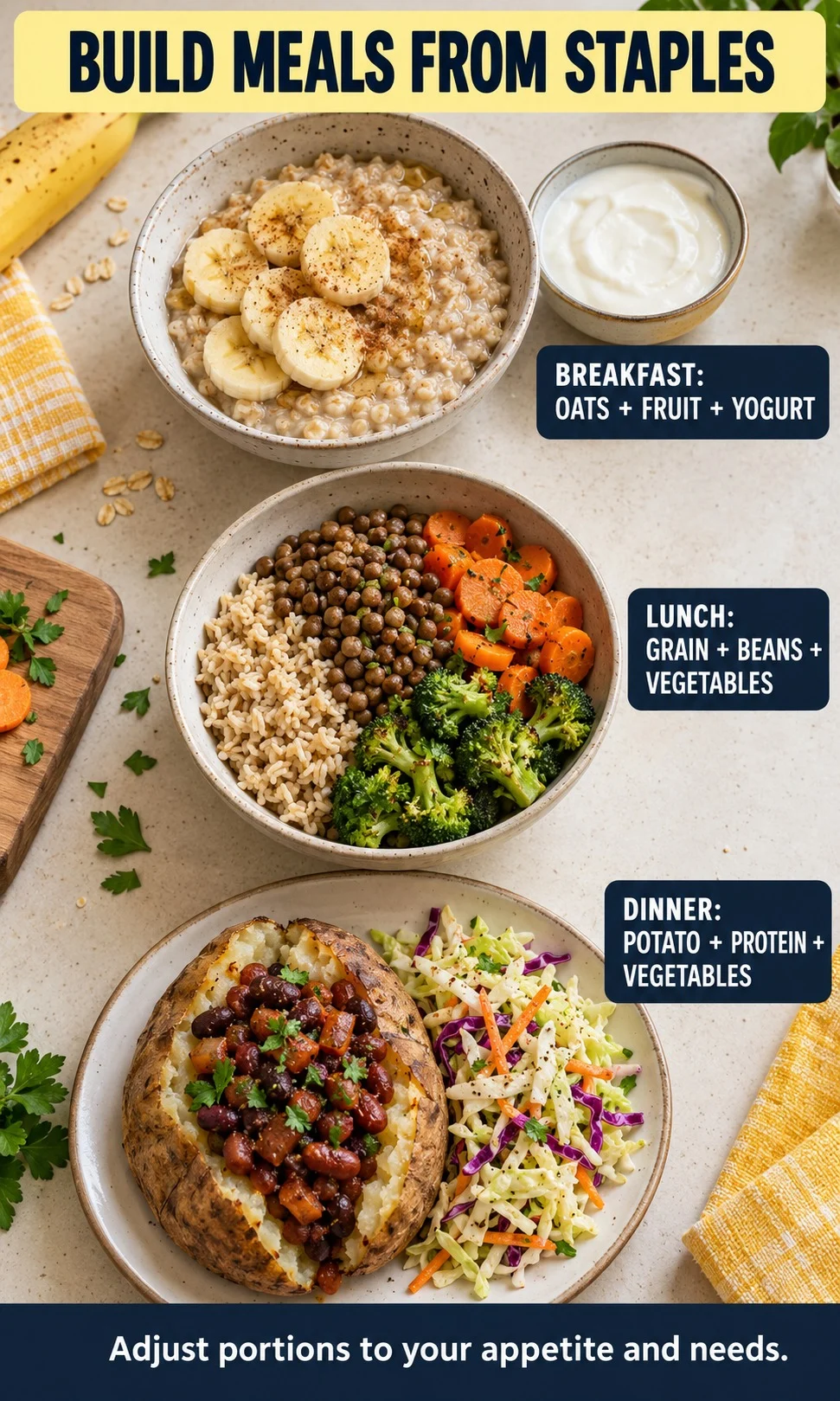
Assemble meals from a base, a protein food and produce, then add flavor and enough food to satisfy you. This is more flexible than assigning a special ingredient to every breakfast, lunch and dinner. For a broader explanation of meal composition, see MyPlate explained; use an individual nutrition plan when general plate guidance does not fit your needs.
The examples use the table’s costing units, not nutritional serving targets. The core day includes one oat portion, two bananas, one yogurt portion, three lentil portions, three vegetable portions, four rice portions, two potatoes and one peanut-butter portion, split across meals. A separate $0.50 illustrative allowance covers oil and seasonings; change it to reflect what you actually use, and add drinks, extra produce or other foods to the budget when needed.
Choose a pattern according to what you enjoy and can prepare, then adapt it rather than following it rigidly. The fish option is an occasional rotation day, and the extra-protein pattern is only an ingredient substitution, not a muscle-building prescription. If you need calorie or protein totals, use the actual product labels and measured portions; these examples have not been analyzed as complete diets.
- Core vegetarian day: oats, banana and yogurt for breakfast; rice, lentils and vegetables for lunch; bean- or lentil-topped potatoes with vegetables for dinner; banana and peanut butter as a snack.
- Fish rotation day: use the same structure, reduce lentils from three to one-and-a-half costing portions, add one egg and one can of sardines across lunch and dinner.
- Extra-protein vegetarian day: keep the core day and add one yogurt portion, two eggs and one lentil portion, distributed where they suit your appetite.
| Pattern | Food subtotal | Oil and seasoning allowance | Illustrative total |
|---|---|---|---|
| Core vegetarian | $4.86 | $0.50 | $5.36 |
| Fish rotation | $6.46 | $0.50 | $6.96 |
| Extra-protein vegetarian | $6.46 | $0.50 | $6.96 |
Daily ingredient cost and checkout spending are different numbers. Eating $0.10 of oats does not let you buy one-tenth of a dollar’s worth when the store sells a whole package. A first shopping trip can therefore cost more than the food consumed that week, with some ingredients left for later; subtract supplies already in your kitchen before shopping.
Low cost also does not prove nutritional completeness. Calcium, vitamin D, iodine, vitamin B12 and total energy deserve attention, especially when you restrict several food groups. The NIH vitamin B12 guide explains why plant-only diets need reliable fortified foods or supplements, and its vitamin D guide explains why fortification and food choices matter; do not assume the ten staples cover every requirement.
Check your own prices before shopping
Use Daily Staples Studio below to replace the example package prices and usable servings. Adjust the daily quantities, household size and number of days to see both ingredient use and an estimated whole-package purchase total. A zero daily quantity removes a food from the calculation, while the food-group reminders help you notice omissions without pretending to assess your entire diet.
Daily Staples Studio
Compare serving costs. Build a repeatable day. Take a clear shopping summary with you.
Example prices are illustrative, not live store prices. Compare package price divided by usable servings. Daily ingredient use and whole-package checkout spending are shown separately.
Your comparison
The shopping figure assumes an empty pantry and rounds up packages. The allowance is added as entered, rather than rounded into packages. Taxes, delivery and cooking energy are excluded unless included in your inputs. Remaining ingredients carry forward.
Before you shop
Replace example prices, check quantities and subtract supplies already at home.
General food-budget guidance, not a personalized nutrition plan. These calculations do not assess calories, protein targets, allergies or nutritional adequacy. Follow individual advice for medical diets, pregnancy and children.
Your entries stay in this page’s memory and are cleared on reload. No account, purchase, cookies or automatic tracking is required.
A seven-day rotation without seven separate shopping lists
Repeat a few ingredients while changing the preparation, produce and seasonings. Cook one manageable batch of lentils and a grain, freeze the portions for later in the week, and prepare a second small batch when useful. The rotation below shows combinations rather than another fully costed menu; include any additional bread, tomatoes, tofu or spices in your own calculations.
| Day | Main combination | Change that keeps it interesting |
|---|---|---|
| Monday | Lentils, rice and broccoli | Lemon and herbs |
| Tuesday | Egg, potato and cabbage | Warm skillet meal |
| Wednesday | Lentil and carrot soup | Different texture; add bread if wanted |
| Thursday | Sardines, rice and vegetables | Fish rotation; swap to beans or tofu |
| Friday | Peanut-sauced vegetables and grain | Use a tolerated alternative if allergic |
| Saturday | Baked potato with beans | Yogurt sauce and crunchy cabbage |
| Sunday | Freshly prepared lentil bowl | Use safely stored ingredients, not old leftovers |
A repeatable breakfast can reduce decisions without making the rest of the day identical. Change banana to an affordable seasonal fruit, or make the oats savory on a day you want something different. If cooking every evening is unrealistic, keep canned beans and frozen vegetables available so the practical fallback still fits the budget.
Batch cooking only saves money when storage is safe
Divide cooked food into shallow containers and refrigerate promptly rather than waiting for a large pot to cool on the counter. USDA food-safety guidance recommends refrigeration within two hours, shortened to one hour when the surrounding temperature exceeds 90°F or about 32°C. Keep the refrigerator at 40°F or about 4°C or below, and label portions so you know when they were prepared.
Use refrigerated leftovers within three to four days or freeze portions earlier for later meals. A seven-day menu does not mean keeping one cooked batch refrigerated for seven days, and rice needs the same prompt handling as the rest of the meal. Reheat leftovers to 165°F or about 74°C, and do not use smell or appearance alone to judge safety; refer to USDA’s leftovers guidance when deciding how to store and reheat food.

Shop for usable food, not impressive discounts
Check cupboards and the freezer before making the shopping list, then compare unit prices between packages you could realistically finish. A bulk bag is useful only when the lower unit cost survives storage, spoilage and the cash you need upfront. Buy a smaller perishable package when that reduces waste, and choose a convenient product when it helps you cook instead of buying an unplanned takeaway.
Do not assume a product is poor value simply because it is canned or frozen. Compare ingredients, sodium, added sugars and the quantity you need, then choose the form that works in your kitchen. For the deeper weekly budgeting workflow, use healthy meal plans on a budget; this daily-staples guide is best used to choose repeatable ingredients and check their serving costs.
- Write down what must be used first, including open yogurt and cooked leftovers.
- Compare package price, usable yield and storage needs together.
- Include oil, sauces, drinks and additional foods in the spending estimate.
- Freeze suitable portions early and keep a visible use-first shelf.
- Keep an easy shelf-stable or frozen meal option for busy days.
Frequently asked questions
What are the cheapest healthy foods to eat every day?
Oats, dried or canned legumes, frozen vegetables and locally affordable fruit are useful starting points, alongside grains and suitable protein foods. The cheapest choice depends on local prices, usable yield, storage and preparation costs. Compare what you will actually eat rather than treating one published food list as the cheapest option everywhere.
Is it healthy to eat the same foods every day?
Repeating a meal or staple can fit a varied diet. Keep different vegetables, fruits and protein sources across the week, and check that restrictive habits are not leaving nutritional gaps. Repetition becomes less useful when it crowds out food groups, causes symptoms or makes meals so monotonous that you abandon them.
Can these foods meet all my nutritional needs?
They can contribute to a nutritious pattern, but the list does not guarantee adequacy. Portions, product fortification, other foods and individual needs determine whether your diet supplies enough energy and nutrients. Seek tailored advice when pregnancy, childhood, a medical condition or a restrictive diet makes a general example unsuitable.
Do I need organic foods to eat well on a budget?
This shopping method does not require organic versions. Choose foods you can afford, handle safely and use consistently, whether they are fresh, frozen, canned or dried. Paying a premium should not force you to buy too little food or eliminate useful variety.
Can I get enough protein without expensive meat?
Beans, lentils, eggs, yogurt, tofu and suitable nut or seed products can contribute protein without relying on premium cuts of meat. Compare actual label values and portions, because equal prices or equal spoonfuls do not imply equal protein. Your total requirement depends on your circumstances, and kidney disease or other medical conditions may change the advice.
Which cheap foods are best for weight loss, muscle or energy?
No single staple guarantees weight loss, muscle gain or better energy. Choose meals with enough food, suitable protein and varied produce, then adjust the pattern to your goal and circumstances. Persistent fatigue or unintended weight changes deserve assessment rather than a promise that one food will fix them.
Make the next shop easier
Pick one breakfast you would happily repeat and two main meals that share ingredients. Check what you already have, enter local prices, and buy the amount you can use safely. After a week, keep the foods that worked and change the ones that went uneaten; that small adjustment is often more useful than adding another supposedly essential superfood.