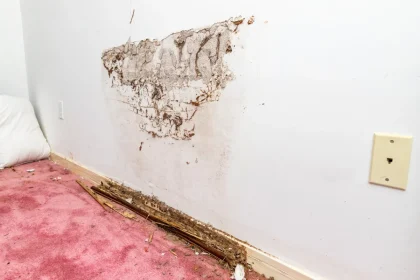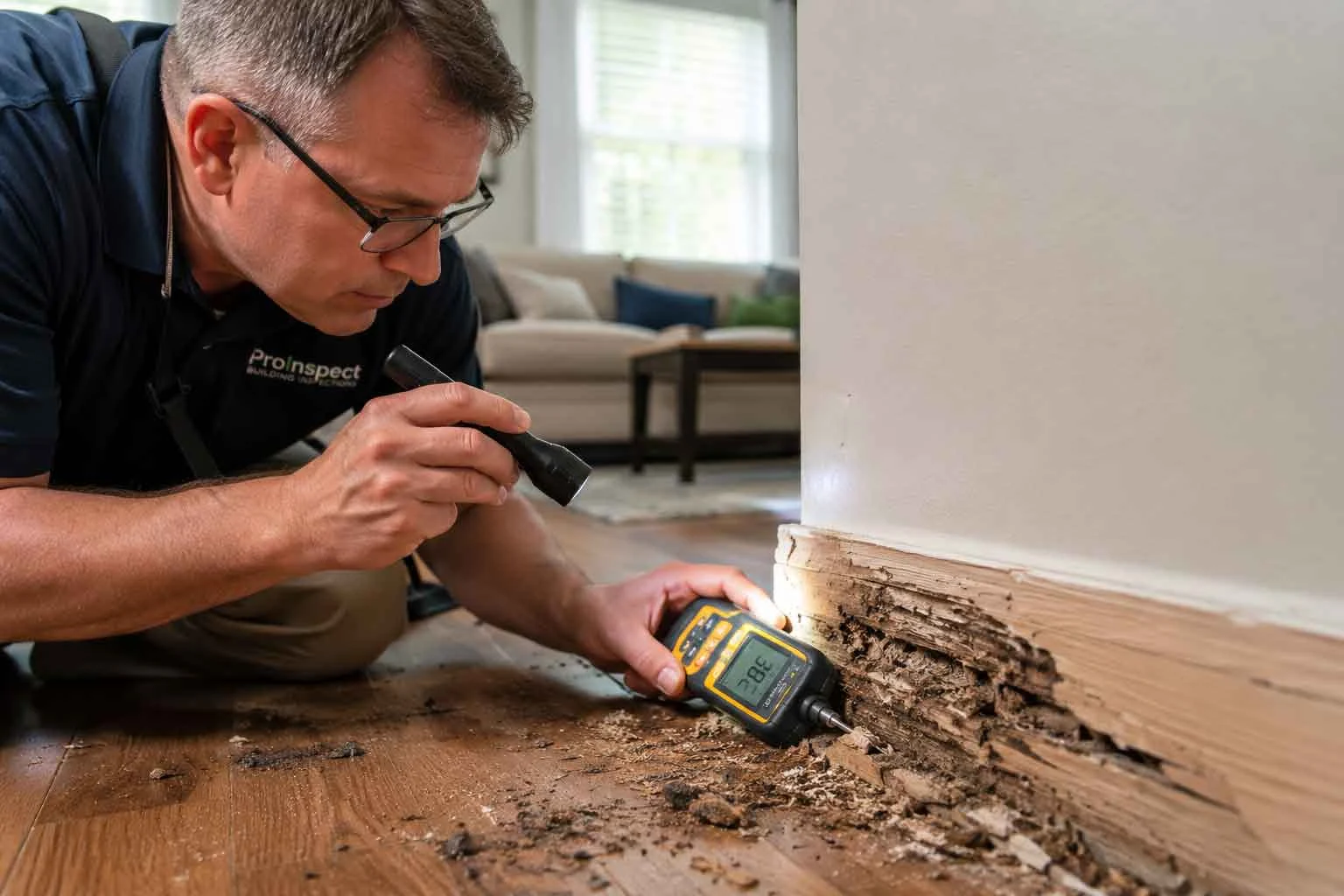

For many homeowners, termite house damage begins long before they realize there is a problem. A wall may look perfectly normal, a timber floor may appear solid, and a cabinet may seem structurally sound. Yet behind the paint, beneath the flooring, or inside a timber frame, termites can quietly consume wood for months or even years before obvious symptoms appear. This hidden nature is one of the reasons termite infestations remain one of the most expensive and frustrating property issues worldwide.
Unlike storm damage, water leaks, or accidental impacts that produce immediate visible evidence, termite activity often develops out of sight. Homeowners typically discover the problem only after noticing subtle warning signs such as bubbling paint, hollow-sounding timber, weakened skirting boards, doors that suddenly become difficult to close, or unusual cracking near timber structures. By the time these symptoms become noticeable, the infestation may already have affected multiple areas of the property.
Termites are not attracted to houses because they prefer homes over natural environments. They are attracted to conditions that provide access to cellulose-based materials, stable moisture levels, shelter from predators, and protected routes between their colony and food sources. Homes containing untreated timber, hidden moisture problems, leaking plumbing, poor drainage, landscaping that traps water near foundations, or direct soil-to-wood contact often provide ideal conditions for termite activity.
One of the most common misconceptions among homeowners is that termite damage always looks dramatic. Popular images often show severely damaged beams, collapsed flooring, or timber that crumbles when touched. While these situations certainly occur, most termite infestations begin with far less obvious symptoms. Small mud tubes, faint surface blistering, isolated soft spots, and subtle structural changes frequently appear long before major deterioration becomes visible. Recognizing these early signs can make the difference between a relatively straightforward treatment process and a major repair project involving flooring replacement, wall reconstruction, cabinetry repairs, or structural timber restoration.
Another challenge is that termite damage can closely resemble other building problems. Moisture damage, wood rot, mold growth, poor-quality finishes, and natural material aging can produce symptoms that look surprisingly similar to termite activity. A homeowner may assume that bubbling paint is simply caused by humidity, that a soft floor is related to water exposure, or that a cracked door frame is the result of normal settlement. While these explanations may sometimes be correct, they can also allow termite activity to continue unnoticed behind finished surfaces.
This overlap between termite damage and other construction defects is why professional inspections often involve more than simply searching for insects. Experienced inspectors evaluate moisture conditions, construction details, timber exposure, drainage systems, previous repair work, and environmental factors that may contribute to hidden deterioration. The goal is not only to determine whether termites are present but also to understand why they gained access to the structure and how extensive the damage may be.
Homeowners are often surprised to learn that termites rarely work alone. Properties with termite infestations frequently have underlying moisture issues that make building materials more vulnerable. A leaking pipe behind a cabinet, inadequate waterproofing around a bathroom, poor ventilation in a roof space, or drainage problems around foundations can create ideal conditions for both termite activity and material deterioration. In these situations, eliminating the termites without addressing the moisture source may only solve part of the problem.
The financial impact of termite damage can vary dramatically depending on how early the issue is discovered. A localized infestation affecting a small section of skirting board may require relatively minor treatment and replacement work. In contrast, damage involving structural framing, flooring systems, roof timbers, or extensive built-in cabinetry can lead to significant repair costs. The longer termites remain undetected, the greater the likelihood that multiple building systems will be affected.
Modern construction methods have also introduced new challenges. Many contemporary homes contain engineered timber products, composite materials, laminated flooring systems, and concealed wall cavities that can hide damage from view. While these materials often provide excellent performance, they can make early termite detection more difficult when infestations develop behind finished surfaces.
Preventing termite house damage requires a combination of awareness, maintenance, and proactive inspection. Moisture control, proper drainage, routine building maintenance, regular inspections, and early response to suspicious symptoms remain the most effective strategies for reducing long-term risk. Waiting until visible damage becomes severe almost always results in more extensive repairs and higher costs.
In this guide, we will examine how termite house damage develops, the warning signs homeowners should watch for, how termite damage differs from water and mold-related deterioration, what professional inspectors look for during assessments, which repair strategies are most effective, and the practical steps property owners can take to reduce future risk. Whether you are concerned about a potential infestation or simply want to protect your investment, understanding how termite damage occurs is the first step toward making informed decisions about your home.
What Is Termite House Damage?
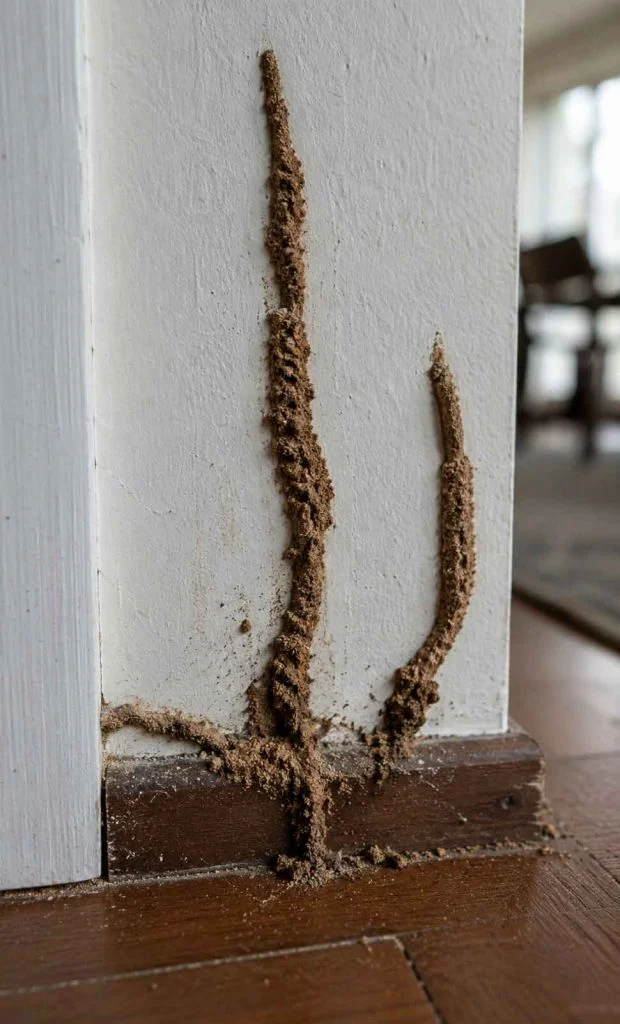
Termite house damage refers to the deterioration of wood and other cellulose-based building materials caused by termite feeding activity. Although termites play an important ecological role in natural environments by helping break down dead plant material, their behavior becomes highly destructive when they gain access to residential structures.
Most termite species consume cellulose, which is found in timber, paper products, cardboard, some insulation materials, and various wood-based construction products. When termites enter a home, they do not distinguish between a structural beam, a hardwood floor, a cabinet panel, or a timber door frame. From their perspective, each represents a potential food source.
One of the reasons termite damage can become extensive before discovery is the way termites consume wood. Rather than attacking exposed surfaces first, many species feed from the inside out. This means the outer layer of a timber component may remain relatively intact while internal galleries expand beneath the surface. To homeowners, the material can appear normal until pressure is applied, repairs begin, or structural weakness becomes obvious.
The pattern of damage often varies depending on the termite species involved. Subterranean termites, which are among the most destructive structural pests, typically build protective mud tubes that allow them to travel between soil and food sources while maintaining necessary moisture levels. Drywood termites live directly inside timber and can remain hidden for long periods without visible mud tubes. Dampwood termites generally prefer wood with elevated moisture content and are commonly associated with leaks, drainage failures, or persistently damp environments.
Inside a home, termite damage can affect nearly every timber-based component. Commonly impacted areas include:
- Timber skirting boards
- Door frames
- Window frames
- Hardwood flooring
- Engineered timber flooring
- Roof trusses
- Ceiling framing
- Built-in cabinetry
- Wall framing
- Stair structures
- Timber decking
- Outdoor structures
In many cases, the first visible symptom does not appear directly where termites entered the structure. A homeowner may discover damage in a bedroom while the original moisture source exists in an adjacent bathroom or exterior wall. This is why professional inspections often involve evaluating the entire building rather than focusing solely on the visibly damaged area.
Another important characteristic of termite house damage is that it frequently develops alongside other building defects. Moisture intrusion, plumbing leaks, inadequate ventilation, and poor drainage can all increase the likelihood of termite activity by creating favorable environmental conditions. As a result, successful repairs often require addressing multiple contributing factors rather than simply replacing damaged timber.
Understanding exactly what termite house damage is—and how it differs from ordinary aging, moisture deterioration, or cosmetic wear—is essential for making accurate repair decisions. The sooner homeowners recognize that a minor surface defect may indicate a deeper structural issue, the greater the opportunity to limit damage and reduce repair costs.
Why Termites Attack Homes
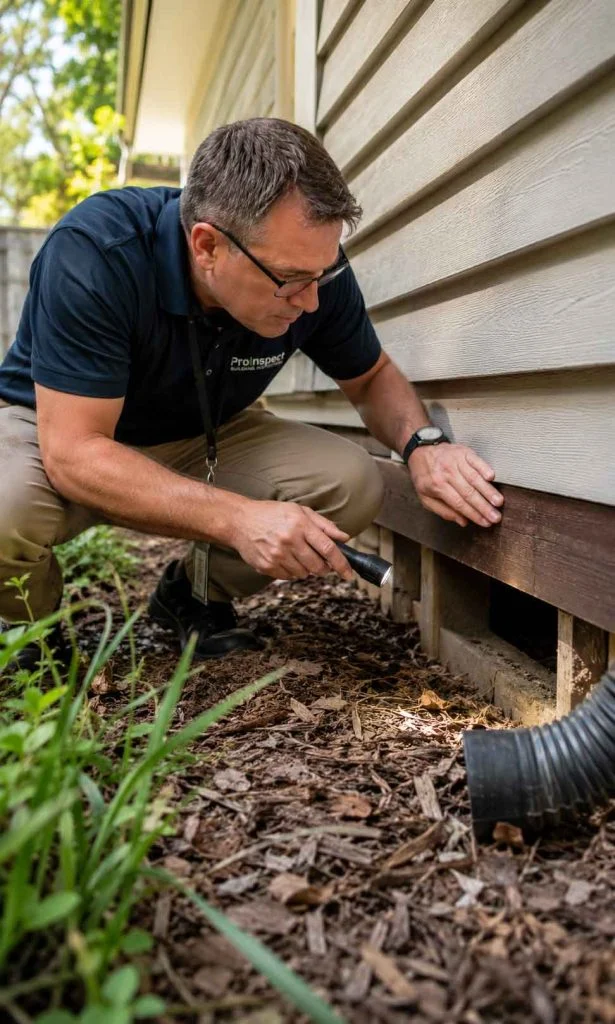
Many homeowners assume termites randomly select houses to infest. In reality, termites are highly efficient survivalists that constantly search for conditions supporting food, moisture, shelter, and colony expansion. A house does not become vulnerable because it is old, expensive, poorly maintained, or located in a particular neighborhood. Instead, termite activity usually develops when a property unintentionally creates an environment that supports long-term termite survival.
Understanding why termites attack homes is important because prevention often begins years before an infestation occurs. Properties that eliminate common risk factors are significantly less attractive to termite colonies than homes with persistent moisture, exposed timber, and easy access routes.
Moisture Is One of the Biggest Risk Factors
One of the strongest predictors of termite activity is moisture. Most termite species require stable humidity levels to survive, which is why they are frequently associated with damp areas around homes. Water does not attract termites directly in the same way food attracts insects, but moisture creates ideal living conditions that allow colonies to expand safely.
Common moisture-related termite risks include:
- Leaking plumbing pipes
- Roof leaks
- Poorly sealed bathrooms
- Air-conditioning condensation
- Damp crawl spaces
- Blocked gutters
- Poor site drainage
- Standing water near foundations
- Exterior wall moisture intrusion
In many inspections, termite activity is discovered close to an existing moisture problem. A homeowner may initially investigate a water stain, soft skirting board, or swollen cabinet only to discover termite galleries hidden behind the affected area.
ExpertsGuys Termite Damage Planner™
Termite Damage Planner
Map visible damage, save project records, compare contractor quotes, plan repair budget, track repair progress, and build a prevention checklist before spending on repairs.
';return;} egTdpLogs.push({room:room,date:date,notes:notes,photo:photo}); var html=''; egTdpLogs.forEach(function(item,index){ html+='
Date: '+(item.date||'Not entered')+'
Notes: '+(item.notes||'No notes')+'
Photo Reference: '+(item.photo||'No reference')+'
'; }); logBox.innerHTML=html; egTdpTrack('eg_termite_damage_log_added', { log_count: egTdpLogs.length }); } function egTdpSaveProject(){ var name=document.getElementById('eg_project_name').value.trim()||'Untitled Termite Project'; var address=document.getElementById('eg_project_address').value.trim()||'No property reference'; var projects=JSON.parse(localStorage.getItem('eg_tdp_projects')||'[]'); projects.push({name:name,address:address,date:new Date().toLocaleDateString()}); localStorage.setItem('eg_tdp_projects',JSON.stringify(projects)); egTdpLoadProjects(); egTdpTrack('eg_termite_project_saved'); } function egTdpLoadProjects(){ var box=document.getElementById('eg_saved_projects'); var projects=JSON.parse(localStorage.getItem('eg_tdp_projects')||'[]'); if(!projects.length){box.innerHTML='
';return;} var html=''; projects.forEach(function(p,i){ html+='
'+p.address+'
Saved: '+p.date+'
'; }); box.innerHTML=html; } function egTdpDetectLocation(){ var note=document.getElementById('eg_tdp_location_note'); if(!navigator.geolocation){note.innerHTML=' Location detection is not supported. Please type your city manually.';return;} note.innerHTML=' Detecting nearby location...'; navigator.geolocation.getCurrentPosition(function(pos){ document.getElementById('eg_tdp_location').value=pos.coords.latitude.toFixed(4)+','+pos.coords.longitude.toFixed(4); note.innerHTML=' Nearby location added.'; },function(){note.innerHTML=' Location permission was not allowed. Please type your city manually.';}); } function egTdpPrintPlan() { egTdpTrack('eg_termite_print_clicked'); window.print(); } function egTdpAnalyze(){ var result=document.getElementById('egTdpResult'); egTdpTrack('eg_termite_analyze_clicked', { time_spent_seconds: Math.round((Date.now() - egTdpStartTime) / 1000) }); result.innerHTML=''; result.style.display='flex'; function checkedScore(selector){var score=0;document.querySelectorAll('#eg-tdp-tool '+selector+':checked').forEach(function(i){score+=parseInt(i.value||0);});return score;} function checkedCount(selector){return document.querySelectorAll('#eg-tdp-tool '+selector+':checked').length;} function getNum(id){return parseFloat(document.getElementById(id).value||0);} function getWarranty(id){return parseInt(document.getElementById(id).value||1);} function level(score){if(score>=75)return'High Priority';if(score>=50)return'Moderate Priority';if(score>=25)return'Watch Closely';return'Low Current Concern';} function makeCard(title,content,extraClass){ var card=document.createElement('div'); card.className='eg-tdp-card'+(extraClass?' '+extraClass:''); var h3=document.createElement('h3'); h3.textContent=title; card.appendChild(h3); var body=document.createElement('div'); body.className='eg-tdp-card-body'; body.innerHTML=content; card.appendChild(body); result.appendChild(card); } var property=parseInt(document.getElementById('eg_tdp_property').value||0); var age=parseInt(document.getElementById('eg_tdp_age').value||0); var roomScore=checkedScore('.eg_tdp_room'); var symptomScore=checkedScore('.eg_tdp_symptom'); var repairExposureScore=checkedScore('.eg_tdp_cost'); var moistureRaw=checkedScore('.eg_tdp_moisture'); var preventionRaw=checkedScore('.eg_tdp_prevention'); var roomCount=checkedCount('.eg_tdp_room'); var symptomCount=checkedCount('.eg_tdp_symptom'); var propertyDamageScore=Math.min(100,property+age+roomScore+symptomScore); var structuralRiskScore=Math.min(100,Math.round((repairExposureScore*2)+(roomScore*0.8))); var moistureRiskScore=Math.min(100,Math.round(moistureRaw*1.8)); var repairPriorityScore=Math.min(100,Math.round((propertyDamageScore+structuralRiskScore+moistureRiskScore)/3)); var contractorReadinessScore=Math.max(10,100-Math.round(repairPriorityScore/2)); var preventionReadinessScore=Math.min(100,preventionRaw*2); var budget=getNum('eg_budget_total'); if (budget > 0) { egTdpTrack('eg_termite_budget_planner_used', { budget_value: budget }); } var inspectionBudget=budget?Math.round(budget*0.10):0; var treatmentBudget=budget?Math.round(budget*0.20):0; var structuralBudget=budget?Math.round(budget*0.45):0; var moistureBudget=budget?Math.round(budget*0.15):0; var contingencyBudget=budget?Math.round(budget*0.10):0; var contractorA=getNum('eg_a_inspection')+getNum('eg_a_treatment')+getNum('eg_a_repair'); var contractorB=getNum('eg_b_inspection')+getNum('eg_b_treatment')+getNum('eg_b_repair'); var contractorC=getNum('eg_c_inspection')+getNum('eg_c_treatment')+getNum('eg_c_repair'); if (contractorA > 0 || contractorB > 0 || contractorC > 0) { egTdpTrack('eg_termite_contractor_compare_used'); } var warrantyA=getWarranty('eg_a_warranty'), warrantyB=getWarranty('eg_b_warranty'), warrantyC=getWarranty('eg_c_warranty'); function contractorRow(name,total,warranty){ var note='Not entered yet'; if(total>0&&warranty>=4)note='Strong value if scope is clear'; if(total>0&&warranty===3)note='Compare scope carefully'; if(total>0&&warranty<=2)note='Check warranty carefully'; return'
'; } var contractorTable='
| Contractor | Total Cost | Warranty | Value Note |
|---|
'; var logSummary=egTdpLogs.length?egTdpLogs.map(function(item,index){return'
';}).join(''):'
'; var location=document.getElementById('eg_tdp_location').value.trim(); var localLinks='
Enter your city or use nearby location to create local search links.
'; if(location){ localLinks='
- Search termite inspector near '+location+'
- Search termite treatment near '+location+'
- Search wood repair contractor near '+location+'
- Search water damage repair near '+location+'
'; } var before=document.getElementById('eg_before_notes').value.trim()||'No before-repair notes entered.'; var during=document.getElementById('eg_during_notes').value.trim()||'No during-repair notes entered.'; var after=document.getElementById('eg_after_notes').value.trim()||'No after-repair notes entered.'; makeCard('Property Damage Score','
'+level(propertyDamageScore)+' based on property profile, selected rooms and visible symptoms.
'); makeCard('Structural Risk Score','
This score reflects possible exposure involving wall framing, flooring systems, roof timber, subfloor or multiple affected areas.
'); makeCard('Moisture Risk Score','
Moisture can increase termite risk and also create mold or water-damage symptoms that look similar to termite damage.
'); makeCard('Repair Priority Score','
'+level(repairPriorityScore)+'. Use this score to decide whether to monitor, inspect or act quickly.
'); makeCard('Contractor Readiness Score','
A lower score means you should gather more photos, notes and inspection details before approving repair work.
'); makeCard('Prevention Readiness Score','
This score reflects how many termite prevention habits you already follow.
'); makeCard('Damage Discovery Summary','
You selected '+roomCount+' affected areas and '+symptomCount+' visible symptoms.
'); makeCard('Damage Documentation Log','
- '+logSummary+'
'); makeCard('Repair Budget Allocation',budget?'
- Inspection: '+inspectionBudget+'
- Treatment: '+treatmentBudget+'
- Structural Repair: '+structuralBudget+'
- Moisture Repair: '+moistureBudget+'
- Contingency: '+contingencyBudget+'
':'
No budget entered yet. Add a budget to generate an allocation plan.
'); makeCard('Repair Progress Tracker','
Before: '+before+'
During: '+during+'
After: '+after+'
'); makeCard('Homeowner Repair Checklist','
- Before inspection: photograph every symptom.
- Before contractor visit: prepare room notes and photo references.
- Before treatment: avoid removing mud tubes or damaged materials.
- Before repair: confirm termite activity and moisture source.
- After repair: document replaced materials and warranty details.
- Annual maintenance: review drainage, timber contact and moisture-prone rooms.
'); makeCard('Contractor Quote Comparison','
Compare inspection cost, treatment cost, repair cost and warranty strength. The cheapest quote is not always safest if the scope is unclear.
'+contractorTable); makeCard('Community Benchmark','
- Homes with soft flooring often require subfloor inspection.
- Homes with cabinet damage often have nearby moisture sources.
- Homes with mud tubes usually need professional termite assessment.
- Homes with roof or ceiling symptoms often need deeper structural review.
'); makeCard('Next 30-Day Repair Roadmap','
- Photograph each affected area.
- Check moisture sources near damage.
- List affected materials: wall, floor, cabinet, roof, trim.
- Book termite inspection if symptoms remain or spread.
- Collect at least two quotes before replacing finishes.
'); makeCard('12-Month Protection Plan','
- Monthly: Check cabinets, skirting boards and flooring.
- Quarterly: Review drainage, mulch and exterior wall clearance.
- Every 6 months: Inspect roof leaks, bathroom moisture and plumbing areas.
- Yearly: Arrange professional termite inspection in high-risk regions.
'); makeCard('Find Professional Help Near You',localLinks); makeCard('Related ExpertsGuys Guides', '
- ' +
'
- Early Signs of Termite Damage in Walls ' + '
- Hidden Water Damage Inside Walls ' + '
- Mold Damage vs Termite Damage ' + '
- Early Signs of Mold Damage ' + '
- Why Wall Paint Becomes Powdery Over Time ' + '
' ); result.scrollIntoView({behavior:'smooth',block:'start'}); }