
Introduction
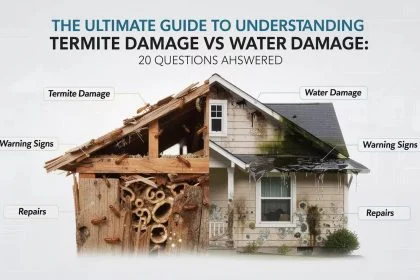
Home damage is not always obvious, and some of the most costly mistakes happen when mold damage is confused with termite damage – or vice versa. Both can weaken structures, affect indoor air quality, and reduce property value, yet their causes, warning signs, and solutions are entirely different.
Understanding the distinction between mold damage and termite damage allows homeowners to act early, apply the correct treatment, and avoid repeated or escalating repairs.
What Is Mold Damage?
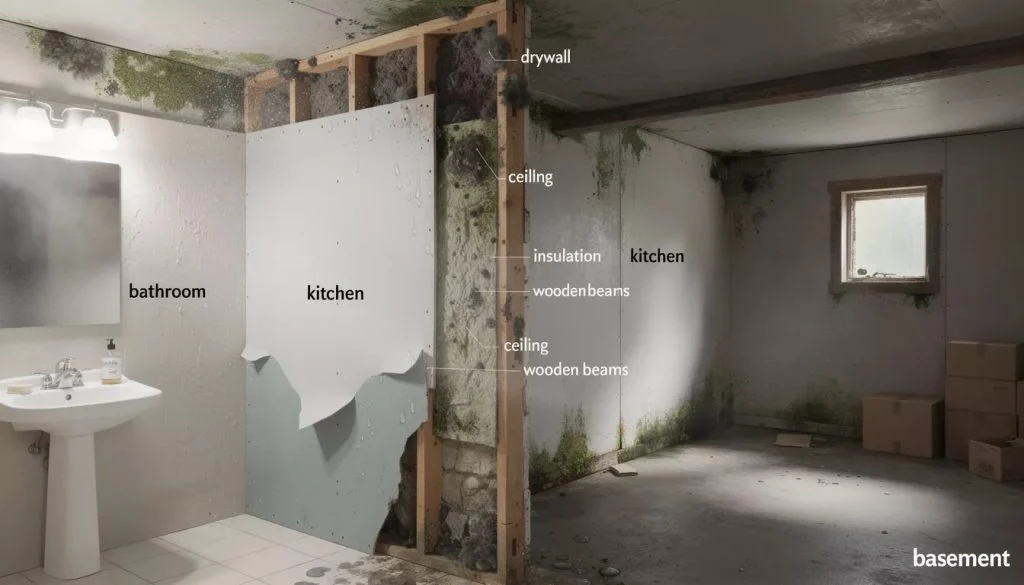
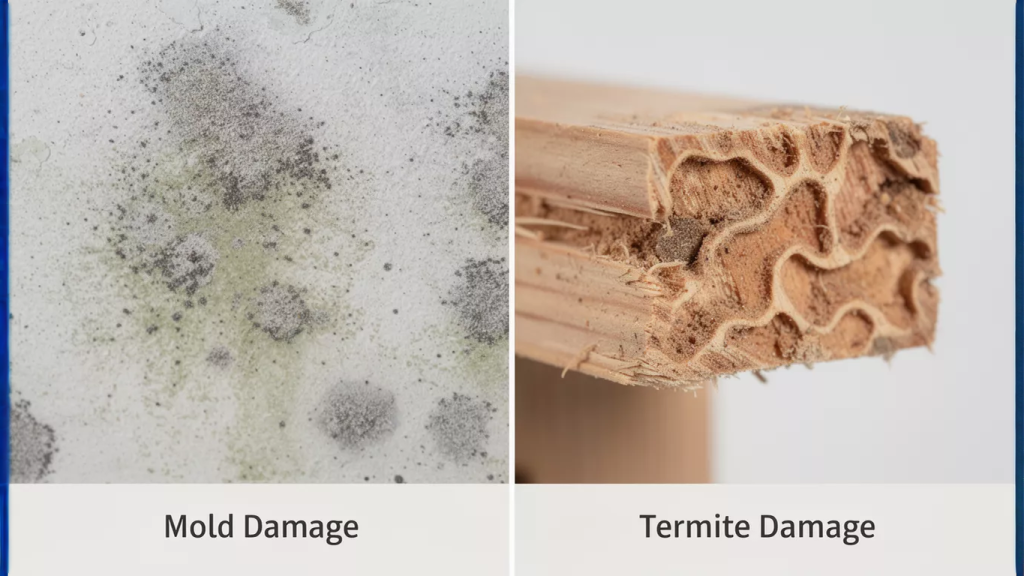
Mold damage occurs when excess moisture creates an environment where mold spores can grow and spread. Mold feeds on organic materials and often develops on or near damp surfaces inside a home.
Key Characteristics of Mold Damage
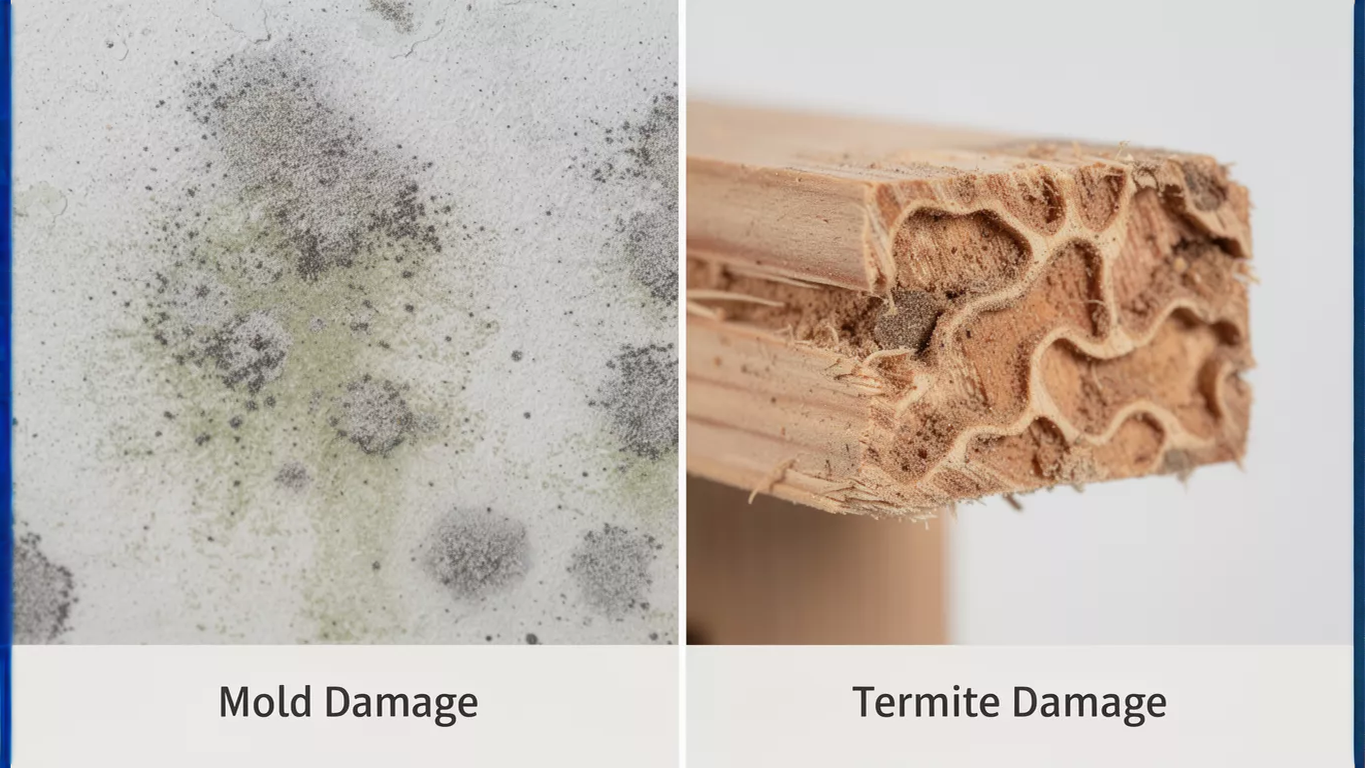
- Discoloration (black, green, white, or gray patches)
- Musty or damp odors
- Surface deterioration of drywall, wood, or insulation
- Potential respiratory and allergy risks
Mold damage usually spreads outward from visible moisture sources such as leaks, condensation, or poor ventilation.
What Is Termite Damage?
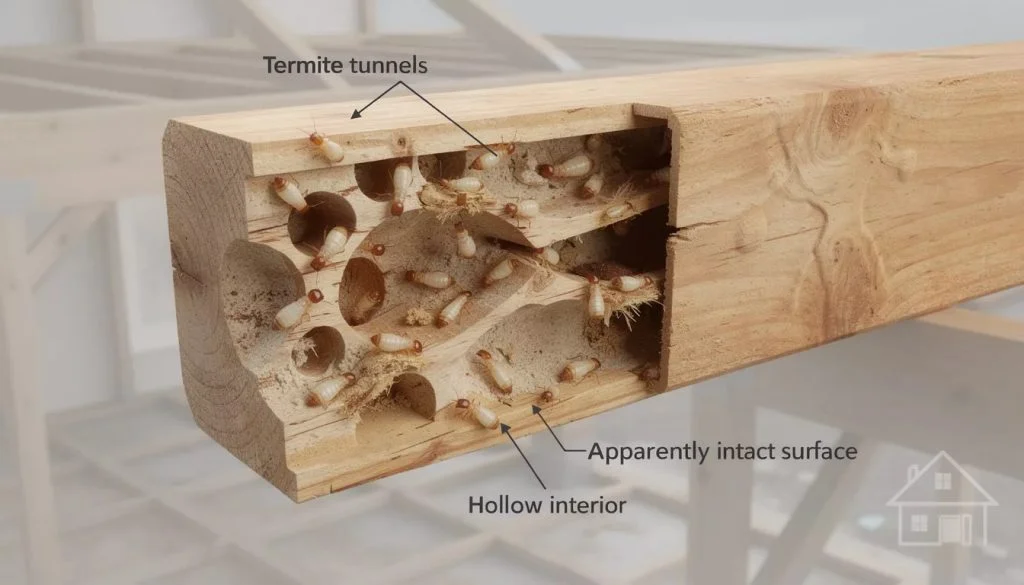
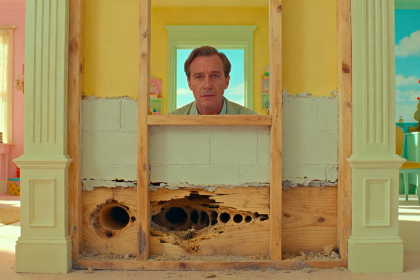
Termite damage is caused by insects that consume wood and cellulose-based materials from the inside out. Because the exterior surface may remain intact, termite damage often goes unnoticed until structural integrity is compromised.
Key Characteristics of Termite Damage
- Hollow or brittle-sounding wood
- Internal tunnels within beams or frames
- Mud tubes near foundations or walls
- Gradual but continuous structural weakening
Unlike mold, termite damage progresses silently and does not require visible moisture once colonies are established.
Mold Damage vs Termite Damage: Side-by-Side Comparison
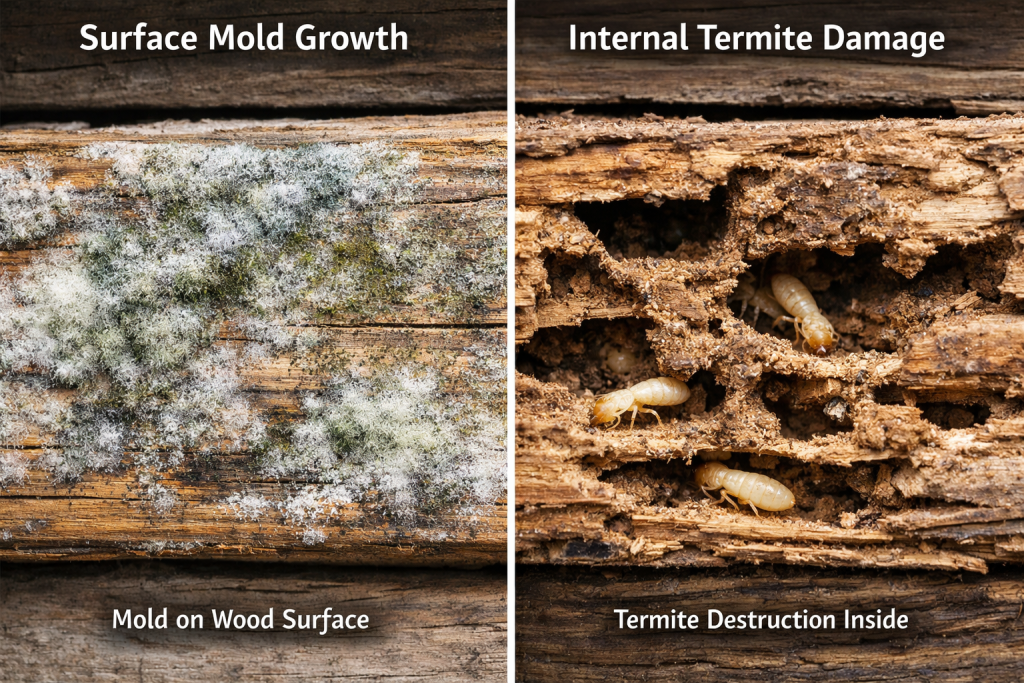
| Aspect | Mold Damage | Termite Damage |
|---|---|---|
| Primary Cause | Excess moisture | Insect infestation |
| Visibility | Often visible on surfaces | Mostly hidden internally |
| Spread Pattern | Expands outward | Progresses inward |
| Health Impact | High (air quality issues) | Low direct, high structural |
| Structural Risk | Moderate to high | High if untreated |
| Early Indicators | Odor, discoloration | Hollow wood, mud tubes |
| Treatment Focus | Moisture control + remediation | Pest elimination + repairs |
How to Tell Which Damage You’re Dealing With
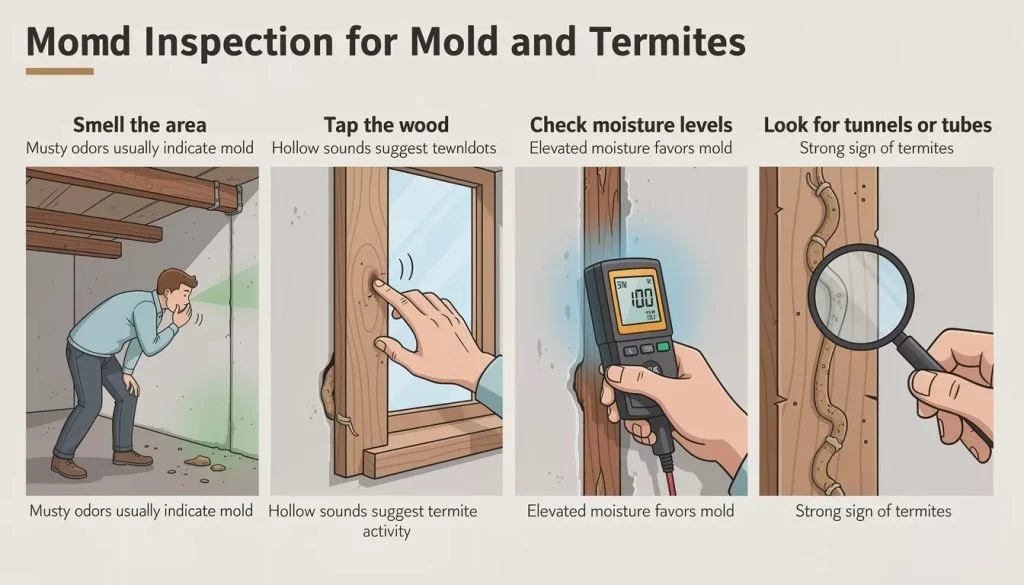
Correct identification determines whether repairs succeed or fail.
Practical Identification Tips
- Smell the area: musty odors point to mold
- Tap the wood: hollow sounds suggest termites
- Check moisture levels: elevated moisture favors mold
- Look for biological signs: spores vs insect tunnels
In some cases, both mold and termites can exist simultaneously, especially in moisture-prone areas.
If you’re experiencing discomfort indoors, our health section explains common indoor triggers and practical home hygiene steps.
Why Confusing Mold and Termite Damage Is Costly
Treating mold damage without addressing termites allows structural destruction to continue unseen. Treating termite damage without eliminating moisture invites mold regrowth and air quality issues.
Proper diagnosis ensures:
- Correct remediation strategy
- Long-term prevention
- Lower repair costs
- Healthier living conditions
Accurate identification is critical, especially when homeowners are comparing mold damage vs termite damage, which often require completely different solutions.
Conclusion
Mold damage and termite damage may share similar symptoms, but their origins and consequences are fundamentally different. Understanding how to identify each type empowers homeowners to act decisively and protect both their health and property.
Early assessment, professional inspection, and targeted treatment remain the most effective defenses against long-term home damage.
Long-term prevention often comes down to routine maintenance, ventilation habits, and humidity control.
If you’re building a prevention checklist, explore our home protection guides for structural risks and seasonal maintenance.
Compare Local Home Specialists Near You
Tell us what kind of help you need, then compare nearby businesses by location, Google rating, review volume and contact options.
HomeFix Local Match
Turn a home problem into a practical local hiring decision. Check the clues, see the specialist types that fit, open focused surrounding-location searches, then compare the strongest three before you call.
 YOUR PROBLEM
YOUR AREA
COMPARE 3
✓ Ready to compare
YOUR PROBLEM
YOUR AREA
COMPARE 3
✓ Ready to compare
What is happening?
Choose the closest problem type, then check every clue that applies. Your selections change the specialist order.
Where should the search focus?
Use Google’s “near me” context or enter the area you actually want a specialist to serve.
Simple local search: open nearby Google results, choose the businesses that look suitable, then compare your best three here before you call.
Problem snapshot
Who should you call first?
These are the specialist types most likely to fit the clues you selected.
Search around your location
Compare your top three
Use the same factors for each option so a high star rating does not hide a weak scope, poor diagnosis, missing credentials or unclear aftercare.
Comparison result
Your result combines the Google signals you entered with the practical hiring checks you completed.
Questions to ask every finalist
Use the same questions with each shortlisted business so the comparison stays consistent.