
At first, the wall usually does not look damaged.
The paint still appears normal from a distance. The color remains mostly intact. There may not even be visible peeling yet.
Then one day, when someone runs a hand across the surface, a thin dusty residue sticks to the fingers.
Sometimes it feels:
- chalky
- dry
- slightly soft
- strangely dusty despite repeated cleaning
In certain rooms, the problem becomes worse near:
- corners
- ceilings
- windows
- wardrobes
- bathroom-adjacent walls
This is commonly called paint chalking or powdery wall paint.
But the wall itself is usually reacting to deeper environmental conditions rather than “random paint failure.”
Humidity plays a major role.
So does:
- airflow
- trapped moisture
- paint quality
- sunlight exposure
- surface preparation
- indoor condensation cycles
This is why one room in a house may develop powdery walls while the next room stays completely normal for years.
At around 8PM in heavily air-conditioned homes, some walls quietly collect moisture differences that homeowners never notice directly. The wall surface temperature changes slightly. Airflow slows near furniture edges. Humidity becomes trapped in narrow zones.
Over time, paint chemistry starts weakening.
The problem often develops slowly enough that people assume:
- dust buildup
- old paint
- poor cleaning habits
when the wall is actually going through gradual surface deterioration.
Paint chalking is not always dangerous.
But it usually signals that the environmental balance around the wall is no longer stable.
What Is Paint Chalking?
Paint chalking happens when the outer paint surface begins breaking down into fine powder.
Instead of remaining tightly bonded, the paint surface slowly degrades and releases dusty residue.
This powder often appears:
- white
- pale
- faded
- dry-looking
especially on darker paint colors.
The effect can feel confusing because the wall may still appear visually “painted” from a distance.
Only closer contact reveals:
- powder transfer
- fading texture
- uneven dryness
- weak paint bonding
Most homeowners first notice it accidentally:
- while wiping walls
- moving furniture
- cleaning corners
- touching near windows
The fingers come away dusty even though the wall was supposedly cleaned earlier.
That detail matters.
Because true paint chalking usually returns repeatedly after wiping.
Why Paint Starts Becoming Powdery
Paint does not normally fail all at once.
The deterioration usually happens gradually through environmental stress.
Different causes produce slightly different wall behavior.
Humidity and Moisture Exposure
Humidity is one of the biggest contributors indoors.
Bathrooms, kitchens, laundry areas, and poorly ventilated bedrooms often create repeated moisture cycles on wall surfaces.
This becomes especially noticeable near:
- bathroom-adjacent walls
- wardrobe backs
- low-airflow corners
- ceilings near warm showers
The wall absorbs small amounts of environmental moisture repeatedly over time.
Eventually, paint binders weaken.
The surface begins losing cohesion and powder forms gradually.
This is one reason some homeowners notice powdery walls only in one room instead of throughout the entire house.
The environmental conditions are uneven.
Poor Ventilation
Walls need airflow more than many people realize.
Rooms with:
- blocked ventilation
- permanently closed windows
- oversized furniture against walls
- trapped humid air
often create microclimates where paint deteriorates faster.
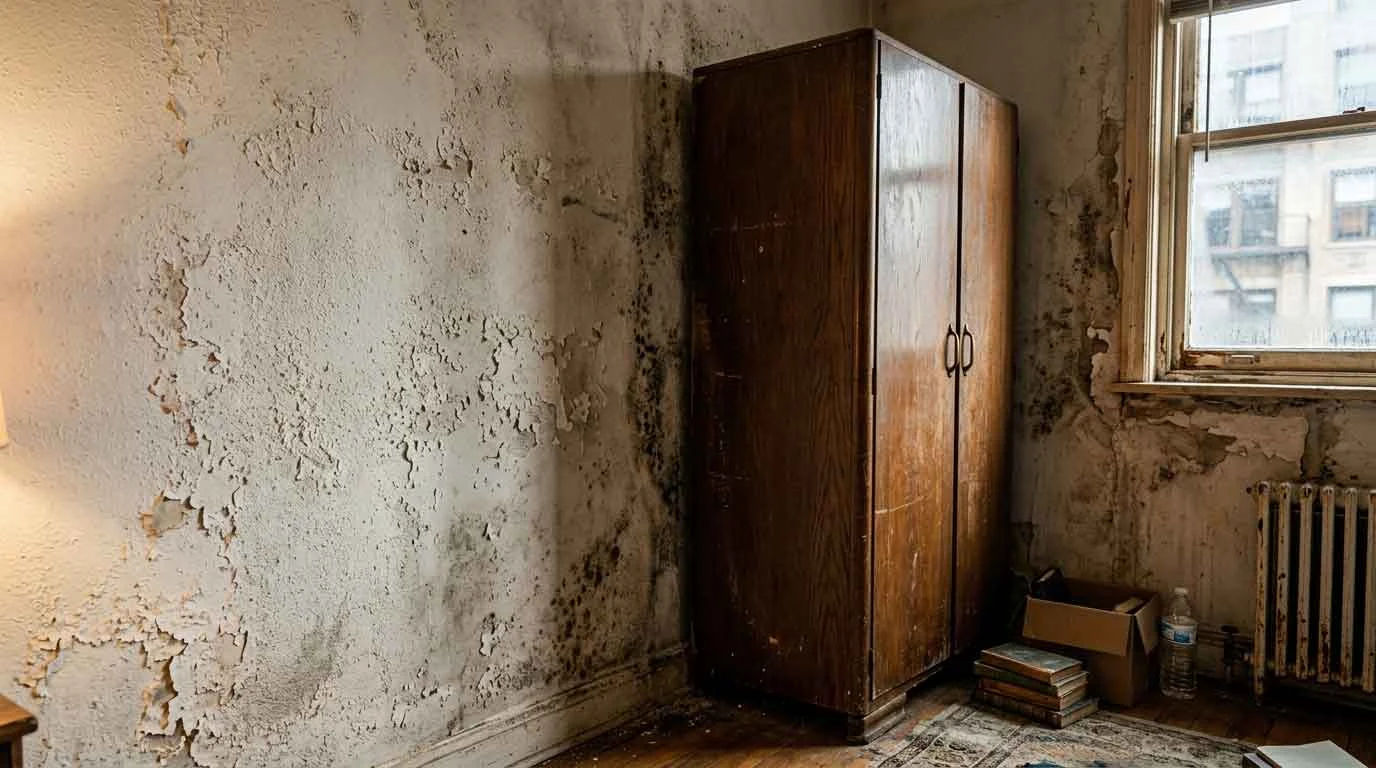
A wardrobe pushed tightly against a wall sometimes traps enough stagnant moisture to create localized chalking behind it while the visible outer wall remains normal.
People discover the issue years later during renovation or furniture movement.
The smell often appears first.
Then the powdery texture.
Low-Quality Paint or Old Paint
Paint quality changes how resistant the surface remains against:
- UV exposure
- moisture
- oxidation
- indoor condensation
Lower-quality paints usually degrade faster because the binding agents weaken more easily over time.
Older paints naturally become more vulnerable too.
Especially if the wall experienced:
- repeated repainting
- moisture intrusion
- inconsistent surface preparation
Some older flats quietly accumulate multiple paint layers over decades. The wall may appear stable outwardly while inner layers already weakened underneath.
Eventually, surface failure reaches the top layer.
Why Bathrooms Often Trigger Powdery Walls
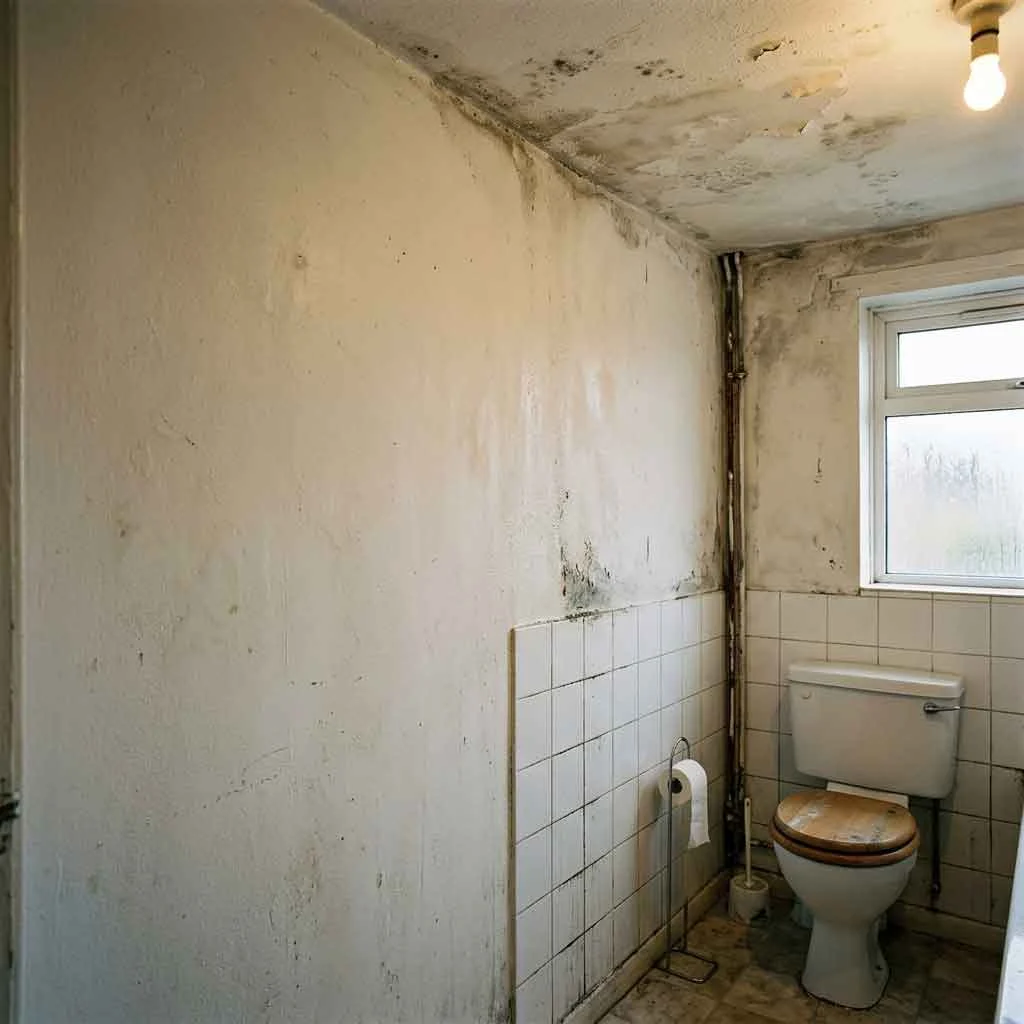
Bathrooms create one of the hardest indoor environments for painted surfaces.
Not because bathrooms are “wet.”
Because they repeatedly cycle between:
- heat
- humidity
- cooling
- condensation
- reduced airflow
This cycle stresses paint continuously.
After hot showers, warm moisture settles onto cooler wall surfaces. Some moisture evaporates quickly. Some remains trapped near corners or ceilings where airflow is weaker.
Over time, the paint surface slowly loses stability.
Bathrooms with:
- weak exhaust fans
- limited natural ventilation
- enclosed shower layouts
Usually accelerate this process.
Many bathroom humidity environments that support tropical indoor plants can also quietly increase wall moisture stress when airflow becomes trapped for long periods.
Why Some Walls Become Powdery Faster Than Others
Two rooms in the same house can behave completely differently.
This confuses many homeowners.
One bedroom stays stable for years.
Another wall nearby starts feeling dusty and dry unexpectedly.
Usually, the difference comes from environmental exposure patterns.
Sunlight Exposure
Walls exposed to stronger sunlight often experience:
- thermal expansion
- UV stress
- repeated heating cycles
Over time, certain paint types weaken faster under repeated light exposure.
This becomes especially noticeable beside:
- large windows
- balcony doors
- west-facing walls
The paint slowly fades first.
Then surface powdering begins.
Furniture Placement
Large furniture changes airflow behavior.
Wardrobes, cabinets, and beds positioned tightly against walls trap:
- moisture
- warmer air
- stagnant airflow
The wall behind the furniture sometimes develops:
- chalking
- mold
- soft paint texture
even when the visible outer wall looks perfectly normal.
At around midnight in cooler rooms, condensation sometimes forms quietly behind furniture where airflow never properly reaches the surface.
The homeowner never sees it happening directly.
Only the long-term damage appears later.
Paint Chalking vs Mold – They Are Not the Same Problem
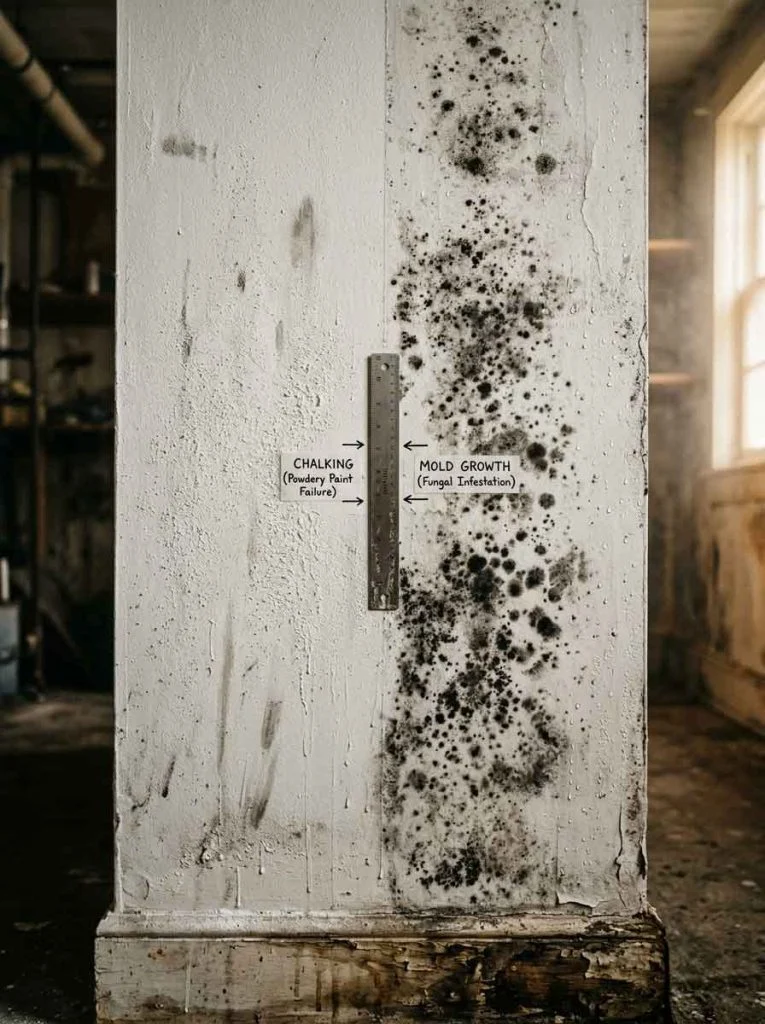
People often confuse powdery paint with mold because both can appear in:
- humid rooms
- darker corners
- poorly ventilated areas
But the wall behavior is different.
Paint chalking happens when the paint surface itself breaks down into powder.
Mold is biological growth.
One is material deterioration.
The other is living contamination.
Still, the two problems sometimes appear together because both are influenced by:
- trapped moisture
- weak airflow
- condensation
- indoor humidity imbalance
Signs of Paint Chalking
Common signs include:
- dusty residue on fingers
- faded paint appearance
- dry chalk-like texture
- repeated powder after wiping
- surface weakness without fuzzy growth
The wall usually feels:
- dry
- dusty
- slightly rough
rather than wet or organic.
Signs of Mold
Mold usually appears as:
- black spots
- green patches
- uneven staining
- fuzzy growth
- musty smell
Mold often develops in:
- corners
- behind furniture
- ceiling edges
- bathroom walls
especially where condensation repeatedly settles.
Why Repainting Sometimes Does Not Solve the Problem
This frustrates many homeowners.
The wall gets repainted.
It looks normal temporarily.
Then several months later, the powdery texture slowly returns.
The reason usually sits beneath the paint layer itself.
If the underlying wall still experiences:
- trapped humidity
- moisture intrusion
- poor airflow
- condensation cycling
new paint eventually reacts to the same environmental stress again.
Repainting without fixing the environment often becomes a cosmetic reset rather than a long-term solution.
This is why some walls repeatedly fail despite:
- expensive paint
- multiple repainting attempts
- frequent cleaning
The wall system itself remains unstable.
How to Fix Powdery Wall Paint Properly
The solution depends on how severe the deterioration has become.
Minor chalking may only affect the outer paint surface.
Severe chalking sometimes indicates deeper moisture problems.
Step 1 – Remove Loose Powder
The unstable surface must be cleaned first.
Usually this involves:
- dry wiping
- vacuuming
- soft brushing
- gentle surface cleaning
Loose chalk residue prevents new paint from bonding properly.
Step 2 – Identify the Moisture Source
This step matters more than repainting.
Check for:
- weak ventilation
- condensation zones
- hidden leaks
- furniture blocking airflow
- bathroom humidity exposure
- window condensation
Without solving moisture behavior, repainting often fails again later.
Step 3 – Stabilize the Surface
Some walls require:
- primer
- sealer
- moisture-resistant undercoat
before repainting.
This helps restore paint adhesion strength.
Step 4 – Improve Airflow
This is one of the most overlooked fixes.
Better airflow reduces:
- condensation retention
- moisture buildup
- trapped humid air
Small environmental changes often help significantly:
- slightly spacing furniture from walls
- improving exhaust fan use
- allowing periodic ventilation
- reducing trapped corner humidity
The wall environment becomes more stable over time.
Indoor walls generally remain more stable when balanced airflow and moisture conditions reduce long-term condensation accumulation.
Why Airflow Quietly Changes Wall Behavior
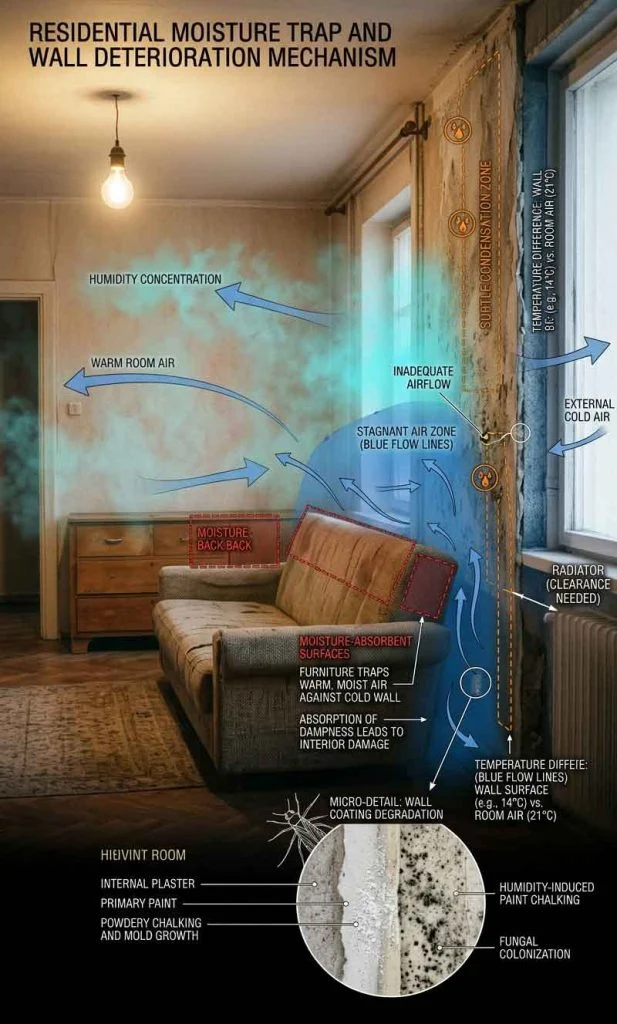
Walls respond to air movement more than most people realize.
Airflow affects:
- surface drying speed
- condensation persistence
- humidity concentration
- temperature balance
A room may technically feel “dry” to people while still trapping moisture against certain wall surfaces.
This commonly happens:
- behind wardrobes
- beside curtains
- near cold external walls
- behind bathroom cabinetry
At around 7AM after overnight cooling, some walls quietly collect condensation that disappears again before homeowners fully notice it.
The moisture cycle still affects paint repeatedly over months and years.
That repeated stress slowly weakens paint chemistry.
The same environmental moisture behavior that changes outdoor nighttime surfaces after rain also affects indoor wall drying patterns and condensation buildup.
Why Powdery Walls Feel Worse at Night
This sounds strangely specific.
But many homeowners notice it subconsciously.
At night:
- humidity rises slightly indoors
- airflow slows
- temperatures shift
- condensation risk increases
The wall surface sometimes feels:
- softer
- dustier
- slightly damp underneath
especially near:
- bathrooms
- enclosed bedrooms
- wardrobe walls
The environmental contrast becomes stronger once nighttime cooling begins.
This is one reason some powdery walls feel worse after:
- rainy weather
- overnight air-conditioning
- prolonged room closure
The wall behavior changes with the indoor climate itself.
Common Mistakes That Make Powdery Walls Worse
Painting Over Damp Surfaces
Fresh paint traps moisture underneath.
The wall may initially appear smooth, then fail again months later.
Blocking Airflow Completely
Furniture pressed tightly against walls creates hidden moisture zones.
Even small airflow gaps help reduce condensation buildup.
Ignoring Bathroom Humidity
Bathroom moisture spreads farther than many homeowners expect.
Walls outside bathrooms sometimes absorb repeated humidity exposure quietly over time.
Using Cheap Paint Repeatedly
Low-quality paints often weaken faster under:
- humid conditions
- UV exposure
- repeated condensation cycles
The surface deteriorates earlier.
Paint Chalking vs Mold Comparison
| Issue | Main Cause | Typical Appearance | Common Locations |
|---|---|---|---|
| Paint Chalking | Paint surface deterioration caused by humidity, aging, UV exposure, or poor ventilation. | Dry powdery residue, faded texture, dusty surface feeling. | Bathrooms, bedrooms, wardrobe walls, ceiling corners. |
| Mold Growth | Biological growth caused by persistent moisture and organic contamination. | Black, green, or fuzzy patches with musty odor. | Damp corners, behind furniture, ceiling edges, bathroom ceilings. |
Why Some Walls Stay Stable for Years While Others Fail Early
This is rarely random.
Walls behave differently depending on:
- sunlight exposure
- airflow movement
- indoor humidity
- external wall orientation
- room usage patterns
A guest room that stays open and ventilated may remain stable for years.
Meanwhile, a bedroom with:
- permanently closed windows
- heavy curtains
- large wardrobes
- nightly air-conditioning
can slowly develop hidden moisture imbalance along colder wall sections.
The deterioration often happens quietly.
People usually notice the powder only after:
- cleaning
- moving furniture
- repainting
- changing lighting
The wall was already reacting long before the symptoms became obvious.
Why Powdery Walls Often Return Near Wardrobes
Wardrobes create one of the most overlooked indoor moisture environments.
Especially full-height wardrobes placed tightly against walls.
The trapped space behind them usually receives:
- minimal airflow
- lower heat circulation
- slower surface drying
At night, wall temperatures sometimes cool slightly behind enclosed furniture while surrounding room air remains warmer.
That temperature difference quietly increases condensation risk.
Over time:
- paint weakens
- dust sticks more easily
- chalking develops
- mold risk increases
Many homeowners discover this only during renovation when the wardrobe finally gets removed years later.
The wall behind it often looks completely different from the rest of the room.
Wall Moisture Behavior Comparison Table
Indoor Wall Moisture Behavior Comparison
| Wall Environment | Moisture Risk | Typical Long-Term Effect | Recommended Improvement |
|---|---|---|---|
| Bathroom-Adjacent Wall | High | Repeated humidity exposure may slowly weaken paint binders and create powdery surfaces. | Improve exhaust ventilation and reduce trapped bathroom moisture. |
| Wall Behind Wardrobe | Very High | Condensation and stagnant airflow increase chalking and mold risk over time. | Leave ventilation gaps and avoid fully sealing large furniture against walls. |
| Sun-Exposed Wall | Medium | UV exposure and thermal cycling may gradually fade or weaken paint surfaces. | Use higher-quality paint with stronger UV and humidity resistance. |
| Well-Ventilated Interior Wall | Low | Paint generally remains more stable with balanced airflow and lower condensation exposure. | Maintain balanced ventilation and avoid excessive trapped humidity. |
Conclusion
Powdery wall paint is usually not just a paint problem.
It is often a sign that the wall has been reacting to environmental stress for a long time.
Humidity, trapped airflow, condensation, furniture placement, and uneven drying conditions slowly change how paint behaves indoors. The wall surface weakens gradually until the texture finally becomes dusty or chalk-like to the touch.
This is why simply repainting the wall sometimes fails.
If the moisture behavior underneath remains unchanged, the new paint often begins deteriorating again later.
Bathrooms, wardrobe walls, enclosed bedrooms, and poorly ventilated corners tend to develop these problems more easily because moisture remains trapped longer than most homeowners realize.
At around midnight in quieter indoor spaces, some walls are still slowly reacting to temperature differences and condensation cycles even though the room itself feels normal.
That long-term environmental imbalance matters more than people think.
Sometimes the real solution is not another paint layer.
It is allowing the wall to dry and breathe properly again.