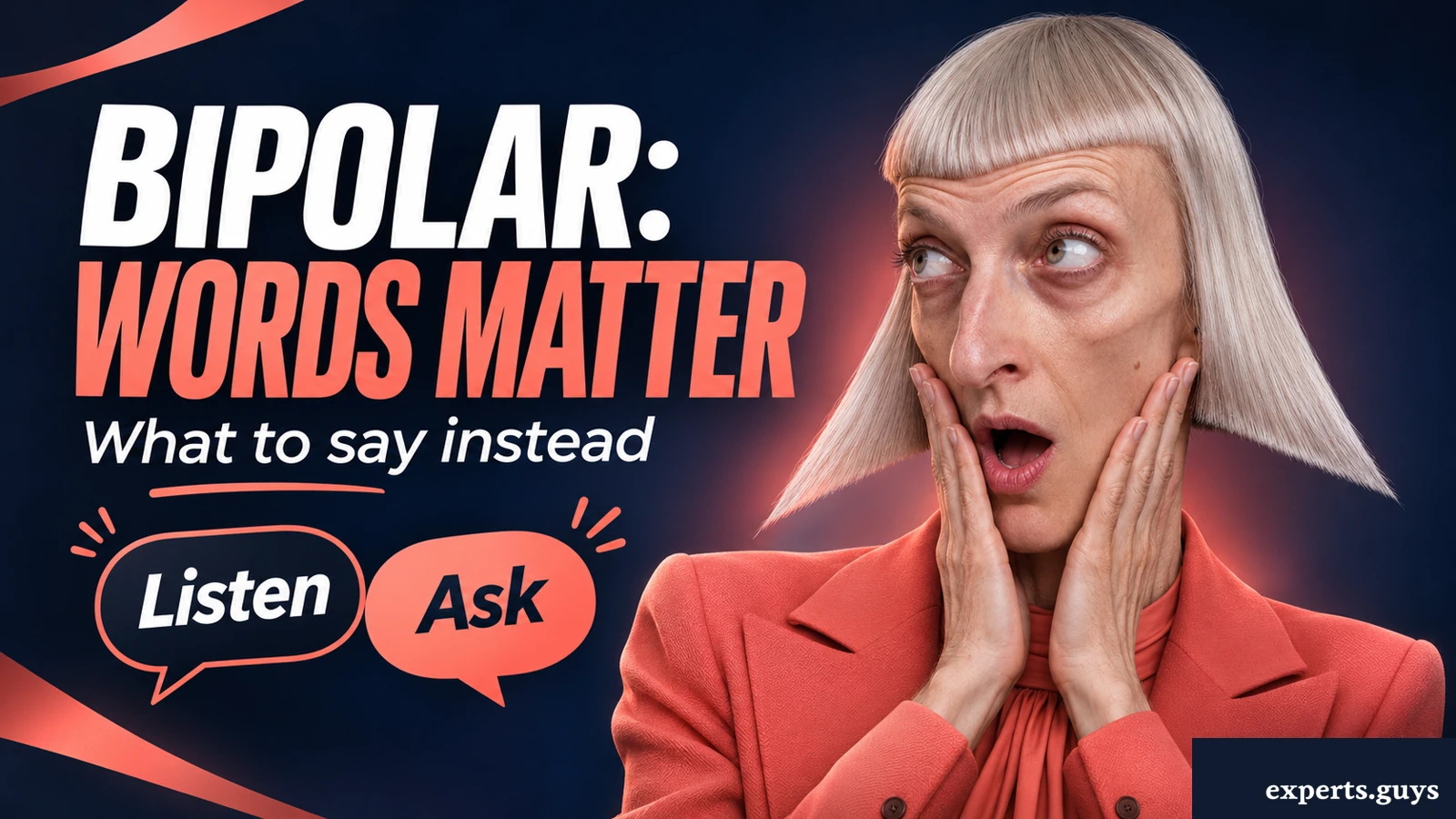
When someone has bipolar disorder, comments like “Are you manic?” or “Just cheer up” can turn an ordinary conversation into a demand to explain their health. Start with what they told you: “I hear that you’re upset I changed our plans. What did you want me to understand?”
What to say instead in everyday conversations
Imagine arriving late to dinner and hearing, “I wish you had called.” Asking about medication at that moment changes who has to explain themselves. Your friend asked about the missed call. A fair answer is “I should have called when I knew I’d be late.” Their diagnosis adds nothing to that exchange.
A different situation calls for different words. A friend who volunteers that sleep has become difficult has opened a health conversation. Someone who tells you a joke at dinner has opened a social one. Follow the opening they actually gave you.
These examples are starting points. Choose words you would normally use with this person. A familiar “Want some company?” can sound warmer than a carefully rehearsed speech.
| Avoid saying | Why it can hurt | Try saying |
|---|---|---|
| “You’re so bipolar today.” | Uses a diagnosis as shorthand for changing an opinion. | “Did something change your mind?” |
| “Everyone has ups and downs.” | A comparison can close a disclosure before you hear what has been hard. | “What has this week been like for you?” |
| “You look fine to me.” | Makes appearance the test for whether you believe them. | “I’m glad you told me. What would help today?” |
| “Did you forget your meds?” during a disagreement | Turns a complaint into a question about treatment. | “You said I interrupted. Please finish.” |
| “I liked you better when you had all that energy.” | Makes your enjoyment the measure of how well they felt. | “How did that time feel for you?” |
| “You’re being selfish.” | Assigns a motive to a missed visit. | “I missed seeing you. Would another day work?” |
| “You’ll be fine. Just stay positive.” | Asks the person to share your optimism before they can talk. | “That sounds hard. I can stay for a bit if you want.” |
When a diagnosis gets pulled into an argument
The word “again” can carry more weight than you intend. “Are you getting ill again?” may bring back a period when your friend depended on others to make decisions. If the immediate issue is a bill, a canceled plan or a promise you made, settle what you can about that issue first. A person can need support and still have a fair complaint.
Take a shared rent payment. “You’re irresponsible when you’re like this” leaves two people debating character while the payment remains unresolved. “The rent is due Friday. I can cover my half. What should we tell the landlord about the rest?” gives both people a real decision. If a health concern also needs attention, raise it privately at a separate moment.
The reverse error is treating a disclosure as an invitation to solve everything. A coworker who says a difficult week affected a handover may simply want to agree on a new deadline. Discuss the handover within your role. Their telling you a diagnosis in private gives you no permission to explain it to the team.
How to repair a comment that hurt
Suppose you asked “Is this your bipolar talking?” after a friend objected to a joke. They go quiet. “I was only trying to help” invites them to reassure you. A repair starts by identifying the remark you can take responsibility for, even if you still disagree about the joke.
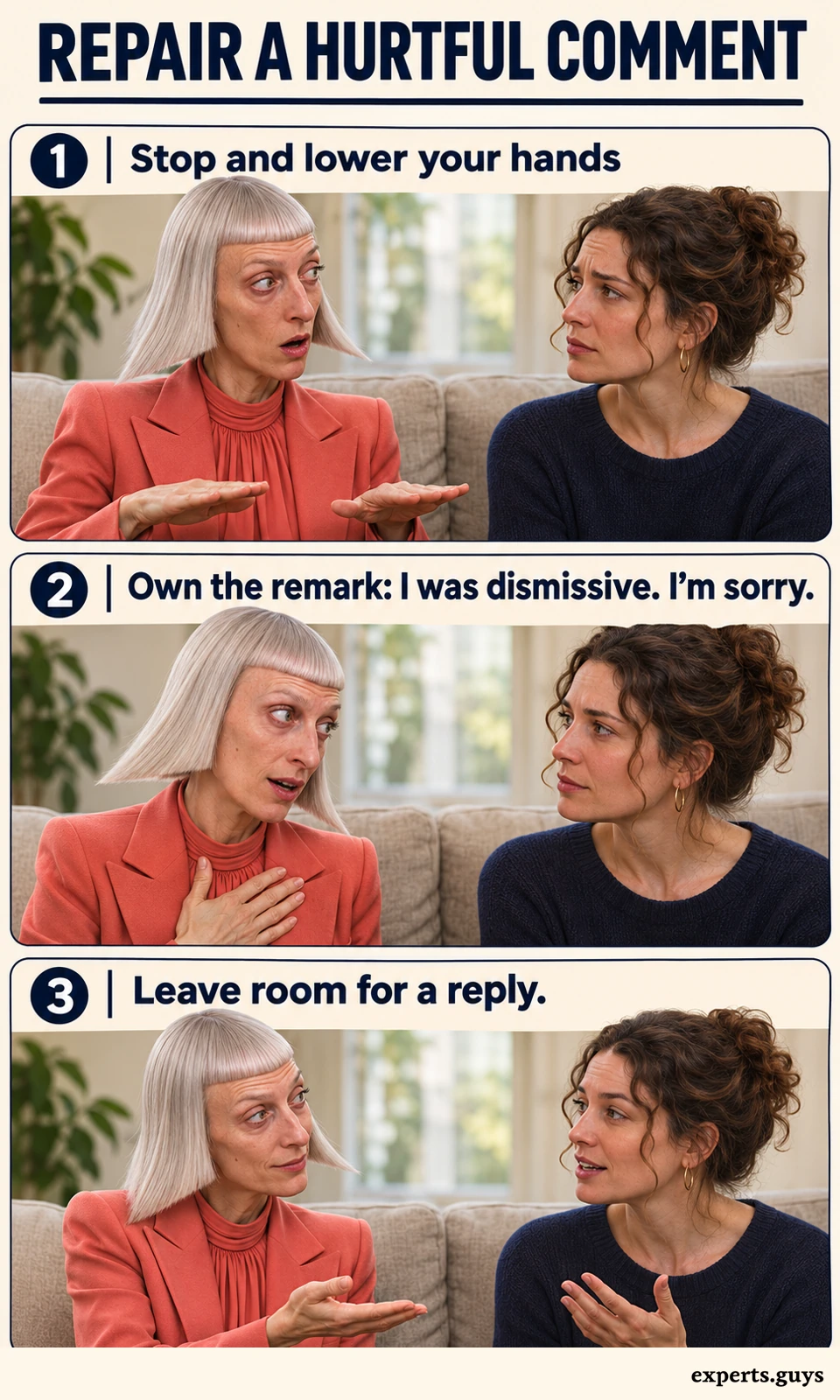
Stop speaking long enough to let them finish. If you were pointing or talking over them, lower your hands and leave a little room. You can do this seated, standing or over an audio call. There is no requirement to make eye contact or to touch someone.
Give a short acknowledgment that stands on its own. “I made your diagnosis the issue when you were telling me the joke hurt. I’m sorry.” Adding “if you took it badly” asks them to defend the impact. Naming your own words makes it clear what you intend to change.
Return the choice of what happens next to the other person. These are three possible endings to the same apology.
- If they want to explain, let them finish the point you interrupted.
- If they want a correction in front of others, agree on wording that protects their privacy.
- If they want to leave it there, accept the answer. You can change how you speak without asking them to approve your apology.
A public mistake sometimes needs a public correction. If relatives heard you dismiss a complaint, you can say “I interrupted earlier. What Sam was saying about the change of plans was fair.” That corrects your conduct without announcing private health information.
An apology also survives an honest disagreement. “I still want to talk about the cost. I was wrong to call you manic” keeps the budget question open and removes the label. You do not have to settle both matters in one exchange.
If the person stops talking, avoid filling the silence with a longer defense. Let your hands settle and give them time to answer or leave. The observable result is that they get their turn back. Forgiveness and a better mood are theirs to decide.
When the room makes talking harder
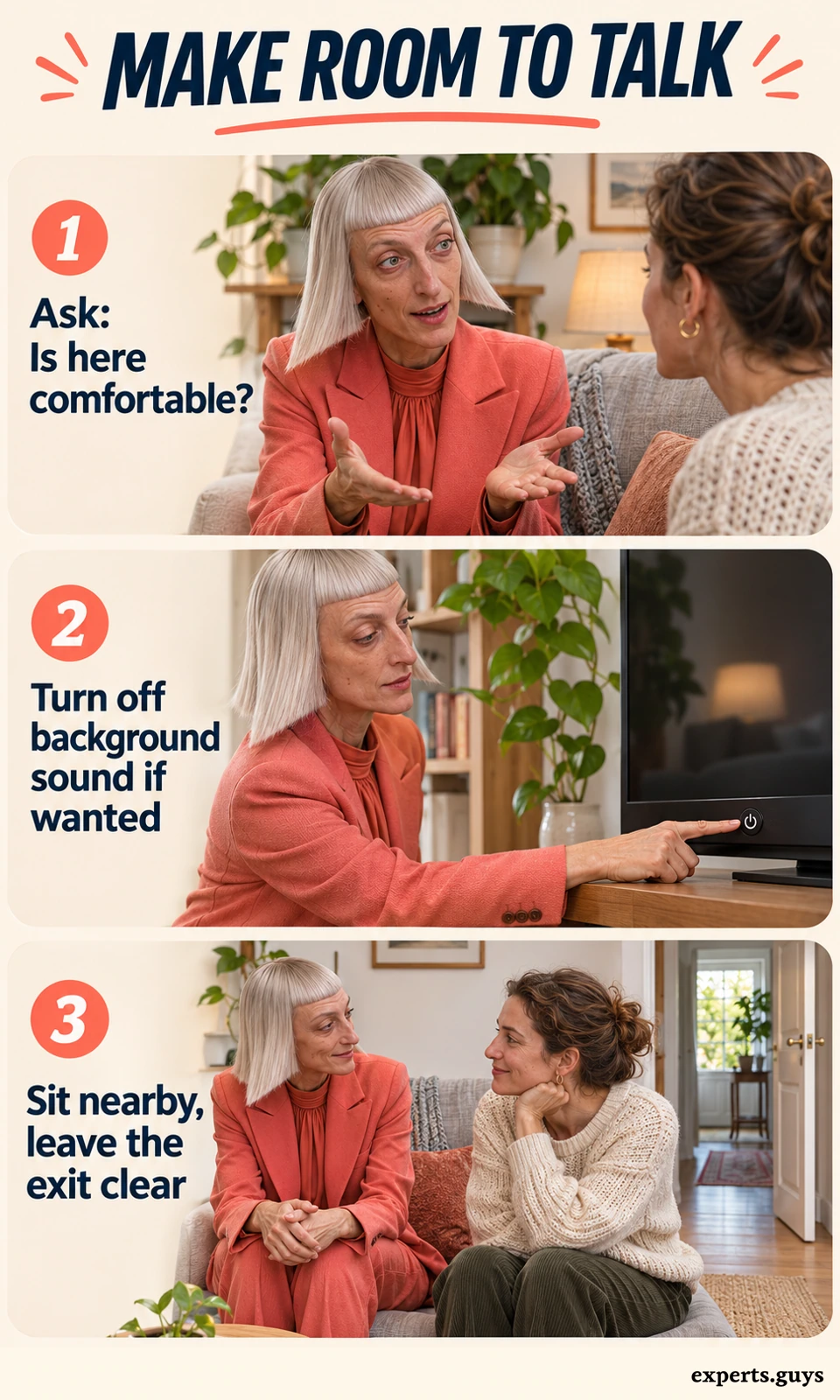
At a family gathering, the television is loud and three people are listening. Even a kind question about health can put someone on the spot. Ask quietly whether this is a comfortable place to talk. If the answer is no, they can choose another place or leave the conversation for another day.
If they want less noise, turn down the television or switch it off with permission. Take a nearby seat that leaves a clear route out. Let them choose their distance. Someone who finds moving tiring can stay where they are while you change your own position. If quiet feels uncomfortable to them, leave the sound alone.
The common mistake is organizing the room before asking. Pulling someone aside or closing a door can feel like being summoned to a meeting. “Should we stay here?” gives them a say before anything changes. The setup is finished once the surroundings and company are acceptable to them.
When you are worried about a change
Bipolar episodes can affect sleep, energy, activity and functioning. A single argument, late night or excited announcement tells you little on its own. A friend may also have reasons for a change that you cannot see. For context on persistent irritability, see irritability and other mood symptoms in bipolar depression. For the clinical background, see the NIMH overview of bipolar disorder.
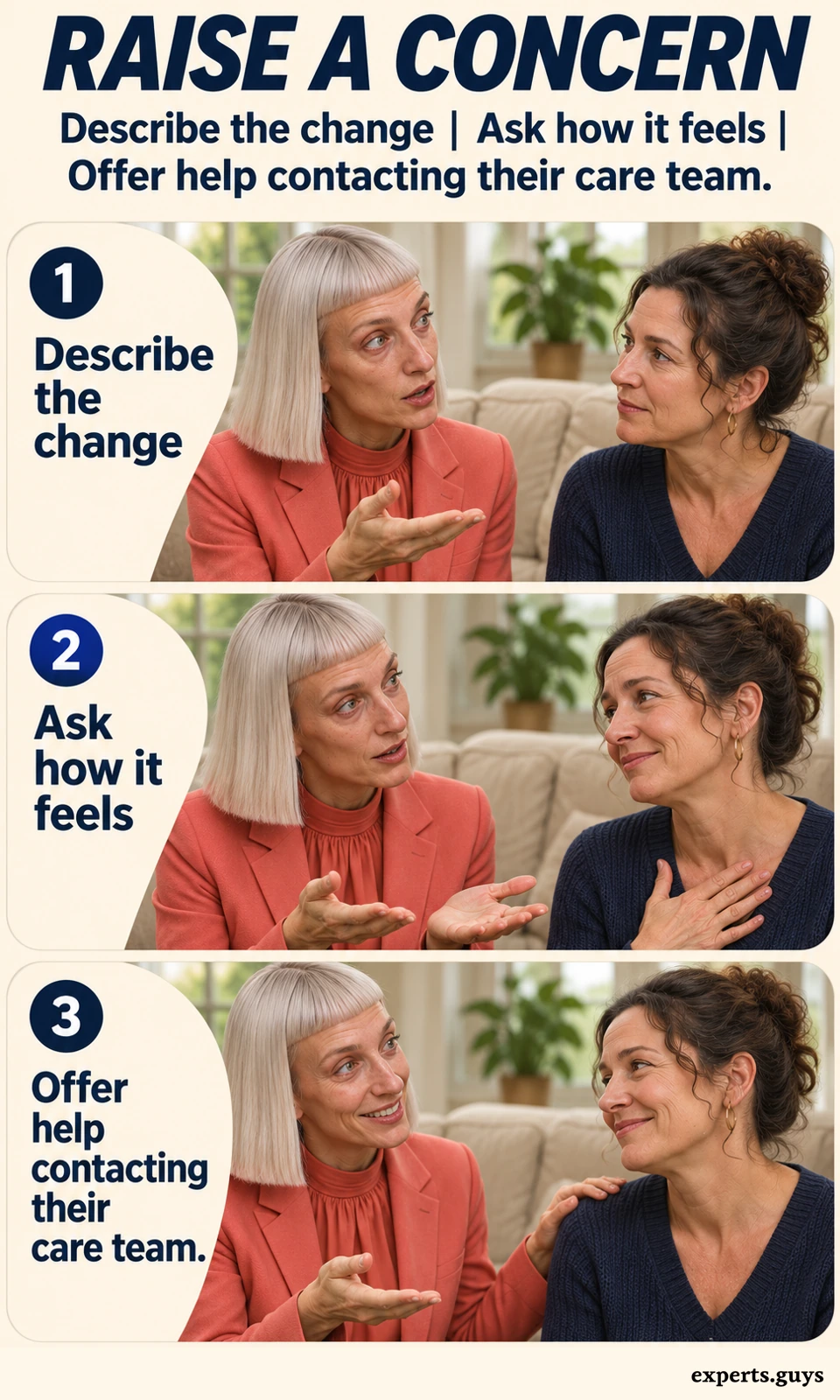
Use a detail you know firsthand. “You said you slept very little the last two nights and still felt full of energy. How has that felt?” is easier to answer than “You’re manic again.” Give the person time to clarify what changed. A friend who was awake caring for a sick child may describe exhaustion. Another might recognize a pattern they have discussed with their clinician.
If the change feels significant to them, ask whether they want help contacting their care team or using a plan they already have. Offer something you can actually do, such as sitting nearby while they make contact. If a long exchange is too much, start with one question and wait. Keep treatment decisions with the person and their clinician.
A frightening belief or perception needs a different response from an ordinary disagreement. You can acknowledge how frightening something feels while being honest about what you perceive. “I don’t hear it myself, but I can see this is frightening. Would you like me to stay while we get support?” New or worsening psychotic symptoms warrant prompt professional assessment. If someone may act on suicidal thoughts soon, cannot stay safe, or there is immediate danger, seek emergency help now. Follow any agreed crisis plan when it is safe to do so.
When you need to set a limit
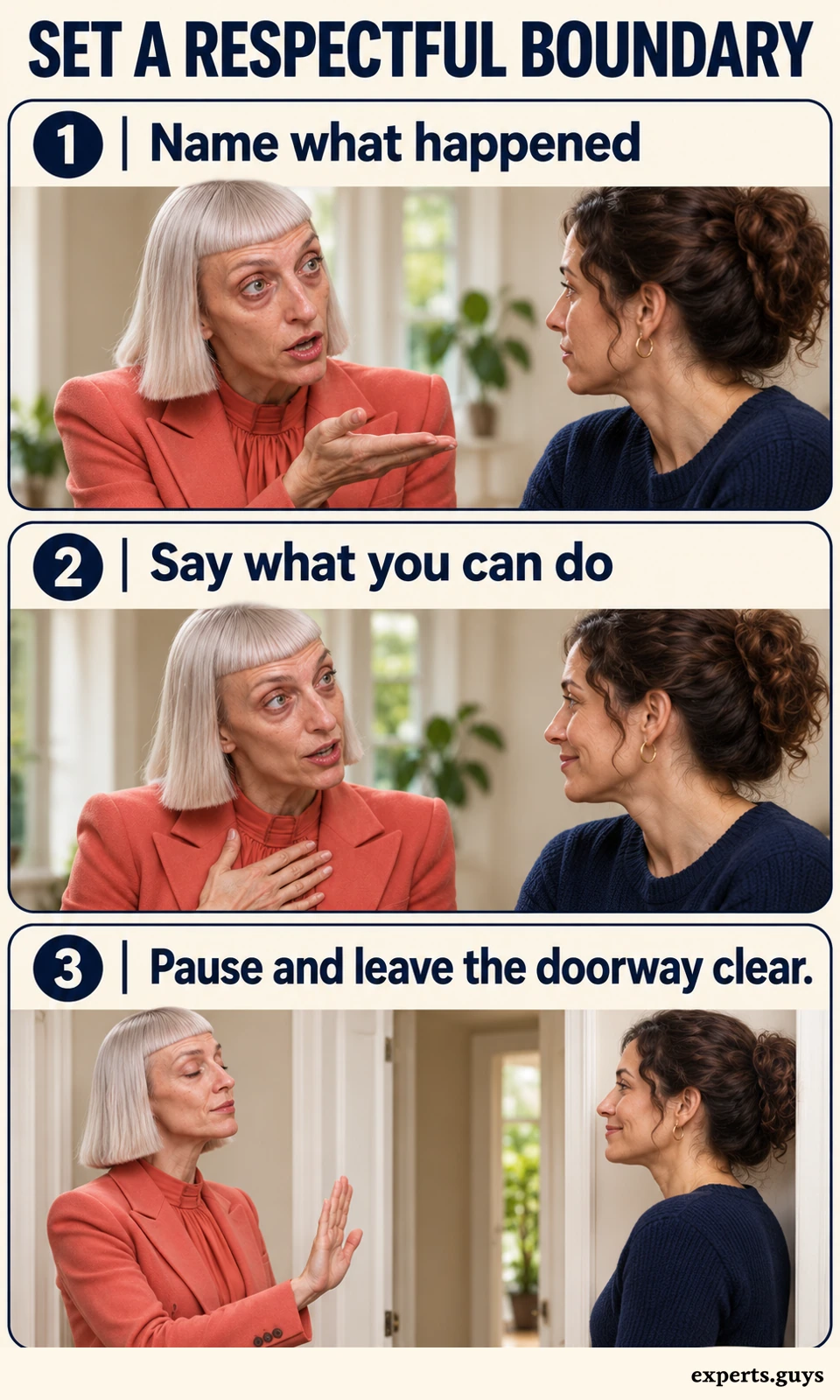
A diagnosis does not erase your stake in a conversation. If someone shouts over you, name the event and what you can manage. “We’re both raising our voices. I’m going to pause. I can come back after dinner if you want to try again.” Make a return offer only if you can keep it.
Follow through by stepping aside or ending the call. Leave the doorway clear and give the other person space. If either of you has limited mobility, a pause can mean staying seated and ending the discussion. A limit you can carry out is more practical than an instruction that depends on someone else becoming calm.
Money can require a boundary even when everyone is speaking quietly. “I hear how excited you are about the project. I can look at the proposal tomorrow, but I can’t lend you money” gives an honest answer. You can decline a loan without deciding whether enthusiasm is a symptom. If the situation becomes unsafe, prioritize getting to safety.
Questions friends and family often ask
Is it okay to use the word bipolar if my friend uses it?
Follow their preference when referring to them, and ask privately if you are unsure. A term someone chooses for themselves can land differently when another person uses it as a joke or introduces them to strangers.
Should I ask about medication if they asked me to help with reminders?
Yes, within the agreement you made. A private reminder at the agreed time is different from asking about medication in front of guests. If the arrangement stops working, revisit what they want. Questions about changing doses belong with the prescriber.
What can I say after they come home from hospital?
An ordinary invitation gives them control over how much to share. “I’m making dinner on Thursday. Would you like a portion?” is easy to accept or decline. Let them decide whether to tell you about the admission.
What if I need support for myself?
You can describe your own experience to someone you trust while protecting the other person’s private details. If you share a home or caring responsibilities, a carers’ support service can help you think through what you can reasonably offer.
What to carry into the next conversation
Before answering, ask yourself what the person has given you to respond to. If it was a complaint, address your part in it. If it was a disclosure, let them choose what to share next. Sometimes the most welcome sentence is the ordinary one you would have said before you knew their diagnosis.