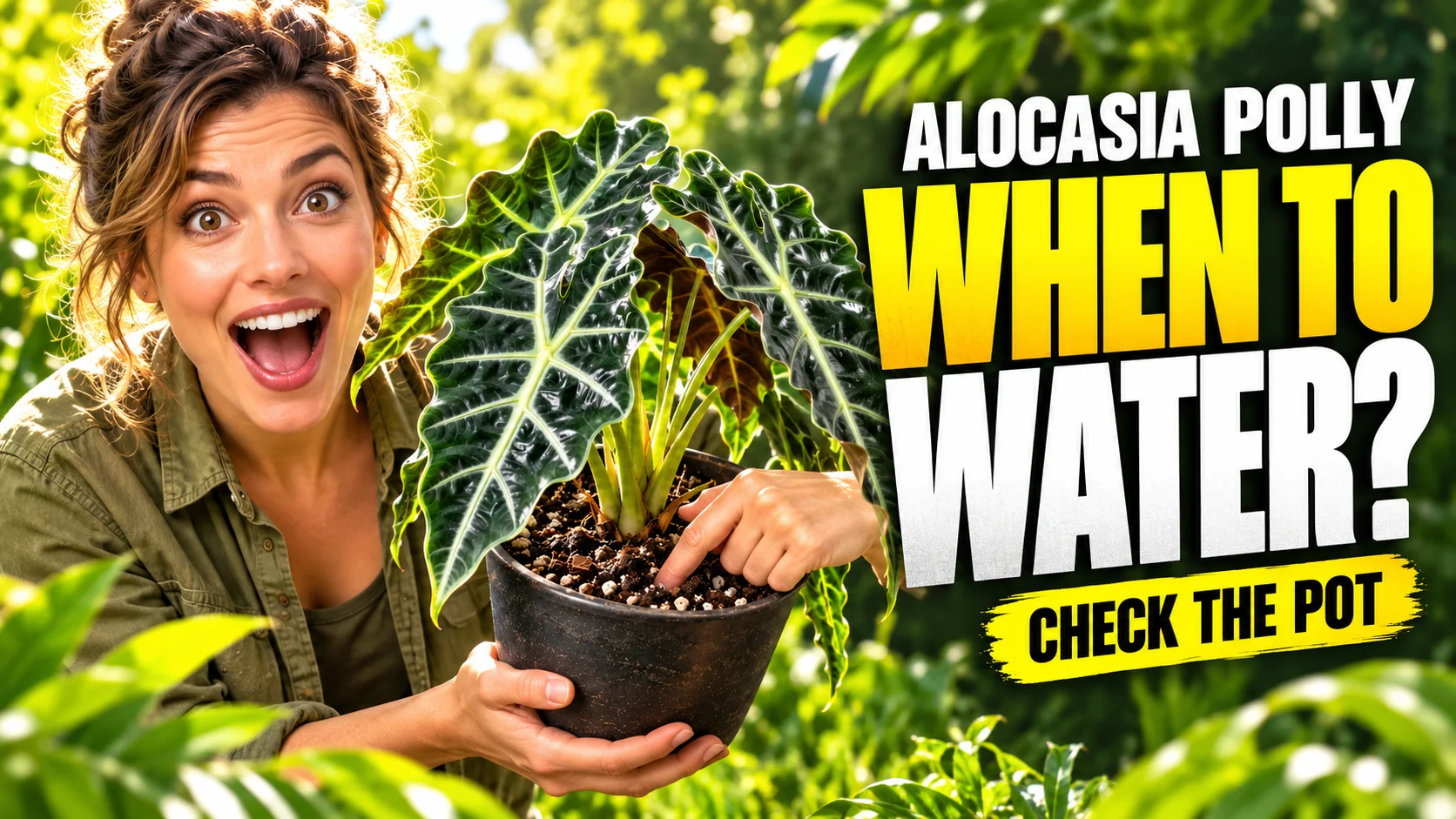

Water Alocasia amazonica when the upper 5 cm (2 inches) of potting mix has dried and the pot feels lighter than it did after its last thorough watering. Check the deeper mix before you pour: a dry surface can hide a wet root zone, especially in a large pot or during slow growth. If the pot is still heavy or the mix below the surface is damp, wait and check again.
Alocasia watering at a glance
Use the season to decide when to check, then use the soil and pot to decide whether to water. The Royal Horticultural Society’s Alocasia growing guide advises watering actively growing alocasias after the upper 5 cm of compost dries and reducing water substantially during winter dormancy; the same calendar interval cannot work for every pot and room. In a warm tropical home where the plant keeps making leaves, follow its growth and drying rate instead of assuming that winter automatically means dormancy.
| Growth stage | When to check | Water only when | If still damp |
|---|---|---|---|
| Active growth | Begin checking a few days after the last watering; check more often in bright, warm conditions. | The upper ~5 cm (2 in) feels dry, the root zone is not soggy, and the pot is distinctly lighter. | Wait and recheck in 1–2 days. |
| Growth slowing | Check less often as light or new leaf production declines. | The upper mix has dried and the pot has clearly shed water weight. | Wait longer; keep it in bright indirect light and away from cold drafts. |
| Genuine dormancy | Inspect periodically; leafless plants use much less water. | Much of the mix has dried and the rhizome is still firm; moisten sparingly enough to avoid prolonged saturation. | Do not add water just because a week has passed. |
These are checks, not fixed intervals. A small terracotta pot in bright light may dry well before a large glazed pot in a dim room. Humid air, reduced leaf area, compact potting mix, and a decorative cachepot can slow drying. Record the number of days your own pot takes to reach the watering point; use that number as a reminder to inspect, never as an instruction to pour.
You may see the plant sold as Alocasia amazonica, African mask plant, or Alocasia ‘Polly’. Botanical naming differs among references: NC State Extension lists Alocasia × amazonica as an earlier name under Alocasia × mortfontanensis, while the RHS treats ‘Polly’ as a named plant. The practical watering checks below apply to the compact plant commonly sold as Polly without assuming that every Alocasia species uses an identical schedule.
How to tell when the plant is actually ready
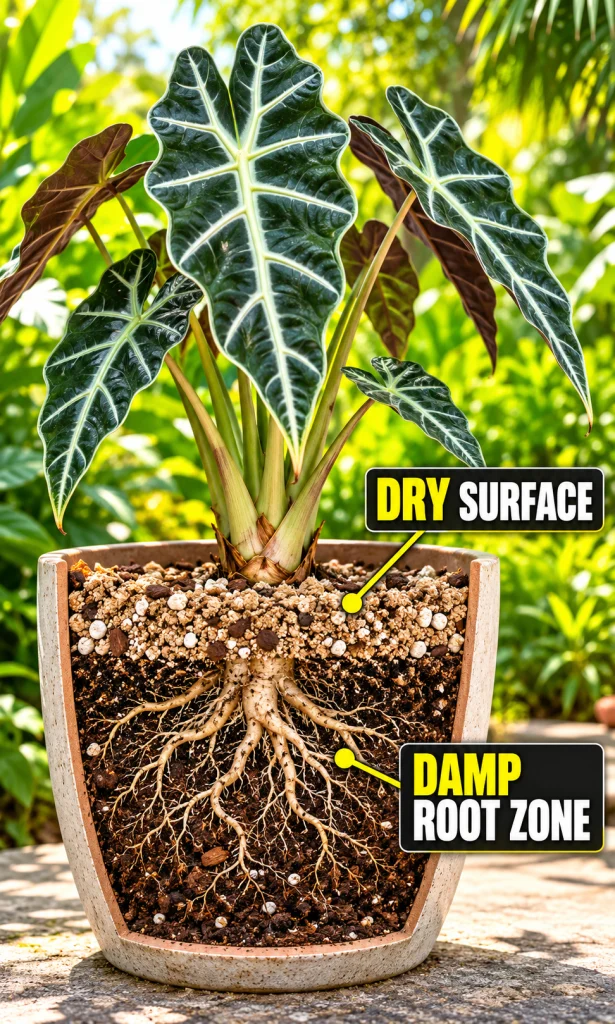
Push a clean finger roughly 5 cm into the mix, away from the main stem. The top can look pale and dry while the material a little lower still feels cool and clings to your finger. In a deep or bark-heavy container, a wooden chopstick left in briefly can give another clue, although bark pieces and pockets of moisture make any single test imperfect.
Now lift the inner pot with both hands. Just after watering and draining, feel how much effort it takes to raise it a few centimetres; that is your wet reference. On later checks, lift it by the same place: it should feel clearly easier to pick up, as though a substantial amount of water has left the pot, rather than only a barely detectable change. Compare only the same pot and mix; a ceramic outer cover or a different container will distort the comparison. No percentage or scale reading is required, and the dry upper layer should agree with the lighter feel before you water.
Still unsure? Check near a drainage hole, or slide the nursery pot out of its decorative cover and feel the lower edge of the mix. A cheap probe moisture meter can support this check, but its reading depends on contact and where the probe enters. If its dial says “dry” while the pot is heavy and the lower mix feels wet, believe the physical evidence and wait. For a deeper explanation, see why soil looks dry on top but stays wet underneath.
How to water Alocasia Polly
- Confirm the drying point. Check the upper mix and compare pot weight; inspect deeper if the two disagree.
- Water the mix slowly. Use room-temperature water around the surface of the root ball, avoiding a strong stream into the crown. Pause if water immediately escapes a very dry mix; give it a moment to absorb, then continue.
- Let it drain. During active growth, water until the root ball is evenly moistened and excess leaves the drainage holes. Empty the saucer or cachepot after draining; do not leave the base submerged.
- Start a new comparison. Lift the freshly drained pot to remember its wet weight and note the date only for future observation.
A fixed number of millilitres cannot suit all pot sizes. If a little water runs straight down a gap at the edge while the centre stays dry, the whole root ball may need slower, repeated watering. If the mix stays wet for many days and the plant is declining, stop trying to fix the problem by changing the volume alone: examine the light, pot, root condition, and mix structure.
What changes with season, light, and humidity?
During active growth
When new leaves appear in warm, bright indirect light, Alocasia Polly generally uses water more quickly. Maintain a moist but freely draining root zone and recheck whenever the top 5 cm dries. Its dark, prominent-veined leaves make it an eye-catching plant, but the leaves do not tell you exactly what is happening below the soil surface.
- Check sooner after a spell of warm, bright weather or a move to a smaller, faster-drying pot.
- Check deeper if only the exposed surface looks dry; the root ball may still contain ample moisture.
As growth slows
Shorter days, lower light, and cooler rooms slow water use; simply repeating a summer routine can keep the roots wet too long. Start checking less often and look for the combination of a dry upper layer and a lighter pot. In Singapore or another warm, consistently bright location, a plant may continue growing through the calendar year, so its behaviour matters more than a northern-hemisphere season label.
During true dormancy
A resting Alocasia may shed some or all leaves while retaining a firm living rhizome below. Keep it protected from cold and reduce watering markedly, but inspect occasionally rather than forgetting it indefinitely. Do not follow an automatic “every 14–21 days” rule: a leafless plant in a cool, large pot can remain damp far longer than one in a small, airy pot. Increase watering gradually when new growth resumes.
Alocasia Watering Check
Check the mix, lift the pot, and find your next move.
No calendar guessworkChoose what you observe today. Test the potting mix below the surface before selecting an answer.
This check offers plant-care guidance based on your observations. A soft rhizome or continuing decline calls for direct root inspection.
Yellow leaves or drooping: check the pot before changing the routine
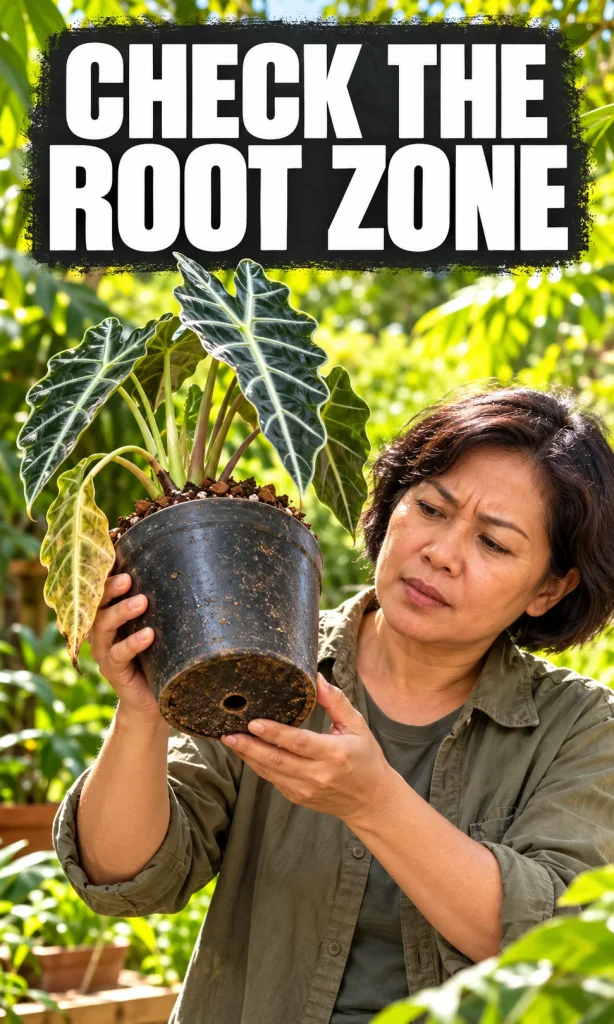
Both thirst and damaged roots can make an Alocasia droop. One slowly aging lower leaf is less alarming than several leaves yellowing while the pot stays heavy. Use the following clues together before deciding whether the plant needs water or an inspection of its roots.
| What you notice | Most useful check | Next action |
|---|---|---|
| Drooping; pot light; mix dry well below the surface | Feel the deeper root ball; check for mix pulled away from pot sides. | Water slowly and thoroughly, then allow drainage. Observe whether posture improves. |
| Drooping or multiple yellow leaves; pot heavy; mix persistently wet | Check drainage and the base for softness or an unpleasant smell. | Do not add more water. If decline continues, inspect roots and rhizome. |
| One older leaf yellows; new growth and firm base remain healthy | Compare the soil and other leaves over several days. | Keep the normal moisture check; a single aging leaf is not a watering diagnosis. |
| Brown margins; mix is neither very dry nor waterlogged | Consider dry air, direct sun, salts, pests, and recent temperature changes. | Correct the confirmed cause instead of automatically increasing watering. |
A soft base, unpleasant smell, or leaves collapsing while the mix stays wet warrants prompt inspection. Slide the plant out gently and examine the roots and rhizome: healthy remaining tissue should feel firm, while badly decayed roots tend to be dark, slippery, or fall apart when touched. A rhizome that has become soft throughout is a much poorer sign than a firm rhizome with some damaged roots.
If some healthy tissue remains, remove clearly rotten roots with clean scissors, discard the old soggy mix, and repot in fresh, airy mix in a drainage pot sized to the remaining roots. If the new mix is already evenly moist, do not immediately saturate it again; if it is dry, moisten it appropriately and let it drain. Keep the plant warm in bright indirect light, then watch for the decline to stop before expecting new leaves. Recovery has no guaranteed timetable; see early signs of root rot below the soil for a fuller inspection sequence.
Set up the pot so watering is easier
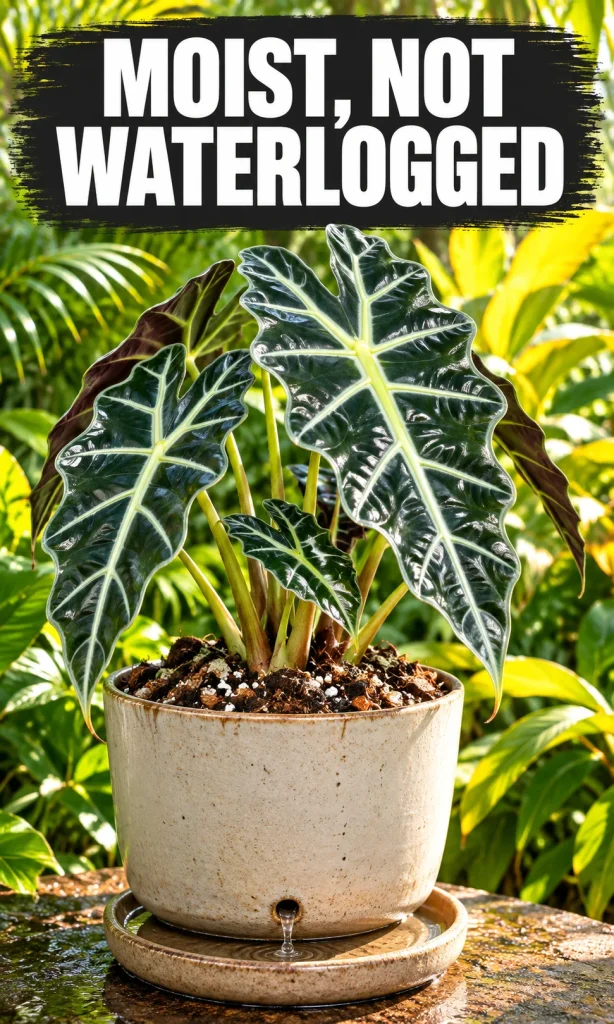
Choose a container with functional drainage and a peat-free houseplant mix with an aerating amendment. A practical starting mix is about three parts peat-free houseplant compost to one part horticultural grit, the proportion in the RHS Alocasia repotting guidance; the RHS also suggests adding perlite for Polly. Adjust the blend if your particular mix dries unusually fast or remains waterlogged: roots need both useful moisture and air, not an extreme bark-only mix.
Move up only modestly in pot size when repotting, because a large volume of unused wet mix dries slowly. A nursery pot with drainage holes can sit in a decorative cover if you remove it to water and empty any collected water afterward. If holes are present but water still pools, see why some pots never drain even with holes.
Bottom watering is an option for a dry root ball: stand the drainage pot in shallow water until the mix absorbs moisture, then remove it and let it drain completely. It does not make a waterlogged pot safe, and top watering occasionally helps you see how the mix takes up water. A reservoir or self-watering pot needs particular care during low growth: check the actual root-zone moisture and let the reservoir empty rather than keeping it permanently topped up.
Room-temperature tap water is generally a sensible starting point if the plant grows well with it. If your water is unusually hard or the mix accumulates salts, clean rainwater or suitable filtered water can be useful; letting tap water stand overnight does not reliably remove dissolved minerals. Misting may briefly wet the leaves, but it is no substitute for stable room humidity or proper root watering. Keep standing water below the pot when using a pebble tray.
Frequently asked questions
How often should I water Alocasia amazonica in winter?
Check whether the plant is still growing and how quickly its mix dries. A dormant or leafless plant needs far less water, but a warm, brightly lit plant may remain active. Water only after checking the upper mix and the pot’s weight; there is no dependable universal winter day count.
Can I bottom water Alocasia Polly?
Yes, if the pot has drainage holes and the root ball genuinely needs water. Let the mix absorb moisture, then remove the pot from the tray and drain it completely. Do not leave the base sitting in water or use bottom watering to treat an already wet pot.
Should I mist the leaves?
Misting is optional and briefly wets foliage; it does not create steady room humidity or replace root watering. If the air is persistently dry, a suitable room humidifier or a location with naturally higher humidity is more consistent. Keep leaves clean and avoid leaving the pot in standing water.
What kind of water is best for Alocasia Polly?
Use room-temperature water that suits your local supply and the plant’s response. Ordinary tap water often works; if it is very hard or salts build up in the pot, consider clean rainwater or appropriate filtration. Leaving water out overnight does not remove mineral hardness.
My Alocasia is drooping but the soil is wet. Should I water it?
No. Check the root-zone moisture, drainage, and firmness at the base first. Wet soil together with continued drooping can indicate stressed roots, although temperature changes and other problems may also contribute. If the pot remains heavy and the plant worsens, inspect the roots and rhizome.
How long can an Alocasia go without water?
There is no safe number of days that applies to every plant. A small active plant in warm, bright conditions may dry much faster than a dormant rhizome in a larger pot. Check the mix and the pot’s weight before a trip, and ask someone to test them rather than water automatically on a set date.
The next watering decision
Put a finger into the upper 5 cm, lift the pot, and look at its recent growth. If the upper mix is dry and the pot is clearly lighter, water evenly and let it drain. If either check says the root zone is still wet, wait; if the plant is declining while the pot remains heavy, investigate the roots instead of adding water.
- Feel the upper 5 cm: dry to the touch or still damp?
- Lift the inner pot: clearly lighter than after the last watering?
- Check growth: making leaves, slowing down, or genuinely dormant?
- Look for trouble: drooping with a heavy pot, a soft base, or a persistent smell?
- Act on the combined evidence: water and drain if ready; wait if damp; inspect roots if declining while wet.