



Bipolar disorder in children involves distinct changes in mood together with energy, activity and everyday functioning. Eight changes can help you describe a concern, but none confirms a diagnosis: the useful question is whether several changes occur together and differ markedly from your child’s usual behavior. Persistent or severe changes deserve an assessment, while immediate danger requires emergency help.
If your child may act on suicidal thoughts, has seriously harmed themselves, or you cannot keep anyone safe, contact local emergency services or go to an emergency department now. Keep a safe adult with the child when it is safe to do so; do not wait to finish a checklist. New hallucinations, severe confusion or rapidly escalating behavior also need urgent assessment.
Start with what changed, not a label
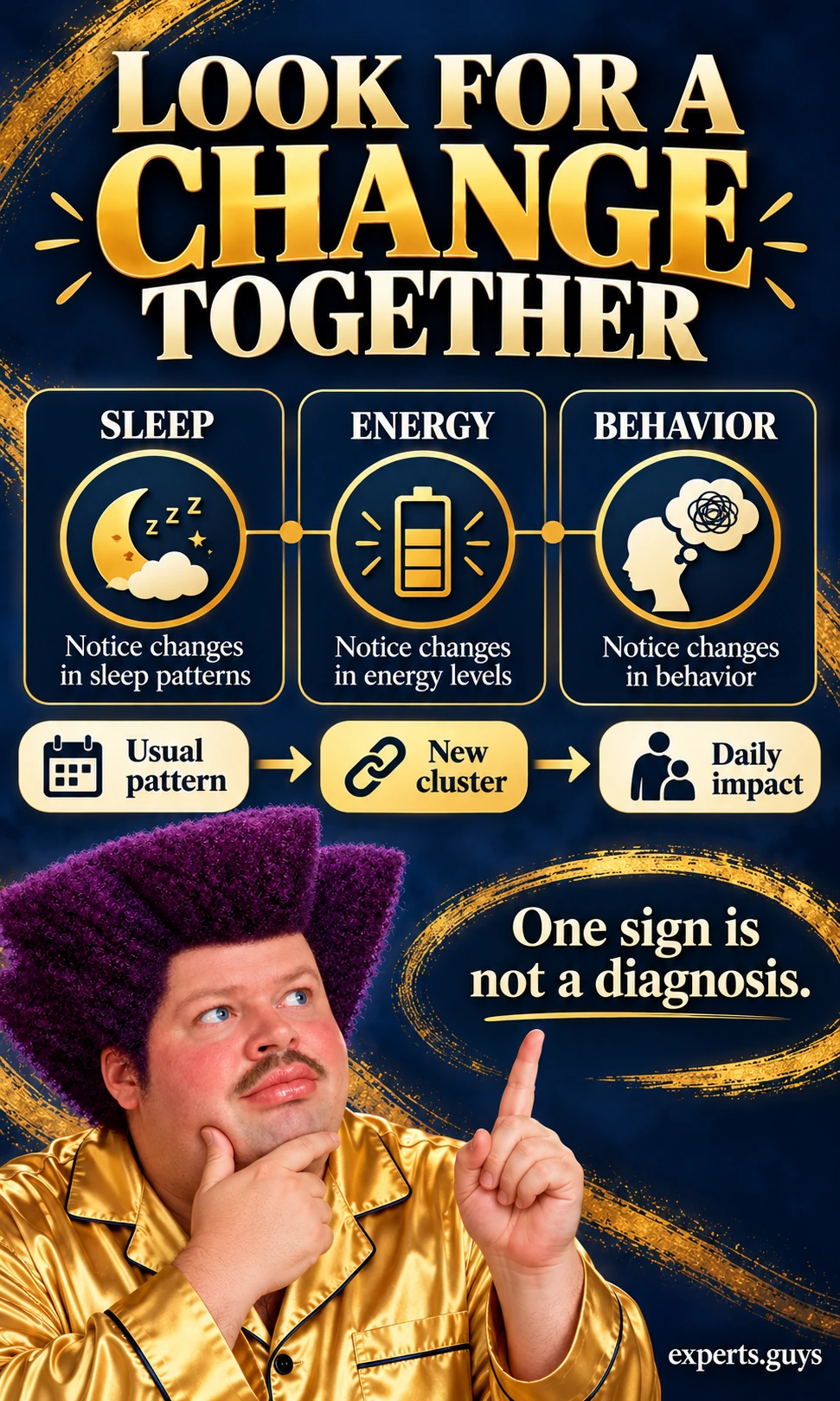
A child who has always been lively is different from a child whose pace, sleep and judgment suddenly change together. Compare the child with their own ordinary behavior and developmental stage, rather than with a quieter sibling. A burst of excitement, a disagreement or a difficult bedtime does not establish a mood episode.
A useful description names what an adult could observe: less sleep, much faster speech, unusually ambitious behavior or withdrawal from familiar activities. “They are bipolar” is an interpretation. “They have been awake much later and seem unusually energetic the next day” gives an assessor something concrete to explore.
Before looking at the eight changes, separate the timing, the combination and the effect on daily life. The purpose is to organize an account of what is happening, not to count enough items to prove a disorder. An isolated symptom can still need help when it is severe.
- Timing: Is this longstanding, tied to a particular situation, or a distinct period of change?
- Combination: Did sleep, energy, mood and behavior shift during the same period?
- Impact: What changed in school attendance, relationships, safety or ordinary routines?
- Context: Were there illnesses, medication changes, stressors or substances around the same time?
Eight changes worth discussing
1. Sleeping less without the expected tiredness
Notice whether your child is getting much less sleep than usual yet appears unusually energized rather than exhausted. This differs from wanting to sleep but being unable to settle. Describe both the night and the following day; bedtime resistance by itself says little about a mood episode.
2. An unusually elevated or intensely irritable mood
Look for a striking departure from the child’s usual emotional state, especially when energy and activity change too. A child may seem exceptionally elated or difficult to interrupt, or markedly irritable. Irritability alone is not specific to bipolar disorder, and chronic anger should not automatically be called mania.
3. A sudden increase in activity or drive
The child may begin far more projects or activity than is typical for them. The useful distinction is a new change in pace, not whether a child enjoys sport or has a busy personality. Consider whether the new activity disrupts meals, schoolwork or sleep instead of fitting comfortably around them.
4. Much faster speech or a feeling of racing thoughts
A noticeable change in conversational pace can matter: talking unusually quickly, jumping between ideas or saying thoughts will not slow down. Let the child explain their experience in their own words. Fast speech during excitement and a longstanding communication style need different context from a new sustained shift.
5. Confidence that becomes markedly unrealistic
Ordinary pride, pretend play and ambitious goals are not the same as a new conviction that ordinary limits no longer apply. Concern increases when unusual confidence changes real-world judgment. Describe the belief and what the child did because of it, rather than arguing about whether they sound “too confident.”
| Observation | Context that changes its meaning | What to describe |
|---|---|---|
| An ambitious claim | Pretend play or an ordinary goal versus a new fixed conviction | Whether it leads to unsafe choices or conflicts with reality |
| More activity | A planned event versus an unusual sustained drive | Whether sleep, pace and responsibilities changed together |
| Anger | A specific frustration versus persistent or episodic changes | What happens between outbursts and how energy changes |
6. A new pattern of risky or impulsive decisions
Look for a change in judgment that is unusual for this child, such as dangerous driving in an older teen, unsafe spending or other behavior with serious consequences. Risk taking has many possible explanations. Respond to the immediate risk first; a suspected diagnosis does not make an unsafe action acceptable or explain it automatically.
7. A period of low mood or loss of interest
A child may withdraw, lose interest in familiar activities, seem persistently sad or irritable, or struggle with ordinary tasks. These changes can occur in depression with or without bipolar disorder. A history of elevated or unusually energized periods is relevant to assessment, but depression alone does not establish bipolar disorder.
8. A marked change in everyday functioning
Difficulty attending school, maintaining friendships or managing routines makes the concern more consequential. This is a measure of impact, not an eighth diagnostic criterion. Ask what the child can no longer manage comfortably and whether that difficulty began alongside changes in mood, sleep or energy.
These eight observations are a parent-facing framework, not a validated screening scale. The NIMH guide to bipolar disorder in children and teens explains the clinical overlap and the need for a thorough evaluation. A clinician considers the whole course of symptoms rather than assigning a diagnosis from this list.
How is this different from everyday moodiness?
The same outward behavior can arise from different difficulties. Persistent irritability, anxiety, attention difficulties and a mood episode can all disrupt a family, but their timing and accompanying features may differ. The comparison below helps identify what needs explaining; it cannot separate diagnoses on its own.
| Pattern | What makes the distinction useful | What not to assume |
|---|---|---|
| Everyday emotional reactions | Often linked to a specific disappointment, conflict or exciting event | A quick recovery rules out every problem, or every tantrum suggests bipolar disorder |
| ADHD or longstanding attention difficulties | Ask what has been present over time and what is newly different | An ADHD diagnosis explains every new sleep or mood change |
| Persistent irritability or DMDD | Irritability can be present most days between severe outbursts | Chronic anger is the same as a distinct manic episode |
| Possible mood episode | Mood and energy change together over a distinct period, with other symptoms | A list of individual traits proves an episode |
| Sleep disruption, illness, stress or substances | Look at changes in routine, health, medicines and exposure | A plausible trigger means no assessment is needed |
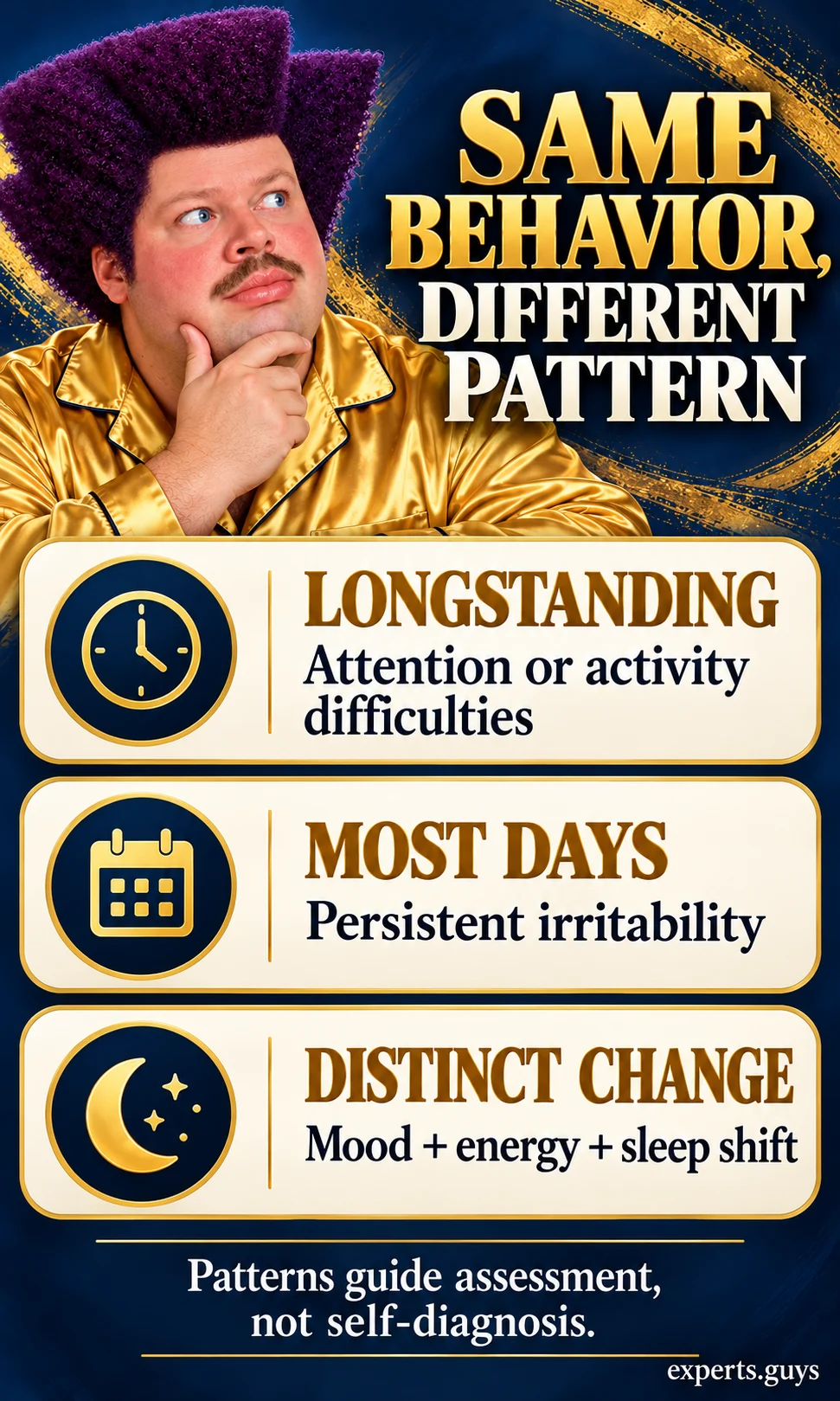
Disruptive mood dysregulation disorder involves severe outbursts with ongoing irritability; it is not a synonym for childhood bipolar disorder. There is also no requirement that a child look equally distressed in every setting. A teacher’s account and a parent’s account may describe different demands or different times of day.
Does staying awake mean a child needs less sleep?
No. Being awake tells you that sleep did not happen; it does not tell you why. A child may be frightened, uncomfortable, using entertainment late, struggling with a disrupted routine or unable to sleep despite feeling tired. Ask what the child experiences instead of interpreting time awake as evidence of mania.
For a hypothetical example, one teen stays up for an event and struggles to get through school the next day. Another sleeps substantially less than usual across several nights, remains unusually active and starts speaking and acting very differently. The second combination warrants prompt attention, but neither example supplies a diagnosis. Do not deliberately restrict sleep to test which pattern appears.

How long do the changes need to last?
Mood episodes involve more than a momentary feeling. Clinical definitions consider duration, severity, associated symptoms and impairment; a family should not use a calendar rule as a reason to delay help. In standard descriptions, mania lasts at least a week, or can be shorter when symptoms are severe enough to require hospital care. Hypomania and depression have their own criteria.
Children require particular care in assessment. NICE’s child and young-person guidance emphasizes specialist observation over time and uses stricter youth criteria, including sustained euphoria. Diagnostic frameworks differ, so a parent article should not turn one threshold into a universal home test. New severe symptoms need attention before a full duration criterion has elapsed.
What can you do before the appointment?
The practical goal is to make the situation easier to understand and safer to manage. You do not need to build a diary, interrogate your child or perform a coping exercise to qualify for care. The following actions use an ordinary conversation and information or objects you already have; they are preparation and safety steps, not treatments for bipolar disorder.
Describe one change and hear your child’s account
Use this when your child is able to have a conversation safely. Choose a familiar place where neither person feels cornered, and speak at a normal distance. Your job is to hear what happened, including parts you did not see, rather than persuade the child to accept a diagnostic label.
- Name one observation: “You have been awake much later than usual, and mornings seem different.” Use an example you actually noticed.
- Invite their account: “Do you feel tired, or do you feel as if you do not need sleep?” Listen without correcting the first answer.
- Share both perspectives: With an appropriate trusted adult or the clinician, say what you noticed and what your child reported. Make differences in the accounts clear instead of choosing a winner.
Adjust and check: Avoid stacking questions or using “always” and “never.” If the discussion escalates, pause it and return to immediate safety needs. A child who struggles to explain may prefer one simple question, their usual communication aid or a familiar supporter; a spoken answer is not required. Success means a clearer shared account, not agreement with a label.

Make medication access safer when there is a risk
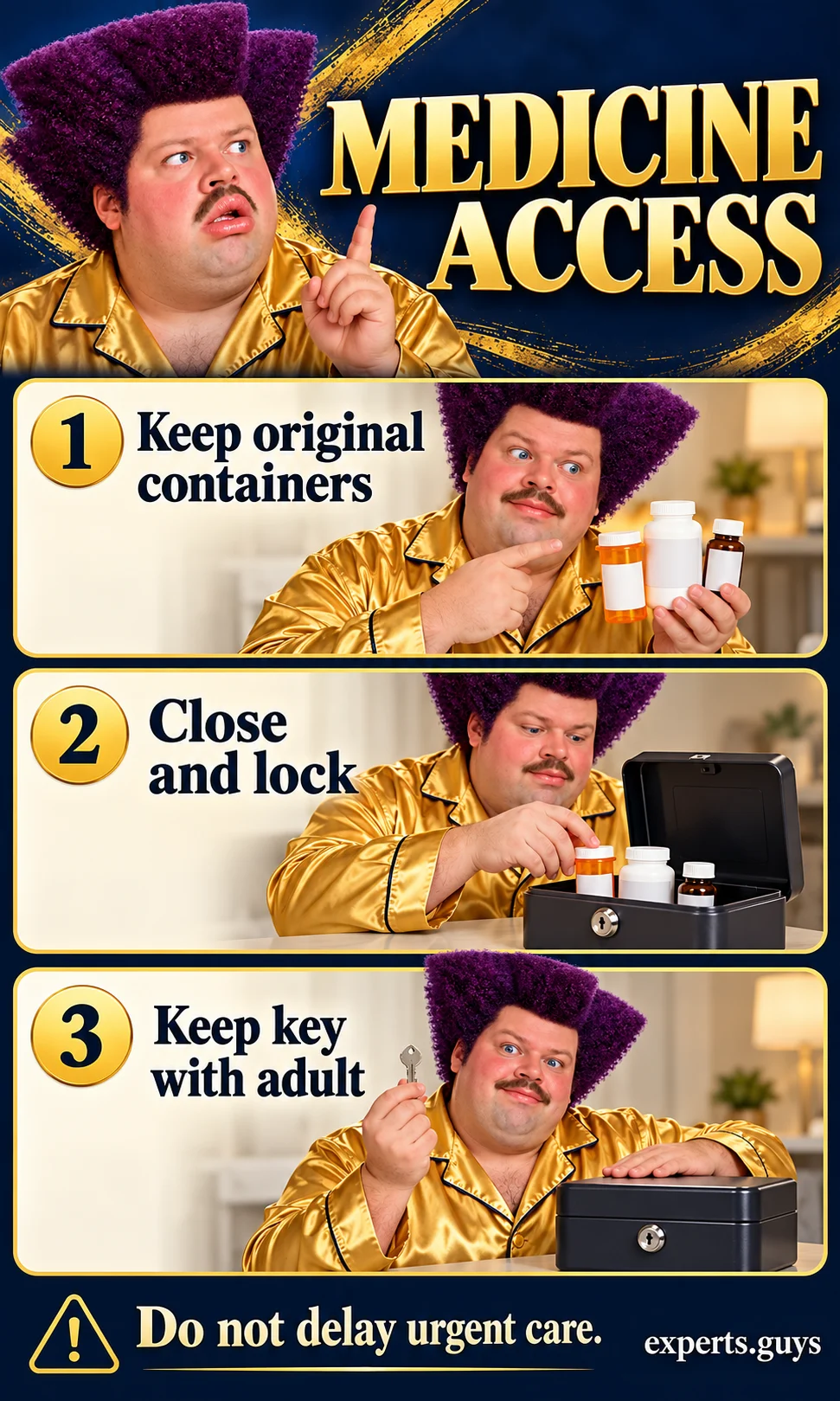
If impulsivity, unsafe use or self-harm concerns are present, household medication access deserves attention regardless of the eventual diagnosis. Do this only when it is safe and it will not delay urgent care. Another responsible adult can handle storage while you remain with a child who needs supervision.
- Keep medicines in their original, closed containers so instructions remain identifiable.
- Place them in suitable locked storage and check that the lock has engaged. Follow any special storage requirements and the child’s agreed emergency-medicine access plan.
- Keep the key or code under responsible adult control. An adult should manage access and administer medication as prescribed.
Adjust and check: A high shelf is not locked storage. If you cannot safely gather medicines, do not struggle with the child or attempt physical restraint; prioritize help and supervision. The completed task is controlled access, not a claim that the home is now risk-free. AACAP’s household safety guidance explains additional precautions for families facing self-harm risk.
Prepare the medicine information without making a diary
The clinician needs to know what the child takes and whether something recently changed. Original packaging reduces guesswork about a product name, strength or formulation. Include relevant over-the-counter products and supplements, not just prescriptions; do not treat this preparation as a reason to postpone the visit.
- Gather the original packs or containers you can safely bring, following their storage instructions.
- Keep labels visible and the containers closed in a suitable pouch or bag under adult control. Do not mix products into an unlabelled container.
- Show the packs to the clinician and explain recent starts, stops or dose changes as accurately as you can. Say when you are unsure.
Adjust and check: If a medicine must stay refrigerated, remain available for emergencies or cannot be transported, ask the clinic how best to provide its details; existing pharmacy information may suffice. A helper can gather the packs if bending or carrying is difficult. Success means the clinician can identify the products; it does not mean you should change or stop them yourself.

What will a child’s assessment consider?
An assessment brings together the child’s account, caregiver observations, developmental history and the timing of changes. With appropriate consent and privacy arrangements, school information can add another view. Family history matters, but a relative’s diagnosis does not establish the child’s diagnosis. The AACAP overview of childhood bipolar disorder explains why evaluation may extend over time.
There is no single blood test or scan that confirms bipolar disorder. A clinician may investigate medical explanations, review medicines and ask about substances or sleep problems. A teen may also need private time to discuss concerns they cannot comfortably explain in front of family. A careful assessment can identify a different condition, more than one condition or a need for further observation.
Treatment depends on the findings. When bipolar disorder is diagnosed, care can include medication and psychological or family support, with monitoring appropriate to the child’s age and treatment. For that separate question, see how bipolar disorder is treated. Do not change a child’s prescription based on a symptom article.
When should you act, and how quickly?
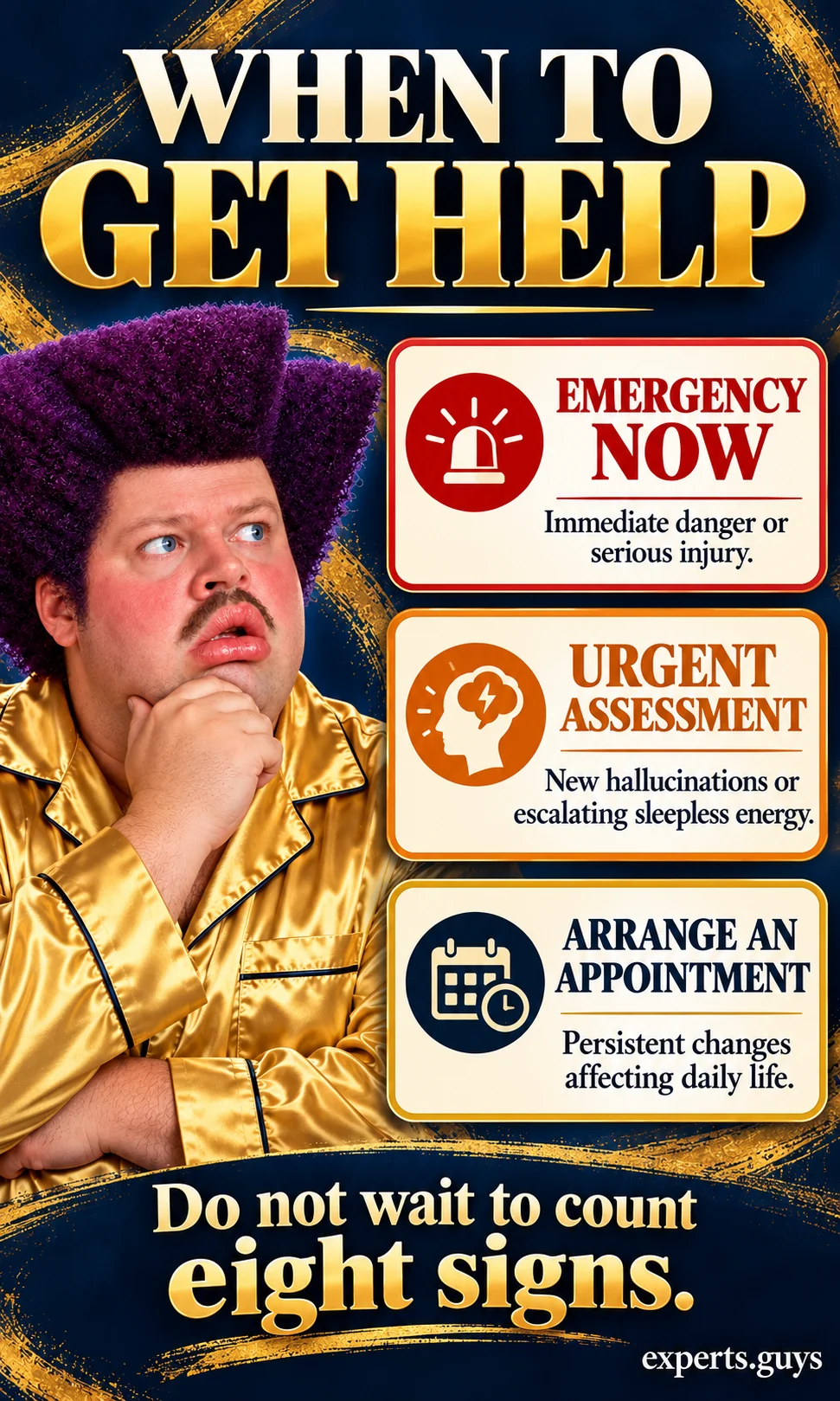
Choose urgency from the current problem, not the number of signs. Waiting for eight observations, a school report or a neat pattern can delay necessary help. If the situation worsens while you are waiting for an appointment, contact the service again and describe the new change.
| Situation | Action |
|---|---|
| Immediate danger, serious injury, overdose or inability to keep people safe | Use local emergency services or an emergency department now. Stay with the child if safe; do not delay for preparation. |
| Suicidal thoughts without immediate intent; new hallucinations or severe confusion; rapidly escalating sleeplessness and energy | Seek urgent assessment now through an appropriate local service. Use emergency services if safety becomes uncertain or the situation is severe. |
| Persistent or recurring changes affecting school, relationships, sleep or daily routines | Arrange an appointment with the child’s healthcare provider and explain the pattern and impact. |
| A brief change with a clear context and a return to usual functioning | Remain attentive to recurrence or impairment. Ask for help if concerned; this is not a rule that excludes illness. |
If your child already has an agreed care or crisis plan, use its contact and escalation steps. That is a different reader job from identifying a first concern; the guide to personal early warning signs of a bipolar episode addresses changes in someone’s established pattern. General stress skills should not replace assessment of new severe mood or energy changes.
Frequently asked questions
Can a young child have bipolar disorder?
It can begin in childhood, although diagnosis more often occurs in adolescence or adulthood. In a young child, developmental stage and overlapping conditions make careful specialist assessment especially important. There is no age at which a symptom checklist becomes a reliable home diagnosis.
Does a parent’s bipolar diagnosis mean their child will have it?
No. Family history can increase risk, but it cannot predict an individual child’s outcome or establish a diagnosis. Tell the assessor about relevant family history without interpreting every difficult behavior through it.
Does rapid cycling mean moods change every few minutes?
No. Rapid cycling has a clinical meaning: at least four mood episodes within a year. Frequent reactions during a day do not establish that pattern. Describe the actual timing without using the term as a label.
What if the teacher has not noticed the same changes?
Different accounts are useful information. Home and school differ in timing, demands and opportunities to observe sleep or behavior. Share both accounts; neither should automatically cancel the other.
Can a child have ADHD and bipolar disorder?
They can occur together, and some symptoms overlap. Assessment asks which difficulties are longstanding and whether a distinct new mood-and-energy change has appeared. A previous diagnosis should not prevent review of a significant change.
Should we stop medication if symptoms started after a change?
Contact the prescribing clinician promptly and explain the timing. Do not independently stop, restart or alter doses; sudden changes can cause harm. Severe symptoms or immediate safety concerns require urgent care rather than waiting for a routine medication review.
Your next action
- Respond to any immediate safety concern before doing anything else.
- For a non-emergency concern, describe one clear change and its effect on everyday life.
- Arrange an assessment for persistent, severe or recurring changes, bringing the child’s perspective and available medicine details.
- Leave the diagnosis open until the full pattern has been assessed.









