
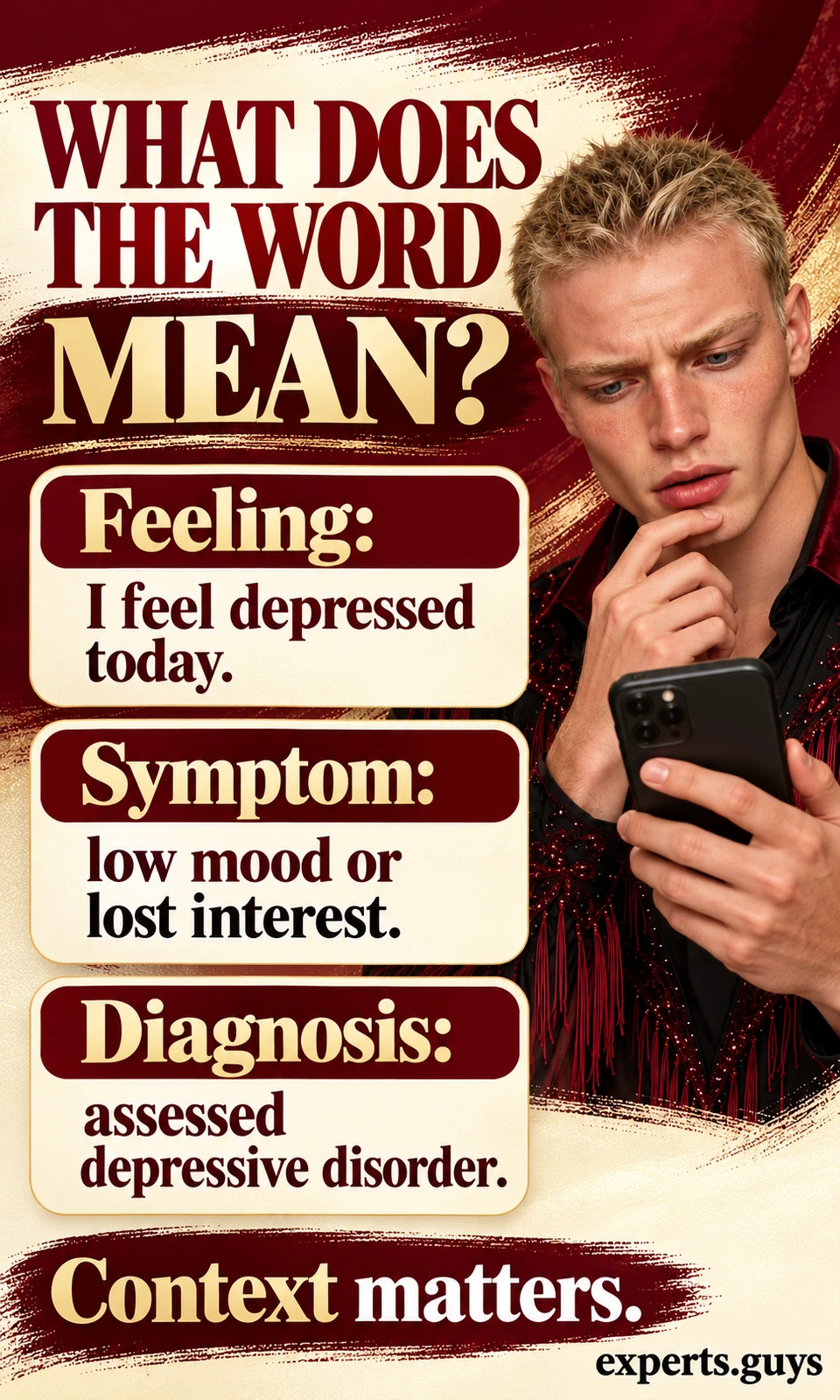
Clinical depression usually means major depressive disorder; “depression” can refer to the same illness, a symptom, or an everyday description of feeling low. The distinction depends on context, not on whether someone adds the word clinical. What matters is the pattern of symptoms, their effect on your life, and a proper assessment.
| Wording | What it may mean | What it does not tell you |
|---|---|---|
| “I feel depressed” | Someone is describing how they feel. | Whether they meet criteria for a depressive disorder. |
| “Depressive symptoms” | Low mood, reduced interest or other relevant symptoms are present. | Whether a full diagnosis has been established. |
| “Clinical depression” or “major depression” | Common terms for major depressive disorder. | That the person must be hospitalized or cannot function at work. |
| “Depression” in a visit summary | A symptom, working assessment or diagnostic label, depending on context. | The intended diagnosis, severity or next step without the surrounding explanation. |
Are clinical depression and depression different conditions?
They are not automatically different conditions. In a discussion about major depressive disorder, a clinician may use either term for the same illness. In everyday conversation, however, depression can have a broader meaning, so the surrounding sentence matters.
The NIMH explanation of depression uses clinical depression and major depressive disorder as alternative names. That does not turn every use of “depressed” into a diagnosis. A person describing a difficult afternoon is using language differently from a clinician explaining an assessed depressive episode.
Think of a hypothetical message from a friend: “I have been feeling depressed since the move.” It tells you something meaningful about their experience, but it does not establish its cause or diagnosis. Equally, knowing there was a stressful move does not rule out a depressive disorder.
Clinical is not a severity score. Someone with a diagnosed illness may still answer messages, attend meetings or laugh at a joke. The effort required and the difficulties outside those visible moments can be substantial; an outwardly capable appearance is not a reliable test.
The word depression can also sit inside a more specific diagnosis or description. The broader guide to types of depression explains those labels without treating them as interchangeable. Here, the useful first distinction is whether a word describes a feeling, a symptom or an assessed disorder; you cannot settle its meaning from the word alone.
What makes symptoms clinically significant?
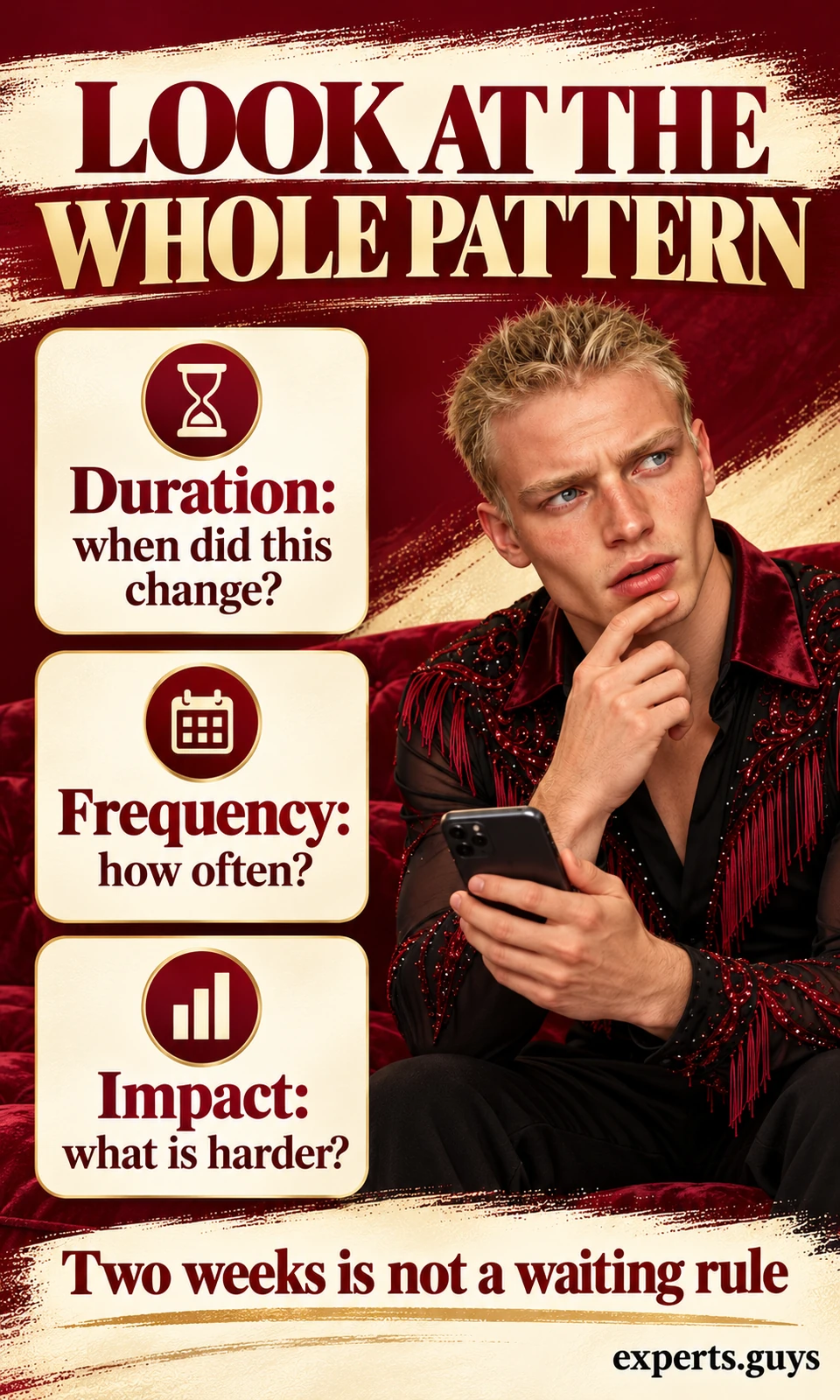
A clinical assessment looks at a pattern, not a single bad day or a word choice. For major depression, persistent low mood or a marked loss of interest is considered alongside other symptoms, their duration and their effects on everyday life. This is why “I am still working” and “I have felt low for two weeks” are each incomplete descriptions.
The symptoms can include changes in sleep or appetite, reduced energy, difficulty concentrating, feelings of worthlessness and thoughts about death. They do not all have to look dramatic from the outside. Loss of interest may be the most noticeable change even when a person does not describe themselves as sad.
A major depressive episode generally involves symptoms most of the day, nearly every day, for at least two weeks, with a qualifying pattern assessed by a clinician. Duration alone does not establish the diagnosis, and symptoms below a diagnostic threshold may still deserve help. The NIMH depression guide explains both the symptom pattern and why assessment goes beyond low mood.
The two-week criterion is therefore a diagnostic consideration, not a countdown before you are allowed to ask for support. Rapid deterioration, difficulty meeting basic needs or concerns about safety justify earlier attention. A screening questionnaire can organize an assessment, but its score cannot capture every alternative explanation, the whole history or immediate safety concerns.
A helpful comparison is between a description and the conclusion drawn from it. “I no longer enjoy seeing friends” describes a change; it does not identify the reason by itself. Assessment connects that change with timing, other symptoms, health history and the person’s circumstances.
| Assessment dimension | Useful detail | Common mistaken conclusion |
|---|---|---|
| Duration and frequency | When the change began and how regularly it occurs. | “Two weeks automatically proves depression.” |
| Distress and functioning | What feels harder, has stopped, or requires much more effort. | “Keeping a job rules it out.” |
| Wider history | Previous mood changes, physical health, medicines and substances. | “All low mood has the same cause.” |
| Context | Recent losses, stress and changes across different parts of life. | “A clear trigger means it cannot be depression.” |
Stress, burnout and depression can overlap in how they feel. The comparison of depression vs burnout explores a different question: whether difficulties are centered on work or extend more widely. Neither that distinction nor a difficult event is a substitute for assessment when symptoms persist or life is becoming harder to manage.
How can you clarify what a diagnosis or symptom label means?
Ask for the meaning of the label and explain what changed for you. You do not need to arrive with a self-diagnosis or a completed symptom diary. The following conversation steps are editorial examples for communicating clearly, not diagnostic exercises or treatments.
Clarify the wording in your visit summary
Use this when you have already had an appointment but the wording remains unclear. A visit summary can contain both a symptom description and an assessment, and they serve different purposes. Looking at the surrounding section helps you ask a precise question instead of guessing from a single label.
- Open the clinic’s secure portal and the summary for the relevant appointment, if one is available.
- Find the assessment or diagnosis section; compare it with the plan rather than relying only on a problem-list entry.
- Ask the clinic: “When you wrote depression, did you mean a symptom, a working diagnosis, or an established diagnosis? What should I do next?”
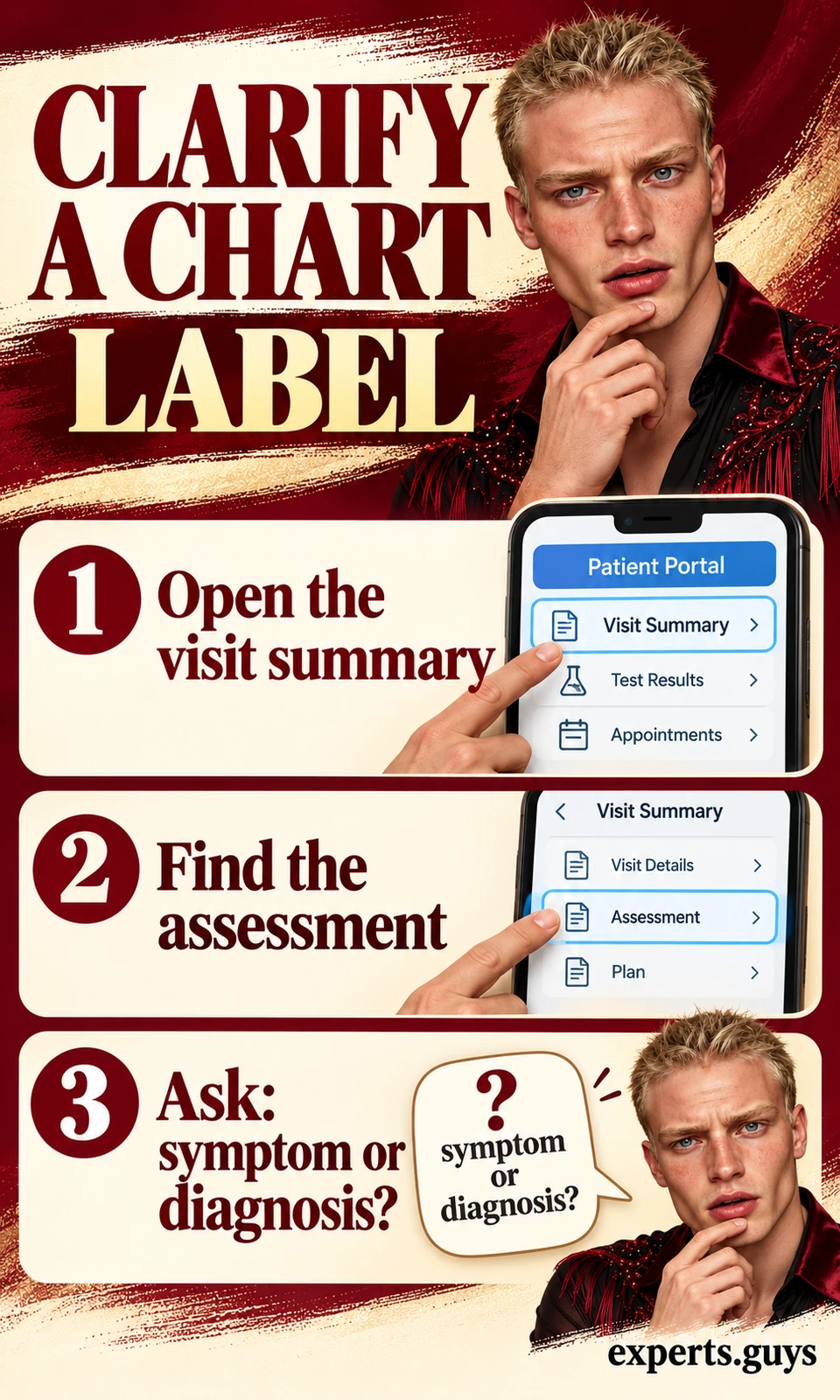
For example, “depressive symptoms” in a note may prompt you to ask whether further assessment is planned. It does not tell you on its own that your concerns were dismissed or that a particular diagnosis is confirmed. If you cannot access a portal, ask the same question by phone or at the next appointment; success is getting an explanation you can understand, not decoding a billing term yourself.
Describe one change from your usual functioning
Use one specific example when “I feel depressed” does not communicate the impact. Comparing current life with your own usual functioning gives the conversation a practical anchor. It is more informative than comparing your difficulty with somebody else’s productivity.
- Choose one activity that has changed, such as preparing meals, following a conversation or getting ready for work.
- Say what you usually manage and what happens now, including effort that other people do not see.
- Add roughly when the change began and whether it happens occasionally or on most days. You can type a short sentence on your phone or say it aloud.

A hypothetical example is: “I normally cook after work, but lately deciding what to eat feels unmanageable, and I often skip the task.” Add an honest estimate of timing if you know it; do not invent a precise date. If making a list feels exhausting, one example is enough to begin, and the clinician can help unpack the rest.
The mistake to avoid is turning this comparison into a pass-or-fail test. Being able to cook yesterday does not erase difficulty on other days, and struggling with cooking does not prove depression. The useful outcome is that another person understands what has changed and what support might be needed.
Bring the context that could change the assessment
A depressive episode does not tell the whole story of a person’s mood history. Periods of unusually elevated or irritable mood and increased energy may be relevant, especially when they involve much less need for sleep or behavior that is out of character. NIMH’s bipolar disorder overview explains why depressive and elevated episodes need to be understood together.
- Mention any distinct periods of unusual energy, reduced need for sleep or behavior that concerned you or others; describe what happened without choosing a diagnosis.
- Bring your current medicine and supplement list on your phone, or show the packaging, and describe alcohol or other substance use honestly.
- Mention physical health changes, recent stress or loss, and previous similar episodes. If you are unsure of the details, say so.
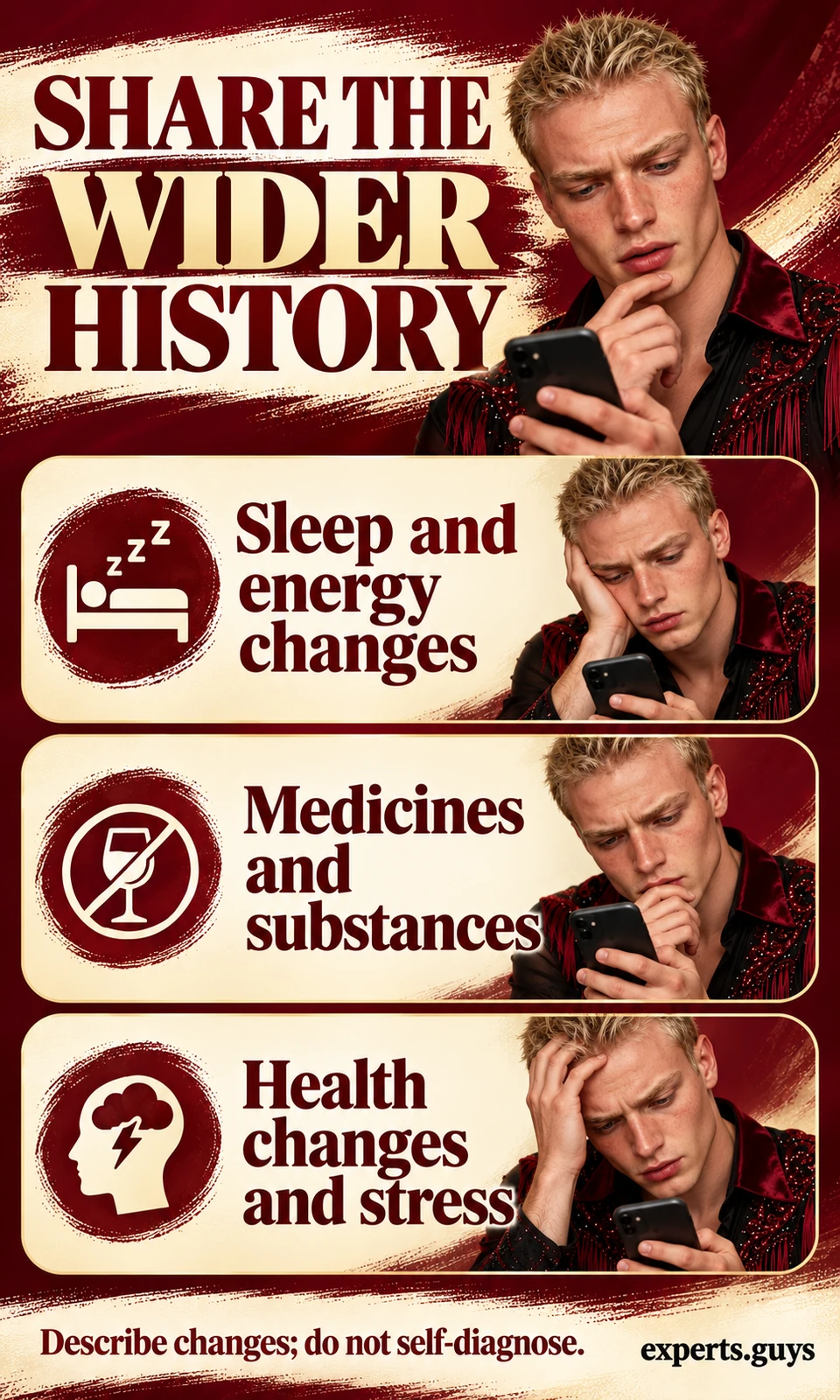
For example, “I felt low after several nights of poor sleep” is different information from “I needed very little sleep and felt unusually energized.” Neither statement establishes bipolar disorder by itself. The point is to share a potentially important distinction rather than leaving it out because the appointment is about depression.
Physical conditions and medication effects can sometimes resemble or contribute to depressive symptoms. Tests may help investigate an alternative explanation, but a normal blood result does not settle the mood assessment. Do not stop or adjust prescribed medication to test a theory; bring the concern to the prescriber so any changes can be considered safely.
Does the word clinical change the help you need?
Care should respond to the symptoms, their impact, safety, history and your preferences, rather than to the adjective clinical. A diagnosis does not automatically mean medication, admission or one particular treatment. Psychological treatment, medication or a combination may be considered according to the assessment and the person’s needs.
Ask for an explanation and a follow-up plan
Use this at the end of an assessment or when a plan still feels vague. A clear explanation helps connect the diagnosis with an actual next step. It also gives you a route back if the situation changes rather than leaving you to decide alone whether a label still fits.
- Ask: “What does this label mean in my situation, and is anything still uncertain?”
- Ask which options fit your current difficulties, including what each option is intended to help and its main limitations.
- Confirm who will review progress, when that review should happen, and what changes should prompt earlier contact. Ask for a digital summary if available.

An example of a useful clarification is: “I understand we are assessing depressive symptoms; what should happen before the follow-up?” The answer should identify a real action or contact route, not simply repeat the label. If you cannot remember several questions, start with “What happens next?” and ask the clinician to explain unfamiliar terms.
If talking with a therapist is one option, the guide to mental health counseling explains that separate care pathway. You do not need to master every treatment before asking for an assessment. The immediate job is to understand the plan offered to you and how to raise a concern if it does not fit.
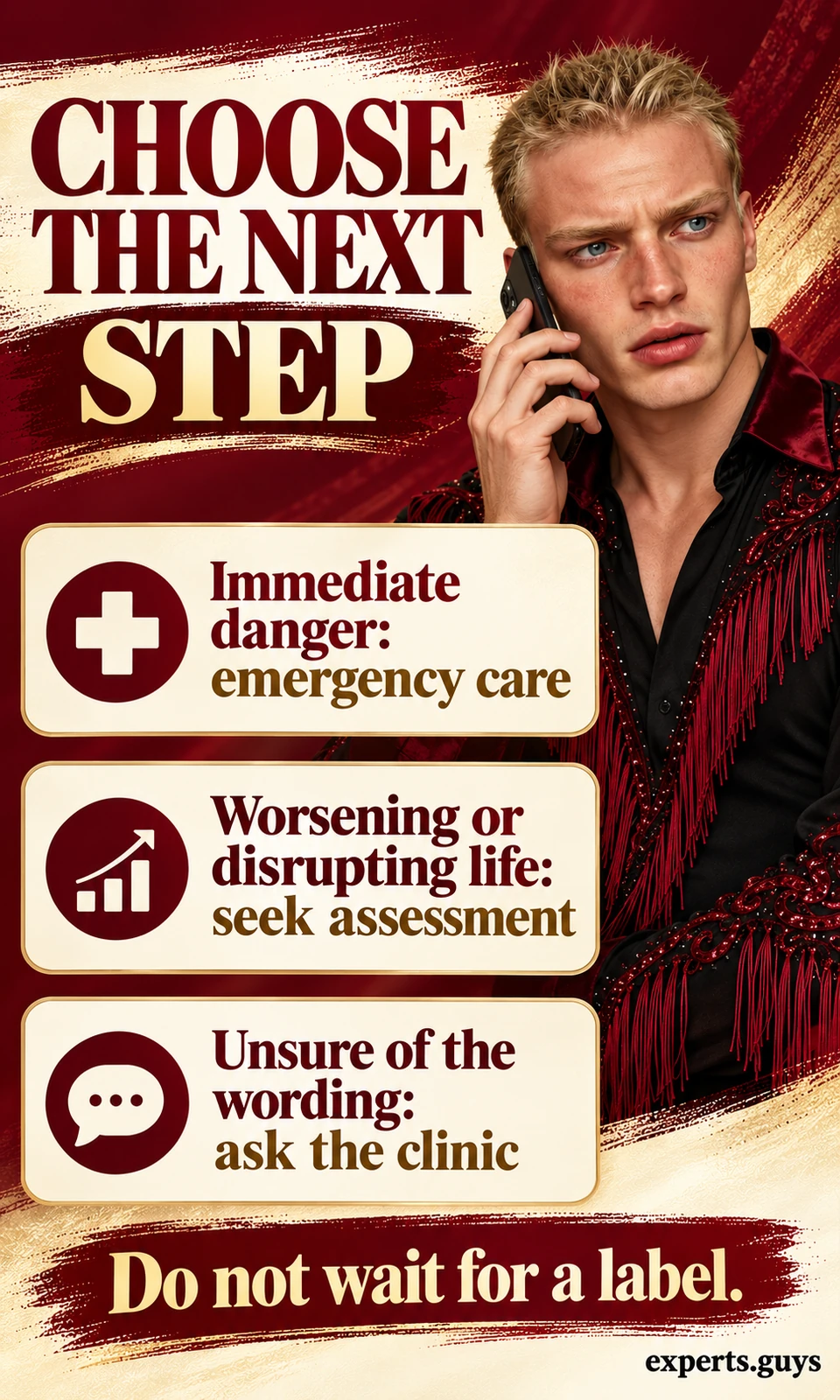
| What is happening | Appropriate next action |
|---|---|
| Immediate danger or inability to stay safe | Use local emergency services or the nearest emergency department; seek help from someone nearby. |
| New thoughts of suicide or self-harm without immediate danger | Seek prompt support from a health professional or local urgent mental health service; escalate immediately if safety changes. |
| Symptoms worsening, persisting or disrupting basic activities | Arrange a clinical assessment and explain the concrete changes; do not wait to choose the correct label. |
| A chart term is unclear but no urgent change is occurring | Ask the clinic to explain the assessment and the follow-up plan. |
The NHS guide to assessment describes how clinicians consider health history and everyday impact. That assessment is a conversation, sometimes supported by questionnaires or tests for other conditions. It should leave you with more clarity about your difficulties and the next step, even when a final diagnosis takes time.
Frequently asked questions
Does a normal blood test mean I am not depressed?
No. Blood tests can help investigate some physical explanations for symptoms, but they do not measure depression directly. The history, symptom pattern and effect on life still need to be considered.
Can my diagnostic wording change after another appointment?
Yes. An initial assessment may be provisional, and new information can clarify the picture. Ask what changed in the clinician’s understanding and whether it changes the care plan rather than assuming that different wording means your earlier difficulties were not real.
Does the word clinical mean I must take antidepressants?
No. A label alone does not select a treatment. Discuss the available options, their expected benefits and drawbacks, and your preferences; do not start, stop or change prescribed medication based on terminology.
Can I ask for help before I know whether this is depression?
Yes. Explain the change that concerns you and how it affects your life. Seeking an assessment does not require a self-diagnosis, and immediate safety concerns should be acted on without waiting.
Your next step
If the wording is the confusing part, ask what the label means in your own assessment. If a change in your life is the concern, use one concrete example to start the conversation. Choose support according to what is happening now, rather than waiting for the word clinical to appear.
Health information for general education, not an individual diagnosis. Images are AI-created editorial illustrations; people, portal screens and examples do not depict an actual patient or clinical encounter.