




Depression can improve with psychological treatment, medication, or a combination chosen for your symptoms, preferences and circumstances. The useful first step is to arrange an assessment, then make the agreed treatment practical enough to start, continue and review. This guide explains eight ways to do that without relying on a miracle remedy or a long handwritten diary.
This guide is for adults navigating care for possible or diagnosed depression. It is general education, not a diagnosis, a medicine-selection service or a replacement for your care team. Children, pregnancy-related illness, bipolar depression and psychotic depression need care tailored to those circumstances.
What is a useful remedy for depression?
A useful treatment addresses the illness and the obstacles that keep help out of reach. Depression can affect mood, interest, concentration, energy and ordinary daily activities, so the right approach depends on more than whether you feel sad. An assessment also considers physical health, current medicines, substance use and any previous periods of unusually elevated mood.
Think of treatment as a reviewable agreement rather than one permanent choice. You and the clinician decide what to try, what you hope will become easier and when to reconsider it. The NIMH depression guide explains why psychotherapy, medication and, in selected circumstances, brain stimulation can each have a role.
| Your situation | A useful starting discussion | What to avoid |
|---|---|---|
| You have not been assessed | Describe symptoms, duration and impact to a primary care or mental health service. | Waiting for a perfect explanation before asking for help. |
| Symptoms are less severe | Ask about guided self-help or psychological treatment and an agreed review. | Assuming “self-help” means being left alone with an app. |
| Symptoms substantially disrupt daily life | Discuss therapy, medication and whether combined care is appropriate. | Treating a lifestyle change as the whole answer. |
| You have started treatment but feel stuck | Review attendance, tolerability, symptom change and everyday function. | Stopping or switching a medicine on your own. |
Treatment labels are not a reliable way to assess yourself. Someone can keep working while still experiencing substantial distress, and another person may struggle with basic tasks. The table is a conversation starter, not a severity test or a rule that determines what you should be prescribed.
How can you turn treatment advice into a workable next step?
The eight methods below concern treatment navigation: arranging, choosing, attending and reviewing care. They deliberately do not repeat breathing exercises, activity ladders or other material in 10 quick coping skills for depression. The phone examples are editorial illustrations, not tested interventions or stories about real patients.
1. Prepare a useful first appointment
Use this when a low mood, loss of interest or slowing has become difficult to separate from ordinary stress or an existing health problem. The depression-specific task is to show what changed from your usual functioning and whether it followed a medicine change, illness or other event. A short phone timeline can help the assessment without turning your own interpretation into a diagnosis.
- Use a private phone note or dictation to contrast your usual functioning with now: for example, essential messages were manageable before, but now remain unanswered.
- Add when the change began, whether it is continuous or comes in episodes, and any change in sleep, appetite or interest. Include a medicine change or illness near the onset without assuming it caused the symptoms.
- Have the names of medicines, supplements and relevant treatments available. Mention alcohol or other substance use and any past periods of unusually high energy or reduced need for sleep.
- At the appointment, read or show the summary. Say what worries you most before the discussion moves to less important details.
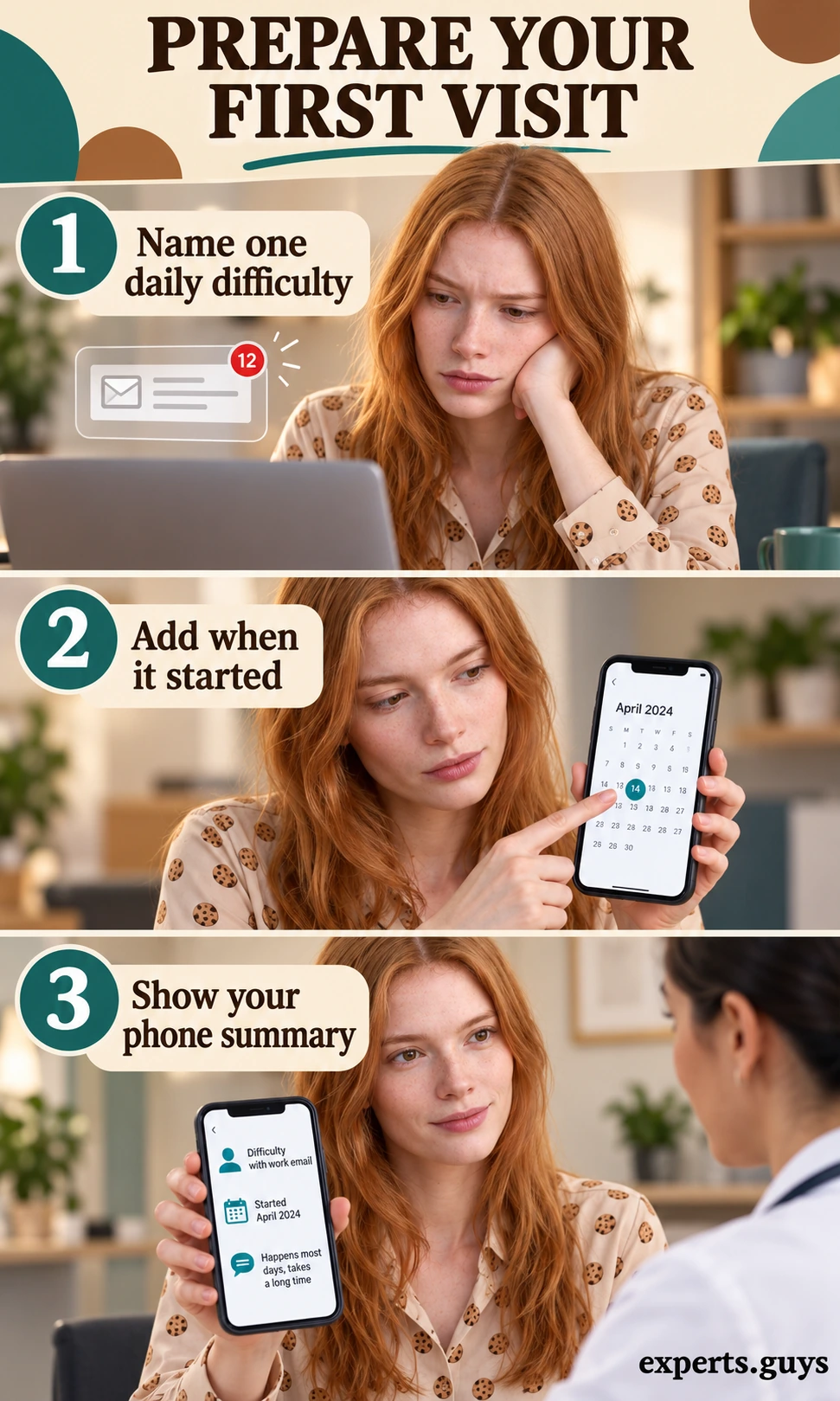
Illustrative example: “For about three weeks I have been unable to start work messages, even when I know what to say. I am also waking much earlier than usual. I would like help understanding what is happening.” This is useful information even if you cannot remember exact dates.
Adjust and check: If preparing several details feels impossible, bring only the first sentence or ask a trusted person to accompany you. Avoid spending days trying to perfect the note; completion means communicating the concern, not producing a full history. The NIMH appointment-preparation guidance supports bringing concerns and relevant information into the conversation.
2. Compare treatment by fit, not by a miracle-cure promise
Use this when several options are offered and you are unsure what each involves. A treatment can be evidence-based yet difficult to sustain if its practical demands conflict with your circumstances. Comparing those demands makes the decision more useful than asking which option is universally best.
- Ask: “What would I actually do each week with this option?” Include sessions, between-session work, prescriptions and follow-up.
- Name one priority or concern, such as avoiding daytime sleepiness, finding private appointment time or understanding whether medication is necessary.
- Ask about likely benefits, important downsides, alternatives and what happens if you choose not to start immediately.
- Agree a review point and whom to contact sooner if symptoms worsen. Keep the decision open to revision rather than treating it as a lifetime commitment.
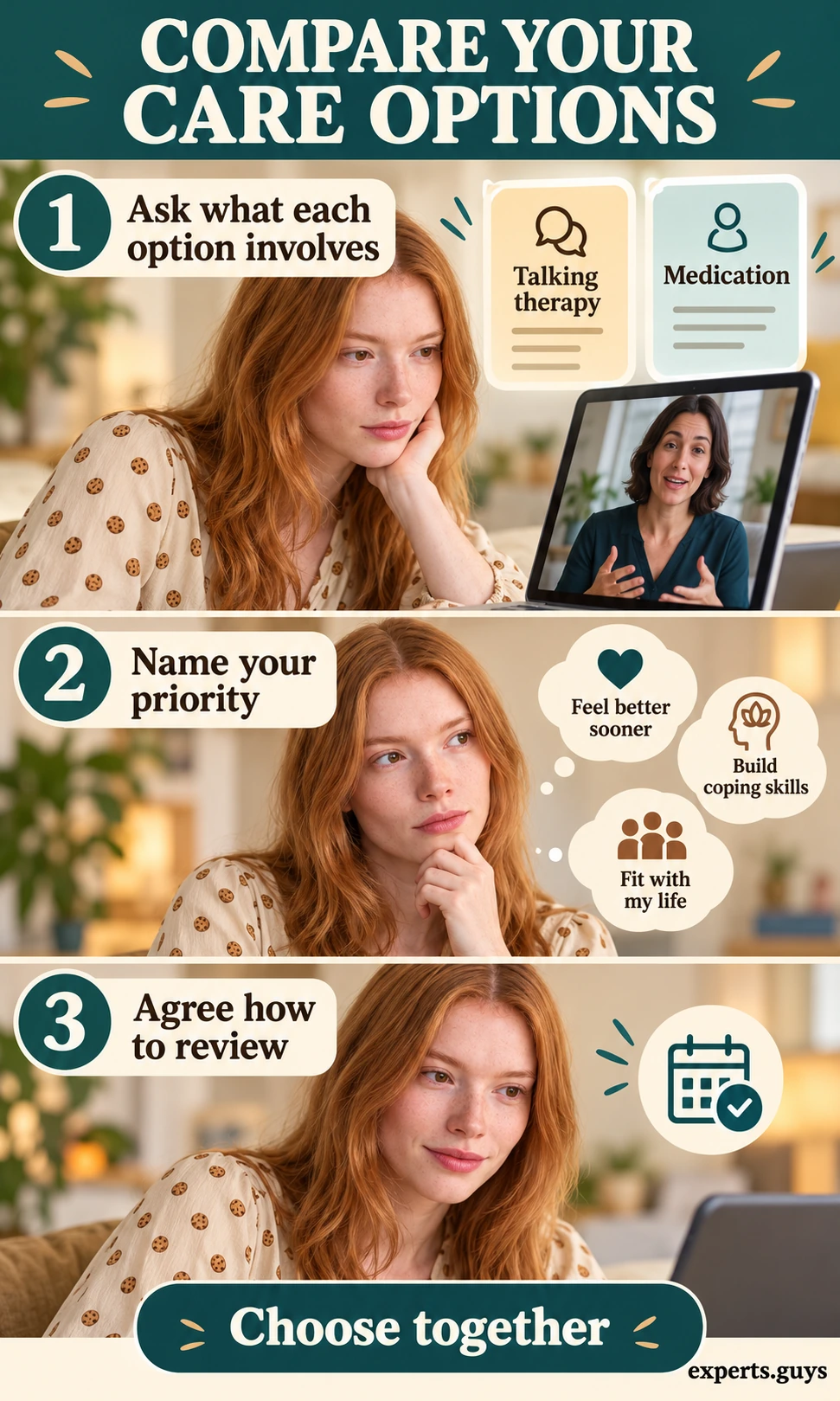
Illustrative example: A shift worker might prefer a scheduled phone session to an appointment during working hours. That preference does not prove phone treatment is clinically superior; it identifies a format the person may be able to attend. If comparing several options is overwhelming, ask the clinician to explain the two most suitable ones first.
Common mistake: Assuming that therapy and medication are competing teams. Either may be useful, and combined care can be appropriate for more severe depression. The NHS treatment overview outlines options, but local availability and individual suitability vary.
3. Turn therapy into a clear working agreement
Use this when depression care includes therapy and you need to understand what it adds, especially alongside medication. A prescription review and a therapy session may address different parts of the same difficulty, so each needs a clear role. Keep general provider selection in the separate mental health counseling guide; here, focus on the treatment target and coordination.
- Ask which depression-related pattern the proposed therapy targets: for example, withdrawal from meaningful activities, unhelpful thinking patterns or a difficult life transition.
- Connect that target to one ordinary-life goal, such as managing the first part of the morning. Ask what therapy contributes if medication is also part of care.
- Tell the therapist about other treatment and any effects that interfere with participation, such as feeling too drowsy to follow a session. Ask what information should be shared with the prescriber, with your consent.
- Clarify which professional handles medicine concerns, which handles therapy adjustments and how the two can communicate. Do not assume attending both services means they automatically share information.

Illustrative example: “My energy is improving, but I still avoid opening work messages. Is that something we can work on in therapy?” This separates a remaining behaviour pattern from a general judgment that all treatment has failed. The smaller version is asking, “Which part of my depression are we working on here?”
Adjust and check: If you receive conflicting instructions, ask the services to clarify them instead of choosing between them yourself. A brief shared summary may be easier than repeatedly retelling your history, but agree what may be shared. NIMH’s psychotherapy guidance explains how psychological treatment can address specific difficulties even when medication relieves other symptoms.
4. Remove one barrier to getting care
Use this when an agreed depression treatment is delayed or repeatedly missed because of cost, timing, travel or privacy. The priority is continuity: being on a waiting list is not the same as having someone review changes in your condition. Identify the obstacle blocking the next contact, then ask what support remains available while it is resolved.
- Identify the single blocking issue: cost, time, travel, privacy, language or difficulty making contact.
- Ask the service one specific question about it, such as whether reduced-fee appointments, a telephone visit or an interpreter is available.
- Confirm that the referral or booking was received and when you should hear back. Ask whether an appropriate interim option, such as supported self-help, is available; do not assume an app replaces clinical follow-up.
- If there is a wait, ask who remains responsible for follow-up and what to do if symptoms worsen before the appointment.
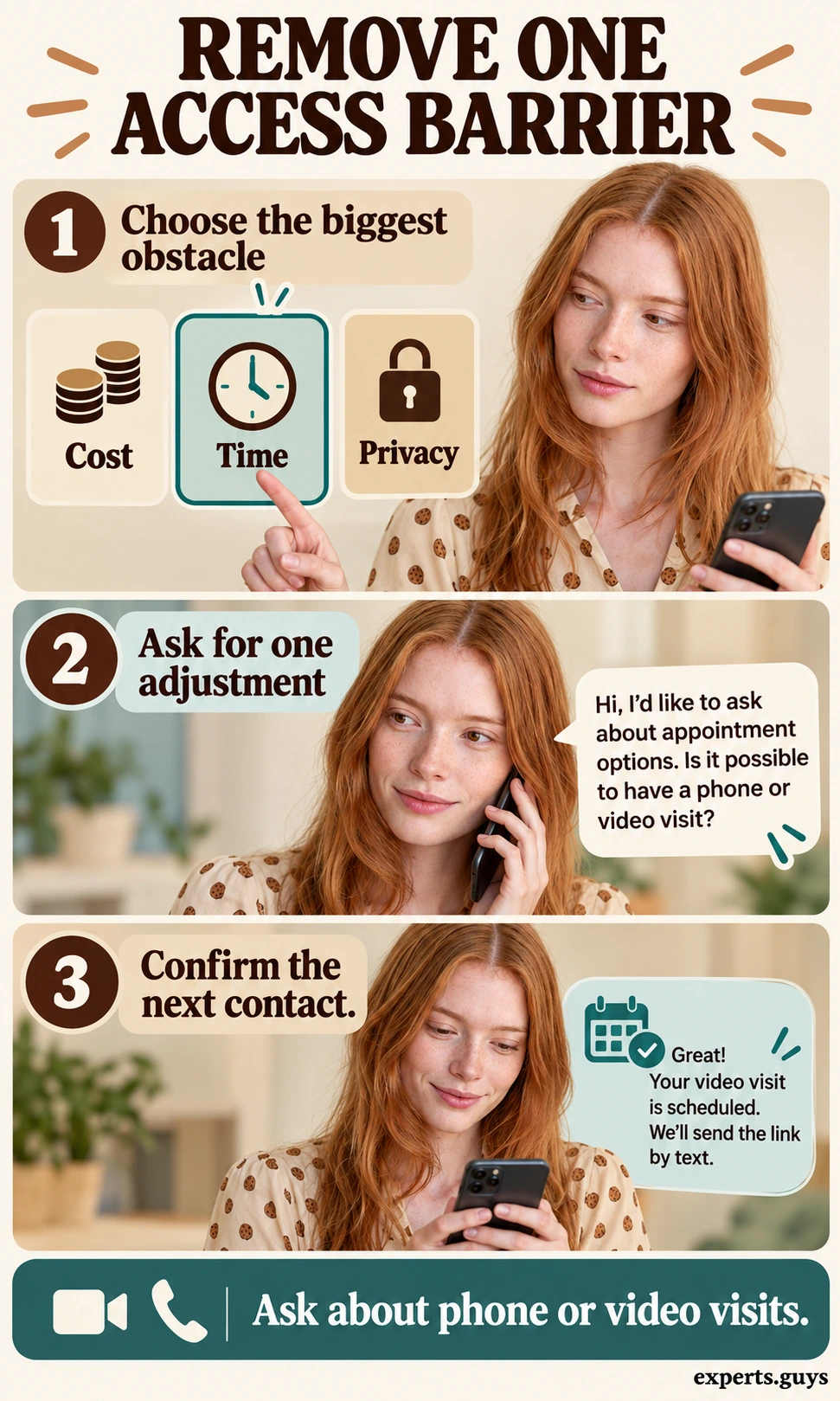
Illustrative example: “I cannot speak privately at home. Is an in-person appointment or a different time possible?” If making the call is the obstacle, a trusted person can sit beside you or help prepare the message. Use the service’s official contact route rather than putting private health details in a public comment.
Common mistake: Assuming that a future therapy appointment replaces current medication or symptom reviews. Confirm who handles those reviews while you wait and use the earlier-help route if your condition changes. Completion means knowing the next contact and the interim arrangement, not merely pressing send.
What makes treatment easier to continue safely?
Once care begins, the question changes from “What might help?” to “Can I use this safely and consistently?” Instructions, practical support and early communication matter here. These steps organise care; they do not authorise you or a friend to change treatment.
5. Set up a safe medication routine if it is prescribed
Use this only after a prescriber has recommended a medicine for you. Antidepressants affect signalling in the brain, but that does not establish a simple chemical-deficiency explanation for your depression. The practical task is to understand your own prescription and follow-up, rather than compare doses with another person online.
- Check the label and ask the pharmacist to explain anything unclear, including what to do if you miss a dose. Follow medicine-specific advice rather than guessing or doubling up.
- If a reminder would help, set a discreet phone alert that matches the prescribed schedule. Keep medicines stored as directed and away from children.
- Confirm your first review date and the contact route for troublesome effects. Ask about interactions before adding supplements or over-the-counter products.
- Tell the prescriber promptly about new or worsening symptoms. Do not stop, increase, reduce or switch the medicine yourself.
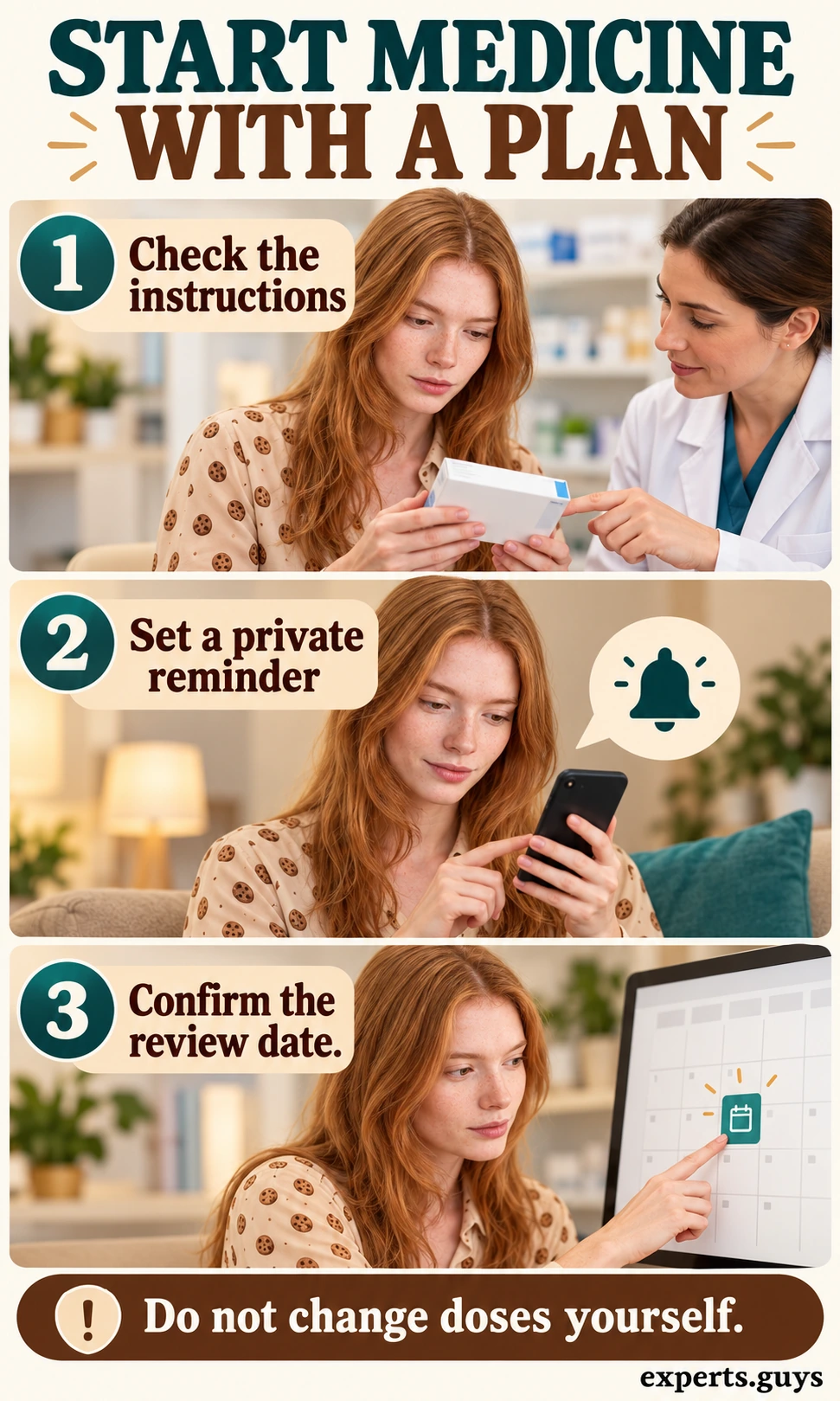
Illustrative example: A private reminder labelled “routine” may be more comfortable on a shared screen than a medicine name. If alerts are easy to dismiss, ask the pharmacist about a safe alternative reminder arrangement rather than improvising storage or dosing. Completion means clear instructions and a review plan, not an immediate improvement in mood.
Timing and safety: NICE generally advises a first review within two weeks, or within one week for a new prescription at ages 18–25 or when suicide risk is a particular concern. Follow your prescriber’s individual plan and seek earlier help for worsening symptoms; immediate danger needs emergency help. The NICE adult depression recommendations explain these monitoring decisions.
6. Give a trusted person a practical role
Use this when organising care is harder than understanding that you need it. A specific request gives another person a task they can accept, decline or help adjust. It also keeps friendship or family support separate from clinical decision-making.
- Choose someone who respects your privacy and boundaries. You do not have to involve a person who makes you feel unsafe.
- Ask for one concrete task, such as helping book a visit, arranging transport or sitting with you during a phone call.
- State the limit: what information you want shared, whether they should join the appointment and what you want to do yourself.
- Agree when the task is finished and whether any later check-in would be helpful.
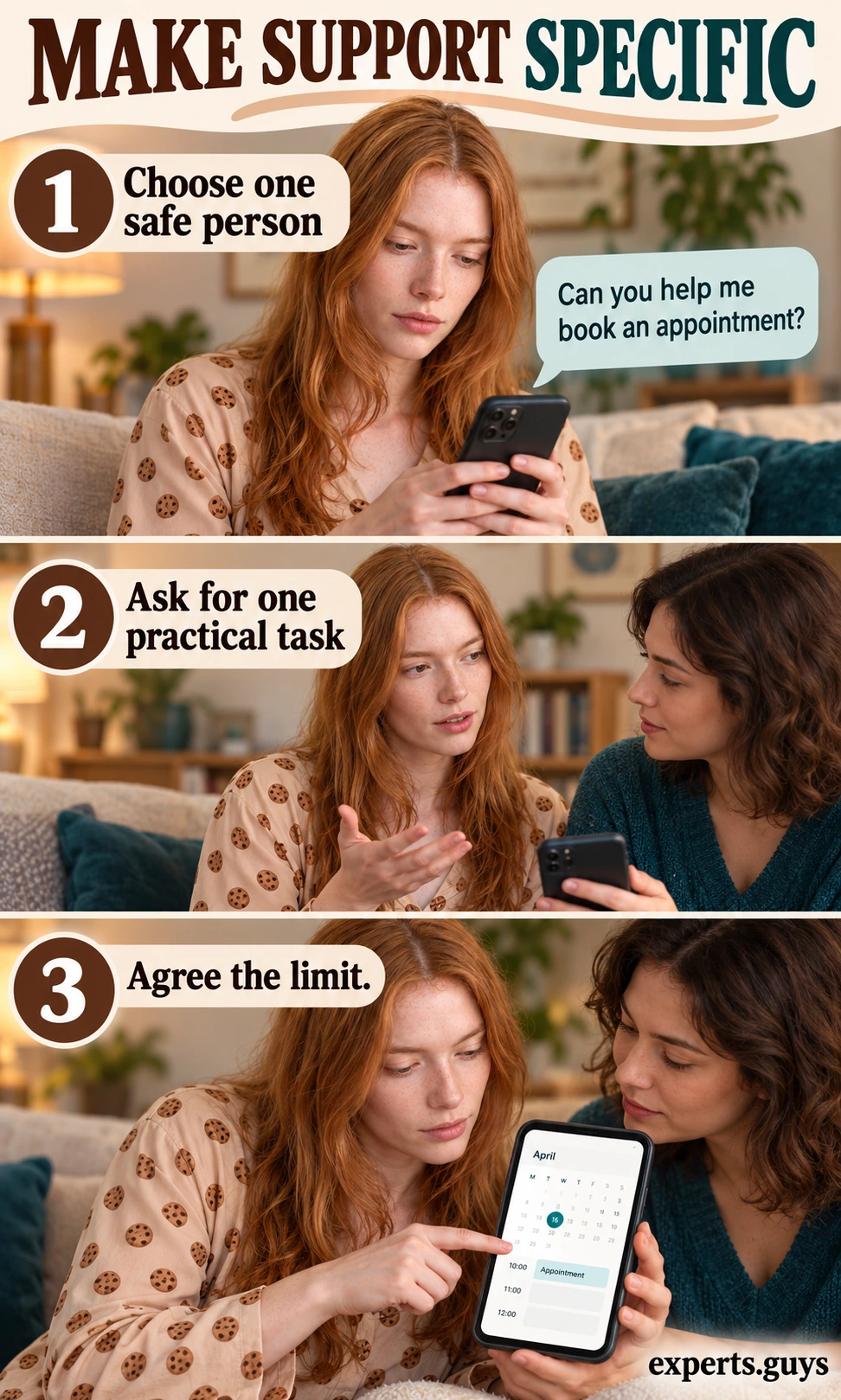
Illustrative example: “Could you sit with me while I call the clinic this evening? I want to do the talking, but I may need help getting started.” If that feels too much, send only the request for company. A clear “yes” or an alternative time is a useful result even before the appointment is booked.
Common mistake: Asking a friend to decide whether a prescription is right or whether symptoms are serious enough for care. Their role can be support, transport or communication, while clinical questions stay with the care team. If you have no suitable person, ask the service whether appointment support or care coordination is available.
How do you know when to review the plan?
A good day is welcome, but it does not settle whether a treatment is working overall. Look at functioning, symptoms, unwanted effects and whether the treatment was possible to use as agreed. The purpose is to make the next discussion clearer, not to monitor yourself constantly.
7. Review function, side effects and treatment fit together
Use this before an arranged review or sooner when things are getting worse. Changes in sleep or concentration may appear before mood improves, while unwanted effects can make an otherwise promising treatment difficult to continue. Keeping these questions separate prevents “I feel the same” from hiding a useful change or a serious difficulty.
- Choose one ordinary activity to compare, such as getting ready for the day or handling essential messages. Recall how it was before treatment and how it is now.
- Add any unwanted effects or difficulties attending sessions or following the prescribed plan. A short private voice note is enough if you prefer one.
- At the review, explain both what changed and what did not. Ask whether the current approach should continue, be adjusted or be reassessed.
- Leave with the next review arrangement and a clear route for earlier help. Do not wait for the scheduled review if you feel unsafe or symptoms deteriorate sharply.
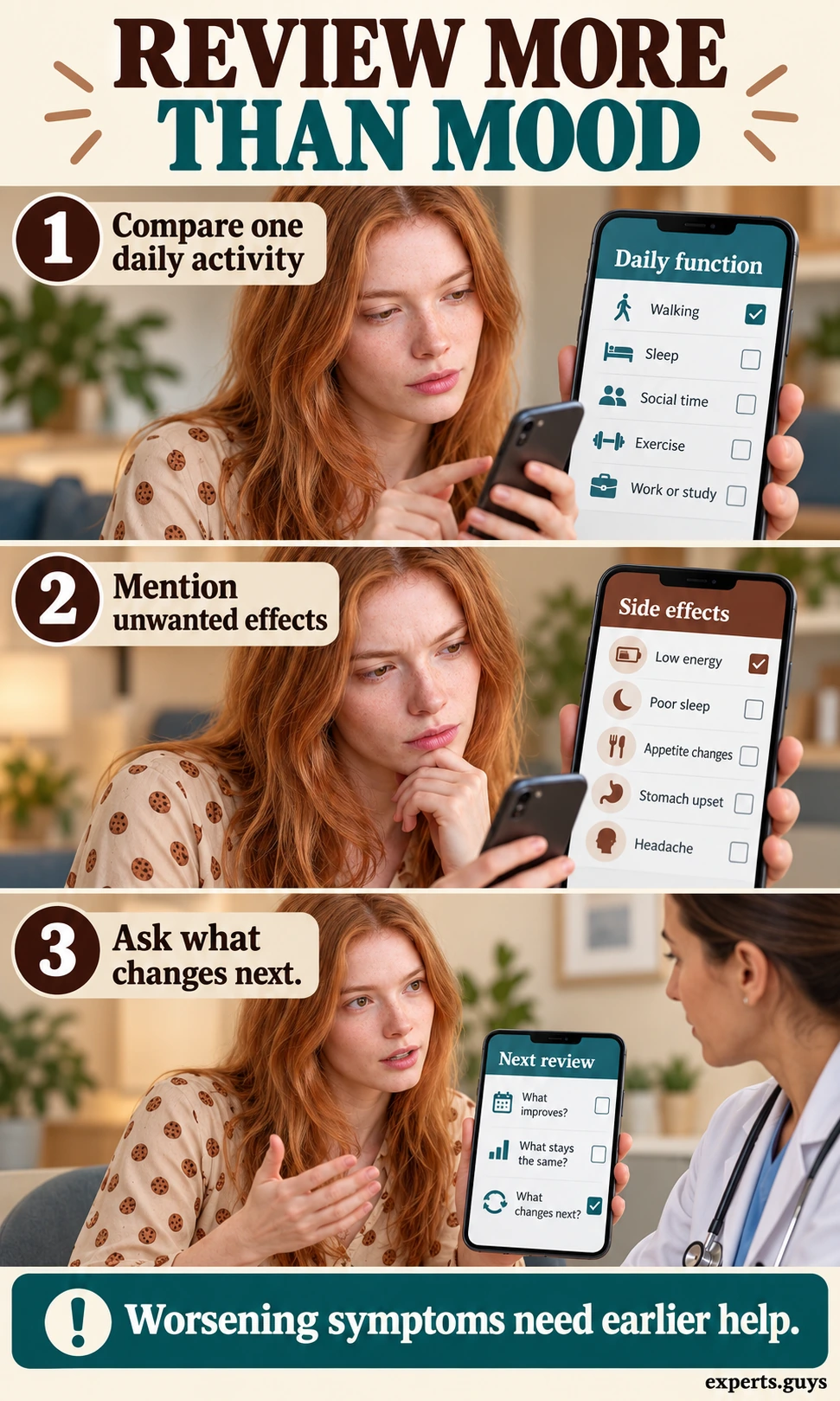
Illustrative example: “I can start getting ready more easily, but nausea is making breakfast difficult.” This communicates partial improvement and a tolerability problem without deciding the remedy. If recall is difficult, bring one recent example instead of building a detailed daily tracker.
Timing is a guide, not a countdown: Antidepressant benefit commonly develops over several weeks, with NIMH describing a typical four-to-eight-week period. Do not interpret that as an instruction to tolerate worsening symptoms until week eight. NIMH’s medication guide explains delayed benefit and the importance of monitoring.
| What you notice | What to bring to the review | What it does not prove |
|---|---|---|
| Some tasks are easier but mood remains low | One example of improved function and the symptoms that persist. | That you should stop treatment because one part improved. |
| Side effects interfere with daily life | What happens, when it started and how it affects eating, sleep or activity. | That changing the dose yourself is the solution. |
| No clear improvement | How long the agreed treatment has been used and any barriers to using it. | That every treatment will fail. |
| Rapid deterioration or inability to stay safe | Seek urgent help immediately rather than preparing a routine review. | That you must wait for an appointment date. |
8. Keep a plan for symptoms returning
Use this as symptoms improve or when a course of treatment is ending. A return-of-symptoms plan makes the next action easier to recognise before daily life becomes much harder. It is separate from an emergency safety plan and should not replace one when your care team recommends it.
- With your clinician, identify early changes that have mattered for you, such as disrupted sleep, withdrawing from contact or losing daily structure.
- Agree what action follows those changes and how soon to contact the service. Avoid inventing a threshold based on somebody else’s experience.
- Save the agreed contact and backup route privately on your phone. Check that the service and contact details are current.
- Review the plan when circumstances or treatment change. Keep decisions about continuing or tapering medication clinician-led.
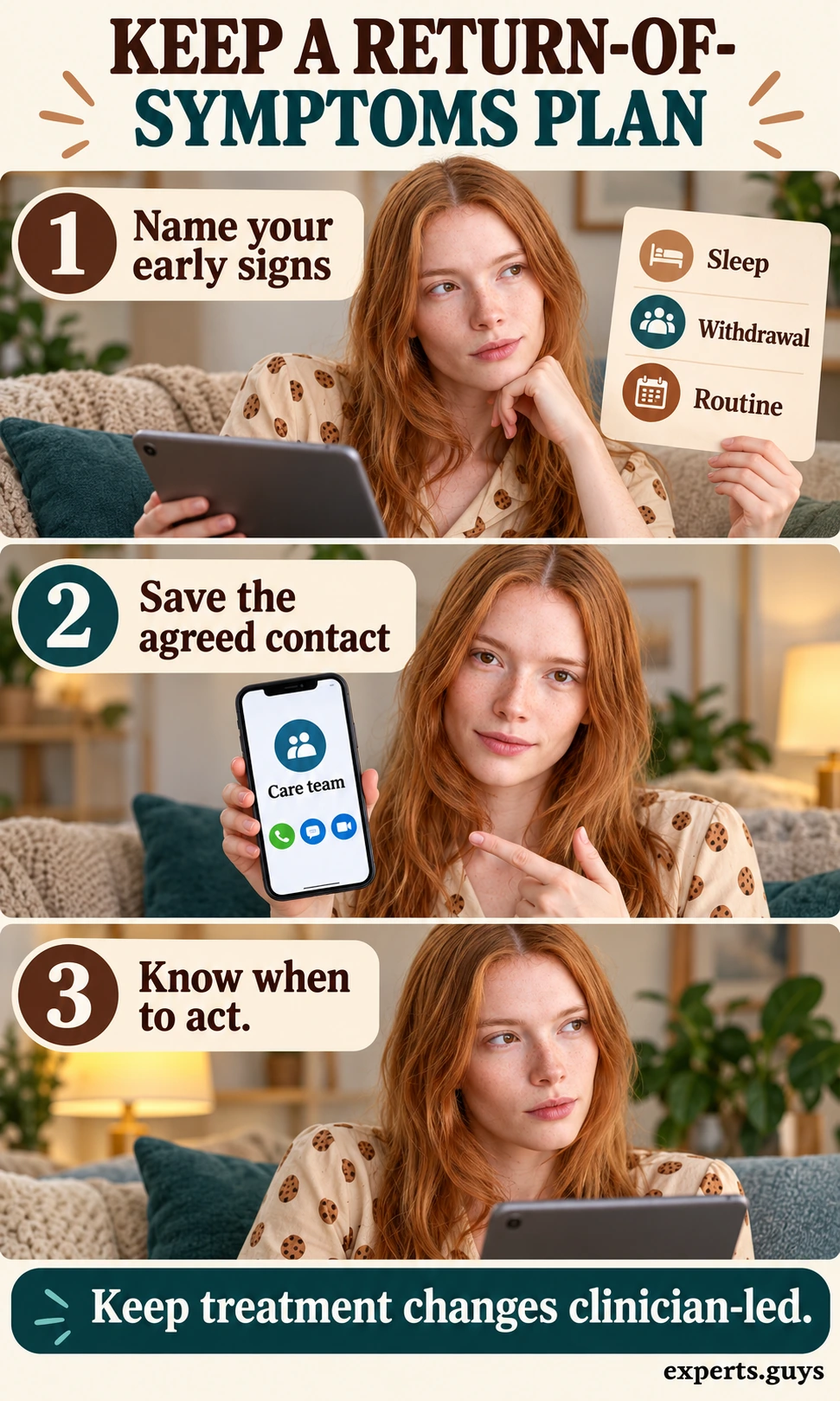
Illustrative example: Your plan might say to contact the care team when a familiar pattern returns, using a trigger and timing you have agreed together. If a long document feels unmanageable, keep the first contact and the agreed action accessible. A missed routine on one day does not automatically mean relapse.
Adjust and check: Make sure you can find the contact information without searching old messages. Ask what to do outside service hours and explain the plan to a trusted person only if you want them involved. NICE’s relapse-prevention standard supports recognising personal warning signs and making a contingency plan.
What if the first treatment does not help?
A first treatment that provides little benefit calls for a review of the situation, not a judgment about your effort. The clinician may reconsider the diagnosis, treatment exposure, side effects, other health conditions or ongoing pressures, then discuss an adjustment or different approach. Persistent or severe symptoms can justify specialist assessment, including discussion of treatments beyond an initial therapy or antidepressant.
This page cannot determine whether you have treatment-resistant depression or which specialist option fits. Brain stimulation and other specialist treatments require individual assessment, and some are considered earlier when illness is life-threatening. Bring the treatment history you have rather than assuming you must complete every option in a fixed order.
Frequently asked questions
Do natural remedies replace depression treatment?
No supplement or lifestyle promise is a dependable substitute for assessment and an appropriate treatment plan. Regular meals, activity and sleep support general health, but they do not establish that depression has resolved. St John’s wort can interact with important medicines; check the NCCIH safety information and speak with a pharmacist or prescriber before considering it.
Can I ask for therapy if I do not want medication?
Yes, you can explain that preference and ask which psychological treatments are appropriate. The decision also depends on symptoms, safety, previous response and access. Discuss what happens if the first approach is insufficient rather than treating the preference as a permanent restriction.
Is a mental health app the same as guided self-help?
No. Guided self-help combines structured material with support, whereas an app may provide information or exercises without clinical guidance. Ask who supports the programme, what its evidence is and how worsening symptoms are handled.
Should I stop treatment when I feel better?
Do not make that decision on your own, especially with medication. Continuing care after improvement may help reduce recurrence, and stopping an antidepressant can require a gradual individual plan. Agree the next stage with the person managing your treatment.
Do I need to explain everything at the first visit?
No. Start with the concern that most affects daily life and say if speaking is difficult. A short phone note, dictation or a trusted companion can help you begin; the clinician can ask follow-up questions.
Can I use this guide for a teenager?
The treatment comparisons here are written for adults. A teenager needs an age-appropriate assessment, with family or caregiver involvement considered according to safety, circumstances and local practice. Do not apply adult medication guidance to a child or teenager.
Choose one next step
If you have not started care, prepare one clear sentence and arrange the first contact. If treatment is already underway, choose the unresolved issue that most affects your ability to continue: access, instructions, support or review. A useful next step makes care more workable; it does not require you to feel better immediately.










