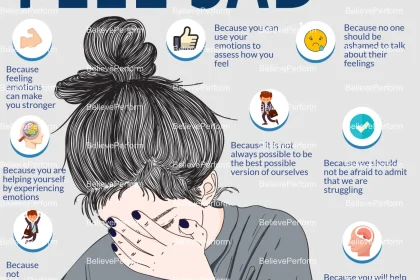

Depression does not always arrive looking like obvious sadness. A person may keep showing up to work, answering messages, taking care of other people and maintaining routines while something underneath has changed considerably. The difference may first appear in how much effort ordinary life requires, how little satisfaction comes back from things that once mattered, or how quickly a person retreats from parts of life that are technically optional.
That makes some depression signs surprisingly easy to misread. Irritability can be blamed on personality, exhaustion can be blamed entirely on a busy schedule, cancelled plans can look like introversion, and a messy home can be interpreted as poor discipline. None of those changes proves depression on its own. Their meaning becomes more important when several begin together, persist beyond a short-lived difficult period, and represent a noticeable departure from the person’s usual baseline.
The most useful way to think about hidden signs is therefore to look for a pattern of change, rather than searching for one secret symptom. Someone who has always preferred quiet weekends is different from someone who previously enjoyed seeing friends and has gradually stopped answering invitations. Someone who occasionally procrastinates is different from someone who now spends unusual amounts of mental energy getting through showers, meals, emails and small decisions.
That distinction matters because people can remain outwardly capable while their inner experience deteriorates. Visible functioning tells you what is still getting done; it does not tell you how much effort, recovery time, self-pressure or emotional cost is required to keep doing it. If you want the broader clinical context first, the depression symptoms guide explains the major emotional, cognitive, physical and behavioral symptoms that can occur together.
What Does “Hidden Depression” Actually Mean?
“Hidden depression” is an informal description rather than a separate medical diagnosis. It usually refers to depressive symptoms that are overlooked because they do not match the stereotype of someone appearing visibly sad, crying frequently or being unable to function. Some people conceal distress deliberately, while others continue functioning well enough that they themselves do not recognize how much their mood, energy, pleasure, thinking or everyday behavior has changed.
Several patterns deserve closer attention when they are new, persistent or beginning to spread across different parts of life:
- Irritability, frustration or unusually low tolerance for ordinary demands
- Quiet withdrawal from friends, hobbies or previously valued routines
- Less pleasure or emotional reward after activities
- Persistent fatigue that does not seem proportional to the day’s demands
- Increasing difficulty starting small everyday tasks
- More trouble concentrating, remembering or making decisions
- Sleep or appetite changes that become a new pattern
- Unexplained aches, digestive discomfort or other physical complaints
- Greater self-criticism, guilt or a sense of being a burden
- Reduced personal care or a gradual narrowing of daily life
- Needing much more private recovery time after appearing functional in public
The important word in that list is change. Almost every item can occur for reasons unrelated to depression, including stress, grief, sleep deprivation, physical illness, medication effects, burnout or a difficult life period. A useful assessment therefore asks what changed, when it changed, what else changed at approximately the same time, and whether the pattern is resolving or becoming more established.
1. Irritability Can Replace the Sadness People Expect

Some people associate depression so strongly with sadness that anger and irritability seem unrelated. In practice, a person who previously handled everyday inconveniences comfortably may become much easier to frustrate, feel constantly overstimulated, react strongly to small interruptions or become unusually impatient with people they care about. The experience may feel less like “I am depressed” and more like “everything is getting on my nerves.”
That pattern still needs context. Irritability can accompany anxiety, sleep loss, chronic stress, pain, hormonal changes and many other conditions, so it should never be treated as a diagnostic shortcut. It becomes more informative when it appears alongside reduced pleasure, persistent tiredness, withdrawal, hopelessness or other significant changes. A deeper look at this presentation is available in anger and irritability in depression.
2. Social Withdrawal May Happen Quietly

Withdrawal does not always look like abruptly cutting everyone off. It can begin with smaller behavioral changes: replying later, allowing conversations to end more quickly, declining invitations that previously sounded enjoyable, keeping camera-off meetings whenever possible, eating lunch alone, or feeling relieved when plans are cancelled. Individually, those choices may mean very little. The pattern becomes more revealing when the person’s social world keeps shrinking despite still wanting connection.
One useful question is what happens before and after social contact. If someone wants to see friends but experiences enormous difficulty initiating the plan, the barrier may involve energy, executive function, anxiety or low motivation. If they attend but feel emotionally detached throughout, another part of the pattern may be more prominent. Social withdrawal and depression examines that distinction in more depth.
3. Enjoyable Things Can Become Emotionally Quiet

Another easily missed change is continuing to perform enjoyable activities while receiving much less emotional reward from them. A person might still watch the same shows, cook, exercise, play games or meet friends because those activities remain part of the routine, yet the anticipated pleasure and the actual pleasure feel noticeably weaker. From the outside, nothing appears to have disappeared.
That makes reduced pleasure particularly easy to overlook in someone who remains active. What matters is the person’s internal comparison with their own earlier experience. If an activity still happens but increasingly feels flat, mechanical or emotionally distant, why nothing feels enjoyable anymore explores reduced pleasure and anhedonia more directly, while anhedonia vs emotional numbness helps distinguish loss of pleasure from a broader flattening of emotional experience.
4. Small Tasks Can Begin Requiring Disproportionate Effort

One of the more revealing hidden changes is an expanding gap between how simple a task appears and how difficult it feels to initiate. Sending one email, putting clothes away, making an appointment or getting into the shower may remain completely understandable and physically possible, yet the internal resistance has become unusually high. People often judge themselves harshly here because the task itself appears too small to justify the struggle.
Difficulty starting does not automatically indicate depression, and the word “lazy” rarely explains what mechanism is actually getting in the way. Energy, executive function, stress, avoidance, reward expectation and emotional load can all affect task initiation. When the distinction is becoming personally confusing, loss of motivation vs laziness is the more specific comparison, while why depression makes simple tasks feel hard examines why apparently minor activities can begin consuming disproportionate effort.
| Change you notice | Why it may be overlooked | What makes it more meaningful |
|---|---|---|
| More irritability | Can look like stress or personality | New change plus fatigue, withdrawal or reduced pleasure |
| Cancelling plans | Can resemble ordinary introversion | Social life is shrinking compared with the person’s normal pattern |
| Difficulty starting tasks | Often labelled procrastination or laziness | The difficulty spreads across work, home and self-care |
| Less enjoyment | Activities may still be happening | Expected emotional reward repeatedly fails to appear |
| More fatigue | Easy to attribute entirely to being busy | Recovery is poor or energy remains low despite rest |
| Reduced self-care | Can be dismissed as disorganization | Several previously automatic routines begin disappearing together |
5. Sleep, Appetite and Energy May Change Before Someone Calls It Depression

A person may initially notice depression through the body rather than through an obvious emotional label. Sleep may become fragmented, waking may become harder, bedtime may drift later, or the person may start sleeping considerably more than usual without feeling restored. Appetite can move in either direction, and daily energy may become less predictable.
Fatigue deserves particular care because it has many possible causes. Sleep disorders, anemia, thyroid problems, infections, medication effects and other health conditions can produce symptoms that resemble part of a depressive picture. Depression fatigue vs normal tiredness can help organize the pattern, but persistent or unexplained fatigue is a good example of why physical-health assessment sometimes belongs alongside mental-health assessment.
6. Thinking Can Become Slower or More Effortful

Depression can affect thinking in ways that are much less visible than mood. Someone may reread the same paragraph, lose track of conversations, take longer to answer ordinary questions, forget why they entered a room or postpone choices because comparing simple options suddenly feels exhausting. A person who is still working may compensate by making more notes, checking work repeatedly or spending longer on tasks that previously felt automatic.
Those experiences overlap with sleep deprivation, anxiety, ADHD, medication effects, neurological conditions and many other possibilities. The pattern becomes more informative when it represents a clear change and occurs alongside wider emotional or functional changes. For more specific distinctions, depression and decision-making focuses on choices, while depression and brain fog examines the broader experience of mental cloudiness.
7. Depression Can Be Experienced Through Physical Symptoms

Persistent aches, headaches, digestive discomfort and a general sense of physical heaviness can sometimes coexist with depression. For a person who does not feel obviously sad, those symptoms may become the main reason they seek healthcare. That does not mean unexplained physical symptoms should automatically be attributed to mental health.
Physical symptoms deserve medical evaluation when they are new, persistent, worsening or otherwise concerning. A depression discussion can be part of that evaluation without replacing investigation of other causes. Physical symptoms of depression looks more closely at where mood, pain, fatigue and bodily complaints can overlap.
8. Personal Care Can Quietly Become Negotiable

Changes in grooming and self-care sometimes appear gradually enough that people normalize them. Someone who once showered automatically may begin postponing it until there is a specific reason to leave home. Laundry accumulates longer, meals become whatever requires the fewest decisions, dental care is delayed, and the standards once applied to private life begin falling even while public responsibilities remain protected.
This can create an important public-private gap. The person may use most available energy keeping work, school or caregiving intact and allow less visible routines to deteriorate because nobody else sees them. If that pattern is becoming established, depression and personal hygiene and depression and self-neglect explore the distinction between occasional lapses and broader functional change.
Hidden Depression and High-Functioning Depression Are Related Ideas, but They Are Not Identical
“High-functioning depression” is also an informal expression rather than a standalone diagnosis. It usually emphasizes the contradiction between preserved outward functioning and significant private emotional cost. Someone can therefore appear successful, punctual and dependable while spending evenings recovering, withdrawing from optional activities, losing pleasure or relying on intense self-pressure to maintain their visible performance.
Hidden signs are a broader idea. The person does not necessarily have to be functioning at a high level; the relevant issue is that the depressive pattern is being overlooked, misinterpreted or concealed. If the striking feature is that outward performance remains strong while private life is narrowing, high-functioning depression signs is the more focused guide.
A Sign Becomes More Important When Several Things Change Together

No single item on a depression checklist can explain an entire person. The more informative pattern is often a cluster: less enjoyment, more effort, poorer concentration, increased isolation and changed sleep appearing within roughly the same period. That does not establish a diagnosis, but it gives a clinician much more useful information than an isolated statement such as “I have been tired.”
Duration also matters. A few difficult days after a stressful event do not carry the same meaning as a persistent pattern that continues, spreads into more areas of life or becomes increasingly difficult to reverse. The direction of travel is often more informative than whether someone can still force themselves through today’s responsibilities.
Questions that can make the pattern clearer include:
- What am I doing significantly less often than I did several months ago?
- Which activities still happen only because they are compulsory?
- What now requires much more recovery afterward?
- Are enjoyable activities still rewarding once I actually begin them?
- Has my social world, self-care or home life quietly become smaller?
- Am I relying on pressure, guilt or fear of disappointing people to keep functioning?
- Have sleep, appetite, concentration or physical symptoms changed at approximately the same time?
- Is this improving with rest and reduced stress, or is it continuing despite them?
Other Conditions Can Look Similar
Burnout, prolonged stress, grief, anxiety, sleep disorders and physical illnesses can produce several changes that resemble depression. Medication effects can also alter energy, appetite, sleep, concentration or emotional experience. That overlap is one reason an article can help someone recognize a pattern without determining what caused it.
Context often provides important clues. A problem tightly linked to one work environment may behave differently from a loss of pleasure, energy and interest that follows the person through weekends, relationships and hobbies. Even then, real life is not always neat enough to separate the possibilities from a checklist because depression, anxiety, physical illness and occupational exhaustion can coexist.
When Hidden Signs Deserve Professional Attention
Consider discussing the pattern with a healthcare or mental-health professional when changes persist, intensify, spread across several areas of life or begin interfering with sleep, eating, work, relationships, personal care or activities that previously mattered. You do not have to wait until functioning collapses. Someone can still be going to work and have a legitimate reason to ask why maintaining ordinary life suddenly costs so much.
Seek more urgent help when the situation involves thoughts of death, suicide, self-harm, an inability to keep yourself safe or a rapid and severe deterioration in functioning. In an immediate emergency, use your local emergency service or crisis support rather than relying on an online symptom guide. Safety takes priority over determining exactly which label best describes the experience.
What to Tell a Healthcare Professional When You Still Look “Fine”
A useful conversation usually starts with concrete changes rather than trying to prove that you fit a particular diagnosis. Explain what your normal baseline used to be, what has changed, approximately when the changes began and what daily activities now cost more effort. Mention changes in sleep, appetite, pleasure, energy, thinking, relationships and self-care even if some seem unrelated.
It can also help to describe what other people cannot see. “I am still meeting deadlines, but I spend most evenings recovering and have stopped doing nearly everything optional” communicates more than simply saying you feel stressed. Specific examples make it easier for a clinician to understand both visible functioning and the hidden cost of preserving it.
| Information to bring | A useful way to describe it |
|---|---|
| Your previous baseline | “I used to manage this without needing hours to recover.” |
| When the change began | Describe weeks or months rather than relying on one difficult day. |
| Where functioning has narrowed | Explain what has disappeared from social life, hobbies, home or self-care. |
| What remains possible | Describe responsibilities you still meet and the effort required to maintain them. |
| Associated changes | Mention sleep, appetite, concentration, irritability, pleasure, physical symptoms and substance use where relevant. |
Do Not Use Someone’s Productivity as a Mental-Health Test
It is easy to assume that someone who is performing well cannot be struggling significantly. Productivity is a poor shortcut because people differ greatly in responsibilities, coping strategies, support, financial pressure and ability to conceal distress. Some people also sacrifice recovery, social contact, hobbies and private care to preserve the one area of life other people can see.
The opposite assumption can be misleading as well. Falling behind at home, being irritable or feeling exhausted does not automatically mean a person has depression. The more useful approach is to take sustained changes seriously, avoid moral judgments, and examine the entire pattern rather than deciding what someone’s mental health must be from a single behavior.
FAQ About Hidden Signs of Depression
Can someone have depression and still seem happy?
Yes, outward behavior does not always reveal the full internal experience. A person may laugh, socialize, work effectively or appear composed while experiencing persistent loss of pleasure, fatigue, hopelessness or other symptoms privately. Appearance alone cannot confirm or exclude depression, so sustained changes in the person’s own baseline are more useful than whether they occasionally look happy.
Is hidden depression a real diagnosis?
“Hidden depression” is an informal description rather than a separate clinical diagnosis. It is usually used when depressive symptoms are concealed, overlooked or expressed in ways that do not immediately resemble the popular stereotype of depression. A healthcare professional assesses the actual symptom pattern, duration, severity, impairment and alternative explanations rather than diagnosing someone with a condition called hidden depression.
Can irritability be a hidden sign of depression?
Irritability can occur as part of depression, although it has many other possible explanations. It becomes more relevant when it represents a meaningful change and appears alongside patterns such as reduced interest, persistent fatigue, withdrawal, sleep disturbance or hopelessness. Irritability by itself should therefore prompt curiosity about context rather than an assumption about diagnosis.
Can depression show up mainly as tiredness?
Fatigue and low energy can occur with depression, and some people notice physical or cognitive changes before describing themselves as sad. Persistent tiredness also has many non-psychiatric causes, including sleep problems and medical conditions, so unexplained fatigue should not automatically be assigned to depression. Looking at the full pattern and discussing persistent symptoms with a healthcare professional can help determine what needs investigation.
Can you be depressed if you are still productive?
Continued productivity does not rule out depression. Some people preserve essential responsibilities while optional activities, social contact, enjoyment, recovery and private self-care deteriorate. The amount of effort required to remain productive and what has disappeared elsewhere in life may reveal information that an outside observer would otherwise miss.
How long should subtle depression signs last before I seek help?
You do not need to wait for an exact deadline if symptoms are severe, distressing or interfering substantially with daily life. Persistence over roughly two weeks is clinically relevant when considering a depressive episode, but duration is only part of the picture and professional help may be appropriate sooner when safety or functioning is deteriorating. If a pattern is continuing, spreading or becoming harder to manage, discussing it with a healthcare professional is reasonable.
How can I tell hidden depression from burnout?
The two can overlap, and a checklist cannot reliably separate them for everyone. It can be useful to notice whether the changes remain closely tied to a particular source of chronic stress or whether reduced pleasure, energy, concentration and functioning have spread broadly into relationships, weekends, hobbies and self-care. Because burnout and depression can also coexist, persistent or significant symptoms deserve assessment rather than forcing an either-or conclusion.
Decision Summary
Hidden signs of depression are best understood as changes that become meaningful in combination. Irritability, withdrawal, fatigue, declining enjoyment, greater task-initiation difficulty, disrupted sleep, physical complaints and reduced self-care can each have many explanations. The concern becomes stronger when several emerge together, persist, spread into different areas of life and represent a clear change from the person’s previous functioning.
Someone does not have to look devastated before their experience deserves attention. A better question than “Do I seem depressed enough?” is whether life has quietly become smaller, harder, flatter or more effortful than it used to be. That change is worth taking seriously even when the person can still smile, meet deadlines and appear completely functional to everyone around them.