

When depression affects personal hygiene, a shower can stop feeling like a ten-minute routine and start feeling like a project. Brushing your teeth may be postponed until later, clean clothes may stay in the laundry basket, and washing your hair can seem to require energy you simply do not have.
This can be confusing because the person usually knows what needs to be done. They may be fully aware that they would feel cleaner after showering or more comfortable after changing clothes. The problem is often not knowledge. Depression can affect energy, motivation, concentration, decision-making, movement and the ability to initiate everyday actions. When several of these difficulties overlap, basic self-care can become much harder to start and complete.
Changes in self-care are also relevant when looking at depression more broadly because difficulties with hygiene can be part of a wider decline in everyday functioning rather than an isolated habit. The site’s depression symptom framework similarly treats self-care alongside work, relationships, tasks and routines when considering functional change.
Quick answer: Depression can make personal hygiene difficult because ordinary routines require energy, task initiation, sequencing, decision-making and an expectation that completing the task will feel worthwhile. Depression can interfere with several of these processes at the same time. The result may be skipped showers, inconsistent toothbrushing, unchanged clothes or other reductions in self-care even when the person genuinely wants to take better care of themselves.
Poor hygiene alone does not establish that someone has depression. A noticeable change from a person’s usual level of self-care is more informative, particularly when it appears alongside persistent low mood, loss of interest, fatigue, sleep changes, cognitive difficulties or problems managing other areas of daily life.
What Can Personal Hygiene Look Like When You Are Depressed?
Depression-related hygiene difficulties do not always look dramatic. For some people, the change is simply showering every few days instead of every morning. Someone may continue brushing their teeth but stop flossing. Hair washing might be repeatedly delayed because drying and styling it feels like too much work. Laundry may accumulate because having clean clothes requires several additional tasks before getting dressed.
For others, the change can become more significant. They may wear the same clothes for days, stop bathing regularly, struggle to brush their teeth, leave bedding unchanged for long periods or stop paying attention to grooming that previously formed part of their normal routine.
The important distinction is change and functional impact, not whether someone’s routine meets another person’s idea of perfect hygiene. Personal hygiene is only one part of the picture, so looking at the broader pattern of depression symptoms can help place changes in self-care alongside changes in mood, sleep, energy, thinking and everyday functioning.
A person who has never cared much about styling their hair has not necessarily developed a depressive symptom because they continue not styling it. A person who previously showered, brushed their teeth and changed clothes routinely but now finds those activities increasingly difficult may be experiencing a meaningful change in functioning.
Common changes can include:
- showering or bathing less often
- repeatedly postponing washing your hair
- brushing your teeth inconsistently
- stopping flossing or other parts of oral care
- wearing the same clothes repeatedly
- finding laundry increasingly difficult to manage
- leaving bedding unchanged for longer than usual
- avoiding shaving, grooming or skincare
- forgetting deodorant or other routine products
- struggling to begin hygiene routines before work or appointments
- completing essential hygiene outside the home while neglecting it when alone
- avoiding social situations because you feel uncomfortable about your appearance or body odour
There is also an easily missed pattern: someone can still look well groomed while privately struggling with hygiene. A person may use most of their available energy to shower and dress before work, then have little capacity left for evening toothbrushing, laundry, meals or household tasks.
The visible appearance therefore does not always reveal how much effort maintaining that appearance requires.
Why Can Depression Make Basic Hygiene Feel So Difficult?

Depression can affect energy, concentration, sleep and the ability to manage everyday activities, which helps explain why difficulties may extend beyond mood into ordinary routines such as personal hygiene.
Personal hygiene is often described as though it consists of simple individual actions: take a shower, brush your teeth, wash your hair, put on clean clothes.
That description hides the real workload.
A shower requires noticing that you need one, deciding when to take it, interrupting whatever you are currently doing, getting up, finding a towel and clean clothes, entering the bathroom, adjusting the water, washing, possibly washing your hair, drying yourself, getting dressed and dealing with wet towels or dirty clothes afterward.
During depression, that automatic flow may become less reliable. The routine can effectively expand into many separate tasks.
Hygiene is one example of a much wider functional pattern. Understanding why depression makes simple tasks feel hard helps explain why cooking, answering messages, cleaning and getting dressed can become difficult for many of the same reasons that showering does. The difficulty may involve energy, initiation, concentration, decisions, emotional load or several sources of friction at once rather than a single absence of motivation. The site’s everyday-task framework likewise separates persistent low energy, initiation difficulty, concentration and decision problems when considering why ordinary activities become harder.
When functioning normally, the brain can bundle much of this sequence into a familiar routine. You do not consciously negotiate every individual movement. The connection extends beyond hygiene itself. The National Institute of Mental Health explains that depression can affect how a person thinks and handles everyday activities, and lists fatigue, reduced energy and difficulty concentrating or making decisions among common symptoms. These changes help explain why a familiar self-care routine may require substantially more effort than it once did.
Low Energy Can Make Hygiene Physically Demanding

Depression can involve significant fatigue. When energy is limited, activities that previously required little thought can begin competing for the same small reserve.
A person may think:
“If I shower now, I still have to dry my hair.”
Or:
“If I change my clothes, I need to deal with the laundry.”
Or:
“I have enough energy to make something to eat or shower, but I don’t feel capable of doing both.”
From the outside, these calculations can appear disproportionate to the task. From the person’s current level of functioning, they may be entirely real.
This is why telling someone that a shower “only takes ten minutes” can miss the problem. Duration and effort are not the same thing.
A ten-minute activity can still feel difficult when standing is tiring, movement feels heavy, concentration is reduced or the activity contains several transitions before and after the ten minutes themselves.
This pattern is consistent with the NHS description of depression symptoms, which includes lack of energy, reduced motivation, difficulty making decisions and, for some people, moving or speaking more slowly than usual. The relevant issue is therefore not simply how many minutes a hygiene task takes, but how much functional effort it currently requires.
When exhaustion has become one of the dominant barriers to self-care, understanding the difference between depression fatigue vs normal tiredness can help clarify why ordinary rest does not always restore someone’s ability to function normally.
Starting May Be Harder Than Knowing What to Do
One of the most frustrating experiences is knowing exactly what needs to happen while remaining unable to begin.
A person may spend an hour thinking about taking a shower.
They may tell themselves:
“I’ll get up in five minutes.”
Five minutes becomes twenty. Twenty becomes an hour. Eventually the routine gets moved to tomorrow.
When this pattern feels less like ordinary postponement and more like being mentally frozen in front of something you genuinely intend to do, depression and task paralysis provides a closer look at why intention can remain present even when action does not begin.
This can easily be interpreted as laziness because no obvious physical barrier is visible. However, intention and initiation are not identical processes. Everyday functioning depends partly on being able to convert an intention into an action and then maintain the sequence long enough to finish it.
This distinction matters because increasing pressure does not necessarily solve an initiation problem.
If the difficulty is “I don’t know why hygiene matters,” education may help. If the difficulty is “I know exactly why it matters but cannot make myself begin,” repeating the reasons may simply add frustration.
Is Poor Hygiene During Depression the Same as Laziness?
No. A decline in hygiene during depression should not automatically be interpreted as laziness.
“Laziness” is an imprecise label that describes behaviour without explaining why the behaviour is occurring. Two people can both postpone a shower while having completely different reasons for doing so.
One person may simply prefer doing something else.
Another may be lying in bed thinking about showering repeatedly, feeling uncomfortable about not having showered, wanting to get up and still experiencing enormous difficulty initiating the sequence.
Those situations may look similar from across the room. Internally, they are very different.
A particularly useful clue is distress about the inability to act. Someone struggling with depression may feel embarrassed, frustrated or ashamed that they cannot consistently complete activities they previously managed without difficulty. They are not necessarily enjoying the avoidance.
This distinction also helps explain why criticism can be counterproductive. If someone already believes they “should” be able to complete the task, telling them they should try harder adds another demand without identifying what is preventing action.
Motivation, Energy and Task Initiation Are Different Problems
These concepts are related, but they should not be treated as interchangeable.
Someone can want a shower but lack the energy to take one. Someone can have enough physical energy but struggle to initiate the first step. Another person may complete the routine but experience almost none of the usual sense of freshness or satisfaction afterward.
That difference changes what may help.
| Main difficulty | What it may feel like | What creates friction |
|---|---|---|
| Low energy | “I want to shower, but standing and washing my hair feel exhausting.” | Physical effort and limited energy |
| Task initiation | “I keep thinking about doing it, but I cannot seem to start.” | Transitioning from intention to action |
| Decision overload | “Do I shower now? Wash my hair? What do I wear? Do I have a clean towel?” | Too many small choices |
| Reduced reward | “I know I’m supposed to feel better afterward, but I don’t.” | The effort no longer produces its usual emotional payoff |
| Shame and avoidance | “I’ve left it so long that I don’t want to deal with it.” | The overdue task becomes emotionally heavier |

These mechanisms can overlap. A person does not need to fit neatly into one category. When the difficulty extends beyond hygiene into planning, sequencing, switching between activities, remembering steps and organising everyday responsibilities, a deeper explanation of depression and executive dysfunction can help distinguish these cognitive difficulties from motivation alone.
In fact, the combination is often what makes hygiene particularly difficult: low energy makes the routine expensive, initiation makes starting difficult, decision fatigue adds more friction, and reduced reward makes the effort feel less worthwhile.
Why Can Showering Feel Especially Hard With Depression?
Showering is one of the clearest examples of a task that looks simple only because its individual steps normally happen automatically.
It contains multiple transitions: stopping what you are doing, leaving a comfortable place, changing temperature, removing clothes, getting wet, standing for a period of time, washing, getting out wet, drying yourself and dressing again.
For someone already functioning with limited energy, each transition can create resistance.
Hair washing can add another layer. The task does not necessarily end when the shower ends. Long or thick hair may need detangling, drying or styling. If someone anticipates that entire sequence, “wash my hair” may represent a much larger commitment than the phrase suggests.
Sensory experience can matter as well. Getting undressed in a cold room, entering water, dealing with wet hair or feeling chilled afterward may become additional barriers when someone already feels depleted.
This is why separating “take a shower” from “complete the perfect shower routine” can be useful. They do not always need to be the same task.
A brief body wash without washing your hair may be enough for that day. Washing only the areas that need attention may be more realistic when energy is extremely limited. Sitting safely while showering may reduce effort for some people if an appropriate shower seat is available and there is no medical reason that makes bathing unsafe.
The objective during a difficult period is not to reproduce an ideal routine at any cost. It is to preserve useful self-care at a level the person can realistically perform.
Why Can Brushing Your Teeth Become Difficult Too?
Toothbrushing is often used as an example of something so quick that there should be no reason to skip it.
That assumption overlooks initiation.
A task does not have to be long to be difficult to start.
If someone is already in bed, brushing their teeth requires interrupting rest, standing up, walking to the bathroom, finding what they need, completing the routine and returning. When depression has made transitions difficult, the barrier may occur before the toothbrush is ever picked up.
There is also an important difference between occasionally missing part of a routine and experiencing a sustained decline in oral care. The American Dental Association recommends brushing teeth twice a day for two minutes with fluoride toothpaste. When depression makes that routine difficult, simplifying the process may help preserve oral care, but lower-effort alternatives should not quietly become permanent replacements for regular brushing.
When a full routine feels impossible, the immediate goal can be to make brushing easier to begin: keep supplies visible, remove unnecessary steps, attach brushing to something that still happens reliably, and aim to complete the basic action before worrying about making the entire routine ideal.
The useful question is not always, “How do I force myself to do everything?” Sometimes it is, “What is the smallest version of this task that still protects my health?”
That change in question becomes especially important when depression is affecting several parts of daily life at once.
How Shame Can Make Personal Hygiene Even Harder
As hygiene routines become less consistent, many people begin feeling embarrassed about the change. They may notice body odour, greasy hair, plaque on their teeth, unchanged clothes or a bathroom routine that has become increasingly irregular, and instead of creating motivation, that awareness can make the entire subject feel heavier. Shame often adds another layer of emotional effort to a task that was already difficult because of fatigue, reduced motivation or problems initiating action.
This is one reason criticism can make the situation worse. A person who is already aware that their hygiene has declined usually does not need stronger reminders that hygiene matters. They may already be thinking about it repeatedly, comparing their current functioning with how they used to manage, and feeling frustrated that something so familiar has become difficult. Adding humiliation can make them more likely to avoid mirrors, social contact, medical appointments or conversations about self-care because every reminder reinforces the sense that they are failing.
If embarrassment about appearance or body odour begins contributing to avoidance of other people, the relationship between social withdrawal and depression becomes particularly relevant because isolation can develop as both a consequence and a maintaining factor.
Avoidance can then become self-reinforcing. The longer someone postpones washing their hair, changing bedding or dealing with laundry, the larger the task can feel when they finally consider returning to it. A missed shower becomes several missed showers, the laundry basket becomes fuller, and clean clothes become harder to find. What began as reduced capacity can gradually turn into a combination of practical backlog and emotional resistance.
The more useful approach is to separate the hygiene problem from the moral judgement attached to it. The question is not whether someone “should know better.” The question is what part of the routine has become difficult, what is contributing to that difficulty, and what version of the task is realistic today.
Can Depression Affect Personal Hygiene Even If You Still Look Put Together?
Yes. Someone can maintain a presentable appearance in public while struggling significantly with personal hygiene in private. This pattern is easy to miss because people often assume that severe difficulty with self-care must always be obvious.
A person may shower and dress before work because the external consequence of not doing so feels unavoidable, but then return home with very little capacity left for toothbrushing, laundry, changing bedding, skincare or preparing for the next day. Another person may maintain only the parts of hygiene that other people can see while reducing everything else. Someone might also complete a rushed public-facing routine while experiencing it as exhausting rather than automatic.
This can happen when daily functioning becomes prioritised according to immediate consequences. Activities connected to employment, school, caregiving or appointments may receive the limited energy that is available, while tasks that can be postponed without an immediate external consequence are repeatedly moved later. From the outside, the person may appear to be functioning well enough. Internally, they may be using a disproportionate amount of effort simply to maintain that appearance.
This is why appearance alone is not a reliable measure of how depression is affecting everyday functioning. A more informative question is how much effort it takes to maintain the routine and what happens to the rest of the person’s day after that effort is spent.
How Can You Make Personal Hygiene Easier During Depression?
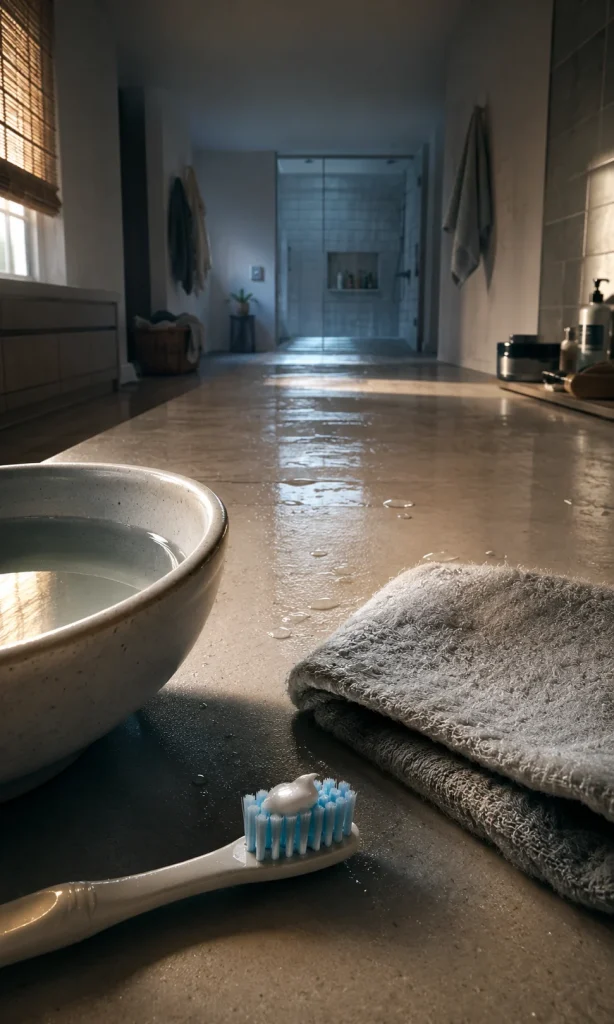
When depression is affecting hygiene, the goal is not to design the perfect routine. The goal is to reduce the number of barriers between noticing the need and completing a useful action. In practice, this often means making routines shorter, more visible, more predictable and less dependent on motivation.
One of the biggest mistakes is setting the threshold too high. If the only acceptable outcome is a full shower, hair wash, skincare routine, clean outfit, laundry cycle and bathroom cleanup, the person may avoid starting because the entire sequence feels impossible. A smaller version of the routine may protect health and restore some comfort without demanding the same amount of energy.
Reduce the Routine Before You Try to Increase Motivation
Motivation is unreliable during depression, so hygiene routines that depend on feeling ready can become inconsistent. Instead of waiting for motivation to return, it may be more practical to reduce the routine until the first step becomes manageable.
For example, a full shower can become a brief rinse. Washing and drying long hair can be separated from washing the body. A complete skincare routine can be reduced to cleansing. A complicated oral-care sequence can begin with brushing before adding flossing or other steps back later. The intention is not to permanently lower standards but to preserve useful self-care during a period of reduced capacity.
This approach also reduces the psychological cost of starting. If someone believes that entering the bathroom automatically commits them to twenty minutes of grooming, they may resist the first step. If the expectation is simply to brush their teeth or wash their face, the task becomes easier to approach.
Put Hygiene Supplies Where the Decision Happens
A surprising amount of friction can come from locating supplies, choosing products or remembering what needs to happen next. When functioning is reduced, even small obstacles matter.
Keeping frequently used products visible and easy to reach can reduce this friction. Toothpaste beside the toothbrush, clean towels in an obvious location, fresh clothes prepared before showering and a simple basket for used clothing can remove decisions from the sequence. If evening toothbrushing is consistently forgotten because the person gets into bed first, keeping an additional toothbrush in another practical location may make the behaviour easier to initiate, provided the setup remains hygienic.
The principle is straightforward: do not make an already difficult behaviour depend on extra searching, organising or remembering.
Separate Hygiene Tasks That Do Not Need to Happen Together
Many people mentally bundle several activities into one routine. “Take a shower” may automatically mean wash hair, condition hair, shave, moisturise, dry hair, choose clothes and tidy the bathroom. When all of these tasks are linked, one difficult element can block the entire routine.
Separating them can make the sequence more flexible. Hair can be washed on a different day from a longer shower. Laundry can be handled independently from changing clothes. Bedding can be changed without cleaning the entire bedroom. Toothbrushing can happen even if the rest of the bedtime routine does not.
This is especially useful when fatigue varies throughout the day. A person may have enough energy to complete one hygiene task in the morning and another later, rather than trying to perform the entire routine in one block.
Use Existing Routines as Anchors
When possible, attach hygiene to something that still happens relatively consistently. Brushing teeth can follow a morning drink, washing the face can happen after taking regular medication, and changing clothes can happen before a predictable meal or appointment.
This reduces the number of separate decisions required because the existing routine becomes a cue for the hygiene behaviour. The approach works best when the anchor already happens with reasonable consistency. Trying to attach one unstable routine to another unstable routine can simply create two tasks that are both skipped.
The aim is not to create a rigid schedule. It is to give the brain fewer opportunities to renegotiate whether the task should happen at all.
What Is a Minimum Hygiene Routine During a Difficult Period?
A minimum hygiene routine is a temporary baseline that protects basic health and comfort when a full routine feels unrealistic. It is not a universal checklist, because hygiene needs vary depending on mobility, work, climate, medical conditions, menstrual care, skin needs, dental health and other individual circumstances.
For many adults, a practical minimum may prioritise oral hygiene, essential body washing, clean underwear and clothes when needed, menstrual or continence care where relevant, and attention to any medical or skin issue that requires regular care. The purpose is to identify which parts of self-care have the greatest health or comfort consequences if they are repeatedly neglected.
A useful way to think about this is to divide hygiene into three levels rather than treating everything as equally urgent.
| Level | Main purpose | Examples |
|---|---|---|
| Protect health | Prioritise tasks where repeated neglect can create health problems | Toothbrushing, menstrual care, wound care, prescribed skin care |
| Maintain basic comfort | Reduce odour, irritation and physical discomfort | Brief washing, clean underwear, changing sweaty clothing |
| Restore the fuller routine | Gradually return to normal grooming when capacity improves | Hair styling, longer showers, skincare steps, detailed grooming |
This framework avoids an all-or-nothing approach. If someone cannot manage every part of their normal routine today, protecting the highest-priority areas still has value. When energy improves, additional steps can be reintroduced gradually rather than expecting an immediate return to previous functioning.
Can Hygiene Wipes, Dry Shampoo or Other Shortcuts Help?
Shortcuts can be useful as temporary support when they reduce the barrier to basic hygiene, but they work best as tools rather than permanent replacements for necessary care.
Body wipes or a damp washcloth may help someone clean areas that need attention when a full shower feels impossible. Dry shampoo can make hair feel more manageable between washes. Mouthwash may provide some temporary freshness, but it should not be treated as a complete substitute for regular toothbrushing because brushing physically removes plaque from tooth surfaces.
The same principle applies across the routine. A simplified option is useful when it helps preserve some care that would otherwise be skipped entirely. It becomes less useful when it quietly replaces essential hygiene for long periods without addressing the reason the fuller routine has become difficult.
If someone repeatedly needs shortcuts because depression is making basic activities hard, that pattern itself is meaningful. The problem is no longer simply finding a more convenient hygiene product. It may indicate that broader daily functioning needs attention.
Should You Force Yourself to Shower When You Are Depressed?
Sometimes a small amount of structure can help, but forcing a full routine regardless of current capacity is not always the most effective strategy. The better question is whether some form of hygiene can be completed without turning the task into another source of failure or exhaustion.
For one person, committing to standing up and entering the bathroom may be enough to overcome initiation once movement begins. For another, pushing through a full shower while severely fatigued may leave them unable to prepare food, take medication or complete another higher-priority activity afterward.
This is where the difference between encouragement and pressure matters. Encouragement reduces the barrier and supports action. Pressure increases the consequences of not succeeding.
A more practical sequence can be to decide the smallest acceptable version in advance. For example: if a full shower feels possible, take one; if not, wash the body briefly; if that is still too much, clean the areas that need attention most and change into fresh clothing. The exact hierarchy will vary, but deciding it beforehand removes some of the negotiation that occurs when energy is already low.
How Can You Restart Hygiene After Letting It Slide?
Restarting can be difficult because accumulated tasks create the impression that everything must be fixed at once. Someone may look at several days of laundry, unchanged bedding, greasy hair and an untidy bathroom and conclude that “getting clean” requires solving all of it.
It does not.
A more effective restart usually begins by separating personal care from environmental backlog. You can brush your teeth even if the laundry is unfinished. You can shower without cleaning the entire bathroom. You can change into one clean outfit without washing every item of clothing you own. You can replace a pillowcase without changing every sheet immediately.
This matters because accumulated disorder can become visually overwhelming. If every unfinished task is treated as part of one giant self-care problem, starting anywhere becomes difficult.
Choose one action that improves physical comfort first. Once that action is complete, stop and reassess rather than automatically expanding it into a larger project. If additional capacity remains, another task can follow. If not, the first task still counts as progress rather than as an incomplete version of a bigger plan.
How Can You Support Someone Whose Depression Is Affecting Their Hygiene?
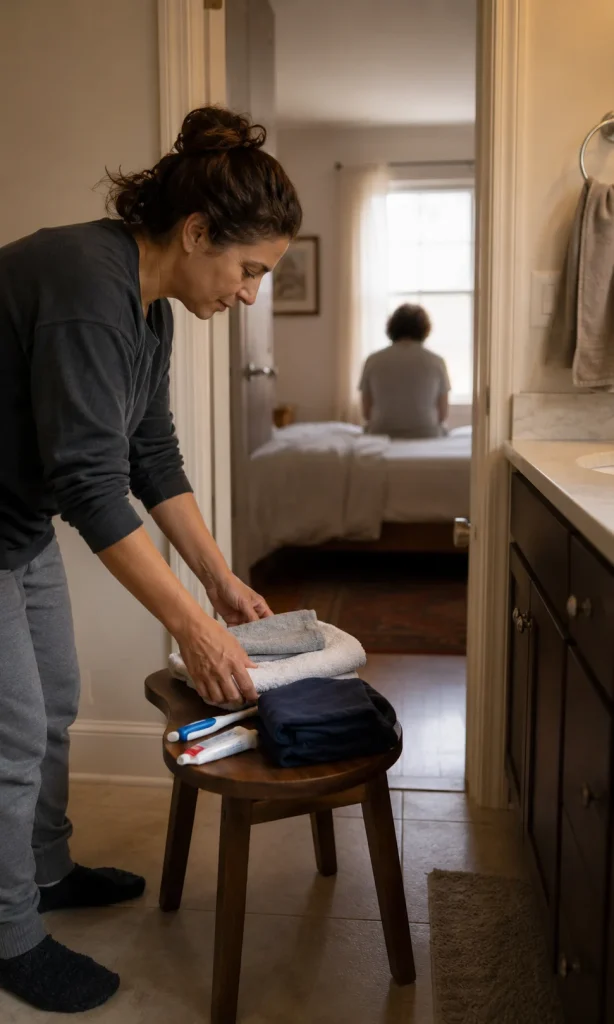
Supporting someone with declining hygiene requires sensitivity because personal care is closely connected to privacy, dignity and shame. Direct criticism may provoke embarrassment without increasing the person’s ability to complete the task.
A better starting point is to focus on what seems difficult rather than on how the person looks or smells. Asking, “Would it help if I put out a clean towel and clothes?” is different from saying, “You really need to shower.” The first identifies a practical barrier and offers support. The second places the entire burden back on the person while highlighting something they may already feel ashamed about.
Practical support can include making sure clean towels are available, helping with laundry if the person agrees, reducing clutter around the bathroom, buying replacement toiletries when supplies have run out or helping prepare a simple sequence for getting ready. In some situations, sitting nearby while the person begins another task can also reduce the sense of isolation, although support should remain respectful rather than supervisory.
It is also important not to assume that every hygiene problem should be solved by a family member or partner. If self-care has declined substantially because depression is worsening, practical assistance may help in the short term while professional assessment addresses the underlying problem.
When Can Reduced Hygiene Become a More Serious Warning Sign?
Occasionally missing a shower during a difficult week is very different from a broader loss of ability to care for yourself. The concern increases when declining hygiene occurs alongside deterioration in eating, drinking, medication management, leaving bed, attending work or school, communicating with others or managing basic responsibilities.
Another important sign is progressive change. If someone who previously managed personal care independently is becoming less able to wash, dress, eat or maintain their environment over time, the shift deserves attention even if they do not describe themselves as feeling dramatically sad.
Physical consequences also matter. Dental pain, skin infections, open wounds, persistent rashes, severe body odour associated with inability to wash, neglected menstrual or continence care, or other health problems should not simply be attributed to depression. Those problems may require their own medical or dental evaluation.
Depression is also not the only possible explanation for a sudden decline in self-care. Physical illness, medication effects, substance use, severe sleep disturbance, cognitive changes and other mental-health conditions can affect functioning. A marked or unexplained change is therefore a reason to look beyond the hygiene behaviour itself.
The most important question becomes: Is this person losing the ability to meet basic needs across several parts of daily life? When the answer is increasingly yes, the situation has moved beyond a routine problem and deserves professional attention.
When Should You Speak With a Professional About Hygiene Changes?

Difficulty maintaining personal hygiene can be worth discussing with a healthcare or mental-health professional when it represents a persistent change from your usual functioning, particularly when the problem is occurring alongside other possible symptoms of depression. The hygiene difficulty itself may not be the central problem; it may be one visible sign that energy, motivation, concentration or overall daily functioning has declined.
Professional assessment becomes more important when showering, brushing your teeth, changing clothes or completing other basic self-care activities repeatedly feels impossible rather than merely inconvenient. The same is true when difficulties extend beyond hygiene into eating regularly, preparing food, keeping appointments, managing work or school, taking prescribed medication, maintaining the home or staying connected with other people. Looking at this broader pattern helps distinguish an occasional disrupted routine from a more substantial change in functioning.
A clinician can also consider whether something other than, or in addition to, depression may be contributing. Persistent fatigue, pain, sleep problems, medication effects, physical illness, cognitive changes and other mental-health conditions can all influence self-care. This is one reason a significant change in hygiene should not automatically be explained as depression without considering the rest of the person’s health and circumstances.
If dental, skin or other physical problems have already developed, those issues may require their own assessment. Depression may help explain why care became difficult, but it does not make the physical consequences unimportant. Dental pain, significant gum problems, persistent skin irritation, wounds or signs of infection should be evaluated by an appropriate healthcare or dental professional rather than waiting for mood symptoms to improve first.
What to Tell a Doctor or Mental-Health Professional
You do not need to describe the problem using clinical terminology. Concrete examples are often more useful than saying simply that you are “not taking care of yourself.”
You might explain that you previously showered most mornings but now regularly go several days without showering because starting feels overwhelming. You could mention that you think about brushing your teeth but repeatedly remain in bed instead, that laundry has become difficult enough that you are running out of clean clothes, or that you can still get ready for work but have almost no energy for self-care afterward.
It can also help to describe when the change began, whether it has been getting worse, what other daily activities have changed and whether your sleep, appetite, concentration, mood, interest or energy have changed at approximately the same time. These details provide a clearer picture of functioning than hygiene frequency alone.
If you have already tried simplifying routines, preparing supplies or using reminders, mention whether those changes helped. Difficulty that persists even after practical barriers have been reduced may provide additional information about the extent of the functional impairment.
Personal Hygiene Problems Can Be Part of a Wider Decline in Daily Functioning

Hygiene rarely exists completely separately from the rest of everyday life. Someone who is finding it increasingly difficult to shower may also be postponing dishes, struggling to answer messages, leaving laundry unfinished, missing meals or finding it unusually difficult to begin work.
This does not mean every unfinished household task is a symptom of depression. Rather, the pattern across multiple areas can be informative.
When several previously routine activities become difficult at approximately the same time, the issue may be less about the individual tasks and more about the mental and physical capacity required to initiate, organise and complete them. This broader perspective helps explain why solving one practical problem does not always restore functioning immediately.
For example, putting a clean towel beside the shower can remove one obstacle. It cannot necessarily restore depleted energy, improve concentration or resolve a broader loss of motivation. Practical adjustments are therefore useful because they lower unnecessary friction, but they should not be treated as substitutes for addressing depression itself when depression is driving the change.
This is also why improvements may occur unevenly during recovery. Someone might begin brushing their teeth consistently before they are ready to manage laundry. They may return to showering regularly while their bedroom remains disorganised. Another person may regain enough capacity to prepare meals before grooming feels important again.
Recovery does not have to occur in the reverse order in which functioning declined.
Does Better Hygiene Improve Depression?
Personal hygiene can improve physical comfort and may make the day feel more structured, but showering or grooming should not be presented as a treatment for depression itself.
This distinction is important because advice such as “take a shower and you’ll feel better” can unintentionally minimise what the person is experiencing. A shower may help someone feel cleaner, cooler, more awake or more prepared to leave home. Changing clothes may create a useful transition between sleeping and starting the day. Brushing teeth can protect oral health and restore a small piece of routine. These benefits are worthwhile without claiming that the activity will resolve the underlying depressive condition.
For some people, completing a manageable self-care task may also provide evidence that action is still possible even when motivation is low. The effect may be subtle rather than transformative. Someone might not suddenly feel happy after showering, but they may feel slightly more comfortable and find the next task marginally easier to approach.
For others, there may be little immediate emotional improvement. This does not mean the hygiene activity was pointless. Protecting dental health, skin health and basic comfort remains valuable even when depression has reduced the usual feeling of reward associated with completing the routine.
When this reduced drive affects many activities rather than hygiene alone, understanding depression and loss of motivation can help explain why knowing that an activity is beneficial may still fail to produce the usual urge to begin it.
The more realistic goal is therefore not “shower so that you stop feeling depressed.” It is to maintain essential care while reducing the amount of effort required to do so, alongside appropriate treatment and support for the underlying depression.
Why You May Not Feel Better Immediately After Showering
Many people expect hygiene routines to produce a recognisable feeling of freshness or accomplishment. During depression, that reward can be muted.
A person may complete a shower and think, “I still feel exactly the same.”
That experience can be discouraging because the effort required to shower may have been substantial. If the anticipated emotional payoff does not arrive, the brain has less reason to repeat the behaviour tomorrow.
This is particularly relevant when depression involves reduced interest or pleasure. The same change that makes hobbies, food, social interaction or previously enjoyable activities feel less rewarding can also affect the small positive sensations associated with everyday routines. The absence of a satisfying feeling afterward does not mean the person completed the routine incorrectly.
It can be more useful to judge the activity by its practical outcome. Your teeth were brushed. Your body is cleaner. You changed into fresh clothing. You reduced discomfort. You protected an aspect of your health.
Those outcomes remain real even if they are not accompanied by a strong emotional reward.
What If You Keep Falling Back Out of the Routine?
Inconsistent progress is common when the underlying symptoms affecting hygiene are themselves inconsistent. Energy may improve for several days and then fall again. A stressful week, poor sleep or worsening mood can make a routine that had recently become manageable feel difficult again.
Treating every interruption as a complete reset can make this harder. If you showered consistently for a week and then missed several days, the useful response is not necessarily to design an entirely new system or conclude that the previous effort failed. Returning to the smallest workable version may be enough.
It can also help to notice which part of the routine disappeared first. If toothbrushing remains consistent but showering drops away, physical effort or transitions may be a larger barrier than remembering. If showers happen but clean clothes become difficult, laundry may be the bottleneck. If everything becomes difficult at once, broader changes in mood, energy or functioning may deserve closer attention.
Patterns like these can provide more useful information than simply recording whether a routine was completed.
Rebuilding Hygiene Is Usually Easier When the Goal Is Function, Not Perfection
There can be a strong temptation to compensate after a period of reduced hygiene by trying to restore everything immediately. Someone may plan a long shower, complete hair care, shave, change bedding, wash several loads of laundry, clean the bathroom and reorganise all of their toiletries in one day.
Occasionally that may feel satisfying. More often, it creates a standard that is difficult to repeat.
A sustainable return to self-care usually depends on making the ordinary version manageable again. If brushing your teeth once consistently becomes possible, work toward restoring the recommended routine rather than adding five unrelated grooming tasks at the same time. If brief showers become manageable, allow that routine to stabilise before deciding that every shower must include extensive grooming.
This approach is not about accepting permanent deterioration in self-care. It recognises that the capacity required for routines can return gradually.
The same principle applies to other areas of daily functioning. When depression has made ordinary activities feel unusually difficult, rebuilding them one component at a time may be more realistic than attempting to recover an entire previous lifestyle in a single burst of effort.
A Practical Low-Energy Hygiene Plan
When deciding what to do on a particularly difficult day, it can help to use a simple hierarchy rather than repeatedly negotiating the entire routine.
Start with care that has the greatest immediate health importance. Oral hygiene, necessary menstrual or continence care, prescribed wound or skin care and other medically relevant routines should generally receive priority. If you have specific instructions from a healthcare professional, follow those rather than replacing them with a generic low-energy routine.
Next, identify what would most improve physical comfort. This might be changing underwear, washing the areas of the body that need attention, putting on a clean shirt or using a damp washcloth when showering feels beyond your current capacity.
Only after those priorities are addressed do the more optional grooming activities need to enter the decision. Hair styling, elaborate skincare, shaving and appearance-focused routines can often wait when capacity is severely limited.
The practical hierarchy can therefore be remembered as:
Protect health → reduce physical discomfort → restore basic cleanliness → add normal grooming as capacity returns.
This structure prevents low-priority details from making higher-priority care feel impossible. If someone believes that showering automatically requires shaving, washing and drying their hair and completing a long skincare routine, they may avoid the shower altogether. Removing those optional requirements can preserve the more important part of the behaviour.
Build a Lower-Energy Hygiene Plan for Today
When several parts of personal care feel difficult at once, deciding what to do first can become another task in itself. The planner below helps reduce the routine to a realistic starting point based on which activities feel difficult, what is getting in the way and how much capacity you have today.
It does not score cleanliness or diagnose depression. Instead, it separates essential care from tasks that may be able to wait and suggests ways to reduce unnecessary effort.
When everything feels equally urgent, even deciding where to begin can consume energy. This planner helps you identify the smallest useful hygiene routine for your current capacity, including what to prioritise today, what can be simplified and what may reasonably wait.
Low-Energy Self-Care Studio
No score. No judgement.Make today's hygiene routine smaller than the energy it is asking from you.
Choose what feels hard, identify the friction underneath it, and build a realistic plan around the capacity you actually have today.
Which hygiene tasks feel difficult today?
Select everything that currently feels harder than usual.
What is getting in the way?
Choose the barriers that best match your experience today.
How much capacity do you have right now?
This helps the planner choose a realistic level of effort.
Are there signs that basic needs are becoming harder to manage?
Select any that apply. These answers do not diagnose anything, but they help the planner flag when extra support may be appropriate.
Building a lower-effort plan from your answers...
What Personal Hygiene Cannot Tell You About Depression
Changes in hygiene can provide useful information about functioning, but they cannot diagnose depression on their own.
Some people with significant depression continue maintaining excellent hygiene because routine, work expectations, habit or personal preference keeps those behaviours intact. Others may experience reduced hygiene for reasons unrelated to depression. A person can therefore be depressed without looking unkempt, and someone who is struggling with hygiene should not automatically be assumed to have depression.
Context matters more than a single behaviour.
The more meaningful pattern is a sustained change from usual functioning that occurs alongside other emotional, cognitive, physical or behavioural changes. This is consistent with the broader approach to depression symptoms: individual experiences are interpreted as part of a pattern, while duration, severity and interference with daily life help determine their significance.
This distinction is particularly important for family members and partners. Hygiene should not become a shortcut for diagnosing another person or judging the severity of their mental health from appearance alone.
Professional Perspective
Personal hygiene difficulties during depression are best understood as a change in functioning rather than a judgement about cleanliness, discipline or character. When someone who previously managed showering, oral care, clean clothing and grooming without much thought begins finding these activities unusually difficult, the clinically relevant question is what has changed in their overall capacity to function.
Depression can affect several processes that personal care depends on at the same time. Reduced energy can make standing in the shower physically demanding. Difficulty concentrating or making decisions can turn a familiar routine into a sequence of separate choices. Reduced motivation can weaken the drive to begin, while diminished pleasure or reward can mean that completing the routine no longer produces the familiar sense of freshness or accomplishment that once helped reinforce the habit.
This is why the response should match the barrier. Someone whose main difficulty is fatigue may benefit from reducing the physical demands of the routine, while someone who repeatedly intends to shower but cannot begin may need to reduce the number of transitions between intention and action. When laundry, supplies or multiple grooming steps are creating the obstacle, changing the environment may be more useful than repeatedly trying to increase motivation.
At the same time, simplification should not become indefinite neglect of health needs. Oral care, necessary menstrual or continence care, wound care and other medically important routines deserve particular attention. If depression is repeatedly preventing these activities, the underlying difficulty deserves assessment rather than assuming the person simply needs a better hygiene schedule.
A broader decline is especially important to notice. Hygiene becomes more clinically concerning when it deteriorates alongside eating, drinking, medication management, leaving bed, attending work or school, maintaining the home or other basic activities. In that situation, the issue is no longer simply whether someone is showering often enough; it may reflect a more substantial loss of everyday functioning.
There is also no single appearance that identifies this problem. Some people with depression visibly reduce their self-care, while others continue looking polished because they direct much of their remaining energy toward appearing functional in public. The effort required to maintain a routine, the change from the person’s previous functioning and the effect on other parts of daily life can therefore be more informative than appearance alone.
For recovery, the most useful target is usually sustainable function rather than immediate perfection. A smaller routine that can actually be repeated is often more useful than an ambitious reset that consumes all available energy and disappears several days later. As depressive symptoms and functioning improve, additional parts of the person’s usual routine can be restored gradually.
Professional perspective: A persistent decline in personal hygiene should be considered in the context of the whole person. The important questions are not only how often someone is showering or brushing their teeth, but whether their functioning has changed, what is preventing self-care, whether physical health is being affected and whether difficulties are spreading to other basic needs.
Conclusion
Depression can make personal hygiene difficult even when someone understands exactly what needs to be done and genuinely wants to do it. A shower, toothbrush or clean set of clothes may remain physically close while the sequence required to reach and use them feels unexpectedly demanding.
That difficulty can arise from several overlapping problems: low energy, trouble initiating action, decision overload, reduced concentration, diminished motivation, weaker emotional reward and shame about routines that have already been missed. Recognising those mechanisms makes it easier to move beyond the unhelpful assumption that reduced hygiene is simply laziness.
The practical response does not have to begin with restoring every part of a previous routine. Protect health first, reduce physical discomfort, make essential hygiene easier to access and allow lower-priority grooming tasks to return as capacity improves. A brief shower can still be useful without washing your hair. Clean clothes do not require completing every load of laundry first. Brushing your teeth remains worthwhile even when the rest of the evening routine does not happen.
Progress may also be uneven. Someone may regain oral care before showering becomes consistent, or begin changing clothes regularly while laundry and bedding remain difficult. These differences do not make the improvements meaningless. They can help reveal which barriers are resolving and which still need support.
Most importantly, hygiene should be viewed within the broader pattern of everyday functioning. An occasional disrupted routine is different from progressively losing the ability to wash, eat, take medication, maintain the home or meet other basic needs. Persistent or substantial changes, physical consequences such as dental or skin problems, or deterioration across several areas of daily life are appropriate reasons to seek professional assessment.
The goal is not perfect personal hygiene during every difficult period. It is to keep essential self-care as achievable as possible while recognising and addressing the depression or other health problems that may be making ordinary routines difficult.
Frequently Asked Questions About Depression and Personal Hygiene
Can depression make you stop showering?
Yes. Depression can make showering more difficult when symptoms affect energy, motivation, concentration, decision-making or the ability to initiate everyday tasks. A shower can also involve several smaller steps, including getting up, finding clean clothes, washing, drying and getting dressed. Difficulty showering alone, however, does not establish that someone has depression.
Why is brushing my teeth so hard when I am depressed?
Depression can make brushing your teeth difficult even when you understand why oral hygiene matters. Low energy, reduced motivation and difficulty initiating or sequencing tasks can make getting up, going to the bathroom and beginning the routine feel disproportionately demanding. Persistent difficulty with oral care deserves attention because repeated neglect can contribute to dental problems.
Is poor hygiene a symptom of depression?
Reduced personal hygiene can occur when depression interferes with everyday functioning, but poor hygiene is not a specific diagnostic sign of depression by itself. Physical illness, pain, disability, cognitive changes, medication effects and other mental-health conditions can also affect self-care. A sustained change from someone’s usual routine is more informative when considered alongside other symptoms and changes in daily functioning.
Is not showering because of depression the same as being lazy?
No. Someone experiencing depression may genuinely want to shower and repeatedly intend to do it while still finding it unusually difficult to begin. Fatigue, reduced motivation, slowed functioning and problems initiating or sequencing tasks can all contribute. Describing the behaviour as laziness does not explain the underlying difficulty and may increase shame.
How can I shower when depression makes it feel impossible?
Reducing the number of steps can make showering more manageable. Preparing a towel and clean clothes beforehand, separating hair washing from body washing and allowing a brief shower to count can reduce the effort required. If a full shower is not manageable, a temporary lower-effort cleaning option may help maintain basic comfort until more of the routine becomes possible.
Can someone have depression and still have good personal hygiene?
Yes. Some people with depression continue showering, dressing and grooming normally, while others maintain a presentable appearance for work, school or social situations but struggle with self-care in private. Personal appearance alone cannot determine whether someone has depression or how much effort everyday functioning currently requires.
Do hygiene wipes or dry shampoo help when you are depressed?
Lower-effort hygiene options can be useful temporarily when they make some self-care possible on a low-energy day. A washcloth or suitable body wipe may help with basic cleaning, while dry shampoo may make hair more manageable between washes. These approaches should not indefinitely replace necessary washing, oral care or other health-related personal-care routines.
Should I force myself to shower when I am depressed?
Some structure or encouragement may help with the initial barrier, but the goal does not have to be completing an elaborate routine regardless of current capacity. It may be more practical to choose the smallest useful version of the task and expand it when energy allows. Persistent difficulty managing basic self-care may also be a reason to address the underlying depression or other contributing health problems.
When should poor hygiene during depression become a concern?
Poor hygiene deserves closer attention when the change is persistent, substantially different from someone’s usual functioning or accompanied by increasing difficulty eating, drinking, taking medication, leaving bed, attending work or school, maintaining the home or meeting other basic needs. Dental problems, skin problems, wounds or possible infections should also receive appropriate professional assessment.
How can I help someone with depression who is struggling with personal hygiene?
Approach the problem without humiliation or criticism. Practical assistance may include preparing a clean towel and clothes, helping with laundry with the person’s permission or making essential toiletries easier to access. If declining hygiene is part of a broader loss of ability to meet basic needs, professional support may be more appropriate than focusing only on the hygiene behaviour.
Key Takeaways
Depression can affect personal hygiene because self-care depends on more than knowing that cleanliness matters. Showering, brushing teeth, washing hair, changing clothes and managing laundry all require some combination of physical energy, initiation, sequencing, decision-making and follow-through. When depression interferes with several of these processes at once, routines that previously happened almost automatically can become unexpectedly difficult.
A decline in hygiene should not automatically be interpreted as laziness, nor should hygiene alone be used to diagnose depression. The more informative pattern is a sustained change from someone’s usual functioning, particularly when self-care difficulties occur alongside changes in mood, pleasure, sleep, energy, concentration, relationships or the ability to manage other everyday responsibilities.
During periods of reduced capacity, simplifying hygiene can be more useful than demanding an immediate return to an ideal routine. Prioritising health-related care, reducing unnecessary steps, preparing supplies in advance and separating large routines into smaller actions can help preserve basic self-care without turning every difficult day into another test of willpower.
Improvement also does not need to happen all at once. Brushing your teeth today, changing into clean clothes tomorrow and managing a shower when enough capacity returns are separate useful actions. The aim is not perfection; it is gradually making essential self-care more accessible while addressing the underlying difficulties that made those routines hard in the first place.
If personal hygiene has declined substantially or the change is part of a broader difficulty meeting basic daily needs, discussing the pattern with an appropriate healthcare or mental-health professional can help clarify what is contributing and what support may be needed.