Unipolar depression means depression without a history of manic or hypomanic episodes; the term is commonly used for major depressive disorder. It describes the pattern of illness, not how mild or severe it is. Understanding the label starts with your current symptoms and the mood changes you have experienced over time.
The useful first question is: “What does unipolar mean in my assessment, and what information could change that conclusion?” You do not need to arrive with a self-diagnosis. This adult-focused guide explains the term and helps you prepare a more useful conversation about it.
What does a unipolar depression diagnosis actually tell you?
The word separates depressive illness from depression occurring within bipolar disorder. A major depressive episode typically involves persistent low mood or loss of interest, with other symptoms and meaningful distress or difficulty functioning, for at least two weeks. A diagnosis also depends on the wider assessment, not simply reaching a duration threshold.
“Unipolar” does not mean one episode, constant sadness or a problem caused by just one factor. Someone may have a single episode, recurrent episodes or periods of recovery between them. For the broader naming system, see types of depression; this page focuses on the meaning and limits of the unipolar label.
| Term or finding | What it tells you | What it cannot establish |
|---|---|---|
| Unipolar depression | No history of mania or hypomania has been established in the clinical assessment. | That symptoms are mild, permanent or explained by one cause. |
| Major depressive disorder | A diagnosis involving one or more major depressive episodes, with other criteria and exclusions considered. | Which treatment will work best for an individual. |
| A depression questionnaire score | How many symptoms someone reports and how often. | Whether their lifetime history includes mania or hypomania. |
| Feeling better after a low period | Mood or functioning has improved. | That the improvement is hypomania. |
| A later diagnostic review | New history or symptoms may need assessment. | That every earlier decision was unreasonable. |
Low mood, loss of enjoyment, fatigue, changes in sleep or appetite, poor concentration, guilt and thoughts of death can be part of depression. Some people mainly notice irritability or a loss of everyday functioning. The NIMH depression guide explains the symptom range and why depression can affect more than mood.
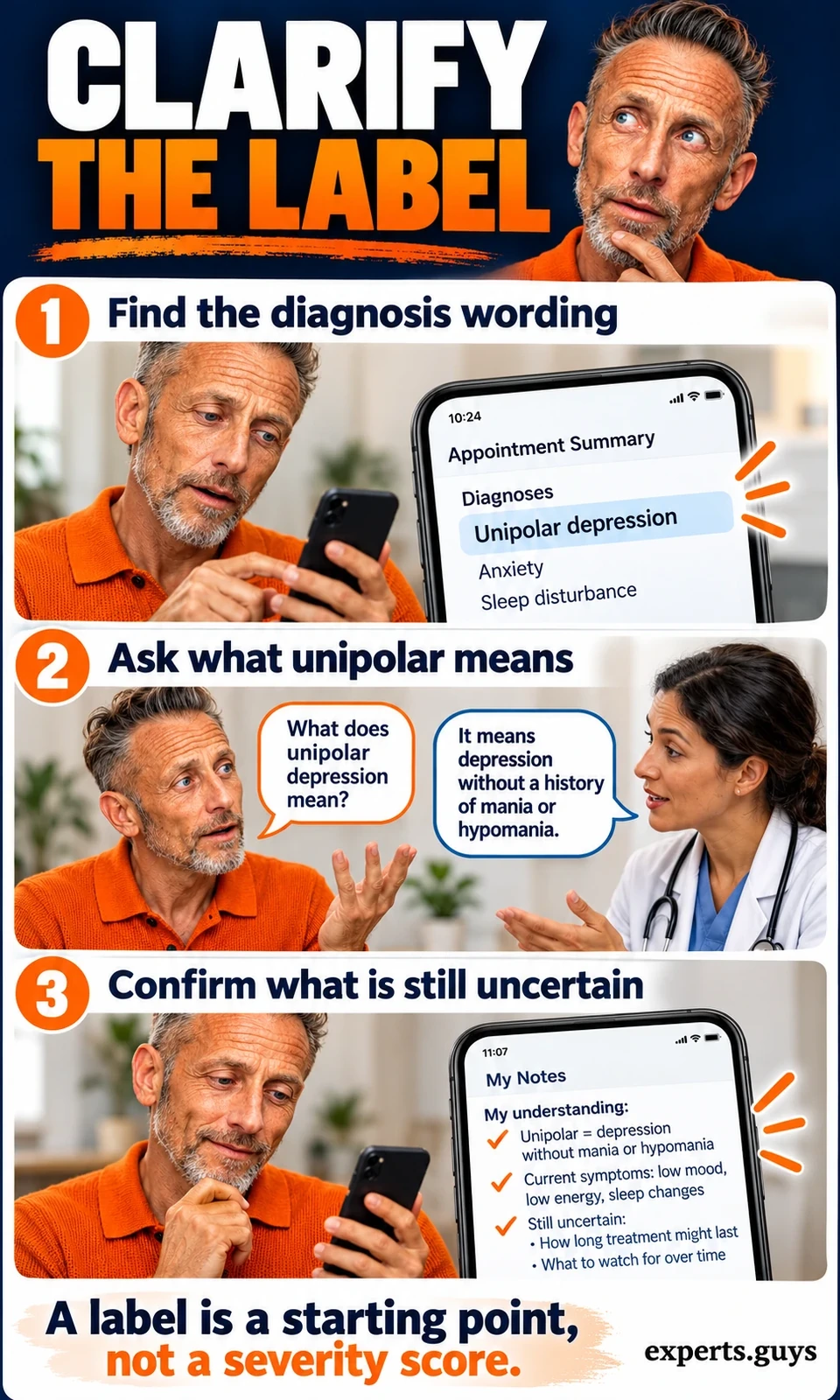
Clarify the wording in your appointment summary
Use this step when a report says “unipolar,” “major depression” or “depressive episode” and you are unsure what the wording means. Have the appointment summary open on your phone if you already have one. The aim is to understand the clinician’s conclusion, not to choose a diagnosis from a list.
- Find the exact wording in the summary or patient portal. If there is no written summary, ask the clinician to explain the term they used.
- Ask: “Does this mean major depressive disorder in my case, and what history did you consider?”
- Confirm what remains uncertain and whether anything needs checking at the next appointment.
Example: “I understand you found depression without a known manic or hypomanic history. What should I tell you if I remember a different period?” A common mistake is treating “unipolar” as a complete explanation of severity or treatment. If reading a report feels overwhelming, ask for a spoken explanation; success is being able to describe what is known and what is still open.
Show one change in daily functioning
A concrete comparison can communicate the impact of depression more clearly than “I feel bad.” Choose one activity that matters to you, such as preparing food, keeping appointments or replying to messages. This is information for an assessment, not a test you must pass to deserve help.
- Choose a familiar activity and describe your usual ability to manage it.
- Compare it with what is happening now, using a brief phone note or a spoken example.
- Say roughly when the change began and whether it happens most days or only in particular circumstances.
Example: “I normally cook dinner, but lately I skip meals because getting started feels too difficult.” Do not spend energy reconstructing every day or making the example sound more serious. If you cannot identify a date, say “around the time I stopped going to work”; the checkpoint is one understandable change, with uncertainty left visible.

Why does a clinician ask about times when you felt better?
A depressive episode can occur in both unipolar and bipolar illness, so the current low period may not settle the distinction. Clinicians ask about separate periods of unusually elevated or irritable mood with increased energy or activity. Hypomania can be overlooked because a person may remember feeling productive rather than unwell.
A good day, ordinary excitement or relief after depression is not automatically hypomania. The question is whether there was a distinct, sustained departure from your usual pattern, with accompanying changes in sleep, speech, decisions or behaviour. The NIMH bipolar disorder explanation describes these episodes; the broader site comparison is depression, anxiety, or bipolar disorder.
Look beyond the periods when you felt low
This step is useful if previous appointments focused almost entirely on depression. Recall a period that stood out to you or someone close to you, rather than searching for proof of bipolar disorder. Old calendar entries or messages can jog your memory, but they cannot diagnose an episode.
- Think of a distinct period of unusually high energy, irritability or activity, including a time you considered successful.
- Ask whether several things changed together: sleep need, talking speed, projects, spending or risk-taking.
- Share the approximate timing, duration and consequences with the clinician; label uncertain memories as uncertain.
Example: “During that trip I slept much less, started several projects and spent more than usual, but I cannot remember how long it lasted.” One busy weekend is not enough to label yourself. If looking back becomes exhausting, bring just one memory; completion means the clinician hears it, not that you resolve its meaning yourself.

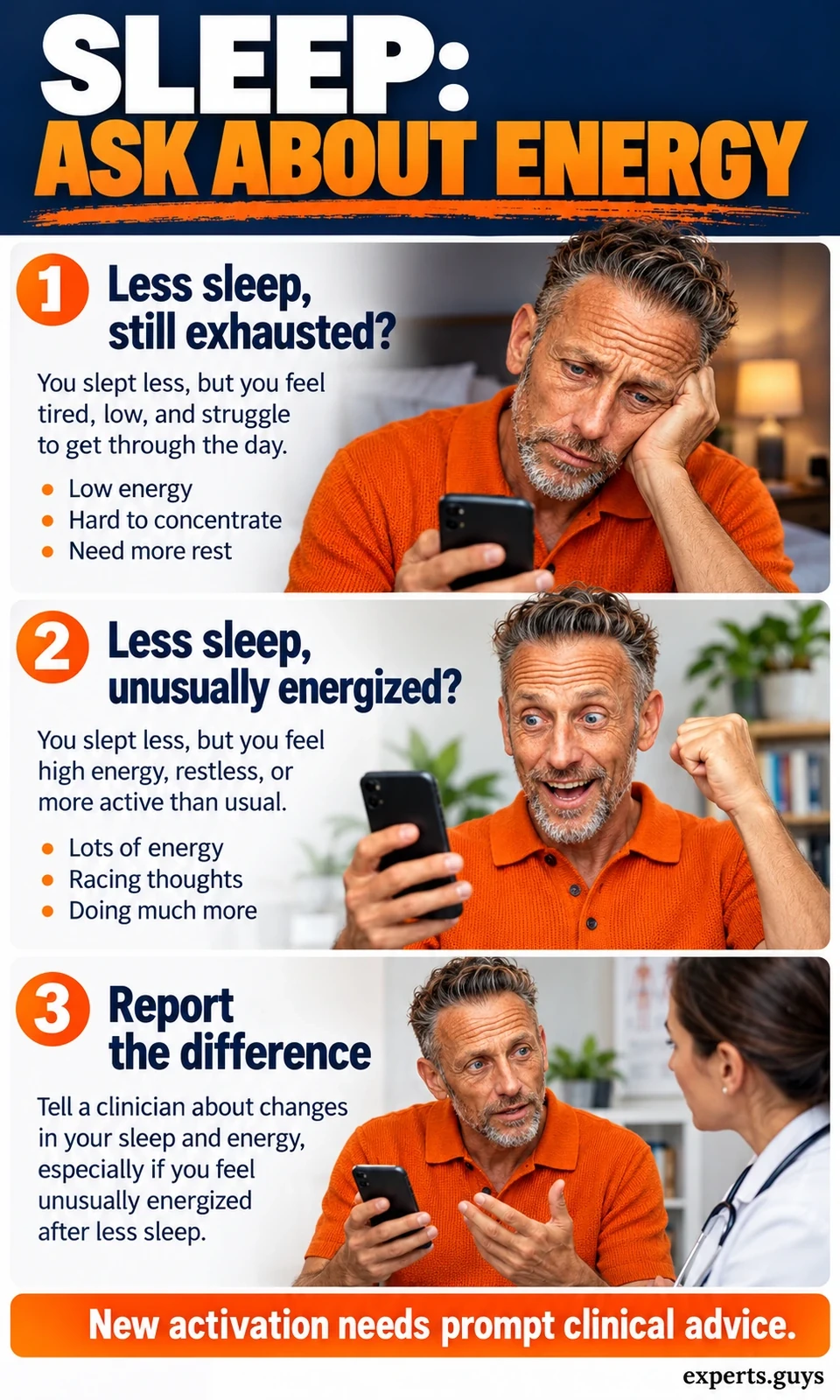
Describe sleep and energy together
“I barely slept” leaves an important question unanswered: how did you feel and function afterward? Difficulty sleeping while exhausted is different from sleeping much less while feeling unusually energized. Neither description alone establishes the diagnosis, but the distinction helps the assessment.
- Describe your usual sleep pattern and what changed. Use rough estimates rather than an apparently precise wearable reading.
- Explain whether you felt tired and wanted more sleep, or unusually energetic and less in need of it.
- Mention accompanying changes, such as faster speech, racing thoughts or impulsive decisions, and raise new activation promptly.
Example: “I slept less and felt drained” communicates something different from “I slept less and felt ready to do everything.” Avoid interpreting a device’s sleep score as proof of an episode. If estimating hours is difficult, describe the difference from normal; if the change is happening now, seek advice rather than waiting to collect more data.
What else needs checking before the label is settled?
A clinical assessment considers history, functioning, safety, physical health and possible alternative explanations. There is no blood test that confirms unipolar depression; targeted tests may help investigate another condition, such as a thyroid problem. The NHS assessment guide explains why a conversation and, when appropriate, physical checks work together.
Medicines, substances, sleep disruption and medical conditions can complicate the picture. Clinicians also consider previous treatment responses and relevant family history. A family member’s diagnosis is useful context, but it does not establish yours; an uncertain or unavailable history should be described that way.
| Information | Why it can matter | Useful boundary |
|---|---|---|
| Prescription medicines, supplements and substances | Their use or changes may coincide with symptoms. | A timing link alone does not prove causation. |
| Physical symptoms or medical history | Some conditions can resemble or accompany depression. | Testing is selected from the history and examination, not a universal panel. |
| Previous treatment response | Benefits, adverse effects and unusual activation may guide reassessment. | One ineffective treatment does not prove bipolar disorder. |
| Another person’s observation | Someone may recall a change you did not notice. | An observation supports discussion; it is not a verdict. |
Check the timing of medicines and other changes
Use this when symptoms started or shifted around a treatment change, illness or substance use. Open your prescription list or take the containers to the appointment if a list is unavailable. Include non-prescription products and substances without trying to decide in advance which one is responsible.
- List what you use, including prescribed medicines, supplements, alcohol and other substances. Share doses or amounts if known.
- Add approximate start, stop or dose-change dates and when symptoms changed. Mark missing details rather than guessing.
- Ask which details need review and whether any physical assessment is appropriate. Do not alter medication yourself.
Example: “My sleep changed after a new prescription, but the low mood started before it.” The mistake to avoid is stopping treatment to test a theory. If making a list is too much, ask a pharmacist to help check your medicines; success is an accurate enough history for review, not a suspected cause confirmed by your own experiment.

Ask a trusted person for one observation
Another person may remember changes in your activity or behaviour that were difficult to notice at the time. Choose someone who knows your usual pattern and respects your privacy. You can decline this step if involving that person would be unsafe, intrusive or unhelpful.
- Ask whether the person is comfortable describing one specific change they noticed.
- Use a neutral question: “What seemed different, and roughly when?” Ask for an example rather than a diagnosis.
- Decide what you want to share, or invite them to an appointment with your agreement. Explain any conflicting memories to the clinician.
Example: “You seemed to talk much faster during that visit” is more useful than “You are definitely bipolar.” Do not turn the conversation into an argument about who remembers correctly. If no suitable person is available, tell the clinician; the useful outcome is extra context where available, not a requirement to recruit a witness.

NICE’s bipolar assessment recommendations include detailed mood history and, with involvement agreed, information from a family member or carer. These details help clinicians examine a pattern across time. They do not convert a family opinion or a collection of messages into a diagnosis.
How should treatment and follow-up use this information?
Treatment for unipolar depression may include psychological therapy, medication or both, depending on severity, preferences, previous response and other needs. A clinician may discuss guided self-help for less severe illness, while more severe depression can warrant more intensive treatment. The NHS treatment overview explains the main options; no single option follows automatically from the word “unipolar.”
The reason to revisit mood history is that bipolar depression has a different treatment approach. If new activation or a previously unmentioned episode emerges, the prescriber needs to assess it. Do not stop, increase or switch medication yourself; for medicine-specific questions, use the separate antidepressants guide.
Make the follow-up specific
A treatment plan is easier to discuss when it includes a practical aim and a clear review arrangement. Choose a function you want to regain rather than asking yourself to feel completely well by a fixed date. Your clinician should set the review timing according to the treatment and your needs.
- Choose one daily-life goal to discuss, such as preparing a simple evening meal more regularly.
- Agree when and how the next review will happen, including who arranges it.
- Confirm who to contact before then for side effects, worsening symptoms or new changes in sleep and energy.
Example: “At the next review, can we discuss whether I am eating regularly and how the treatment is affecting my sleep?” Avoid judging the entire treatment by one good or bad day. If arranging a full plan feels difficult, start by obtaining the review date and contact route; success is knowing what will be reviewed and how to get help sooner.

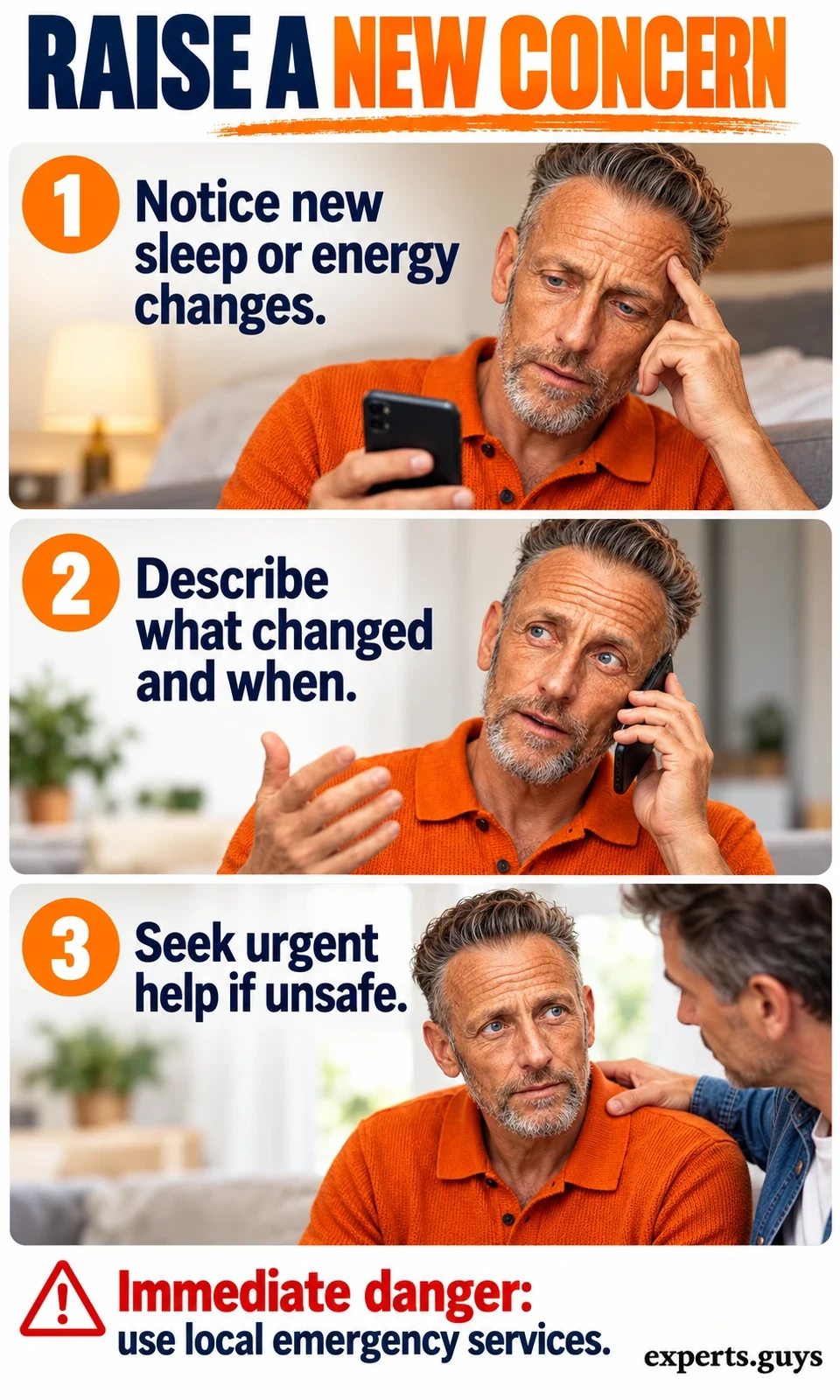
Raise a new concern without relabelling yourself
A working diagnosis should be open to new information. A change in sleep, energy or behaviour may have several explanations, including treatment effects, and needs assessment rather than an online verdict. The next action depends on the seriousness of the change, not on whether you can name it.
- Identify what is new compared with your usual pattern and when it began.
- Contact the treating clinician promptly for marked activation or other significant changes; describe any recent treatment changes.
- Seek urgent assessment for new suicidal thoughts or psychotic symptoms. If you cannot stay safe or there is immediate danger, use emergency services; do not wait for a routine reply.
Example: “Since the change, I need much less sleep and my thoughts feel unusually fast. Can this be assessed today?” Avoid waiting to see whether you meet a diagnostic checklist. If speaking feels difficult, a trusted person can help explain the change; the checkpoint is an appropriate response, with emergency help taking priority over paperwork.
These preparation steps are practical communication aids, not treatments or validated screening tests. You can use one relevant step rather than completing all eight. Their purpose is to make the clinical conversation clearer without making you responsible for diagnosing yourself.
Frequently asked questions
Does unipolar mean I can never feel happy?
No. People can experience enjoyable moments or recover between depressive episodes. The term concerns the absence of manic or hypomanic episodes, not an inability to feel positive emotion.
Can depression and anxiety occur together?
Yes. Anxiety symptoms or an anxiety disorder can coexist with unipolar depression. Their presence alone does not establish bipolar disorder, and both concerns belong in the assessment.
Do recurrent depressive episodes automatically mean bipolar disorder?
No. Major depressive disorder can recur without mania or hypomania. Recurrence is a reason to review the illness course and care plan, not a diagnosis of bipolar disorder by itself.
What if I cannot remember whether an elevated period happened?
Say that you are unsure. A clinician can ask more specific questions and, with your agreement, consider existing records or observations from someone who knows you. Uncertainty is more useful than a forced yes or no.
Does an unsuccessful antidepressant prove the diagnosis is wrong?
No. Limited benefit can have several explanations and calls for a treatment review. A clinician may revisit the diagnosis along with the treatment duration, dose, side effects and other factors; a single unsuccessful treatment does not prove bipolar disorder.
Summary: clarify the label, then the next decision
Unipolar depression describes a depressive illness without a manic or hypomanic history; it does not predict severity or prescribe a treatment by itself. Start with the part that is unclear: the diagnostic wording, an overlooked period or the follow-up arrangement. Bring that specific question to care, and treat new safety concerns as urgent rather than waiting for certainty.