
An antidepressant is a prescription medicine used for depression and some other conditions, including anxiety disorders. If you are starting one, first confirm exactly what to take, how to take it and when treatment will be reviewed. The instructions for your particular medicine matter more than a general checklist.
This guide is for adults who already have a prescription. It covers practical use and communication, not choosing a drug or calculating a dose. Children, pregnancy, breastfeeding, bipolar disorder and complex medical conditions need an individual treatment plan.
The useful distinction is between managing the routine and changing treatment. You can check a label, arrange a refill and prepare a question yourself. Changing the amount, timing, formulation or combination may need a pharmacist or prescriber to confirm what is appropriate.
What should you check before the first dose?
Check the medicine identity, directions and other products you use before building a routine around the prescription. A familiar-looking box does not establish that the strength or release formulation is the same. The FDA explanation of pharmacist support also notes that different-looking generic tablets can still contain the same medicine.
Match the label before the first dose

Use the pharmacy label and current prescription together. Formulation means how a medicine is supplied or releases its ingredient, such as a tablet, liquid or modified-release product. A mismatch needs clarification rather than a guess based on a photograph or an old packet.
- Match the name. Compare the dispensing label with the current prescription or patient-portal entry. Check that the supply is intended for you.
- Check strength and formulation. Read the amount per tablet or liquid concentration and the formulation wording. Do not assume different forms use the same quantity.
- Confirm unclear directions. Ask the dispensing pharmacist about mismatches, unreadable labels or conflicting instructions. Confirm food directions and whether the product may be split, crushed or opened before doing so.
Example: A refill looks different, so you compare its label instead of assuming it is wrong. Easier option: Show both packs to the pharmacist or use a secure pharmacy message with clear label photos. Done means: You can explain the current instructions without choosing between conflicting versions.
Include occasional products in the interaction check
An interaction check needs the products you actually use, including occasional remedies. A pharmacy record may omit a supplement bought elsewhere or a cold medicine used only on weekends. Preparing labels is an information-gathering step, not a way to declare a combination safe.
- Gather the products. Include prescriptions, nonprescription medicines, vitamins and herbal supplements. Show ingredient panels as well as front labels.
- Include occasional use. Mention pain relief, sleep products, migraine medicines, alcohol and recreational substances, along with allergies and previous reactions.
- Request a combination check. Ask which products need avoiding, replacing or monitoring before adding something new. Do not stop established treatment simply because an online checker flags it.
Example: Ask about an occasional headache tablet as well as daily medicines. Easier option: Bring original packages instead of typing a long list. Done means: The pharmacist has identified the ingredients and answered the question about the proposed combination.

Some combinations increase serotonin activity enough to cause a serious reaction. The NIMH medication guide describes serotonin syndrome and the importance of checking interacting medicines and supplements, including St John’s wort. This does not mean every combination is prohibited; the specific products and clinical monitoring matter.
If your unresolved question is which medicine fits your symptoms, that belongs in a prescribing discussion. Our article on choosing an antidepressant for depression and anxiety addresses that separate decision. Here, the completion point is understanding the prescription already issued.
How do you follow the prescription when memory or timing is difficult?
Use a reminder that mirrors the confirmed instructions, and keep confirmation separate from the reminder itself. A notification can appear even if you never take the medicine. That distinction becomes valuable when you later cannot remember what happened.
| Situation | Useful check | Avoid |
|---|---|---|
| The reminder appeared | Check whether you confirmed taking the dose | Assuming a notification proves it was taken |
| The record is blank | Treat the history as uncertain; check the leaflet or ask a pharmacist | Automatically taking another dose |
| Your schedule changes | Ask how the prescribed timing fits the new routine | Moving doses close together without checking |
| You want to change the medicine | Arrange a prescribing review | Creating a new regimen through reminder settings |
Make the reminder match the prescription
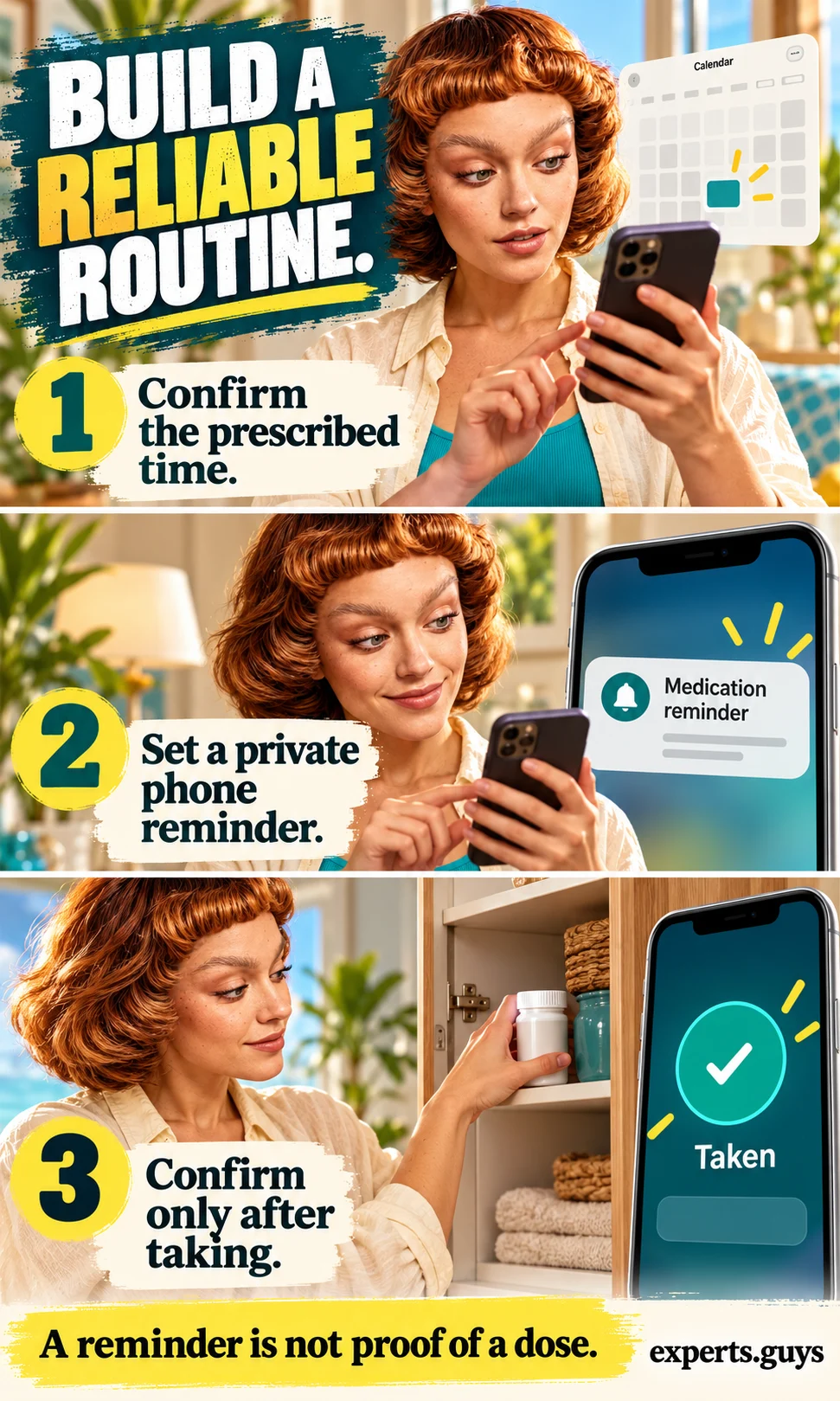
A practical reminder triggers the intended action without exposing private details on a lock screen. Use your medicine instructions as the source of the schedule rather than copying a friend’s routine. For example, NHS sertraline instructions describe once-daily use, but another medicine or formulation may have different directions.
- Confirm the schedule. Use the timing and food instructions agreed for your prescription. Ask before moving the dose to another part of the day.
- Set one private reminder. Use a neutral label such as “Medication reminder” and test notifications. Store medicine according to its label and away from children.
- Confirm after the action. Mark the dose taken only after taking it. If you dismiss an alert without taking the medicine, leave it unconfirmed.
Example: You dismiss an alert during a meeting but do not mark the dose taken. Easier option: Ask a trusted person to help set up the reminder while you keep control of the instructions. Done means: The alert works and its confirmation has a clear meaning.
Use the right instructions for a missed or uncertain dose
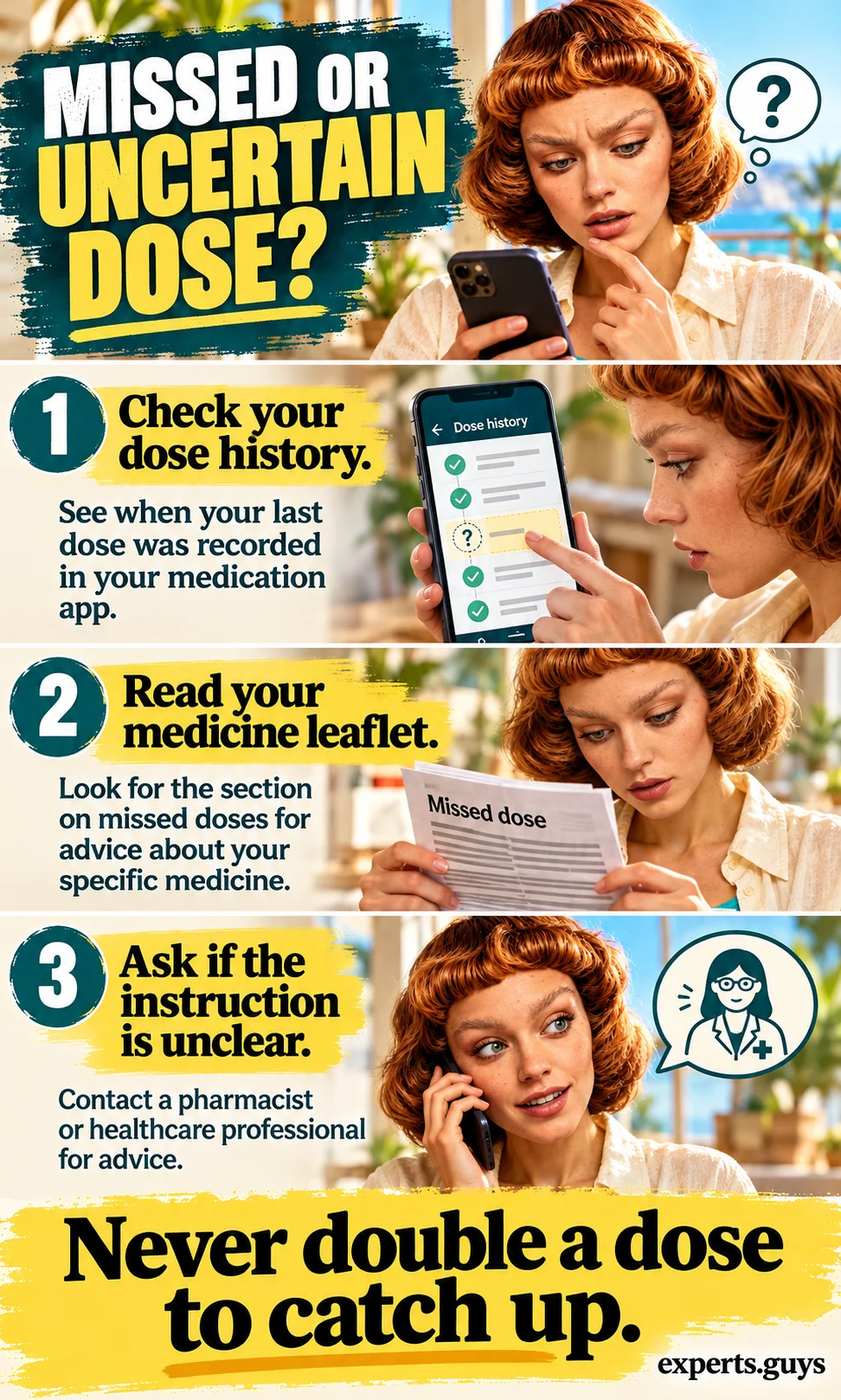
A known missed dose and an uncertain dose are different problems. If you cannot remember taking it, another dose could duplicate one you already took. Missed-dose instructions also vary between medicines, so a generic “take it now” rule is inappropriate.
- Check what you know. Look at reliable dose confirmation and identify the last dose you are certain about. A blank app entry alone does not prove a missed dose.
- Read your exact medicine instructions. Use the supplied leaflet, particularly its missed-dose section. Never double a dose to catch up.
- Ask when uncertainty remains. Give the pharmacist the name, strength, formulation, usual schedule and last confirmed dose. If you may have taken too much, seek urgent poison-service or medical advice rather than waiting for symptoms.
Example: Your phone has no confirmation, but you remember opening the pack. Easier option: Call the pharmacy with the pack beside you rather than reconstructing the day alone. Done means: You have medicine-specific advice instead of an improvised catch-up dose.
What if side effects, refills or travel interrupt the routine?
Respond to the particular disruption rather than changing several things at once. A side-effect call needs a clear symptom description; a supply problem needs early pharmacy contact. Neither is solved by silently skipping doses or stretching the remaining supply.
Describe a side effect by its effect on your day
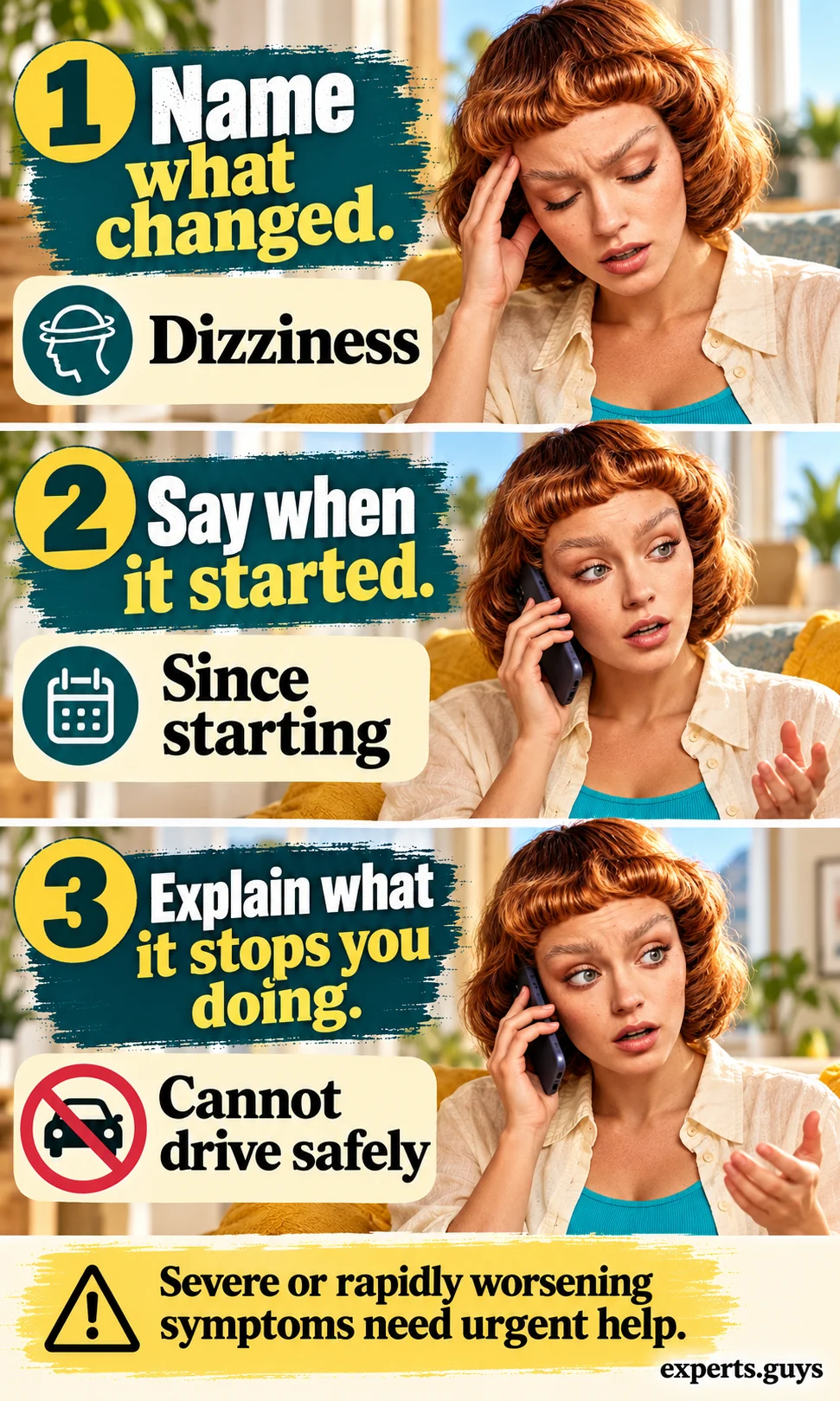
A symptom description becomes more useful when it includes a functional consequence. “I feel dizzy” leaves unanswered whether you can stand, travel or drive safely. Some early adverse effects settle while others persist; NHS antidepressant guidance advises discussing effects that are difficult to manage.
- Name the change. Describe the symptom, including emotional numbness or sexual difficulties when relevant. Say whether it is new or worse than before.
- Give the timing. Explain when it started relative to starting treatment, a prescribed change or another new product. Say whether it is constant or intermittent without assuming the cause.
- Explain the impact. Say what you cannot safely or comfortably do and ask what to do before the next review. Severe or rapidly worsening symptoms need urgent care, not an ordinary portal message.
Example: “Since starting this medicine, I have felt dizzy when standing and cannot drive safely.” Easier option: Read that short description during a call; a detailed diary is unnecessary. Done means: You understand the next action and when to seek help sooner.
Avoid driving or operating machinery when dizziness or drowsiness makes it unsafe. If unsteadiness is your main concern, depression, antidepressants and fall risk covers the related mobility question. Safety takes priority over waiting to see whether a troublesome effect disappears.
Protect the supply when your routine changes
A refill or trip is easier to manage before the last dose is due. Travel adds separate questions about availability, storage, timing and entry rules. The CDC travel guidance for chronic conditions recommends sufficient supplies, hand-luggage carriage and discussion of time-zone changes; destination rules need their own official check.
- Compare supply with dates. Check what remains against the prescribed schedule, pharmacy lead time and travel dates. Ask about an appropriate extra supply for delays and contact the pharmacy early if a gap is likely.
- Keep medicines identifiable. Carry original labelled packages in hand luggage, with prescription details and required documents. Follow storage instructions rather than leaving medicines in a hot car.
- Confirm timing and entry rules. Ask the pharmacist how to handle your actual time-zone change. Check the destination government or embassy requirements for your medicine; a prescription is not automatic permission to import it.
Example: A trip overlaps your refill date, so you resolve the supply before packing. Easier option: Give the pharmacy your departure and return dates and ask what needs arranging. Done means: You have the supply, documents and instructions for the itinerary, not just a full pill organiser.

How do you prepare for follow-up or a possible treatment change?
Use follow-up to compare tolerability, everyday function and the treatment goal. Antidepressant benefit usually develops over weeks, and different symptoms can change at different times. A useful review can happen before you know the full benefit; it is also a safety and understanding check.
Prepare a review that can change the plan
Confirm the first review when the medicine is prescribed instead of waiting for a problem. As a UK reference, NICE recommends an initial review usually within two weeks, or one week for a new prescription in people aged 18 to 25 or when suicide risk is a particular concern. Your clinician may arrange a different or earlier schedule for your circumstances.
- Check the appointment. Confirm the date, whether it is a call or visit, and how to reach the service sooner. Ask the prescribing service to arrange a review if none is booked.
- Choose a concrete comparison. Think of one everyday task, sleep pattern or troublesome effect that matters to you. Compare it with before treatment without treating one day as the whole result.
- Bring one clear question. Ask what change is expected next, what to do until the next review and what would justify earlier contact. Bring current medicine details and mention missed doses honestly.
Example: “I am getting to work, but afternoon sleepiness makes the journey difficult; what should I do?” Easier option: Prepare that sentence in a private phone note or say it aloud. Done means: You leave with an agreed next step and contact route.

More energy is not always the same as steady recovery. Unusually little need for sleep, racing thoughts or risky behaviour deserves prompt assessment; NIMH describes these patterns in bipolar disorder. Mention previous episodes before treatment and new changes during treatment rather than assuming they prove the medicine is working.
Discuss stopping or switching before making changes
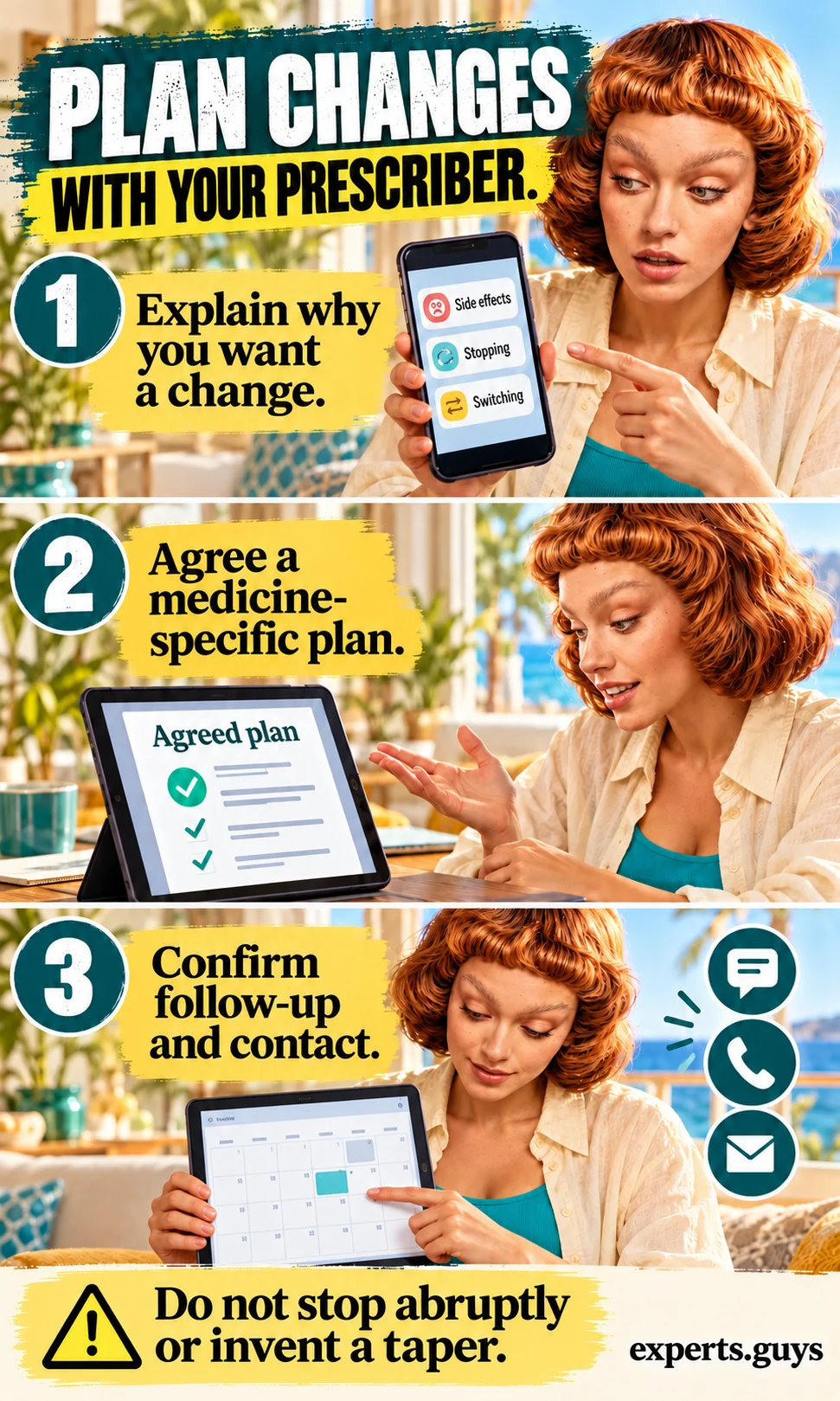
Wanting to stop because of side effects, cost or limited benefit is a legitimate reason to request a review. Abrupt changes can produce withdrawal symptoms, which may overlap with the original condition. The Royal College of Psychiatrists guidance on stopping antidepressants explains why reduction plans need to be individualised.
- Explain the reason. Say whether the issue is a side effect, access, lack of benefit or feeling ready to stop. Include previous withdrawal experiences and missed doses.
- Agree the actual plan. Ask the prescriber to specify what changes, when and what to do if symptoms appear. Do not create your own taper, alternate-day schedule or overlap with another antidepressant.
- Confirm follow-up. Establish who to contact and when the plan will be reviewed. Resolve conflicting instructions before making the change.
Example: You ask to discuss emotional numbness instead of abruptly stopping over a weekend. Easier option: Send a short appointment request describing the reason, unless symptoms require urgent care. Done means: You have a medicine-specific plan rather than a schedule copied from someone else.
A review may consider more than the prescription alone. The broader role of medication in antidepressant treatment for major depression is a separate question from managing the next dose. Keep those discussions connected without trying to solve both by changing medicine on your own.
Frequently asked questions
Does an antidepressant prescription prove I have depression?
No. Antidepressants are also prescribed for some anxiety disorders and other conditions. Ask what condition or symptom your particular prescription is intended to treat; the medicine name alone does not establish a diagnosis.
Is a lower-strength tablet automatically a milder antidepressant?
No. Milligram numbers are not a strength ranking across different drugs. Compare a dose only with the instructions for that particular medicine, formulation and person.
Can a phone app decide whether I should take a late dose?
An ordinary reminder app can show what you recorded, but it cannot verify that you swallowed a dose or replace medicine-specific instructions. Use the leaflet and pharmacist advice for a late or uncertain dose. Keep reminders and dose confirmation separate.
What if I become pregnant while taking an antidepressant?
Contact your prescriber promptly for an individual review of benefits and risks. Some antidepressants can be used during pregnancy, and untreated illness also matters. Do not abruptly stop on discovering a pregnancy.
Does needing a taper mean I am addicted?
Withdrawal can occur because the body has adapted to a medicine. That differs from the craving and compulsive use associated with addiction. It is still a real clinical issue and a reason to agree an individual plan when stopping.
Choose the check that resolves your next question
Start with the uncertainty you actually have: the label, the next dose, a side effect, the supply or the review. Complete the matching check and use its completion point to decide whether the question is resolved. If the answer requires changing treatment, take that specific question to the prescriber rather than changing the routine by guesswork.