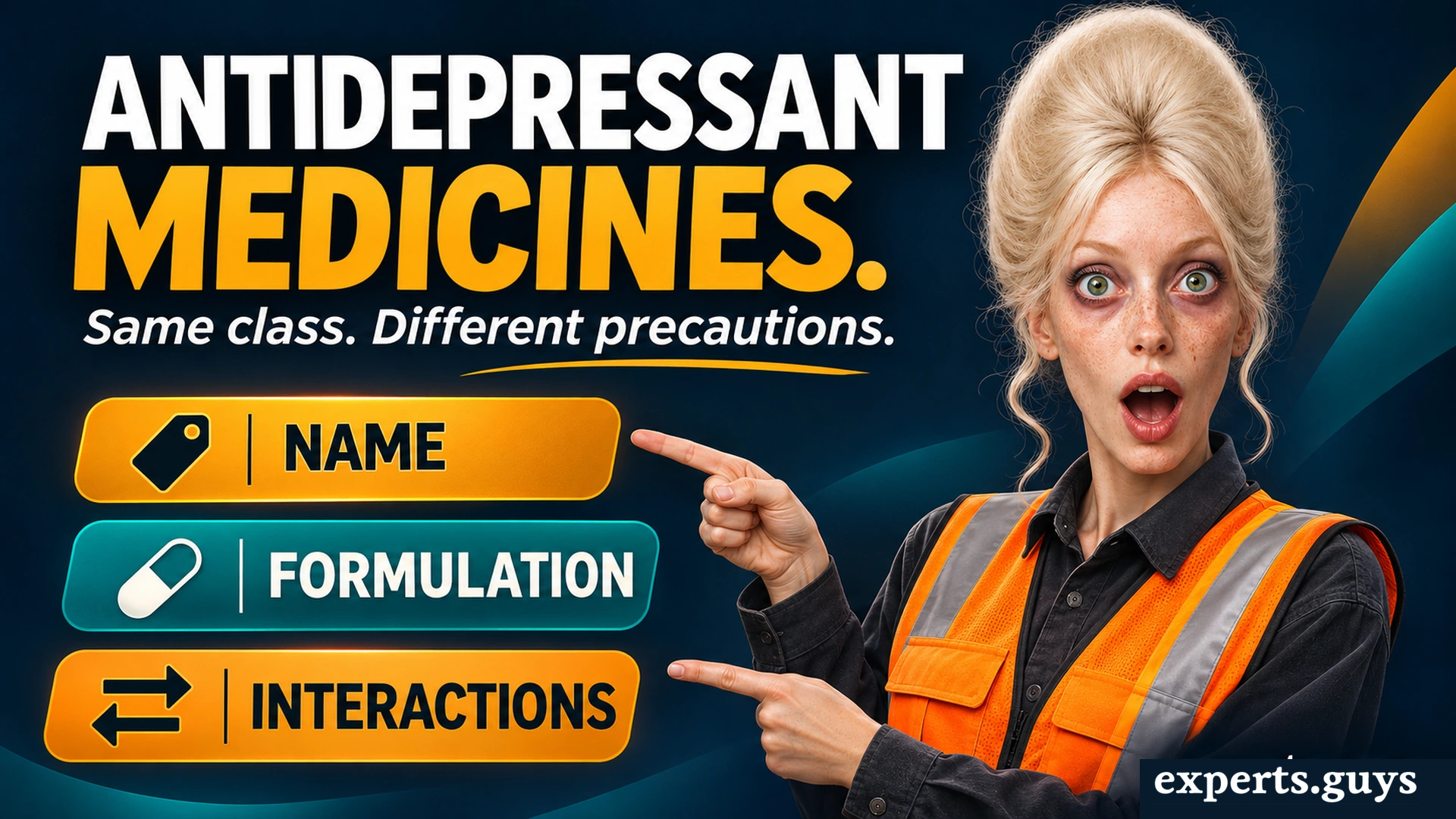
Antidepressant medicines include SSRIs, SNRIs, tricyclics, MAOIs and medicines with other mechanisms, such as mirtazapine and bupropion. These groups help explain drug actions, but the named medicine and its formulation determine many of the precautions that matter in everyday use. Start with the active ingredient on your own pack before applying advice about a class.
A useful comparison therefore has two levels: what members of a group share, and where an individual medicine needs separate instructions. Two drugs can belong to the same class without sharing the same interaction risks, persistence in the body or handling directions. This guide concerns adults and focuses on those easily missed differences; availability and approved uses vary between countries.
For a broader introduction to the terminology, the antidepressant class guide provides the full classification background. Here, the practical question is narrower: which details should you check before assuming that advice about one antidepressant applies to another?
Use the comparison below as an orientation, not a menu for selecting your own treatment. A class can suggest a useful question; it cannot establish that a medicine is suitable for your diagnosis, health history or other prescriptions.
| Group | Examples | What still needs checking |
|---|---|---|
| SSRIs | Sertraline, fluoxetine, citalopram | Shared reuptake action; individual persistence and heart precautions can differ. |
| SNRIs | Venlafaxine, duloxetine | Shared serotonin/noradrenaline actions; check the named drug and its indication. |
| Other mechanisms | Mirtazapine, bupropion, trazodone | A broad filing group with different effects and restrictions. |
| Tricyclics (TCAs) | Amitriptyline, nortriptyline | Consider effects beyond mood, including anticholinergic and heart precautions. |
| MAOIs | Phenelzine; moclobemide where available | Exact product determines food, medicine and switching precautions. |
What can an antidepressant class tell you about a medicine?
A class identifies a shared feature, usually part of how a medicine acts. It does not contain the complete information needed to take the product safely. The quickest way to avoid confusion is to distinguish the class, the active ingredient and the actual preparation supplied.
Class, ingredient and formulation answer different questions
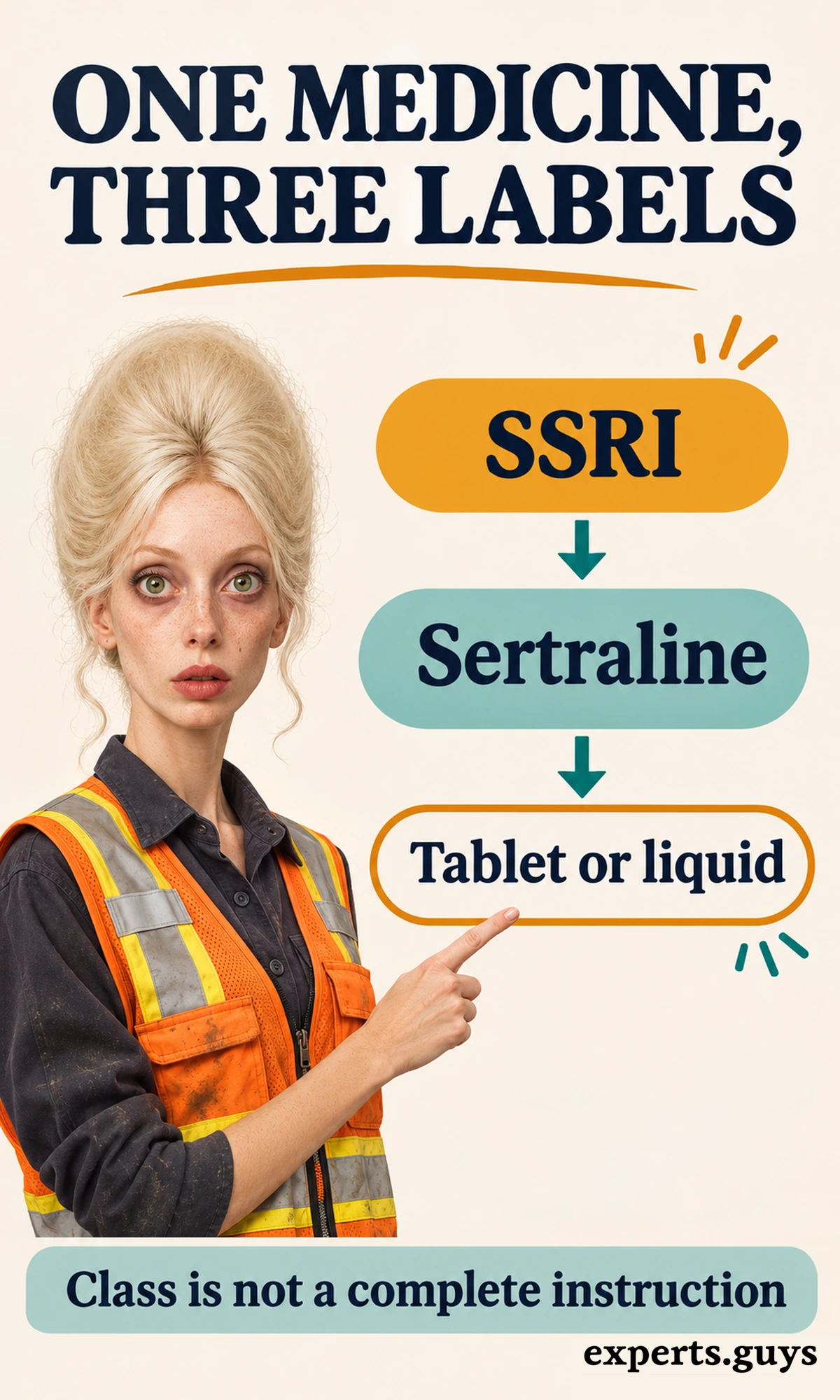
Consider an illustrative sequence: SSRI, sertraline, tablet. SSRI identifies the family, sertraline identifies the drug, and tablet identifies a preparation. A liquid containing the same active ingredient belongs to the same family, but its measuring and administration instructions can differ. Neither the abbreviation nor a familiar brand name tells the whole story.
The distinction becomes particularly useful when a pharmacy supplies a different-looking box. A change in colour or manufacturer does not by itself show that the active ingredient has changed. Conversely, similar packaging does not show that two medicines are interchangeable. Match the ingredient, strength and release wording to the prescription rather than relying on appearance.
Mechanism labels also describe only part of the biology. Reuptake inhibitors alter how particular neurotransmitters are taken back up after release. That drug action does not establish that a person’s depression was caused by a measurable shortage of the same chemical. A useful medicine can act on a system without proving a single-cause explanation for the condition.
Nor does a mechanism predict exactly how treatment will feel. An abbreviation cannot tell you whether nausea will be manageable, whether a particular interaction matters, or whether a symptom will improve. Those are questions about a specific medicine used by a particular person under a treatment plan.
Why more targets do not create a strength ranking
The word “dual” in a description of an SNRI can sound like an upgrade from an SSRI. It describes pharmacological actions, not a promise of greater benefit. A medicine with more than one target is not automatically the better treatment for someone whose existing medicine is working and tolerable.
Likewise, the word “selective” does not mean side-effect-free. Selectivity concerns relative actions at biological targets. It does not mean that a medicine affects only mood, or that the rest of the body is excluded. Reading it as a safety guarantee gives a technical term a meaning it does not have.
- A class name helps you locate the right section of a medicine guide.
- An active ingredient helps you locate the right individual drug information.
- Release wording helps you check whether the administration instructions match your product.
- The prescription and leaflet supply instructions that a class comparison cannot provide.
An illustrative mistake is to hear that a relative takes an SSRI at night and move your own medicine to bedtime without checking. The shared class does not establish a shared schedule. The useful lesson from another person’s experience is that timing can be discussed, not that their instructions transfer to your prescription.
This is also why “first choice” and “last resort” are poor substitutes for a proper comparison. Treatment order reflects several considerations, including tolerability, safety and clinical circumstances. Being offered a commonly used medicine does not mean the depression is minor, and being offered an older medicine does not reveal a person’s prognosis.
Prescription purpose changes the meaning of a comparison
Some antidepressants are prescribed for conditions other than depression. Seeing an antidepressant name on a pack therefore does not tell you the diagnosis, the intended outcome or whether the dose is meant to treat mood symptoms. Ask what the prescription is intended to improve before judging it against someone else’s treatment.
For example, comparing a prescription intended for nerve pain with a depression prescription can create a false impression that one person is receiving an inadequate amount. The explanation of low-dose antidepressant prescriptions addresses that separate question. Keep dose interpretation distinct from identifying the medicine and its precautions.
The practical takeaway is to use the class as an index. It points you toward relevant information, while the named product supplies the details. This approach leaves room for useful general education without treating a short comparison chart as a set of personal instructions.
Why do medicines in the same class need different precautions?
Medicines can share a major action while differing in how the body processes them and in other effects they produce. Those differences matter most when another medicine is added, a prescription is changed, or an existing health condition affects the balance of benefits and risks.
SSRIs: clearance and heart precautions can differ
Sertraline and fluoxetine are both SSRIs, yet their switching precautions are not identical. Fluoxetine and its active metabolite persist for a long time after treatment stops. Removing it from the daily routine therefore does not immediately remove its potential to interact with a newly started medicine.
This distinction is especially important around MAOIs. The Specialist Pharmacy Service guidance on switching from SSRIs describes drug-specific approaches and longer waiting periods after fluoxetine for some switches. These are prescribing decisions; a general article should not turn them into a universal home timetable.
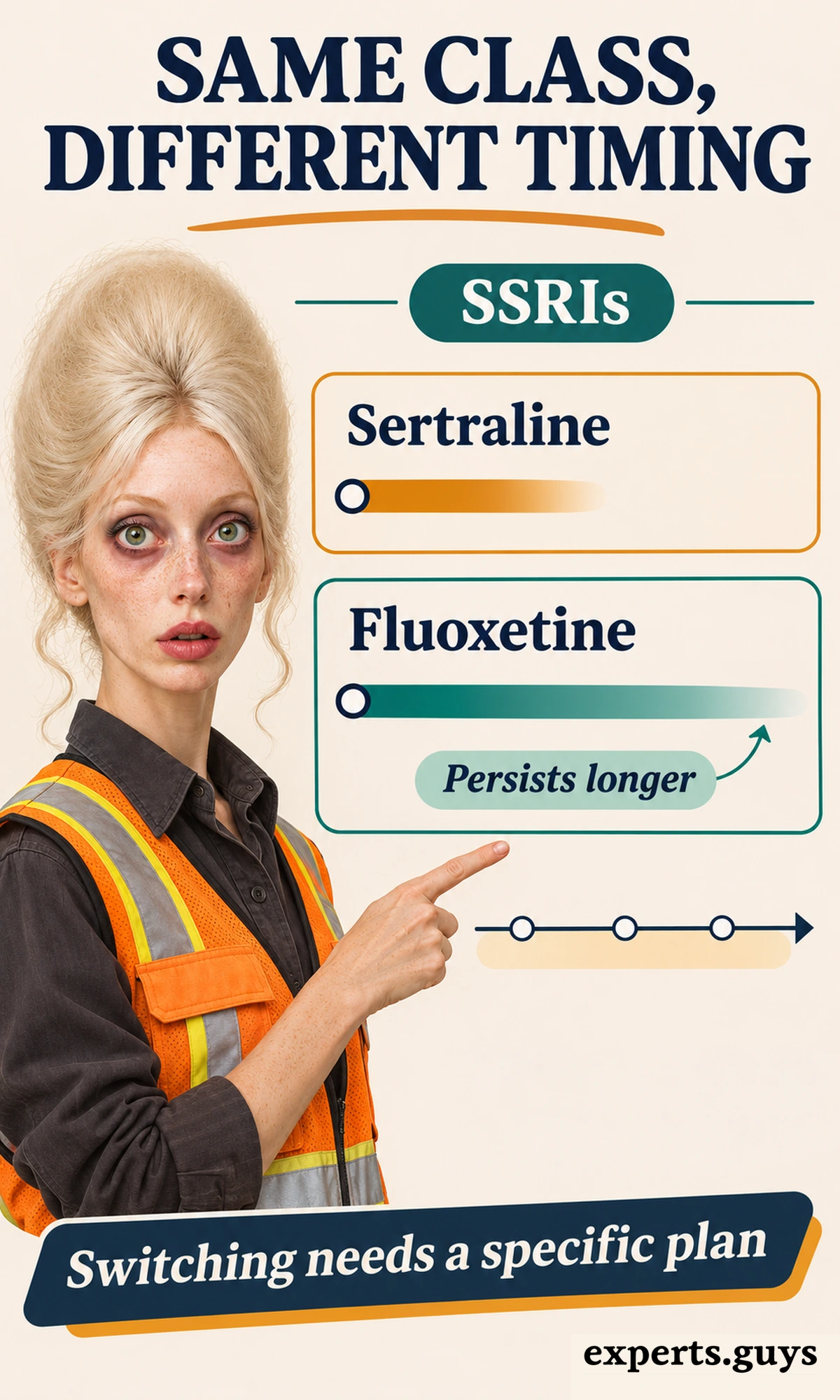
Imagine two people who both say, “I stopped my SSRI yesterday.” That sentence leaves out the ingredient, duration of treatment, last dose and intended replacement. The same calendar statement can therefore describe different clinical situations. A medicine’s persistence is one reason the exact name matters after the final tablet as well as before it.
Citalopram supplies a different example within the SSRI family. Its individual precautions include heart-rhythm concerns, particularly where relevant heart problems or interacting medicines are present. This does not mean everyone taking citalopram will have a rhythm problem. It means that “SSRI” alone is too broad an answer to a question about cardiac suitability.
The NHS citalopram information explains the heart conditions and serious symptoms that require attention. Do not extend that warning into a claim that every SSRI has the same risk profile, or use another SSRI’s instructions to decide whether an ECG or medicine review is needed.
Side-effect lists need the same careful reading. A listed effect is possible, not inevitable; an effect absent from a short comparison is not impossible. If a concern matters to daily life, look at the individual leaflet rather than treating a short list as an exhaustive description.
SNRIs: blood pressure and pain indications need named-drug context
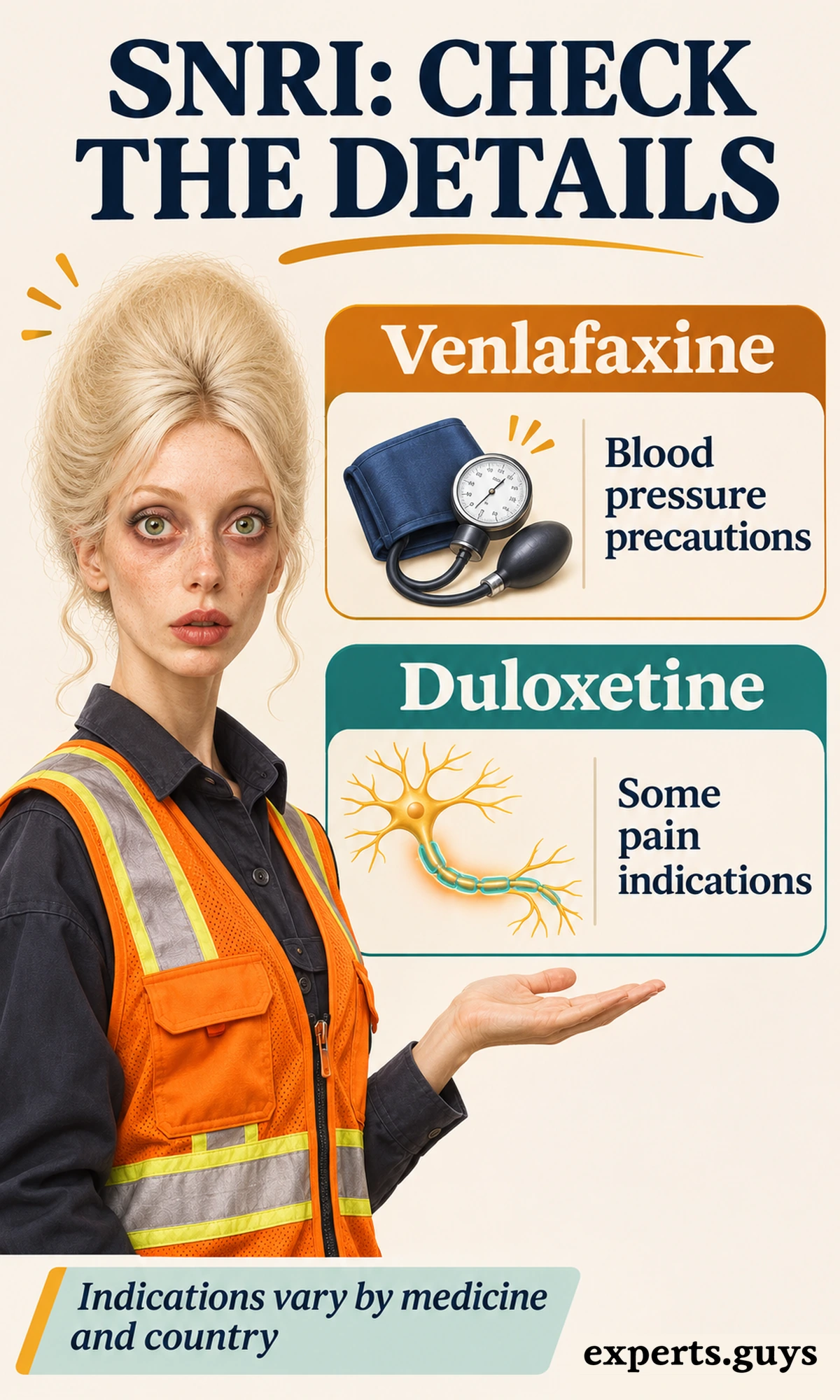
Venlafaxine and duloxetine are SNRIs. Their shared class is useful background, but it does not erase individual precautions. Venlafaxine can raise blood pressure, making the prescriber’s blood-pressure plan relevant. Duloxetine has uses for certain pain conditions, but that does not make every SNRI an equivalent treatment for any unexplained pain.
“Pain” is too broad a label to settle the question. Nerve pain, an acute injury and an unrelated new pain are not interchangeable indications. A medicine prescribed for depression should not be assumed to cover a new physical symptom simply because the same drug has another recognised use.
An illustrative comparison might involve one adult who values improvement in a condition for which duloxetine has been prescribed, and another whose main difficulty is an adverse effect on venlafaxine. Their useful next questions differ. The first needs clarity about the intended symptom and response; the second needs review of the specific adverse effect and its consequences.
This is a reason to resist category-wide conclusions such as “SNRIs are better for physical symptoms.” The claim skips the individual medicine, the type of symptom and the evidence for that use. Keep the relationship precise: a named drug may have a particular indication under particular prescribing rules.
A useful benefit can still carry an unacceptable cost
The same change can have different importance in different circumstances. Feeling sleepy before bed may seem manageable to one person, while continued impairment the following morning can make driving or machinery work unsafe for another. The relevant comparison includes what the person needs to do, not only whether the effect appears on a leaflet.
Do not test alertness by taking a short drive or using equipment “just to see.” If a medicine causes dizziness, drowsiness or impaired concentration, avoid the affected hazardous activity and obtain advice about the prescription. Work gloves, helmets and other protective equipment do not cancel medicine-related impairment.
When the broader question is which treatment fits depression together with anxiety, use the separate guide to choosing an antidepressant for depression and anxiety. This page’s narrower role is to explain why a class label cannot answer every practical safety question.
How should “other,” tricyclic and MAOI medicines be understood?
“Other antidepressants” is a filing category, not one uniform mechanism or set of precautions. Older categories also contain important differences. Read the named medicine first, then use the group to understand why particular checks are needed.
Mirtazapine and bupropion illustrate very different trade-offs
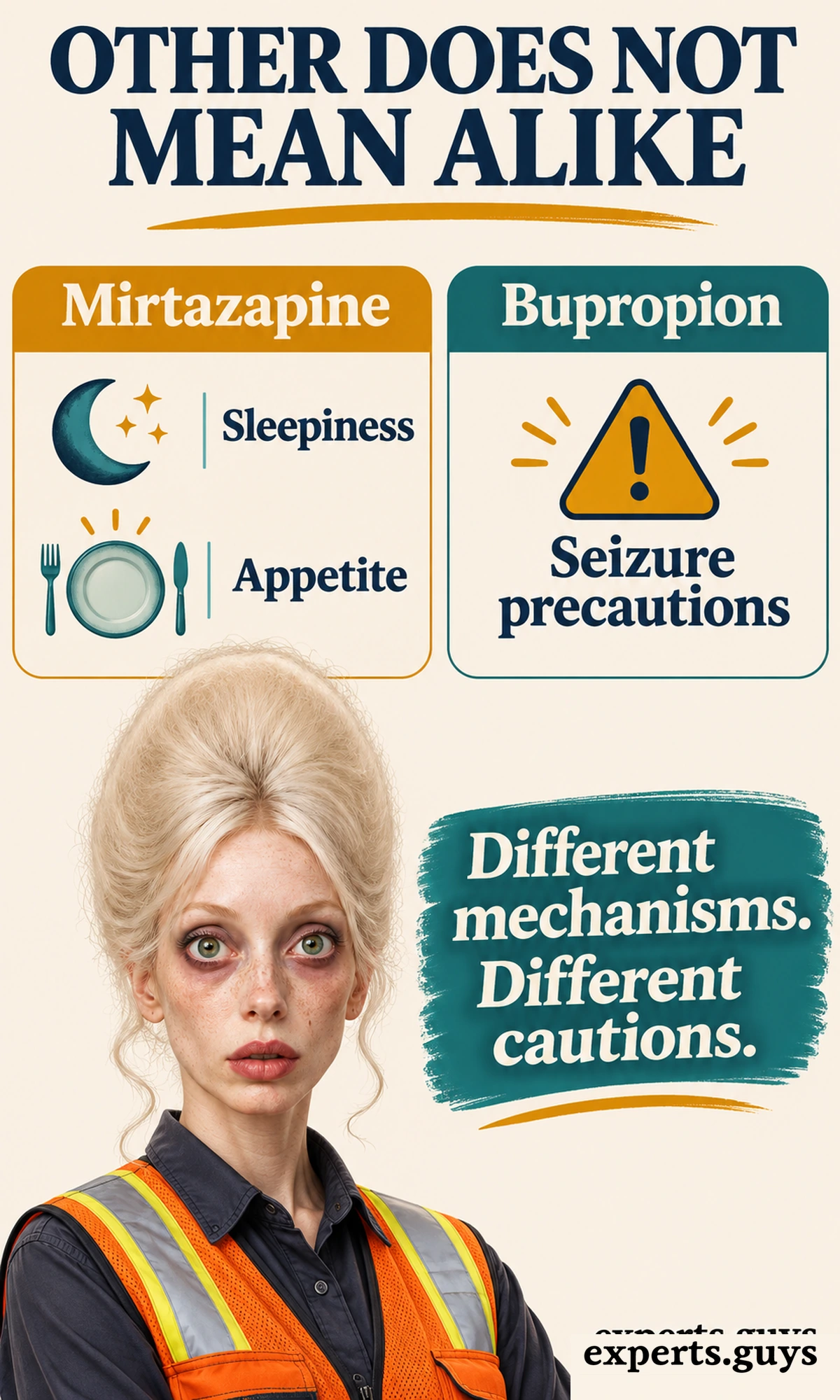
Mirtazapine can cause sleepiness and increased appetite or weight gain. These effects may influence whether its overall profile is acceptable, but they should not be mistaken for proof that depression is improving. Sleeping longer and functioning better are related questions, not identical outcomes.
Bupropion has a different profile and important seizure-related restrictions. It is contraindicated in people with a seizure disorder or a current or previous diagnosis of anorexia nervosa or bulimia. Abrupt withdrawal from alcohol or certain sedating medicines is another important contraindication context; this is not a situation for choosing or adjusting treatment independently.
The MedlinePlus bupropion information explains these restrictions and the need to identify other bupropion-containing products. A drug marketed for another purpose may still contain the same ingredient. Different product names do not make duplicate exposure harmless.
A comparison that places both medicines in one “atypical” row can conceal the very information a reader needs. The label is convenient for an overview but insufficient for a question about appetite, alertness or seizure history. Expand the individual row when a specific precaution is the reason for reading.
Trazodone provides another reminder that a broad category does not settle everyday effects. It can cause drowsiness and dizziness, and its information includes specific serious warnings. Its use in a sleep-related context does not make it interchangeable with mirtazapine or establish that any prescription aimed at sleep also constitutes an adequate depression treatment.
TCAs: effects beyond the main antidepressant action matter
Tricyclic antidepressants include amitriptyline and nortriptyline. Their name refers to chemical structure rather than a promise of one narrowly selective action. Effects associated with amitriptyline can include dry mouth, constipation, blurred vision and difficulty passing urine, as well as drowsiness; heart-related precautions also matter.
Anticholinergic effects are a useful term to understand here. The term describes effects related to blocking acetylcholine activity, which can help explain why several apparently unrelated bodily symptoms appear together. It is a mechanism-based explanation, not a way for a reader to diagnose every new symptom without assessment.
The amitriptyline medicine information distinguishes common effects from serious symptoms such as fainting, chest pain or an irregular heartbeat. An older antidepressant should not be dismissed merely because it is older, but its additional precautions should remain visible in any comparison.
MAOIs: tyramine is the relevant food-interaction term
MAOIs inhibit monoamine oxidase, an enzyme involved in breaking down monoamines. With medicines such as phenelzine, interactions with certain medicines and tyramine-containing foods can produce dangerous reactions. Tyramine is the food-related term here; thiamine is vitamin B1 and is not a substitute spelling.
Food rules depend on the exact MAOI and formulation. Reversible MAO-A inhibitors, such as moclobemide where available, should not be treated as having identical instructions to every older irreversible MAOI. Equally, “reversible” must not be translated into “no important interactions.” Follow the product-specific instructions rather than a blanket online statement.
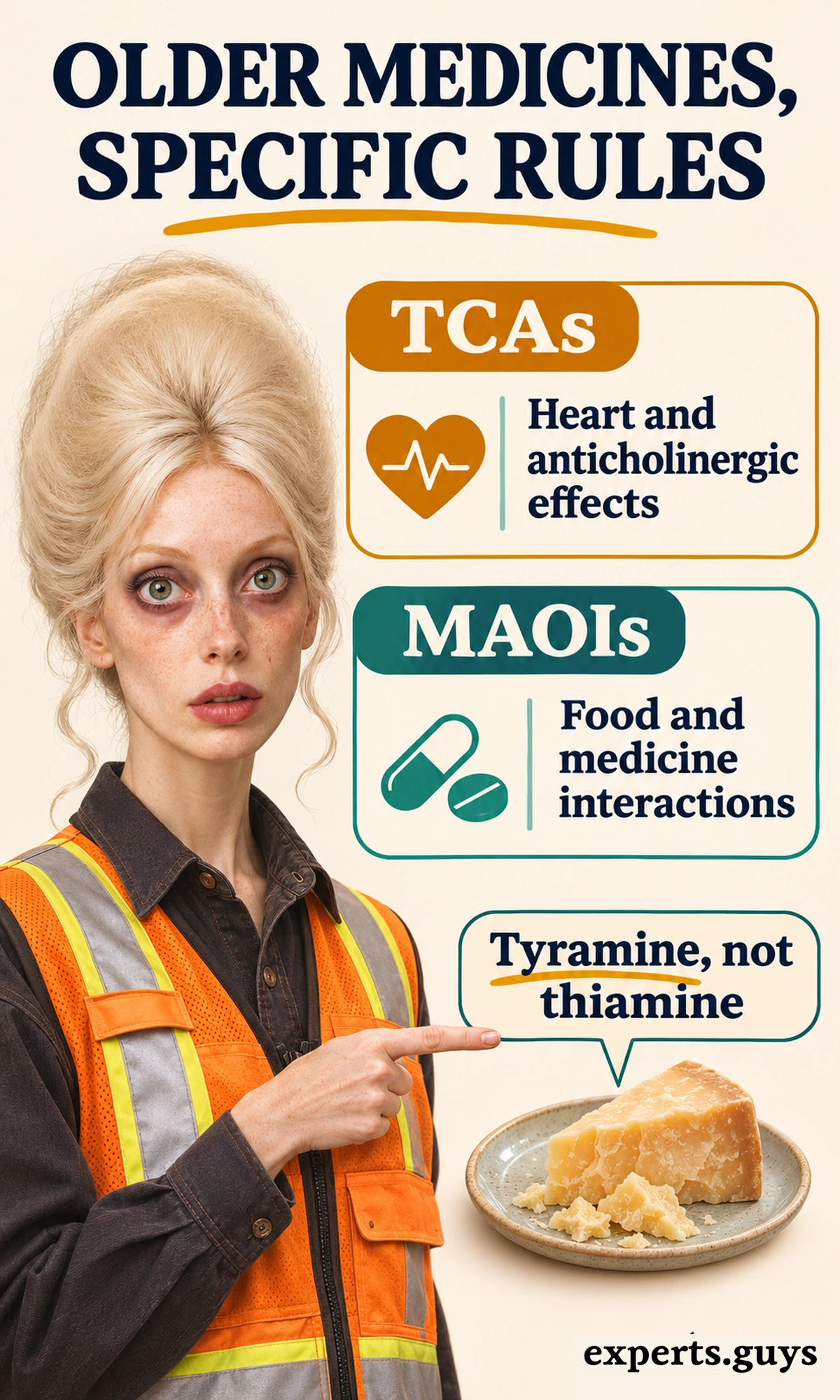
The phenelzine patient information supplies relevant food and medicine precautions. A generic picture of cheese cannot identify a safe serving, a complete prohibited-food list or the rules after stopping treatment. Those instructions must come from the actual prescribed product and treatment team.
An illustrative failure is to avoid a food while overlooking a newly bought cold remedy. MAOI safety concerns combinations, not one memorable item. A careful food routine cannot compensate for an unchecked medicine interaction, and a familiar nonprescription product does not become suitable simply because it is sold without a prescription.
Other treatments with narrower indications or supervised administration also exist. They do not fit neatly into a simple oral-tablet comparison. Their presence does not create a ladder ending in a universally “strongest” antidepressant; route, indication, supervision and individual circumstances must be considered separately.
The useful question after this section is specific: “Which precaution belongs to my medicine?” That question can lead to an actionable answer. “Are older or atypical medicines bad?” mixes unlike drugs and invites a reassuring or alarming generalisation that may miss the actual issue.
What can you check safely before taking or changing a medicine?
You can check the identity of the product, assemble the medicines involved in an interaction question and clarify an existing switching plan. These are information and handling checks. They do not require choosing a drug, calculating a new dose or experimenting with treatment.
Match the actual pack to the instructions
Use this check when a refill looks different, instructions seem inconsistent, or a release abbreviation is unfamiliar. Work with closed containers and the supplied leaflet. Keep the medicines in their original packaging so the ingredient and dispensing directions remain together.
- Find the active ingredient on the dispensing label or original pack. Check it against the prescription instructions, rather than identifying the medicine by colour or tablet shape.
- Find the strength and any release wording, such as immediate-release, sustained-release or extended-release. Read the whole label; a familiar drug name does not make the rest irrelevant.
- Open the leaflet for that supplied product and match its administration section to the dispensing directions. If the pack and directions do not agree, ask the dispensing pharmacy to resolve the discrepancy before guessing.
For example, a familiar ingredient followed by “XL” raises a formulation question. It does not tell you to take the product more often, split it, or substitute an older supply. The completed check is a clear match between the product in your hand and the instructions intended for it.
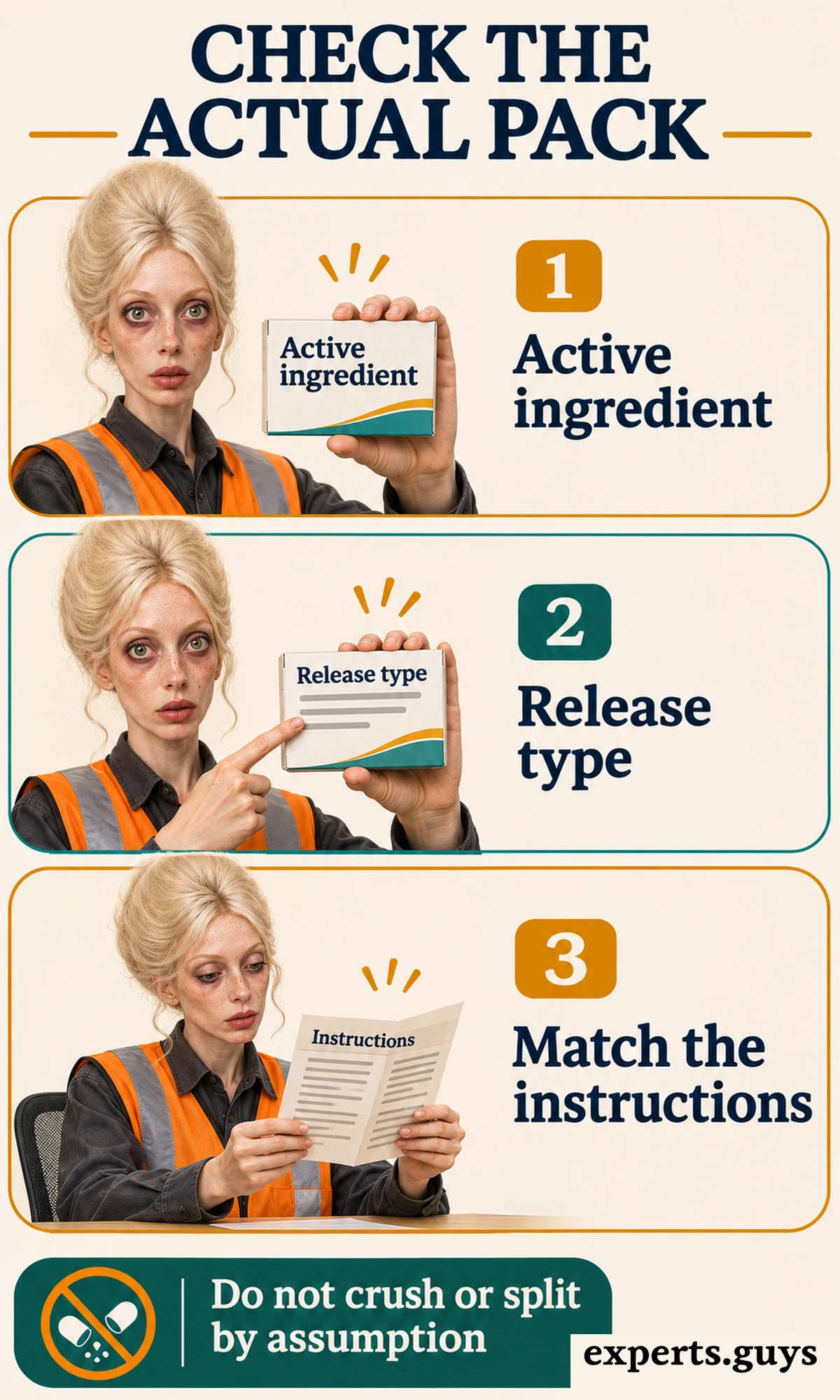
Release systems control how a product delivers its ingredient. Crushing, chewing, opening or splitting can change how some products behave. There are product-specific exceptions, so neither “all capsules can be opened” nor “no capsule can ever be opened” is an adequate rule. Use exact instructions for the named preparation.
If small print or fatigue makes the check difficult, ask the pharmacist to point out the ingredient and release wording on the actual pack. A trusted person can help read it with your agreement. The easier version preserves the same outcome: identifying the supplied medicine without relying on memory or appearance.
Bring the whole combination to an interaction check
Use this sequence before adding a nonprescription medicine, herbal product or supplement. It is especially useful when different clinicians or pharmacies are involved. An interaction check needs the proposed addition as well as the existing antidepressant.
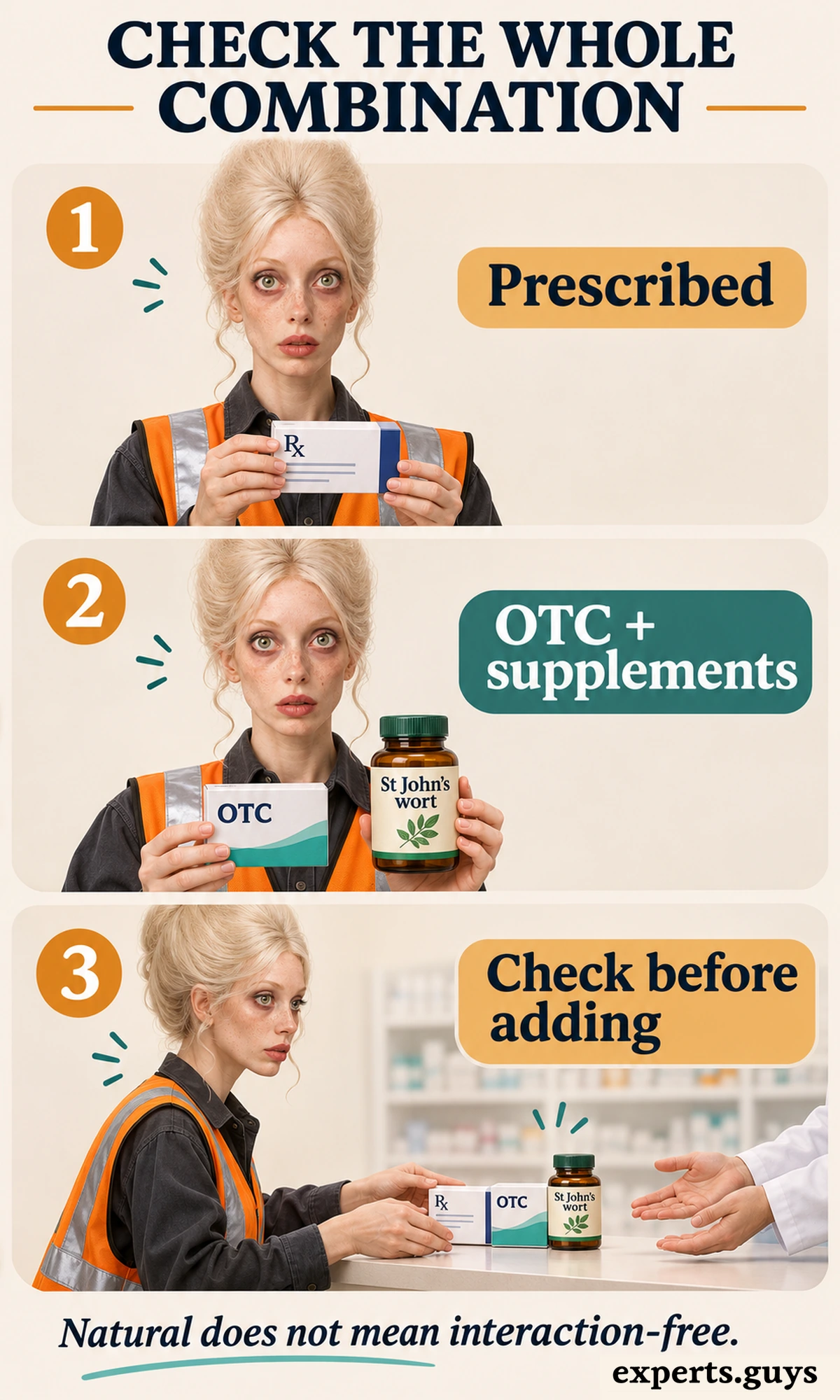
- Gather the original packs of the prescribed medicines you take. Include medicines used occasionally, because an interaction can matter even when a product is not taken every day.
- Add the proposed nonprescription product and any supplements or herbal preparations. Keep multi-ingredient packaging so the pharmacist can see every active ingredient.
- Present the combination to a pharmacist before adding the new product. Ask whether the exact combination needs avoidance, an alternative or particular instructions; keep any existing prescribed treatment unchanged unless you receive specific advice.
St John’s wort is an important example: combining it with antidepressants can create serious interactions. The word “natural” does not answer a pharmacology question. Similarly, a familiar painkiller or cough product should be assessed by its ingredients rather than by the reassuring appearance of its packaging.
This sequence does not require writing a diary or entering a medication history into an app. If carrying containers is difficult, ask the pharmacy how to verify the same information using the prescription record and exact product details. Do not decant tablets into an unlabelled bag for the purpose of the check.
The completion point is a specific answer about the proposed combination. “I mentioned that I take an antidepressant” may still leave the ingredient unknown. Naming the actual medicine allows the pharmacist to evaluate the relevant interaction rather than respond to an entire category.
Separate a switching plan from a stopping plan
A taper reduces a dose over time. A washout is an interval before another medicine starts. A cross-taper involves reducing one medicine while another is introduced. These terms describe different actions, and no single sequence applies to every pair of antidepressants.
If a switch has been prescribed, identify the old medicine, the new medicine and the instructions for each stage. Ask whether any overlap or waiting interval is intended and what to do if symptoms or practical difficulties interrupt the plan. If the instructions conflict with a newly supplied pack, have the prescriber or dispensing pharmacist resolve that conflict.
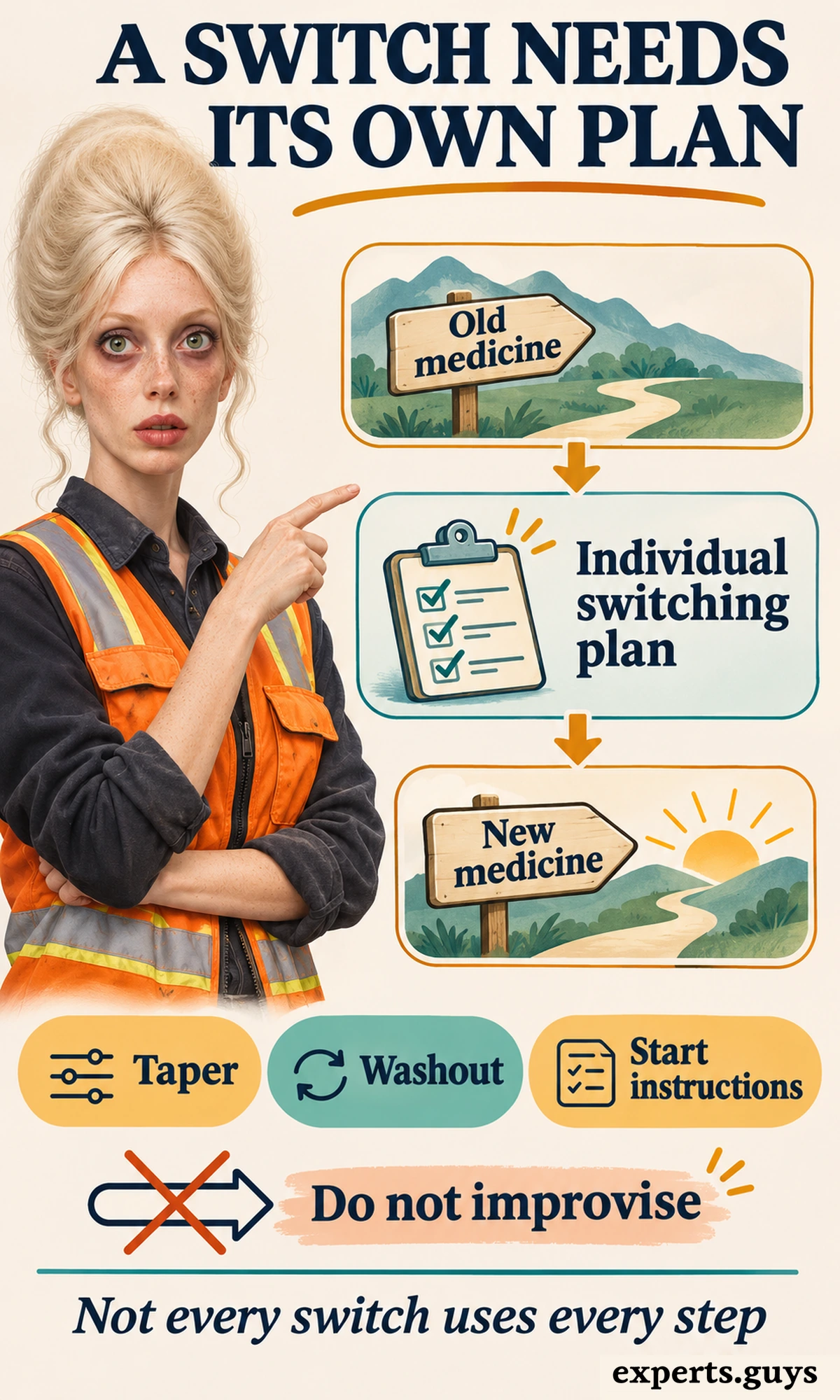
An illustrative error is to begin the new medicine because it has arrived, while continuing the old one because tablets remain. Having both supplies is not permission to combine them. Another error is to copy a friend’s taper because both medicines are described as antidepressants. The actual pair and the person’s circumstances determine the plan.
Withdrawal symptoms can follow dose reductions, missed doses or abrupt stopping. NICE identifies paroxetine and venlafaxine as medicines needing particular care in this respect. Symptoms beginning soon after a change may represent withdrawal rather than an immediate return of depression, but timing alone does not establish the cause.
The NICE recommendations on starting and stopping antidepressants support individualised reductions and review. This article deliberately supplies no fixed taper percentage or switching calendar: the safe practical action is to obtain an unambiguous plan for the actual medicines, not calculate one from a comparison chart.
Changes in health history can change the comparison
A medicine that fitted an earlier situation may need a fresh assessment when pregnancy, breastfeeding, a new diagnosis or another prescription changes the context. This is not evidence that the original choice was wrong. It means the information used to judge suitability has changed. Keep that distinction clear when reading older advice about a medicine you have taken for some time.
Pregnancy questions in particular involve the effects of the illness as well as the medicine. A warning on a leaflet is a reason for an individual benefit-risk discussion, not an instruction to stop treatment abruptly. Different medicines and circumstances need different decisions; a class-wide statement cannot settle the question.
A history of mania or hypomania also changes the treatment question. In bipolar disorder, an antidepressant may be considered in particular circumstances, but antidepressant treatment alone can trigger mania or rapid cycling. A past period of unusually elevated mood, reduced need for sleep and risky behaviour therefore belongs in the assessment before a prescription decision; a general antidepressant comparison cannot substitute for that distinction.
Know which changes cannot wait for a routine review
- Breathing difficulty, a swollen tongue or throat, collapse, seizures, or a suspected overdose need emergency medical help. Use your local emergency service and take the medicine packaging if possible.
- Fever with agitation or confusion and marked shaking, twitching or stiffness after a medicine addition or change needs urgent assessment for a serious reaction, including possible serotonin syndrome. Do not try to diagnose it from one symptom.
- New suicidal thoughts, severe restlessness, or an unusually elevated or irritable state with very little need for sleep require prompt clinical contact. If there is immediate danger or you cannot stay safe, seek emergency help now.
The MedlinePlus serotonin syndrome guide explains why combinations and recent changes are relevant. Tell the assessing team exactly what was taken and when, including supplements. Do not drive yourself if you are impaired or seriously unwell.
For routine treatment questions, an early review checks tolerability and safety before a full response can necessarily be judged. Improvement may develop over several weeks, so a first review is not automatically a pass-or-fail deadline. Equally, severe or disruptive effects do not need to be endured until an arbitrary future date.
Questions that often remain
Does a different brand mean a different antidepressant?
A brand change can still contain the same active ingredient, but verify the strength and formulation rather than assuming equivalence from the name. If appearance changes unexpectedly, the dispensing pharmacy can confirm what was supplied. Keep the old and new labelled packs available for that conversation; do not combine their contents.
Can an antidepressant be addictive even if stopping causes symptoms?
Withdrawal is not the same as the compulsive use and craving associated with addiction. The distinction does not make withdrawal unimportant or justify abrupt stopping. A person can need a carefully adjusted reduction without that implying misuse. Describe the actual problem rather than using “addictive” as a substitute for a stopping plan.
Does being prescribed an antidepressant mean I have depression?
No. These medicines may be used for other conditions, and a class name does not establish a diagnosis. The useful question is which condition or symptom your prescription is intended to treat. That purpose also changes how response, dose and duration should be interpreted.
Should I judge a medicine by a friend’s experience?
A friend’s experience can identify a question you had not considered, such as sleepiness or sexual effects. It cannot predict your response or establish that the same product is appropriate. Use the concern to ask about a named drug and your circumstances, while keeping prescription decisions separate from anecdotal comparisons.
Start with the medicine you actually have
If you already hold a prescription, begin by matching its active ingredient and formulation to its instructions. If your question concerns a new addition or a switch, bring the exact products and the existing plan into that discussion. A useful understanding of antidepressant kinds ends with clearer, medicine-specific questions and safe handling, rather than a ranking to act on alone.