
There is no single strongest antidepressant for everyone: the useful next step is to identify whether the difficulty is limited benefit, side effects, an interaction or a problem following the current plan. Those situations call for different reviews, so do not increase, combine or stop medicines on your own. Start with the concern that is disrupting daily life most, then use the steps below to prepare a focused treatment review.
This guide is for adults already discussing or taking treatment for depression. It focuses on review preparation rather than drug rankings, dosing instructions or a self-diagnosis. The examples and AI-created illustrations are teaching aids, not reports of real patients or treatment results.
Why can the “strongest” medicine still be the wrong fit?
Treatment strength is not a single scale that combines effectiveness, tolerability and suitability. Two medicines can differ in dose units and unwanted effects without one being universally better. The NHS antidepressant overview explains that individual response and side-effect burden vary even when medicines generally work similarly across groups.
Start by distinguishing the type of problem rather than assigning yourself a treatment-resistant label. “Response” usually means meaningful improvement; “remission” means symptoms have reduced to a low level, and neither is established by one good afternoon. Daily function and unwanted effects still deserve attention when mood has improved.
| What you mean by “not helping” | What to bring to the review | Why the distinction matters |
|---|---|---|
| Little or no improvement | Actual treatment dates and current symptoms | The clinician needs to assess the trial and remaining symptoms. |
| Some benefit, difficult side effects | One improvement and one specific burden | A benefit can coexist with a reason to change the plan. |
| Interrupted treatment | Refill gaps, missed doses and their causes | The obstacle may need resolving before judging effectiveness. |
| Several health conditions or medicines | Current medicine list and relevant changes | Interactions and other contributors can alter the decision. |
For the broader first-choice discussion, see choosing an antidepressant for depression and anxiety. This page addresses a different question: what to clarify when your current plan is falling short. Keep the comparison focused on the problem you still need solved.
Name the problem before asking for a stronger medicine
Use this when “it is not working” describes several different frustrations. A treatment review becomes more useful when improvement, unwanted effects and everyday obstacles are separated. This is an editorial preparation exercise, not a test that identifies the right medicine.
- Open a private note or voice memo on your phone and choose the concern that matters most: little benefit, unwanted effects, or difficulty following the plan.
- Add one concrete example of the impact, such as “I feel less anxious, but I cannot stay awake through dinner.”
- Mark whether the problem is longstanding or appeared after a treatment change; include uncertainty rather than guessing.
Illustrative example: less worry and more daytime sleepiness can happen together. Describing both prevents “not working” from hiding a useful effect or an unacceptable burden. The completed note should make your main concern clear in one sentence.
Do not label every difficult day as treatment failure. If typing feels hard, dictate a short message and check the transcription. Sudden dangerous symptoms belong in urgent care, not in a note to discuss weeks later.

Reconstruct the treatment timeline from existing records
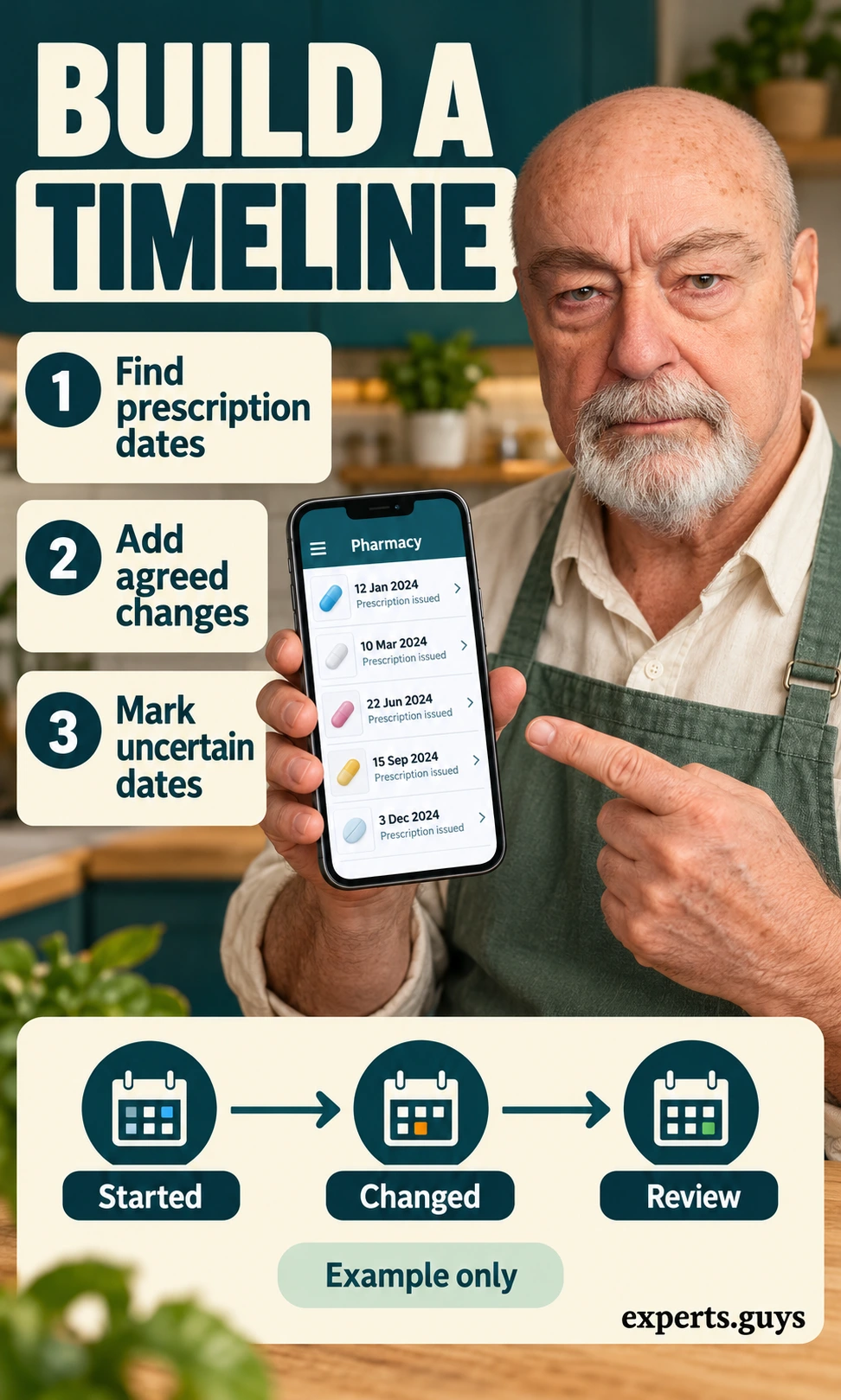
Use this when you cannot remember whether a medicine had enough time to help. The prescription date, actual start date and time at the prescribed treatment dose may differ. Existing pharmacy records and appointment messages are better starting points than memory alone.
- Find the medicine name, first-use date and agreed changes in your pharmacy app, prescription label or clinic messages.
- Put those events in order and add any refill gaps or periods when you could not take it as directed.
- Mark dates as approximate if needed, and ask the prescriber which period counts as an adequate trial.
Illustrative example: a prescription was issued six weeks ago, but treatment started later and changed again recently. “Six weeks since prescribing” does not tell the whole story. The useful result is an accurate sequence, not a self-assigned pass or fail.
Do not estimate doses from the colour or size of a tablet. If records are incomplete, ask the dispensing pharmacy for your medication history. Keep packaging available for identification, away from children and pets.
Could side effects or interactions explain the complication?
They may contribute, but timing alone cannot prove the cause. Some symptoms overlap with depression or another condition, and combining products can change risk. For example, the sertraline medicine guide flags interactions with certain medicines and supplements, which is why the exact product list matters.
Emotional flatness also needs a careful description rather than an automatic assumption that the dose is too low. Our guide to antidepressant emotional blunting explores that concern in more detail. Here, keep the task practical: identify what changed and how it affects your life.
Make one complete medicine list for an interaction check
Use this if several clinicians prescribe for you, or if you also take nonprescription products. A medicine used only occasionally can still matter. The aim is to make a pharmacist’s check complete, rather than trying to judge combinations yourself.
- Photograph or scan the names and strengths on current packaging, then check that the text is readable.
- Add over-the-counter painkillers, cold remedies, sleep products, vitamins, supplements and any alcohol or other substance use relevant to care.
- Show the complete list to a pharmacist and ask which combinations need checking before anything is added or changed.
Illustrative example: a person remembers their daily antidepressant but forgets an occasional pain medicine. Adding the occasional item gives the pharmacist a more accurate picture. Ask for a clear answer about that exact product, rather than assuming every painkiller behaves alike.
A photo collection without names or current-use information is difficult to interpret. Mark old prescriptions as no longer used and avoid uploading identifying labels to public websites. If scanning fails, show the actual packaging during the appointment.

Compare benefit and burden separately
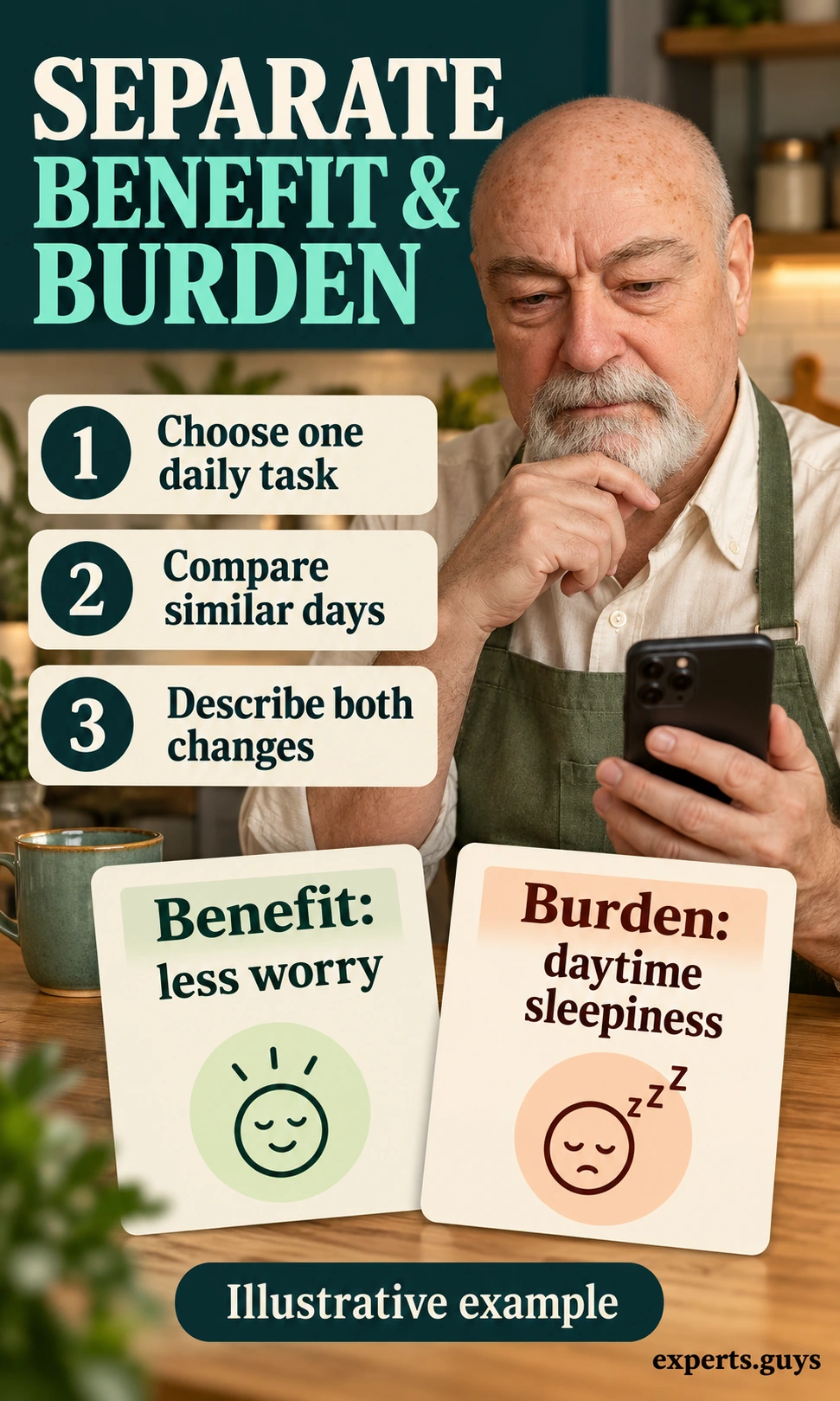
Use this when one symptom improves while something else feels worse. A single overall rating can hide that trade-off. Two short descriptions give the appointment a clearer starting point without pretending to measure clinical remission.
- Choose one ordinary activity that matters to you, such as preparing a meal, getting through a meeting or enjoying a conversation.
- Compare similar situations before and after the change, using only what you actually remember.
- Describe one improvement and one difficulty; if there was no improvement, say so.
Illustrative example: “I can finish dinner preparation now, but I feel sleepy by early evening.” That is more informative than “50% better” without context. Bring the description to the review rather than using it to decide on a dose.
Do not force a positive entry or treat one unusually good day as a stable change. Use a brief voice memo if concentration is poor. If sleepiness affects driving or safe work, avoid the unsafe activity and ask for advice promptly.
Has the treatment had a fair trial in your actual circumstances?
An adequate trial depends on the prescribed treatment, dose, duration, tolerability and how it was taken. NICE recommends reviewing the reasons when there is no response after four weeks at a recognised therapeutic dose; that is a review point, not an instruction to stop or change the dose yourself. Its further-line treatment guidance also asks clinicians to consider other contributors when response remains limited.
Your calendar and your body do not always tell the same story. A long time since the first prescription may include missed treatment or time before an agreed adjustment. If another condition is central to the picture, the guide to depression and chronic illness explains the wider overlap without treating every symptom as depression.
Identify what makes the current plan difficult to follow
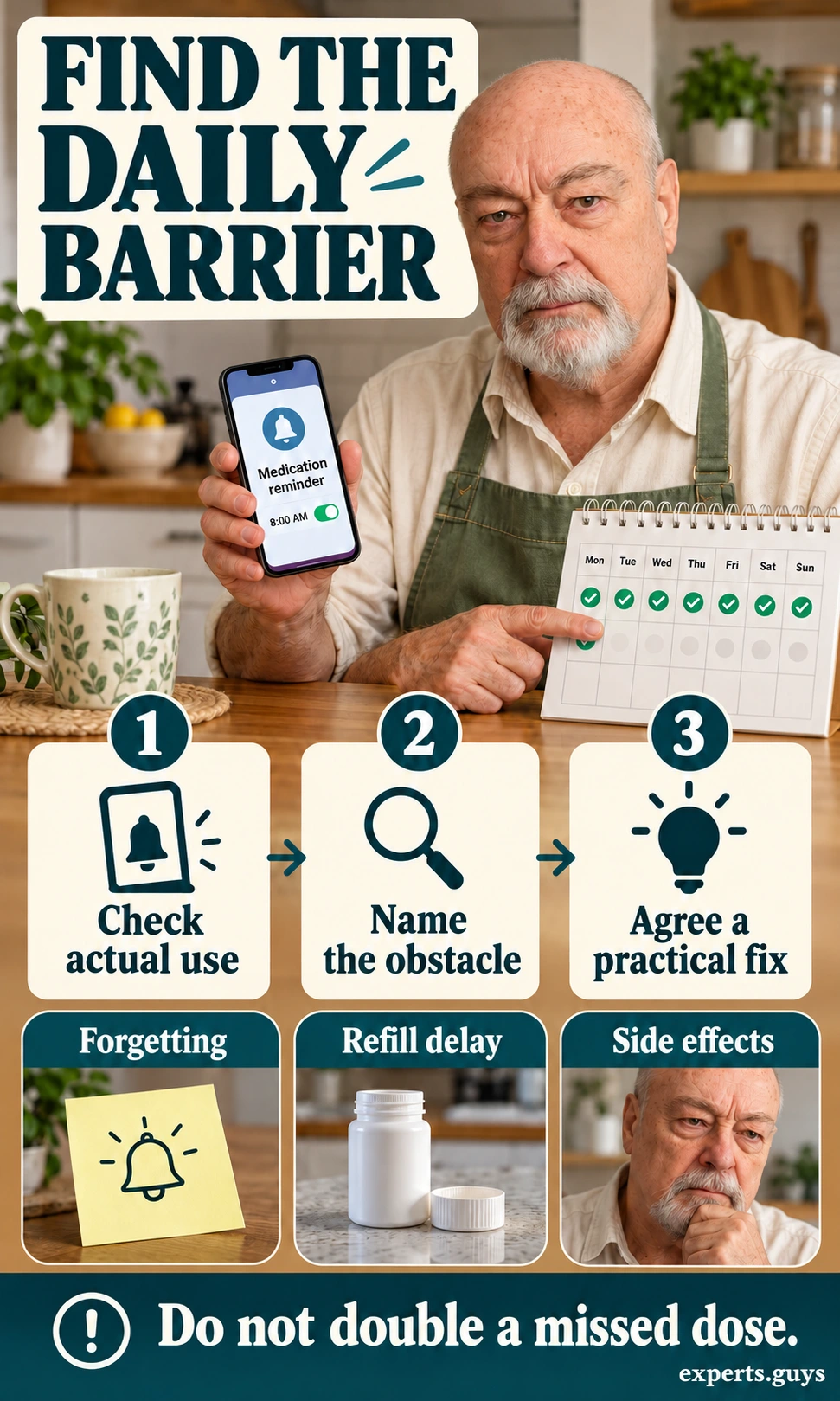
Use this when missed doses, refill delays, cost or side effects make treatment inconsistent. Naming the barrier helps the care team solve the actual problem. It is not a blame exercise, and an app cannot determine what to do with a missed dose.
- Check your recent routine honestly: forgetting, running out, avoiding unwanted effects, or misunderstanding instructions.
- Choose the practical obstacle you want help with; set a refill reminder or a neutral phone reminder only if that addresses it.
- For a missed dose, use the instructions for your exact medicine or ask a pharmacist; do not improvise a catch-up schedule.
Illustrative example: a refill reminder helps when medication runs out before a weekend. It does not solve nausea or an unaffordable prescription. The useful checkpoint is whether the chosen fix addresses the reason doses were missed.
Do not double a dose to compensate unless your own clinician has specifically instructed otherwise. Hide medicine names from lock-screen reminders if privacy matters. If cost or supply is the obstacle, ask the pharmacy about available routes before the next refill is due.
Add the health context that changes the discussion
Use this if pain, sleep problems, another condition or a new life stage complicates treatment. Symptoms can have more than one contributor. A concise description helps the clinician decide what needs assessment without you having to diagnose it.
- List the conditions already diagnosed and the concern that remains most disruptive.
- Add important recent changes, including new medicines, pregnancy or pregnancy plans, or major changes in sleep and energy.
- Explain what changed together and what did not; ask whether the review should include another possible contributor.
Illustrative example: pain has eased but exhaustion still limits daily activity. That observation does not establish a cause for the fatigue. It does tell the clinician that improvement in pain did not solve the whole problem.
Do not turn an internet symptom match into a diagnosis. A short phone summary or a trusted person’s observations can help if memory is patchy. Mark “not sure” when you cannot separate old symptoms from new ones.

What can a treatment review lead to besides a stronger prescription?
A review may lead to addressing a barrier, changing the treatment approach or seeking specialist input. Medication, psychotherapy and other treatments can play different roles, rather than forming a simple weakest-to-strongest ladder. The NIMH medication guide describes individual treatment planning and options when previous treatment has not helped enough.
| Discussion route | Question worth asking | Important limit |
|---|---|---|
| Review the current plan | Was the trial adequate and tolerable? | Only the prescriber can decide on dose or schedule changes. |
| Switch or add treatment | Which remaining problem does this address? | Switching and combinations need an individual safety plan. |
| Add or change psychotherapy | What would sessions help me practise? | The approach should fit the symptoms and goals. |
| Specialist assessment | Which options fit my history and health? | Eligibility and availability vary by setting. |
For persistent or severe depression, specialist options may include brain stimulation or other supervised treatments. ECT and rTMS are different procedures with different practical burdens and risks; neither is a home technique or simply a stronger tablet. NIMH’s brain stimulation guide explains these differences, while our mental health counseling guide helps with the therapy side of the conversation.
Ask about the goal and trade-off of each next option
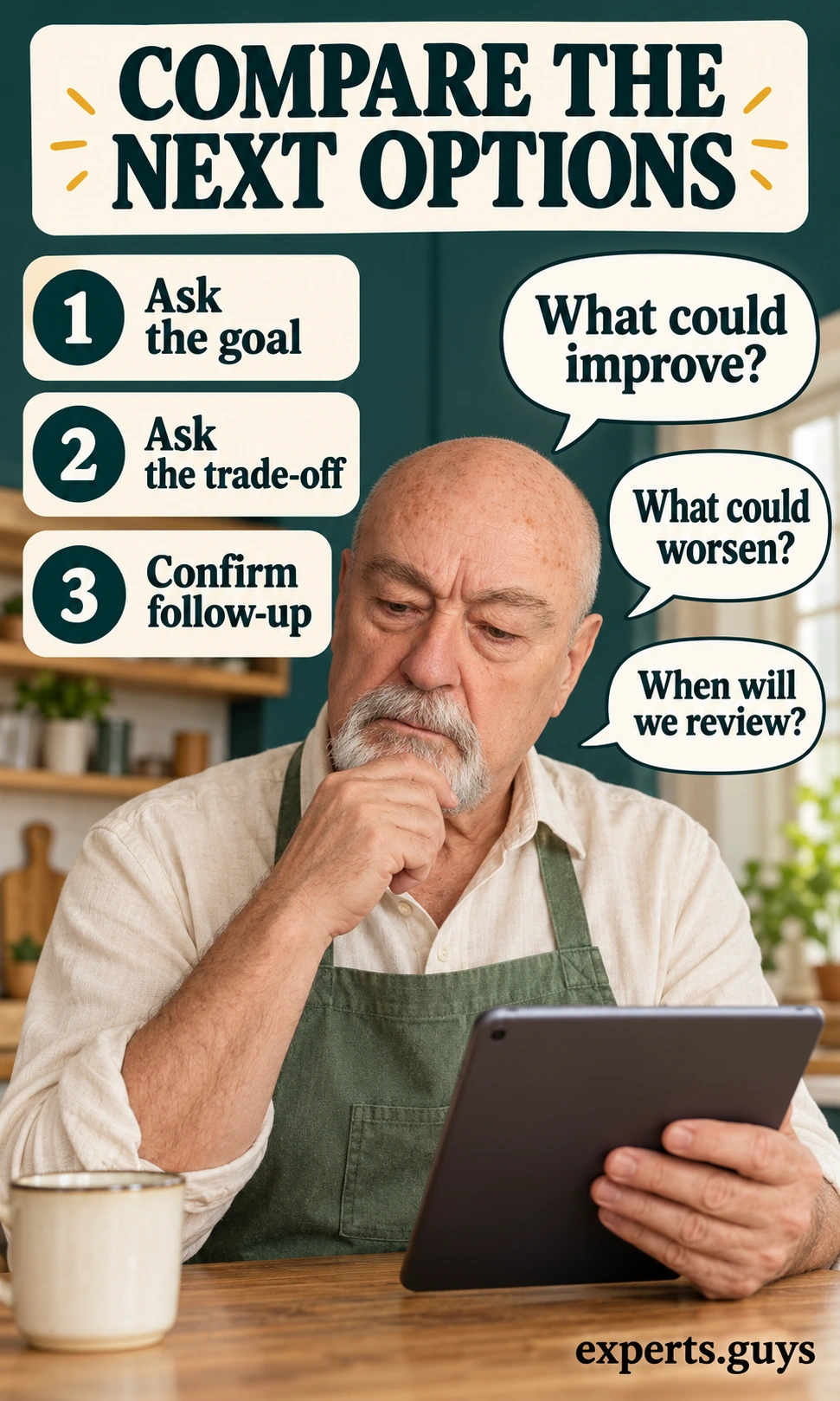
Use this after the current trial and its barriers have been reviewed. The useful question is which option addresses your specific remaining problem. A larger milligram number, a newer product or an additional medicine does not establish that it is the best fit.
- Ask what the proposed change is intended to improve: mood, function, tolerability or another specific concern.
- Ask what new burden it could introduce, including monitoring, interactions, appointments, cost and unwanted effects.
- Confirm when the result will be reviewed and what should trigger earlier contact.
Illustrative example: “What would count as worthwhile improvement, and what would make us reconsider?” turns an open-ended trial into a clearer conversation. Save the agreed answer in your clinic portal or private phone note. It is the clinician’s plan, not a schedule generated by this article.
Do not compare different medicines by milligrams or copy another person’s switching schedule. If several options feel overwhelming, ask the clinician to explain the two most relevant choices first. Ask for clarification before leaving if instructions conflict.
Create a short digital handoff for the appointment
Use this when the appointment is short or you find it hard to explain the whole story. A short summary keeps the main concern visible while leaving clinical decisions to the care team. It also reduces the need to repeat a long history from memory.
- Select the main concern and relevant context in the Review Conversation Studio below.
- Read the generated summary and correct any choice that does not describe your situation.
- Download the text or save the A4 view as a PDF, then bring it to your appointment or share through your clinic’s secure route.
Illustrative example: “Main concern: side effects. Context: other medicines. Question: what should be checked before changing treatment?” is enough to open a focused discussion. It should accompany the medication list, not replace it. The builder does not assess safety or choose a treatment.
Do not put personal identifiers into a public comment or send a summary to an unverified recipient. If downloads are unavailable, take a screenshot of the result on your own device. Check the content before sharing and remove the file from a shared device afterwards.

Questions that often come up
Does a higher milligram number mean a stronger antidepressant?
No. Milligrams measure the amount of a particular drug, not a shared scale of antidepressant strength. Different drugs cannot be ranked by comparing their tablet numbers.
Can a genetic test identify the strongest medicine for me?
A pharmacogenetic result may inform how your body handles certain medicines; the FDA explains the limits of gene–drug associations. It does not guarantee which medicine will relieve your depression best. Ask what decision a proposed test could actually change.
Should I stop for a few days to see whether a symptom is a side effect?
Do not run a stop-and-restart experiment on your own. Withdrawal can create new symptoms and make the picture harder to interpret. Ask for a planned review instead.
What if I have already tried several antidepressants?
Bring the names, actual trial periods, benefits and reasons for stopping. A specialist can assess what those trials establish and discuss options. Several prescriptions alone do not describe whether each trial was adequate.
The useful next step
Choose the most disruptive concern, reconstruct the actual treatment history and bring a complete medicine list. Describe both benefit and burden, then ask what the next option is meant to achieve and when it will be reviewed. That gives the decision a clearer basis than searching for the strongest name.