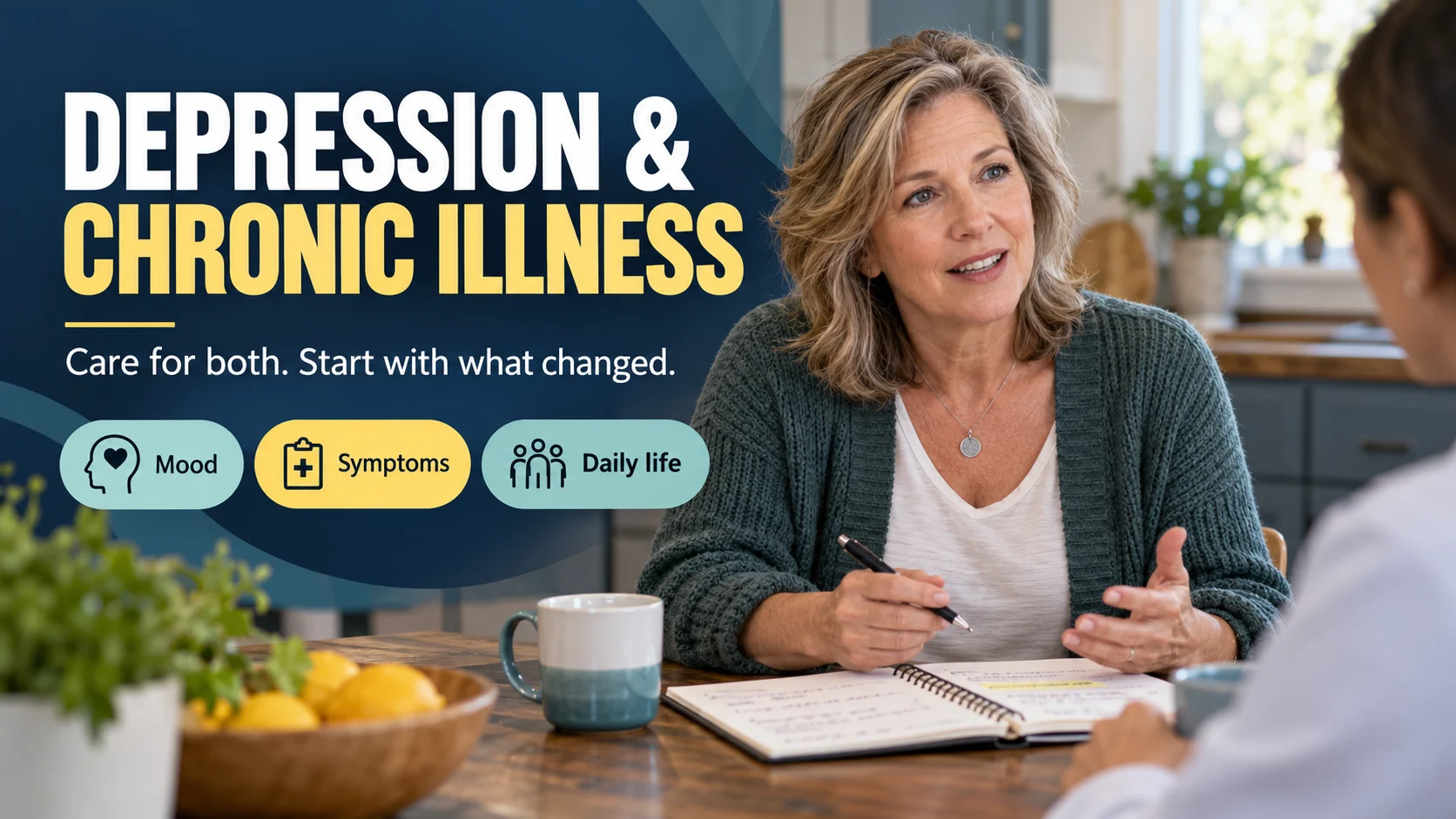

Depression can occur alongside a chronic physical illness, and both deserve care rather than assuming low mood is an unavoidable part of being unwell. Fatigue, poor sleep and appetite changes can come from several causes, so the useful next step is to describe what changed from your usual pattern and how it affects daily life.
Having a long-term condition does not automatically mean you have depression. Equally, an established physical diagnosis should not prevent a conversation about persistent low mood or loss of interest. A clinician can assess the overlap without asking you to prove which condition came first.
When to get help instead of waiting
If you might act on thoughts of suicide, cannot keep yourself safe, or have a life-threatening physical symptom, seek emergency help now. In the United States, call 911 for immediate danger; call or text 988 for suicide crisis support. Outside the United States, use your local emergency service or crisis service, and ask someone you trust to stay with you while help is arranged.
For symptoms that persist, worsen or disrupt everyday tasks, arrange a clinical assessment. NIMH’s guidance on seeking mental health help uses duration and functional impact as useful signals. You do not need to wait two weeks when distress is severe or your ability to eat, drink, take essential treatment or manage safely is deteriorating.
| What you notice | What to discuss |
|---|---|
| Low energy or poor sleep | How this differs from your usual illness pattern; pain, sleep disruption and recent treatment changes. |
| Less interest or enjoyment | Whether activities feel emotionally unrewarding even when physically possible. |
| Daily tasks becoming harder | A concrete example: missed meals, difficulty organizing medicines, or withdrawing from contact. |
| A change after a new medicine | The medicine, dose change and timing. Do not stop prescribed treatment on your own. |
Why depression and physical illness can overlap
The relationship can run in both directions. NIMH’s explanation of chronic disease and depression describes contributions from illness-related stress, some disease effects and treatment effects. Depression may also make physical care harder to manage; that is a reason to add support, not to blame the person.
Pain, disrupted sleep and reduced independence can leave less room for work, relationships and enjoyable activity. Biological processes may also contribute, but a possible link does not establish the cause of an individual’s symptoms. There is no single explanation that fits everyone; the broader context is covered in what causes depression.
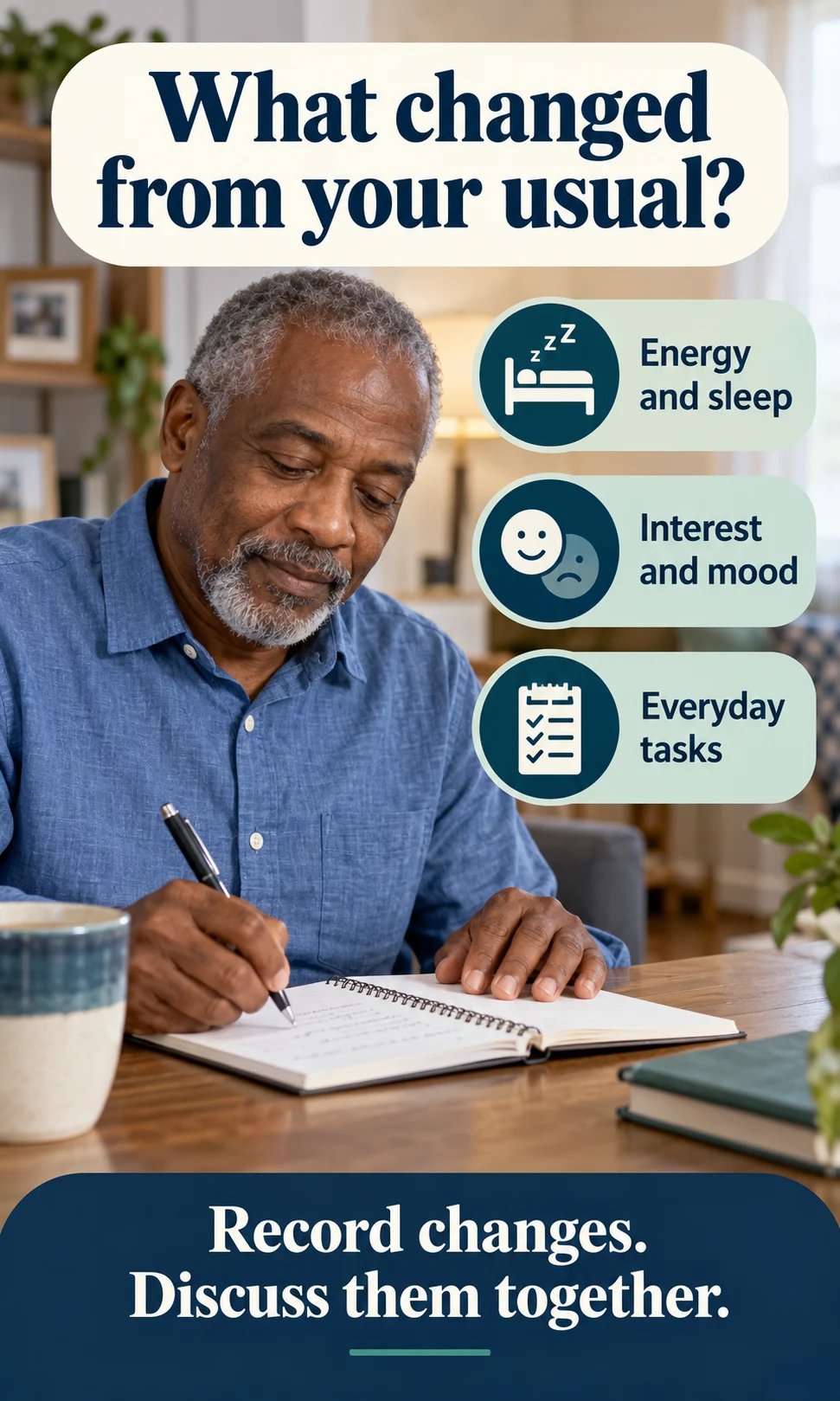
Fatigue alone cannot tell you which condition is responsible
Depression involves more than feeling physically exhausted. NIMH’s overview of depression describes changes in mood, thinking and daily activity, with several interacting risk factors. Ask about the whole pattern rather than treating one symptom as a diagnosis.
For example, someone may stop gardening because joint pain makes bending difficult, because nothing feels enjoyable, or because both problems are present. Those explanations lead to different care conversations. The distinction is not always obvious, so describe the barrier in your own words rather than choosing a label first.
A clinician may review physical contributors as well as mental health, depending on your history and examination. Our guide to anemia and depression explains one specific overlap. It does not mean every tired person needs the same blood tests or that a normal test result rules depression in or out.
Bring a timeline, not a self-diagnosis
Write down when the change began, whether it fluctuates with physical symptoms, and what you can no longer manage as you usually would. Include medicines, supplements and recent dose changes. If dates are uncertain, say so; an honest approximate sequence is more useful than a precise-looking guess.
A short opening can be enough: “My pain has been familiar for years, but over the last month I have also stopped enjoying conversations and cannot organize my morning routine.” This separates an established problem from a new change. It gives the clinician something specific to explore without claiming that one condition explains the other.
- Start with your baseline: what sleep, energy, mood and activity usually looked like before this change.
- Add one concrete example: a task, relationship or enjoyable activity that has become harder.
- Bring the treatment list: include non-prescription products and who prescribes each medicine.
- Ask for a follow-up plan: who will review progress, and what should prompt earlier contact.
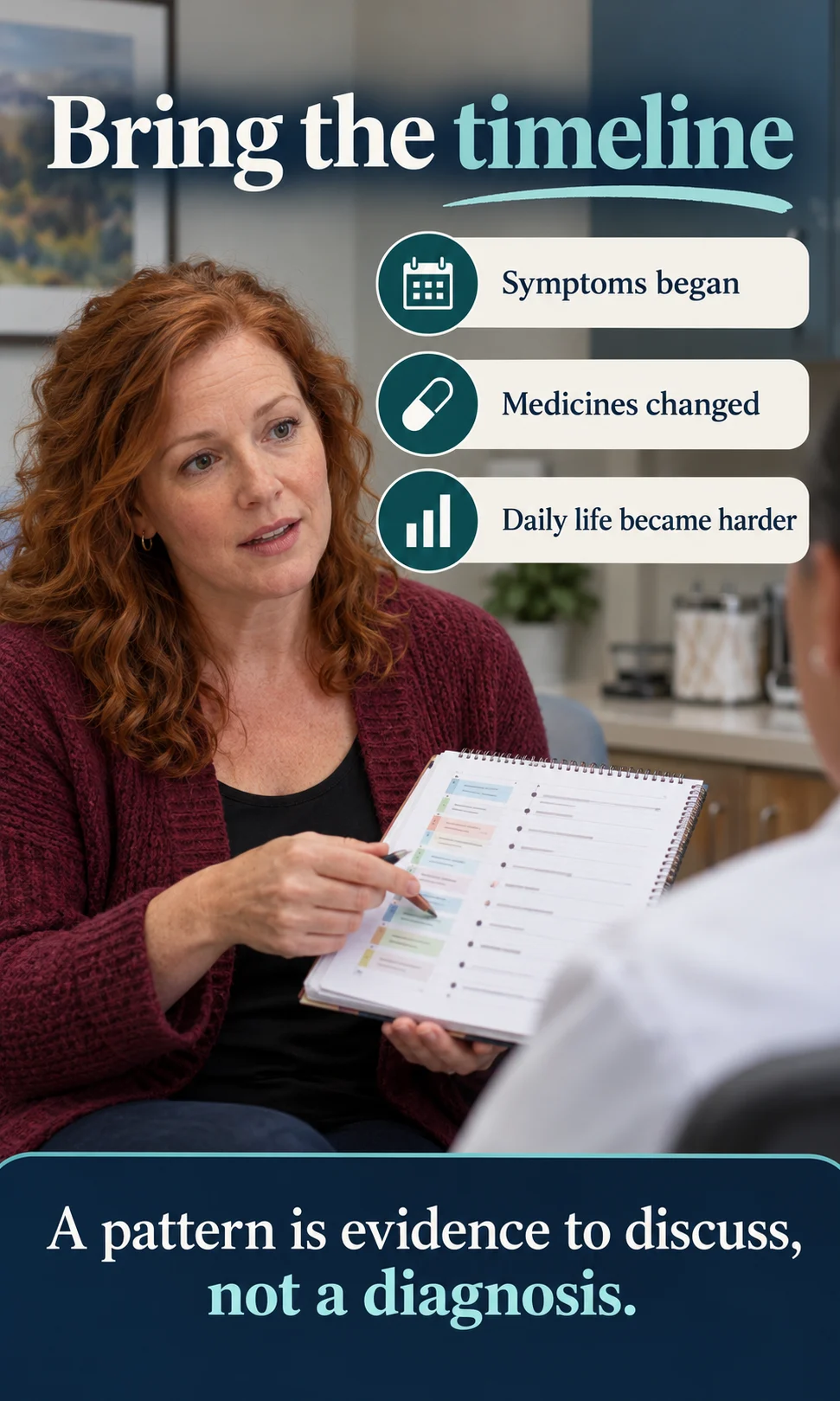
Prepare your Mood & Care Brief
Use the brief below to organize a care conversation. It creates a checklist from the topics you select, without calculating a depression score or deciding what caused your symptoms. Keep urgent concerns separate from routine preparation, and seek help directly if you cannot stay safe.

Mood & Care Brief
Bring the changes that matter into one care conversation.
No diagnosis · No score · No accountFor adults preparing a healthcare conversation. This is not a diagnosis, screening test, treatment recommendation or emergency service. Your selections stay in this page’s memory until you clear them or leave. Nothing is submitted or saved by this experience.
Interactive preparation is loading. If the controls do not respond, use this manual method: note when changes began, one daily-life example, your medicines and the questions you want to ask.
Your care conversation brief
Questions to bring
Selections organize discussion only. Duration and daily impact do not establish a diagnosis or cause.
Method: topic-based editorial preparation informed by NIMH and NICE. No numerical algorithm or clinical interpretation is used.
What coordinated treatment can involve
Treatment should account for both the physical condition and the person’s preferences. NICE’s chronic-physical-health guidance recommends a broader assessment that considers functional impact, history and context. A questionnaire can support a conversation, but its symptom count should not replace that assessment.
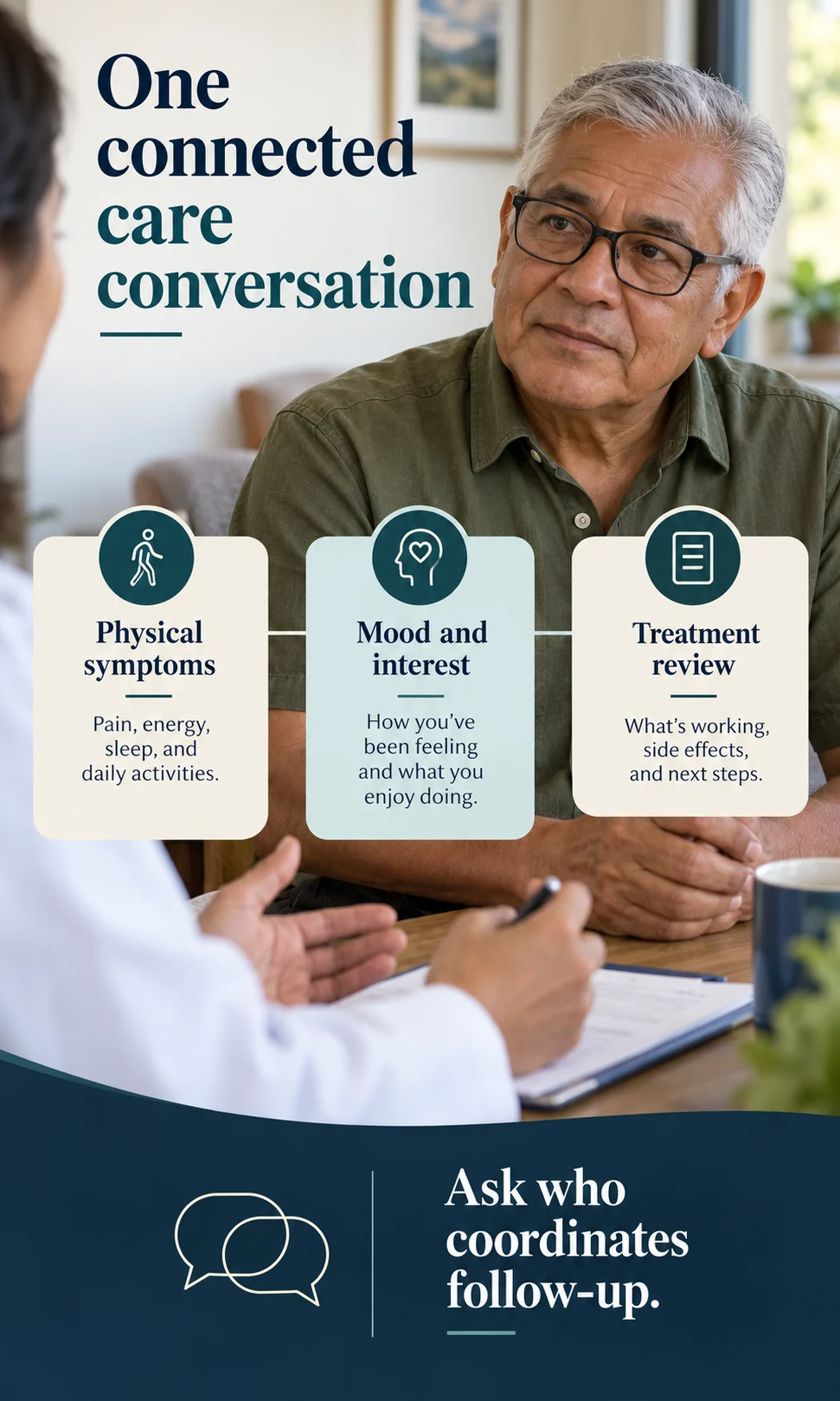
Psychological treatment, medication or a combination may be considered. Ask how any proposed medicine fits with your existing treatment, how side effects will be monitored, and who will coordinate follow-up. Do not change doses or stop medication because of a website result; discuss concerns with the prescriber or pharmacist.
Make the options concrete before leaving the appointment. If therapy is suggested, ask what approach is offered, how to access it and what happens while you wait. If medication is proposed, ask which benefits and unwanted effects you should report and how soon the first review will happen.
If several professionals are involved, ask which person should receive updates and how information will be shared. A written plan can name the next appointment, the treatment decision and an earlier-contact route. This helps prevent a concern being passed between teams without anyone arranging the next step.
Agree on a change you would recognize in daily life, such as finding it easier to prepare a meal or reconnect with someone. Keep that goal realistic for the physical condition and discuss it with your team. The purpose is to track something meaningful, without promising that all physical symptoms will disappear.
Support that makes daily care easier
Offer practical help that the person actually wants: transport to an appointment, a meal, or company while they prepare questions. Ask which task feels hardest rather than assuming encouragement alone solves it. Respect their choices, and take worsening distress seriously even when they already have medical care.
Long-lasting depression and a long-lasting physical illness are different concepts. If low mood has been present for years, persistent depressive disorder is a separate topic to discuss with a clinician. The duration of the physical condition does not determine the depression diagnosis.
Frequently asked questions
Is depression inevitable with a chronic illness?
No. Chronic illness can increase vulnerability, but people respond differently and depression remains treatable. Discuss changes rather than assuming distress is something you must accept.
Can a questionnaire distinguish depression from a physical illness?
A questionnaire can highlight concerns but cannot establish their cause. Clinical assessment considers symptoms, function, medical history and treatment. This page’s brief is an appointment aid, not a screening instrument.
Should I stop a medicine if my mood changed after starting it?
Do not stop or adjust prescribed medicine on your own. Contact the prescriber or pharmacist and explain the timing and symptoms. Seek urgent help if there is an immediate safety concern.
Do I need to wait for my physical condition to improve first?
You can raise mental health concerns while physical treatment continues. Ask your care team how the two parts of care can be coordinated. Persistent or worsening distress deserves attention in its own right.
A useful next step
Bring one clear example of what changed, your treatment list and a question about follow-up to your next care conversation. The aim is to make the overlap easier to assess while keeping both physical symptoms and emotional health visible. You do not have to resolve the diagnosis before asking for support.