
There is no single best antidepressant for everyone with depression and anxiety. The right choice depends on the symptoms being treated, previous treatment response, medical history and side effects you can reasonably tolerate. Start by comparing those factors with your prescriber, rather than choosing the strongest-sounding medicine.
For many adults, an SSRI is an initial medication option; SNRIs and other medicines may suit different circumstances. Psychological treatment may be used instead of, or alongside, medication, depending on the assessment and your preferences. This guide helps adults prepare that decision and review it safely; it does not select a medicine or dose.
| Option discussed | Why it may come up | What to clarify |
|---|---|---|
| SSRIs, such as sertraline or escitalopram | Common options for depression and some anxiety disorders. | Which anxiety condition is being treated, early unwanted effects and sexual side effects. |
| SNRIs, such as duloxetine or venlafaxine | Options for depression and some anxiety disorders; some also have pain indications. | Medical-history fit, interactions and monitoring for the specific medicine. |
| Mirtazapine | An alternative antidepressant when its overall profile suits the person. | Sleepiness, increased appetite and weight gain may be important trade-offs. |
| Other antidepressants or specialist strategies | May be considered after individual assessment or an inadequate response. | Why this option is preferred and what additional monitoring is needed. |
This comparison is a discussion guide, not a ranking or a complete list of medicines. Licensing and availability vary by country, and medicines within one class are not interchangeable. For example, mirtazapine’s sleepiness and appetite effects can matter to someone whose priorities differ from another person’s.
Get urgent help for severe changes: Seek emergency care for trouble breathing, severe swelling, or fever with confusion and marked muscle stiffness or shaking. New suicidal thoughts, severe agitation, or unusually high energy with very little need for sleep require urgent assessment; if you cannot stay safe, contact local emergency services immediately. Do not wait for a routine review or an online questionnaire.
Antidepressants affect signalling involving neurotransmitters, but the name of a neurotransmitter does not tell you which medicine will work for you. Treatment effects develop over time, and a simple “chemical imbalance” story cannot predict an individual response. The NIMH medication overview explains why response, unwanted effects and ongoing review all matter.
What should you clarify before choosing an antidepressant?
Build a short digital symptom brief
A useful first appointment separates the problem you want treated from the name of the medicine you have heard about. Persistent worry, panic attacks and avoidance are different patterns, even when they occur alongside depression. Describe what happens before trying to decide which diagnosis or prescription fits.
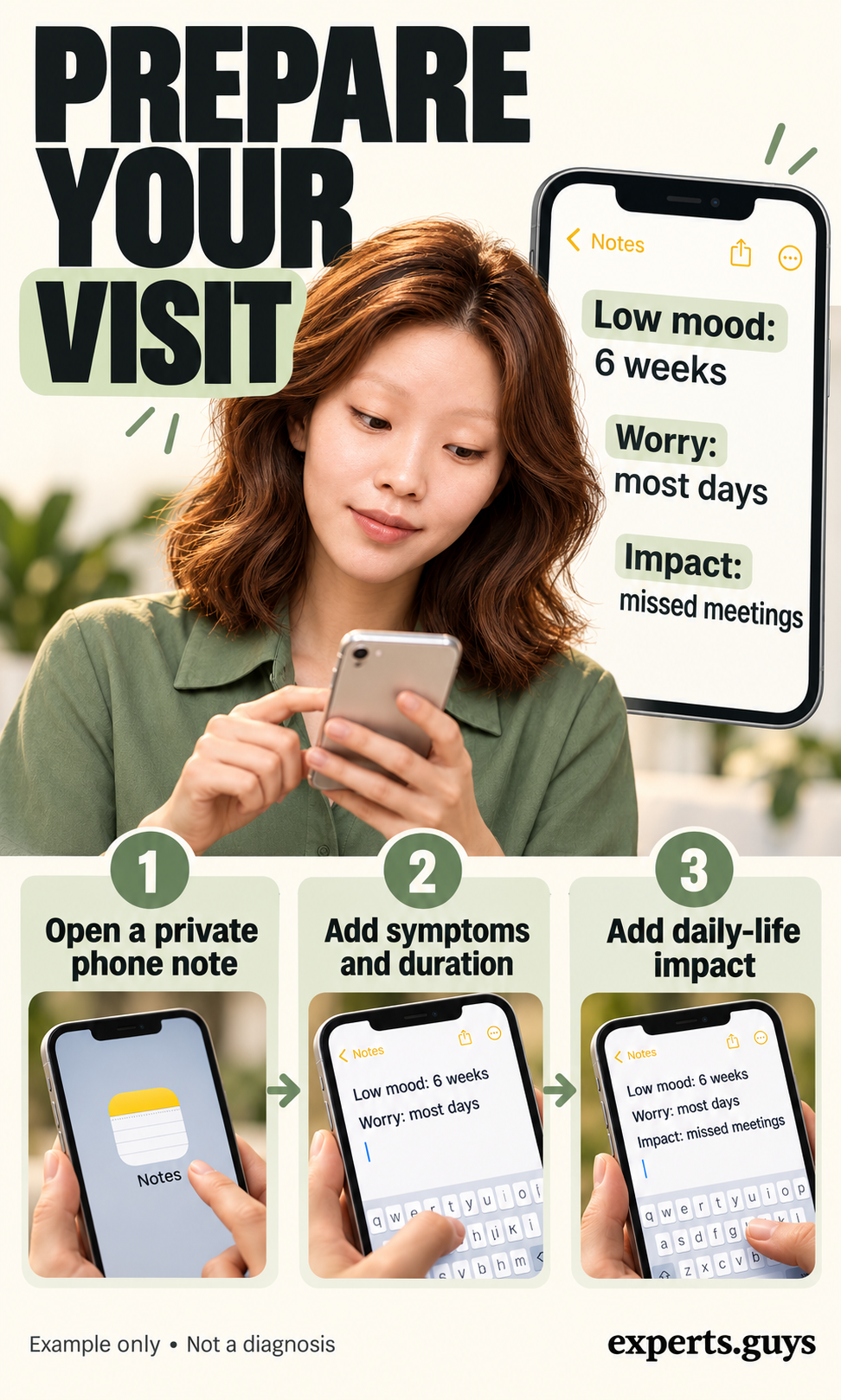
- Open a private phone note and add when low mood and anxiety began, including whether symptoms are constant or episodic.
- Add one concrete effect on daily life, such as missing meetings or avoiding public transport, and any previous treatment and response.
- Show the summary at the visit and ask which symptoms or conditions the proposed treatment is intended to address.
Example: “Low mood for six weeks; worry most days; missed two meetings” is more informative than “I need the strongest tablet.” This is an illustrative appointment note, not a diagnostic threshold. Include any past periods of unusually high energy, little need for sleep or impulsive behaviour, because these can change the assessment; the separate guide to depression, anxiety or bipolar disorder explains that distinction.
Make it easier: Use a private voice memo if typing is tiring, and turn off sensitive lock-screen previews. Avoid turning one difficult day into a diagnosis or deleting past episodes because you feel better now. The checkpoint is a clear account the clinician can explore, not a perfect symptom history.
Choose one benefit goal and one concern
“Feeling better” becomes easier to evaluate when it includes something you want to do again. Choose a functional goal and a tolerability concern rather than a score that claims to identify your ideal medication. This keeps your preferences visible without treating them as a prescribing formula.

- Pick one activity depression or anxiety is making difficult, such as staying through a work meeting.
- Choose one side-effect concern that would interfere with your life, such as daytime sleepiness or sexual difficulties.
- Ask how each proposed option fits both priorities and what trade-off would prompt a review.
Example: A shift worker may value alertness during working hours more than an effect that makes falling asleep easier. Another person may find disrupted sleep the larger obstacle. Neither preference alone establishes which medicine is appropriate.
Common mistake: Asking for a medicine with no possible side effects creates an impossible comparison. If choosing priorities feels overwhelming, start with the single activity you most want to regain and add the concern during the appointment. Success is an agreed goal that can be revisited, not a promise that one option will meet every preference.
Prepare your questions: The Medication Visit Studio below turns your treatment stage, main goal and concern into a short appointment agenda. It does not diagnose symptoms, rank medicines or recommend changes. You can copy the result to a private note or open a one-page appointment card.
Medication Visit Studio
Turn your priorities into questions for your prescriber.

Appointment preparation only. No diagnosis, drug selection, dose advice or emergency assessment. Do not change medication based on this result.
This component processes selections in this page only. It does not save or transmit them. Copies, downloads and browser printing are under your control; other site services have their own privacy policies.
Find and compare local care
A primary-care clinician can assess symptoms and discuss treatment. A pharmacist can check medicine instructions and interactions. Ask about a psychiatrist when specialist assessment is needed.
Opening a search shares the entered location and provider category with Google. No symptoms or medication selections are included.
| Provider | Credentials / fit | Access / fees |
|---|---|---|
Check registration, relevant experience, appointment availability, fees and follow-up arrangements. No providers or ratings are recommended or verified here.
How do benefits, side effects and medical history change the choice?
Make the medicine list complete
A medicine can be reasonable on its own and still be a poor fit with another product you use. A pharmacy record may miss supplements, occasional pain relievers and medicines from another clinic. Checking the complete list is a practical safety step, not a task for an online interaction score.

- Open your pharmacy or patient-portal list and check it against the products you actually take.
- Add non-prescription products, supplements and occasional medicines; tell the clinician about alcohol or other substances too.
- Ask the pharmacist or prescriber to review the complete list before adding anything new, and resolve any uncertain product names using package photos.
Example: Someone may remember a daily prescription but forget a herbal product taken only when sleep is difficult. Include it rather than deciding that “natural” means irrelevant. Antidepressant interaction precautions include other medicines and St John’s wort.
Adaptation: If the portal is incomplete, show clear photos of labels during the visit. Do not upload identifying labels into a public discussion or stop a current prescription to “clean up” the list. The useful outcome is a reconciled list with unanswered interaction questions resolved by a pharmacist or prescriber.
Compare proposed options on the same questions
A fair comparison asks the same questions of each suitable option. The purpose is to understand why an option is being offered, not to rank drugs by popularity or assume that newer means better. Your previous response and medical history can matter more than a general comparison chart.

- Ask what benefit is expected for your particular depression and anxiety symptoms.
- Ask which unwanted effects deserve attention given your priorities and health history.
- Ask what would make the clinician prefer the alternative, and what the review plan would be for either choice.
Example: If a clinician offers an SSRI and an SNRI as reasonable possibilities, ask whether another condition or previous response explains the choice. Duloxetine is also used for some nerve-pain conditions, but pain alone does not make it the right antidepressant for everyone. A shared indication does not remove contraindications or interaction concerns.
Check the limits: Pregnancy, breastfeeding, seizures, heart problems and liver or kidney disease need an individual review. If a comparison becomes confusing, ask for the main reason one option is being suggested for you in a single sentence. The endpoint is an understandable rationale, not a self-selected prescription; detailed antidepressant emotional blunting belongs in the separate symptom guide.
How can you make the treatment plan practical from the start?
Check access, cost and instructions before leaving
A plan that cannot be filled reliably is not yet a workable plan. Availability, prescription rules and costs differ across countries and health systems, so a global “best value” list can mislead. Check the ongoing arrangement rather than only the price of the first supply.

- Ask the pharmacy whether the prescribed product and formulation are available and how refills are arranged.
- Check the cost of repeat supplies and follow-up appointments, including what insurance or public coverage actually includes.
- Ask for medicine-specific instructions about missed doses, food, driving and travel; keep the official leaflet accessible on your phone.
Example: A low initial price may still be difficult if repeat appointments or an unavailable formulation interrupt access. Ask about an appropriate affordable alternative before the supply runs out. Do not substitute a product or change the dose yourself to make the prescription last longer.
Common mistake: Applying missed-dose instructions from one antidepressant to another can be unsafe. If reading a long leaflet is difficult, ask the pharmacist to highlight the instructions relevant to your prescription and explain them back in your own words. Success means knowing what to take, where the next supply comes from and whom to ask when instructions are unclear.
Book the review and save the contact route
Arrange follow-up when treatment starts rather than waiting until you decide it has failed. Early review checks tolerability and safety; it does not require the full benefit to have appeared already. Ask for the contact route to use between appointments so a concerning change does not wait in a calendar queue.

- Agree a first-review date with the prescriber and save it as a calendar event.
- Save the clinic contact details and ask how to obtain advice outside its opening hours.
- Ask which changes should trigger earlier contact and keep that instruction with the appointment reminder.
Timing: NICE’s adult depression guidance usually places the first review within two weeks, or one week for people aged 18–25 or where suicide risk is a particular concern. That is a UK guideline reference, not a universal schedule for every patient. Your clinician may arrange closer monitoring for your circumstances.
Adaptation: Ask about a telephone or video review if attending in person is difficult. Do not move the appointment later simply because there is no improvement in the first few days. The checkpoint is a booked review and a usable contact route; if you feel unable to keep yourself safe, use emergency help rather than this routine route.
What should you do if the first antidepressant is not a good fit?
Antidepressants may begin to have an effect after one or two weeks and can take up to eight weeks to work fully, although the course varies. Side effects can appear before the intended benefit, so an early safety check is different from a later effectiveness review. Report troublesome effects or worsening symptoms rather than waiting for an arbitrary deadline.
Compare a daily-life task alongside side effects
Look for changes in functioning as well as changes in mood. A brief comparison is more useful than repeatedly checking every sensation throughout the day. Keep benefit and unwanted effects separate so an improvement in one area does not conceal a problem in another.

- Choose the same everyday task you identified before treatment, such as staying through a meeting.
- At an agreed interval, save a short private phone check-in about that task and any unwanted effects.
- Bring the before-and-now comparison to review, including missed doses or difficulties following the plan without embarrassment.
Illustrative example: “Before: left the meeting early; now: stayed to the end; still too sleepy in the morning” describes both benefit and a remaining problem. It is not proof that the medicine caused every change. Work pressure, sleep and other treatment can also affect the comparison.
Make it manageable: If frequent tracking increases anxiety, ask about a less frequent check-in or describe a few concrete examples at the appointment. Do not create your own pass/fail deadline or increase the dose because a graph looks flat. Progress assessment should help a treatment conversation rather than become another exhausting task.
Turn an unsatisfactory result into a clear next decision
An unsatisfactory first trial does not establish that all antidepressants will fail. The review needs to distinguish limited benefit, difficult side effects, an interrupted trial and a diagnosis or treatment target that needs reconsideration. Those situations can lead to different next steps.

- Open your brief summary of benefit, unwanted effects, time on treatment and any interruptions.
- Ask which issue is limiting the current plan and whether more assessment or mental health counseling would help.
- Agree the next step, the follow-up date and any written switching or stopping instructions supplied by the prescriber.
Example: “I am less panicky but too drowsy to work safely” raises a different decision from “I could not obtain the prescription consistently.” In the first case, tolerability needs attention; in the second, access must be understood before assuming a medicine has failed. Neither situation calls for a self-directed dose change.
Stopping is a separate plan: Abrupt withdrawal can cause symptoms, and switching medicines may require specific timing or gradual changes. Do not improvise a taper or combine leftover prescriptions. If the explanation is unclear, ask the prescriber to put the plan in the patient portal and use the pharmacist to clarify the instructions before acting.
Other questions about choosing an antidepressant
Can a friend’s successful antidepressant be my best option?
Their experience can help you name questions, but it cannot establish your own treatment fit. Your diagnosis, other medicines and previous reactions may differ. Bring the example to the appointment without borrowing or sharing medication.
Does a higher dose mean a stronger or better treatment?
Dose numbers cannot be compared across different medicines as if they measured one shared strength. A higher dose can also change unwanted effects and may not be appropriate for you. Follow the prescribed plan and discuss benefit and tolerability at review.
Will I need medication forever?
Duration depends on recovery, previous episodes, recurrence risk and your preferences. Treatment often continues beyond initial improvement, and stopping needs its own review. Ask what circumstances would lead to continuation or a gradual stopping plan rather than setting an end date yourself.
Can I use this guide for a child or teenager?
This article is written for adult treatment discussions. Children and adolescents need age-specific assessment, treatment choices and monitoring. Do not apply an adult medication comparison or someone else’s prescription to a young person.
Your next conversation
Begin with the symptom brief, one useful daily-life goal and one side-effect concern. Use those points to understand the proposed choice, then leave with a follow-up date and clear contact instructions. The aim is a treatment plan you understand and can review safely, not a winner from an online drug list.
Images are AI-generated instructional illustrations. The depicted person and examples do not represent a real patient or treatment outcome. This educational guide does not replace individual assessment or prescription instructions.