Persistent depressive disorder (PDD) is a long-lasting depressive condition assessed through mood history, associated symptoms, and the effect on daily life. DSM-5-TR criteria include a duration requirement, but time alone cannot establish the diagnosis. Understanding the criteria can help you describe your experience clearly at an appointment.
Is dysthymia still the DSM name?
Dysthymia remains a familiar term, but the DSM-5-TR diagnostic name is persistent depressive disorder. The American Psychiatric Association’s explanation of the name change makes a useful distinction: the current category is broader than the older dysthymic disorder diagnosis. PDD should therefore not be described as necessarily mild depression.
The “dsm-2” ending of this page’s web address is part of its existing URL, not a reference to the DSM-II manual. This explanation concerns DSM-5-TR. Keeping that distinction clear prevents an old publishing slug from being mistaken for the clinical edition.
A diagnostic label describes a pattern; it does not explain everything about a person. Two people with the same label may differ in symptom burden, support, health conditions, and treatment needs. For a more detailed recording method, see how to log a long low-mood history.
What the DSM-5-TR criteria mean in practice
| Area assessed | Requirement or clinical check |
|---|---|
| Mood and duration | Depressed mood for most of the day, more days than not, for at least two years in adults. In children and adolescents, mood may be irritable and the duration is at least one year. |
| Associated symptoms | At least two of the six associated symptoms while depressed; see the symptom section below. |
| Symptom-free intervals | During the qualifying period, no interval without the relevant mood and associated symptoms lasts longer than two months. |
| Daily impact | Clinically significant distress or impairment in important areas of life. |
| Other explanations | Assess mania or hypomania history, psychotic disorders, substance or medication effects, and medical conditions. |
| Major depression | Major depressive episode criteria can be continuously present during the two-year period; chronicity does not exclude substantial severity. |
These requirements belong together, rather than functioning as independent boxes that prove PDD. A clinician has to establish the pattern and interpret competing explanations. The Australian Repatriation Medical Authority’s published DSM-5-TR-derived criteria provide a publicly accessible cross-check; its service-entitlement rules are specific to that legal setting.
- Record approximate onset and whether mood was low on most days.
- Distinguish partial improvement from a period without the relevant symptoms.
- Describe distress or daily limitations alongside the timeline.

Which symptoms belong in the PDD assessment?
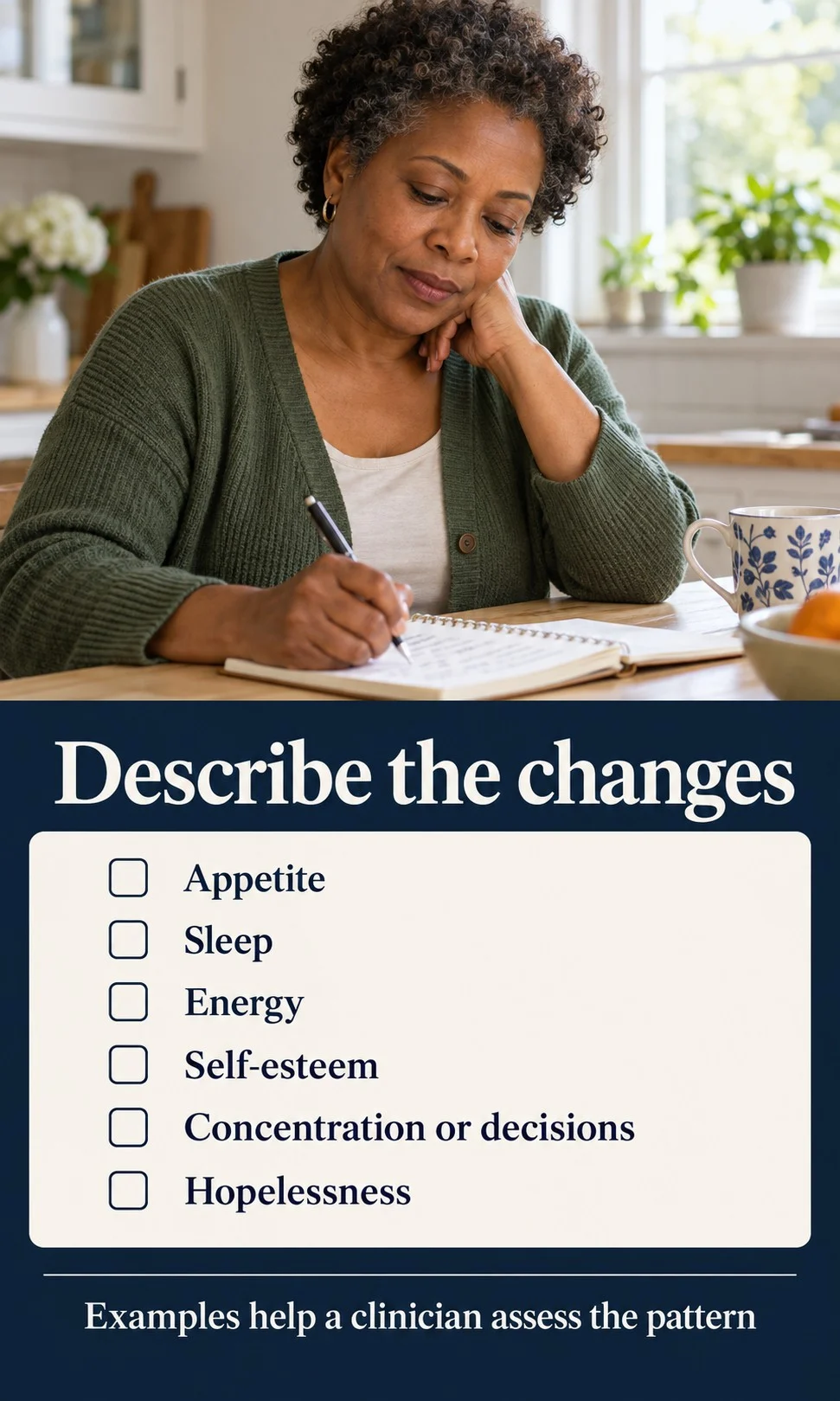
The associated symptom categories concern appetite, sleep, energy, self-esteem, concentration or decision-making, and hopelessness. MedlinePlus’s PDD overview describes these alongside the long-lasting mood pattern. Ordinary tiredness or one disrupted night does not establish a depressive disorder.
- Poor appetite or overeating.
- Difficulty sleeping or sleeping excessively.
- Low energy or fatigue.
- Low self-esteem.
- Difficulty concentrating or making decisions.
- Feelings of hopelessness.
Use examples that show what changed: lying awake despite being tired, postponing routine choices, or avoiding meals because eating feels difficult. Describe when the change occurs and what it stops you doing. Specific examples are more useful in an assessment than a broad statement such as “everything is bad.” If sleep is the clearest change, the guide to depression and sleep problems can help you describe it.
Why a better week does not settle the question
“Better” can mean several things: less distressed, more productive, or fully free of the relevant symptoms. These are different descriptions, so tell the clinician which one you mean. A weekend with friends should not automatically be recorded as a symptom-free interval if the underlying low mood and difficulties remained.
If you cannot remember exact dates, use approximate anchors such as a job change, school year, or family event. Mark uncertainty explicitly rather than filling gaps with confident guesses. An imperfect timeline can still support a useful conversation, especially when someone who knows you well can help describe changes with your permission.
PDD and major depression: duration is not severity
Major depression is assessed around an episode, while PDD emphasizes a sustained course. They are not clean opposites, and severe symptoms can occur within a persistent depressive history. The term “double depression” is sometimes used informally for major depressive episodes superimposed on longstanding depression, but it is not a separate DSM-5-TR diagnosis.
| Mistake | More useful interpretation |
|---|---|
| “I still work, so this cannot be depression.” | Describe the effort, distress, and losses in other parts of life as well as tasks you still complete. |
| “I have not reached two years, so I must wait.” | The PDD duration requirement is not a waiting period for care. |
| “A questionnaire gave me a high score, so it is PDD.” | A symptom score cannot establish a multi-year history or rule out other causes. |
| “Chronic means permanent.” | A long history describes the past; it does not guarantee a fixed future outcome. |
A short-term questionnaire and a longitudinal assessment answer different questions. One can summarize recent symptoms; the other examines how mood has unfolded over time. For help understanding day-to-day experiences, the depression symptoms guide provides related context.
What a clinician needs to check before confirming PDD
A clinician will ask about elevated or unusually irritable periods, changes in activity, and episodes of needing much less sleep. Describe those experiences even if they felt productive or enjoyable. A history of mania or hypomania changes the diagnostic assessment; the related guide to depression, anxiety, or bipolar disorder explains why that distinction matters.
Medical history, medicines, supplements, alcohol, and other substances also belong in the conversation. Tell the clinician what you take and when symptoms began or changed. Tests are chosen according to the assessment, rather than serving as a universal blood test that confirms PDD.
Prepare for an assessment without diagnosing yourself
Write a short account of onset, the usual mood pattern, any better intervals, and the hardest daily-life change. Add current medicines and a question you want answered. If fatigue is central to your concern, anemia and depression offers background for discussing overlapping symptoms.
- Bring approximate dates and label gaps in memory.
- Describe one example of daily impact, including the effort behind tasks you still manage.
- List medicines, supplements, substances, and previous care.
- Ask what else could explain the symptoms and what follow-up is needed.

Create a short appointment summary
Mood History Studio organizes a few observations into a summary you can print and bring to an appointment. It does not compare your answers with diagnostic thresholds or estimate the likelihood of PDD. Your entries stay in the current browser page unless you choose to print or save the report yourself.
[pdd_criteria_studio]
Treatment is tailored to the person
Treatment may involve psychotherapy, medication, or both, with the plan chosen around symptoms, preferences, medical history, and response. The NIMH depression treatment overview describes options including cognitive behavioral therapy and interpersonal therapy. Discuss side effects and follow-up, and speak with your prescriber before starting or stopping medication.
A useful follow-up question is “What should improve, and how will we notice?” Agree on practical changes worth monitoring, such as sleep, participation, or the ability to manage everyday tasks. This turns an abstract goal of feeling better into a conversation about progress, setbacks, and adjustments without promising a recovery deadline.
When to seek urgent support
Do not wait for an appointment summary or a duration threshold if you may harm yourself or cannot stay safe. Contact your local emergency service or attend the nearest emergency department, and ask a trusted person to stay with you if possible. In the United States, call or text 988 for crisis support; elsewhere, use your local crisis service.
Frequently asked questions
Can you have PDD for less than two years?
The adult PDD diagnosis includes a two-year duration requirement; the youth requirement is one year. That requirement does not decide whether symptoms deserve care. Seek assessment when low mood or daily difficulties concern you.
Can PDD include major depressive episodes?
Yes, a persistent depressive history can include major depressive episodes. PDD should not be assumed to mean mild symptoms. A clinician assesses both the ongoing course and any episodes.
Does the PHQ-9 diagnose persistent depressive disorder?
No. The PHQ-9 concerns recent depressive symptoms, so it cannot by itself establish the long-term pattern required for PDD. Bring any screening results to a clinician as part of the wider history.
What should I do if I cannot remember when symptoms started?
Record an approximate period and mark it as uncertain. Life events, old notes, or observations from someone you trust may help reconstruct the history. You do not need a perfect timeline to ask for support.
Does dysthymia mean depression that never improves?
No. Dysthymia is an older term and does not predict one person’s outcome. Discuss treatment and follow-up instead of treating the label as a permanent forecast.
A clear history is a useful next step
You do not have to decide the diagnosis before asking for help. Bring the pattern you remember, the effects you notice, and the questions you need answered. The clinical assessment can then focus on explanations and care rather than on defending a label you assigned yourself.