
Antidepressants can reduce symptoms of major depression, but choosing a medicine is only the beginning: the useful question is whether its benefits outweigh its burdens for you. Agree a treatment goal and follow-up date, then assess daily functioning and side effects together rather than judging the prescription from one good or bad day. This guide explains eight practical checks for adults already discussing treatment with a prescriber.
“Key depression” is not the standard clinical term; this article concerns major depression, also called major depressive disorder. Medication can be one part of treatment, alongside psychological therapy and other support. The checks below help you participate in care; they do not select a drug, diagnose depression or supply a dosing schedule.
A useful medication review separates three questions: is depression improving, are adverse effects acceptable, and has the medicine had a fair trial? These questions can point in different directions. Better sleep with disabling daytime drowsiness, for example, deserves a different conversation from better sleep with easier mornings.
Antidepressant effects vary between people, and improvement is not a test of willpower. Some changes emerge earlier than others, while a fuller response may take several weeks. A review schedule creates opportunities to adjust care safely without assuming either instant success or inevitable failure.
| Your situation | What matters next |
|---|---|
| Considering medication | Compare treatment options, personal priorities and relevant health history. |
| Recently started or changed treatment | Confirm an early review and report troublesome or urgent changes. |
| Some improvement, significant burdens | Describe both; a benefit does not cancel out a difficult adverse effect. |
| Little benefit after an adequate trial | Review duration, regularity, diagnosis and next treatment options with the prescriber. |
| Feeling well again | Confirm continuation and repeat-prescription plans before considering stopping. |
How do you choose a treatment that fits your life?
The best-fitting option depends on the depression, past treatment response, medical history and what side effects would be hardest to live with. Antidepressants influence neurotransmitter signalling, but this does not establish that an individual has a measurable “chemical imbalance.” A practical choice connects likely benefits and risks to the person who will take the medicine.
SSRIs are commonly used first, while SNRIs and other antidepressants provide alternatives with different profiles. Older medicines can still be appropriate in selected circumstances, but may have additional interaction or safety burdens. A class name alone cannot tell you which medicine will work best, and availability and licensed uses vary by country.
1. Define fit before comparing drug names
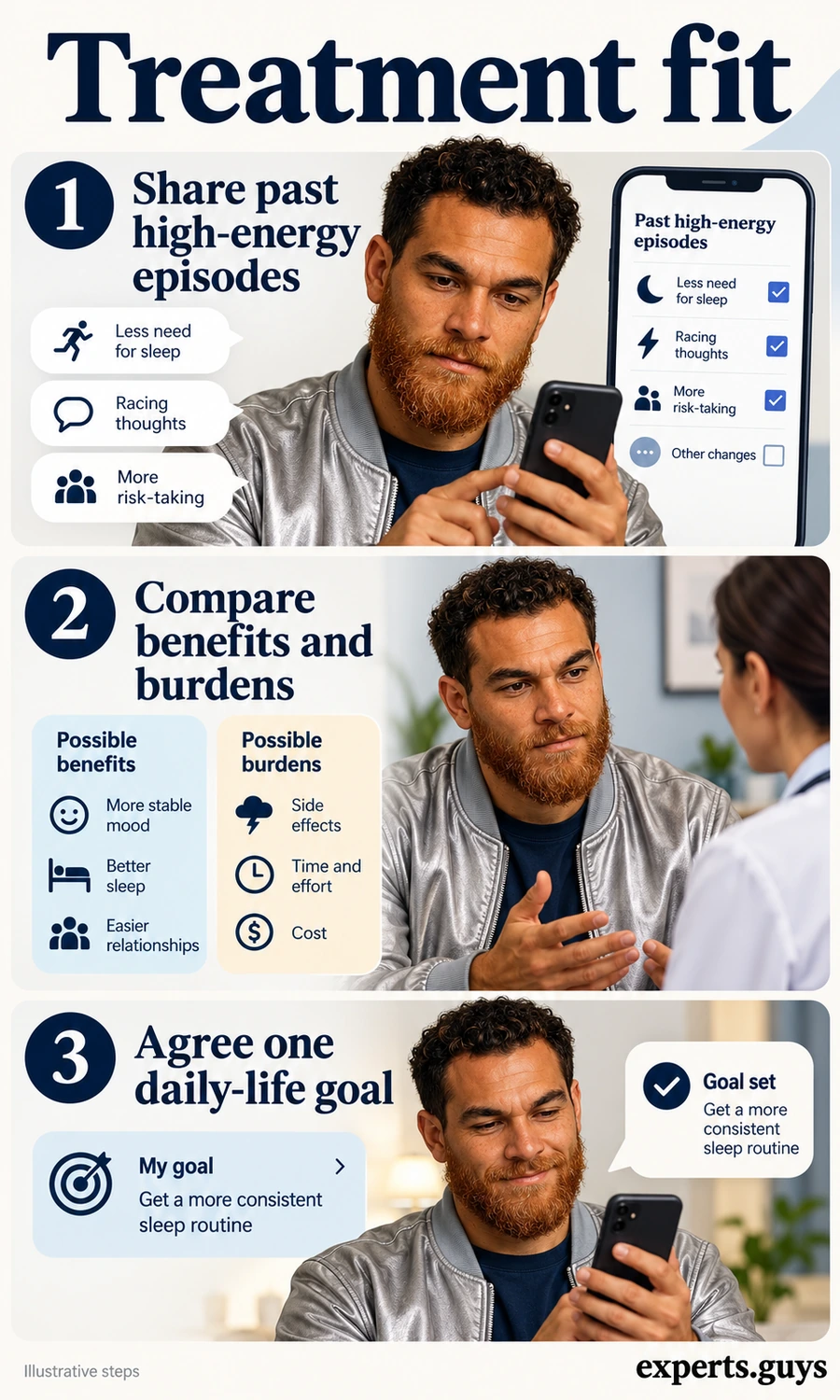
Use this check when deciding whether to start treatment or reviewing an earlier unsuccessful prescription. Bring your priorities and relevant history to the discussion, including past periods of unusually high energy with little need for sleep. That history can change the assessment and treatment approach; it is not something to diagnose from an online checklist.
- Use a private phone note or patient-portal message to share previous treatment benefits, adverse effects and unusually elevated or irritable episodes with reduced need for sleep.
- Compare the proposed treatment’s benefits and burdens with psychological treatment, combined care and alternatives for your circumstances.
- Agree one daily-life goal, such as managing the morning routine, and what would prompt earlier contact.
For example, a person who drives for work might ask how early drowsiness would affect the plan. A common mistake is choosing solely because a friend liked a medicine; their response does not predict yours. If explaining the history feels difficult, use a short voice note, and finish the appointment knowing the agreed goal and what would prompt earlier contact.
2. Check the complete medicine list
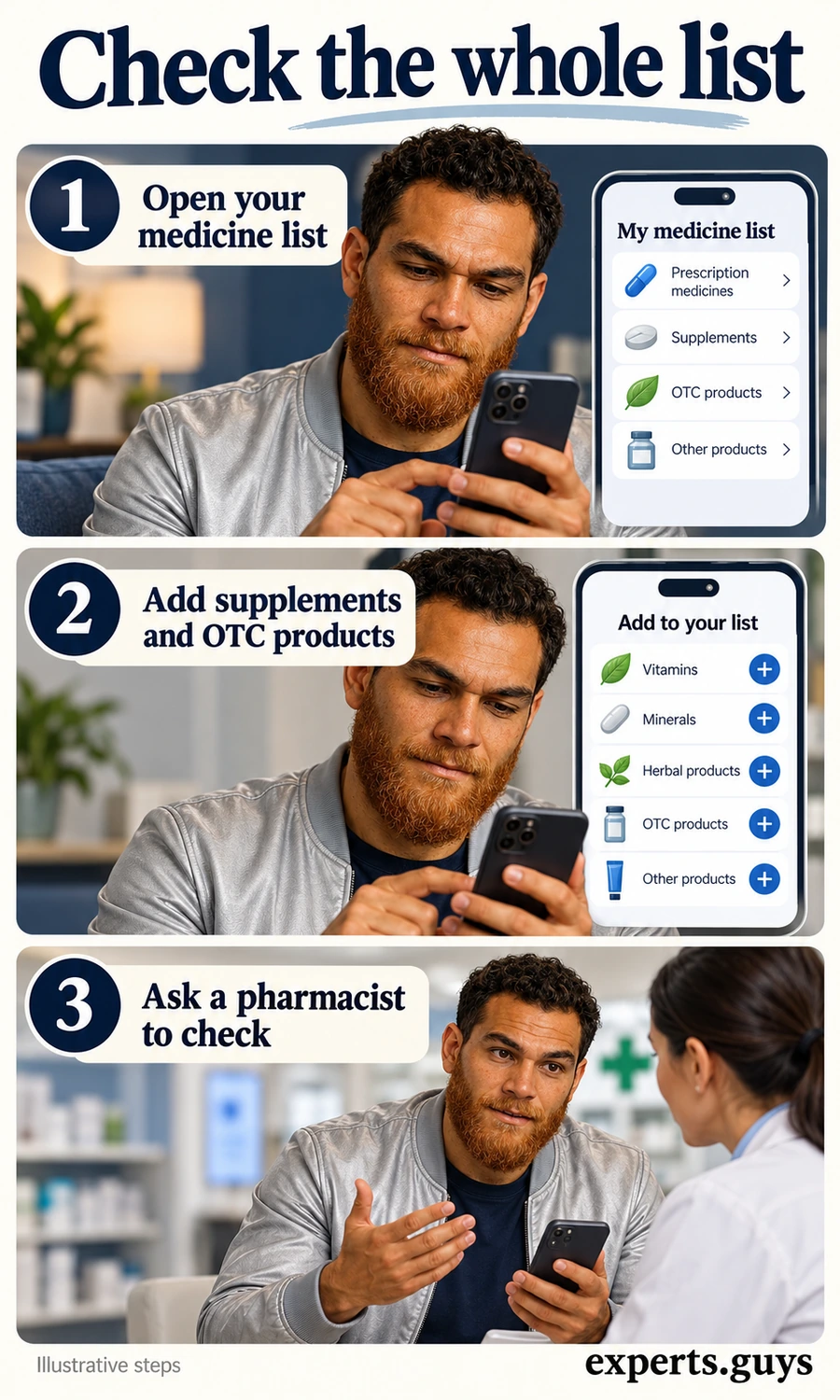
Use this before starting a prescription and whenever a new medicine or supplement is added. Interaction checks need the whole list, including products bought without a prescription. A photograph of the packaging can help identify the exact ingredient and formulation when brand names differ.
- Open your current medication list or photograph the labels of products you actually take.
- Add vitamins, herbal products, occasional pain medicines, recreational substances and alcohol use to the information you share.
- Ask the pharmacist or prescriber to check the complete list and clarify any combination before you add it.
An illustrative message is: “I take this antidepressant and sometimes this pain medicine; is the combination suitable for me?” Leaving out occasional products is a common error because intermittent use can still matter. If maintaining a list is difficult, show the packages during the pharmacy visit; the checkpoint is an answer about the specific combination, not a generic interaction score.
Do not add St John’s wort or another mood product on the assumption that “natural” means compatible. Some combinations that affect serotonin can cause a serious reaction, while other interactions involve different mechanisms. The NIMH medication overview explains why disclosure and monitoring matter; the specific product leaflet and pharmacist determine advice for an individual combination.
What should you check during the first weeks?
Check safety and tolerability early, then look for a pattern of benefit over time. A fuller antidepressant effect often takes several weeks, and changes in sleep or energy may precede a clearer improvement in mood. Waiting for benefit does not mean waiting silently through deterioration or difficult adverse effects.
3. Put the follow-up date in your phone
Use this as soon as a prescription or treatment change is agreed. A booked review is more dependable than an open-ended instruction to return if necessary. The timing should reflect age, risk, symptoms and the treatment change rather than an automated countdown.
- Confirm when the first review should happen and who will provide it.
- Add that agreed date to your phone calendar with an alert that gives you time to arrange attendance.
- Save the clinic contact and ask how to obtain help sooner if symptoms worsen.
For example, enter “Medication review: discuss benefit and side effects” rather than a reminder that exposes a diagnosis on a shared lock screen. If there is no appointment available, ask the service what earlier telephone or remote follow-up it can offer. The common mistake is treating the calendar date as a reason to delay urgent help; the checkpoint is both a review arrangement and a route for earlier concerns.

Early reviews are commonly arranged within one to two weeks, with closer follow-up where suicide risk or younger age warrants it. After an antidepressant switch, NHS Specialist Pharmacy Service guidance specifies review within two weeks generally, and within one week for people aged 18–25 or at suicide risk. These are clinical review checkpoints, not instructions to change a dose yourself.
4. Compare one symptom and one everyday task
Use this when “I feel the same” is too broad to explain what has changed. Choose a symptom that matters to you and a task affected by it, then compare them with your starting point. This is an editorial communication method, not a validated scoring system or a test proving the medicine caused a change.
- Choose one symptom, such as low mood, and one task, such as getting ready for work.
- At a consistent check-in, describe each as easier, unchanged or harder than your starting point, with one brief example.
- Share the pattern at review alongside missed doses, adverse effects and major life changes.
A hypothetical entry might read: “Mood still low; getting dressed is easier; afternoons remain difficult.” Avoid treating a single better day as recovery or a single worse day as treatment failure. If typing is tiring, use a short private voice memo; success means a clearer conversation, not perfect daily data.

How do you handle side effects and missed doses?
Match the action to the severity and the specific medicine. Mild discomfort, a persistent quality-of-life problem and a medical emergency should not receive the same response. Side effects can change over time, but you do not have to wait until the next scheduled visit when they are difficult to tolerate.
5. Describe a side effect in three useful details
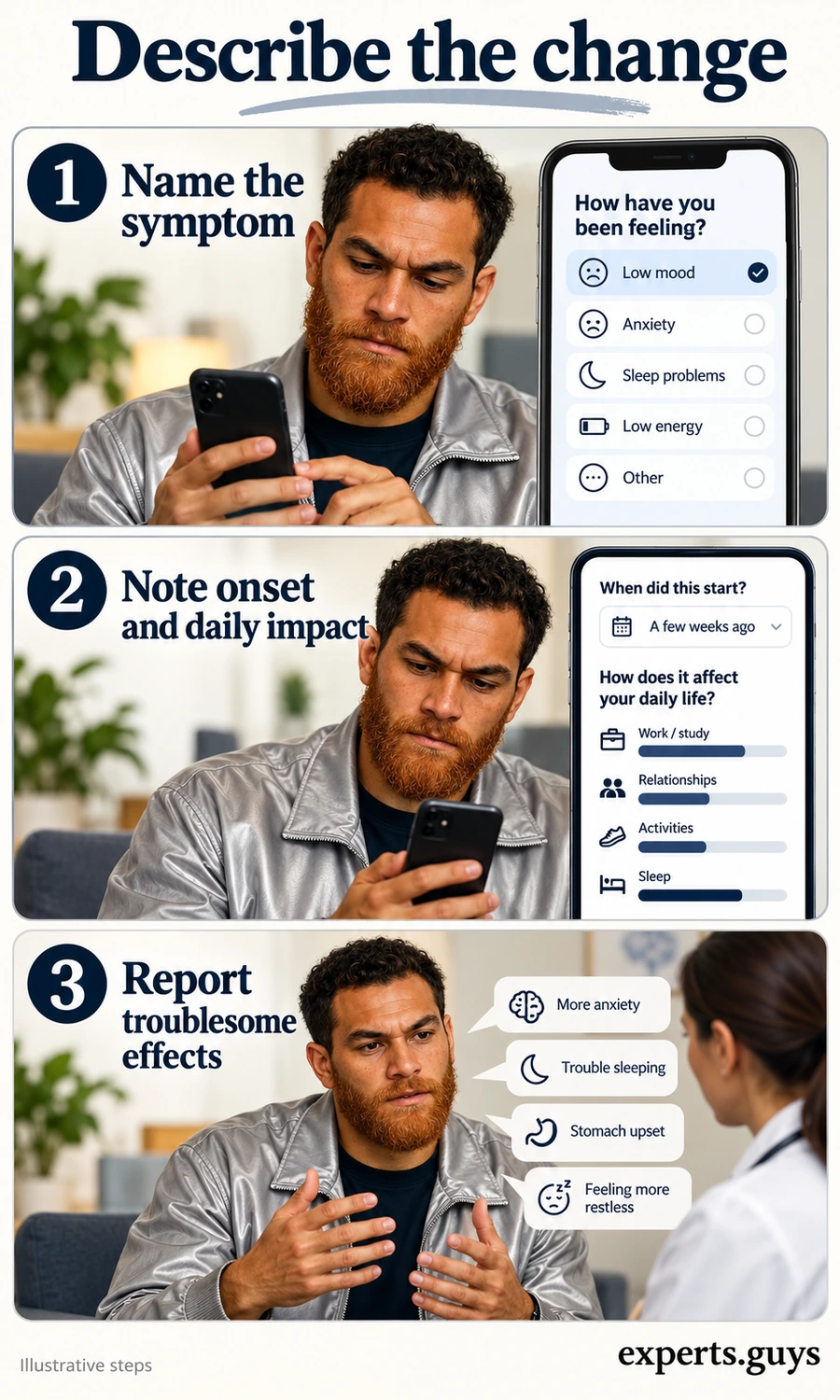
Use this for non-emergency concerns such as nausea, sleep disruption or sexual problems. A description of onset, severity and daily impact helps the clinician distinguish possible medication effects from symptoms or other causes. Timing suggests a relationship but does not prove causation.
- Name the change clearly rather than saying only “I feel strange.”
- Add when it began and what it prevents you doing; include relevant treatment changes.
- Send the description through the agreed clinical channel or call if the problem needs prompt attention.
An illustrative message is: “Nausea began after starting treatment and now makes breakfast difficult; what should I do?” The mistake is quietly skipping doses to test whether the symptom disappears, which can make interpretation harder. If messaging is inaccessible, read the same three details over the phone; ask for specific next steps and do not alter the prescription independently.
Emotional flatness deserves its own description rather than being counted automatically as recovery. Reduced distress and reduced ability to enjoy or connect are different experiences. The separate guide to antidepressant emotional blunting explores that distinction; bring the concern into the medication review without assuming its cause.
| Change | Practical response |
|---|---|
| Mild but manageable adverse effect | Check the product guidance and report the pattern at the agreed review; seek advice sooner if it worsens. |
| Persistent effect interfering with eating, work, relationships or sleep | Contact the prescriber promptly to discuss options; do not silently change the regimen. |
| New suicidal thoughts, severe agitation, or very little need for sleep with unusual energy | Obtain urgent assessment. Use emergency services if you cannot stay safe. |
| Severe allergic reaction, overdose, or severe confusion with fever and muscle rigidity/twitching | Seek emergency medical help immediately. |
6. Use medicine-specific missed-dose instructions
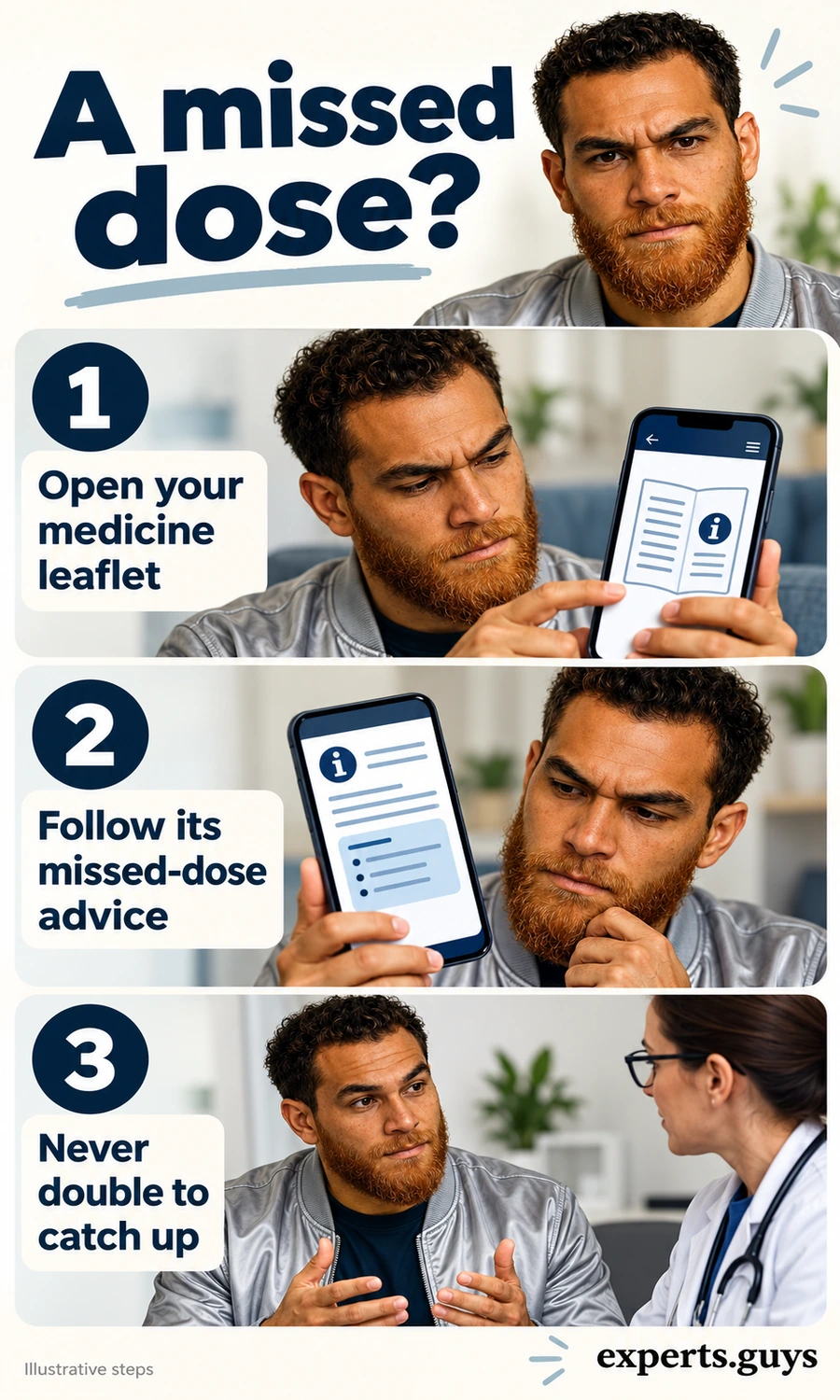
Use this when a dose was forgotten or you are uncertain whether it was taken. The correct action depends on the medicine and timing, so one generic catch-up rule is unsuitable. Do not take a double dose to compensate for a missed dose.
- Find the missed-dose section of the leaflet for your exact medicine and formulation.
- Follow that instruction; if you cannot tell what applies or may have already taken it, ask a pharmacist before taking extra.
- Never double a dose to catch up; confirm the next scheduled dose if the leaflet does not resolve your situation.
For example, a remembered alarm does not prove that a tablet was swallowed. If you cannot access the digital leaflet, call the pharmacy with the medicine name and formulation instead of guessing. The checkpoint is a clarified next dose; if an extra dose may have been taken, seek medicine-specific urgent advice rather than improvising.
The NHS antidepressant guide describes adverse effects and why stopping suddenly can cause problems. Product-specific instructions remain essential: advice for one antidepressant should not be copied to another. Ask the pharmacy for an accessible or digital leaflet if the supplied version is difficult to read.
What happens if treatment helps only partly-or you feel well again?
Limited improvement calls for a structured review, while improvement calls for a continuation plan. Neither situation means you should experiment with doses on your own. The next decision depends on the adequacy of the trial, tolerability, remaining symptoms and your preferences.
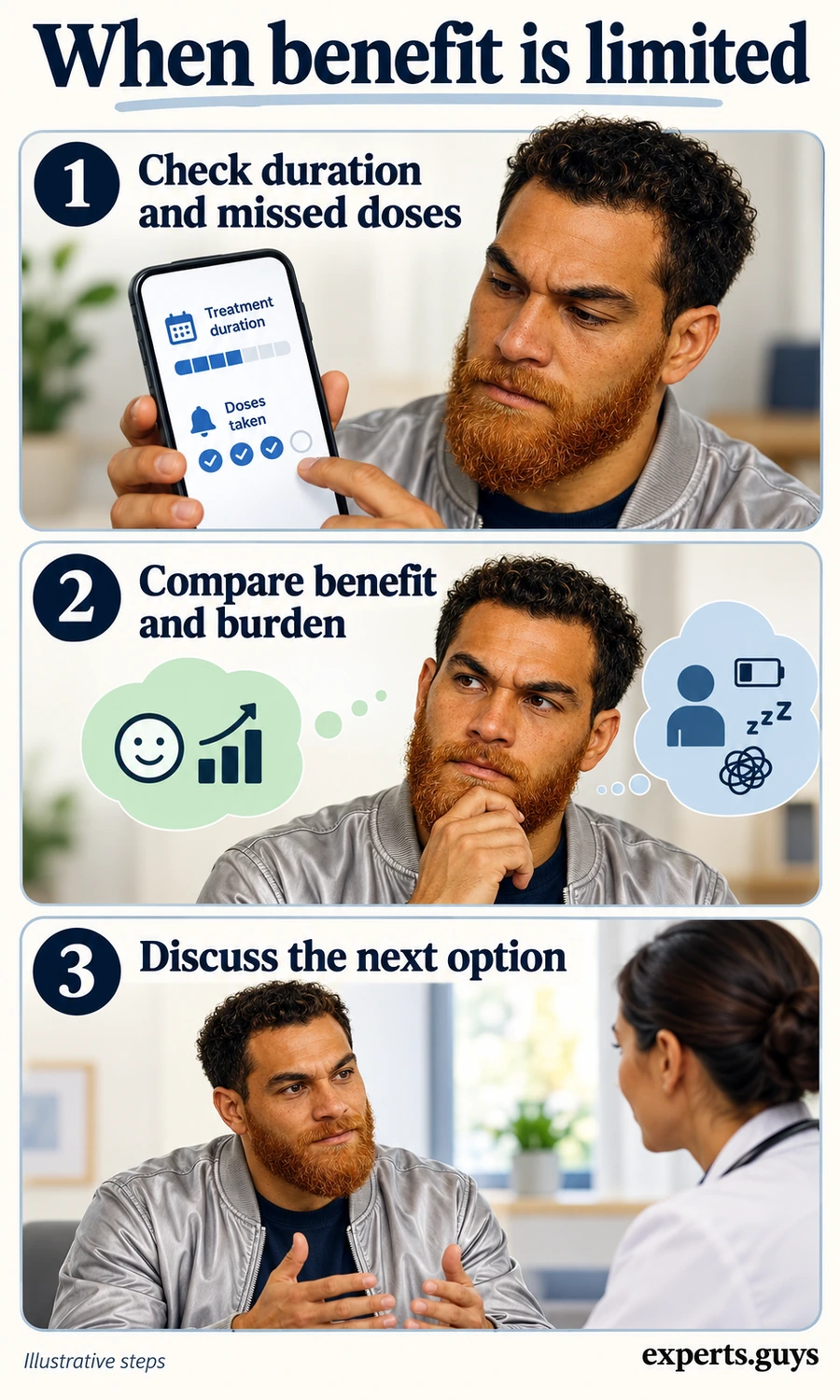
7. Prepare a benefit-and-burden review
Use this when progress is limited, side effects outweigh benefit or you are unsure what the trial has shown. Bring the actual prescription history rather than just the date the first box was dispensed. Time at an agreed therapeutic dose, missed doses and tolerability can affect how the clinician interprets the result.
- Summarize how long you have taken the medicine as prescribed and any gaps or changes.
- Compare the benefit with the burdens using a concrete example of each.
- Ask which next option fits: more time, a clinician-directed adjustment, a different medicine, psychological treatment or a specialist assessment.
A useful hypothetical question is: “Mornings are easier, but nausea still disrupts meals; what are our options?” The mistake is equating a dose increase with a guaranteed improvement, because higher doses can also add adverse effects. If remembering the trial is difficult, bring the pharmacy record; a successful review ends with an agreed next step and another checkpoint.
Medication and psychotherapy can address different parts of recovery, so discussing combined care is reasonable. The choice depends on clinical need, preference, access and earlier treatment, rather than a universal contest between the two. For the session-based part of care, see psychotherapy for depression; this page stays focused on evaluating the medication trial.
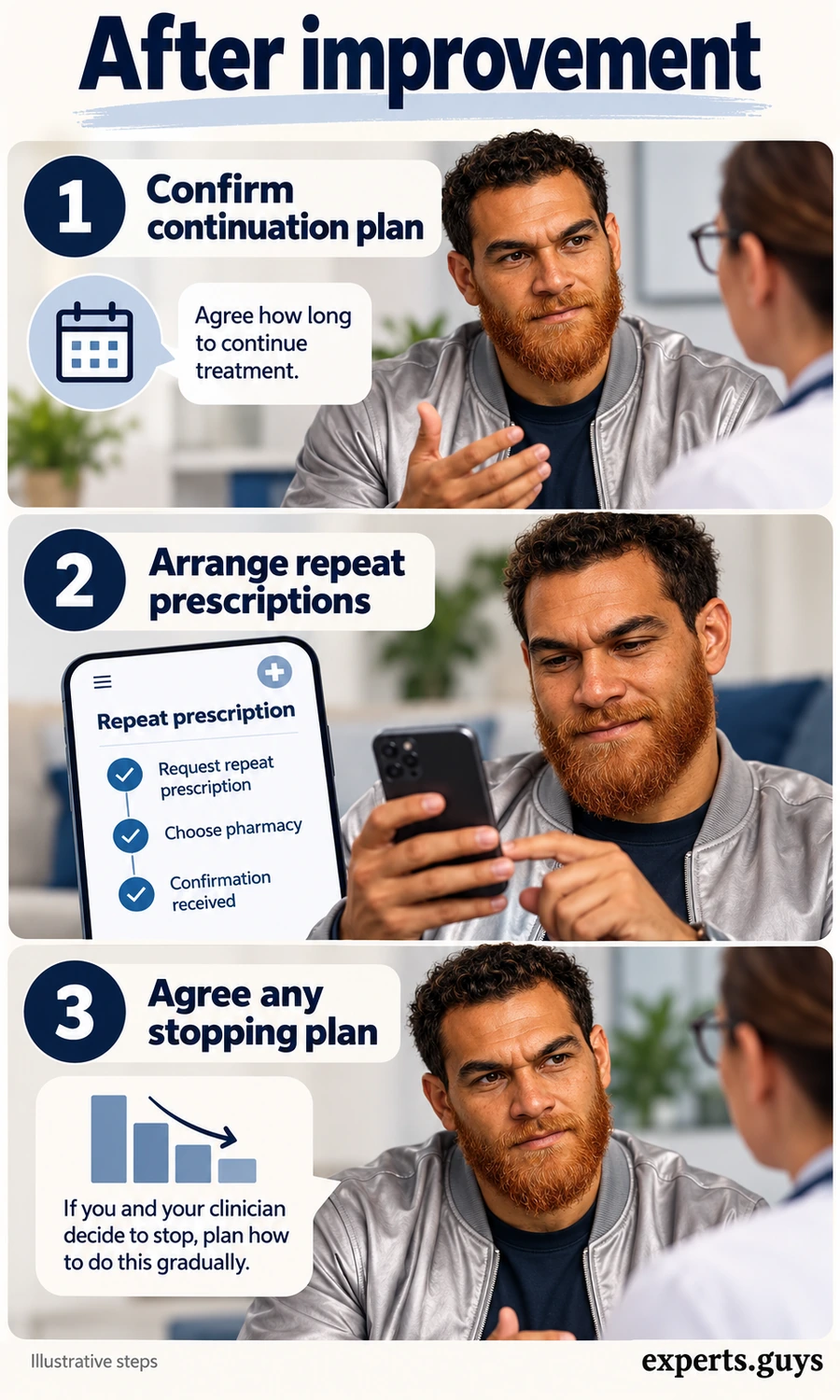
8. Make improvement a continuation conversation
Use this when symptoms have improved or you are thinking about stopping. Feeling better can be evidence that the current treatment is helping, not proof that it is no longer needed. Continuing and eventually stopping are separate decisions, each needing a plan.
- Confirm the expected continuation period and review date with the prescriber.
- Arrange repeat prescriptions early enough to avoid an unplanned gap.
- If stopping is being considered, agree an individualized gradual-reduction plan and what to do if symptoms appear.
A practical question is: “Now that I feel better, how long should I continue, and when will we reassess?” A common mistake is creating an alternate-day or tablet-splitting schedule without checking the medicine and formulation. If refills are the barrier, contact the pharmacy before supply runs out; the checkpoint is continuity now and an agreed stopping process when appropriate.
Withdrawal can include dizziness, unusual electric-shock sensations, sleep changes and mood symptoms; some experiences overlap with depression returning. Timing and symptom pattern can help a clinician assess the difference, but they are not a reliable self-diagnosis. The Royal College of Psychiatrists’ stopping guidance explains why gradual reduction may need to be individualized and slowed when symptoms occur.
Frequently asked questions
Does needing another antidepressant mean treatment has failed?
No. A first prescription may not provide enough benefit or may cause unacceptable adverse effects. Review what happened before treating that experience as evidence that all medication will be ineffective.
Can I drink alcohol while taking an antidepressant?
The answer depends on the medicine and your circumstances. Alcohol may worsen drowsiness, dizziness or depression, and some combinations need particular caution. Check the specific leaflet and discuss your actual drinking pattern with the pharmacist or prescriber.
Should I stop if I become pregnant?
Do not stop suddenly on your own. Contact the prescribing or maternity team promptly so the benefits and risks of treatment and untreated illness can be considered together. The appropriate plan depends on the medicine, health history and pregnancy circumstances.
Can this guide be used for a teenager?
This guide is written for adults. Depression treatment under 18 has different assessment, prescribing and monitoring considerations. Use a child or adolescent care pathway rather than adapting an adult medication plan.
Summary: make the next review useful
Start with the check that matches where you are in treatment: clarify fit before starting, arrange follow-up early, or compare benefit and burden during a review. Use a private phone note, voice memo or patient portal to bring one clear example instead of trying to remember everything. Keep medication decisions collaborative, and treat urgent deterioration as a reason for immediate help rather than another item to discuss later.