

Introduction
Depression is often described using medical or clinical language, but for many people, the experience begins long before any diagnosis or label. It shows up quietly — as emotional fatigue, loss of interest, or a sense that everyday life feels heavier than it used to. Understanding depression from a life-experience perspective allows people to recognize emotional patterns without immediately framing them as illness.
This article explores depression as an inner experience: how people commonly describe it, how emotional and mental patterns form, and why understanding these patterns matters for self-reflection and awareness. This content is intended for educational understanding and personal insight, not medical or therapeutic guidance.
This article is part of our broader depression topic hub, which explores emotional patterns and inner experiences.
What People Mean When They Say “Depression”

When people talk about depression in daily life, they are not always referring to a medical condition. Often, they are describing a state of being — feeling emotionally drained, disconnected, or stuck in repetitive negative thinking.
Some describe it as:
- Feeling numb rather than sad
- Losing motivation without a clear reason
- Feeling distant from people or activities they once enjoyed
These descriptions highlight an important point: depression is experienced differently by each person. Understanding these descriptions helps distinguish emotional experience from formal diagnosis.
Emotional Patterns Commonly Associated With Depression

Depression is frequently linked to repeating emotional patterns rather than isolated moments. These patterns may develop gradually and can persist even when external circumstances appear stable.
Common patterns include:
- Emotional heaviness that lasts throughout the day
- Reduced emotional response to positive events
- Increased self-doubt or self-criticism
- A sense of mental exhaustion after simple tasks
Recognizing these patterns is often the first step toward understanding one’s inner emotional state.
How Thoughts and Feelings Interact Over Time
Emotions and thoughts do not exist separately. Over time, they influence one another and can reinforce specific mental loops. When someone feels emotionally drained, their thoughts may become more pessimistic or repetitive. Those thoughts can then deepen the emotional state.
For example:
- Feeling unmotivated may lead to self-critical thoughts
- Self-critical thoughts may reduce confidence
- Reduced confidence may increase emotional withdrawal
This interaction does not happen overnight. It often develops slowly, making it difficult to notice without reflection.
The Difference Between Sadness and Ongoing Emotional Fatigue
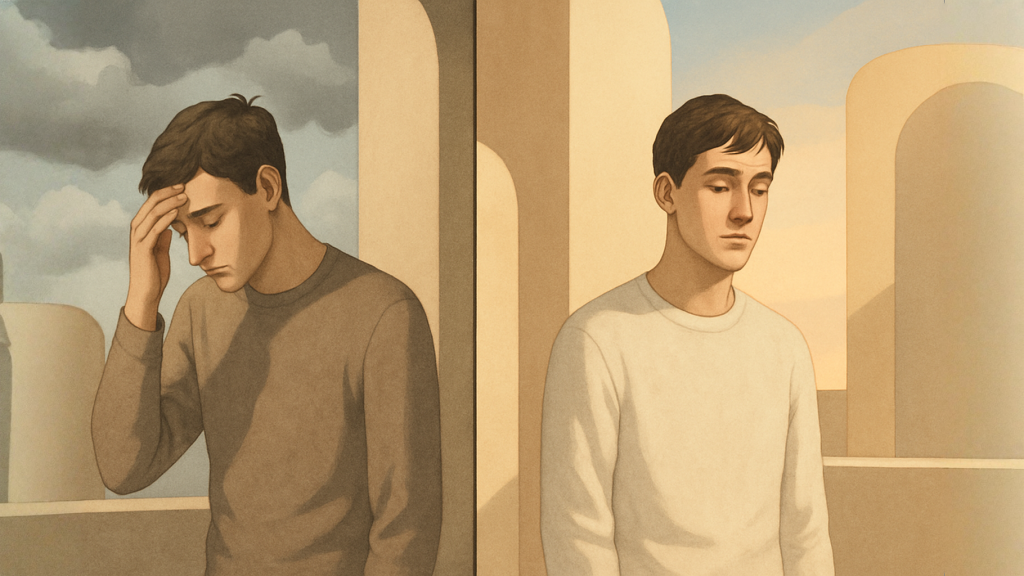
Sadness is a natural emotional response to loss, disappointment, or change. It usually has a clear cause and gradually eases with time. Depression, as an experience, is often described differently.
Ongoing emotional fatigue may involve:
- Feeling tired even after rest
- Difficulty feeling emotionally engaged
- A sense that effort outweighs reward
Understanding this distinction helps people articulate what they are experiencing without oversimplifying it.
Why Understanding Emotional States Matters
Understanding emotional experiences does not mean fixing or solving them immediately. Awareness allows people to describe what they feel more accurately and notice patterns that may otherwise go unnoticed.
Clarity helps in:
- Communicating feelings to others
- Recognizing emotional changes over time
- Avoiding unnecessary self-judgment
This form of understanding supports reflection rather than reaction.
When Professional Support May Be Needed
Some emotional experiences become overwhelming or persistent and may require professional support. Recognizing this does not mean labeling oneself, but acknowledging that certain feelings exceed what self-reflection alone can address.
Awareness includes knowing when additional help might be appropriate, even if the experience began as a general emotional state.
Conclusion
Depression, when viewed through the lens of lived experience, is not a single definition or condition. It is a collection of emotional and mental patterns that shape how people relate to themselves and the world around them.
By understanding depression as an inner experience rather than a label, individuals can develop greater emotional awareness and clarity. This perspective encourages reflection, compassion, and informed understanding without replacing professional guidance where it may be needed.
Readers exploring related emotional experiences can browse more reflections in our depression topic hub.