
Depression and antidepressants can both contribute to fall risk, especially when dizziness, drowsiness or changes in movement occur together. A new wobble after starting or changing medicine needs attention, but it does not prove the antidepressant caused it. Keep taking medicine as prescribed while checking the timing, other medicines and the situations in which you feel unsteady.
The aim is to preserve both treatment benefit and safe movement. Most formal falls-prevention guidance focuses on older adults; younger people still need assessment when unsteadiness is new or unexplained. The practical checks below help you describe the problem and reduce avoidable hazards without testing your balance or adjusting a dose yourself.
Is the unsteadiness from depression, medicine or something else?
There is no home observation that reliably separates these causes. Depression can affect attention and movement, while medicine-related sleepiness or a drop in blood pressure on standing can create a different route to the same near-fall. A loose rug, poor vision or another illness may contribute at the same time, so finding one possible explanation should not end the review.
A medicine review is useful because the relevant exposure is the whole combination, including products bought without a prescription. Sedating effects can overlap, and a newly added sleep or allergy product may matter even when the antidepressant dose has not changed. The CDC pharmacy falls-prevention guidance supports checking medicines as part of a wider assessment rather than assuming one tablet explains every fall.
Build a complete medicine picture
- While seated, photograph the label of each prescribed medicine, supplement and nonprescription product you actually use. Include the name, strength and directions; keep the original containers available if photos are unclear.
- Put the photos in one private phone album and add how you really take each product, including occasional night-time remedies. Do not post identifying prescription labels publicly.
- Ask the pharmacist or prescriber: “Could this combination explain sleepiness or dizziness, and what should we review first?” Include recent starts, stops and dose changes.

For example, “I take my antidepressant every morning and added a sleep product last weekend” is more useful than “my tablets make me dizzy.” The common mistake is leaving out occasional products because they do not feel like regular medication. If photographing labels is difficult, ask someone you trust to help or take the containers to the appointment; success means the reviewer can see the actual combination, not that you have identified a culprit.
- Sleepy or slowed: review sedating products and whether alertness changed.
- Lightheaded after rising: mention the position change; a clinician may check lying and standing blood pressure.
- Unsteady despite no medicine change: include vision, footwear, illness and earlier falls.
- New severe symptoms: use urgent care rather than waiting to collect more information.
An association between antidepressant use and falls does not establish what caused an individual fall. People who need treatment may also have depression, frailty, sleep problems or other illnesses that affect mobility. This is why a simple “safest antidepressant” ranking cannot replace a personal benefit-and-harm review.
Some antidepressants can cause dizziness, drowsiness or blurred vision, and stopping abruptly can also cause unsteadiness. These are reasons for a planned review, not reasons to skip doses as an experiment. The NHS antidepressant guidance explains both side effects and withdrawal, which can otherwise be mistaken for the original problem.
Feeling emotionally flat is a separate symptom from feeling sleepy or physically off balance. If that is the main change, the explanation of antidepressant emotional blunting addresses the emotional experience. Here, the key question is what changed in standing, walking or staying alert.
What should you check after a medicine change or a near-fall?
Start with the sequence: what changed, what you felt and what you were doing. Timing can narrow the questions for a review, but symptoms may have more than one explanation and do not have to appear immediately after a dose. Do not postpone reporting a fall or repeated near-falls while trying to create a perfect record.
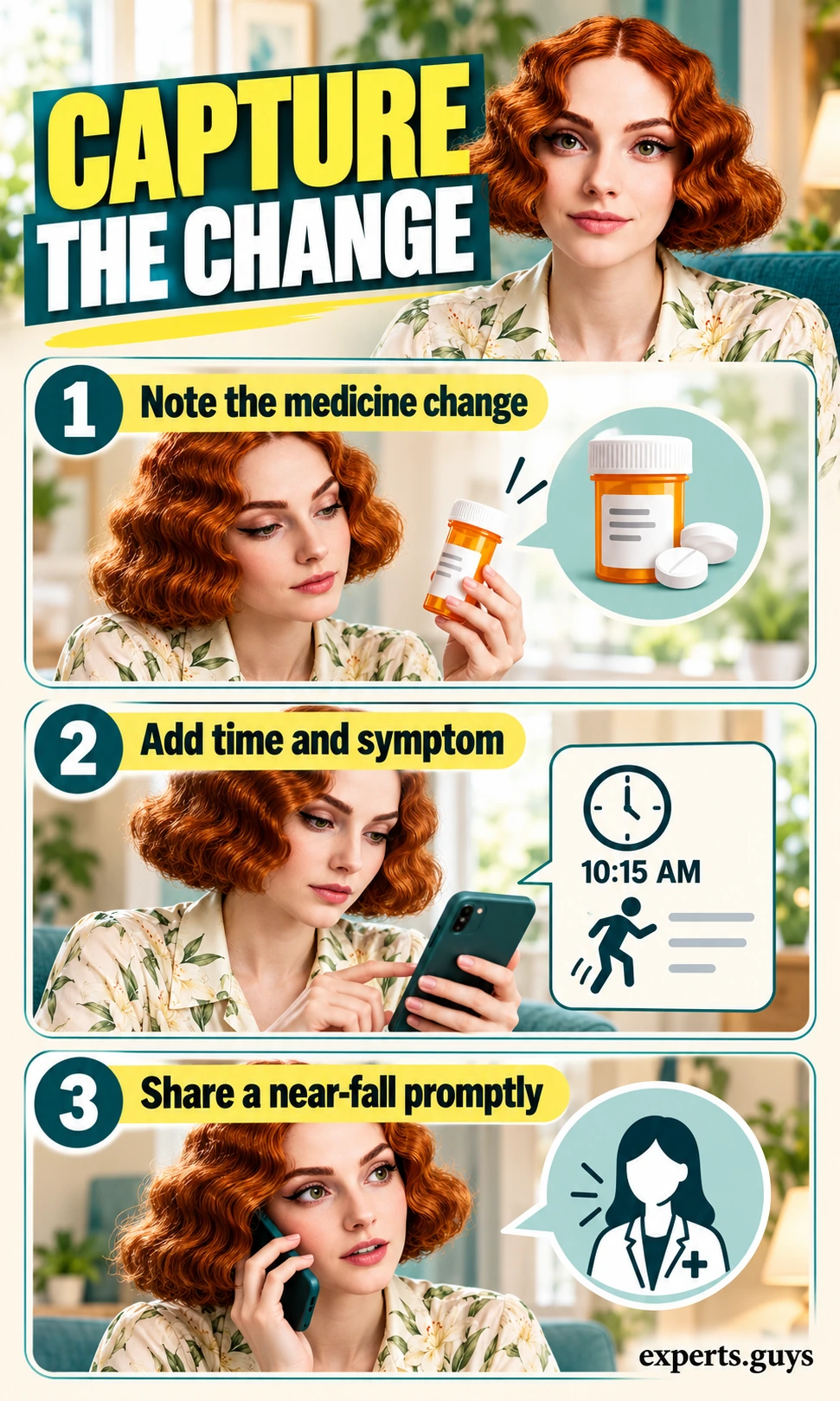
Capture the change without keeping a diary
- Open a private phone note or use voice dictation after you are safely seated. Add the medicine change and its approximate date.
- Describe one concrete event: time, position or activity, symptom and whether you fell or caught yourself. Mention missed doses or illness if relevant; do not deliberately repeat a trigger.
- Send the short description through your usual secure clinical channel, or read it out when calling. Ask how soon you should be assessed.
An illustrative message is: “My dose changed on Monday. On Tuesday morning I became lightheaded after standing from bed and caught the bedside table; I did not hit the floor.” This describes a near-fall without diagnosing its cause. If typing is difficult, a short voice note or a trusted person’s account works; avoid vague labels such as “bad day” that hide the movement involved.
Separate standing up from starting to walk
A blood-pressure drop after a position change can reduce blood flow to the brain briefly and cause lightheadedness. The CDC postural hypotension guide recommends moving slowly between positions. This precaution is not a blood-pressure test and does not confirm why you feel dizzy.
- From lying down, first sit upright and pause with your feet supported. From a chair, pause before rising and use its stable armrests if needed.
- Stand slowly using secure support, then pause again before walking. Do not pull on a movable object or assume a wheeled aid is a fixed handhold.
- If lightheaded, sit back down safely and ask for help. Walk only when steady; persistent or repeated symptoms need assessment rather than repeated practice.

The mistake is combining “stand, turn and walk” into one rushed movement, especially on the way to the bathroom. If you cannot rise safely even with your usual support, arrange assistance instead of rehearsing it alone. A useful checkpoint is whether the transition feels steady, not whether you can endure dizziness for a set number of seconds.
Do not use extra salt, large amounts of water or supplements as a self-treatment for unexplained dizziness. Fluid needs and restrictions vary, and some medication problems require examination or blood tests. New confusion, marked weakness or a major change in walking needs prompt clinical advice; severe or sudden symptoms belong in urgent care.
| What happened | What it can suggest | Useful next step |
|---|---|---|
| Lightheaded immediately after standing | A positional blood-pressure effect is possible | Describe the trigger; ask whether lying and standing blood pressure should be checked. |
| Drowsiness after a new product | A medication effect or combined sedation is possible | Show the complete medicine list; avoid driving while impaired. |
| A trip at the same doorway | A route hazard may contribute | Check the obstacle and lighting; do not assume this excludes a medical cause. |
| Fewer falls but much less walking | Reduced exposure may hide ongoing difficulty | Report both activity and steadiness at follow-up. |
How can you make daily movement safer without stopping treatment?
Reduce hazards in the situations that actually cause trouble. Nighttime trips, insecure footwear and carrying tasks while sleepy need different fixes, so a generic reminder to “be careful” does little. These changes support daily function while the cause is assessed; they do not replace treatment for a balance disorder.
Make the nighttime route predictable
- Check the bed-to-bathroom route in daylight with help if you are unsteady. Identify loose cables, rugs and objects at foot level.
- Have a helper clear obstacles and arrange a reachable bedside light or suitable night lighting. Turn on the light before standing, rather than using darkness as a test.
- Keep your phone or personal alarm within reach. Make sure the route stays clear after normal household use.
A common failure is placing a lamp across the room so the first steps still happen in darkness. Another is creating a new trip hazard with its power cable. If moving furniture requires lifting or bending, ask for help; the useful result is a clear, visible route, not an exhausting room makeover.

Check the shoe rather than blaming your balance
- Sit down to put on footwear and inspect it. Choose a secure fit with a closed back or effective heel support and a sole that grips.
- Fasten it properly and check that the heel is not slipping out. Look for worn tread, damage or a loose sole.
- Replace insecure or damaged footwear; do not test traction on a wet floor. If pain or swelling prevents a comfortable fit, arrange a foot assessment.
For example, a backless slipper that slides off when turning can create a problem even if you walk comfortably in it in a straight line. Thick socks are not a reliable repair for a badly fitting shoe. A helper can check the soles if bending is difficult, and the checkpoint is secure, comfortable contact rather than a particular brand or “fall-proof” claim.

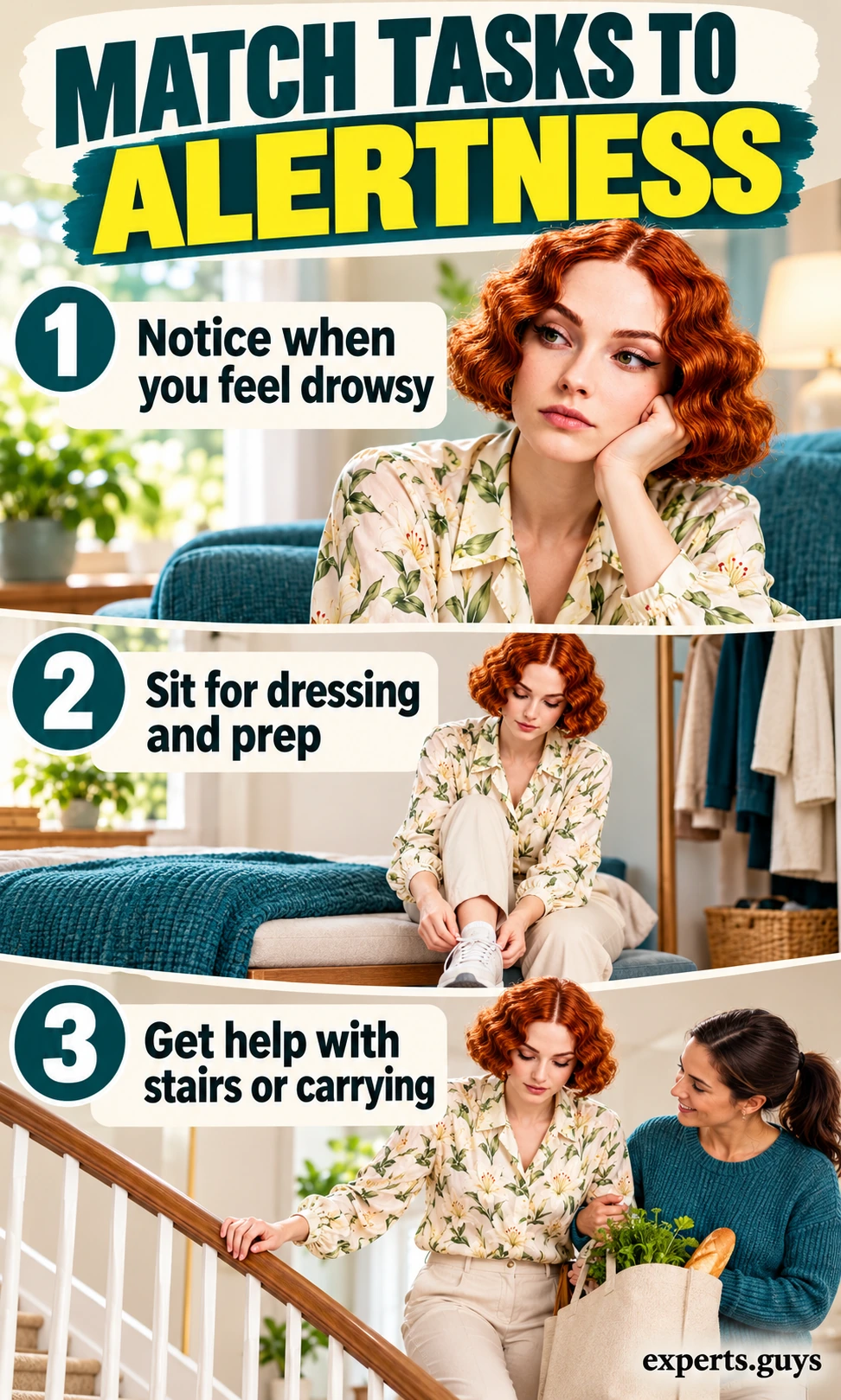
Move demanding tasks out of drowsy periods
- Notice when alertness is reduced during normal activities; do not provoke symptoms to find a pattern.
- Sit for suitable tasks such as dressing or simple food preparation, and postpone carrying loads on stairs until you can do so safely or have help.
- Tell the prescriber about the pattern. Change medication timing only if they advise it, and do not drive or use hazardous equipment while dizzy or sleepy.
An illustrative adjustment is to fold laundry while seated and ask someone else to carry it upstairs. The common mistake is saving time by carrying a full basket that blocks your view when you are already drowsy. Choose smaller, supported activities that preserve participation; needing more help or becoming sleepier is a reason to review the problem, not to push through it.
These household measures complement a wider falls assessment. When weakness or balance difficulty is present, an appropriately tailored strength-and-balance programme may be useful; an unsupervised balance challenge is not a safe starting point for someone currently dizzy. NICE falls guidance supports individual assessment, medication review and targeted interventions, with its main scope covering older adults and higher-risk people aged 50 and over.
How do you know the changes are helping, and when is more help needed?
Look for steadier normal activity, not merely an empty fall count. Someone who stops going upstairs or walking outdoors may have fewer falls because they have fewer opportunities to fall. That can hide lost independence and does not show that a medicine effect or balance problem has resolved.
Judge progress by steadiness and activity together
- At your agreed follow-up, compare dizziness, drowsiness, falls and near-falls with the earlier pattern. Use your brief phone notes if helpful.
- Add what you are now able to do and what you have stopped doing. Include whether you need more assistance.
- Report persistent unsteadiness, another fall or worsening symptoms promptly; do not wait for the planned appointment if the situation changes.
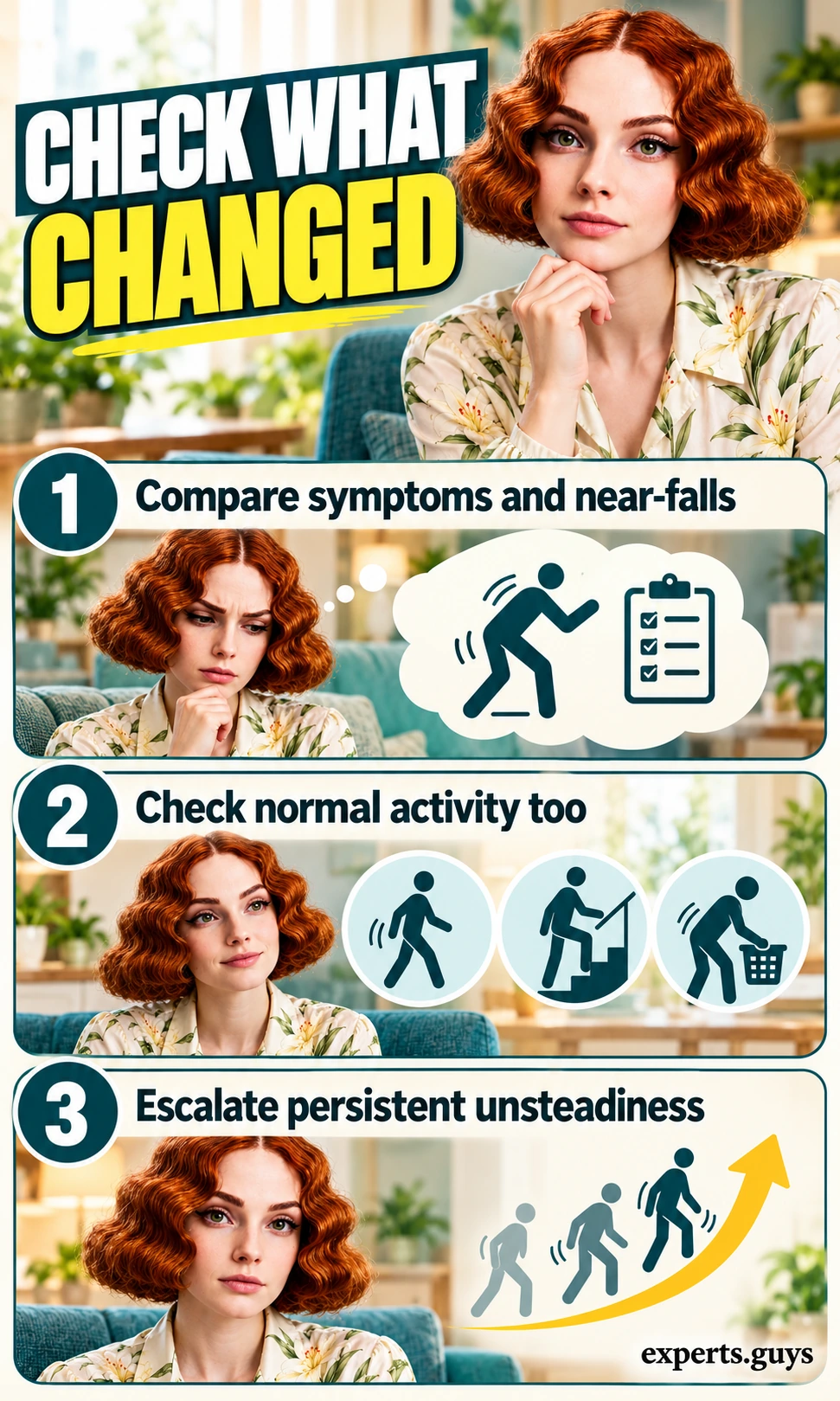
An illustrative comparison is “No falls this week, but I stopped walking to the shop because I still feel unsteady.” That changes the interpretation of apparent improvement and helps identify the next useful assessment. If phone recording becomes burdensome, describe one representative event and one activity change instead; the purpose is a clear conversation, not continuous self-surveillance.
A review may consider blood pressure, gait, vision, other medicines and the ongoing benefit of depression treatment. Persistent psychomotor slowing in depression has a different meaning from a brief dizzy spell, although both can affect daily function. The useful outcome is a plan that names the suspected contributors, agreed changes, follow-up timing and the symptoms that should trigger earlier contact.
Frequently asked questions
Does a low antidepressant dose remove fall risk?
No dose guarantees freedom from dizziness or unsteadiness. Other medicines, age, illness and your own response still matter. A lower dose is not something to try independently after a fall.
Should I move my antidepressant to bedtime?
Not without checking with the prescriber or pharmacist. Nighttime dosing can change when unwanted effects occur, and a bathroom trip may still happen during that period. Ask about your exact medicine and daily pattern instead of applying a general timing rule.
Does a near-fall count if I caught myself?
It is worth reporting, especially if it is new or repeated. Describe what happened before you reached for support and whether you felt dizzy or sleepy. Catching yourself prevented an impact; it does not explain why your balance failed.
Can a younger adult use these checks?
Yes, the phone-based preparation and ordinary household precautions can be useful. The age groups and evidence behind formal falls programmes are often older, so those findings should not be treated as an individual risk estimate for a younger person. New unexplained falls still need assessment.
Choose your next step
If the change began around a prescription or product change, start with the complete medicine picture and a short description of the event. If the difficulty occurs during a specific transition or route, make that situation safer while arranging assessment. Keep the treatment decision and the safety decision connected: the goal is effective depression care with steadier everyday movement.
Images are AI-generated educational illustrations. Scenarios are illustrative, not accounts of real patients or measured treatment outcomes.