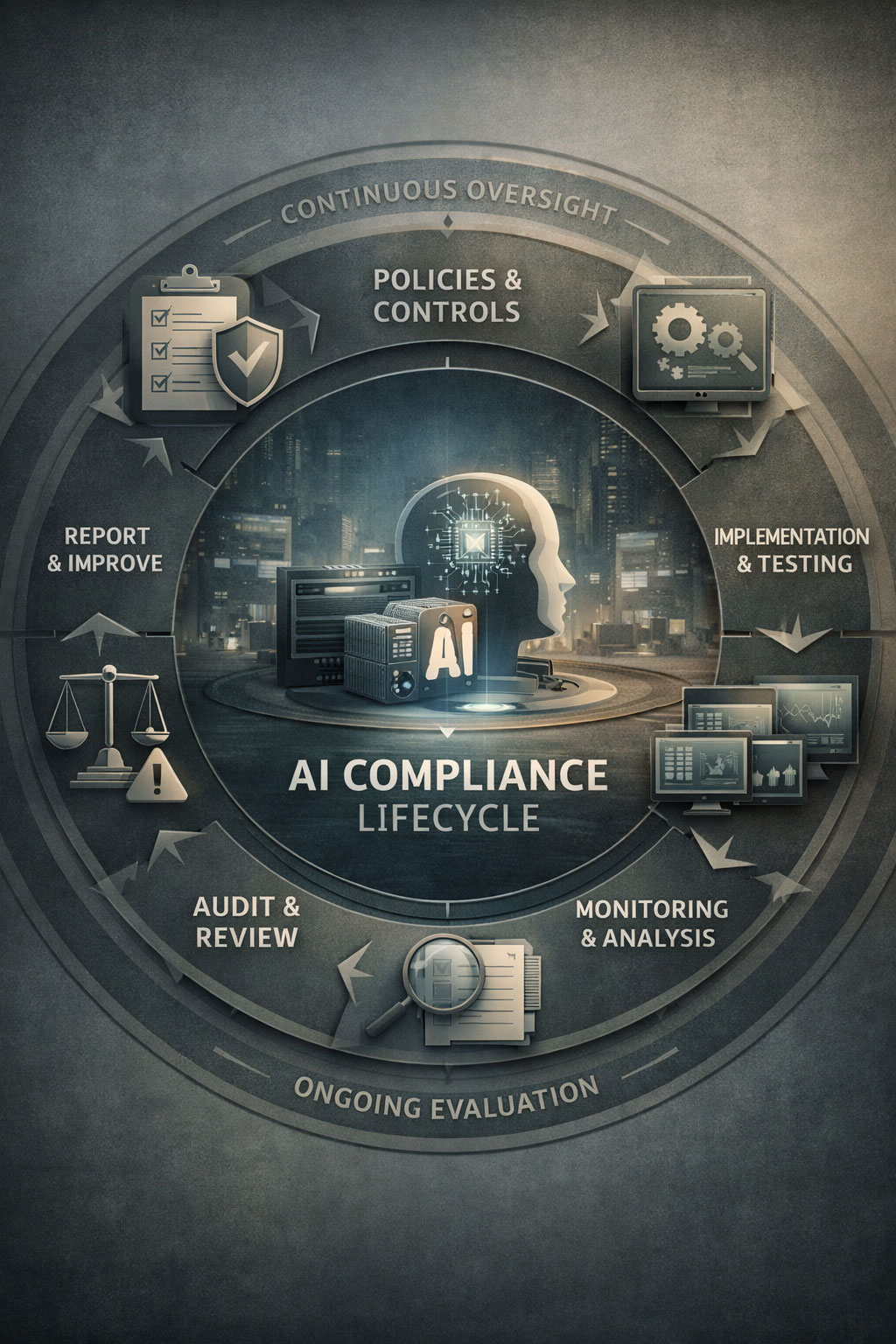

WHY AI RISK RARELY APPEARS SUDDENLY
AI failures are often described as sudden.
In reality, they are the final visible moment of a long accumulation process.
For a broader structural overview of how organizations adopt and manage AI systems, explore our AI for Business knowledge hub.
Risk builds incrementally through small deviations, ignored signals, and tolerated exceptions. The absence of immediate harm creates the illusion of safety.
Risk Accumulation Is a Structural Process
AI risk does not emerge from a single bad decision.
It accumulates through:
- Minor model drift
- Repeated edge cases
- Small compliance exceptions
- Normalized overrides
Each instance is survivable. Together, they reshape system behavior.
Why Early Signals Are Discounted
Early risk signals are often:
- Ambiguous
- Context-dependent
- Non-catastrophic
Organizations prioritize stability. Signals that do not force action are absorbed rather than escalated.
Silence is mistaken for safety.
Performance Metrics Mask Risk Growth
Dashboards emphasize:
- Accuracy averages
- Throughput
- Adoption
Risk grows in variance, not averages.
As long as top-line metrics remain stable, underlying volatility goes unnoticed.
Why AI Risk Feels Abstract Until It Is Not
Risk feels abstract when:
- Consequences are delayed
- Responsibility is diffused
- Impact is probabilistic
AI systems allow organizations to operate in this abstraction zone longer than traditional systems.
That delay increases eventual impact.
Accumulation Creates Fragility, Not Resilience
Each tolerated exception increases fragility.
The system becomes:
- Less predictable
- More context-sensitive
- Harder to intervene in
Failure eventually appears sudden, but only because accumulation was ignored.
When this accumulation continues unchecked, the result is often a broader pattern of AI business risk that eventually leads to enterprise failure.
This accumulation pattern explains why AI governance fails inside enterprises long before failure becomes visible.
WHERE AI RISK HIDES INSIDE ENTERPRISES
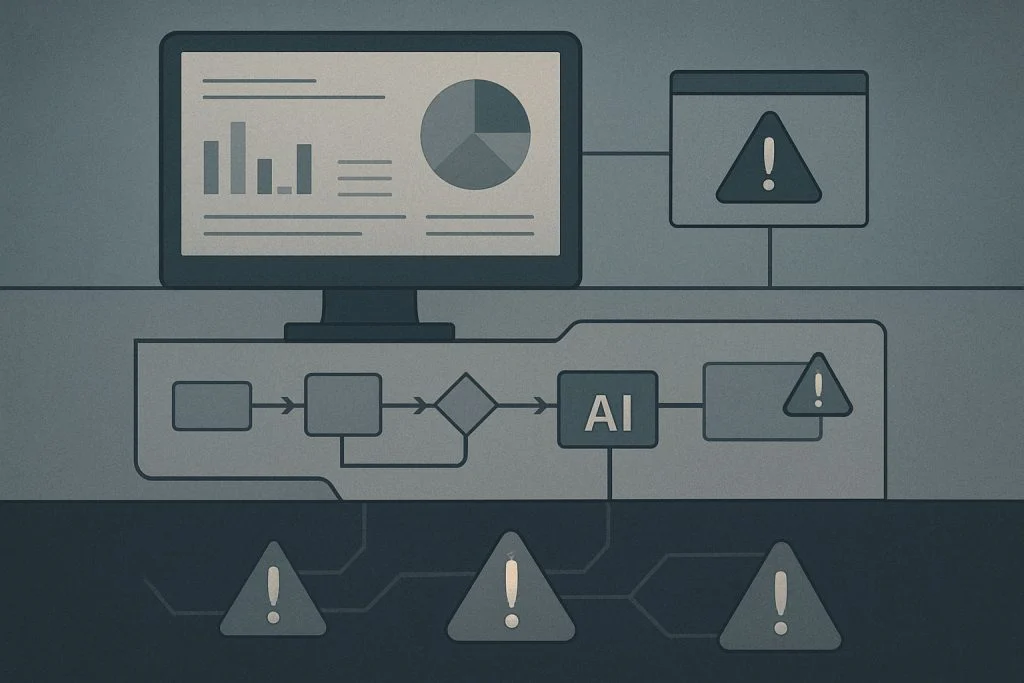
Risk Accumulates in Decision Dependencies
AI rarely makes final decisions.
Instead, it:
- Ranks options
- Filters inputs
- Prioritizes cases
- Triggers downstream actions
Each dependency magnifies small errors. Risk hides in how AI outputs influence later decisions, not in the output itself.
When downstream teams rely on AI signals implicitly, risk compounds invisibly.
Data Pipelines Hide Risk Better Than Models
Model performance is often measured.
Data behavior is not.
Risk hides in:
- Gradual data drift
- Changing input distributions
- Silent preprocessing changes
Because these shifts occur upstream, they escape traditional monitoring. Models appear stable while inputs quietly change.
Human Overrides Create Invisible Risk Debt
Overrides are treated as safety mechanisms.
In practice, they create risk debt.
Each override:
- Masks system weakness
- Prevents root-cause correction
- Normalizes exception handling
Over time, overrides become routine. The system adapts to intervention rather than correction.
Organizational Silos Trap Risk Locally
Enterprise AI spans teams.
Risk appears locally:
- In customer service
- In operations
- In compliance reviews
Without cross-functional synthesis, these signals remain siloed. No single team sees the full accumulation pattern.
Risk remains fragmented and therefore ignorable.
Metrics Reward Stability, Not Sensitivity
Risk grows in:
- Variance
- Edge cases
- Correlation shifts
Most metrics track averages.
As long as averages remain acceptable, volatility is tolerated. Sensitivity is traded for stability in reporting.
Why Hidden Risk Persists
Hidden risk persists because:
- It avoids immediate confrontation
- It does not violate thresholds
- It fits existing narratives
Organizations detect failure thresholds, not accumulation trends.
By the time thresholds are crossed, accumulated risk has already reshaped the system.
As hidden risk accumulates, AI compliance costs rise in response to uncertainty rather than clear failure.
WHY MONITORING AND AUDITS MISS AI RISK ACCUMULATION

Monitoring Is Designed to Detect Breaches, Not Drift
Most monitoring systems are threshold-based.
They trigger alerts when:
- Accuracy drops below a limit
- Error rates spike
- Outputs violate constraints
Risk accumulation rarely breaches thresholds early. It manifests as slow drift, variance expansion, or correlation changes that remain within acceptable bounds.
Monitoring confirms stability while fragility grows.
This structural blind spot also explains why many organizations experience strong early performance before outcomes deteriorate, a pattern examined in Why AI ROI Collapses After Early Success Inside Enterprises.
Audits Are Periodic, Risk Is Continuous
Audits provide snapshots.
They:
- Review selected periods
- Sample limited decisions
- Assess documented processes
Accumulated risk exists between audit windows. By the time audits occur, conditions may have already changed.
Audits explain the past. They do not prevent future accumulation.
Audit Scope Favors Documentation Over Behavior
Audit frameworks emphasize:
- Approval trails
- Documentation completeness
- Policy alignment
Behavioral risk lives in:
- Decision patterns
- Contextual misuse
- Downstream impact
As long as documentation is complete, behavioral drift remains unchallenged.
Aggregation Masks Localized Failure Patterns
Enterprise reporting aggregates performance.
Aggregation:
- Smooths volatility
- Hides clusters
- Dilutes weak signals
Localized failures that indicate accumulation are averaged away. What looks stable globally may be deteriorating locally.
Monitoring Tools Create False Confidence
Sophisticated dashboards suggest control.
Visibility is mistaken for understanding.
As tooling complexity increases, confidence grows even when interpretability does not. Organizations assume risk is managed because it is visible, not because it is constrained.
Why Missed Accumulation Feels Acceptable
Missed accumulation is tolerated because:
- No immediate harm occurs
- KPIs remain green
- Responsibility is diffused
Risk that does not force action is normalized.
By the time alerts trigger, accumulation has already crossed into systemic fragility.
These monitoring gaps reinforce why AI governance fails to surface risk early.
INCENTIVES THAT REWARD SILENCE OVER ESCALATION

Performance Metrics Favor Continuity
Enterprise incentives prioritize:
- Delivery timelines
- Adoption metrics
- Cost containment
Raising AI risk concerns threatens these goals. Silence preserves performance narratives, while escalation introduces friction.
Teams learn quickly which behaviors are rewarded.
Escalation Creates Personal Risk
Escalating AI risk introduces uncertainty for individuals.
It can:
- Delay initiatives
- Trigger reviews
- Invite scrutiny
When outcomes are uncertain, individuals choose options that minimize personal exposure. Silence feels safer than intervention.
Ambiguity Weakens Justification for Action
AI risk signals are often ambiguous.
Without clear thresholds, escalation requires judgment. Judgment exposes individuals to second-guessing.
Ambiguity shifts the burden of proof to those raising concerns. Silence requires no proof.
Committees Dilute Accountability
Risk escalation is often routed through committees.
Committees:
- Slow decision-making
- Diffuse responsibility
- Reduce urgency
When everyone is responsible, no one acts. Risk accumulates while governance processes remain formally intact.
Success Narratives Crowd Out Warnings
AI initiatives are often framed as strategic progress.
Warnings disrupt that narrative.
As long as systems deliver visible benefits, warnings appear pessimistic or premature. Organizations prioritize success stories over inconvenient signals.
Silence Becomes Rational Behavior
Over time, silence becomes rational.
It:
- Avoids conflict
- Preserves momentum
- Aligns with incentives
Risk accumulation continues not because teams are unaware, but because structures reward quiet continuation.
As silence persists, AI compliance costs rise to compensate for unmanaged uncertainty.
WHEN ACCUMULATED AI RISK TURNS INTO CRISIS
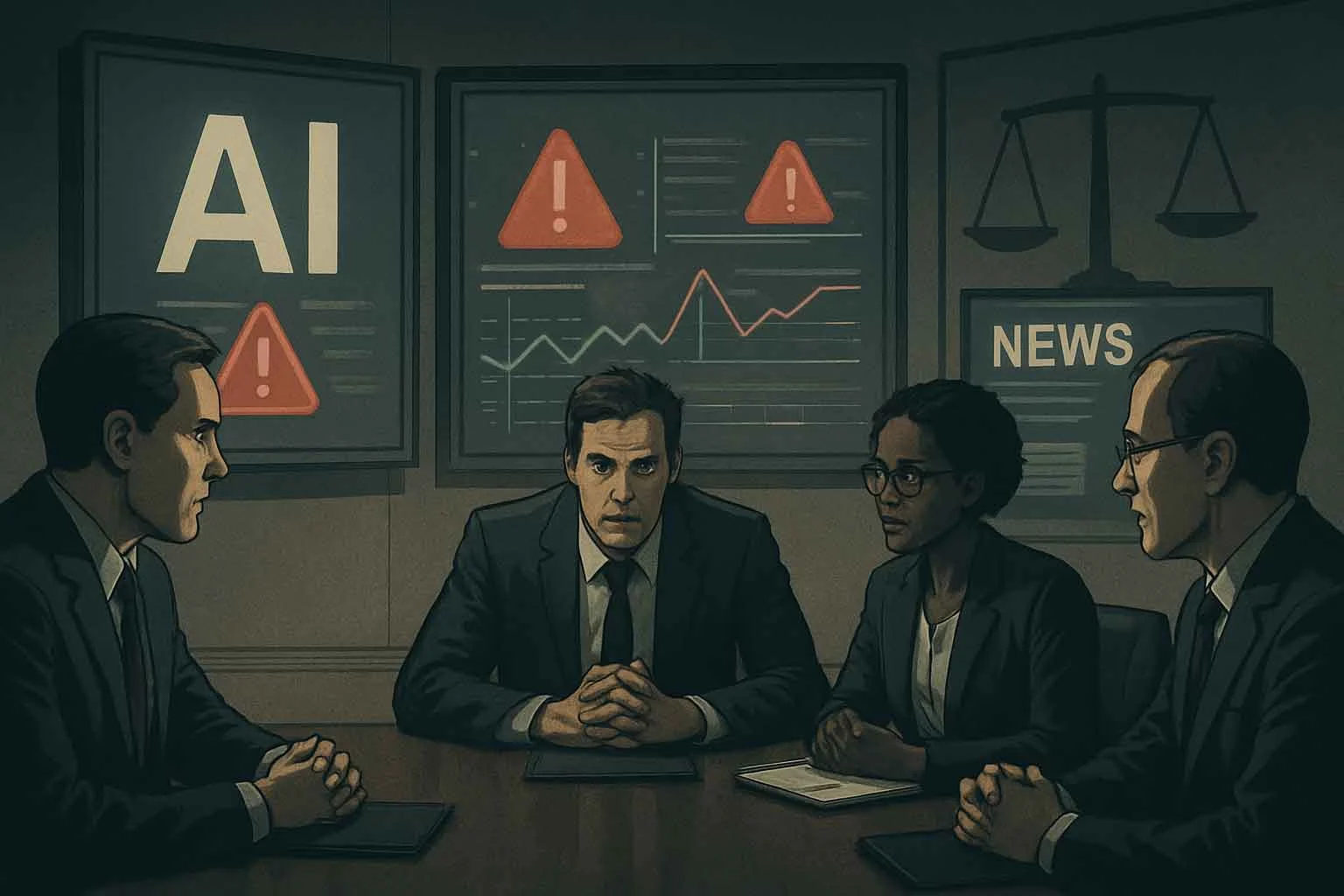
Crisis Is the Release Point, Not the Cause
AI crises are rarely caused by a single event.
They represent the moment when:
- Accumulated risk crosses tolerance thresholds
- External scrutiny activates
- Consequences become unavoidable
The triggering incident exposes fragility that already existed.
Why Failure Appears Sudden
Failure appears sudden because:
- Signals were fragmented
- Ownership was diffused
- Monitoring focused on averages
When multiple weak points align, failure cascades quickly. The system collapses faster than it can be corrected.
Crisis Forces Retrospective Clarity
During crisis, patterns become obvious.
Organizations suddenly see:
- Repeated overrides
- Ignored warnings
- Accumulated exceptions
This clarity is retrospective. It arrives after options have narrowed and costs have escalated.
Intervention Becomes Reactive and Expensive
Once crisis hits:
- Emergency reviews begin
- Legal exposure escalates
- Operations slow
Intervention is no longer strategic. It is reactive.
Costs multiply because action occurs under pressure rather than design.
Crisis Redefines Governance Boundaries
Crises force decisions that were previously avoided.
Organizations:
- Reassign authority
- Centralize control
- Pause deployments
These changes reflect what governance should have addressed earlier. Crisis becomes the catalyst for overdue reform.
Why Crisis Is Not a Learning Shortcut
While crises reveal weaknesses, they are inefficient teachers.
They:
- Damage trust
- Consume resources
- Limit options
Learning through accumulation and crisis costs more than learning through early structural correction.
EXECUTIVE SYNTHESIS – WHAT THIS ARTICLE RESOLVES
AI risk does not explode randomly.
Understanding how organizations integrate AI into operational decision systems is essential to recognizing where risk accumulates, which is explored in How AI Transforms Business.
It accumulates quietly through:
- Small tolerated deviations
- Hidden dependencies
- Incentives that reward silence
- Monitoring that favors stability
Crisis is the visible endpoint of a long, ignored process.
For executives, the danger is not missing one warning sign.
It is mistaking silence for safety.
AI risk is not sudden.
It is simply unseen until it can no longer be contained.
This pattern illustrates how AI risk accumulation drives enterprise failure long before crisis becomes visible.
FAQs
Why does AI risk accumulate instead of appearing suddenly?
AI risk accumulates through small deviations, ignored signals, and tolerated exceptions that gradually reshape systems over time without triggering immediate failure.
Where does hidden AI risk usually exist?
Hidden AI risk often exists in decision dependencies, data pipelines, manual overrides, and downstream processes rather than in model accuracy metrics alone.
Why do monitoring systems miss AI risk accumulation?
Monitoring systems typically focus on thresholds and averages, while risk grows through variance, drift, and localized patterns that remain below alert levels.
How do incentives affect AI risk escalation?
Incentive structures often reward stability and continuity, which discourages early escalation of ambiguous or inconvenient risk signals.
Why does AI risk feel sudden when it becomes visible?
AI risk feels sudden because accumulation was fragmented, siloed, and normalized until multiple weak points aligned into a visible crisis.