

Introduction
Artificial intelligence is often presented as a technological breakthrough – faster processing, smarter automation, predictive accuracy. Yet inside real companies, AI failure rarely begins with broken algorithms.
It begins with business decisions.
Across enterprises, AI projects stall, underperform, or quietly get abandoned. Not because the models cannot function, but because organizations misunderstand how AI interacts with workflows, incentives, accountability, and risk exposure.
This gap between expectation and reality is now one of the most expensive blind spots in modern business.
The Illusion of AI as a Plug-and-Play Solution
Executives are frequently told that AI can be “integrated” into existing systems with minimal disruption. This framing creates a dangerous assumption: that AI behaves like traditional software.
It does not.
AI systems introduce probabilistic outputs, evolving behavior, and decision opacity. When companies treat AI as a static tool rather than a dynamic decision participant, risk accumulates silently.
Most AI initiatives fail before deployment, at the strategy layer.
Where Failure Actually Starts Inside Organizations
AI failure follows a predictable internal pattern:
- Leadership approves AI without redefining responsibility
- Departments adopt tools without shared governance
- Outputs are trusted without validation processes
- Errors surface only after financial or reputational damage
These failures are rarely documented publicly. Internally, they are categorized as “implementation issues” rather than systemic misjudgments.
The result is a cycle where companies repeat the same mistakes under new AI labels.
Enterprise AI Risk Intelligence Engine
Assess governance weakness, operational exposure, compliance gaps, human oversight, vendor dependency, and enterprise failure risk before AI problems become expensive.
Decision Risk Replaces Technical Risk
Traditional enterprise risk focused on:
- System downtime
- Data breaches
- Compliance violations
AI adds a new layer: decision risk.
When AI influences pricing, hiring, credit approval, logistics, or forecasting, mistakes are no longer technical glitches. They are business judgments executed at scale.
This distinction matters because:
- Technical teams cannot fully own decision accountability
- Legal frameworks are not designed for probabilistic outcomes
- Executives often approve systems they cannot explain
This is where AI shifts from innovation asset to liability exposure.
Why AI Problems Stay Hidden for So Long
One reason AI risk is underestimated is timing.
AI systems often:
- Perform well in controlled testing
- Degrade under real-world variability
- Fail silently rather than catastrophically
Small errors compound slowly. Forecasts drift. Recommendations skew. Bias creeps in unnoticed.
This is the same accumulation pattern explained in Why AI Risk Builds Quietly Before Enterprise Failures.
By the time leadership realizes performance is off, the system has already influenced months or years of decisions.
At that point, rollback becomes politically and operationally difficult.
The Cost Nobody Puts on the Balance Sheet
Most companies track:
- AI development cost
- Licensing fees
- Cloud infrastructure spend
They do not track:
- Cost of incorrect AI-driven decisions
- Time lost correcting downstream errors
- Opportunity cost of misplaced trust in outputs
- Reputational erosion from subtle failures
These costs rarely appear as “AI losses”. They show up as inefficiency, churn, compliance friction, or declining confidence in leadership decisions.
THE HIDDEN COST STRUCTURE OF AI INSIDE COMPANIES
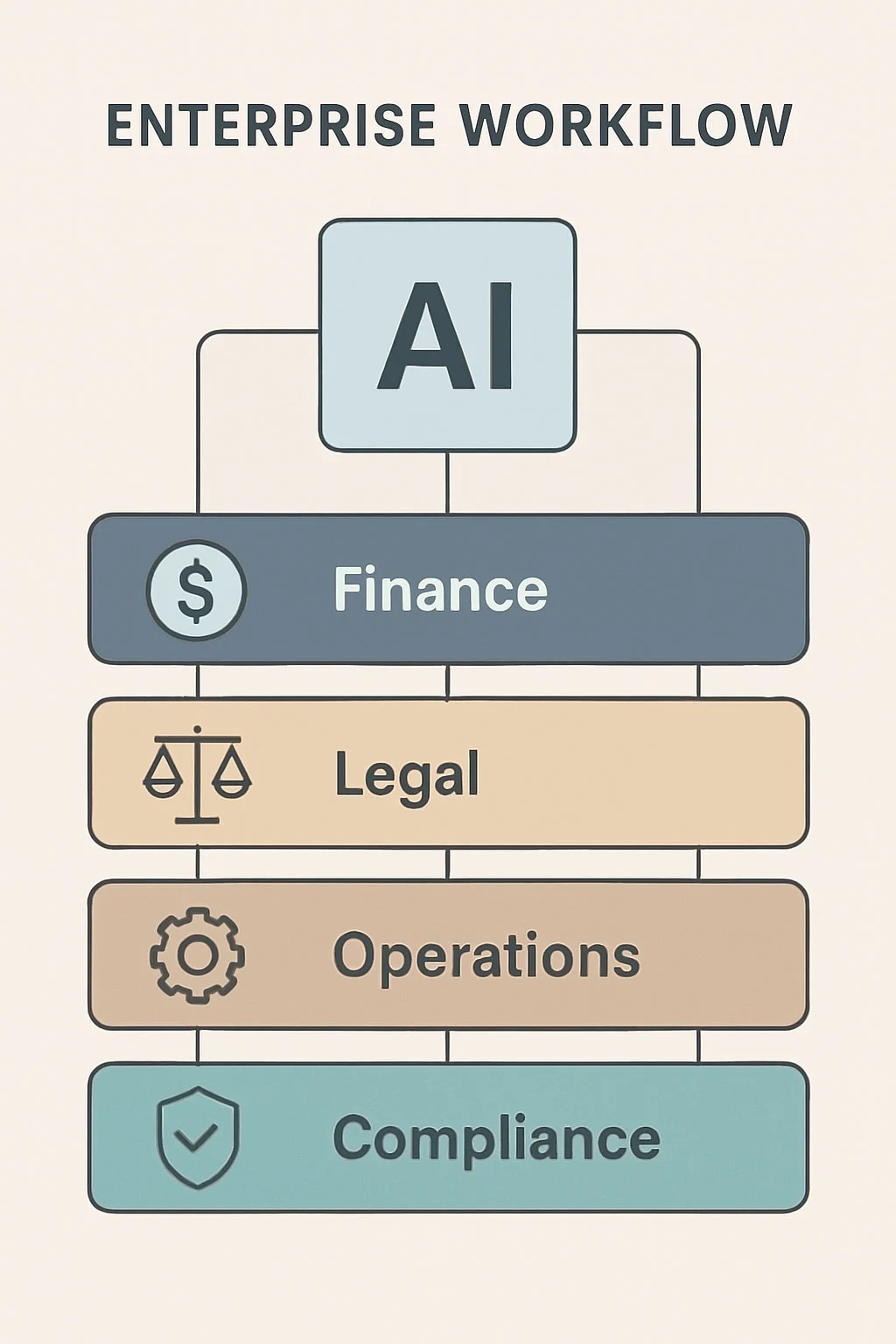
Why Most AI Budgets Are Incomplete by Design
When organizations approve AI initiatives, budgeting typically focuses on visible line items:
- Software subscriptions
- Cloud compute
- Integration fees
- Initial consulting costs
This creates the impression that AI is a finite investment.
In reality, AI introduces recurring and compounding costs that are rarely captured during approval stages. These costs surface gradually, making them harder to trace back to the original decision.
The problem is not miscalculation.
It is structural omission.
The Operational Drag AI Introduces
Once deployed, AI systems require constant operational attention:
- Model monitoring and performance reviews
- Data pipeline maintenance
- Exception handling when outputs conflict with reality
- Human review loops to correct edge cases
Each layer adds friction to existing workflows. Instead of streamlining operations, AI often creates parallel processes that must coexist with legacy systems.
The organization becomes slower before it becomes smarter.
The Human Cost Nobody Forecasts
AI adoption is frequently framed as labor reduction.
In practice, it often reshapes labor rather than removing it.
New roles emerge:
- AI oversight teams
- Ethics and bias reviewers
- Compliance coordinators
- Internal auditors for AI outputs
Existing employees spend time validating AI results, explaining anomalies to management, or correcting downstream consequences.
This labor is rarely labeled as “AI cost” – but it directly offsets expected productivity gains.
Data Is Not a One-Time Asset
AI systems depend on data quality, relevance, and freshness. Maintaining this input layer is one of the most underestimated expenses.
Common realities include:
- Data drift requiring retraining
- Regulatory restrictions limiting data usage
- Integration conflicts between departments
- Vendor lock-in around proprietary formats
What begins as a data advantage often turns into a maintenance obligation.
Cost Escalation Happens Quietly
Unlike traditional projects, AI rarely fails with a clear stop signal.
Instead:
- Costs rise incrementally
- Performance plateaus
- Confidence declines gradually
By the time leadership questions ROI, the organization is already dependent on the system’s outputs.
At this stage, the cost of removal feels higher than the cost of continuation – even if the AI is underperforming.
This is how AI becomes a permanent expense without proportional value.
Why Finance Teams Struggle to Measure AI ROI
Finance departments rely on clear attribution:
- Investment
- Output
- Return
AI breaks this model.
Its influence is distributed across decisions, forecasts, and recommendations rather than isolated outputs. When performance improves, credit is ambiguous. When it declines, blame is diffuse.
As a result, AI ROI discussions often default to narratives rather than numbers.
This ambiguity protects underperforming systems from scrutiny.
This is why AI ROI disappoints executives, even when adoption metrics appear strong on paper.
GOVERNANCE GAPS AND ACCOUNTABILITY FAILURE

AI Decisions Without Owners
In traditional systems, responsibility follows structure.
A department owns the tool. A manager owns the outcome.
AI breaks this chain.
When AI generates a recommendation:
- Who approves it?
- Who validates it?
- Who is accountable when it is wrong?
In many organizations, the answer is no one explicitly.
AI outputs are often treated as “system suggestions” rather than decisions, allowing responsibility to disperse across teams.
This diffusion is not accidental. It emerges naturally when governance frameworks lag behind adoption.
Why Technical Teams Cannot Carry Business Accountability
Engineering and data science teams are often placed closest to AI systems. This proximity leads organizations to assume they can also own outcomes.
They cannot.
Technical teams:
- Optimize models, not business judgment
- Work within probabilistic tolerances
- Lack authority over operational consequences
When an AI-driven pricing error triggers revenue loss, or a hiring model introduces bias, the failure is not technical. It is organizational.
Assigning accountability to engineers masks governance failure at higher levels.
The Board-Level Blind Spot
At board and executive levels, AI is often discussed in abstract terms:
- Innovation
- Competitiveness
- Efficiency
Rarely is it framed as decision delegation.
This creates a blind spot where:
- AI strategy is approved without accountability mapping
- Risk committees lack AI-specific oversight
- Compliance reviews trail implementation by months
By the time governance questions surface, systems are already embedded into core operations.
Policy Exists, Enforcement Does Not
Many enterprises now publish:
- AI ethics guidelines
- Responsible AI statements
- Internal policy documents
These frameworks create reassurance without control.
Common gaps include:
- No enforcement mechanisms
- No escalation paths for AI errors
- No shutdown criteria when models degrade
Governance without enforcement becomes symbolic rather than operational.
Why Accountability Rises Upward After Failure
When AI-driven decisions cause harm, accountability does not remain distributed.
It moves upward.
Regulators, courts, and the public do not audit model architectures. They examine:
- Executive approvals
- Risk disclosures
- Oversight processes
This is why AI failure increasingly becomes a leadership liability, not a technical incident.
Executives inherit responsibility even when they lack visibility into model behavior.
Governance Debt Accumulates Faster Than Technical Debt
Technical debt is measurable and visible.
Governance debt is neither.
Each AI system deployed without:
- Clear ownership
- Audit mechanisms
- Decision boundaries
adds invisible risk.
Over time, organizations accumulate dozens of AI-driven processes that no single leader fully understands or controls.
This debt only becomes visible when failure forces scrutiny.
These AI governance failures often remain invisible until a regulatory or financial incident forces accountability.
LEGAL AND COMPLIANCE EXPOSURE FROM AI DECISIONS

Why AI Expands Legal Exposure Without Clear Precedent
AI systems operate faster than regulatory frameworks evolve.
This creates a dangerous gap where:
- AI decisions affect real people and markets
- Legal standards lag behind technical capability
- Companies operate without clear case law guidance
In this environment, enterprises are exposed not because they violate explicit rules, but because they cannot demonstrate reasonable oversight.
Decision Traceability Becomes a Legal Weak Point
Traditional systems allow:
- Clear decision logs
- Human sign-off
- Predictable rule-based outcomes
AI introduces probabilistic logic, opaque model weights, and adaptive behavior. When regulators or courts ask why a decision was made, companies often cannot provide a clear explanation.
This lack of traceability turns AI systems into legal liabilities during disputes.
Compliance Teams Are Structurally Unprepared
Most compliance frameworks were built for:
- Static policies
- Human-controlled processes
- Periodic audits
AI requires:
- Continuous monitoring
- Dynamic risk assessment
- Technical understanding of decision logic
Without redesigning compliance operations, organizations rely on outdated controls to manage modern risks.
This mismatch increases exposure over time.
When AI Violations Are Discovered Too Late
Many AI-related compliance issues surface only after:
- Customer complaints
- Media exposure
- Regulatory inquiries
By then, corrective action appears reactive rather than preventive.
This timing matters.
Regulators evaluate not only outcomes, but whether companies took reasonable steps to prevent foreseeable harm. Delayed discovery weakens defense.
Why Vendors Do Not Absorb the Risk
Enterprises often assume AI vendors share responsibility.
In practice:
- Contracts limit vendor liability
- Decision accountability remains with the deploying company
- Custom configurations shift responsibility internally
AI suppliers provide tools. Enterprises make decisions.
Legal responsibility follows decision authority, not software ownership.
Compliance Risk Becomes Reputational Risk
Legal exposure does not remain confined to courtrooms.
AI-related compliance failures:
- Damage trust with customers
- Trigger investor concern
- Attract regulatory scrutiny across regions
Once public, these incidents reshape how organizations are perceived – not as innovative, but as careless.
This reputational impact often exceeds direct legal penalties.
Unchecked AI compliance risk often escalates from internal oversight failure into public regulatory exposure.
WHY AI SHIFTS RISK UPWARD TO EXECUTIVES
AI Does Not Reduce Responsibility – It Redistributes It
One of the most persistent myths around AI adoption is that automation reduces executive burden.
In reality, AI redistributes responsibility upward.
As decisions become faster and more abstracted, executives retain approval authority while losing operational visibility. This creates a structural imbalance where leaders are accountable for outcomes they cannot fully audit.
The more influential AI becomes, the narrower the margin for plausible deniability.
Delegation Without Oversight Is Not Defensible
Executives frequently rely on layered delegation:
- Strategy teams approve adoption
- IT manages deployment
- Operations consume outputs
This structure works for traditional tools. It breaks under AI.
Regulators and courts increasingly examine whether leadership:
- Understood decision impact
- Established governance mechanisms
- Monitored system behavior
Delegation without oversight is no longer defensible when AI affects outcomes at scale.
Why Executive Briefings Fail to Surface Real Risk
AI risks are often summarized through:
- Performance dashboards
- Vendor reports
- High-level KPIs
These formats obscure underlying instability.
They rarely reveal:
- Edge-case failures
- Decision drift over time
- Bias amplification under stress conditions
Executives receive reassurance rather than insight, until a failure forces deeper scrutiny.
The Accountability Asymmetry Executives Face
When AI performs well:
- Credit is shared
- Impact is diffuse
When AI fails:
- Accountability is concentrated
- Public attention escalates quickly
This asymmetry changes the risk profile of leadership roles. AI adoption increases downside exposure without proportionate upside protection.
For executives, this transforms AI from an operational tool into a personal liability vector.
Why Boards Are Becoming AI Risk Bottlenecks
Boards are increasingly expected to:
- Approve AI strategy
- Oversee risk frameworks
- Respond to incidents
Yet many boards lack technical literacy or structured oversight processes.
This creates a bottleneck where AI risk is acknowledged but not operationalized.
As scrutiny intensifies, boards face pressure to either deepen involvement or slow adoption.
Leadership Confidence Erodes Quietly
AI failures rarely collapse companies overnight. Instead, they erode leadership confidence internally.
Signals include:
- Increased manual overrides
- Hesitation to expand AI scope
- Internal skepticism toward outputs
These behaviors indicate trust decay long before public failure emerges.
By the time leadership confidence erodes visibly, strategic damage has already occurred.
As AI adoption accelerates, executive AI risk increasingly becomes a governance issue rather than a technical one.
REPEATING ENTERPRISE AI FAILURE PATTERNS
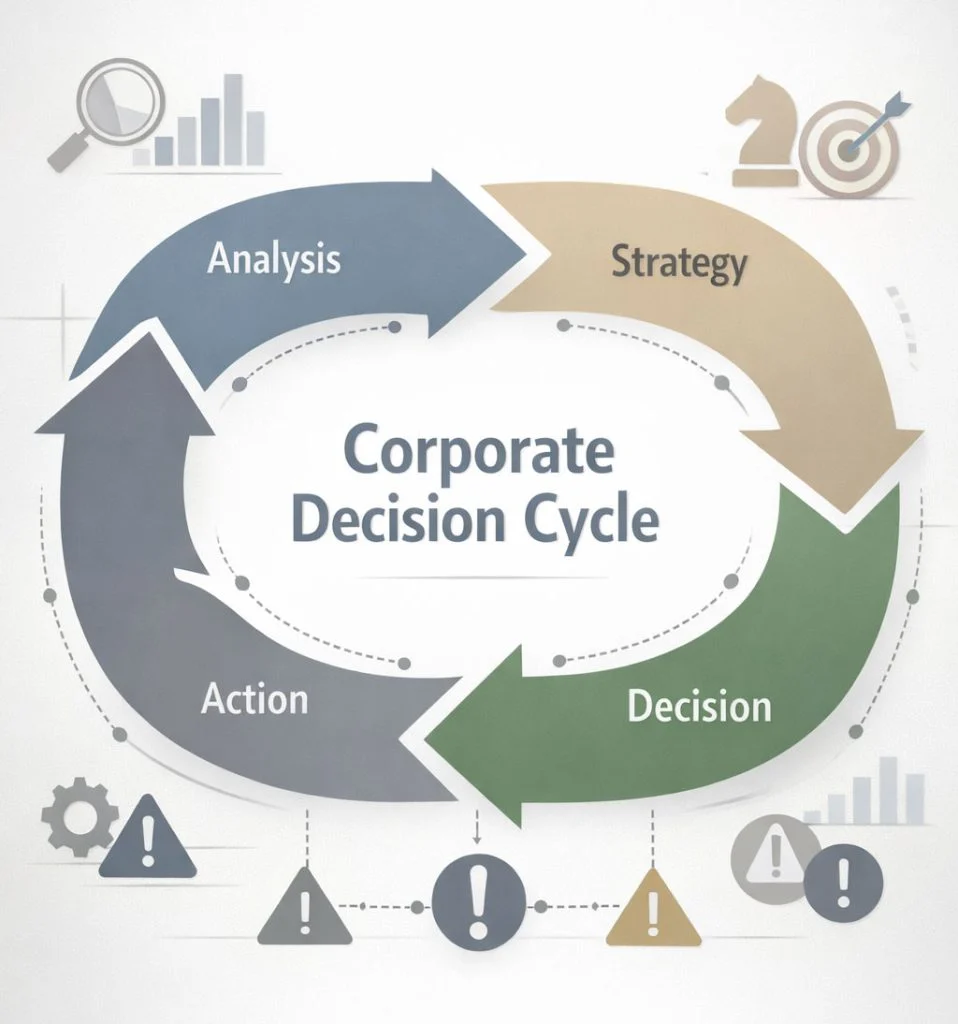
Treating AI as a Technology Upgrade Instead of a Decision System
The most common failure pattern begins at framing.
Organizations adopt AI as if it were:
- Faster software
- Smarter analytics
- An upgraded automation layer
In reality, AI alters how decisions are made, not just how tasks are executed.
When leadership fails to recognize this shift, AI is deployed without redefining authority, validation, or escalation paths. The system operates in a vacuum until outcomes conflict with expectations.
Scaling AI Before Understanding It
Early pilot projects often perform well:
- Clean datasets
- Controlled environments
- Limited decision scope
Encouraged by early success, companies rush to scale.
At scale:
- Data variability increases
- Edge cases multiply
- Contextual nuance disappears
This is where performance collapses. What worked in isolation fails under real-world complexity.
Confusing Activity With Effectiveness
AI dashboards frequently report:
- Model accuracy
- Processing volume
- Usage frequency
These metrics create an illusion of success.
They do not measure:
- Decision quality
- Downstream impact
- Long-term outcome alignment
Organizations mistake system activity for business effectiveness, allowing underperforming AI to persist unchecked.
Delegating AI Ownership Without Authority
Many enterprises assign AI ownership to:
- Innovation teams
- Digital transformation offices
- Data science groups
These teams often lack authority to:
- Override business decisions
- Halt deployment
- Enforce governance
Ownership without authority creates symbolic responsibility without control, setting projects up for quiet failure.
Ignoring Human Behavior Around AI Outputs
AI does not operate in isolation. Humans interpret, trust, and sometimes defer to it.
Common behavioral responses include:
- Over-trust in automated recommendations
- Reduced critical thinking
- Delayed intervention during anomalies
Organizations rarely design controls for these behaviors. As a result, human interaction amplifies AI error rather than correcting it.
Learning the Wrong Lessons From Failure
When AI initiatives underperform, post-mortems often conclude:
- “Data quality was insufficient”
- “Change management needs improvement”
- “The model needs refinement”
While sometimes true, these explanations avoid deeper structural issues around decision authority and accountability.
The same failure pattern then repeats under a different AI tool or vendor.
These enterprise AI failure patterns repeat because organizations misdiagnose structural problems as technical ones.
WHY AI ROI COLLAPSES AFTER EARLY OPTIMISM

Early Wins Are Not Proof of Sustainable Value
AI projects often begin with visible gains:
- Faster processing
- Cleaner reports
- Reduced manual effort
These wins occur in controlled conditions with focused scope. Leadership interprets them as validation of long-term ROI.
This interpretation is flawed.
Early performance reflects environmental simplicity, not systemic strength. As scope expands, hidden constraints surface and initial gains erode.
ROI Models Ignore Compounding Friction
Traditional ROI models assume stable efficiency once a system is deployed.
AI introduces compounding friction:
- Additional review layers
- Exception handling
- Ongoing model tuning
- Governance overhead
Each layer consumes time and budget. Over months, these costs outpace early savings, flattening ROI curves.
The decline is gradual, making it difficult to attribute directly to AI.
Success Metrics Drift Away From Business Outcomes
As ROI weakens, organizations often adjust success metrics rather than reassess value.
Common shifts include:
- Emphasizing usage over impact
- Highlighting accuracy over outcomes
- Reporting adoption over effectiveness
This metric drift protects AI initiatives from scrutiny while masking declining business contribution.
Opportunity Cost Becomes the Silent Loss
AI ROI discussions focus on direct returns. They rarely consider opportunity cost.
While teams maintain underperforming AI systems:
- Alternative investments are delayed
- Talent is locked into maintenance work
- Strategic flexibility narrows
These missed opportunities represent real economic loss, even if they never appear on financial statements.
Why Organizations Double Down Instead of Exiting
Once AI is embedded, exit becomes difficult:
- Workflows depend on outputs
- Teams are trained around the system
- Leadership reputation is tied to adoption
As ROI weakens, organizations often double down – adding features, vendors, or data – hoping to recover value.
This behavior increases sunk cost exposure and prolongs underperformance.
The Psychological Trap of AI Investment
AI initiatives carry symbolic weight:
- Innovation signaling
- Competitive positioning
- Leadership credibility
Admitting ROI failure challenges these narratives. As a result, organizations tolerate declining returns longer than they would for traditional projects.
The collapse of AI ROI is rarely sudden. It is normalized.
Over time, this AI ROI collapse becomes a structural issue rather than a performance anomaly.
HOW COMPANIES MISREAD AI SUCCESS SIGNALS

Activity Metrics Are Mistaken for Value
One of the most common interpretive errors in AI adoption is confusing activity with impact.
Enterprises track:
- Number of AI-generated outputs
- Processing speed
- Volume of automated decisions
These indicators measure system usage, not decision quality. High activity can coexist with poor outcomes when recommendations are misaligned with real-world conditions.
The appearance of momentum masks underlying weakness.
Accuracy Without Context Is Misleading
Model accuracy is frequently highlighted as proof of success. Yet accuracy alone provides little insight into business risk.
AI can be:
- Statistically accurate
- Contextually inappropriate
- Operationally harmful
When accuracy metrics are isolated from downstream consequences, leadership gains false confidence in system reliability.
Early Stability Hides Long-Term Drift
AI systems often stabilize quickly after deployment. This stability is interpreted as maturity.
In reality, stability can signal:
- Overfitting to historical data
- Reduced sensitivity to new patterns
- Delayed response to environmental change
Performance drift emerges slowly, making it easy to miss until decisions are already compromised.
Exception Handling Is Underreported
AI systems generate exceptions – cases where outputs conflict with human judgment or policy.
These exceptions:
- Are often handled manually
- Rarely logged systematically
- Seldom reported upward
As a result, leadership sees a sanitized performance narrative while frontline teams absorb correction costs.
Confidence Replaces Verification
Over time, organizations substitute verification with trust.
Once AI becomes routine:
- Fewer outputs are challenged
- Reviews become symbolic
- Oversight decays
This transition happens quietly. Confidence grows while validation weakens, setting the stage for latent failure.
Why Signals Fail Executives
Executives rely on condensed signals to make decisions. When AI success indicators emphasize convenience over consequence, leadership loses the ability to intervene early.
By the time contradictory signals surface:
- Dependencies are entrenched
- Reversals are costly
- Accountability pressure intensifies
Misread signals convert manageable risk into structural exposure.
Misinterpreting AI success metrics often delays corrective action until risks become systemic.
WHAT SUSTAINABLE AI OVERSIGHT ACTUALLY REQUIRES
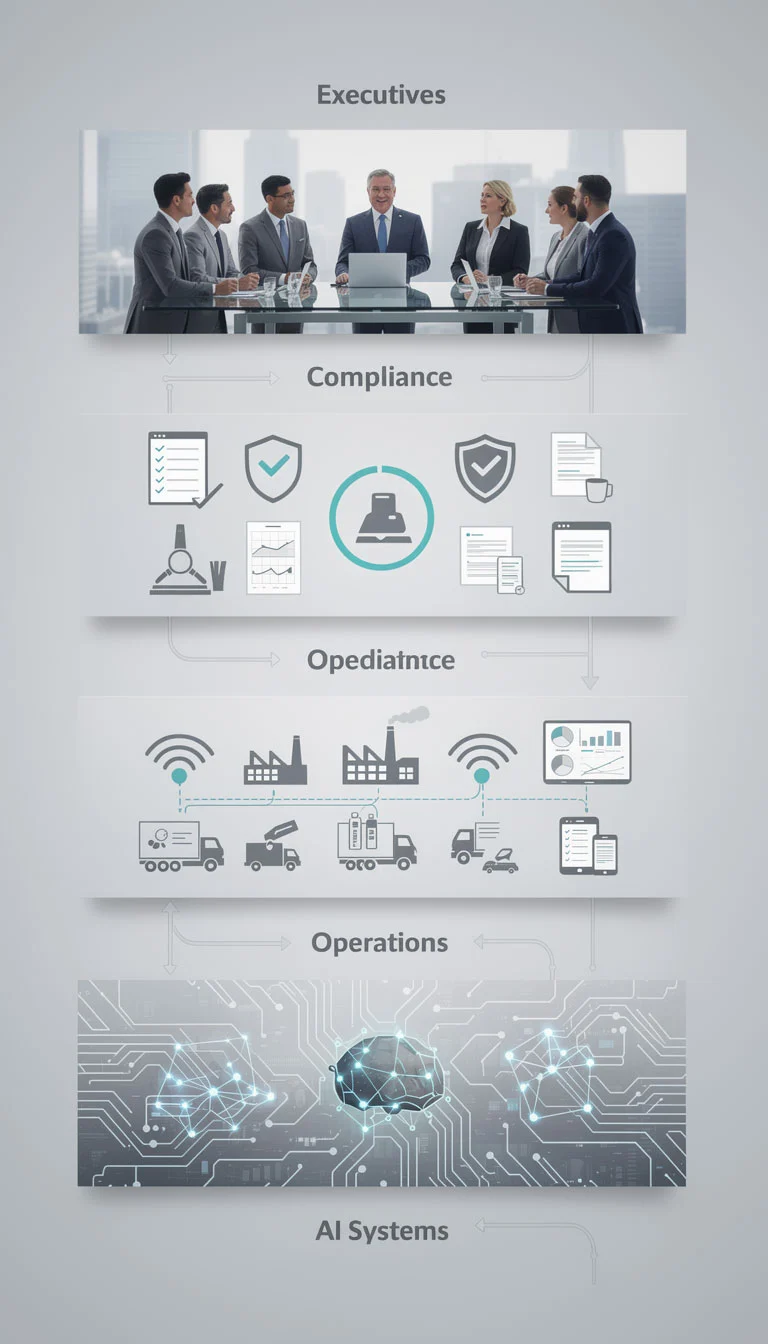
Oversight Is an Operating Model, Not a Policy
Sustainable AI oversight does not begin with ethics statements or policy documents.
It begins with operating structure.
Organizations that manage AI risk effectively treat oversight as a continuous process embedded into daily operations, not a periodic review or symbolic approval.
This distinction determines whether AI risk remains visible or fades into background noise.
Clear Decision Boundaries Reduce Hidden Risk
One of the most effective oversight mechanisms is defining decision boundaries.
This includes:
- Where AI can recommend
- Where AI can decide
- Where human validation is mandatory
Without these boundaries, AI influence expands informally, creating ambiguity around accountability.
Clear boundaries limit exposure even when models perform imperfectly.
Oversight Must Match AI Impact, Not Tool Complexity
Organizations often scale oversight based on technical complexity.
This approach misses the point.
Oversight should scale based on:
- Decision impact
- Financial exposure
- Reputational sensitivity
A simple model influencing high-stakes decisions requires more scrutiny than a complex model operating in low-risk contexts.
Continuous Review Prevents Silent Degradation
Sustainable oversight relies on continuous review mechanisms rather than periodic audits.
This includes:
- Regular outcome evaluation
- Drift detection tied to business metrics
- Escalation triggers when confidence thresholds are breached
Continuous review transforms AI from a black box into a monitored participant in decision processes.
Why Oversight Fails Without Leadership Involvement
Oversight frameworks collapse when leadership treats AI as a technical issue.
Executive involvement:
- Signals priority
- Aligns incentives
- Enables enforcement
Without leadership engagement, oversight remains theoretical and unenforced.
This is not a technical failure. It is an organizational one.
Without sustainable AI oversight, enterprises accumulate invisible decision risk over time.
FINAL SYNTHESIS: WHY AI FAILURES ARE PREDICTABLE

AI Failure Is Rarely a Surprise
When AI initiatives fail, post-incident narratives often describe them as unexpected.
In reality, most failures follow predictable patterns:
- Governance gaps
- Misread success signals
- Diffused accountability
- Unmeasured cost accumulation
These patterns are visible long before outcomes surface.
Technology Accelerates Existing Weaknesses
AI does not create organizational weakness. It accelerates what already exists.
Poor decision hygiene becomes faster.
Unclear accountability becomes more dangerous.
Overconfidence becomes systemic.
The technology amplifies structure.
Why AI Risk Is a Leadership Issue
Because AI influences decisions at scale, risk concentrates at leadership levels.
Executives cannot delegate:
- Responsibility for outcomes
- Oversight of decision systems
- Accountability for failures
This reality reshapes how AI should be evaluated and governed.
The Quiet Cost of Misunderstood AI
The most damaging AI failures are not public scandals.
They are:
- Years of subtle misallocation
- Erosion of decision quality
- Declining trust in internal systems
These costs accumulate quietly until strategic damage becomes irreversible.
Closing Perspective
AI adoption is not a technical race.
It is a structural test.
Organizations that fail do so not because AI is immature, but because their governance, oversight, and decision frameworks are.
Understanding this difference determines whether AI becomes a durable advantage or a persistent liability.
FAQ
Why do many AI projects fail inside companies?
Most AI projects fail not because the technology is broken, but because organizations underestimate governance requirements, decision accountability, change management, and long-term operational complexity.
Is AI failure usually caused by bad data?
Poor data quality contributes to failure, but structural issues such as unclear ownership, misaligned incentives, misunderstood performance metrics, and weak oversight are more common causes.
Why does AI ROI decline after early success?
Early AI gains often occur in controlled pilot environments. As systems scale across departments, hidden costs, increased oversight needs, integration friction, and compliance requirements reduce long-term returns.
Can AI decisions create legal or compliance risk for companies?
Yes. When AI influences pricing, hiring, approvals, or customer interactions, accountability remains with the organization, even if the decision logic is automated or vendor-provided.
Why do executives carry more risk with AI adoption?
AI shifts responsibility upward because leaders authorize systems that influence decisions at scale. Strategic approval without operational visibility increases governance and reputational risk.
How do companies misinterpret AI success metrics?
Organizations often prioritize usage rates, speed, or model accuracy instead of evaluating decision quality, downstream business impact, risk exposure, and long-term sustainability.
Are AI vendors responsible when AI causes harm?
In most enterprise deployments, vendors provide tools and infrastructure, while the deploying company retains responsibility for how decisions are made and how outcomes are managed.
Why do AI failures often go unnoticed for long periods?
AI errors tend to accumulate gradually, producing subtle distortions in decision patterns rather than immediate breakdowns. Without strong monitoring systems, these issues can remain undetected for extended periods.