
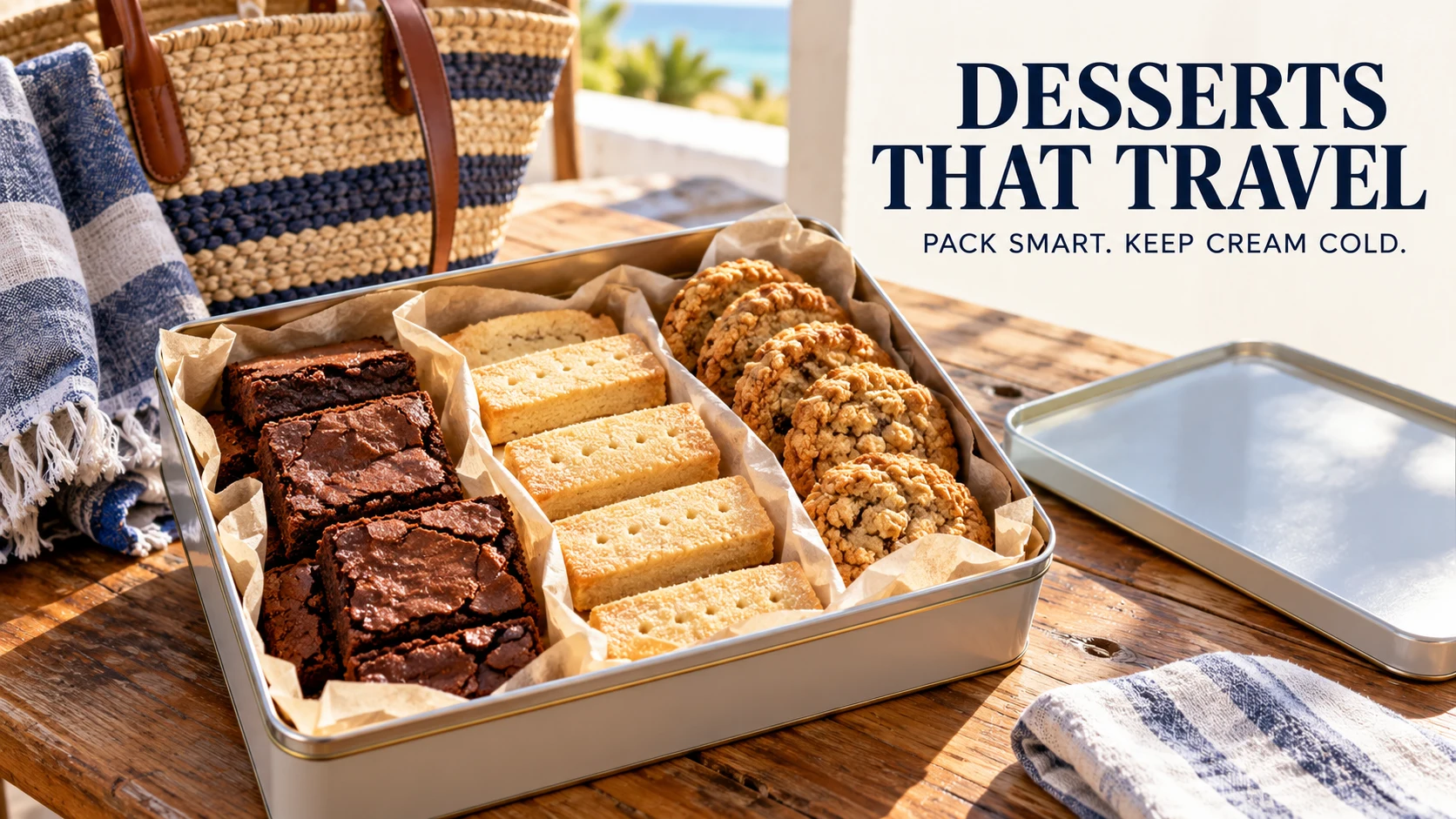
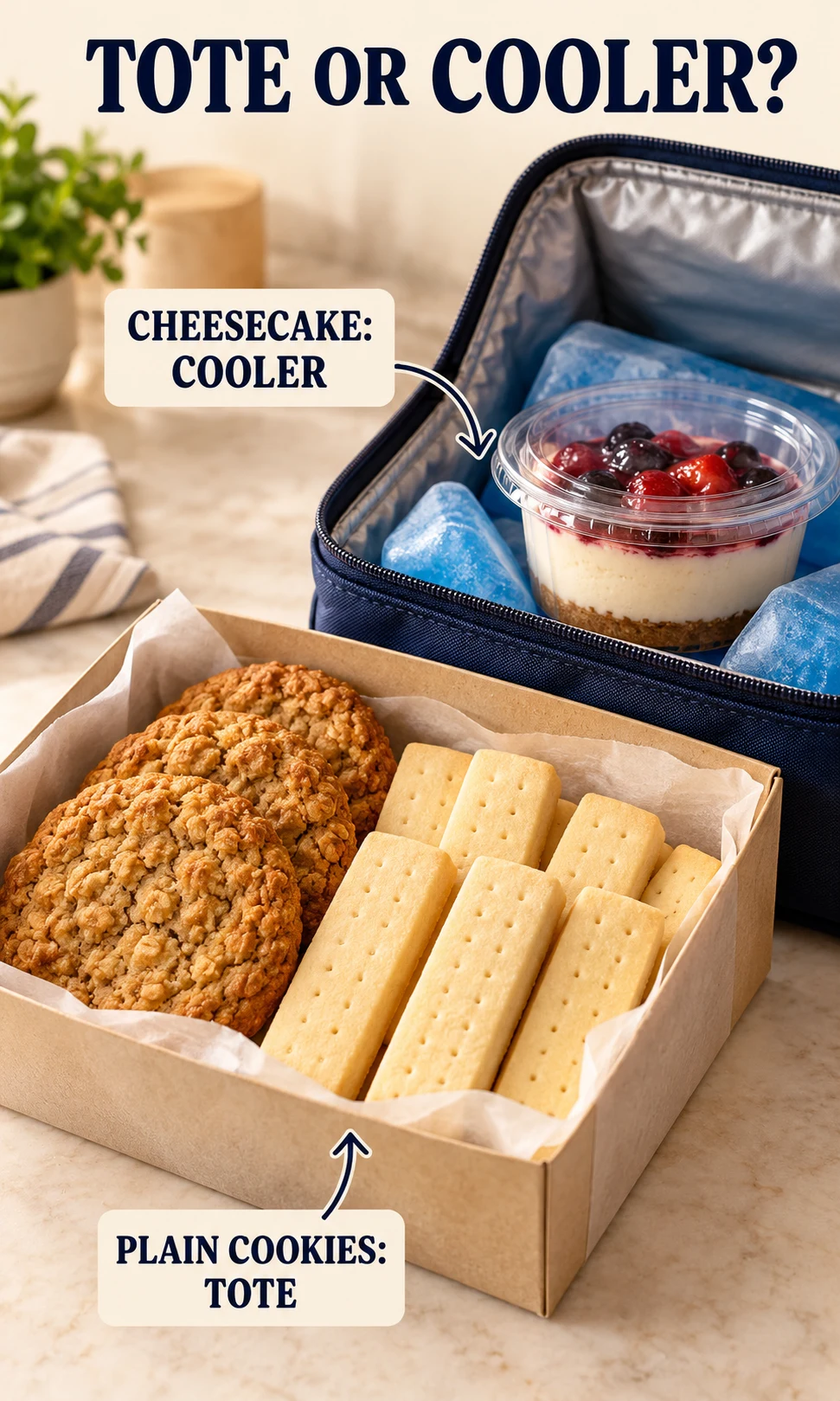
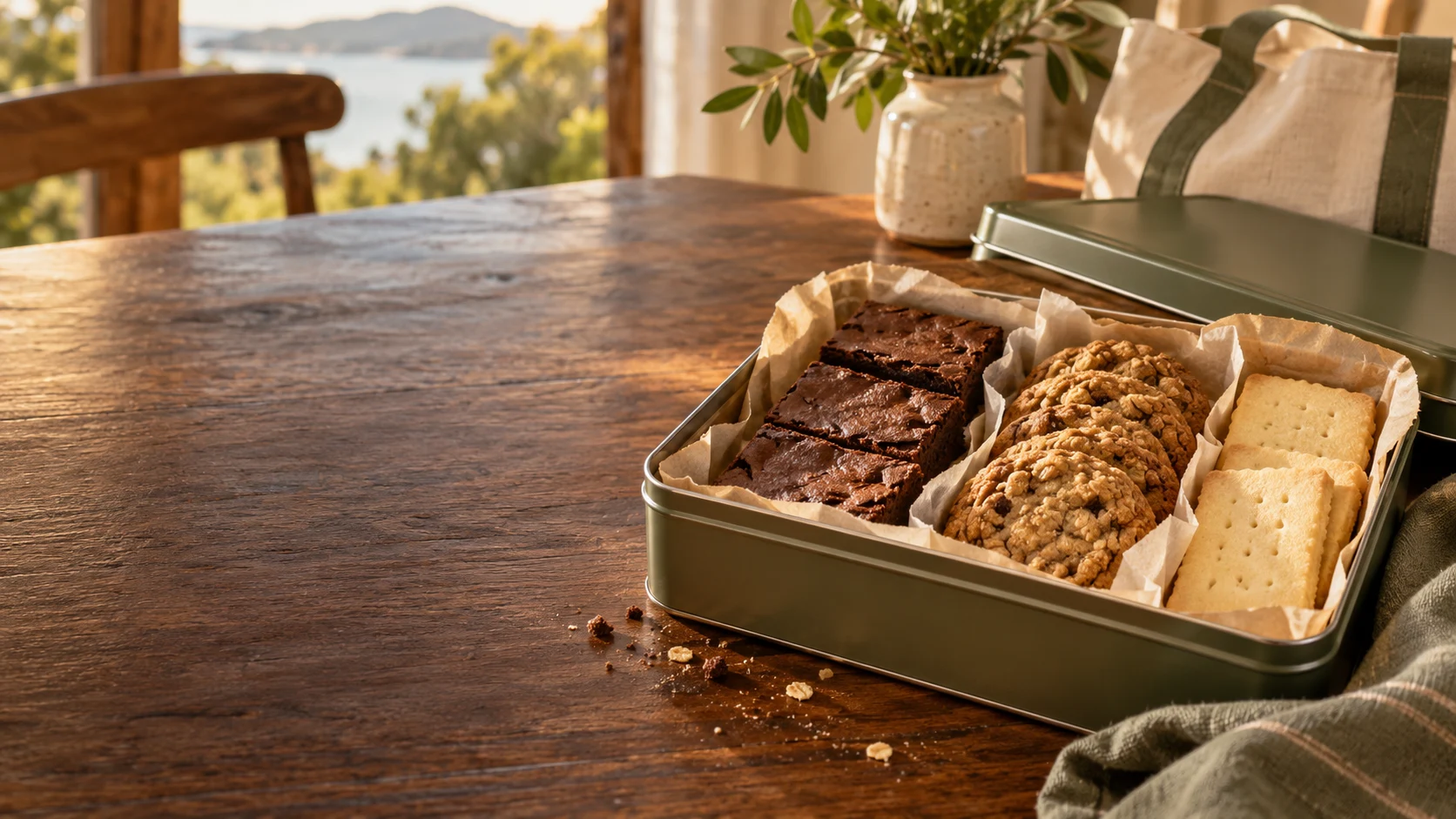
Plain brownies, shortbread fingers, and sturdy cookies are practical finger desserts for a trip without a fridge when their recipe or label allows room-temperature storage. Cheesecake cups, whipped-cream trifles, and desserts with perishable fillings need a cooler that keeps them at or below 40°F / 4°C. Choose the dessert around your storage plan before deciding how to decorate it.
What “no fridge” means on a vacation day
A room-temperature dessert belongs in a clean, shaded container, away from heat and contamination. It does not belong on a dashboard or in a parked car for the afternoon. Even a dessert that needs no refrigeration can become greasy, sticky, or impossible to pick up when chocolate, butter, or caramel softens.
Read the storage instruction for the finished recipe or purchased product. Eggs or butter baked into a cookie do not automatically make it equivalent to an egg custard or whipped-cream filling. The complete formulation, moisture, filling, and handling determine the storage requirement; an unfamiliar homemade dessert should not receive a shelf-stability guarantee from its name alone.
Three finger desserts that fit a no-fridge pack
Plain brownie squares: soft enough to enjoy, firm enough to lift
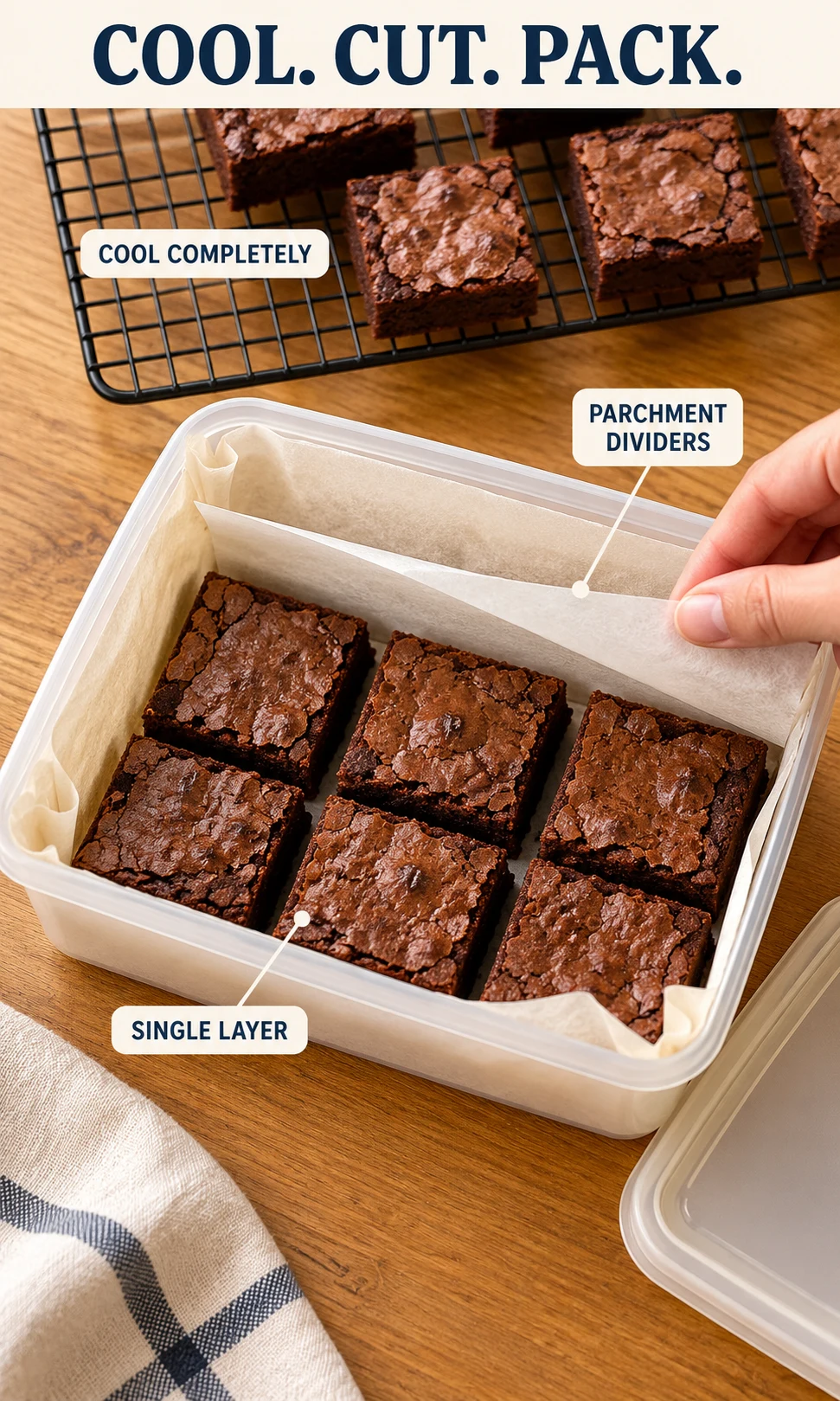
Choose a fully baked, unfrosted brownie with a set structure rather than a molten center. A box mix is useful in a vacation rental because the pan size, added ingredients, and baking instructions are stated together. Follow those directions instead of mixing instructions from several recipes, and allow enough time for the slab to cool completely before cutting.
Cut modest squares that can be lifted without bending. Keep the pieces in a shallow rigid container, preferably in one layer, so the weight above does not compress the centers. A parchment liner helps lift a piece cleanly; it cannot prevent chocolate from softening in heat or make a cream-cheese swirl safe without cooling.
Shortbread fingers: the simplest choice when cooler space is scarce
Plain shortbread has a dry, firm structure and no sticky filling to escape onto the lid. Choose fingers or small squares rather than long, thin shapes that snap easily when the bag is knocked. Skip chocolate dipping for a hot-weather outing and give the pieces a snug container without pressing them together.
Keep crisp shortbread separate from moist brownies. In a shared sealed container, moisture can move between the desserts and reduce the shortbread’s snap. A divider limits contact, but separate boxes are the more dependable way to preserve two different textures.
Sturdy cookies: easy portions with no slicing at the destination
Plain oatmeal or sugar cookies are useful when you need a handheld sweet that distributes easily. Avoid fragile lace cookies, large soft sandwich cookies, or decorations that stick to the lid. For purchased cookies, retain the label so you can check storage directions and ingredients after packing.
The USDA’s cookie storage guidance supports room-temperature storage for ordinary baked cookies. That does not cover every filled cookie or establish how a cookie performs in a hot car. Pack the type you already know, and keep soft cookies separate from crisp ones.
- No cooler: choose plain brownies, shortbread, or sturdy cookies with storage directions that permit room temperature.
- Long time in heat: change the storage location and favor plain shortbread or cookies without chocolate; do not rely on a parked car.
- Cream, custard, or fresh-fruit topping: use verified cold storage or choose another dessert.
- Unknown ingredients or storage instructions: treat the dessert as a cold-storage choice until you can verify the requirement.
What about candy brownies, pineapple cakes, and cheesecake cups?
Candy-stuffed brownies can be portable, but their texture is less predictable than a plain brownie. Exposed chocolate and caramel may soften, while larger candy chunks can make clean cutting difficult. Follow a complete recipe and its storage directions; freezing candy before mixing is not a proven fix for every batter and does not establish safe storage.
Pineapple upside-down bites bring another problem: a moist fruit layer that can stick, leak, and break away from the crumb. Drain and pat the fruit dry as the recipe directs, cool the cakes, and pack them upright in individual liners. This guide routes them to cold storage unless a reliable recipe or manufacturer explicitly supports room-temperature storage for that exact product.
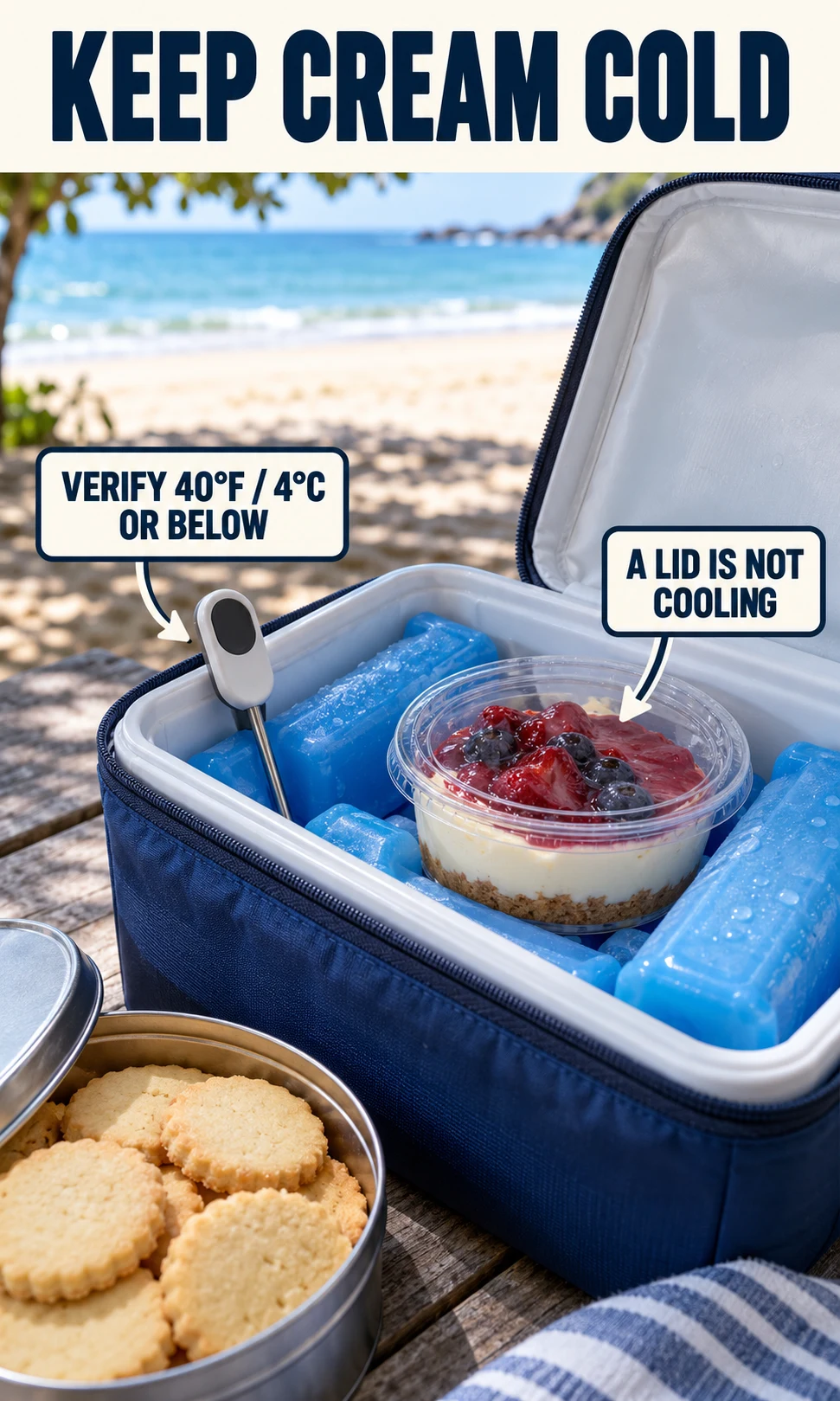
Strawberry cheesecake cups and trifles are cold desserts, even when they fit into convenient individual containers. A lid prevents leaks; it does not refrigerate cream cheese, cream, or cut berries. Assemble close to serving when possible, or transport components cold and combine them at the rental rather than in a beach bag.
Pack the night before without trapping steam
Bake ahead so the food can cool without delaying your departure. Once plain baked items are completely cool, portion and seal them according to the recipe’s storage directions. Warm food sealed under a lid releases moisture that can collect on the surface, soften crisp edges, and make paper liners cling.
Choose a container with a firm lid and enough headroom for the tallest piece. Put it above heavy groceries rather than underneath bottles, and keep it level during travel. At the beach, open only the portions you are serving so the remaining sweets stay protected from sand and handling.
- Check the recipe or label for storage directions before you buy ingredients.
- Allow cooling time, then cut plain bars with a clean knife and pack in a rigid food-safe box.
- Separate soft and crisp desserts; use parchment between suitable layers.
- Keep toppings in separate containers with their required cold storage.
- Label ingredients and use separate utensils for different batches; substitutions do not prove allergy suitability.
Dessert packing comparison
Swipe horizontally to compare on smaller screens.
| Dessert | Storage decision | Packing weakness |
|---|---|---|
| Plain brownies | Room-temperature option if the recipe permits; fully baked and unfrosted. | Soft centers compress; chocolate can smear in heat. |
| Shortbread fingers | Room-temperature option without perishable filling. | Thin pieces snap; moisture from other sweets softens them. |
| Plain sturdy cookies | Room-temperature option; check filling and label. | Decorations stick; crisp and soft cookies affect each other. |
| Candy-stuffed brownies | Check the complete recipe and candy storage directions. | Exposed caramel and chocolate soften. |
| Pineapple upside-down bites | Cold-storage default here unless exact-product guidance says otherwise. | Wet fruit layers stick and loosen during travel. |
| Cheesecake or trifle cups | Keep at or below 40°F / 4°C. | Loose lids leak; dairy and fruit require a cold chain. |
How long can perishable desserts sit out?
The FDA’s outdoor food-handling guidance sets a maximum of two hours outside cold storage for perishable food, shortened to one hour above 90°F / 32°C. Keep cold desserts at or below 40°F / 4°C until serving. Count time spent preparing, carrying, and displaying them outside cold storage; putting them back in a cooler does not erase earlier exposure.
These limits apply to foods that need refrigeration, rather than acting as a universal two-hour expiry for plain shelf-stable cookies. When a perishable dessert has exceeded the limit, discard it. If you cannot establish its temperature history, the FDA’s safe-storage advice makes clear that appearance and smell cannot confirm safety.
Check your dessert before you leave
Use Dessert Packing Studio to compare your dessert with the ingredients and conditions of your trip. Enter cumulative time outside verified cold storage, including time before packing, rather than only the drive. Its report gives a packing decision and precautions; it does not measure temperature or establish a recipe’s shelf life.
 Tote or cooler
Dessert Packing Studio
Choose a sweet that fits your trip. Check ingredients, heat and cold storage before you pack.
Packing decision · A4 reportPacking guidance, not a food-safety certification. Recipe and label storage directions take priority. Unknown ingredients are routed to cold storage. Read FDA outdoor food guidance.
A practical vacation-rental kitchen approach
Check the rental’s pan, oven, refrigerator, and containers before starting. A familiar brownie mix or purchased plain cookies can be more useful than a dessert that needs a mixer, specialty tin, or overnight setting time. Buy only the toppings you can store correctly, and assemble chilled desserts after arrival if the refrigerator is available.
For a different dessert format, see the site’s fudgy brownie cookie guide and holiday baking ideas. Apply the same storage checks to each suggestion rather than assuming every variation travels alike. This page provides packing guidance; no original bake, yield, or warm-car trial is claimed, and the illustrative images are AI-generated.
Frequently asked questions
Which dessert travels best for a picnic?
Plain shortbread or sturdy cookies are practical when you have no cooler, provided their storage directions permit room temperature. Plain brownies also work when protected from crushing and heat. A dessert with cream or custard needs verified cold storage.
What desserts do not need refrigeration?
Ordinary plain baked cookies, shortbread, and some unfrosted brownies can be stored at room temperature. Check the complete recipe or purchased-product label. Cream fillings, fresh-fruit toppings, and unfamiliar formulations change the decision.
Can brownies sit in the car?
Carry plain brownies in the shaded passenger area during the trip and take them with you when you leave. Do not store them in a parked hot car. Cream-cheese brownies or other perishable versions need cold storage.
Can I bring cheesecake cups to the beach?
Yes, if you keep them at or below 40°F / 4°C in a cooler and manage serving time. The perishable-food limit is two hours outside cold storage, or one hour above 90°F / 32°C. A sealed cup helps with leaks but does not keep the food cold.
What can I prepare the night before a trip?
Bake plain brownies or sturdy cookies early enough to cool fully before packing. Use the recipe’s storage directions overnight and keep crisp items separate from moist ones. Refrigerate desserts that require it rather than leaving them on the counter.
Do pineapple upside-down bites need a cooler?
This guide treats them as a cold-storage choice unless reliable instructions permit room-temperature storage for the exact formulation. A moist fruit layer and any cream topping make them less dependable for an uncooled bag. Draining the fruit improves texture but does not validate shelf stability.
Choose the sweet that fits the storage
For a no-fridge day, start with a plain baked dessert you can protect in a rigid container. Bring a verified cooler if the dessert depends on chilled cream, custard, or fruit, and keep serving portions small. If the route offers only a hot parked car and no reliable cold storage, change the dessert or buy it when you reach the destination.