
You and your mom can eat the same sweet-and-sour dish and genuinely experience it differently. The difference can come from taste sensitivity, aroma, texture, learned familiarity, and genetics – so disliking a flavor combination that someone in your family loves does not mean either person is tasting it “wrong.”
The most useful distinction is between detecting a taste and liking the overall flavor. Sweetness and sourness are only part of the experience; smell, temperature, texture, concentration, and past exposure can change whether the same bite feels bright and balanced or sharp and unpleasant.
| What can differ | What you may notice | Simple way to test it |
|---|---|---|
| Sour intensity | The acidic part feels much sharper to you. | Try the same food with less acid or a more diluted sauce. |
| Sweetness preference | The sauce tastes cloying, flat, or not sweet enough to balance the acid. | Compare a lower-sugar and slightly sweeter version side by side. |
| Aroma | You dislike the smell before the food even reaches your tongue. | Taste a simpler version with fewer aromatic ingredients. |
| Texture | Sticky sauce, soft vegetables, or chewy meat bothers you more than the flavor. | Try the same flavor on a different texture, such as crisp vegetables. |
| Familiarity | A flavor combination feels unusual even when none of its parts are individually unpleasant. | Use small, low-pressure tastes over time instead of forcing a full serving. |
Why family members can like completely different tastes
Sharing a home does not give family members identical sensory systems. Reviews of human taste research show that genetic variation can influence how strongly people perceive some tastes and which foods they prefer, especially for bitter and sweet perception; research on sour liking also supports a genetic contribution, although taste preference is never explained by one gene alone.
A recent systematic review of food-preference genetics found associations between several taste-related gene variants and differences in sweet, bitter, and other food preferences. Recent twin research likewise found that both genetic factors and experiences unique to each person contribute to sweet-liking, which helps explain why siblings or a parent and child can develop different preferences even within the same household. See the systematic review of genetic determinants of food preferences and twin research on sweet-taste liking.
Sourness is not simply “liked” or “disliked” at a fixed level. Concentration matters: a small amount of acid can make a sauce taste lively, while a stronger dose may dominate everything else for a more sour-sensitive eater. Twin research on genetic contribution to sour taste preference found that both inherited and environmental factors contribute to how people perceive and enjoy sour foods.
- You may feel the acid more strongly. The same vinegar, citrus, tamarind, or fermented note can feel refreshing to one person and aggressively sharp to another.
- Your preferred sweet-to-sour ratio may be different. One eater may need more sweetness to soften acidity; another may find that extra sweetness heavy or sticky.
- Aroma can decide the reaction before taste does. Fruity, vinegary, fermented, or cooked aromas can make a dish inviting or off-putting.
- Texture can be the hidden deal-breaker. If you dislike a syrupy coating or soft texture, changing the food’s texture may matter more than changing the sugar.
- Familiarity can change comfort with a flavor. Repeated exposure can increase acceptance in some contexts, but it is not a guarantee that everyone will learn to love the same food.
Taste is not the same thing as flavor
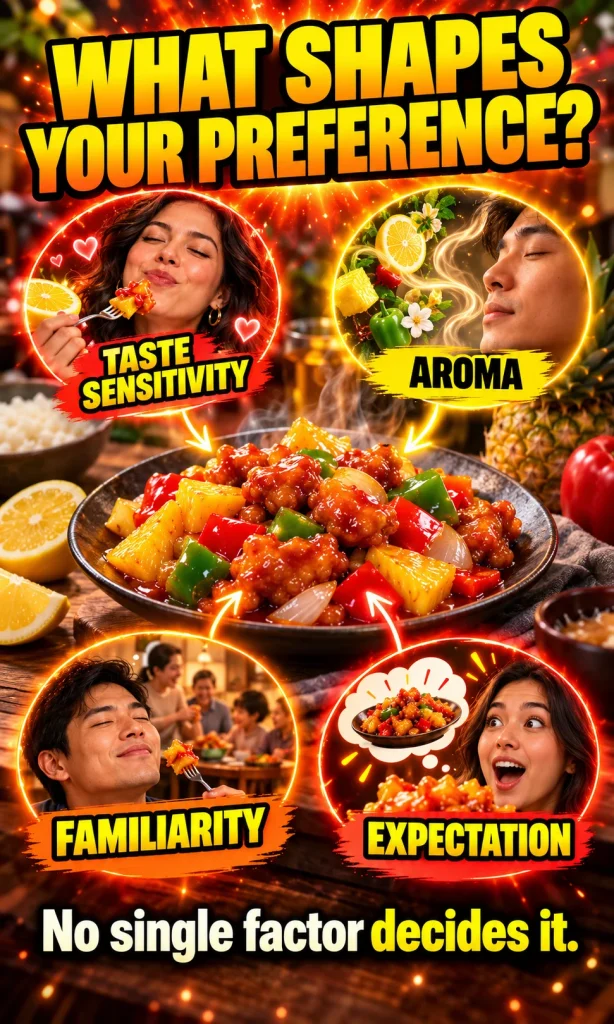
The tongue detects basic taste qualities such as sweet, sour, salty, bitter, and umami, but the experience you call “flavor” is broader. The National Institute on Deafness and Other Communication Disorders explains that aroma, temperature, texture, and other mouth sensations combine with taste signals to produce the final flavor experience.
This is why a sweet-and-sour sauce can taste different when it is hot instead of cold, when it coats crispy food instead of soft food, or when it contains a strong aroma such as vinegar, pineapple, citrus peel, garlic, or fermented ingredients. If you want a deeper explanation of that sensory side, the site guide on why food texture matters more than flavor is a useful companion.
Smell is especially easy to underestimate. When food is chewed, aroma molecules reach the nose from the back of the mouth, and that retronasal smell helps the brain identify what you are eating. If the aroma is the part you dislike, changing the sugar level may do almost nothing.
Sweet-and-sour balance is a ratio, not a universal recipe
Think of sweet-and-sour food as a balance problem rather than a fixed flavor category. Your mom may enjoy a bright acidic peak followed by sweetness, while you may prefer a flatter, less acidic profile or a cleaner finish with less sugar. Both reactions can be internally consistent because the same recipe is being filtered through different sensory thresholds and preferences.
| If your reaction is… | The likely friction point | Try changing… |
|---|---|---|
| “Too sharp” | Acid intensity | Less vinegar/citrus, more dilution, or a milder acid. |
| “Too sweet” | Sweetness concentration | Reduce sugar or use more savory ingredients rather than simply adding more acid. |
| “Smells wrong” | Aroma | Simplify the sauce and test the acid source separately. |
| “Sticky or mushy” | Texture | Use a thinner sauce or pair it with crisp food. |
Same dish, different experience
Sweet-Sour Match Check
See whether acidity, sweetness, aroma, texture, familiarity, or a recent sensory change is the strongest clue behind your reaction.
Choose the descriptions that match your experience. The result is a practical interpretation, not a medical diagnosis and not a claim that one preference is better than another.
Main friction point
Next useful checks
A stable food preference is different from a sudden or persistent change in taste or smell. This experience does not diagnose allergies, infections, medication effects, or sensory disorders.
Hero artwork is locally packaged and contains no third-party logos or brand marks.
Can you learn to like a flavor you dislike?
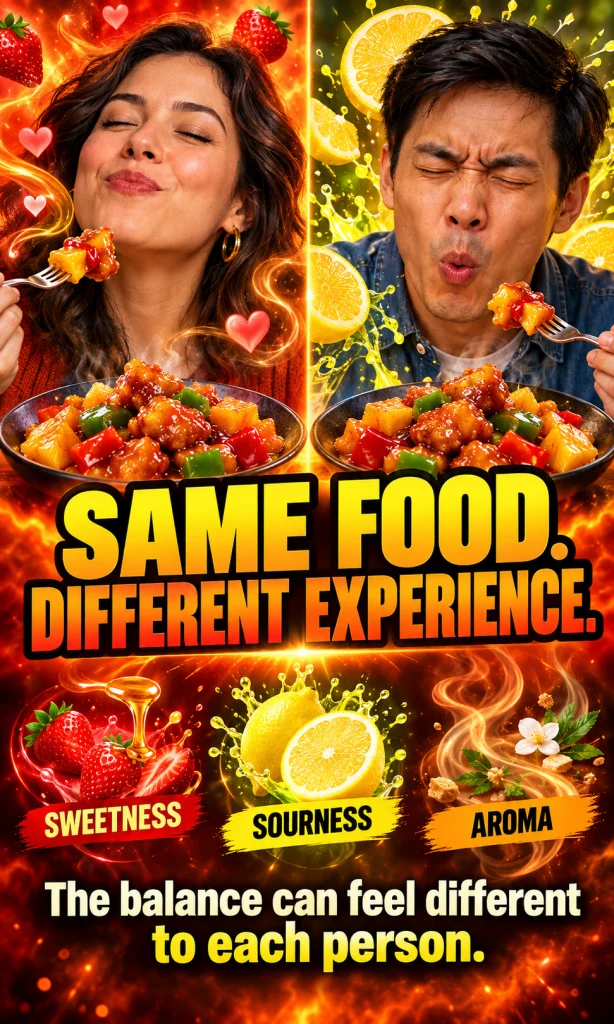
Sometimes, but “just keep eating it” is too simplistic. Food acceptance can change with familiarity, especially when exposure is voluntary and the intensity is manageable, yet the effect depends on the food, age, context, and what part of the sensory experience caused the dislike in the first place.
Evidence on exposure also cautions against assuming that more sweetness automatically creates a stronger “sweet tooth.” A review of human research on sweetness exposure and sweet liking found that the relationship is not that simple, with sustained exposure often showing inconsistent or no clear increase in general preference for sweetness.
That means you do not need to force yourself to copy your mom’s preference. A better approach is to identify which part of the food is creating the rejection, then test one change at a time.
Try the same dish three ways
Use a small side-by-side tasting rather than eating three full servings. Keep the food base the same and change only one variable in each sample so you can tell what actually changes your reaction.
- Version A – reduce the acid. Keep the sweetness the same but lower the vinegar, citrus, or other souring ingredient.
- Version B – reduce the sweetness. Keep the acid similar but make the sauce less sugary or less syrupy.
- Version C – keep the flavor, change the delivery. Try the same sauce thinner, cooler, warmer, or on a crisper food to see whether texture or temperature is the real issue.
If one version suddenly becomes enjoyable, you have learned more than “I hate sweet-and-sour food.” You have found the part of the combination that does not suit your sensory preference.
What if your taste suddenly changed?
A long-standing preference difference is different from a new loss or distortion of taste or smell. If foods suddenly taste unusually metallic, bland, foul, or very different from normal – especially if the change persists – treat that as a sensory change rather than simply a personality preference; the NIDCD taste-disorders guide explains when taste and smell problems may need evaluation.
For everyday preference differences, though, there is no need to turn the dinner table into a contest. Your mom can enjoy a brighter sweet-and-sour profile while you choose a milder one, and both versions can still fit into a balanced eating pattern; for broader food choices, see the site’s food basics guide.
Bottom line
Your mom probably does not love sweet-and-sour food because she has “better” taste buds, and you probably do not dislike it because anything is wrong with you. The more useful explanation is that genetics, sensory sensitivity, aroma, texture, familiarity, and personal experience can make the same sweet-and-sour balance land very differently.
If you want to understand your own reaction, change one variable at a time: acid, sweetness, aroma, or texture. The goal is not to train yourself to agree with someone else – it is to find the balance that actually tastes good to you.

Frequently Asked Questions
Why do I hate sour food when my mom loves it?
You may perceive the acid as more intense, prefer a different sweet-to-sour balance, dislike the aroma or texture, or simply have different learned preferences. Genetics can contribute to sensory differences, but no single factor fully explains food liking.
Are taste preferences genetic?
Partly. Research supports genetic contributions to several taste traits and food preferences, but environment, exposure, culture, smell, texture, and individual experience also matter.
Can I train myself to like sweet-and-sour food?
Sometimes familiarity helps, but repeated exposure does not guarantee that a disliked flavor will become a favorite. Start with small tastes and reduce the intensity of the specific part you dislike instead of forcing the original recipe.
Does age change how sweet or sour food tastes?
Sensory function and food preferences can change across life, but age alone does not predict whether someone will prefer sweet-and-sour food. Smell, health, medications, exposure, and individual sensory sensitivity can also affect flavor perception.
Is disliking sweet-and-sour food a sign of a taste problem?
Not by itself. A stable dislike is usually a preference. A sudden or persistent change in taste or smell, especially distortion or major loss, is different and may deserve medical evaluation.