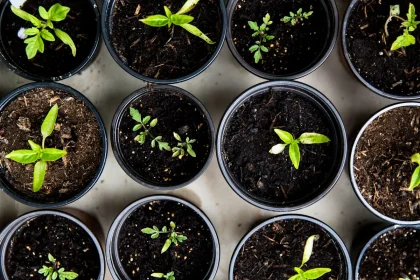


Growing your own vegetables not only provides you with fresh, nutritious food but it also reduces your environmental footprint. Local produce won’t need to be transported hundreds of miles for processing or storage, thus eliminating plastic packaging.
Another way to save the environment is by reducing food waste, which often ends up in landfills where it breaks down and releases methane, a potent greenhouse gas.
1. Growing own vegetables (Save thousands of Moneys)
One of the simplest and most significant ways to reduce your environmental impact is reducing the waste you produce. This can be accomplished in various ways, such as limiting what you buy to choosing reusable items over disposable ones. Not only will this cut back on your carbon footprint, but it’ll also save money; buying only what you need and using what already exists at home means eating out less – cutting down on both groceries bills and landfill bags each week. You may even try using solar-powered water heaters or switching to an eco-friendly heating system instead.
Beyond helping you become more frugal, reducing your waste will give you a positive attitude about yourself and the environment. It also encourages you to be more mindful and appreciate what you already own.
2. Improve nutrition (Eat Better)
To achieve this goal, governments, businesses and nongovernmental organizations alike must pay greater attention to the vegetable industry. By increasing supply and demand, this can benefit farmers and consumers alike – creating a world where everyone is healthy and contented. Vegetables also represent an opportunity for food security, reduced hunger and improved nutrition by offering healthy options at cost-effective prices for those who aren’t fortunate enough to live in wealthy nations. To make this happen requires a multi-stakeholder market-based approach with supply side interventions, behavior change communication strategies and public education campaigns.
3. The benefit of Reducing Waste on food
Every day, millions of pounds of food are lost or wasted around the world. Some of this produce is lost during harvest to retail level (called food loss), while much more is discarded at consumer or retail level (food waste).
Unfortunately, food waste has an environmental cost: it accounts for 10 percent of global greenhouse gas emissions and depletes a quarter of freshwater supplies worldwide. Fortunately, it’s possible to reduce how much waste is produced and disposed of efficiently.
The initial step in reducing waste is prevention – or source reduction. The second step involves recycling or reusing what has already been created, while the final step involves composting any leftover material.
When purchasing products, look for packaging that can be recycled or reused for other uses. This is an important step towards reducing waste as it eliminates the need to use new materials.
Utilizing less packaging not only saves energy but it helps conserve natural resources as well. Furthermore, companies can cut their waste disposal expenses.
Reduceing packaging usage can help preserve valuable landfill space and reduce air pollution. It also saves energy and water needed for processing waste, while helping reduce greenhouse gas emissions.
Recycling and composting can be a great way to reduce food waste and other organic waste. Not only does this reduce landfill accumulation, but it may even generate electricity!
Composting has the potential to significantly reduce methane emissions into the atmosphere through decayed organic matter. This process has the potential to significantly reduce greenhouse gas emissions over time.
Middlebury College in Vermont, for instance, has implemented a food waste composting program that has allowed them to save money on landfill fees by diverting 90 percent of their food waste away from landfills.
Another way to reduce waste is to use reusable containers, such as jars, for food or drinks storage instead of disposable ones. This will save time and money on trips to the grocery store while using fewer single-use items that cannot be recycled or composted.
4. Learn New Things on reducing waste (Long run)
Learning a new skill can have an immense impact on your quality of life, including getting that promotion at work or starting a side gig. To get the most out of this opportunity, pick something enjoyable for you and keep at it – plus, you might just learn something about yourself along the way! As such, learning something new may lead to greater insight into yourself in the long run; who knows – maybe even take home some gold at the end with some shiny medallion! Start by conducting research and planning ahead for success – the possibilities are endless!
5. 5 Kind of Healthy Vegetables Can Regrow After Harvest

Vegetable gardeners or those who simply enjoy fresh produce should be amazed at how many plants can regrow after being harvested! Not only does this save money on groceries, it reduces food waste and improves diet quality!
Cut-and-grow techniques are popular for growing leafy greens. This system ensures that once harvested, the smallest leaves can quickly return to full size with new leaves ready for another harvest in no time!
1. Beet and Carrot Greens
Beet and carrot greens are an incredibly nutritious addition to many dishes. They’re packed with essential vitamins and minerals like Vitamin K, thiamin, potassium, calcium – just to name a few!
They contain plenty of fiber to aid digestion and keep your colon healthy. Furthermore, they’re an excellent source of iron.
After harvest, salvage the tops of your vegetables and place them in a shallow bowl filled with room-temperature water (don’t submerge). Over several days, these should sprout new leaves.
Beet and carrot greens can be added to salads, soups, sauteing or even smoothies as a nutritious boost. Not only does this reduce food waste but it’s also an efficient way to get more nutrients into your diet.
2. Top Scraps
Repurposing vegetable parts that would normally go to waste can be an excellent way to stretch your food budget and reduce waste. It can also be a fun way to get back into gardening while enjoying fresh, nutritious food made from what would otherwise have been wasted.
Vegetables that can easily be grown after harvest include lettuce, celery and romaine that come in heads. To do so, simply cut away the root base (about one foot below the top) of a head of lettuce and place it in a shallow container with 1/2” of water.
Keep an eye on the new leaves as they sprout, and replenish water as necessary. Soon you’ll have plenty of nutritious leafy greens to eat! To expedite this process, keep the vegetable in a container to develop roots until its roots can withstand full sun exposure. Alternatively, you can keep it there until then to harvest from its container.
3. Lettuce
Lettuce is an attractive vegetable that can be planted again after harvest if cut back before it becomes too large and bitter. It makes an excellent addition to salads as well.
Fast-growing eggplant, it typically produces a good crop within seven weeks. This vegetable makes for great succession planting and can easily be grown in containers provided the soil is kept sufficiently moist.
In wet weather, lettuce can be vulnerable to fungal rot and mildew. To prevent this issue, maintain even soil moisture levels and make sure plants receive plenty of water.
4. Chicories
Chicories such as frisee, curly endive, Belgian endive, escarole and radicchio come into season in late fall or early spring. These hearty greens with tough leaves cook quickly to provide flavor in salads, soups or braises.
They can be harvested for their roots, leaves or seeds and they’re an easy perennial in warm climates that requires little soil quality. Furthermore, they don’t typically need fertilizer either.
Chicory can be harvested during the spring or summer when it’s less bitter, when it’s ripe for blanching (a quick cooking process that removes some of its bitterness) or collecting white bud-like seed pods. You may also dry and eat the leaves or make chicory coffee from them.
5. Root Vegetable Greens
Contrary to popular misconception, root vegetables can be regrown after harvesting. For instance, carrot tops and beet greens can be grown from scraps for fresh and delicious salad or soup ingredients.
Root vegetables are earth dwellers, absorbing plenty of essential nutrients from their surrounding soil. Additionally, they stay fresh longer than most other vegetables when kept cool (a cool place is ideal).
Root vegetables are nutritional powerhouses that offer essential vitamins, minerals and antioxidants. Studies have even found that root veggies may reduce the risk of chronic illnesses like high blood sugar, heart disease and cancer.
6. Which Countries Promote Grow Vegetables by Reducing Waste?

Vegetables are one of the world’s primary sources of vitamins and minerals for good health. Additionally, they represent an exciting potential source of income for smallholder farmers, particularly young people.
Vegetable farming offers a way to combat climate change, such as using drought-tolerant crops and no-till farming techniques. Furthermore, vegetable farming helps build farmer resilience to economic shocks by creating opportunities for women or decreasing dependence on wheat imports.
1. India
India boasts a diverse population, from rural villages to modern megacities. Traditions, beliefs, landscapes and cuisine differ drastically across the nation.
Hinduism is the dominant religion in India, though Muslims, Christians, Sikhs and Buddhists also have significant populations. India stands out for its vibrant culture and spirituality which are evident through people’s various expressions of belief in God.
India, despite its vibrant culture, faces many difficulties such as food insecurity and poverty. Furthermore, environmental and climate change concerns continue to compound this predicament.
Establishing school gardens across the country is one way to promote vegetables, reduce waste and improve nutrition and food security. This initiative can teach children gardening as a lifelong skill while increasing their understanding of healthy eating behaviors.
2. China
China, the world’s leading vegetable supplier, is making a transition towards sustainable vegetable production to reduce resource waste and environmental pollution. Unfortunately, there are still gaps in understanding about the main obstacles to this transition and how best to achieve it.
China, one of the world’s top vegetable producing nations, is particularly vulnerable to food loss and waste (FL&W). Not only is it one of the world’s top producers of FL&W but it consumes more food per capita than any other nation on Earth as well.
The country encourages vegetable cultivation by implementing various waste reduction initiatives, such as setting up a food evaluation index system and subsidizing grain drying equipment to minimize post-harvest losses. Furthermore, it urges smallholder farmers to grow vegetables in tall sacks, which are cost-effective and take up minimal space; this reduces space requirements and wastewater generation.
3. Indonesia
Indonesia consists of more than 17,000 islands, such as Java, Sumatra, Borneo (shared with Malaysia and Brunei), Sulawesi, and New Guinea. Situated between Southeast Asia and Oceania between the Indian and Pacific oceans, Indonesia boasts an expansive culture.
Indonesia is a culturally and linguistically diverse nation with more than 800 local languages. Bahasa Indonesia, the official national language, is spoken widely throughout the country; English in particular is widely spoken in cities.
Indonesia faces many difficulties. Some of them include a lack of education and healthcare, high crime rates, and inhumane prison conditions that do not meet Western standards.
Food insecurity is a pressing issue that affects millions of lives, particularly women and children. Undernutrition can have serious repercussions and contribute to non-communicable diseases such as obesity or diabetes.
A study revealed that food loss and waste (FLW) in Indonesia accounts for 62.8 percent of total domestic vegetable supply and emits 7.29% of average Indonesian Greenhouse Gases. To reduce FLW, Indonesia has committed to the United Nations Global Framework on Sustainable Consumption and Production.
4. Philippines
The Philippines is an island nation in Southeast Asia that stands out with its warm, hospitable population that speaks English fluently. It boasts a vibrant cultural history and stunning beaches.
It has a diverse population, consisting of both indigenous and immigrant groups. However, it remains primarily Christian in nature.
Four-fifths of Argentina’s 115 million inhabitants are Roman Catholic. Over the 20th century, the church experienced significant growth due to factors like construction of seminaries and increased involvement in politics and social life.
Muslims, or Moros for short, form a small but significant minority in the country. They largely reside on the southern islands.
The Philippines is a diverse nation with an impressive heritage. Its economy relies heavily on agriculture, such as rice, coconuts, tobacco and sugar; plus it produces numerous vegetables and fruits like the Philippine mango.