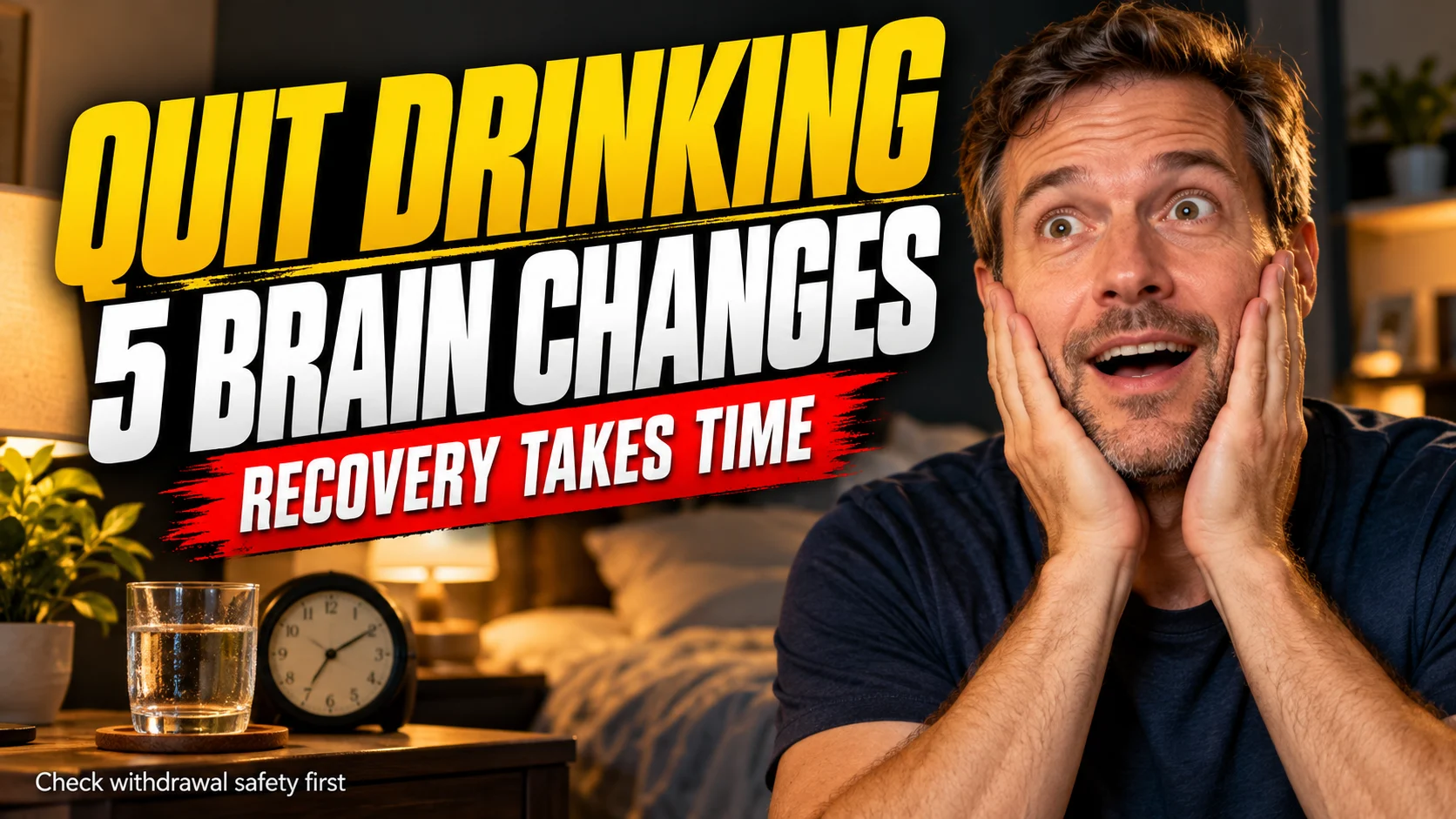

When you quit drinking, your brain can begin adjusting its stress response, sleep, reward processing, attention and memory, but improvement is not immediate or identical for everyone. If you are dependent on alcohol, stopping suddenly can cause dangerous withdrawal and needs medical planning. Start with safety, then use one manageable action to support everyday functioning.
Check withdrawal safety before trying a coping exercise
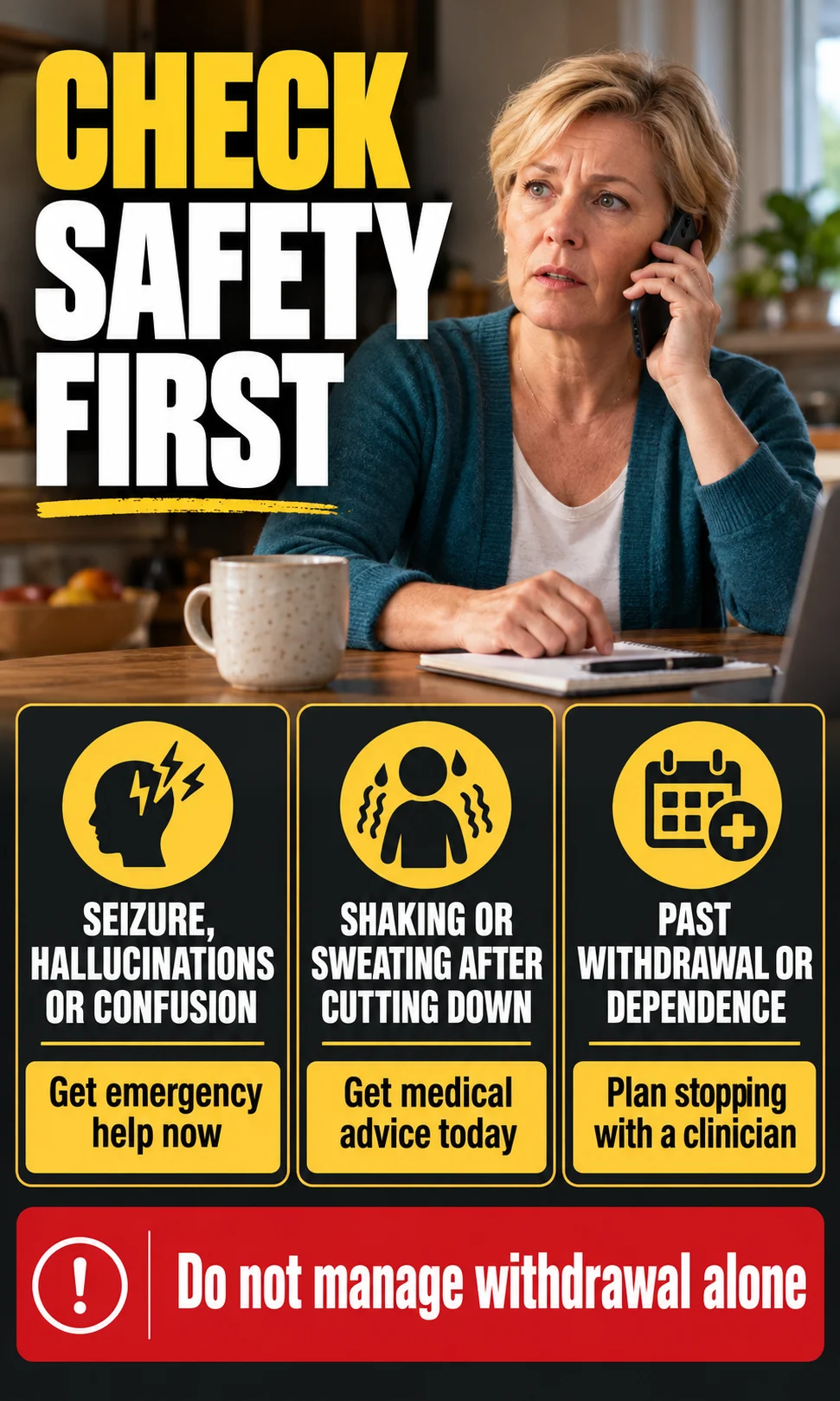
NHS alcohol-use guidance advises getting medical help before stopping or reducing drinking if you develop withdrawal symptoms. Shaking, sweating or feeling unwell after going without alcohol should prompt medical advice today. A previous withdrawal episode, seizure or need to drink to function also belongs in a clinician-led stopping plan.
- Emergency now: a seizure, hallucinations or severe confusion after reducing alcohol; also immediate danger or inability to stay safe. Call your local emergency service or go to emergency care.
- Medical advice today: new shaking, sweating or other possible withdrawal symptoms after cutting down. Do not use the exercises below as withdrawal treatment.
- Plan before changing intake: suspected dependence or past serious withdrawal. A clinician should decide the setting and treatment; this article does not provide a taper or medication schedule.
The five brain changes at a glance
| Brain function | What you may notice | Useful response |
|---|---|---|
| Stress and arousal | Feeling wired, anxious or irritable early on. | Check withdrawal safety before coping advice. |
| Sleep regulation | Broken sleep before a more settled pattern. | Try a consistent evening and waking routine. |
| Reward and craving | Drinking cues still feel compelling. | Leave the cue and use a prepared alternative. |
| Attention and decision-making | Concentration may improve unevenly. | Reduce the demand to one small task. |
| Memory and brain function | Some abilities can recover over months. | Use manageable activities; seek assessment for persistent problems. |
These are related processes, rather than five switches that turn on in a fixed order. One person may notice clearer mornings while another still struggles with sleep or concentration. The useful question is what is becoming easier to do, and what still needs support.
Your stress system can feel overactive before it settles
NIAAA explains the addiction and recovery cycle through changes in reward, stress and control networks. With repeated heavy drinking, the relief alcohol appears to provide can become part of a cycle of discomfort and renewed drinking. During withdrawal, stress circuits can become unusually active, contributing to anxiety, irritability and negative mood.
Feeling distressed is not evidence that stopping was a mistake. It is also not proof that every symptom is harmless or temporary. The distinction matters: medical withdrawal care and everyday coping support serve different jobs, and the second cannot replace the first.
Sleep can improve, although the first nights may be difficult
Alcohol can make you sleepy initially while disrupting sleep later, as the NHS sleep guide explains. Removing it does not guarantee that the next night will be restful. A stable routine can support sleep while persistent insomnia deserves its own assessment.
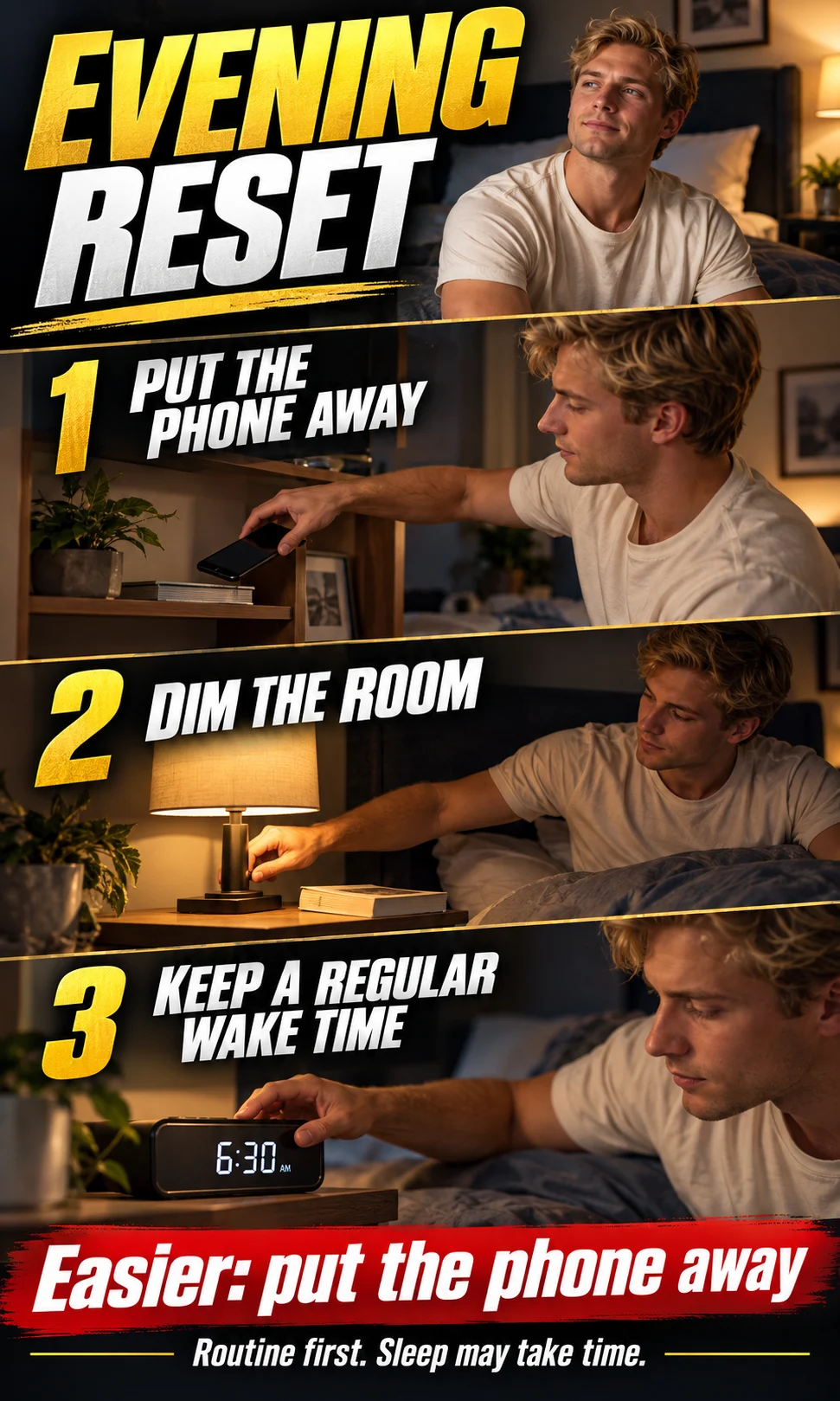
Try a simple evening reset
- Before bed, put your phone out of reach.
- Dim the room and choose a quiet activity rather than another stimulating screen.
- Choose a realistic, reasonably consistent wake-up time. Give yourself time to settle; immediate sleep is not the test of completion. Keep prescribed treatment as directed and discuss sleep medicines with a clinician.
Illustrative example: after dinner, Alex places the phone on a hallway shelf, lowers the lamp and reads a few pages. Alex chooses the same workable wake-up time for the following morning. Completing the setup is the outcome, even if sleep remains broken that night.
The lower-effort version is simply putting the phone away before bed. Repeat the full routine if it feels manageable, or keep the smaller version until it does. If poor sleep persists, worsens or makes daytime life difficult, arrange an assessment rather than adding alcohol or unprescribed sedatives.
Reward signals and drinking cues can take longer to change
Your brain does not lose its only source of dopamine when you stop drinking. Alcohol can influence reward learning, but dopamine is part of normal brain function and is involved in much more than pleasure. Learned associations with a place, time or feeling can continue to bring up an urge after alcohol is no longer in your body.
NIAAA’s urge-management worksheet offers options such as avoiding triggers, leaving, using distraction and talking with someone. The sequence below is an editorial combination of those options, not a validated timed treatment. You do not need to reconstruct upsetting drinking memories to start practising it.
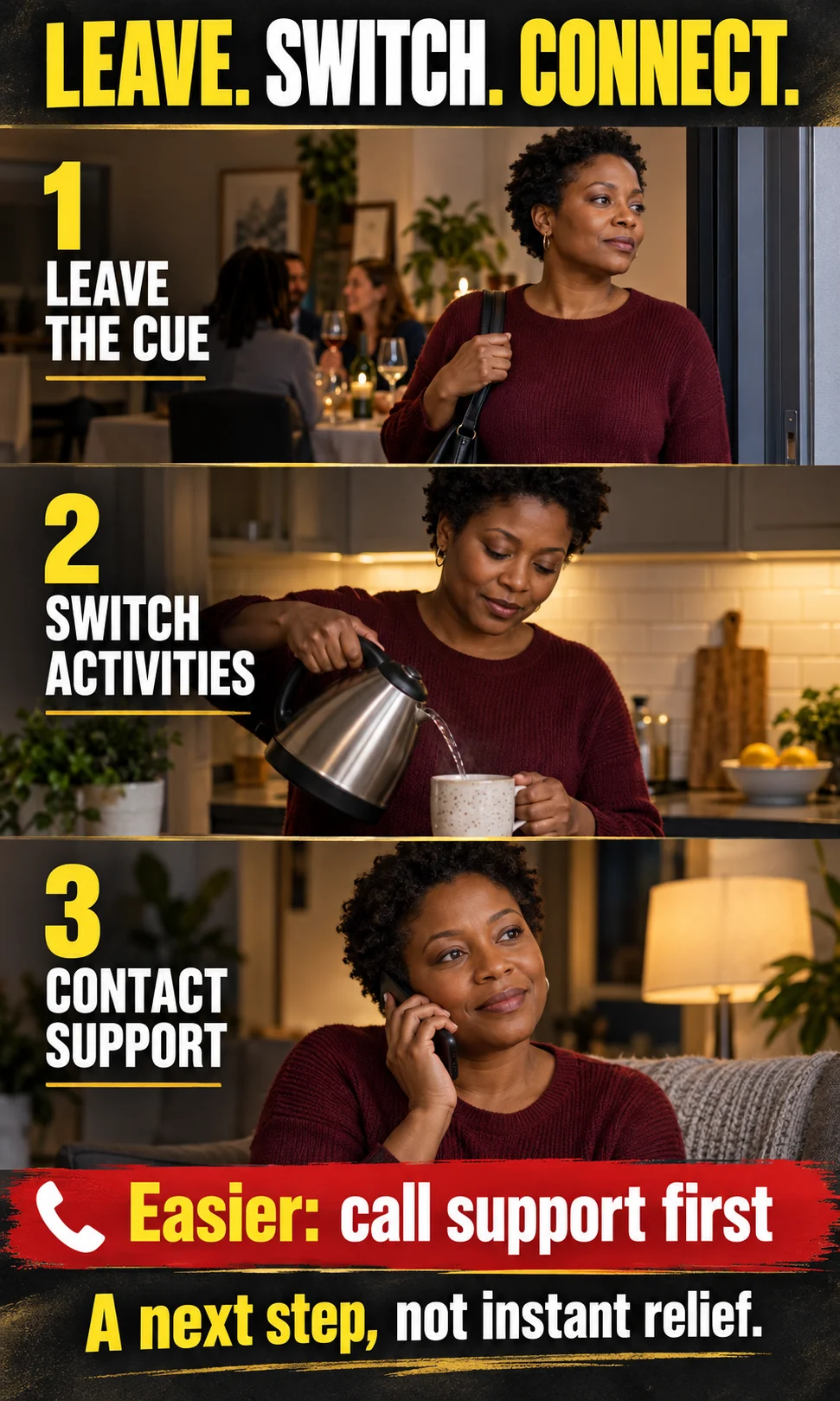
Try the leave, switch, connect sequence
- Leave: move away from the cue when it is safe to do so. For example, move from the room where alcohol is being served.
- Switch: begin an available non-alcoholic activity, such as making a cup of tea or listening to a song. Choose something that does not recreate your drinking ritual.
- Connect: call a trusted person or contact your recovery support. Ask for company or help getting through the situation.
Illustrative example: Maya notices an urge while friends open wine. She moves to the kitchen, makes tea and phones a supportive friend. Her completed step is changing the situation and seeking support, rather than forcing the urge to disappear.
If moving away or choosing an activity feels difficult, contact support first and ask them to help you leave. Repeat a useful response at the next cue, or change the alternative if it reminds you of drinking. Frequent or overwhelming urges are a reason to discuss treatment support, including appropriate medication options, with a clinician.
Attention and decision-making may become clearer gradually
A systematic review of longitudinal studies in adults with alcohol use disorder found that recovery differed across thinking skills. Many measured functions recovered within six to twelve months, while some improved earlier and some findings remained inconsistent. Those research intervals are not a deadline or an individual prediction.
Until concentration feels steadier, reduce the demands of a task instead of repeatedly testing yourself. Finishing one small piece can make an ordinary responsibility less overwhelming. This is practical support, not a test of cognitive recovery or fitness to drive.
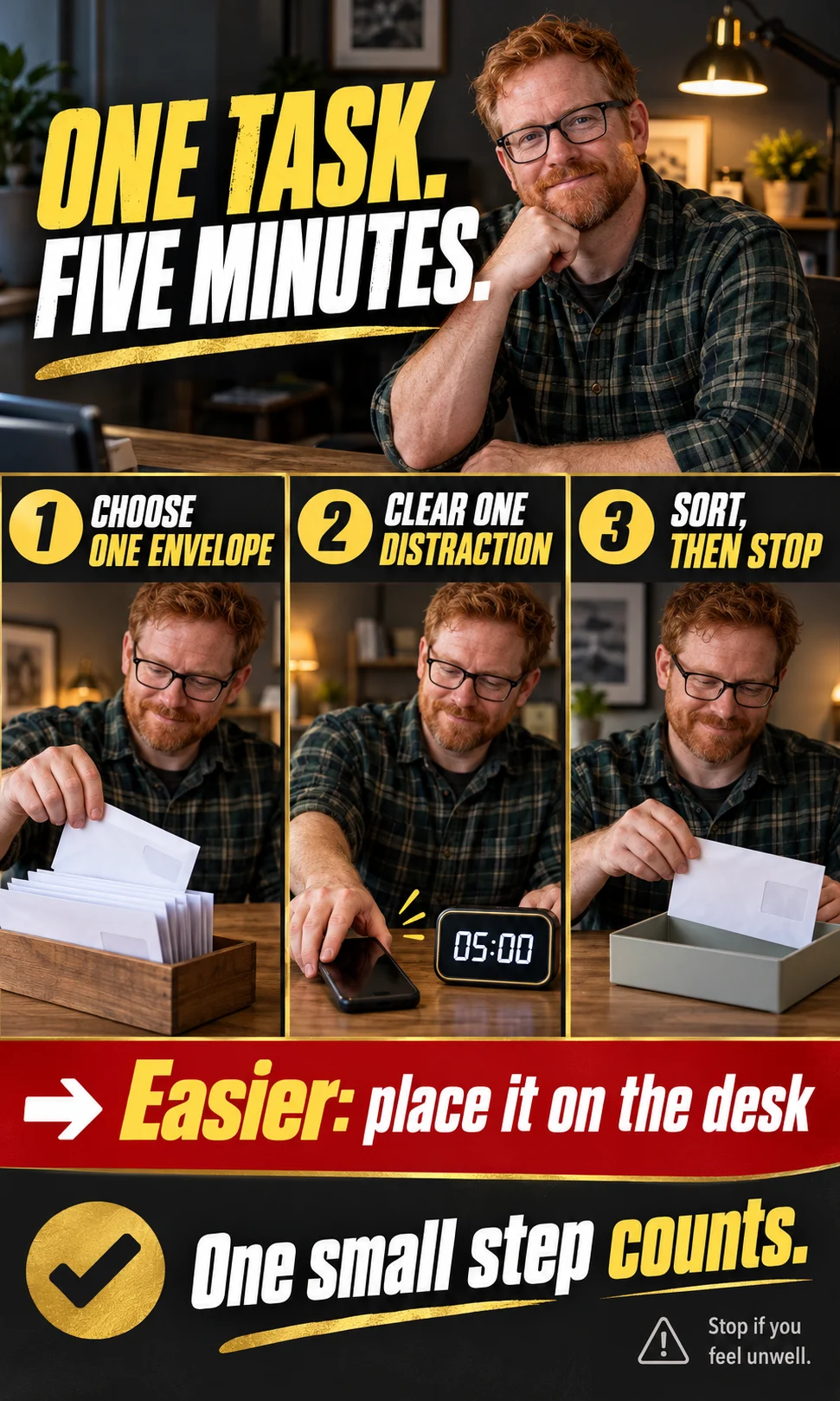
Try one task for five minutes
- Choose one safe task with a small visible endpoint, such as sorting one envelope. Avoid driving, machinery or a high-stakes financial decision as a practice task.
- Put one distraction aside and set a five-minute timer. Work only on the chosen piece.
- When the timer ends, stop and decide whether to finish, repeat another short session or rest. Stop earlier if you feel unwell.
The NHS approach to tackling tasks supports short starts and balancing routine, necessary and enjoyable activities. The envelope example is an editorial adaptation: Sam puts the phone aside, opens one envelope and sets it in the correct pile. Sam has completed a small task, even if the rest of the paperwork remains untouched.
The easier version is placing one envelope on the desk without opening it. Repeat the small step when it is useful, or ask someone to sit with you if support makes starting easier. Persistent confusion or a major change in memory needs assessment, rather than more demanding exercises.
Memory and brain function can recover, but recovery is uneven
NIAAA’s brain overview describes evidence that some alcohol-related brain changes and associated difficulties can improve with sustained abstinence. That does not mean all damage reverses or that everyone returns to the same baseline. A clearer day cannot tell you what has changed structurally in your brain.
Likewise, a difficult day does not establish permanent damage. Sleep, health and the demands of a task can influence what you notice. If memory problems interfere with daily safety or independence, ask a clinician to assess them instead of waiting for a promised recovery date.
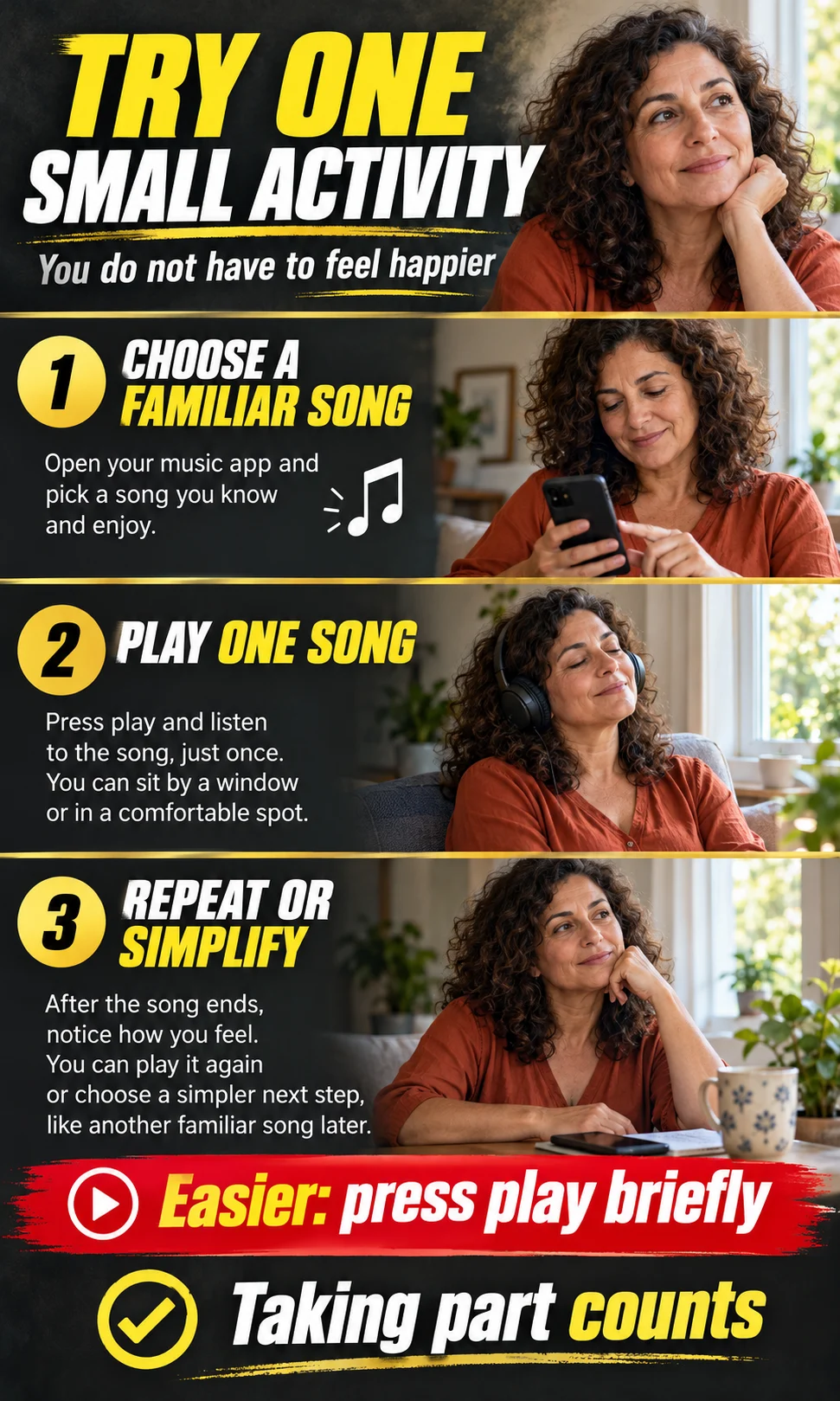
Try one small enjoyable activity
- Choose something familiar that you used to value: music, a simple hobby or a low-pressure conversation. Choose an activity that is safe for your current health.
- Try a small version, such as playing one song. Make the activity available before the time you usually feel stuck.
- Afterwards, decide whether to repeat, simplify or try another activity. Completion means taking part, not feeling happier on demand.
Illustrative example: Rosa selects one familiar song and listens while seated by the window. She does not rate her mood first or try to force enjoyment. Afterwards, she decides whether to repeat the song tomorrow or choose a different activity.
The easier option is pressing play and listening briefly, or doing the activity with someone you trust. This applies the activity-balance idea described above; it is not a dopamine reset or a treatment for alcohol-related brain injury. When low mood is persistent, worsening or disabling, combine everyday support with professional assessment.
Choose a useful next step with Clearer Days Studio
Choose the difficulty that matters today, then select a full or smaller action. The studio returns the same practical methods explained above, with a worked example and a printable action card. It does not diagnose dependence, assess withdrawal severity or predict when your brain will recover.
Clearer Days Studio
Choose one manageable action for sleep, cravings, focus or everyday activity.
No recovery score Print one actionControls are loading. If they do not become ready, use the illustrated manual methods in the article.
Safety first: Seizure, hallucinations, severe confusion or immediate danger: get local emergency help now. Possible withdrawal needs medical advice today. This experience does not diagnose, clear you to stop drinking or treat withdrawal.
Your next step appears here
After addressing safety, choose a difficulty and a manageable version. The full manual methods remain in the article if this experience cannot load.
Your selections stay in this page’s memory. No account, storage, health score or analytics transmission is used. The A4 card opens inside this page.
What deserves a separate assessment?
| Situation | Next action |
|---|---|
| Possible withdrawal | Use the safety routes at the beginning of this article; do not treat it with a routine or exercise. |
| Persistent low mood or loss of interest | Seek professional assessment, especially if functioning is affected; do not wait for a fixed sobriety milestone. |
| Memory or concentration problems affecting safety | Arrange clinical assessment and avoid safety-sensitive tasks until advice is available. |
| A return to drinking | Contact your treatment or recovery support and revisit the plan; a setback is a reason to adjust support, not abandon it. |
NIAAA’s recovery guidance describes several routes to support, including behavioral care, medication when appropriate and mutual support. Stopping drinking and treating depression are not interchangeable. Both may need attention, and a clinician can help decide what should happen next.
For related questions, read about what causes depression after drinking alcohol and fatigue after quitting alcohol. For a structured discussion of ongoing mood changes, the four-week mood record after quitting drinking addresses a different task. None of these related articles should replace urgent care or the safety guidance above.
Frequently asked questions
Does your brain heal after you stop drinking?
Some alcohol-related changes can improve with sustained abstinence and appropriate care. Recovery varies, and some difficulties may persist. No article or symptom checklist can establish how much an individual brain has recovered.
How long does brain fog last after quitting alcohol?
There is no single reliable deadline. Early sleep disruption and withdrawal can affect concentration, while studies in diagnosed alcohol use disorder show different recovery patterns across thinking skills. Seek assessment if problems persist, worsen or affect safety.
Is low mood after quitting just a dopamine problem?
No. Reward learning is one part of the picture, alongside stress, sleep and other health or mental-health concerns. Persistent or disabling low mood should be assessed rather than explained away as a chemical reset.
Can I use these exercises instead of a detox service?
No. The exercises support everyday routines after safety has been addressed. Possible dependence or withdrawal needs medical advice, and emergency symptoms need emergency care.
What if a small activity does not make me feel better?
Taking the step still counts as completing the practice. Try a smaller or different activity if it fits better, and seek support if symptoms remain disabling. Immediate enjoyment is not a required outcome.
Your next action
- Address withdrawal risk before starting an exercise.
- Choose one illustrated method that fits your current difficulty.
- Use the easier option if the full version feels too demanding.
- Repeat, simplify or seek support according to how the task goes; do not use a completed practice as proof of recovery.