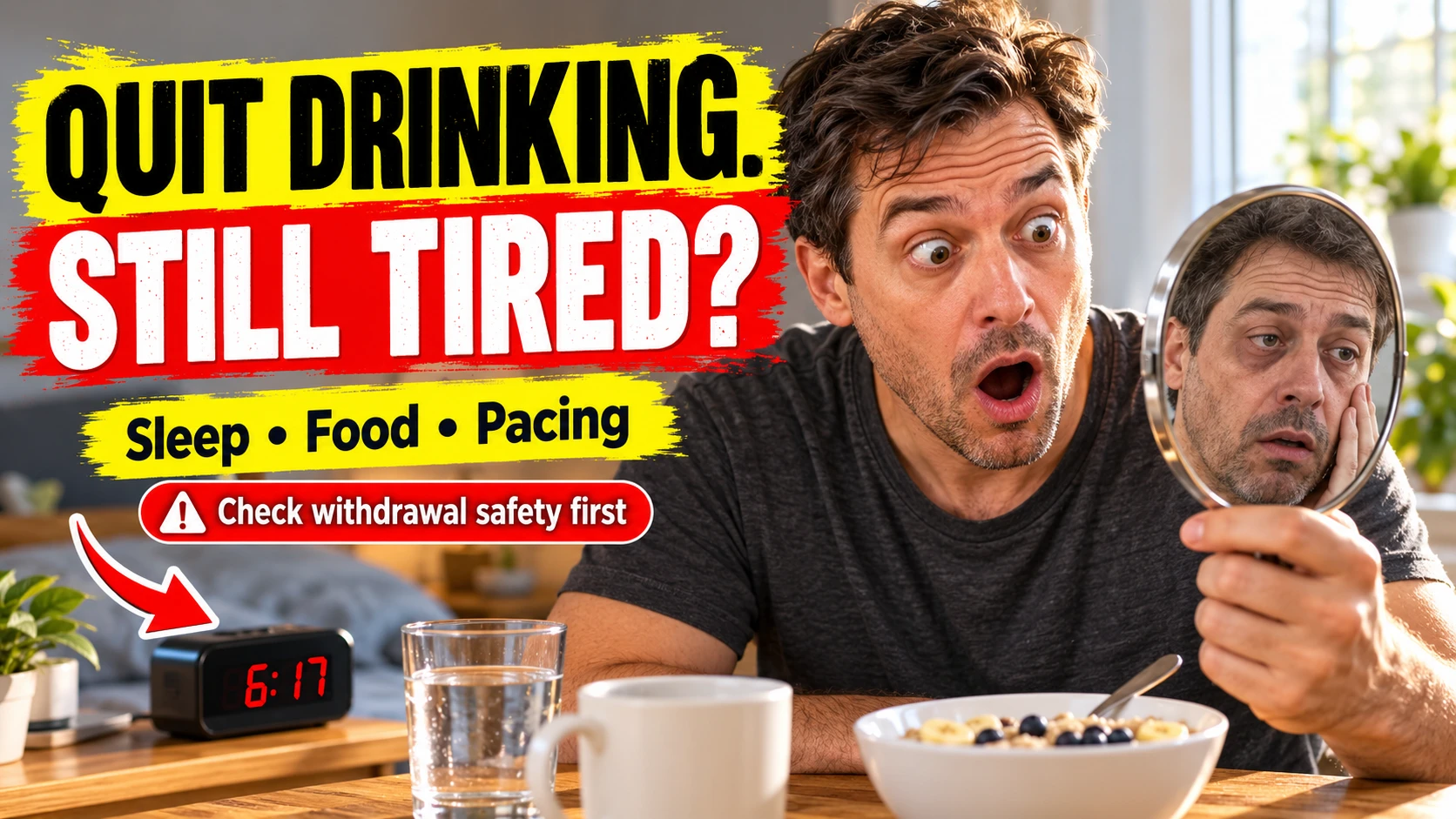

Fatigue after quitting alcohol can happen, especially when sleep and everyday routines are unsettled. Tiredness alone cannot tell you whether withdrawal is safe or whether another health problem is involved. Check the warning signs first, then choose a manageable step for sleep, food or daily tasks.
Check safety before treating this as ordinary tiredness
If you have a seizure, new confusion, hallucinations or severe shaking after reducing alcohol, call your local emergency service now. Chest pain, fainting or serious breathing difficulty also need emergency assessment. Do not drive yourself or wait to finish an online check.
Shaking, sweating, nausea, anxiety or a racing heartbeat after cutting down need prompt medical advice. If dependence is possible, seek a medically supported stopping plan rather than abruptly stopping or making further reductions alone. The NHS alcohol-support guidance explains why supervised withdrawal may be necessary.
| What you notice | What to do |
|---|---|
| Serious symptoms after an alcohol reduction | Emergency assessment now; do not drive yourself. |
| Tremor, sweating, nausea or a racing heartbeat | Prompt clinician contact for possible withdrawal. |
| Tiredness with disrupted sleep, without the above signs | Use supportive routines alongside appropriate care; absence of warning signs is not clearance for home detox. |
| Persistent, worsening or disabling fatigue | Arrange assessment for other causes; do not automatically label it withdrawal. |
Why stopping alcohol can leave you feeling drained
Alcohol can make you sleepy at first while disrupting sleep later in the night. After stopping, difficulty falling asleep or staying asleep can leave you tired during the day. Sleepiness is the tendency to doze, while fatigue can feel like a lack of energy even when you are awake.
Changes in eating, hydration and daily routines can add to that strain. Low mood, anxious thoughts and the effort of changing a familiar habit may also make ordinary tasks feel harder. These are possible contributors, not a way to diagnose the cause from your symptoms alone.
Fatigue also has causes unrelated to stopping alcohol. Medicines, anaemia, thyroid problems, diabetes and sleep apnoea are among the issues a clinician may consider. The NHS guidance on tiredness and fatigue recommends assessment when tiredness affects daily life or remains unexplained.
How long can fatigue last after quitting?
The time course varies with health, drinking history, sleep and the care you receive. Fatigue and sleep changes can continue beyond acute withdrawal, sometimes for much longer. The MedlinePlus alcohol-withdrawal overview describes this variable course; it is not a countdown to safety.
A slow return of energy does not mean you have failed at sobriety. It also does not prove that everything is simply recovery from alcohol. Whether symptoms are improving, worsening or limiting basic activities matters more than reaching a particular day without drinking.
What you can do once withdrawal safety has been addressed
Choose the routine that addresses your biggest practical difficulty today. These are supportive habits for someone whose medical needs are being addressed, not home-detox instructions. You can use the manual steps below without completing a questionnaire or keeping a diary.
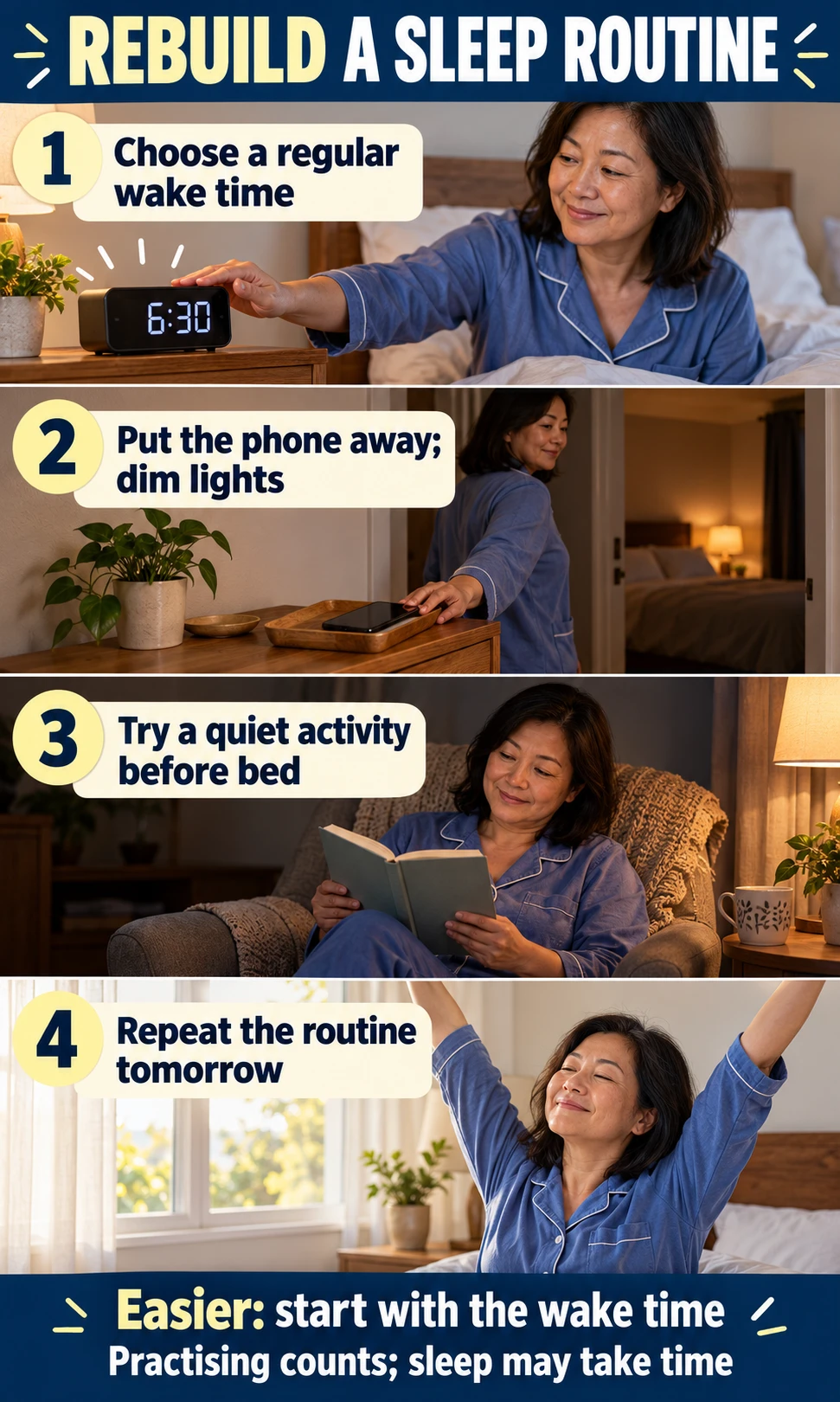
Rebuild a sleep routine without forcing sleep
Use this when bedtime has become irregular or your phone keeps you awake. Set up an alarm, a place to put the phone and one quiet activity. The NHS sleep guidance supports regular routines and reducing late stimulation; the example below is an editorial adaptation.
- Choose a wake time you can keep most days, allowing a realistic opportunity for sleep.
- Before bed, put your phone away and dim bright lights.
- Choose a quiet activity, such as reading in a chair, before going to bed when sleepy.
- Repeat the routine the next day; do not judge it by one night.
Illustrative example: Maya usually scrolls in bed after midnight. She chooses a regular morning alarm, leaves her phone outside the bedroom and reads a few pages in a chair before bed. The next morning she follows the chosen wake time instead of deciding the routine has failed because sleep was imperfect.
Completion: Completion means practising the routine, not falling asleep immediately.
Next: Repeat if it is manageable. Discuss persistent insomnia or severe daytime sleepiness with a clinician.
Make one easy meal when cooking feels exhausting
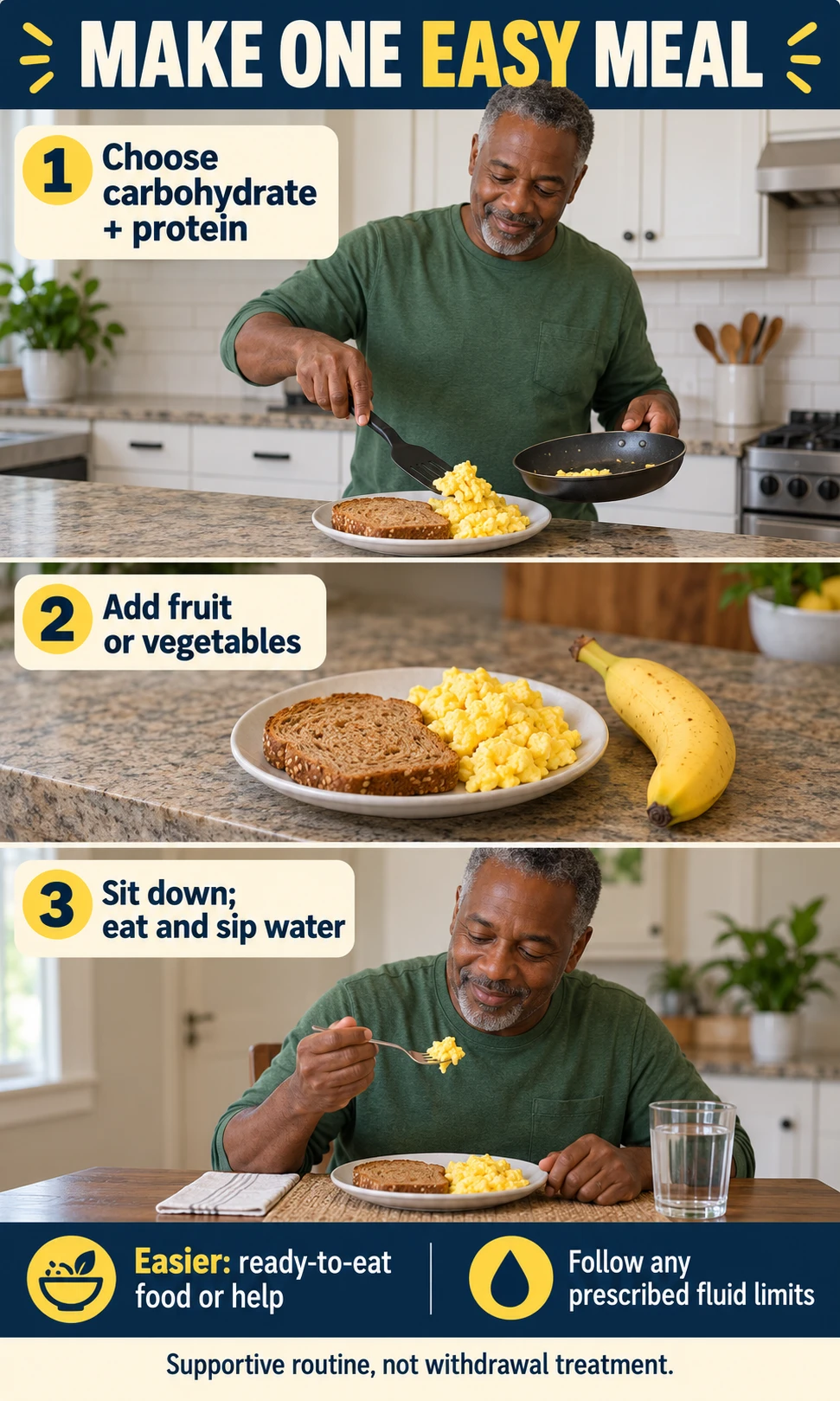
Use this when preparing a meal feels harder than eating it. Gather simple food, a plate and a drink so preparation stays modest. Healthy eating and avoiding dehydration can support fatigue management, but food does not treat alcohol withdrawal.
- Choose an easy carbohydrate and protein combination, such as toast with eggs, or rice with beans.
- Add fruit or vegetables if available; frozen, canned or ready-to-eat options can reduce preparation.
- Sit down to eat and sip water, following any prescribed fluid limits.
Illustrative example: Daniel has skipped lunch because cooking feels too demanding. He makes toast and eggs, adds a banana and sits at the table with water. This is a manageable meal, rather than a test of whether food instantly removes fatigue.
Completion: Completion means eating the manageable meal or obtaining help with it.
Next: Return to regular meals as tolerated. Seek prompt care for repeated vomiting, poor intake or inability to keep fluids down.
Pace one essential task instead of catching up on everything
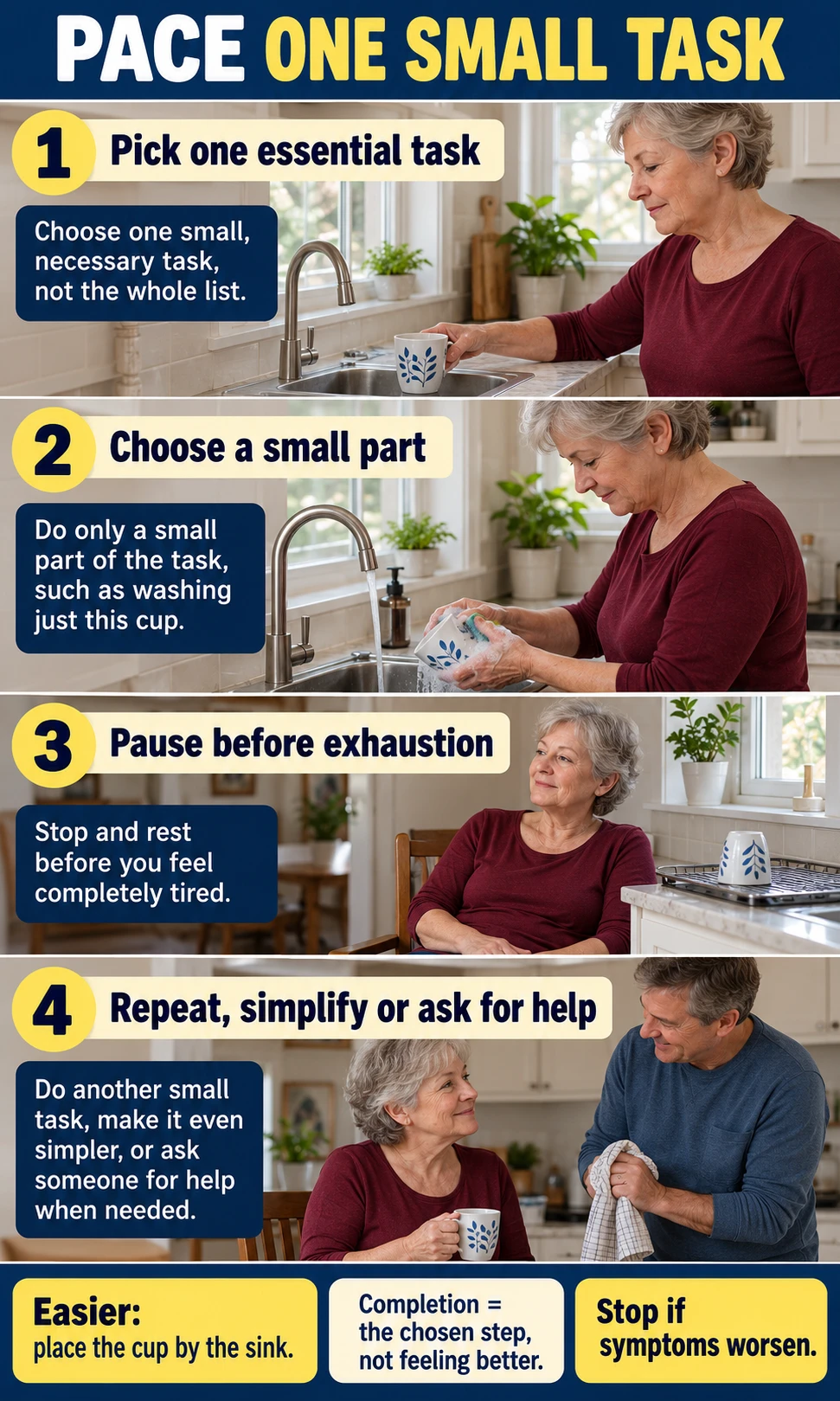
Use this when tiredness makes the whole task feel impossible. The Cambridge University Hospitals fatigue guidance supports prioritising work, breaking it into smaller amounts and resting. The one-cup example is an editorial adaptation, not a validated treatment protocol.
- Pick one necessary task and leave optional work for another time.
- Choose a small part that fits your current capacity, such as washing one cup.
- Pause before exhaustion; sit down and leave the remaining work.
- Decide whether to repeat a manageable amount later, simplify it or ask for help.
Illustrative example: Elena sees a sink full of dishes and wants to finish them all. She chooses one cup, washes it and sits down, leaving the rest for later. If the smaller task is still too much, her partner can help while she rests.
Completion: Completion means the chosen step or a request for support; feeling better is not required.
Next: Keep the amount manageable. Stop and seek advice if activity worsens symptoms or exhaustion is significant.
Alcohol Fatigue Recovery Studio
Choose a routine to receive one specific first step, an easier version and a useful next action. The experience does not diagnose fatigue, score withdrawal or predict recovery time. Its suggestions match the manual methods above, and the safety guidance takes priority.
Alcohol Fatigue Recovery Studio
Choose one manageable first step after withdrawal safety has been addressed.
No account, automatic saving or health-data analytics. Answers stay in this page and clear on refresh. Printing creates a separate copy. Opening a Google search sends your entered location to Google.
Your next step appears here
Choose the situation above. The manual routines remain available in the article.
Find and compare care for a non-emergency concern
Who: a licensed primary-care clinician or alcohol treatment service. Ask about withdrawal assessment, medical supervision and follow-up. For urgent symptoms, use emergency services instead of provider searches.
Compare services you find
Compare relevant expertise, licensing, availability, medical supervision, follow-up and fees. No provider details are verified here; your optional notes remain on this page and are excluded from the report.
When tiredness needs another explanation
Book an assessment if fatigue is worsening, affecting normal life or lasting several weeks without a clear reason. Describe when it began, what changed in your drinking and whether eating, sleep or mood have changed. The clinician may review medicines and consider blood tests or a sleep assessment, guided by your history.
Tell the clinician about breathlessness, palpitations, unintended weight loss or loud snoring with gasping. Persistent low mood or loss of interest also deserves attention rather than being dismissed as a phase. If you cannot stay safe or have thoughts of harming yourself, seek urgent local crisis or emergency support.
For the wider safety question, read common alcohol withdrawal symptoms. If low mood is central to the problem, depression fatigue vs normal tiredness explains that distinction. For a separate medical possibility, anemia and depression covers the overlap without making fatigue a diagnosis.
Frequently asked questions
Is it normal to be tired after quitting alcohol?
Tiredness can occur after stopping alcohol, especially when sleep is unsettled. It does not establish that withdrawal is mild or that alcohol is the only cause. Use the safety guidance above and seek assessment when fatigue is worsening or disrupting daily life.
How long does fatigue after quitting alcohol last?
There is no reliable deadline for an individual. Fatigue and sleep changes can outlast the acute withdrawal period, and persistent symptoms may have another cause. Do not wait for a sobriety milestone if functioning is impaired or symptoms are worsening.
Does fatigue mean my liver is detoxing?
Fatigue cannot tell you whether your liver is healthy or recovering. Avoid fixed liver-detox countdowns and supplements marketed as proof of recovery. A clinician can assess symptoms and decide whether liver tests or other investigations are appropriate.
Should I take vitamins or iron for tiredness?
Ask a clinician before using supplements to treat unexplained fatigue. Heavy drinking and poor nutrition can need medical attention, including assessment for thiamine needs. Iron should not be used as a guess for tiredness, and supplements do not make withdrawal safe.
What if I am tired even after sleeping?
Poor sleep quality, sleep apnoea, mood symptoms, medicines and other conditions can contribute. Mention loud snoring, gasping during sleep, unintended weight loss or other changes at an assessment. More hours in bed do not reliably identify or fix the cause.
Can I use alcohol or sleeping pills to get through this?
Do not use alcohol as a sleep remedy or take borrowed sedatives. Discuss sleep problems with the clinician managing your alcohol care, and do not change prescribed medicines on your own. Severe drowsiness or trouble breathing requires urgent help.
Choose the next useful step
Start with medical help when withdrawal or another illness may be involved. Once safety has been addressed, choose one routine that fits your capacity and use its easier version when needed. Completing a small step counts even if your energy has not changed yet.