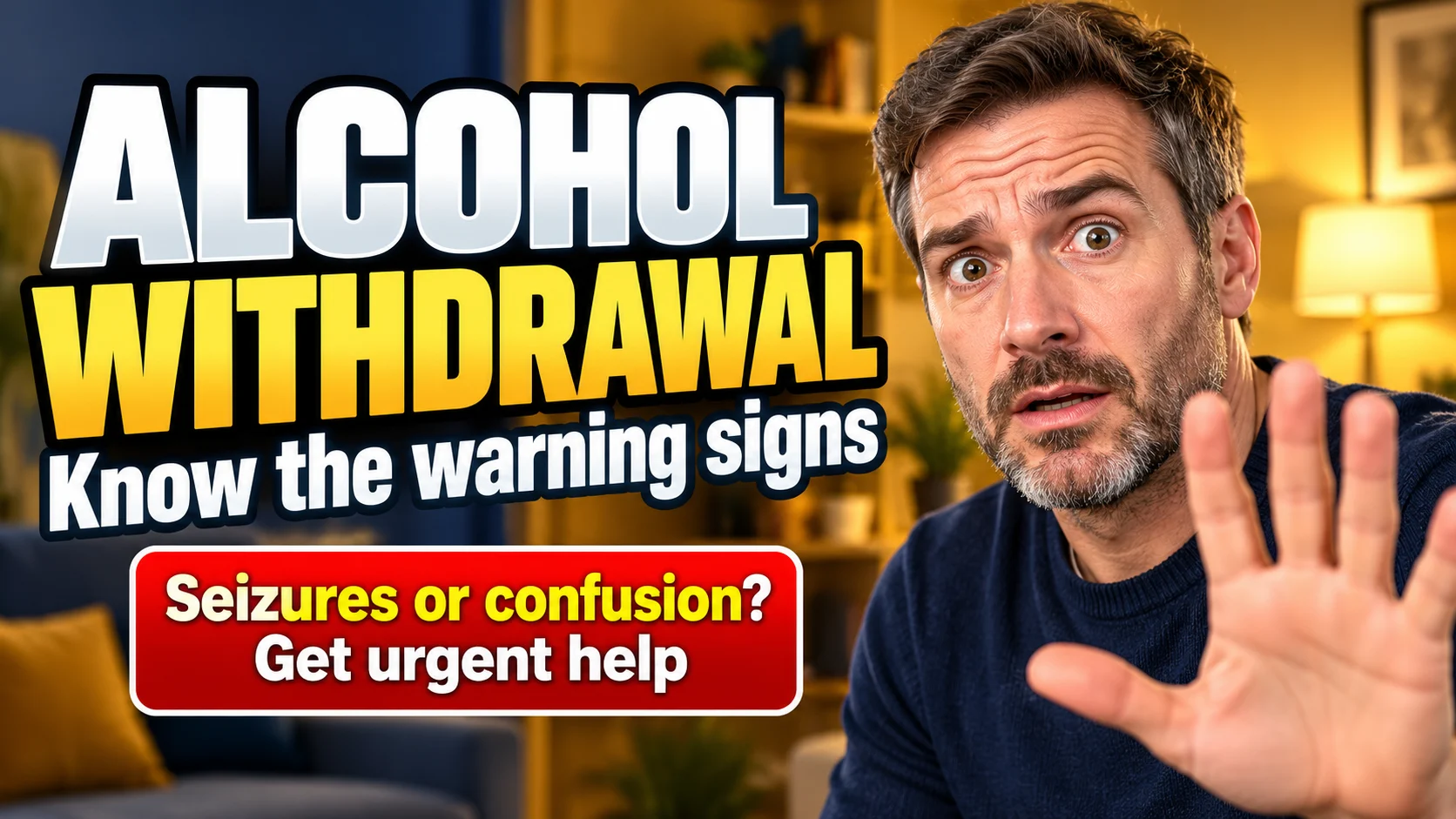

Common alcohol withdrawal symptoms include shaking, sweating, anxiety, nausea, poor sleep and a fast heartbeat after stopping or substantially reducing regular drinking. Withdrawal can become life-threatening, so seizures, confusion or hallucinations need emergency care rather than a home remedy. If dependence is possible, get medical advice before abruptly stopping or making further reductions.
Which symptoms need medical help?
Emergency signs come first. Call your local emergency number for a seizure, new confusion, hallucinations, severe agitation or pronounced shaking after reducing alcohol. Chest pain, fainting, serious breathing difficulty or an irregular heartbeat also need urgent assessment; do not drive yourself.
Less dramatic symptoms can still need prompt care. Trembling hands, sweating or nausea after a missed drink are reasons to contact a clinician now, especially if you drink to relieve them. Feeling able to talk or walk does not establish that withdrawal is safe to manage alone.
The timing of symptoms matters, but it is only one part of an assessment. A clinician also needs your usual drinking pattern, previous withdrawal experiences, medicines and health conditions. Describe the change plainly rather than deciding first whether it is a hangover, anxiety or withdrawal.
A hangover can cause headache, nausea and tiredness after drinking, while withdrawal follows a reduction in alcohol exposure in a person whose body has adapted to it. Symptoms overlap, and withdrawal can develop before all alcohol has left the body. A website cannot reliably separate these conditions for an individual.
Withdrawal is a medical response to a change in alcohol intake, not evidence that someone lacks determination. It can follow a substantial reduction as well as complete cessation. Drinking less than another person does not prove your own stopping plan is safe.
Use the distinctions below to decide what conversation is needed, not to assign yourself a severity score. Serious symptoms should interrupt any questionnaire or appointment search. The NHS alcohol-use disorder guidance provides a current explanation of withdrawal signs and when to seek urgent help.
| What you notice | What it changes |
|---|---|
| Seizure, confusion or hallucinations | Call local emergency services now. Do not wait for an appointment or drive yourself. |
| Severe agitation, pronounced shaking or an irregular heartbeat | Seek emergency assessment, especially after an alcohol reduction. |
| Shaking, sweating, nausea, anxiety or a racing heartbeat | Contact a clinician promptly for possible withdrawal; use emergency care if severe or rapidly worsening. |
| Poor sleep, headache, low mood or difficulty concentrating | Describe the alcohol change and symptoms to a clinician. These symptoms do not identify the cause by themselves. |
| Past withdrawal seizure or delirium; symptoms relieved by drinking | Ask for a medically supported stopping plan even if you currently feel well. |
When do alcohol withdrawal symptoms start and peak?
Symptoms often begin within roughly 6–12 hours of the last drink or a substantial reduction, although later onset is possible. Many symptoms become most intense over the first 24–72 hours, and uncomplicated acute symptoms often settle over several days. These are broad clinical patterns, not a countdown to safety.
Withdrawal seizures can occur early, sometimes without much warning from other symptoms. Delirium tremens is a dangerous state involving severe confusion and nervous-system overactivity that may develop later, over the following days. Do not wait for a particular hour or for every symptom to appear before getting help.
Sleep disruption, fatigue and mood changes can continue beyond the acute phase. Persistent symptoms deserve assessment rather than being automatically labelled prolonged withdrawal. Other medical conditions, medications and mental health problems can contribute, and a sobriety milestone cannot rule them out.
The useful question is not simply “How many days has it been?” Ask whether symptoms are changing, whether the person can function safely and what their previous withdrawals were like. A worsening pattern needs care even if a familiar online timeline says improvement should have started. The MedlinePlus alcohol withdrawal overview explains the variable course and the need for assessment.
How to contact a clinician about possible withdrawal
If symptoms have started after cutting down, call a medical service promptly rather than waiting to prepare a perfect history. For a planned change without symptoms, contact your usual clinician or an alcohol treatment service before stopping if dependence is possible. This communication procedure is an editorial adaptation of assessment guidance, not a treatment protocol.
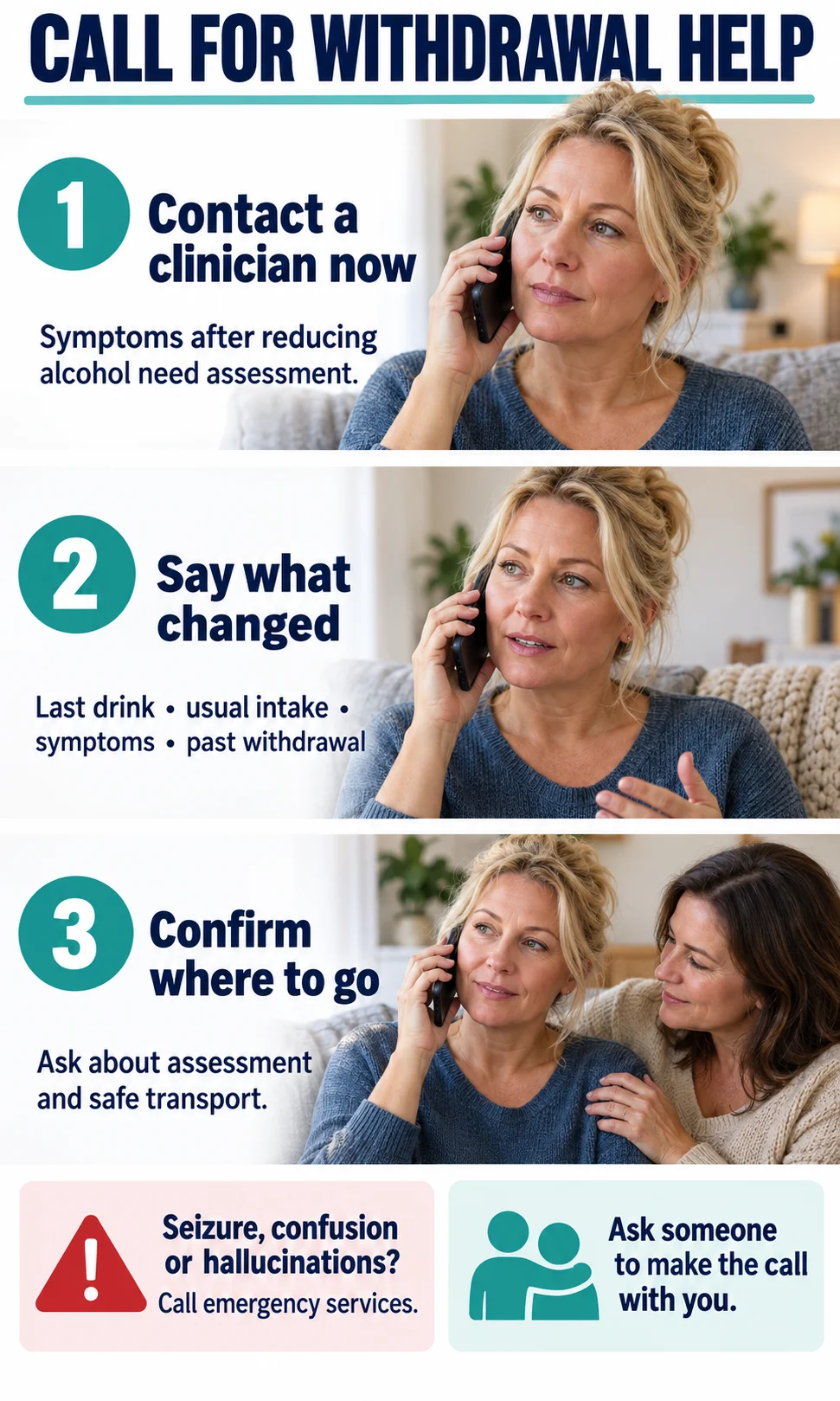
- Make contact. Say: “I have reduced alcohol and may be having withdrawal symptoms,” or “I want help to stop safely.” Ask for timely medical assessment.
- Explain the change. Give the time of your last drink or reduction, usual amounts, drink sizes and strengths, current symptoms, previous seizures or severe withdrawals, and medicines or other substances.
- Confirm the next step. Ask where and when to be assessed, how to travel safely, and what to do if symptoms worsen while waiting. If you cannot reach the service and symptoms worsen, seek urgent care.
Illustrative example: after missing usual evening drinks, someone wakes with trembling hands and sweating. They call their clinic, describe the change and a previous difficult withdrawal, and follow the service’s instructions for assessment. If speaking is hard, a trusted person can make the call with them; completion means a contact attempt and a concrete next action, not proof that staying home is safe.
How to act if emergency signs appear
A seizure, new confusion or hallucinations after reducing alcohol is a reason to interrupt everything else and get emergency help. This applies whether or not you are certain alcohol is the cause. Use your local emergency service rather than searching for a routine treatment provider.
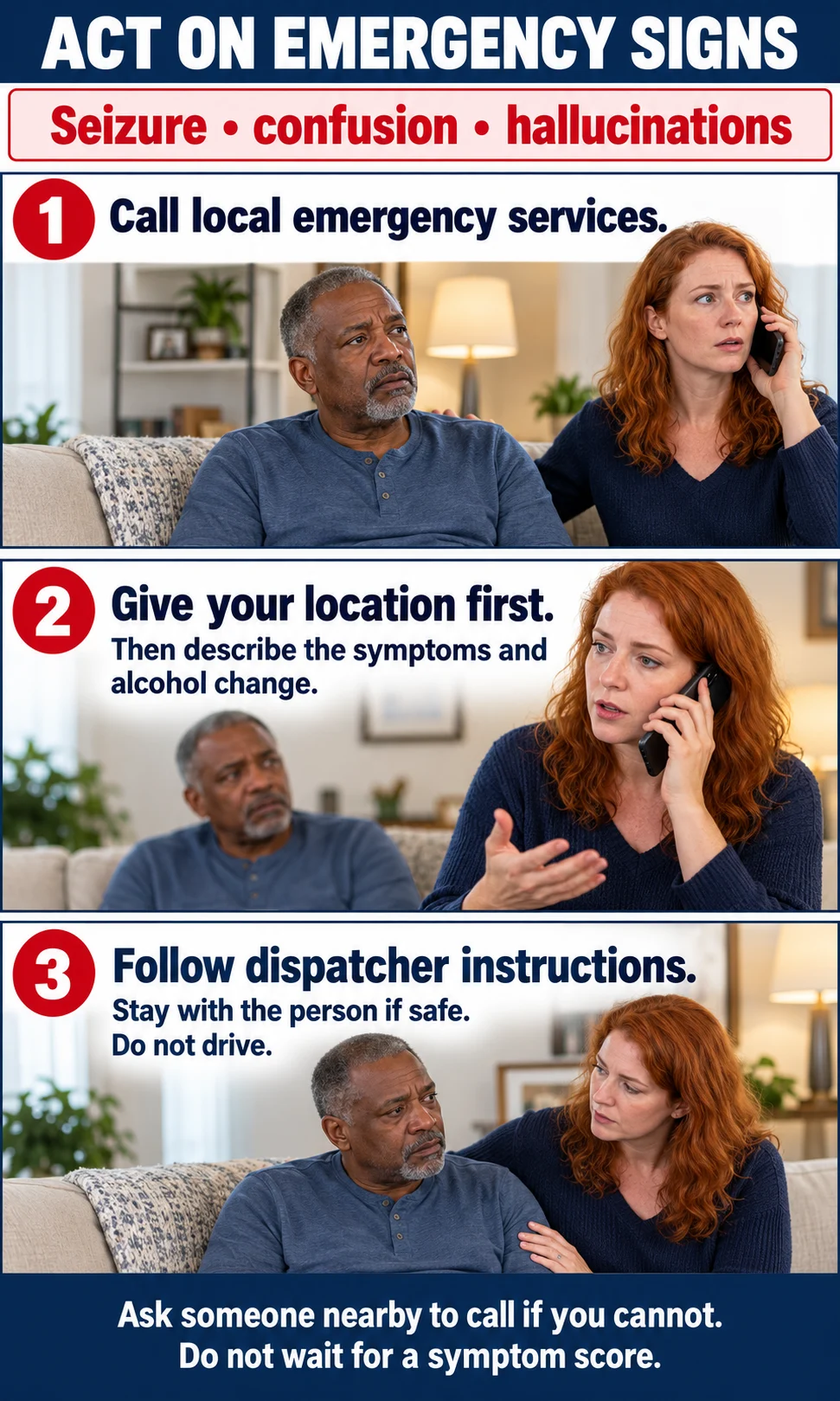
- Call local emergency services immediately. If you cannot call, ask someone nearby to do it.
- Give your location first. Describe the serious symptoms and explain that alcohol was recently reduced or stopped.
- Follow dispatcher instructions. Stay with the person if safe to do so and do not drive yourself to care. Do not delay the call to complete an online check.
Illustrative example: a supporter notices that a person cannot recognise where they are and is describing things no one else sees. The supporter calls emergency services, states the address and explains the alcohol change, then follows the dispatcher’s directions. The smaller supported option is simply asking another nearby adult to make the call; the completed action is help requested, not symptoms resolved.
Why withdrawal happens and who needs closer supervision
Alcohol influences brain systems that regulate inhibition, excitation and stress. With repeated heavy exposure, the nervous system adapts; removing alcohol can leave it overactive for a period. That helps explain tremor, agitation and autonomic symptoms, but it does not predict the severity of one person’s withdrawal.
Previous withdrawal seizures or delirium, repeated withdrawal episodes, prolonged heavy drinking and significant medical illness can increase concern. Older age and dependence on other sedating substances may also affect the plan. Current mild symptoms do not cancel a concerning history, so share the history even if you feel embarrassed or relatively well.
- Tell the clinician about earlier detoxification, seizures, hallucinations or severe confusion.
- Disclose sedatives, sleeping tablets, opioids and other substances; do not stop or change medicines on your own.
- Mention pregnancy, injuries, serious health conditions and whether reliable support is available.
- Do not use a borrowed prescription, alcohol taper from the internet or symptom score to choose your own treatment.
What medically supported withdrawal care can involve
Care may be delivered in hospital or through a structured outpatient programme, depending on the clinical assessment and available support. Outpatient care still includes a medical plan, follow-up and a route for escalation. It is different from simply deciding to stay at home and hope symptoms pass.
Clinicians may use withdrawal medicines, evaluate hydration and nutrition, and provide thiamine when indicated. The medicine, dose and setting depend on individual risks, so this article gives no dosing schedule. Vitamins, food and a quiet room do not replace medication or observation when those are needed.
Withdrawal management is only one part of alcohol treatment. Follow-up may include counselling, medicines for alcohol-use disorder and mutual support, chosen with the person rather than through a willpower test. The ASAM withdrawal-management guideline distinguishes withdrawal care from ongoing treatment.
How to prepare a calm setting during approved outpatient care
Use this preparation sequence only if a clinician has assessed you and approved outpatient care. The purpose is to reduce avoidable stimulation and make the care plan easier to follow, not to prevent withdrawal complications by relaxation. Do not interpret a comfortable environment as permission to manage withdrawal alone.
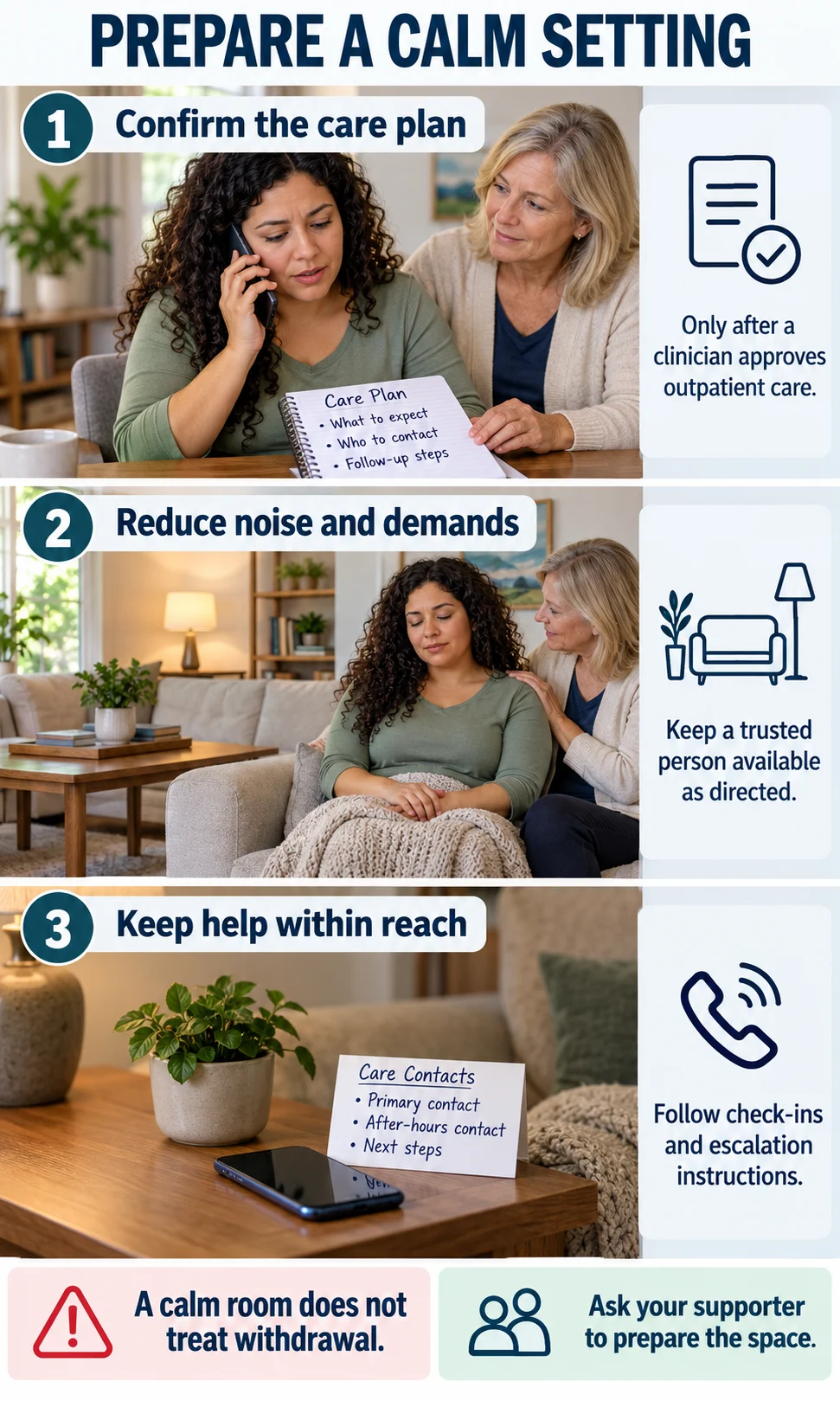
- Confirm the plan. Know who is responsible for your care, when check-ins happen and which changes require urgent contact.
- Reduce noise and demands. Choose a quiet, uncluttered place and keep a trusted person available as your care team directs.
- Keep help accessible. Place a charged phone and your care contact details within reach, then follow the agreed check-ins and escalation instructions.
Illustrative example: after assessment, an outpatient service explains the person’s follow-up and warning signs. A supporter lowers the television volume, prepares a comfortable chair and puts the phone and care contacts nearby. If setting up feels exhausting, ask the supporter to do it; completion means the space supports the prescribed plan, and worsening symptoms still change the next action.
Withdrawal Next Step Studio
Choose the situation that fits to see the relevant action, a worked example and an easier supported option. This experience does not diagnose withdrawal, calculate its severity or approve home detoxification. The manual instructions above remain usable if scripts are unavailable, and emergency signs should never wait for an interaction.

Withdrawal Next Step Studio
Choose a useful action. No scores.
For adults seeking a next conversation or supporting clinician-approved care. This is educational guidance, not a diagnosis, severity assessment or permission to detox at home. If dependence is possible, get medical advice before stopping abruptly or making further reductions.
Answers remain in this page; there is no account, automatic saving or health-data analytics. Refreshing clears them. Printing creates a separate copy. Optional service searches send your entered location to Google when you open a link.
Your next action appears here
Choose the situation that fits. No result can confirm that withdrawal is absent or that home detox is safe.
Find a service for planned care
Who: a licensed clinician or alcohol treatment service that can assess withdrawal and arrange medical supervision. For emergencies, call emergency services rather than use a search result.
Compare services you find
Ask about withdrawal expertise, licensing, supervision, follow-up, availability and fees. These optional notes stay in this page and are excluded from the A4 summary. No provider ratings or availability are verified here.
What if anxiety, low mood or poor sleep continue?
After the acute problem has been assessed, continuing mood or sleep symptoms deserve their own conversation. Explain whether they began before the alcohol change, how they affect daily life and whether they are worsening. For that separate reader question, see depression and anxiety after quitting drinking.
Anxiety after a drinking episode is also a different question from medically significant withdrawal. Our article on feeling depressed the day after drinking covers that adjacent topic. Neither page can determine the cause of new severe symptoms or replace assessment.
Treatment providers should explain their qualifications, how they manage alcohol-related care and how follow-up works. Ask whether they can assess withdrawal, provide or arrange medical supervision, and coordinate care for mood symptoms. Comparing providers is useful for planned follow-up; it must not delay urgent treatment.
Frequently asked questions
Can alcohol withdrawal happen after cutting down rather than stopping?
Yes. A substantial reduction can trigger symptoms when your body is dependent on alcohol. Tell a clinician about the reduction rather than assuming withdrawal requires complete abstinence. Serious symptoms need emergency assessment.
Does mild shaking mean it is safe to detox at home?
No. Symptom intensity alone cannot establish safety, especially when there is a history of seizures or severe withdrawal. A clinician must decide the appropriate care setting. Seek prompt advice for shaking after reducing alcohol.
Is a hangover the same as alcohol withdrawal?
No. A hangover and withdrawal can share symptoms, but they have different clinical contexts. New symptoms after reducing regular drinking deserve assessment. Do not use a symptom checklist to make the distinction on your own.
Can water, vitamins or sleep prevent withdrawal seizures?
No home remedy can be relied on to prevent withdrawal seizures. Nutrition and fluids may support a clinician-directed care plan, while specific deficiencies may need treatment. They do not replace medically assisted withdrawal care.
Can symptoms start while alcohol is still in the body?
Yes. Withdrawal may follow a significant fall in alcohol exposure rather than waiting until alcohol is completely absent. Feeling that you still have alcohol in your system does not rule out withdrawal. Seek medical advice if symptoms appear after reducing intake.
Should I wait a week before asking about persistent symptoms?
No fixed waiting period is appropriate. Ask sooner when symptoms worsen, disrupt daily life or make you feel unsafe. If there is immediate danger from self-harm, call local emergency services; thoughts of self-harm also warrant prompt crisis support.
The next step is care matched to the situation
Recognise possible withdrawal early, tell a clinician what changed and use emergency help for serious signs. If outpatient care is approved, make the environment support that plan and keep the escalation route accessible. Recovery also needs appropriate follow-up after withdrawal, with help for alcohol use and any continuing mental health symptoms.