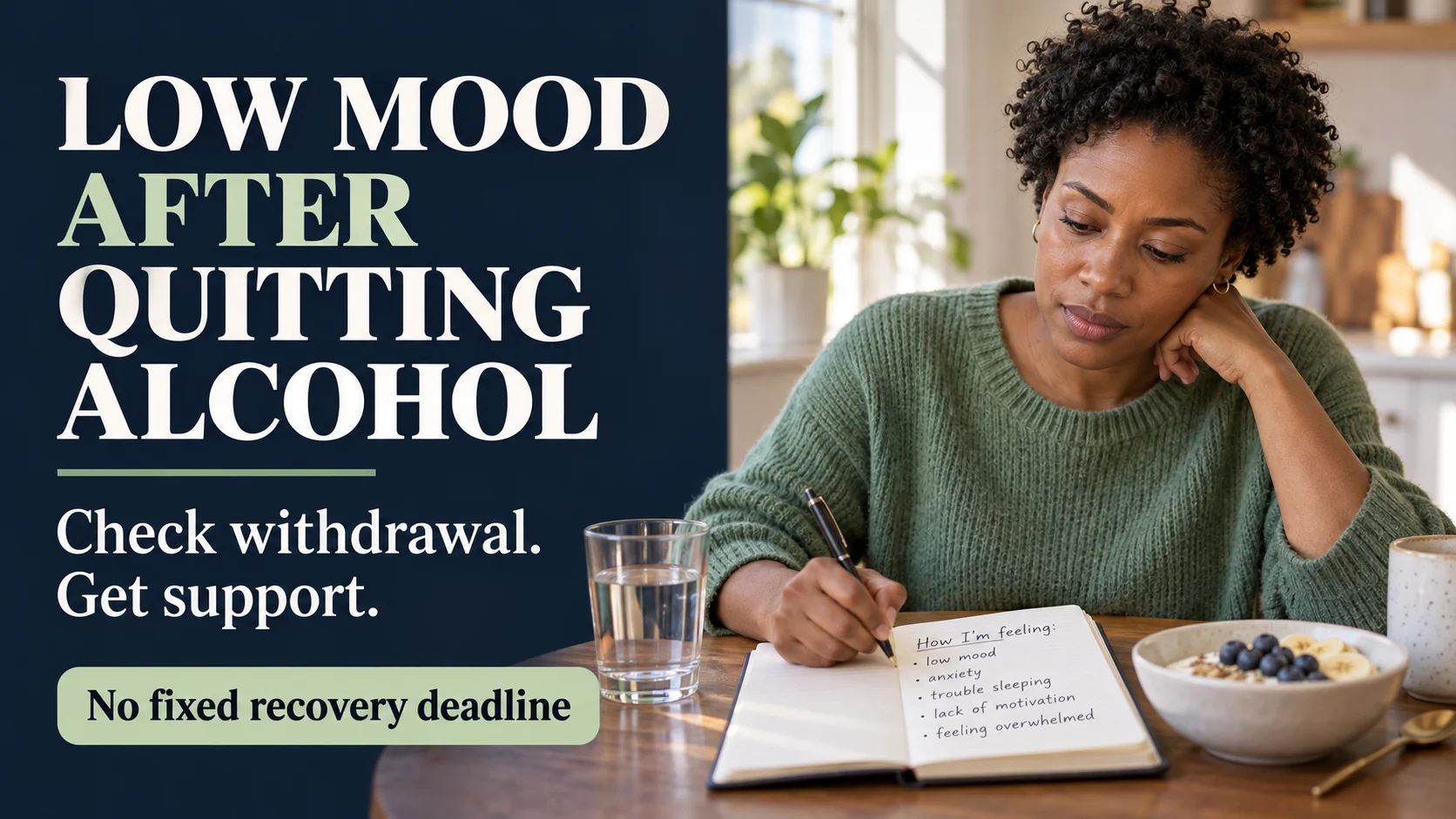

Low mood and anxiety can appear after stopping alcohol, but they should not automatically be dismissed as a harmless adjustment. If you drink regularly or heavily, symptoms after cutting down may be alcohol withdrawal, which can become dangerous and needs medical advice. The useful first step is to check safety, then look at how symptoms affect sleep and everyday life.

A clearer conversation about symptoms
Early Sobriety Check-In
Record what changed. Prepare your next conversation.
For adults preparing a clinician conversation. This is not a diagnosis, withdrawal assessment or confirmation that home detox is safe. Do not stop abruptly or make further reductions without medical advice if you may be dependent. Answers stay in this page; closing or refreshing clears them. Printing makes a separate copy.
Your record will appear here
It will summarize your selections, repeat relevant safety guidance and suggest questions to ask. A low-risk clearance is never issued.
Find a service for the next conversation
Use any city and country. These actions open search results; availability, qualifications and emergency access are not verified.
Ask about alcohol and mood care, supervision, follow-up, fees and licensed qualifications. These searches are not for emergencies.
Compare services you find
Optional notes, kept only in this page. Verify details directly with each service; these notes are not added to the A4 symptom record.
Check withdrawal before calling it mild anxiety
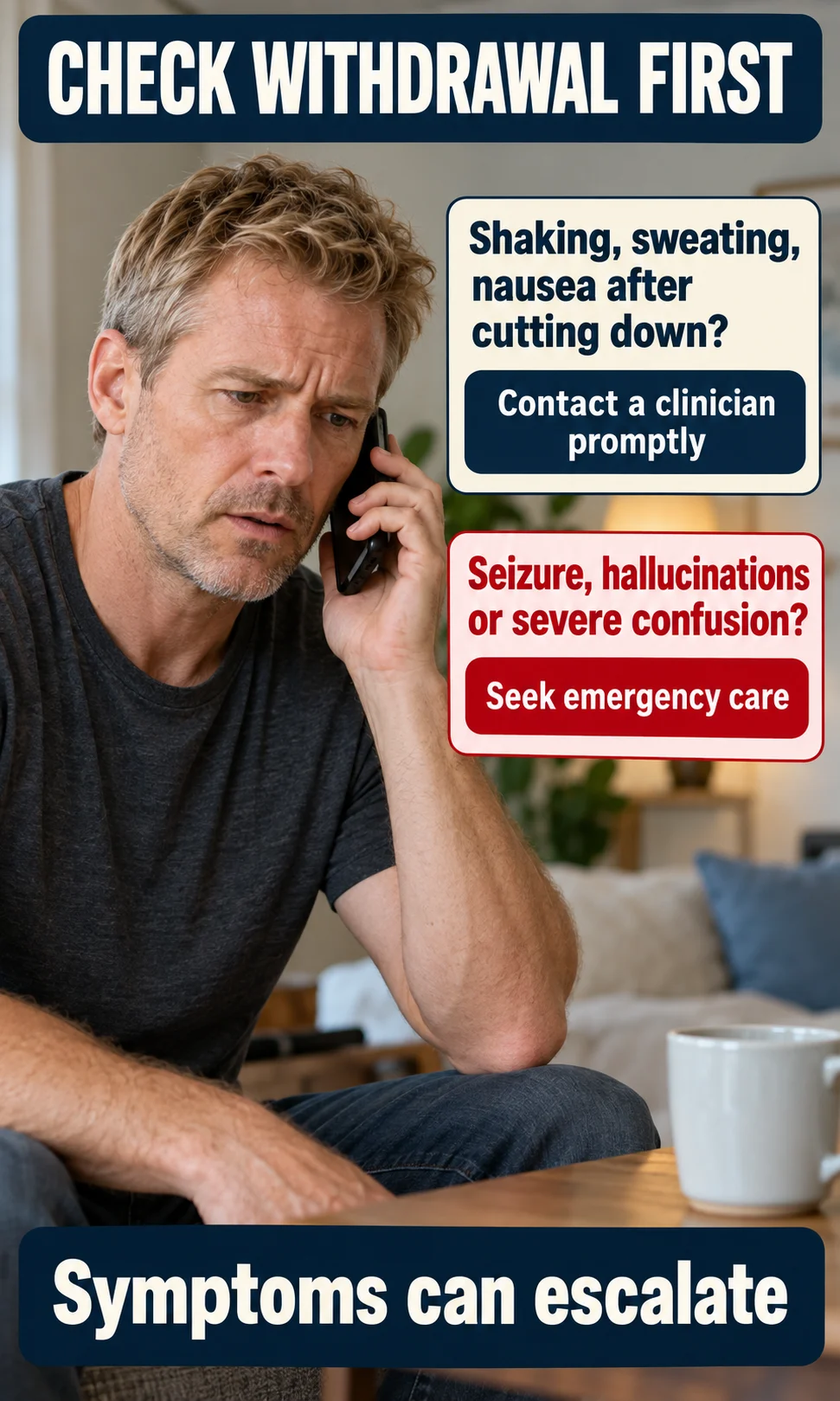
Feeling on edge is only one part of the picture. Shaking, sweating, nausea, disturbed sleep or a racing heart after reducing alcohol can signal withdrawal. Someone who feels mentally calm may still need medical help for physical symptoms, while someone who feels intensely anxious may have more than one contributing cause.
If you may be physically dependent on alcohol, speak to a clinician before stopping abruptly or making further reductions. A previous withdrawal seizure, a history of severe withdrawal or drinking to relieve morning symptoms makes that conversation especially important. Do not use this article to devise an alcohol taper or to decide that home detoxification is safe.
A seizure, hallucinations, severe confusion or an irregular heartbeat after stopping alcohol needs emergency assessment. Call your local emergency number, and do not drive yourself. Alcohol withdrawal guidance explains why apparently manageable symptoms can still require medical supervision.
| What you notice | What to do |
|---|---|
| Seizure, hallucinations, severe confusion or irregular heartbeat | Seek emergency care now; do not wait to complete a symptom record. |
| Thoughts of self-harm or suicide | Seek immediate crisis support. If you may act on them or cannot stay safe, use emergency services. |
| Shaking, sweating, nausea or a racing heart after reducing alcohol | Contact a clinician promptly for possible withdrawal. Seek emergency care if symptoms are severe or rapidly worsening. |
| Regular heavy drinking or previous complicated withdrawal | Arrange a medically supported stopping plan; current symptom intensity alone cannot establish safety. |
| Low mood or anxiety that persists, worsens or disrupts daily life | Arrange assessment for mood, alcohol use and other possible contributors; do not wait for an arbitrary sobriety milestone. |
Why you may feel worse before you feel better
Alcohol changes how the nervous system regulates activity. With repeated exposure, the brain adapts to its depressant effects; reducing alcohol can leave those compensating processes temporarily unbalanced. That can help explain agitation and anxiety, but it cannot tell you how severe withdrawal will become or whether every symptom comes from alcohol.
There is also a practical change to manage. An evening drink may have marked the end of work, made social situations feel easier or postponed an uncomfortable thought. Removing it can reveal a gap in the routine and feelings that were already present. That gap deserves support rather than a judgment about willpower.
Depression and alcohol problems can coexist, and the sequence is not always obvious. Symptoms that existed before heavy drinking are relevant, as are episodes during earlier periods without alcohol. Guidance on co-occurring mental health conditions supports considering both problems together rather than assuming sobriety alone will resolve everything.
How long should low mood or anxiety last?
There is no recovery deadline that applies to everyone. Acute withdrawal and longer-lasting changes in sleep, energy or mood are different problems, and the duration of one does not reliably predict the other. A timeline on a website cannot replace an assessment of drinking history, current symptoms and medical circumstances.
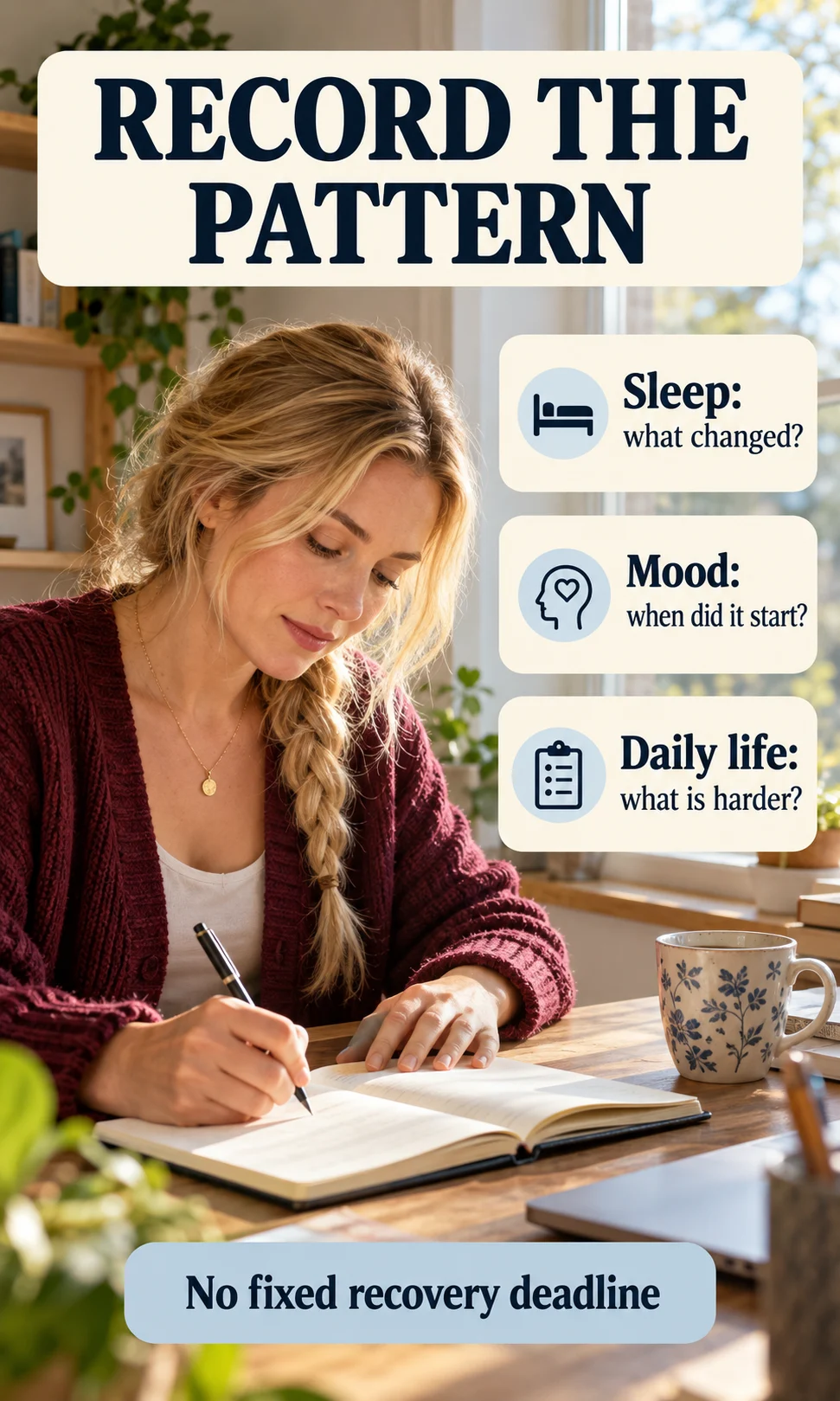
Compare what is happening across several ordinary days rather than repeatedly testing whether you feel normal. Are you sleeping at all, eating, getting through basic responsibilities and staying connected to someone? A worsening pattern or difficulty functioning is a reason to get help now, even if you have only recently stopped.
Persistent low mood or loss of interest for about two weeks is a reason to discuss depression with a clinician, especially when daily life is affected. It is not a rule requiring you to wait two weeks, and it is not enough by itself to diagnose depression. Severe distress, suicidal thoughts and withdrawal symptoms need attention sooner.
Sleep deserves its own observation because a poor night can change how the following day feels. Record whether the problem is falling asleep, frequent waking or waking much too early, rather than writing only “bad sleep.” Our guide to depression and sleep problems explains those distinctions without treating a sleep pattern as a diagnosis.
What you can do while arranging appropriate support
- Keep the first task small. Choose one meal, one brief check-in with a trusted person or one manageable household task rather than trying to rebuild every routine at once.
- Protect regular meals and fluids. If you cannot keep fluids down or are becoming unwell, seek medical advice rather than relying on food changes.
- Replace a drinking cue deliberately. Decide who to contact or what to do during the time you usually drank; avoid making an unstructured evening a test of endurance.
- Use movement only when medically appropriate. A short walk may support routine once you are stable; exercise does not treat withdrawal.
- Keep treatment decisions with your clinician. Do not borrow sedatives, change antidepressants or use alcohol to manage symptoms on your own.
Food supports recovery, but a clean-eating rule is not a treatment for depression or withdrawal. Heavy alcohol use can contribute to nutritional deficiencies, including thiamine deficiency, and a clinician may recommend assessment and specific treatment. A supplement purchased without assessment is not a substitute for that care.
Aim for a workable routine rather than an ideal one. If preparing a full meal feels unrealistic, an accessible balanced meal is a more useful starting point than skipping food while waiting to cook perfectly. Avoid interpreting a difficult day as proof that stopping alcohol was the wrong decision.
Small actions can also create information. You might find that a ten-minute conversation reduces isolation even when it does not lift your mood, or that an ambitious activity leaves you exhausted. Behavioral activation for depression explores how planned activity can be adapted to what you can currently manage.
Peer support may make the change less lonely, while professional care addresses withdrawal risk, alcohol use and mental health needs. The two can work alongside each other, but a support group cannot assess whether detoxification is medically safe. For broader daily coping ideas, see coping with depression after quitting drinking.
What to tell a clinician
Start with the timing of your last drink or most recent reduction, what you normally drank and how often. Include previous withdrawal symptoms, seizures, detoxification treatment and medicines or other substances you use. Describing drink size and alcohol strength is more useful than saying only “a few drinks,” because serving sizes vary.
Then describe the symptom pattern: when low mood or anxiety began, whether it occurred before the drinking change and what it stops you doing. Mention sleep, appetite, concentration, panic, loss of interest and any thoughts of self-harm. You do not need a polished explanation or a firm diagnosis to ask for help.
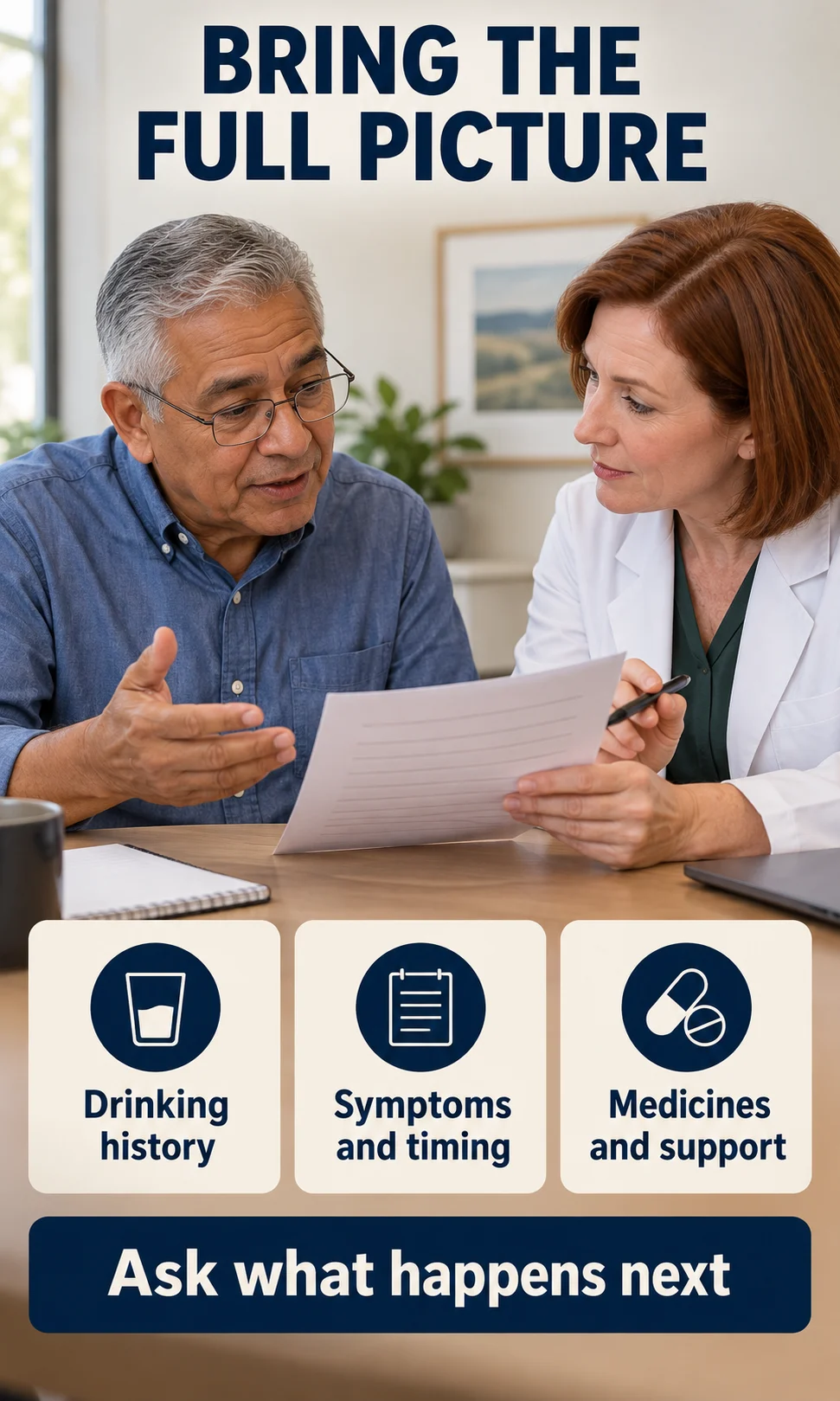
Ask which issue needs attention first and how follow-up will work. Withdrawal management, longer-term alcohol treatment and depression care can require different interventions, even when they are coordinated by the same team. A useful appointment ends with a named next step and a way to get help if symptoms change.
Early Sobriety Check-In
Use this experience to organize observations and prepare questions for a clinician. It shows urgent guidance before the record and keeps your answers only in the current page, with no account or automatic saving. It cannot diagnose depression, assess withdrawal severity or confirm that stopping alcohol without supervision is safe.
Frequently asked questions
Is anxiety after quitting drinking always withdrawal?
No. Anxiety may relate to withdrawal, disrupted routines or an anxiety problem that was already present. Physical symptoms after reducing alcohol need prompt medical advice, and a clinician can help distinguish overlapping causes.
Can quitting alcohol cause depression?
Low mood can become noticeable after stopping alcohol, but that timing does not establish a single cause. Alcohol-related symptoms and a separate depressive disorder can overlap. Assessment is especially useful when symptoms persist, worsen or affect ordinary activities.
Should I wait two weeks before asking for help?
No. Two weeks is part of the clinical description of some depressive episodes, not a waiting period for support. Seek help sooner for severe distress, difficulty functioning, suicidal thoughts or possible withdrawal.
Will vitamins or a healthier diet fix this?
Regular meals can support recovery, and deficiencies may require clinician-directed treatment. Food and supplements do not replace withdrawal management or evidence-based depression care. Ask about nutritional assessment rather than assuming one nutrient explains your mood.
What if I drink again while trying to stop?
Tell your clinician or treatment team what happened and discuss the next safe step. A return to drinking is a reason to review support and triggers, not to hide symptoms or abandon treatment. If dependence is possible, do not repeatedly stop and restart without medical guidance.
Does this check-in tell me whether I can detox at home?
No. It creates a discussion record and repeats general safety guidance. A clinician must assess withdrawal risk and decide which setting and monitoring are appropriate.
Make the next step specific
Check withdrawal risk first, then get support for symptoms that continue or make life harder. Write down what changed, choose a person or service to contact and ask how to respond if symptoms worsen. Recovery does not have to follow a fixed calendar to deserve care.