
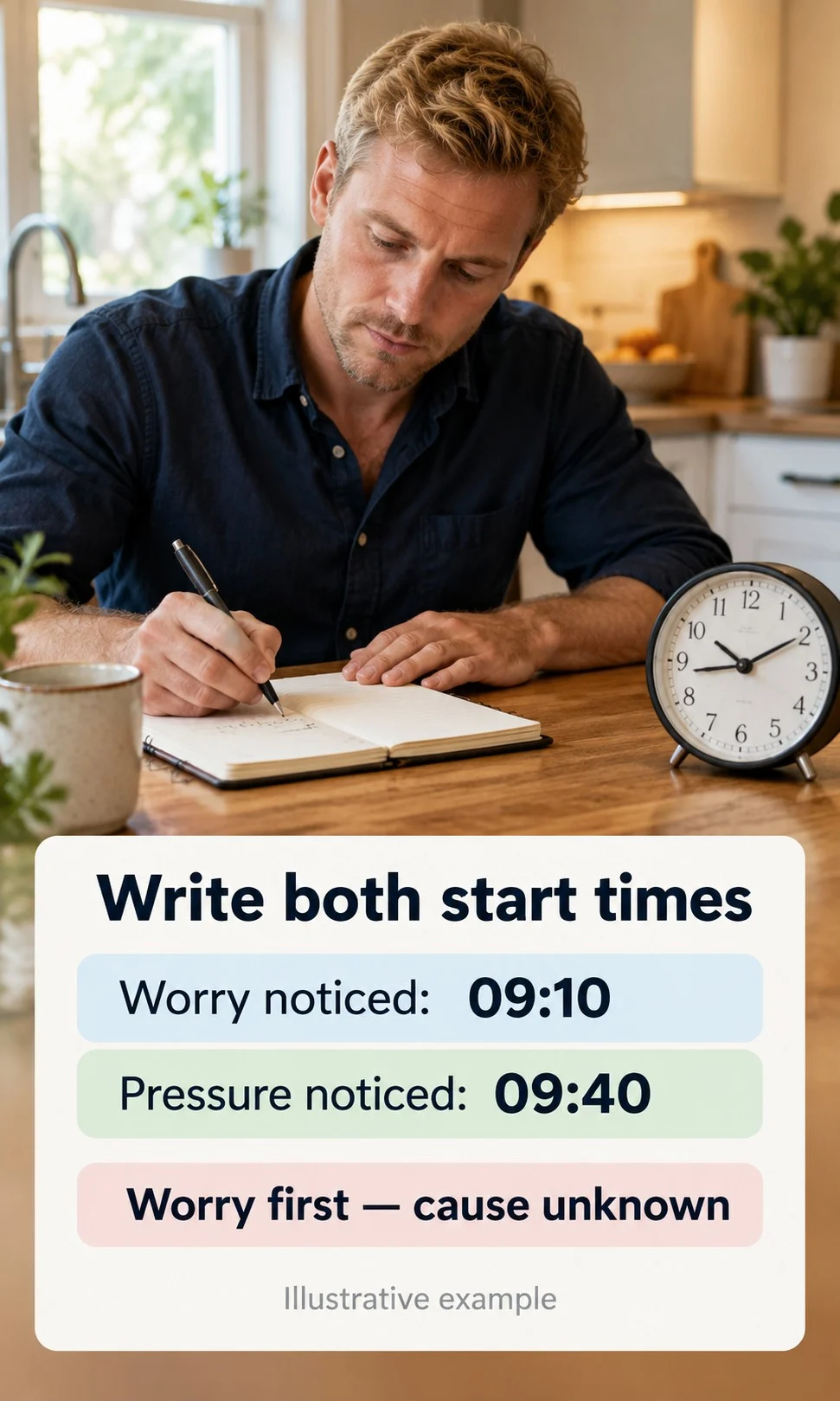
Record the time you first notice worry and the time you first notice head pressure, then mark which came first, whether they appeared together, or whether the order is uncertain. Keep the same brief fields across your observations so a clinician can compare episodes. The sequence can support a conversation about symptoms, but it cannot show that anxiety caused the headache.
Get medical help before starting a log if the headache is sudden and extremely severe, or comes with weakness, confusion, trouble speaking, seizure, vision loss, fever with a stiff neck, or a recent head injury. New headache during pregnancy or after age 50 also needs prompt medical assessment. A familiar feeling of worry does not rule out another cause of head pain.
Why the order matters more than the label “anxiety headache”
“Anxiety headache” describes what someone associates with their pain; it is not a standalone diagnosis in the International Classification of Headache Disorders. Anxiety and a headache disorder may coexist, while the headache itself may lead someone to worry. Recording the order keeps those possibilities open instead of naming a cause before an assessment.
The ICHD-3 psychiatric-disorder chapter distinguishes coexistence from a headache attributed to a psychiatric disorder. Attribution requires more than two symptoms appearing on the same day. Your note should describe what happened, leaving diagnostic classification to the clinician.
| What you noticed | What to write |
|---|---|
| Worry clearly came earlier | Worry first. Record both start times if you can. |
| Pressure clearly came earlier | Pressure first. Include worry about the pain itself. |
| Both noticed at the same time | Same recorded time. This describes your observation, not exact biological onset. |
| Timing is unclear or symptoms were present on waking | Order uncertain. Do not reconstruct an onset you did not observe. |
| Only one symptom occurred | Worry only or pressure only. Leave the absent symptom’s time empty. |
| Neither occurred | Neither noticed. A missing entry instead means the day was not recorded. |
How to log whether worry starts before the head pressure
Use one row for a clearly described observation and repeat the same fields when you make another entry. Note symptoms when you notice them, rather than repeatedly scanning your body to catch the earliest possible second. If checking makes you more anxious, keep a short scheduled note and ask your clinician how to record symptoms comfortably.
The six fields
| Field | What belongs in it |
|---|---|
| Date | The observation date. Include start dates as well as times if an episode crosses midnight. |
| Worry start | When you first noticed worry. Use an approximate time if necessary; say if you do not know. |
| Pressure start | When you first noticed head pressure. “Already there on waking” means onset is unknown. |
| Order | Worry first, pressure first, same recorded time, uncertain, only one symptom, or neither. |
| Feel | Pressing, tight band, throbbing or another description. Add jaw or neck observations without naming a diagnosis. |
| One-hour recheck | Whether both eased, only one eased, neither eased, or you did not check. This is an optional observation, not a treatment test. |
Keep “first noticed” separate from “started.” You may notice a tight feeling during a meeting even though you cannot tell when it began, and you may only remember the worry approximately. An uncertain entry is more useful than an exact time invented later.
For episodes crossing midnight, record full local dates and times rather than comparing clock times alone. Worry first noticed at 23:50 and pressure first noticed at 00:10 the following day should remain worry first. If the sequence cannot be reconstructed confidently, retain “order uncertain.”
The one-hour interval is a convenient recheck used in this page’s method; it is not a validated clinical threshold. Record what changed while continuing your usual care, and leave the field as not checked when necessary. Do not withhold medication, provoke worry or perform a relaxation experiment to test a theory.
What to write when they start together
Use “same recorded time” when you first notice both symptoms together. If you noticed both while answering a message at 10:20, that is the observation even if you suspect one began earlier. Do not add a speculative sequence to make the row look complete.
Worry about the pain is still worry
Pressure can appear first and be followed by concern about what it means. A row can therefore say “pressure first; worry about the pain,” even when you usually associate headaches with stressful days. If the wider pattern includes repetitive negative thinking, our depressive rumination and overthinking guide discusses that separate experience.
Use Pressure Sequence Studio for a brief visit summary
The studio records up to 14 observations, retains uncertain timing and summarizes your chosen sequence labels. Entries remain in this page’s memory until you leave or refresh, with optional export and import for your own saved copy. Print the standalone A4 summary when you want to bring it to an appointment, and store any downloaded health notes privately.
Pressure Sequence Studio
Capture which you noticed first: worry or head pressure. Bring observations to your visit.

Entries stay in this page’s memory. Refreshing or leaving clears them. Nothing is sent by this experience. Export before leaving; downloaded files contain your health notes.
Loading interactive controls. If they do not load, use the six-field paper method in the article.
Your sequence summary
No entries yet. Add an observation to see the sequence counts.
Earlier onset is an observation, not evidence of a cause. A tie means the recorded times match, not that symptoms began at exactly the same instant.
Use up to 14 observations for this brief visit summary. It does not replace a full headache diary. Follow your clinician’s recording period and bring any medication list separately.
A count of “worry first” entries describes the notes you entered; it does not calculate headache frequency, diagnose an anxiety disorder or prove a relationship. Multiple observations on the same date are permitted, so the summary distinguishes observations from recorded dates. Days without entries remain unrecorded rather than automatically becoming headache-free days.
A two-week sample, including a blank day
The following sequence sheet is an illustrative example, not a patient record or a claim of personal clinical experience. It shows why symptom-free days and missed recording days need different labels. Times are local first-noticed times, and the brief descriptions do not identify headache types.
| Day | Observation | Recheck / context |
|---|---|---|
| 1 | Worry 09:10; pressure 09:40. Worry first. Pressing feeling. | Both eased; ordinary activities continued. |
| 2 | Pressure 14:00; worry 14:20. Pressure first. Tight band. | Pressure eased only; worry was about the pain. |
| 3 | Both noticed 11:30. Same recorded time. Pressing. | Neither eased at the recheck. |
| 4 | No entry made. Day not recorded. | No symptom status can be inferred. |
| 5 | Neither worry nor pressure noticed. | Not applicable. |
| 6 | Pressure noticed on waking; onset unknown. Worry also noticed. | Order uncertain; recheck not recorded. |
| 7 | Worry noticed 16:10; no pressure noticed. | Worry only; recheck not applicable. |
| 8 | Pressure 12:20; no worry noticed. Pressing. | Pressure only; recheck not recorded. |
| 9 | Worry 08:40; pressure 09:05. Worry first. Tight band. | Worry eased only. |
| 10 | Neither symptom noticed. | Not applicable. |
| 11 | Both present by lunchtime; start times unknown. | Order uncertain; both eased later. |
| 12 | Pressure 15:15; worry 15:35. Pressure first. Throbbing. | Neither eased; other features noted separately. |
| 13 | Neither symptom noticed. | Not applicable. |
| 14 | Worry 10:00; pressure 10:30. Worry first. Pressing. | Recheck missed; left as not checked. |
Day 2 is the row someone might mistakenly label “worry first” because the worry was memorable. The head pressure was already present before the concern about it, so pressure first is the honest entry. Day 4 cannot be counted as a symptom-free day because no observation was made.
Tight band, jaw and neck: mark them without diagnosing
Describe the sensation before choosing a label: where it is, whether it presses or pulses, and what else you notice. In the ICHD-3 description of episodic tension-type headache, common features include pressure or tightening, mild to moderate pain and no worsening with ordinary physical activity. A matching description alone is not enough to diagnose that condition.
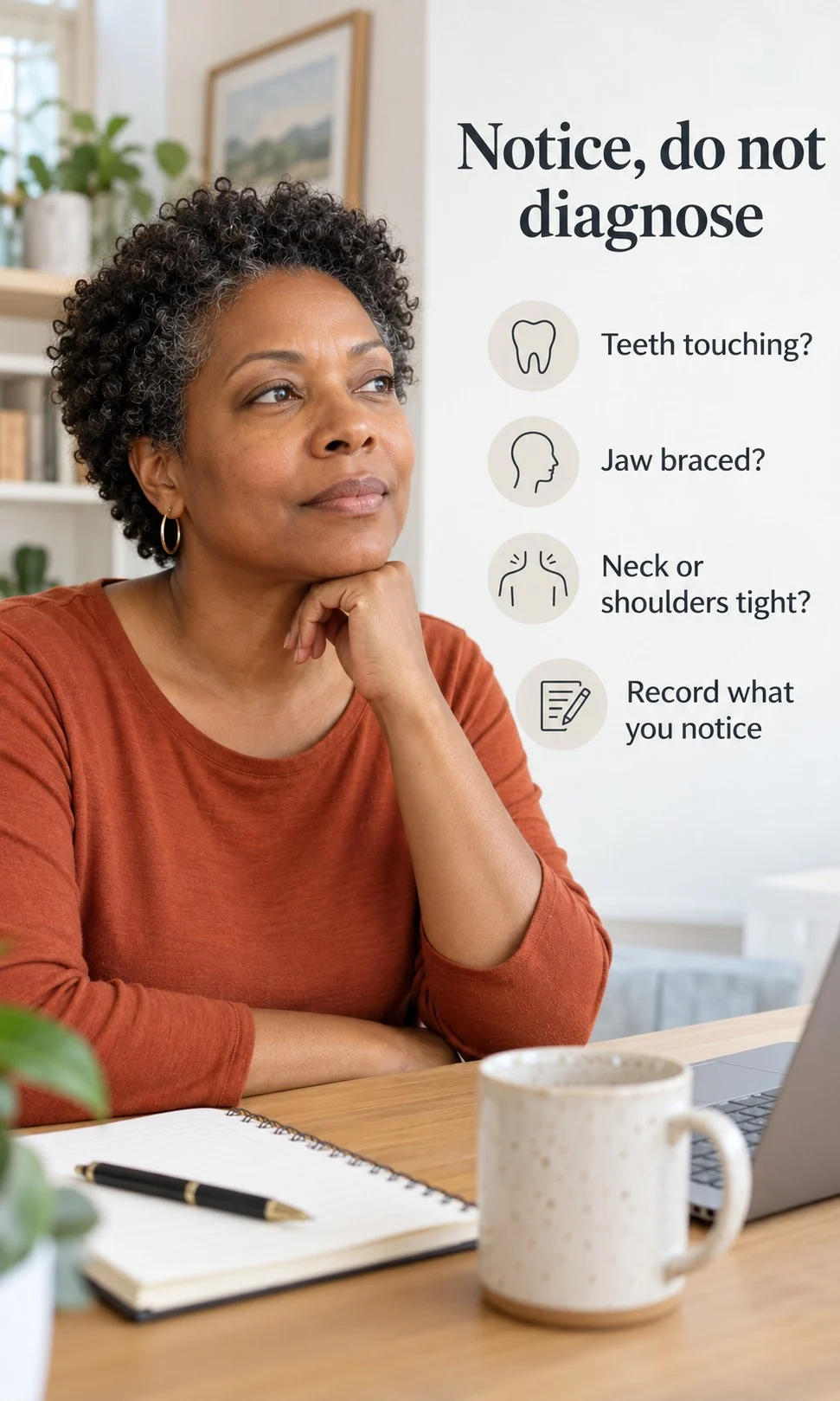
You can add whether your teeth were touching, your jaw felt braced, or your neck and shoulders felt tight at the time. Notice these gently rather than repeatedly pressing painful areas or deliberately clenching to reproduce the headache. Such details may help a clinician ask better questions, but they do not establish bruxism, a jaw disorder or the origin of the pain.
- Jaw: teeth touching, jaw braced, relaxed or not checked.
- Neck and shoulders: tightness noticed, no tightness noticed or not checked.
- Other headache features: nausea, light or sound sensitivity, activity-related worsening, or symptoms different from usual; record these in the clinic diary or a separate note.
Throbbing pain, nausea or sensitivity to light and sound deserve their own description rather than being relabeled as anxiety. For broader context, see our discussion of anxiety, depression and migraine symptoms. Keep this sequence sheet focused on onset order while your clinician assesses the full symptom picture.
What this log cannot prove
A repeated sequence is a clue for discussion, not a controlled test of causation. Worry and head pressure may share other circumstances, including poor sleep, a busy day or changes in routine, and your attention may affect when you notice each one. The sheet does not measure those alternatives or rule out another headache cause.
The same limit applies when both symptoms ease during the hour after an entry. Their improvement may occur together without one driving the other, and usual care or the passage of time may contribute. Write “both eased,” rather than “anxiety caused it” or “relaxation cured it.”
Low mood is another distinct observation, not a sequence label in this studio. If that is part of your concern, our depression and headache article addresses the broader overlap. Bring the separate concerns to the visit without making this brief log stand in for a mood assessment.
What to bring, and when to skip the log and get help
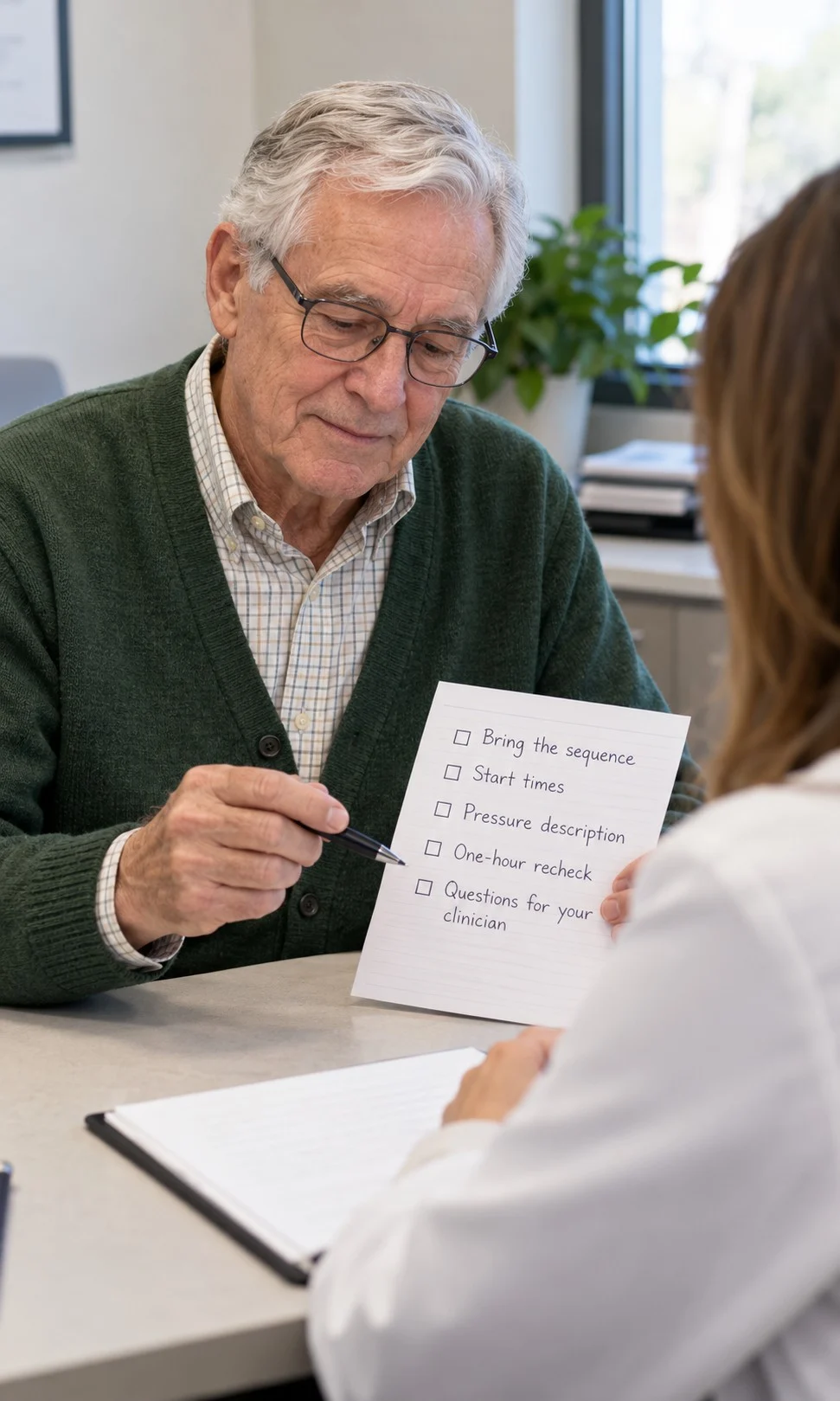
Bring the notes you have when the appointment arrives, even if you have only a few days recorded. The two-week example is an appointment-preparation format, not a validated minimum for diagnosis. NICE headache guidance recommends at least eight weeks when using a headache diary diagnostically, with frequency, duration, severity, associated symptoms, medication use and other relevant details.
- Your sequence sheet, including uncertain and missed observations.
- Any full headache diary supplied by your clinic, following its instructions.
- A list of prescribed and nonprescription medicines, plus any changes you noticed.
- Questions about a new, worsening or unfamiliar headache pattern; do not wait for a complete sheet before seeking advice.
Use emergency care for a sudden extremely severe headache or headache with new neurological symptoms, seizure, vision loss, confusion, fever with a stiff neck, or after injury. The NHS headache guidance also identifies headache with jaw pain while eating, scalp tenderness and eye or vision problems as reasons for urgent assessment. Ordinary jaw bracing in a note must not be confused with those warning signs.
Seek prompt medical advice for a new headache during pregnancy, after age 50, or when the pattern is worsening or substantially different from usual. Use your local emergency service when emergency symptoms occur. Do not let worry-first entries persuade you that a new headache is safe to monitor at home.
Frequently asked questions
Is an anxiety headache a real diagnosis?
“Anxiety headache” is an everyday description rather than a standalone ICHD-3 diagnosis. Anxiety and a headache disorder can coexist, and attributing a headache to a psychiatric disorder requires more evidence than a shared day or an onset sequence. A clinician assesses the headache features and relevant history.
What if worry and pressure start at the same time?
Write “same recorded time” if you first notice them together. Record the time you noticed both rather than guessing which began seconds earlier. If you cannot tell when either began, use “order uncertain.”
How many days should I log before the visit?
Take whatever notes you have to the appointment, even when the sheet is incomplete. The two-week example here is a short preparation format, not a diagnostic standard. Follow the recording period your clinician requests; NICE recommends at least eight weeks when a headache diary is used diagnostically.
Should I also mark jaw clenching?
You can note teeth touching, a braced jaw or neck tightness without deliberately reproducing pain. Those observations do not diagnose bruxism or explain the headache. Headache with jaw pain while eating or scalp tenderness needs urgent medical assessment rather than routine logging.
Does this replace the diary my clinic gave me?
Keep using the clinic’s diary as instructed. This sheet adds a focused observation about onset order, while a full diary may capture duration, severity, associated symptoms and medication use. Bring both if you have used both.
When should I skip the log and get help?
Do not delay emergency care for sudden extremely severe pain, neurological changes, seizure, vision loss, confusion, fever with a stiff neck or headache after injury. Seek prompt medical advice for a new headache during pregnancy or after age 50, and for a worsening or unfamiliar pattern. A sequence log cannot rule out a serious cause.
Keep the sequence useful
Write what you noticed, preserve uncertainty and bring the record to the visit you already need. A shorter honest sheet gives a clinician more useful information than a complete-looking sheet built from guesses. The goal is a clearer symptom history, with the cause and next steps assessed in context.