

Postpartum depression is a treatable illness that can affect mood, energy and daily life after childbirth. Persistent or worsening symptoms deserve assessment, and severe symptoms need help immediately rather than a two-week wait. This guide explains the differences to look for and practical ways to reach support.
How can you tell postpartum depression from baby blues?
Baby blues usually ease within the first two weeks, while postpartum depression involves a more persistent, severe or disabling pattern. Low enjoyment, hopelessness, anxiety, guilt and trouble functioning may be more revealing than tiredness alone. Symptoms can begin during pregnancy or emerge in the first year after birth, so a later start still deserves attention.
The distinction involves duration, intensity and the effect on ordinary life. Being woken for feeds differs from being unable to sleep when someone else safely cares for the baby. The symptom and assessment guidance supports seeking help when symptoms continue, worsen or make coping difficult.
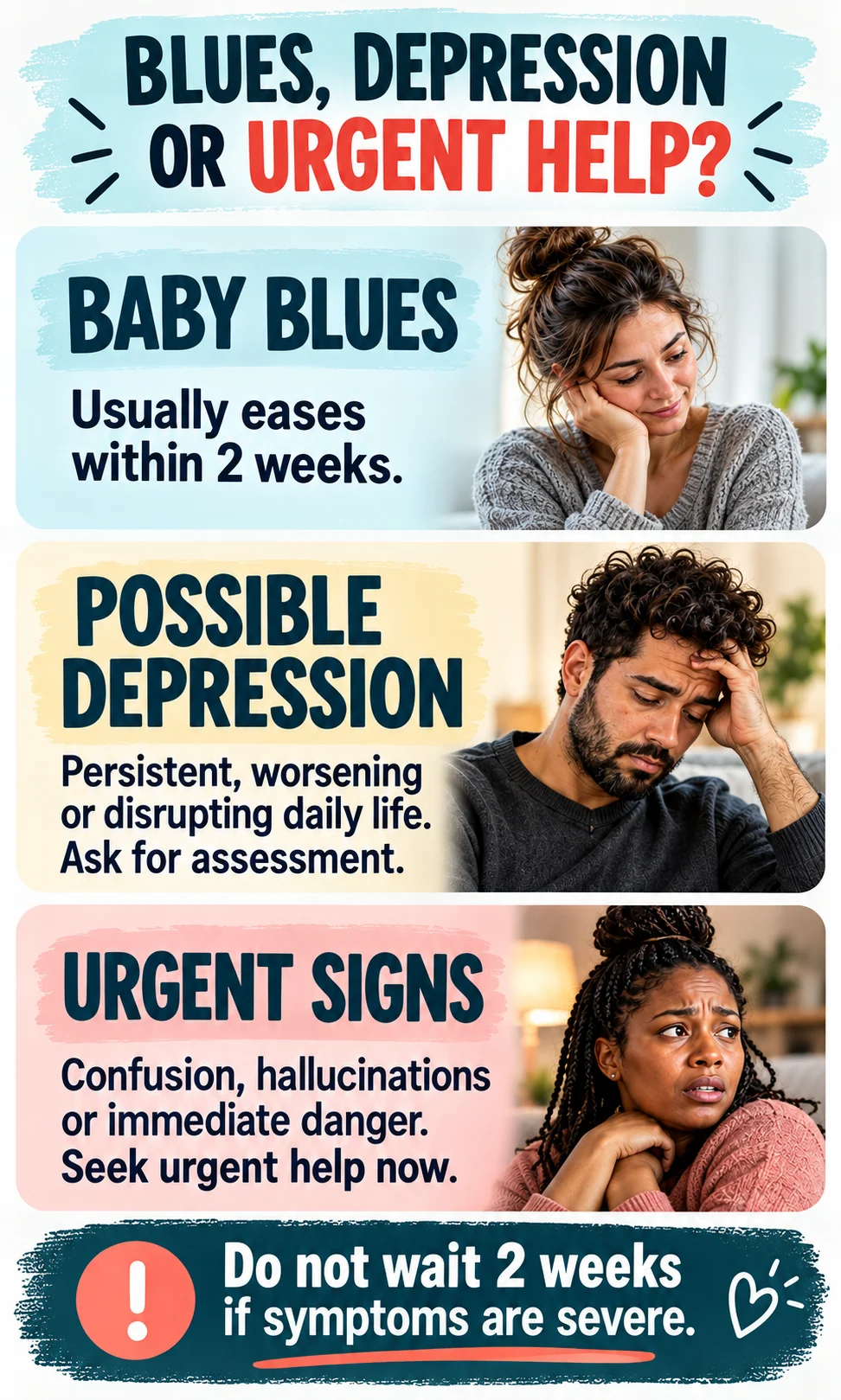
| Pattern | What changes the decision | Next step |
|---|---|---|
| Baby blues | Brief mood changes that are easing; usually resolve within two weeks. | Accept support; seek care if worsening. |
| Possible postpartum depression | Low mood or enjoyment, marked anxiety, guilt or impaired functioning. | Request assessment; do not self-diagnose from a checklist. |
| Possible psychosis or immediate danger | Hallucinations, delusions, severe confusion, mania or inability to keep safe. | Urgent medical help; emergency services for immediate danger. |
A screening questionnaire can start a conversation, but its score does not establish the diagnosis. A clinician considers symptoms, functioning, physical health and past mood episodes together. If there has been unusually high energy with much less need for sleep, mention it; the distinction discussed in Bipolar And Anxiousness can change treatment decisions.
Make the first care contact
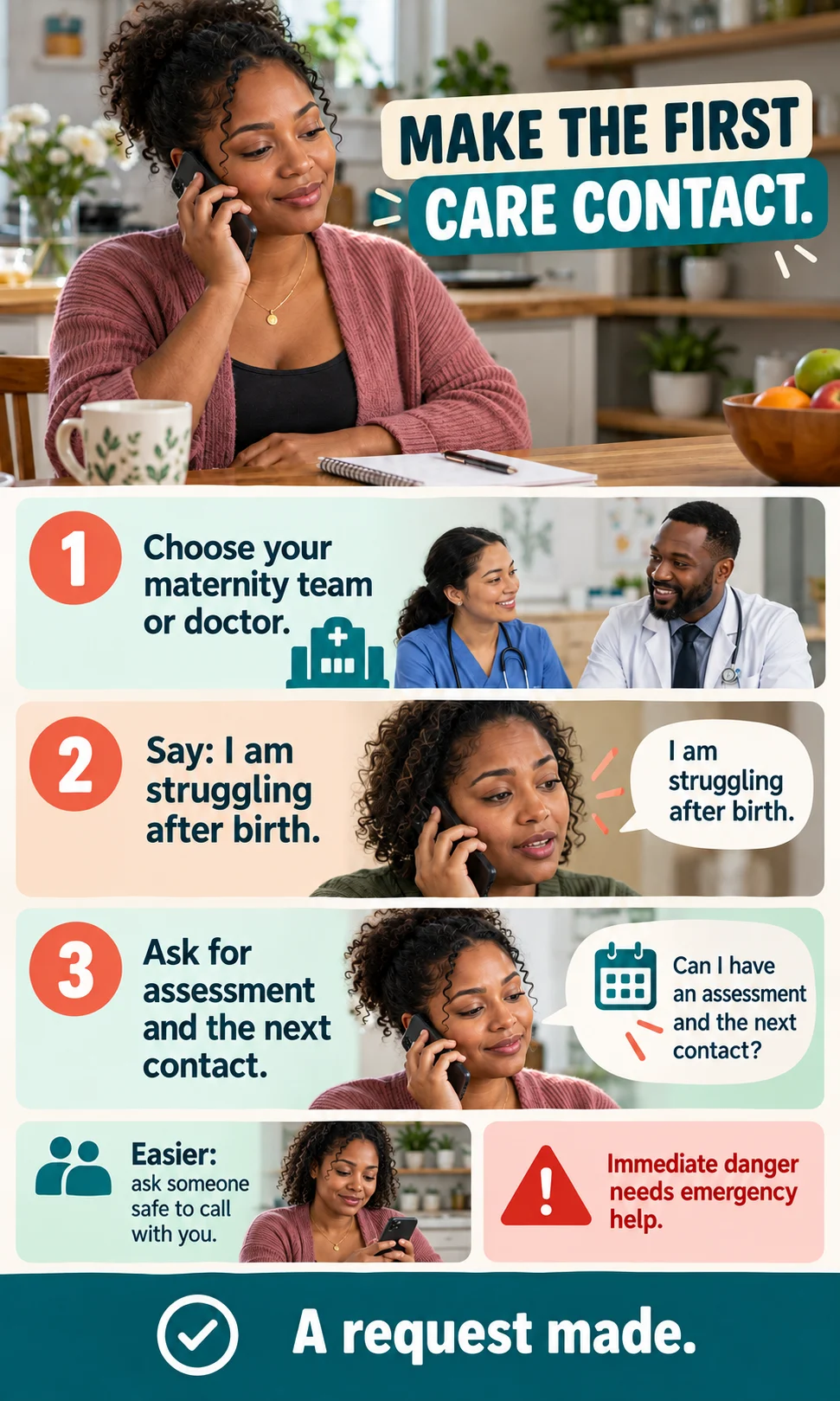
Use this when you suspect depression and there is no immediate emergency. You need a telephone or another way to reach a maternity team, primary care clinician or mental health service. The example message below is an editorial adaptation, not a diagnostic test.
- Choose your maternity team, doctor or another available clinical contact.
- Say: “I am struggling after birth. My mood and daily functioning have changed.”
- Ask for an assessment, how soon you should be seen and whom to contact if things worsen.
Easier option: ask someone safe to make the call with you or explain on your behalf. Completion means you have made a care request, even if an appointment is still being arranged. If you cannot reach that service, try another clinical contact; urgent risk needs urgent care rather than another unanswered message.
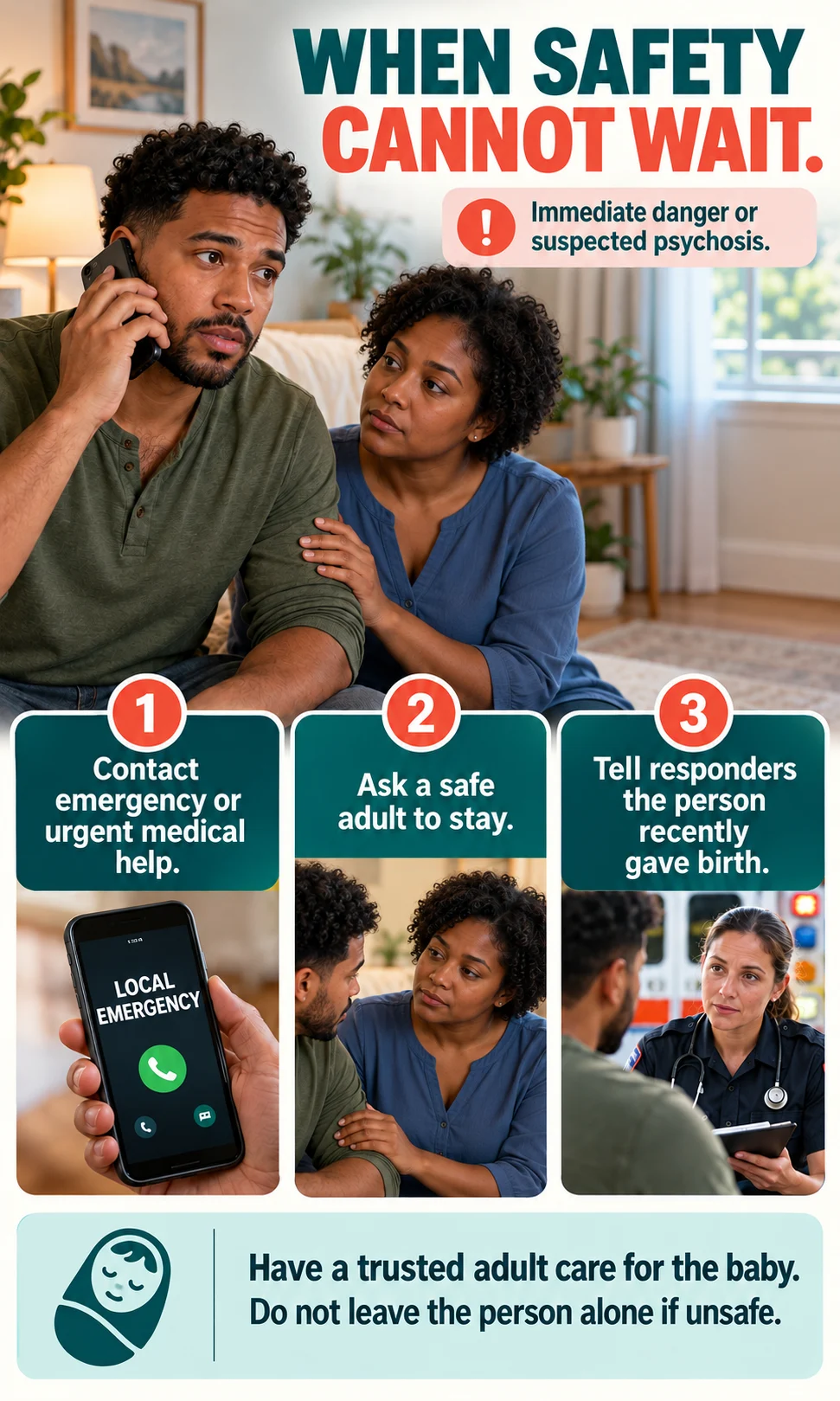
When safety cannot wait
Postpartum psychosis can develop quickly and is a medical emergency. Hallucinations, fixed unusual beliefs, severe confusion or a manic state require immediate assessment, even when the person does not recognise they are unwell. The urgent psychosis guidance explains why supporters may need to act.
- Contact emergency services for immediate danger, or urgent medical services immediately for suspected psychosis.
- Ask a safe adult to stay with the parent while help is arranged; arrange a trusted adult to care for the baby.
- Tell responders that the person recently gave birth and describe the symptoms and safety concern.
Thoughts of harm should be discussed urgently with a professional. An unwanted frightening thought does not by itself establish psychosis, but you should not have to judge the risk alone. If you feel you might act, lose control or cannot keep safe, use emergency help immediately.
Why can postpartum depression develop after birth?
There is no single cause that explains every episode. Hormonal changes, previous vulnerability, sleep disruption and stressful circumstances can interact after childbirth. These possible contributors do not mean the parent caused the illness or failed at parenthood.
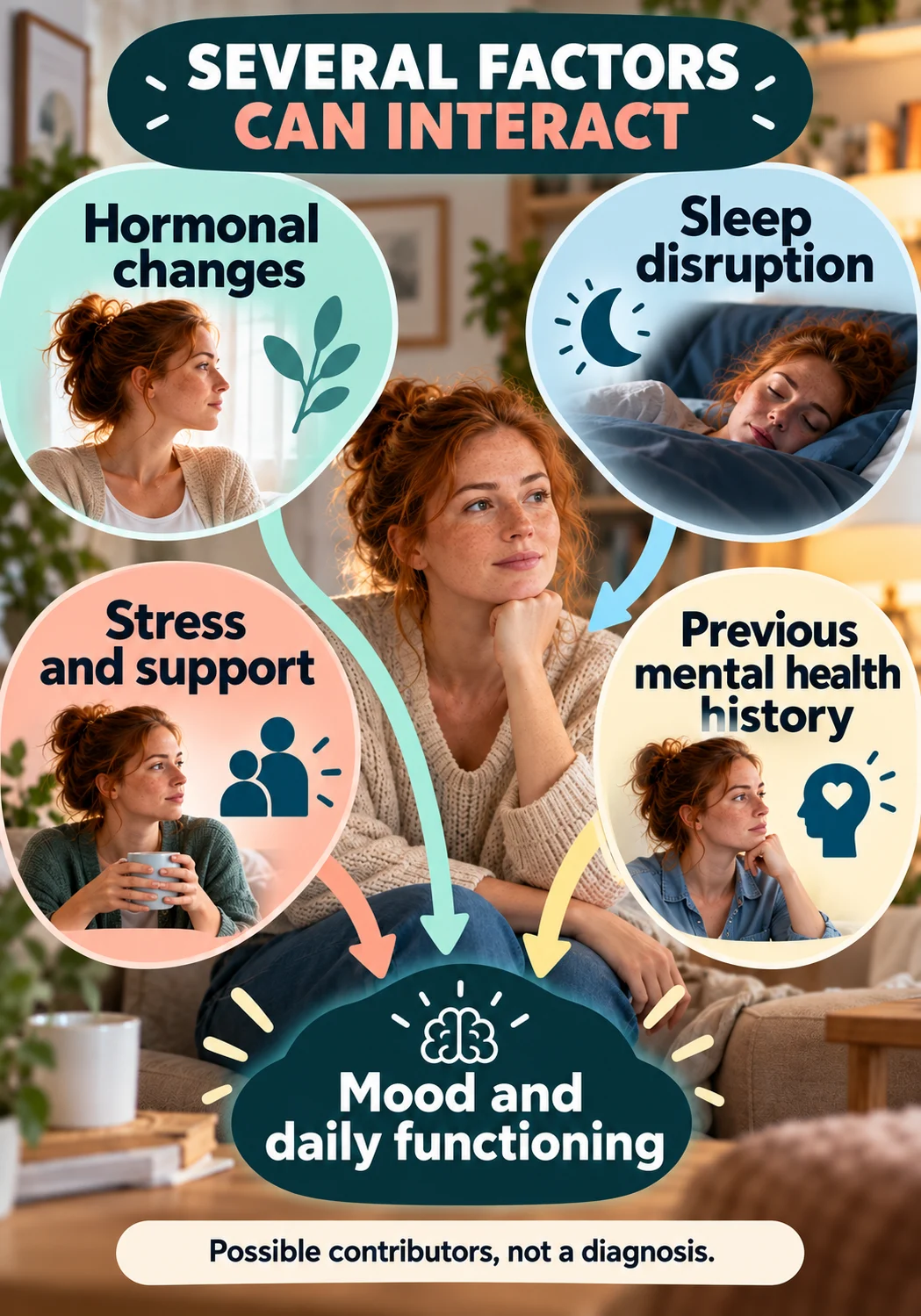
A difficult birth, an unwell baby or a shortage of safe support can add demands while recovery already consumes energy. Repeated interruptions may reduce opportunities to rest, and persistent worry can make available rest harder to use. This describes a plausible reinforcing pattern, not proof that sleep disruption caused a particular person’s depression.
A history of depression, bipolar disorder or a previous postpartum episode is important background for assessment and follow-up. Symptoms may still occur without an obvious trigger or recognised risk factor. Our broader explanation of What Causes Depression? Risk Factors and First Steps separates vulnerability from a confirmed cause.
Physical symptoms also deserve their own assessment. Chest pain, trouble breathing, fainting, severe headache or heavy bleeding after birth should not be dismissed as anxiety or exhaustion. The maternal warning signs identify symptoms requiring immediate medical care; tell the team you recently gave birth.
What can you do today while arranging professional care?
Arrange clinical care and reduce one immediate practical burden alongside it. The goal is a manageable action, rather than proving that you can cope without treatment. Choose a rest handover or a specific help request below; both translate general support guidance into observable steps.
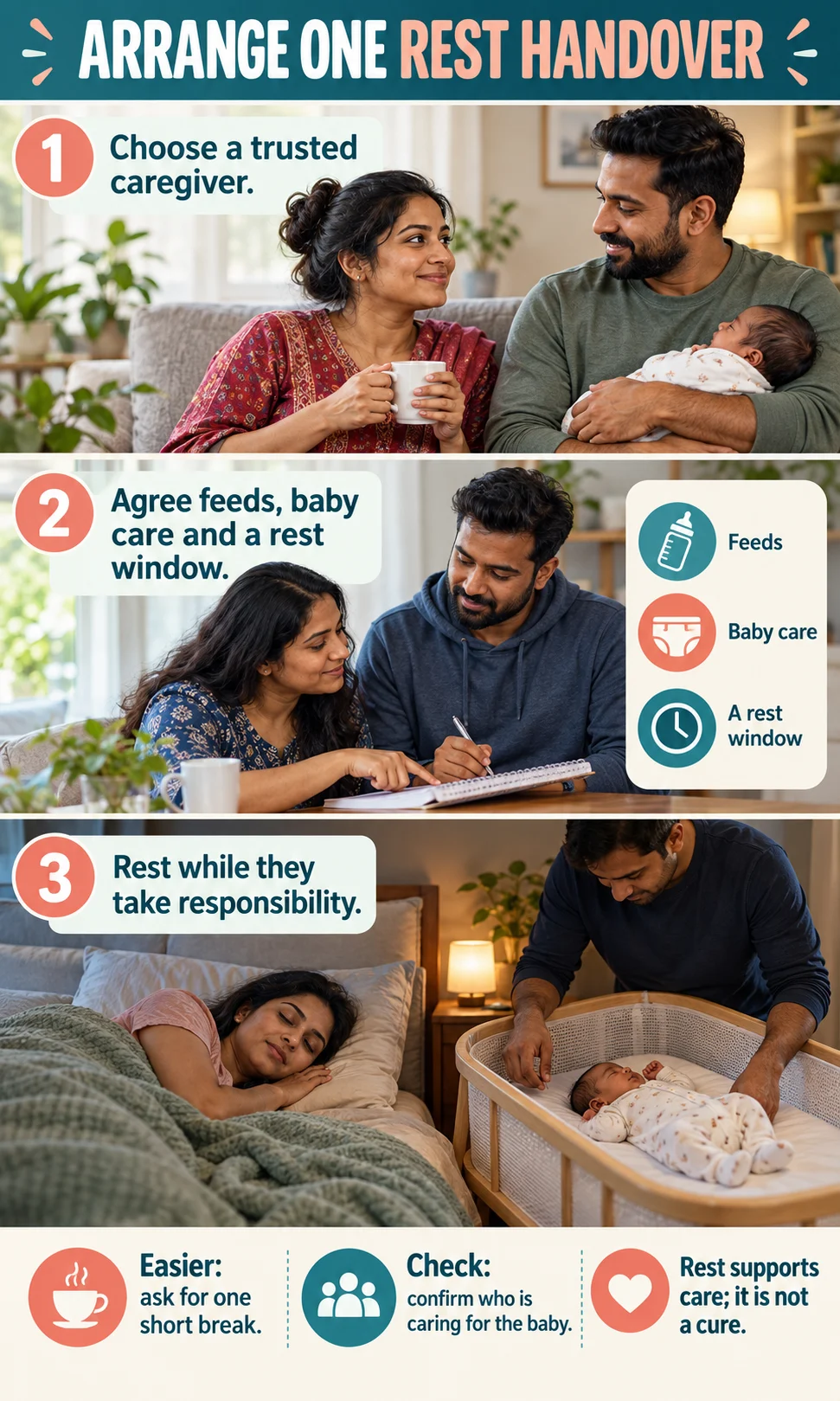
Arrange one rest handover
Use this when caring demands leave little opportunity to rest and a trusted caregiver is available. The caregiver must be able to care safely for the baby, and the arrangement should respect feeding needs and medical advice. Agree responsibility explicitly so you are not still monitoring every task while trying to rest.
- Choose a trusted caregiver who agrees to take responsibility for the baby.
- Agree the rest window, feeds and other baby-care needs; clarify when you should be contacted.
- Rest while that adult carries out the agreed care, then check whether the arrangement was workable.
For example, a co-parent handles an agreed period of baby care after a feed while you rest in another room. Easier option: ask for one short supported break rather than a long window. Completion is an agreed handover and an attempted rest break; falling asleep or feeling better is not required.
Ask for practical help
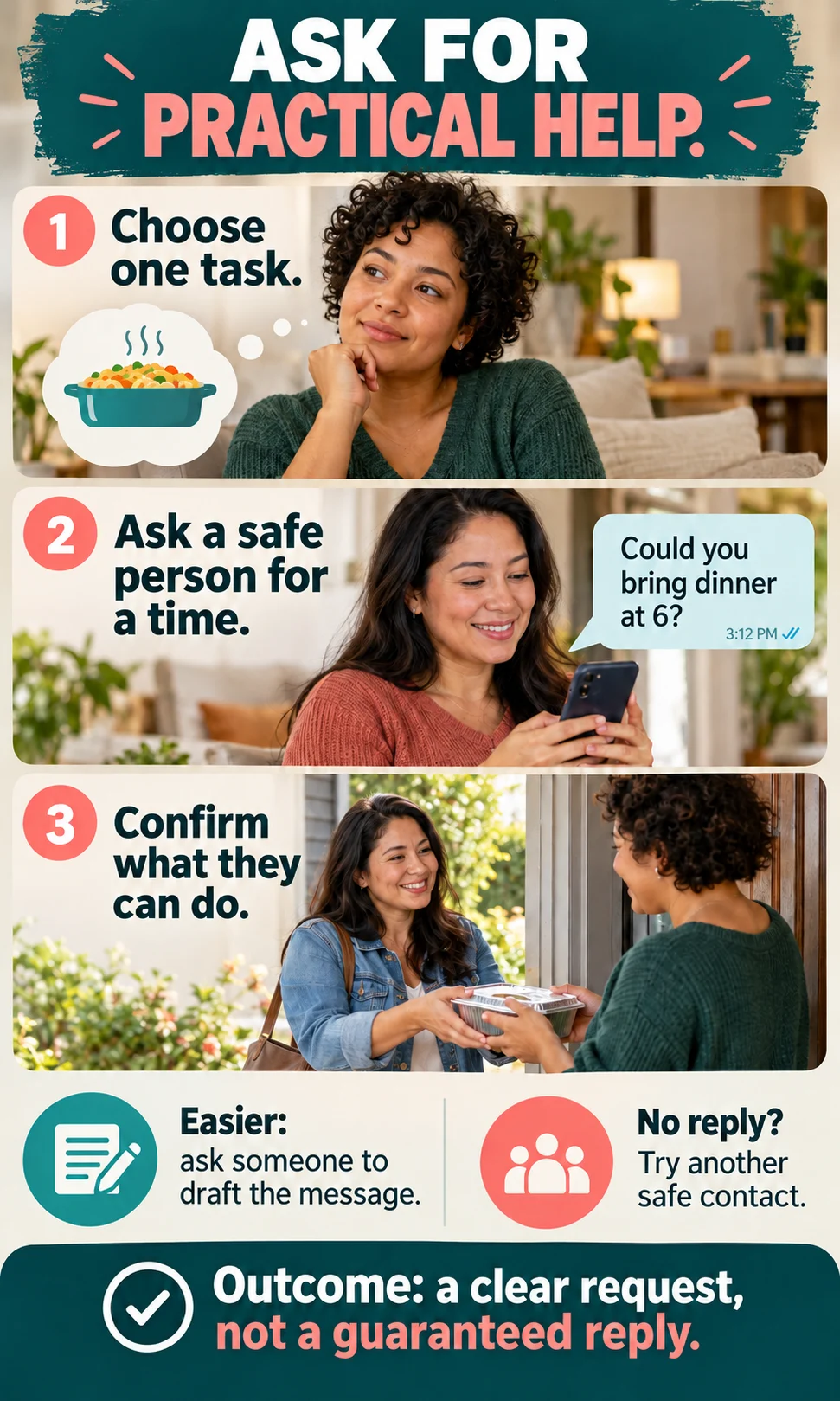
Use this when a general request for support feels difficult to explain. Pick one task that removes a real burden and a person who feels safe to contact. The request can be short, and you do not owe a detailed account of your mental health to get practical help.
- Choose one task, such as bringing a meal or doing shopping.
- Ask a safe person for a specific time: “Could you bring dinner at 6?”
- Confirm what they can do; if they cannot help, try another safe contact or ask your care team about practical support.
Easier option: ask someone to draft or send the request with you. Completion means making a clear request, rather than receiving an immediate reply. If the message goes unanswered, that does not establish rejection; choose another contact, and never rely on a message for emergency help.
These steps support daily life while care is arranged; they are not treatments on their own. If you want further general coping ideas, Guidelines For Coping with Depression offers wider context. Adapt any activity to recovery from birth and avoid turning self-care into another demanding checklist.
Which treatments help, and how can family support recovery?
Treatment may include talking therapy, medication or both, chosen around symptoms, history and preferences. CBT addresses unhelpful thought and behaviour patterns, while interpersonal therapy works with relationships, communication and changes in role. Practical help can make it easier to attend treatment and practise skills, but does not replace clinical care.
| Approach | Purpose | Discussion point |
|---|---|---|
| Talking therapy | Structured work on thoughts, behaviour or relationships. | Access, session format and support between visits. |
| Medication | Treatment of depressive symptoms. | Previous response, side effects, feeding and monitoring. |
| Combined care | Psychological and medication treatment together. | Severity, preferences and response to one approach. |
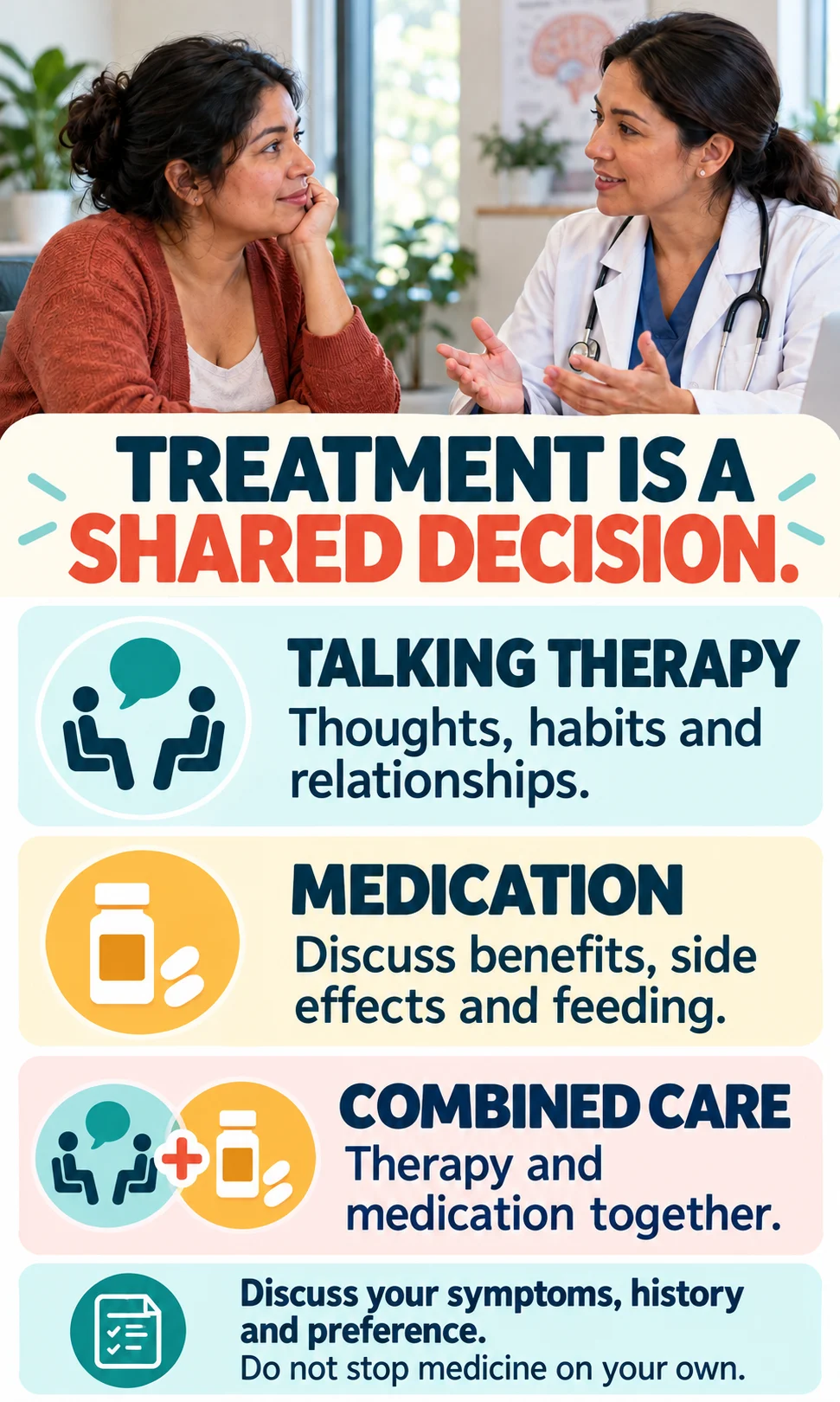
The perinatal treatment recommendations distinguish supported self-help from more intensive therapy and medication options. Treatment intensity should reflect the illness and the person’s circumstances, rather than a requirement to exhaust self-care first. Discuss what will happen if the first approach is unavailable or does not help enough.
Tell the prescriber if you are breastfeeding and discuss the particular medicine, infant circumstances and expected benefit. Do not stop or change prescribed medication on your own. Some options can cause sedation, so childcare and driving arrangements may also need attention.
Specialist postpartum-specific medicines may be available in some countries. For example, the FDA information on zuranolone describes an oral treatment for adults and a restriction on driving for at least twelve hours after each dose. Approval, availability and suitability vary; this is a clinical discussion, not an instruction to obtain or use it yourself.
Prepare for the appointment
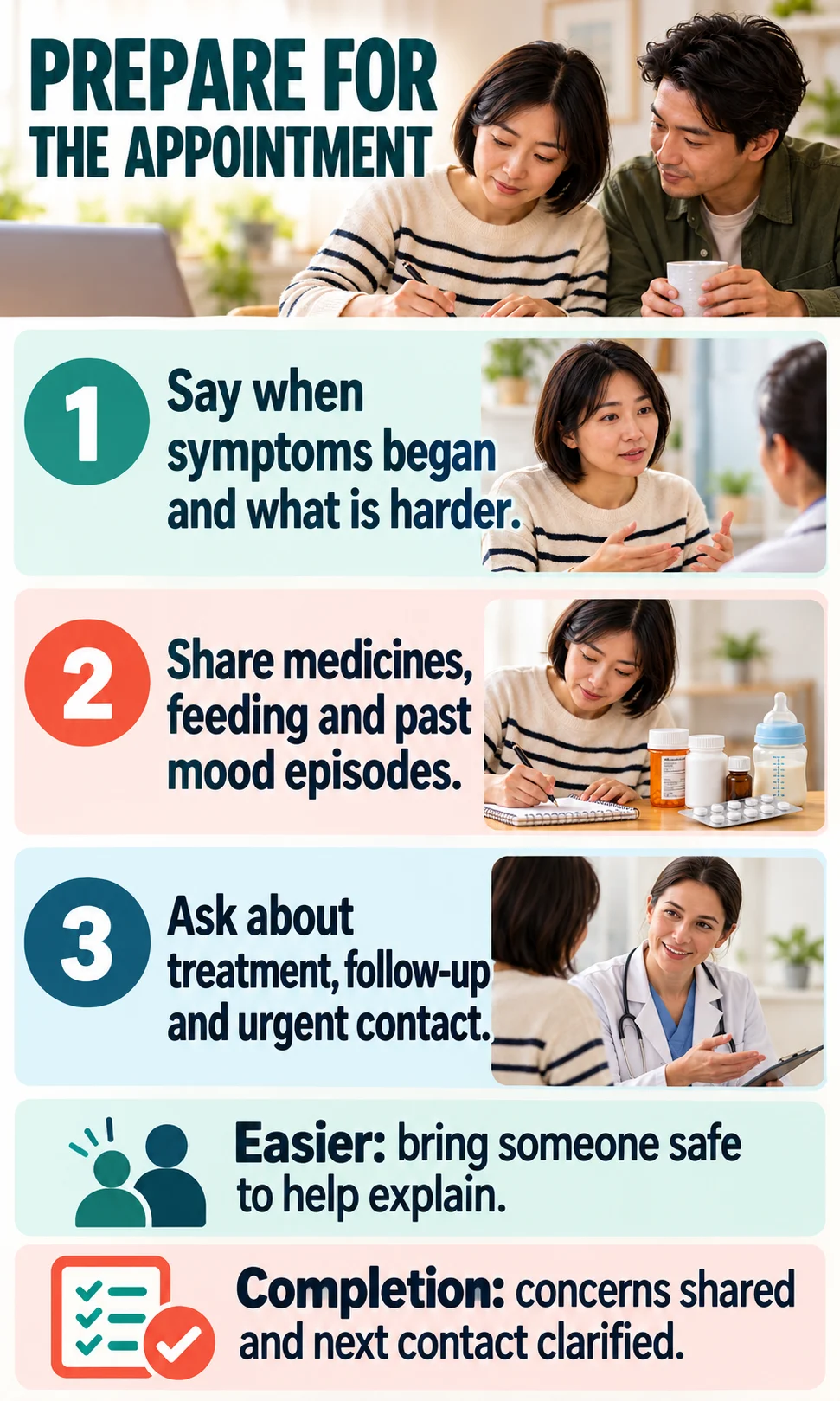
Use this when it is hard to know what to say during a short consultation. You can make brief phone notes, speak directly or bring a safe companion. A long diary is not necessary, and urgent care must not wait for preparation.
- Explain when symptoms began and one concrete daily difficulty, such as being unable to rest or manage routine decisions.
- Share medicines and supplements, feeding needs, previous depression and any past episodes of unusually high energy or reduced need for sleep.
- Ask about treatment choices, the next review and whom to contact for worsening symptoms or urgent concerns.
An illustrative example is: “Since the birth I feel overwhelmed most days and cannot sleep when I get the chance. What assessment and treatment can we arrange?” Easier option: bring someone safe to help explain. Completion means sharing the main concerns and clarifying the next contact; you do not need to remember every detail.
A supporter can offer an agreed task, help with transport or attend a consultation if invited. Listen without demanding gratitude, instant bonding or a positive attitude. A parent’s difficulty feeling connected to their baby is information for care, not a verdict on their worth.
Recovery is individual, and one good or bad day does not establish the overall outcome. Agree follow-up and report worsening symptoms or treatment problems rather than waiting silently. Our guide to Depression And Chronic Ailments provides further context when ongoing physical illness adds to the care burden.
Frequently asked questions
Can postpartum depression begin months after childbirth?
Yes. Symptoms can develop in the first year after birth, and some episodes begin during pregnancy. Ask for assessment whenever persistent or worsening symptoms affect your life; the calendar alone should not decide whether you receive care.
Does difficulty bonding mean I am a bad parent?
No. Difficulty feeling connected can occur with postpartum depression and deserves compassionate support. Tell your clinician about it so that your care addresses both your wellbeing and your parenting concerns.
Can fathers or partners become depressed after a baby arrives?
Yes. Partners can also experience depression after a birth. Their symptoms need assessment and support too, and a family may need practical help for more than one person.
Should I wait for the routine postnatal visit?
If you are struggling, request help sooner. A routine visit is not a reason to delay assessment of worsening or disabling symptoms. Immediate danger or suspected psychosis needs urgent help now.
Choose one next step
Contact a clinician if symptoms persist, worsen or disrupt daily life. While that contact is arranged, choose one illustrated action that reduces a practical burden. If safety is uncertain, move directly to urgent professional help instead of waiting for an exercise to work.