
Appetite is your desire to eat, and it can change with illness, medicines, mood and daily routines. A brief change may settle, but persistent changes, unintended weight loss or difficulty eating and drinking deserve medical attention. Start by identifying what has changed, then choose support that fits the difficulty.
This guide is for adults noticing a change in eating, rather than a weight-loss programme. If you can swallow normally and keep fluids down, a smaller familiar meal may feel more manageable than a large plate. If food or fluids are not going down safely, use the care guidance first.
| What you notice | What to do next |
|---|---|
| Severe confusion, difficulty waking or breathing trouble | Get emergency help through your local emergency service. |
| Cannot keep fluids down; much less urine or persistent dizziness on standing; new swallowing difficulty | Seek urgent medical advice. Do not rely on food substitutions to resolve these symptoms. |
| Continuing unplanned weight loss or an unexplained appetite change that persists or worsens | Arrange a healthcare assessment; seek help sooner if other symptoms accompany it. |
| A short-lived dip, with normal swallowing and fluids staying down | Try a smaller meal or simple food and drink option. Escalate if intake remains poor. |
What is appetite, and how is it different from hunger?
Appetite describes wanting to eat; hunger describes the drive to obtain food, while fullness is the feeling that you have had enough. These experiences overlap, but they are not interchangeable. You might want a favourite food without feeling very hungry, or need nourishment without finding food appealing.
Your digestive system and brain exchange signals through nerves and hormones. Food cues, including sight and smell, can start digestive responses before a meal, while signals from the digestive tract help communicate hunger and fullness. This gut-brain communication is a normal process, not evidence that a particular appetite change comes from one hormone or one disease.
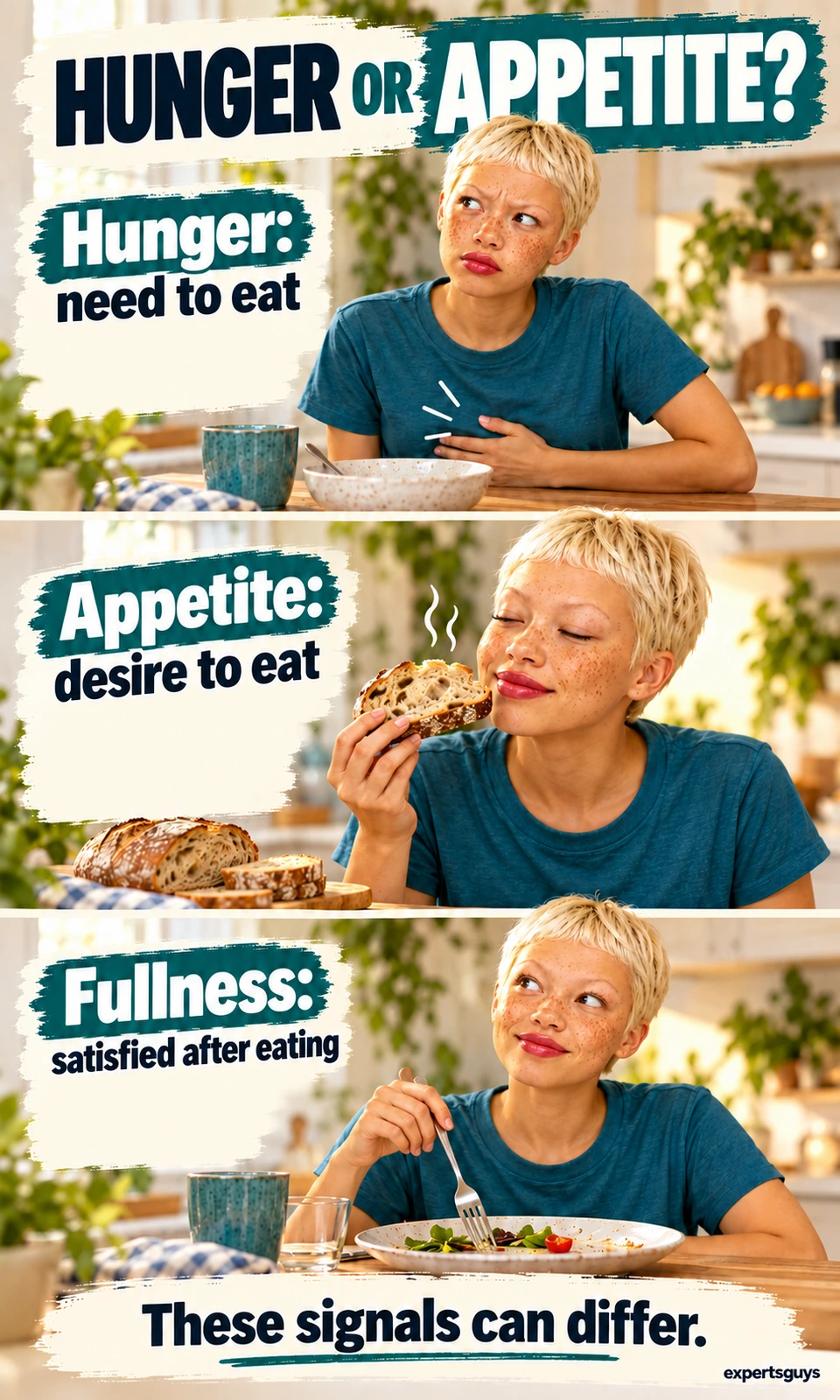
Use the description that fits the actual interruption: “I have no interest in food,” “I want food but feel sick,” or “I feel full after a few bites.” Someone can have more than one barrier, and the distinction helps make the problem clearer. Feeling hungry does not rule out a swallowing problem, and food feeling stuck needs assessment rather than an appetite remedy.
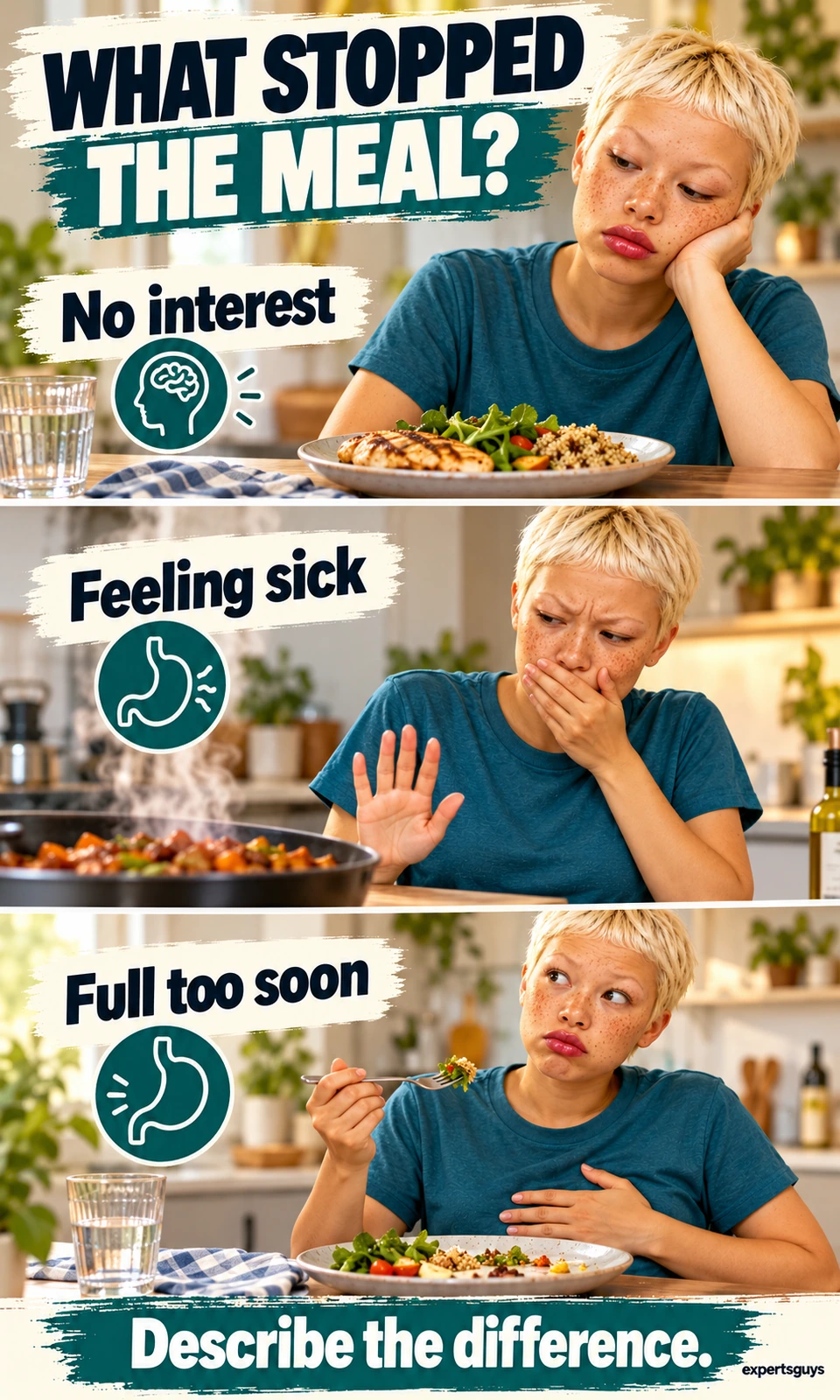
A single meal does not tell you whether your overall intake is adequate. The useful question is whether the change is interfering with eating, drinking or everyday function over time. There is no need to compare your appetite with someone else’s plate size or turn every meal into a test.
Why has my appetite decreased or increased?
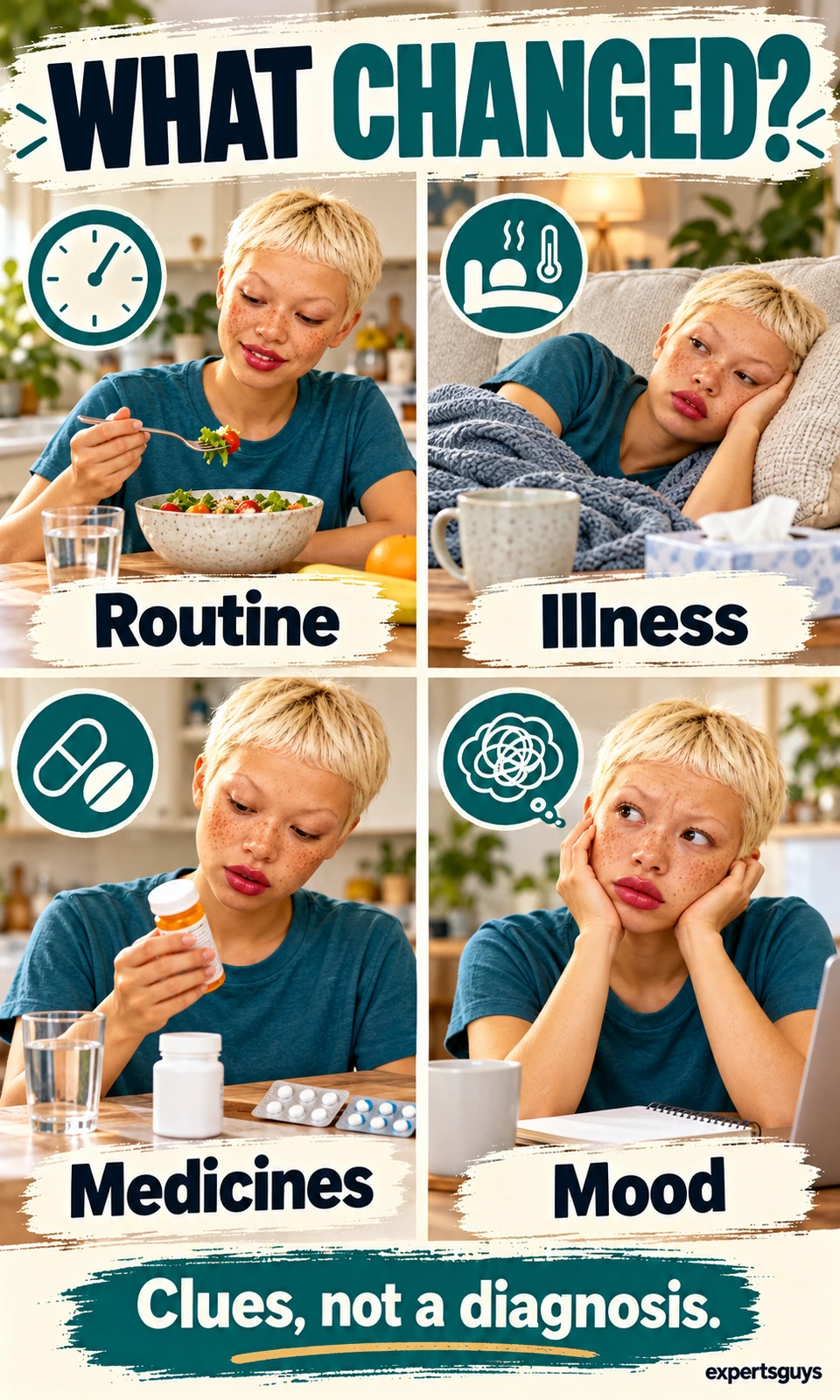
A new routine, an illness, a medicine change or emotional strain can coincide with reduced interest in food. Nausea, mouth discomfort or difficulty obtaining and preparing meals may also make eating harder even when some appetite remains. Timing gives a clinician useful clues, but a change starting during stress does not prove stress is its only cause.
| Pattern | What it can help clarify | What it cannot prove |
|---|---|---|
| Little interest while physically unwell | Whether appetite changed with illness or other symptoms | That waiting indefinitely is safe |
| Nausea around meals | Whether sickness, smell or the act of eating is the main barrier | That depression is the cause |
| Change after starting a medicine | Which medicine and timing to discuss with the prescriber | That stopping it yourself is appropriate |
| More hunger with thirst, frequent urination or weight change | Why a broader medical assessment may be needed | A diagnosis of diabetes or thyroid disease |
| Low mood and loss of enjoyment alongside appetite change | Whether mood also needs assessment | A depression diagnosis from appetite alone |
Depression can involve appetite or unplanned weight changes, alongside symptoms such as persistent low mood or reduced enjoyment. Appetite alone cannot establish that diagnosis, and physical illness or medication effects may coexist. The NIMH depression guide explains why the overall symptom pattern and impact on daily life matter.
The opposite change also deserves attention: an unexplained, persistent increase in appetite can have medical or medicine-related causes. Increased appetite does not always mean weight gain, so eating more while losing weight should not be dismissed. Guidance on increased appetite recommends assessment when the change is unexplained or other symptoms accompany it.
Keep medicine questions with the clinician or pharmacist who can review the full treatment list. A temporal connection is a reason to ask, not a reason to stop or alter a prescription. If anxious situations are a particular concern, the separate guide to logging anxiety-related appetite changes before a visit shows how to describe the pattern without assigning a cause.
What can I try when eating feels difficult?
Choose one adjustment that removes the immediate barrier, rather than trying to force a full meal. The examples below are practical adaptations of patient guidance, not a treatment for depression or a personalised nutrition prescription. If you have a swallowing plan, fluid restriction or condition-specific diet, follow that advice and ask your care team about changes.
Start with a smaller meal
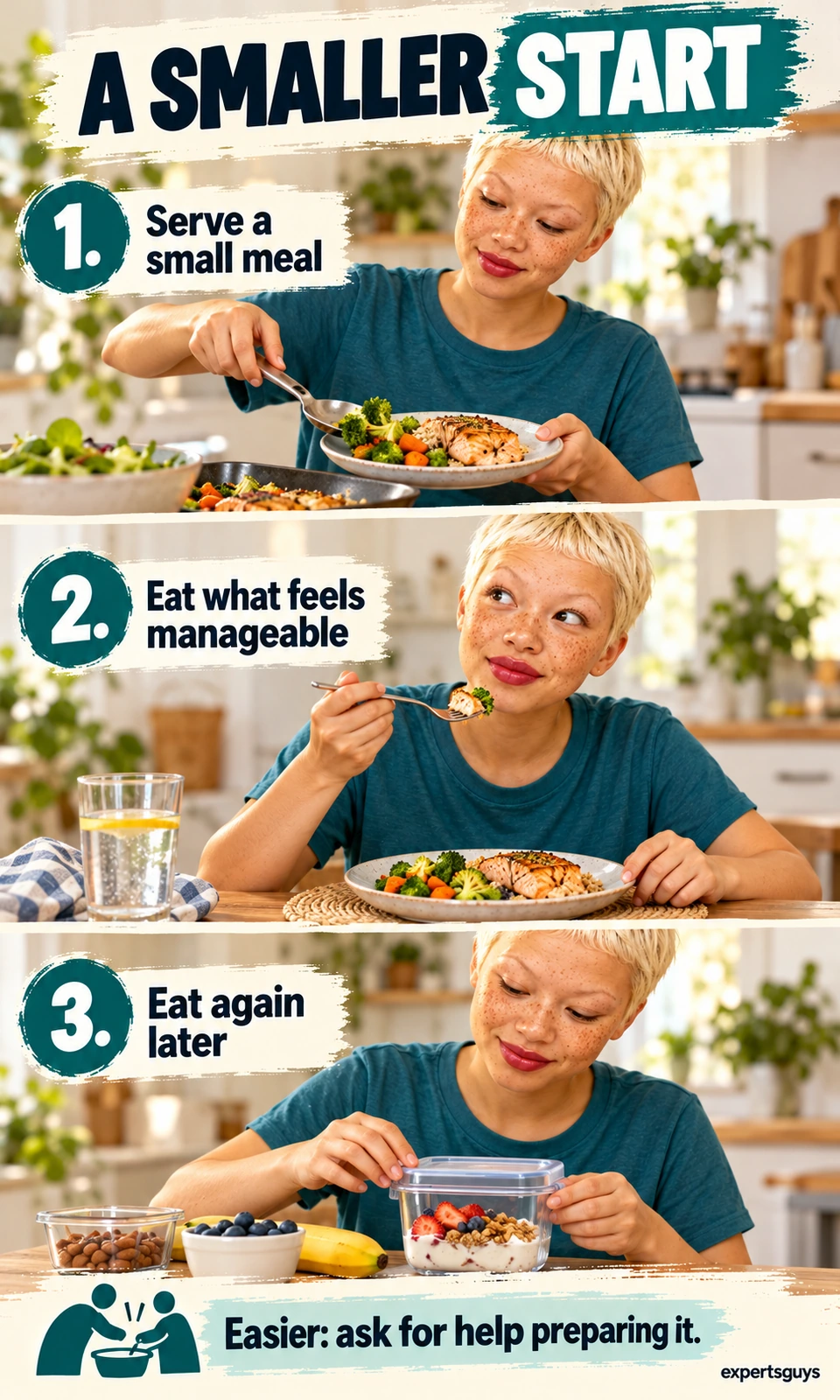
For a large plate that feels overwhelming, try a smaller portion of familiar food with another eating opportunity later. Dietetic guidance for adults with poor appetite supports smaller, more frequent meals when increasing portion size is difficult. That guidance is particularly relevant to low intake and weight loss; it does not mean everyone with a temporary appetite change needs weight-gain foods.
- Serve a smaller meal that suits your dietary needs, such as toast with egg or a small bowl of a familiar dish.
- Sit somewhere comfortable and eat what you can manage without forcing yourself through pain or nausea.
- Keep another suitable meal or nourishing snack available later, rather than treating this small portion as the whole day’s food.
Illustrative example: a full dinner feels too much, so you serve a smaller bowl and keep a suitable snack for later. If preparation is the barrier, ask someone to portion the food or bring a ready-to-eat option. Completing this step means making one eating opportunity easier; it does not establish that you have eaten enough or explain why appetite changed.
Reduce cooking and smell barriers
If cooking feels exhausting or smells make nausea worse, choose a simple cold option that you tolerate. Reducing preparation removes a practical obstacle, while avoiding strong smells may make the eating setting more comfortable. This matches NHS advice for nausea, but recurring sickness still needs assessment.
- Choose food that needs little preparation, such as yogurt, bread or a suitable sandwich filling.
- Assemble a small snack or meal on a clean surface, following storage instructions and your dietary restrictions.
- Try eating away from cooking smells; do not keep testing a food that makes you feel worse.
Illustrative example: you put hummus into a sandwich rather than cook a hot meal, then sit away from the kitchen. An easier version is choosing a suitable ready-to-eat snack or asking someone to assemble it. The goal is a usable food option today, not a promise that cold food will restore appetite.

Make fluids accessible
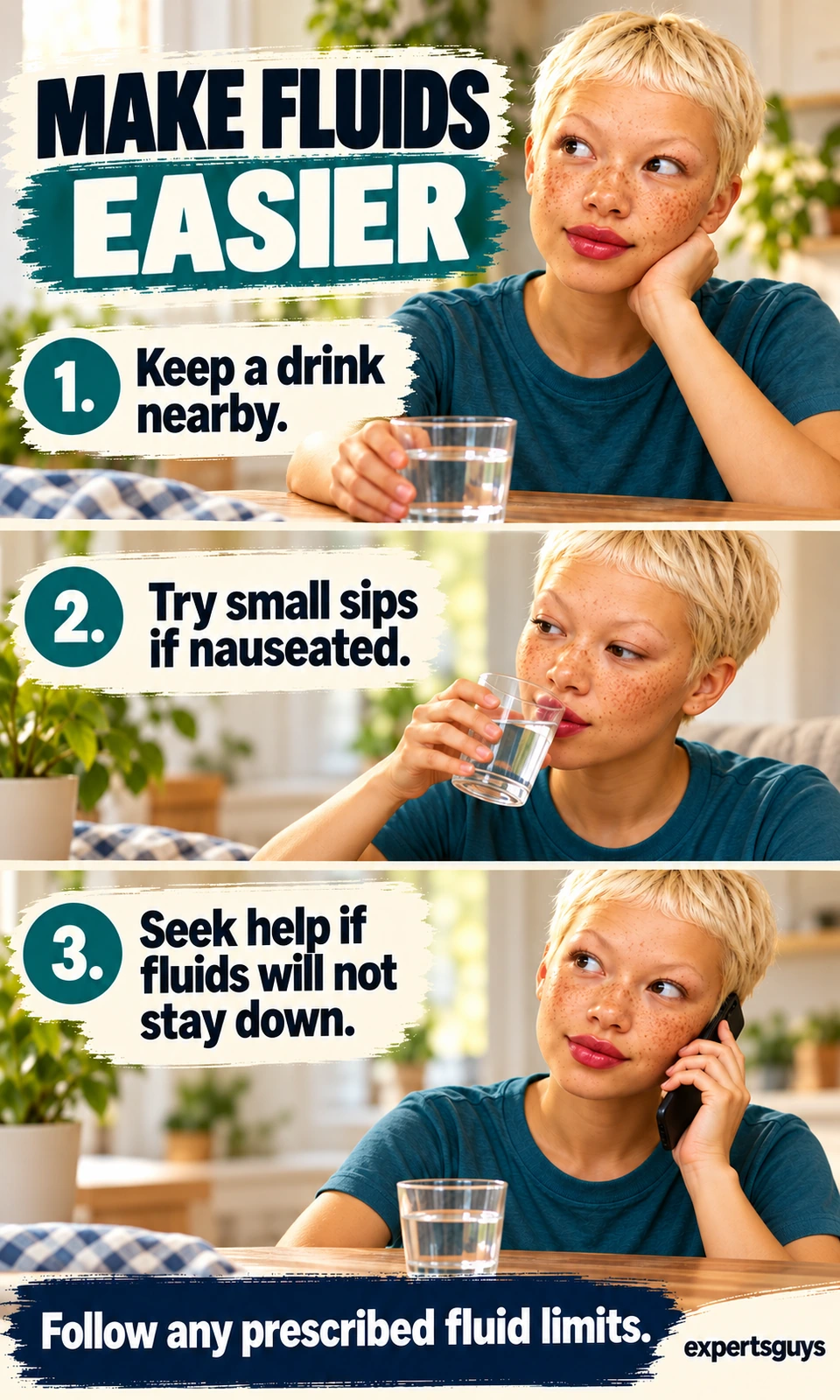
Place a drink within easy reach and take small sips if nausea makes larger drinks difficult. Fluids and food are separate needs, so managing a snack does not establish that you are adequately hydrated. Follow prescribed fluid limits and seek advice if you cannot keep fluids down or notice signs of dehydration.
- Put a suitable drink where you are sitting, or ask someone to bring it.
- If nauseated, start with small sips and increase as tolerated rather than forcing a large drink.
- If fluids will not stay down, or urination drops and you feel unwell, seek medical advice instead of repeating the same attempt indefinitely.
Illustrative example: instead of facing a large mug at once, you keep a glass nearby and sip comfortably. If getting the drink is difficult, asking for it is the smaller first step. The dehydration guidance explains when symptoms need urgent care and when a pharmacist can advise on rehydration after vomiting or diarrhoea.
Food access is also part of the problem: shopping, cost, fatigue and having nobody to help can interrupt eating without changing desire for food. Say which task is difficult when asking for support, such as bringing groceries or preparing one meal. If depression is making meals repeatedly disappear, the separate skipped-meal appointment guide can help describe that pattern without replacing practical help.
When should an appetite change be checked?
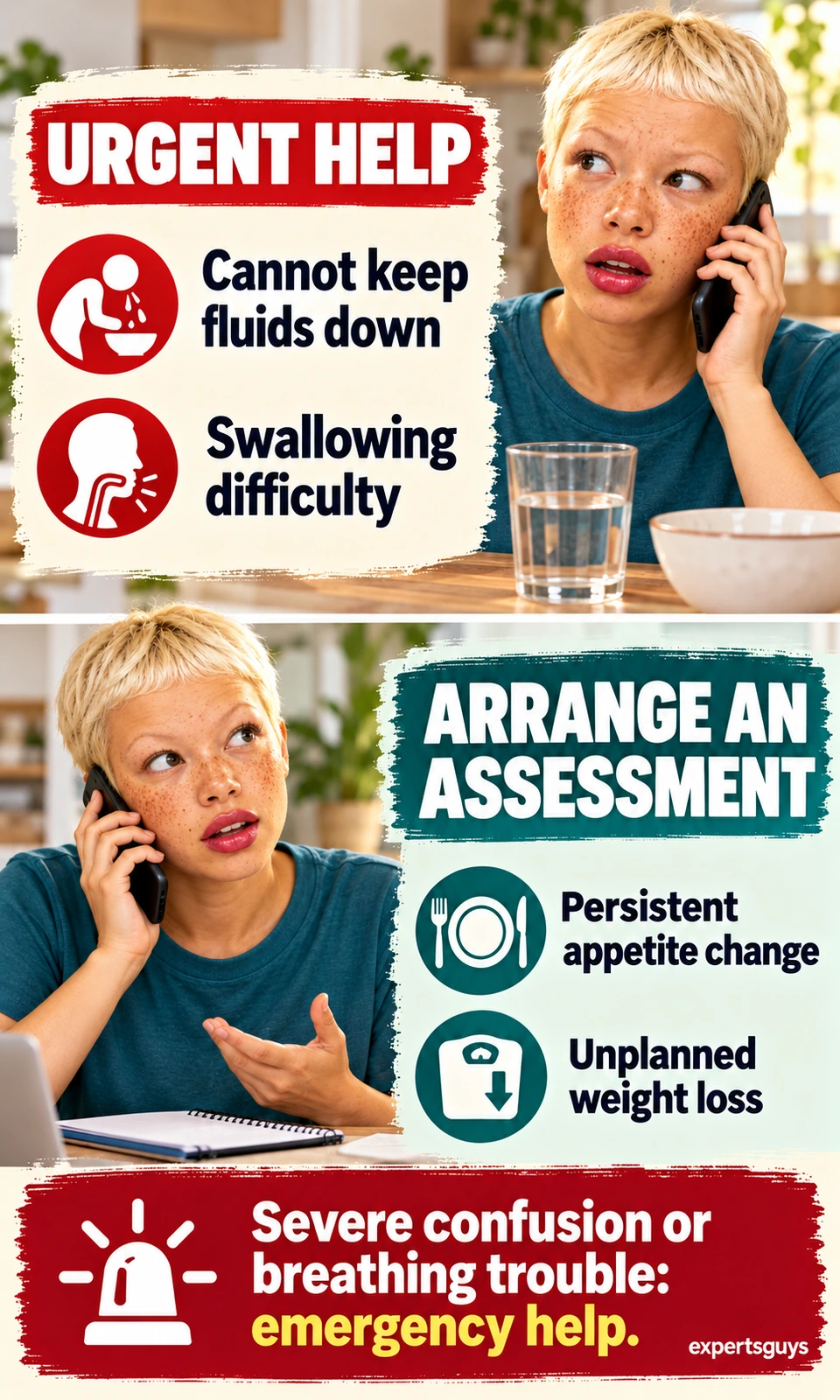
Arrange an assessment when an unexplained change persists, worsens or affects your ability to eat and function. Continuing weight loss without trying should also be checked, even if you still feel hungry. NHS guidance on unintentional weight loss advises assessment and earlier attention when other symptoms are present; you do not need to wait for a particular number on the scale.
Use the early table for urgent situations, especially difficulty keeping fluids down, reduced urination with illness, or persistent dizziness on standing. Swallowing difficulty, including coughing or choking during meals or food feeling stuck, also requires prompt medical advice. Severe confusion, difficulty waking or breathing trouble warrants emergency help rather than continued meal experiments.
Prepare a short account, not a perfect diary
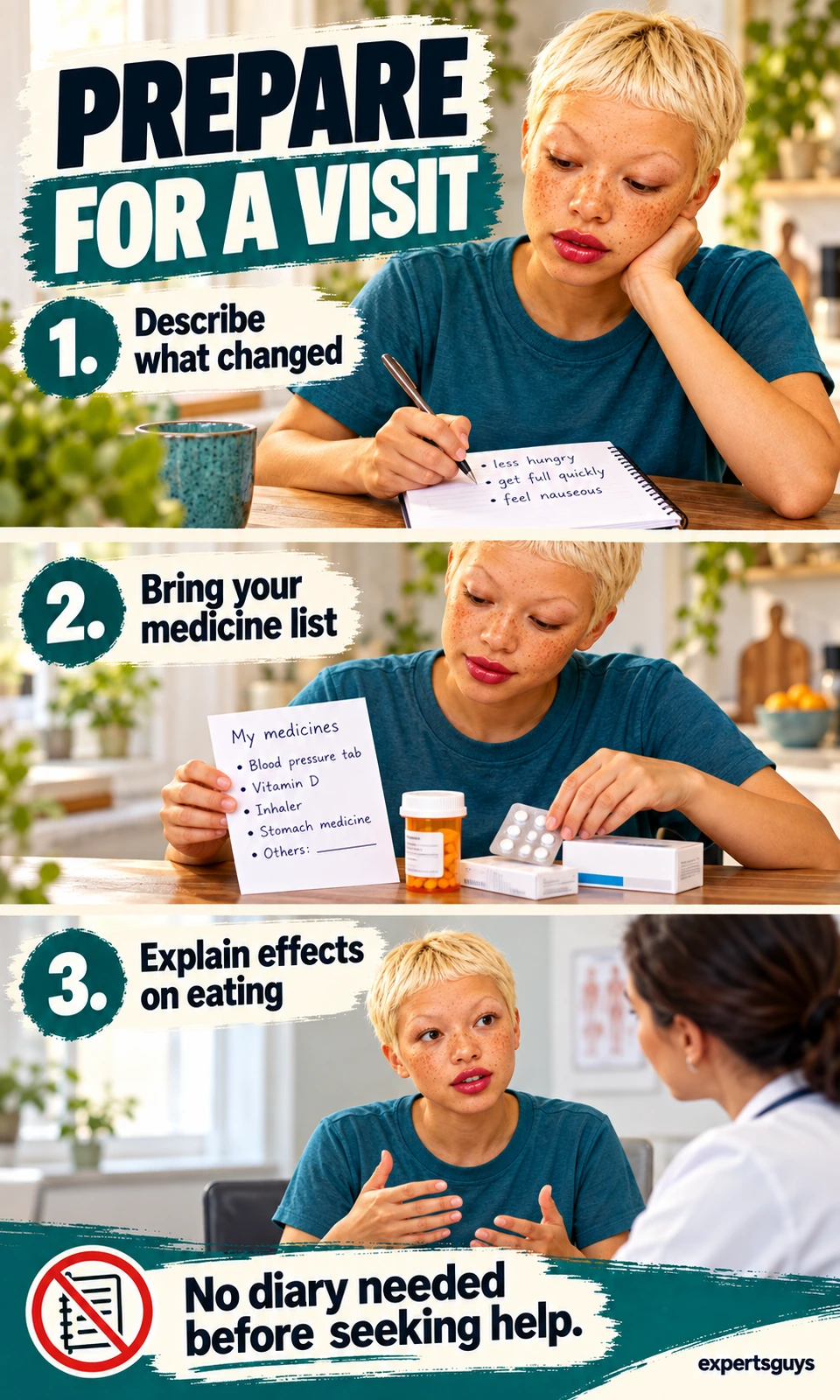
A healthcare appointment is more useful when you can describe the change and its effects in ordinary words. A short note can help memory, but you can give the information verbally and do not need to delay care to collect it. Bring what you know rather than filling gaps with guesses.
- Describe when the change began and whether it is low interest, nausea, early fullness or increased hunger.
- Bring a current medicine and supplement list, including recent starts or dose changes.
- Explain what eating and drinking now look like, any unplanned weight change and other symptoms.
Illustrative example: “I still want lunch, but I feel full after a few bites; this began after I started a new medicine.” That statement describes timing and function without claiming the medicine caused it. If writing feels difficult, say it aloud or bring a trusted person to help explain, with your agreement.
The clinician may review your diet, weight pattern, medicines and other symptoms, examine you and decide whether tests are appropriate. There is no single appetite blood test that explains every case, and tests are selected according to the clinical picture. Normal results from one test do not automatically settle a continuing problem, so discuss what follow-up is needed.
Frequently asked questions
Does loss of appetite mean anorexia nervosa?
No. “Anorexia” can describe reduced appetite as a symptom, while anorexia nervosa is a distinct eating disorder. If eating involves fear, restriction, loss of control or distress, seek an assessment rather than trying to diagnose it from appetite alone.
Should I force myself to finish a large meal?
A smaller manageable portion may be easier when appetite is low. Do not force food through pain, significant nausea or swallowing difficulty. Ongoing poor intake needs assessment and individual nutrition support, not pressure to clear a plate.
Can I stop a medicine to see whether appetite returns?
Do not stop or change a prescription without speaking to the prescriber. Bring the medicine name, dose and timing of the appetite change to the discussion. The right next step depends on the medicine, its purpose and your wider health.
How quickly should appetite return?
There is no recovery deadline that applies to every cause. A temporary change may improve as the underlying problem settles, while ongoing illness or treatment effects may need further help. Seek assessment for persistent, worsening or disabling changes, and use urgent care for the warning signs described above.
Choose the next useful step
First name the barrier, then make one eating or drinking task easier if it is safe to do so. Seek assessment when appetite changes persist or intake, weight or function are affected. A practical adjustment can support today’s meal while the underlying cause is being addressed.