
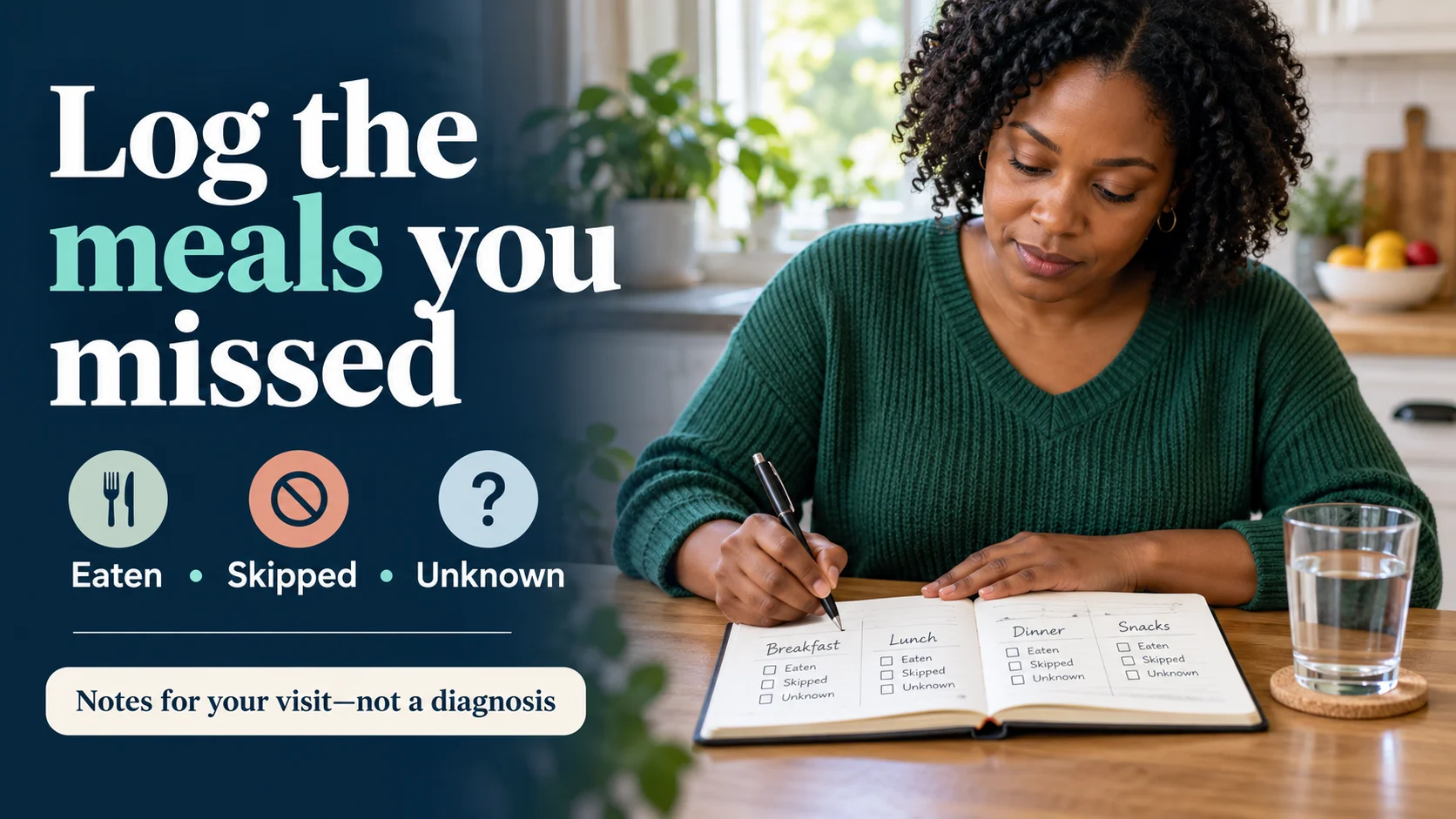

To prepare for a depression appointment when you have been missing meals, record your usual eating slots as eaten, skipped or unknown, with a brief note about drinks and what happened. The record can help you describe the week, but it cannot explain the cause or diagnose depression. Use whatever observations you have, without waiting to complete a full diary before seeking help.
What this log is for
This method is for an adult preparing for a booked, non-urgent primary-care or mental-health appointment. Its purpose is to make a difficult conversation more concrete when memory is patchy or a meal never happened. This is an educational recording method, not a clinician-authored assessment. It is an appointment note, not a meal plan, nutrition assessment or treatment programme.
The NIMH depression guide lists appetite or unplanned weight changes among possible symptoms and suggests taking symptom notes to a visit. That does not mean a skipped lunch establishes depression, or that every appetite change has the same cause. A clinician needs the wider history and may consider other explanations.
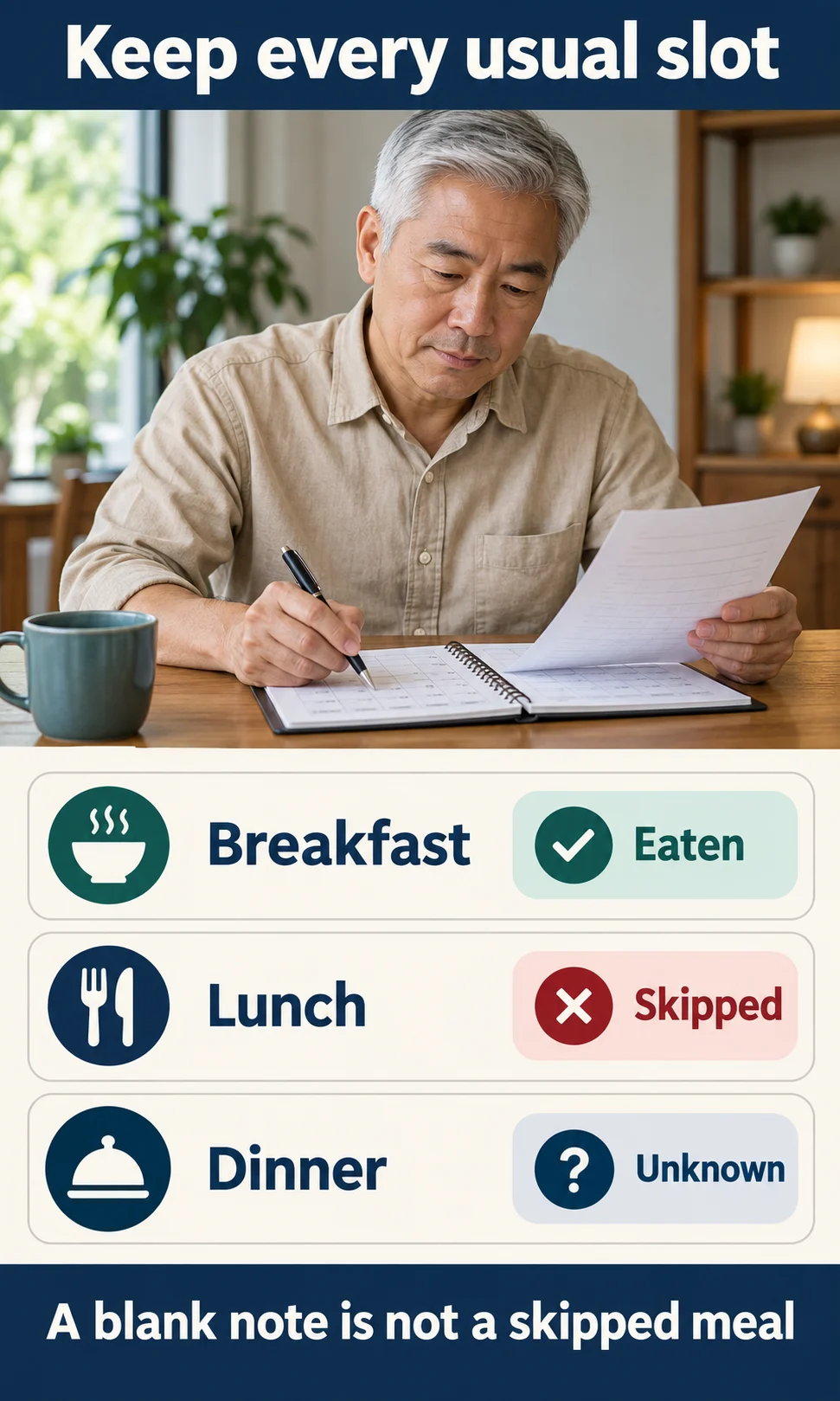
Start with the eating times that are usual for you, rather than adopting someone else’s breakfast, lunch and dinner schedule. Keep those slots on the page even when you eat nothing, and choose a status instead of leaving the result ambiguous. The distinction below is a recording convention for this method, not a medical classification.
| Entry | What it means |
|---|---|
| Eaten | Some food was eaten at this usual slot; describe the rough amount if you remember it. |
| Skipped | You reliably remember eating nothing at this usual eating time. |
| Unknown | You cannot reliably remember whether you ate at this slot. |
| Not recorded | The slot has not been completed in the digital log. It is not counted as skipped or unknown. |
How to log skipped meals before a depression appointment
If it feels manageable, use up to seven days and include a weekend day when one falls before your visit. Seven days is a convenient layout for showing different routines, not a clinically validated minimum or a reason to postpone an appointment. A shorter record, a few examples or a verbal account may be enough to start the conversation.
Make a brief entry near the time it happened if you can, or mark it later with the uncertainty intact. A phone note or paper sheet works just as well as the interactive record below. If your clinician has already provided a diary, use their instructions instead of adding a second tracking task.
The seven columns
Keep the fields observational and short: time, usual slot, status, rough amount, fluids, taste or interest, and effort to start. “Two bites,” “half a bowl” and “one small mug” are useful descriptions without weighing food. The University of Wisconsin food-and-drink log illustrates recording timing and amounts; the separate skipped and unknown states here are an editorial adaptation for visit preparation.
| Column | Useful wording |
|---|---|
| Time | “About 1 pm”; an approximate time is acceptable. Leave it blank if unknown. |
| Usual slot | “Lunch” or “after my night shift”; use your own routine. |
| Status | Eaten, skipped or unknown; do not infer the state from a blank field. |
| Rough amount | “A few spoonfuls of soup.” For a skipped slot, “nothing eaten” is enough. |
| Fluids | “About half a small mug of tea”; include drinks even if no food was eaten. |
| Taste or interest | “Toast tasted flat” or “no interest in lunch”; observation, not a cause. |
| Start effort | “Sat down to cook, then stopped after 10 minutes”; record minutes only if known. |
You do not need to finish every column to preserve a useful event. A reliable status with one short note is better than detailed estimates invented afterwards. If a field feels burdensome, leave that detail out and tell the clinician what you could record.
A filled Tuesday with a skipped lunch
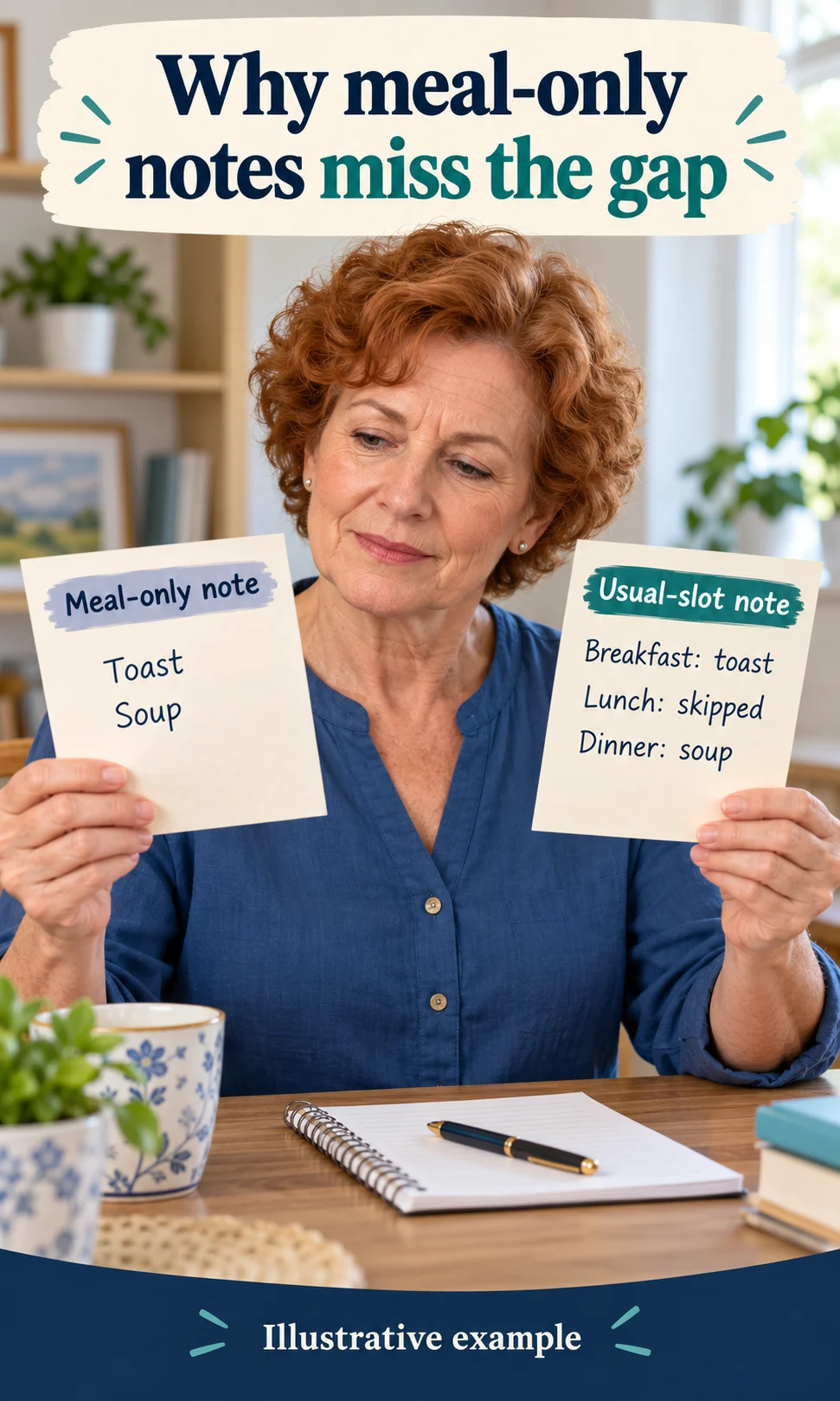
The example below is fictional and demonstrates the method; it is not a patient diary or evidence of a clinical outcome. A note containing only “toast” and “soup” would make the day look like two meals without explaining the lunch gap. Keeping the lunch slot visible preserves the missed event and the drink that would otherwise disappear.
| Time / usual slot | State and rough amount | Short observation |
|---|---|---|
| 8:30 am / breakfast | Eaten: half a slice of toast | Half a small mug of tea; toast tasted flat; no cooking needed. |
| 1 pm / lunch | Skipped: nothing eaten | Half a glass of water; no interest in food; stopped preparing lunch after about 10 minutes. |
| 7 pm / dinner | Eaten: a few spoonfuls of soup | One small glass of water; taste not noted; someone else prepared it. |
- Leave a row for each usual eating time, including the ones with no food.
- Choose unknown when you cannot remember; do not fill the gap with what you intended to eat.
- Keep drinks and effort in plain words, with no calorie goal, rating or success target.
Why writing only meals you ate hides the problem
A meal-only diary begins when food is eaten, so a missed meal can leave no trace. Looking back at night then adds a second problem: the meal you considered making can be confused with the meal you actually ate. The usual-slot method keeps intention and observation separate, without judging either.
The slot is a prompt to remember an event, not an instruction about when you must eat. If your work pattern changes, rename the slots so the record reflects that routine. A household member may help write down an offer of food and what was visibly eaten, with your agreement, but should not guess your feelings or privately monitor you.
What to do with a forgotten day
Mark the slots unknown when you have no reliable memory, rather than copying a typical day into them. If a photo, message or another person’s observation reminds you of one specific event, record only that event and say where the information came from. A receipt may show that food was bought, but it does not prove that it was eaten.
A forgotten day is part of the record’s limitations, not a failure to complete homework. You can tell the clinician that recall was difficult and identify which entries are uncertain. That is more useful than a polished page whose accuracy nobody can assess.
Fluids and flat taste, in one line each
Keep the drink description tied to what you observed: the type of drink, approximate cup size and how much was consumed if known. “Half a 250 ml cup” is clearer than “some water,” but there is no need to measure every drink. This log sets no fluid target and cannot determine hydration status.
For taste or interest, use your own words rather than an explanation borrowed from a website. “Food tasted like cardboard,” “the smell put me off” and “I wanted food but could not begin preparing it” describe different experiences. Persistent or new changes can be mentioned at the visit, but the diary cannot assign them to a medicine, deficiency or psychiatric condition.
When to stop the log
Stop immediately if recording increases distress, urges to restrict food, compulsive checking or pressure to produce a perfect page. There is no three-day minimum, and you do not have to push through tracking that is making things worse. If you are being assessed or treated for an eating disorder, ask your care team whether any food record is appropriate.
Seek urgent medical advice if you cannot keep fluids down, or have persistent dizziness on standing or much less urine than usual. If you have fainted, arrange medical assessment; call emergency services if you have not fully recovered, have chest pain or have been seriously injured. The NHS dehydration guidance identifies persistent standing dizziness and reduced urination as reasons for urgent assessment; confusion, breathing difficulty or being difficult to wake require emergency help. Use your local urgent-care or emergency service rather than waiting to complete this record.
Contact a clinician promptly about ongoing or rapid unintended weight loss, especially when other symptoms are present. The NHS advice on unintentional weight loss recommends assessment rather than assuming a cause. You do not need to create a weight chart for this appointment log.
If you have thoughts of suicide or self-harm, get support now instead of continuing the diary. In the United States, call or text 988; in Singapore, Samaritans of Singapore offers the 24-hour 1767 hotline and WhatsApp CareText at +65 9151 1767. If you are in immediate danger, call your local emergency number; elsewhere, use your local crisis service.
Prepare your appointment record
The Visit Notes Studio keeps eaten, skipped, unknown and not-recorded slots separate and lets you choose up to three examples for a one-page summary. Its counts describe the entries you made; they are not a nutrition score or a measure of depression severity. The record stays in this page’s memory unless you download a file, so save a private copy before closing or refreshing if you want to keep it.

Visit Notes Studio
Keep the missed slots visible.
Bring a clearer account to your appointment.
If the controls do not respond, use paper with the seven columns described in the article. Blank slots are not automatically skipped.
Use your usual eating times. Rename a slot if your routine differs. Closing or refreshing clears the record unless you download your private file. No entries are sent by this experience.
Your record at a glance
Counts describe marked slots only. They do not establish nutritional adequacy, depression severity or a cause. Select up to three dated entries for the A4 summary; the CSV download includes all slots.
No slots marked yet. You can bring an incomplete record.
Downloaded files contain your notes. Keep them somewhere private, especially on a shared device. This experience does not add analytics or persistent browser storage; the surrounding site has its own privacy practices.
What to hand the clinician
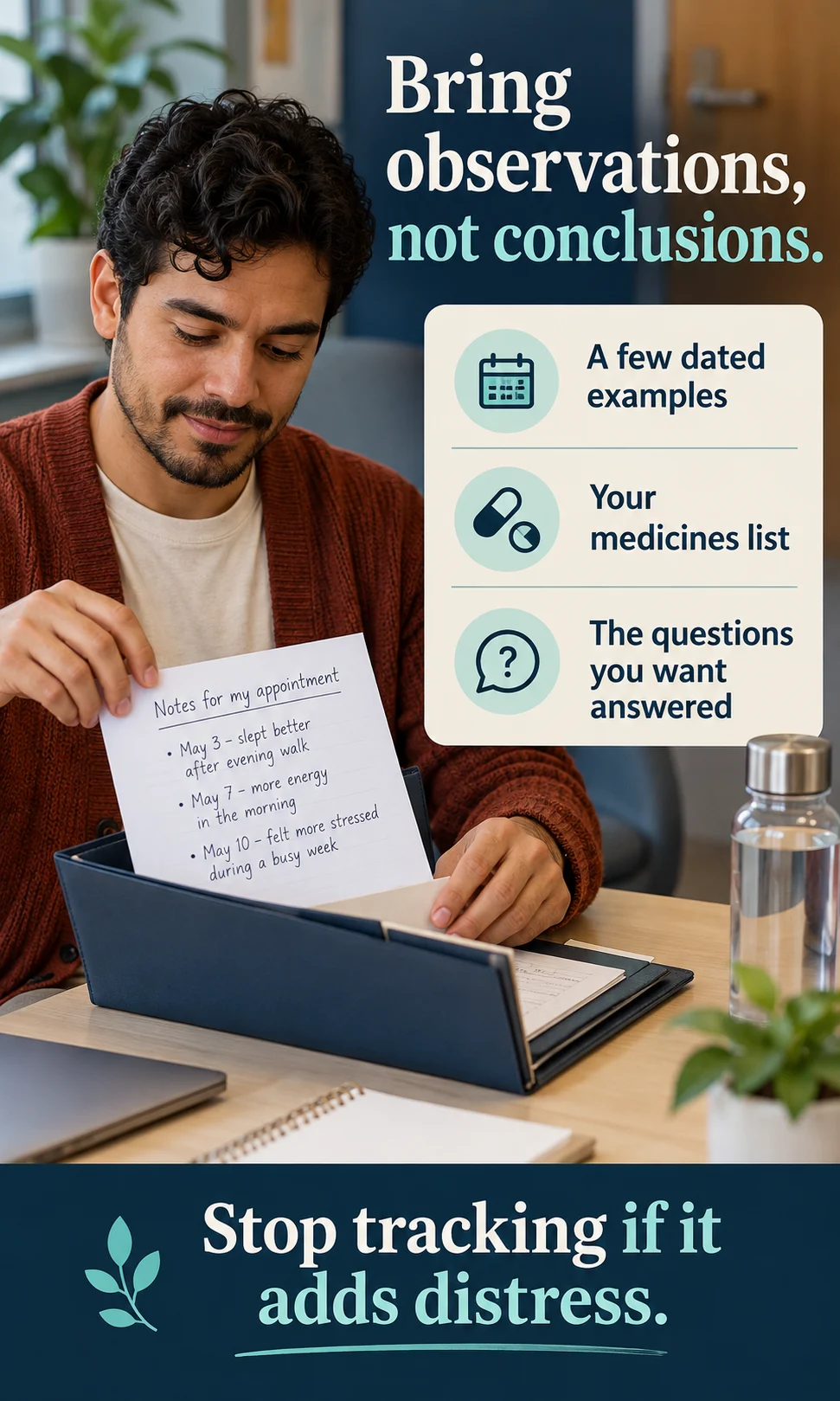
Bring a brief description of what changed, the dates you observed and a few examples you trust. The summary should preserve skipped and unknown slots separately, with drinks and practical barriers shown in the selected examples. Bring the full record as well if it helps, and say explicitly when information is missing.
The NIMH appointment-preparation guidance recommends preparing questions and a list of all medicines, including nonprescription products and supplements. List what you take separately; this diary cannot tell you whether a medicine caused an appetite change. If you wish, a trusted person can attend to help you remember the discussion.
If fatigue is another concern, note when it started and ask whether it needs its own assessment; our anemia and depression explanation discusses why overlapping symptoms need context. If an unfamiliar label appears in your chart, our unspecified depression coding explanation can help you frame a question about the wording. Neither page can identify the cause of your missed meals.
Frequently asked questions
How many days should I log before the visit?
Up to seven days is a convenient editorial format, including a weekend day when possible. It is not a required clinical duration. Bring fewer days or a few reliable examples if that is what you have, and never delay care to finish the record.
Do I write down meals I only planned to eat?
You can name the usual slot, but do not record a planned meal as eaten. Choose skipped if you reliably remember eating nothing, or unknown if you cannot remember. A note such as “planned soup; did not start cooking” keeps intention separate from the event.
Should I record calories or weight?
This method does not require calorie counting, weighing food or a weight chart. Rough descriptions such as a few bites or half a bowl are enough for the recording task. Follow any separate instructions from your clinician, and stop if tracking increases distress or restriction.
What if I cannot remember yesterday?
Choose unknown for the slots you cannot recall. Record any specific detail you genuinely remember without inventing the rest of the day. Tell the clinician that the record is incomplete.
Do I log drinks if I skipped the meal?
Yes, you can record drinks independently of whether food was eaten. Note the drink and approximate cup size or amount when you know them. The log does not set a drinking target or assess dehydration.
Can this log tell my doctor I have depression?
It can show observations relevant to the conversation, but it cannot diagnose depression or an eating disorder. A clinician needs the broader history and assessment. The same entry can have more than one possible explanation.
Bring an honest record, even when it is incomplete
Keep the usual slots visible, distinguish skipped from unknown, and add only the detail you can comfortably recall. The aim is to give the clinician a clearer starting point for questions, not to prove a diagnosis or correct your eating yourself. A short, honest record is ready to bring as it is.