




Depression usually cannot be reduced to one cause. Background vulnerability, life circumstances, health changes and processes that keep difficulties going can interact. A useful starting question is what changed, when it changed and what became harder—not who is to blame or which single factor must explain everything.
The purpose of exploring causes is to improve support and assessment. It is not to build a case against yourself or another person. You may identify a relevant disruption, several interacting pressures or no obvious trigger. A complete explanation is not a requirement for taking symptoms seriously or beginning an appropriate care plan.
Separate background, onset and what keeps things difficult
Background vulnerability concerns context that may have existed before the current difficulty. A possible trigger concerns a change around onset. A maintaining factor concerns something making daily functioning or recovery harder now. These categories are a practical way to organise a conversation, not medically validated boxes that determine a diagnosis.
For example, an illustrative person might have earlier episodes, then experience a disruptive change in work, followed by difficulty sleeping and withdrawing from support. Each detail raises a useful question, but the story does not prove a single causal chain. The nearest event in time is not automatically the whole explanation.
NIH’s depression overview identifies several relevant kinds of risk and context. This supports asking broadly rather than assuming a single chemical or psychological defect. A risk factor changes a pattern of likelihood in research; it is not a verdict about why one person became unwell.
Start with a short statement in ordinary language: “Since this change, this part of daily life has become difficult.” Approximate timing is useful if exact dates are unclear. An existing calendar, prescription list or message may help, but there is no need to create a detailed diary or reconstruct every day before seeking support.

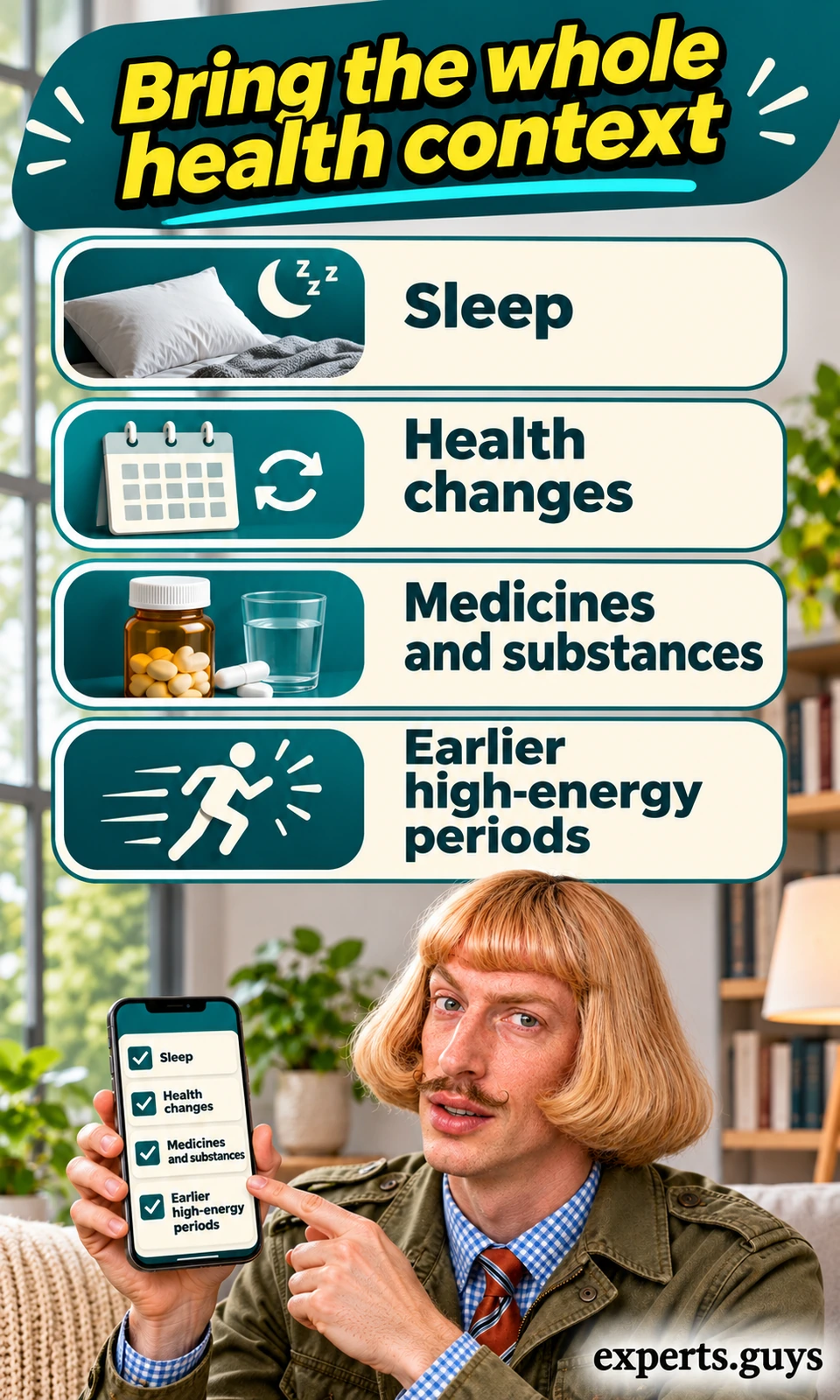
Include health and treatment changes in the picture
The NIMH depression guide describes assessment that considers medicines and physical health as well as symptoms. Some health conditions and medicine effects can overlap with low energy, concentration problems or mood changes. That is a reason for assessment, not an instruction to diagnose yourself from a symptom list.
If something began after a medicine was started or changed, the timing is worth discussing. It does not alone establish causation: the underlying condition, sleep or another change may also be relevant. Bring the name, the approximate change and the difficulty into a review rather than stopping treatment to see what happens.
Past periods of unusually elevated or irritable mood, high energy, reduced need for sleep or marked changes in behaviour also matter. NIMH’s bipolar disorder guide explains why a lifetime pattern can be important when someone presents with depression. A current low period should not be treated as the only piece of the history.
Alcohol, other substances and major sleep disruption belong in the same practical conversation. The aim is an accurate picture, not a moral judgement. If discussing a detail feels difficult, a short factual description can still help: what changed, what you noticed and what you need help deciding.
Family history can be relevant without deciding the outcome. An absence of known family depression does not exclude it, and a history does not make it inevitable. You do not need to investigate relatives’ private medical histories or assign inherited blame. Bring what is already known and allow uncertainty to remain where information is missing.
| Part of the story | Illustrative question | What it does not prove |
|---|---|---|
| Background vulnerability | What relevant health, family or earlier episode context is already known? | That an episode was inevitable |
| Possible trigger | What changed around the time difficulties began? | That the nearest event was the only cause |
| Maintaining factor | What is making functioning or recovery harder now? | That the person caused the illness |
| Protective support | What makes a necessary task or connection more achievable? | That one change is a complete treatment |
Look at circumstances without making them a character test
Loss, isolation, care responsibilities, insecurity and relationship changes can create burdens that deserve practical attention. Naming the burden does not mean everyone in a similar situation will develop depression or that the burden explains every symptom. It helps identify what support might reduce the strain now.
NIH’s discussion of research on depression risk factors illustrates how studies investigate multiple aspects of daily life. Such findings can inform further questions. They do not justify telling a person that one habit caused their illness or that changing it will reliably prevent every future episode.
Avoid comparisons such as “Other people have it worse.” They do not clarify a causal question and can make it harder to ask for help. A more useful response is to identify the demand that is exceeding available capacity: an unresolved practical task, an unsustainable caring load or a support arrangement that has broken down.
A helpful next step should be small enough to use in the actual circumstances. For example, if meals have become difficult, a trusted person might arrange an agreed simple option rather than sending an ambitious lifestyle plan. If a necessary appointment is hard to attend, the useful support may be transport or joining the conversation, not another explanation of motivation.
- Name one current demand that is harder than usual.
- Identify one part that another person or service could help with.
- Agree the specific help and when it will happen.
- Keep that practical support connected to the wider assessment or care plan.

Distinguish a contributor from a complete explanation
A change can help without proving what caused the illness. Easier access to meals, a less demanding schedule or restored contact may improve a part of daily life while other symptoms remain. Conversely, a practical change that does not bring enough relief is not evidence that you failed or that the original difficulty was imaginary.
This distinction prevents two common mistakes. One is dismissing support because it does not solve everything. The other is promising that one action will cure depression. A manageable support can have value within a broader plan, while persistent or worsening symptoms still deserve reassessment.
Use the separate depression theories guide if your question is about explanatory models. The chemistry guide separates a medicine’s mechanism from outcome evidence. Neither question needs to take over a practical conversation about what changed in your own functioning.
For concerns about air, noise or chemical exposure, the environmental exposures guide focuses on interpreting that evidence. A general causes article cannot identify a personal environmental cause from where someone lives or works. Specific hazards need the appropriate health or environmental assessment.
Know when the next step needs to be urgent
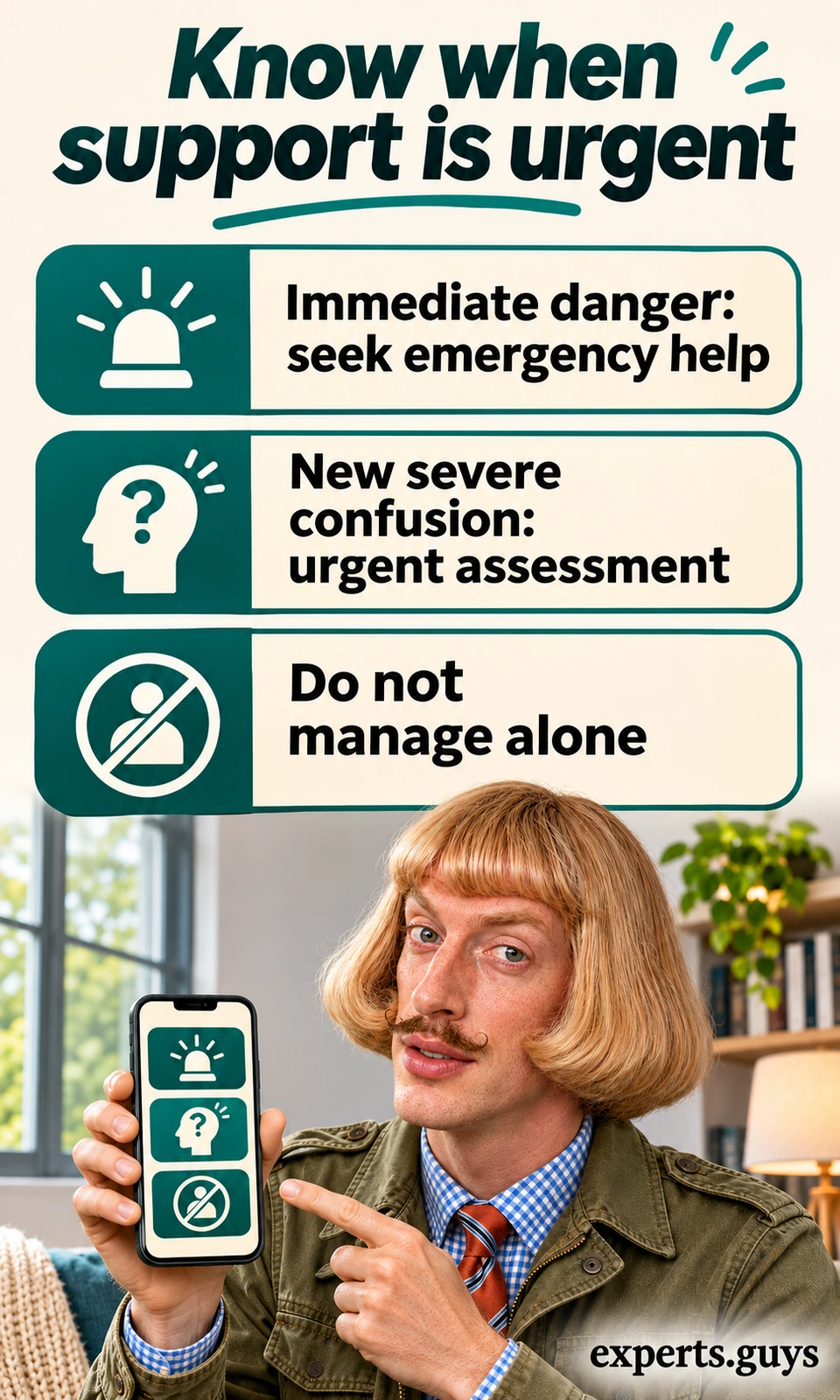
If someone is in immediate danger, cannot stay safe or is experiencing a severe new change in mental state, use local emergency help rather than waiting to complete a causal explanation. Stay with a trusted person if possible while arranging appropriate assistance. An online framework cannot establish the safety of a situation.
New severe confusion, unusual perceptions or beliefs, or a marked change associated with very little sleep may need urgent assessment. NIMH’s understanding psychosis resource describes several possible contexts for psychotic symptoms. Do not assume that an apparent explanation from stress or lack of sleep makes the situation safe to manage alone.
For an ordinary review, a useful opening is concise: the main change, its impact, relevant health or medicine context and the decision you need help with. If communicating is difficult, someone you trust can help relay that information with your agreement. Getting support should not depend on producing a polished personal case study.
NIMH’s psychotherapy overview describes treatment that can address particular difficulties in thinking, behaviour, relationships and functioning. Its relevance does not require proving that thoughts were the sole cause. Support can address what is making life harder while the wider clinical picture is considered.
Frequently asked questions
Can depression happen without an obvious reason?
Yes. A person may not identify a clear trigger. That does not make symptoms less real or mean support must wait for a complete causal explanation.
Is stress always the cause?
No. Stress can be relevant, but depression involves different contributing factors and can occur without a single identifiable stressful event.
Does family history mean depression is inevitable?
No. Family history is context for assessment, not a prediction that an individual must develop depression.
Should I stop a medicine if symptoms began after starting it?
Do not stop or adjust prescribed treatment independently. Bring the medicine name, timing and symptoms into a prompt review so the relationship and safe next steps can be assessed.
What if I cannot explain the whole story?
Start with the most important change in functioning and a rough sense of when it began. An exhaustive history or perfect record is not required to begin getting help.
Next steps
Start with one meaningful change and its approximate timing. Bring the relevant health, medicine and earlier mood context into assessment, and choose one current burden that can be shared or reduced. The aim is a clearer next decision and usable support, rather than a perfect explanation or a person to blame.










