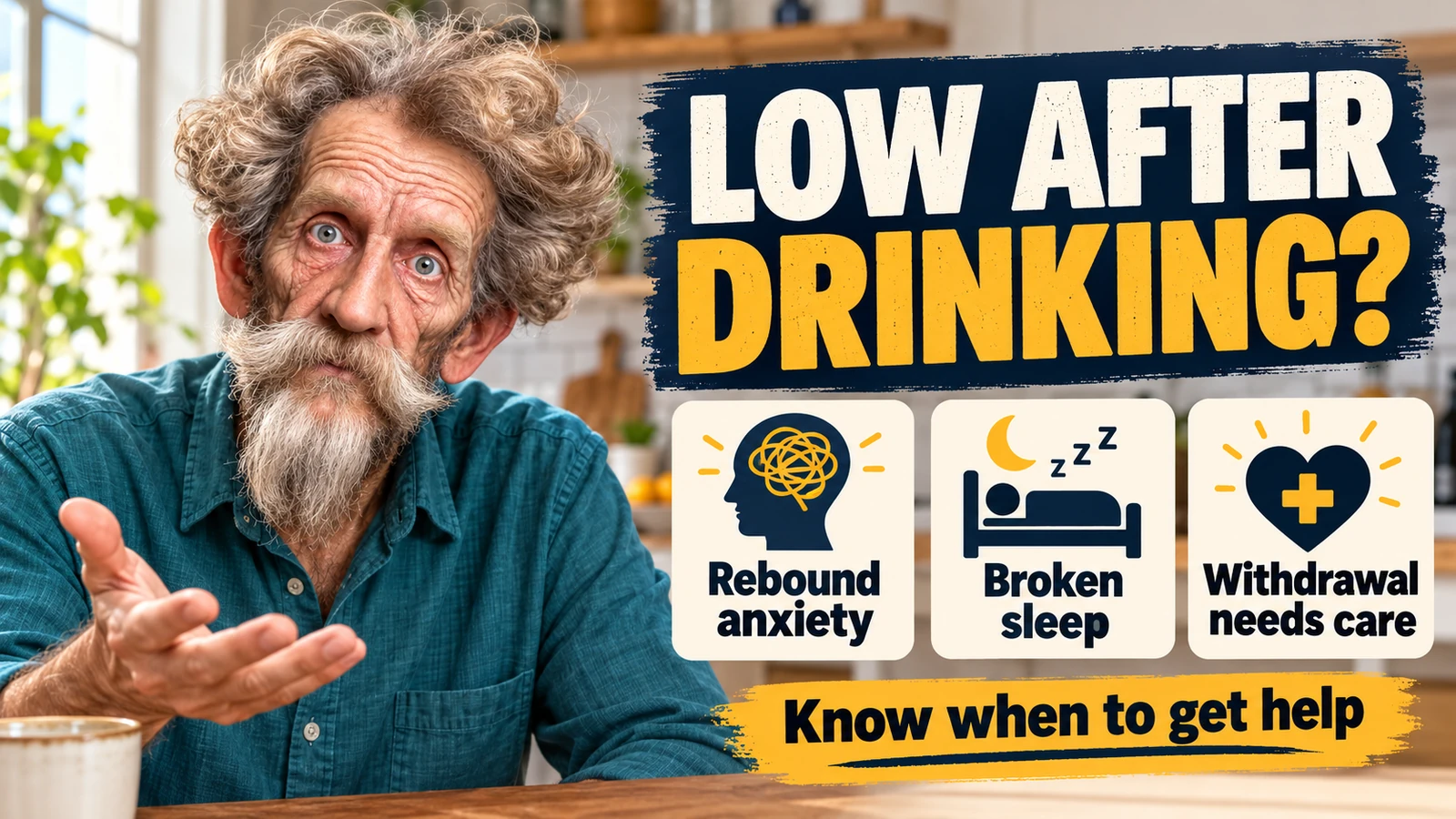
Alcohol can leave you feeling low through rebound anxiety, disrupted sleep, physical discomfort and the emotional consequences of drinking. Repeated heavy drinking can also coexist with a depressive disorder, while symptoms after cutting down may signal withdrawal. The safest next step depends on the pattern and severity, not simply how much time has passed.
Why can alcohol leave you feeling depressed or anxious?
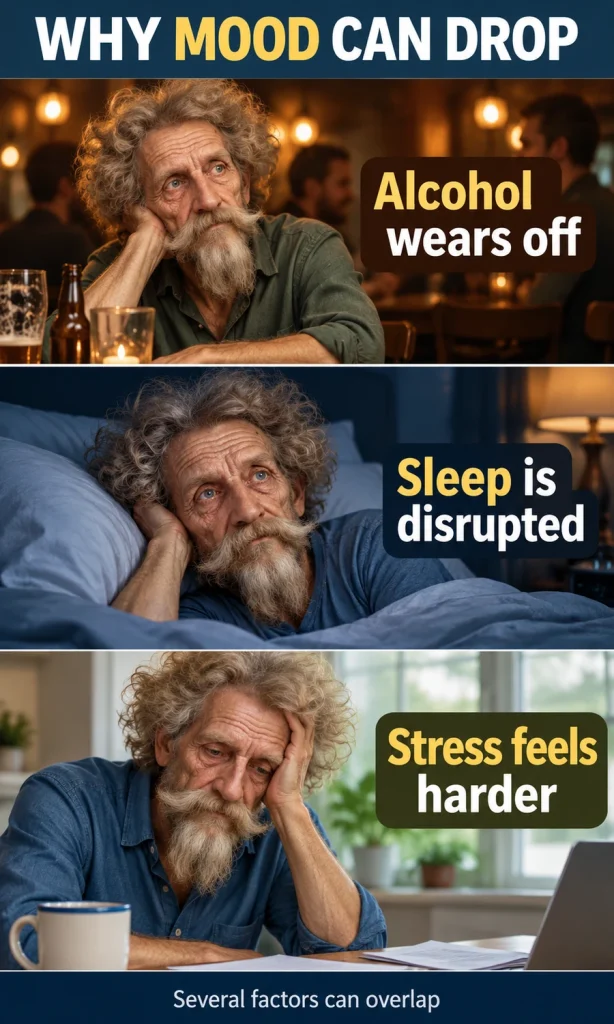
The calming effect of a drink can be followed by a less comfortable rebound as it wears off. Alcohol changes brain activity, and the nervous system adjusts to its presence. That adjustment can leave you restless or anxious afterward; it does not mean a website can identify your neurotransmitter levels.
Several effects can arrive together, making the emotional dip feel larger than any one symptom. A broken night, nausea and worries about what happened can all make the following day harder. This is a useful explanation of possible contributors, not proof that alcohol explains every episode of sadness.
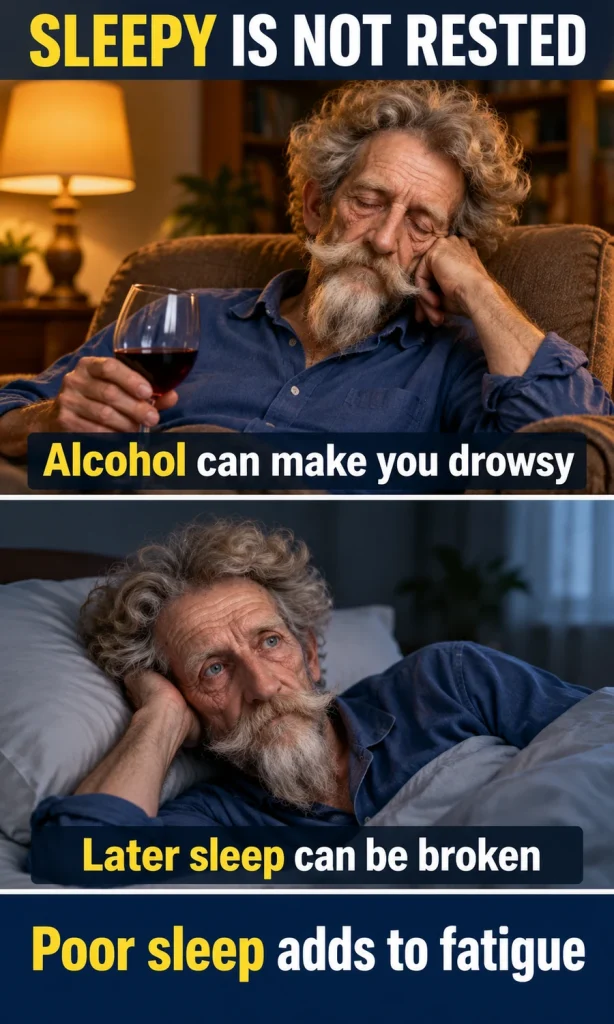
Alcohol may make falling asleep easier while disrupting sleep later in the night. Feeling sedated at bedtime and feeling restored the next morning are different outcomes. If tiredness and early waking continue beyond drinking occasions, the broader relationship between depression and sleep problems deserves attention too.
Physical symptoms can add another burden without being the whole explanation for low mood. The NIAAA hangover guidance describes sleep disruption, rebound anxiety, stomach irritation and fluid loss as contributors to the overall experience. Water may help thirst, but it does not reverse all of these effects or provide a treatment for depression.
Regret, conflict and pre-existing stress can matter alongside alcohol’s physical effects. For example, an uncertain memory of a conversation may become a harsh judgment about yourself the following morning. That example is illustrative: neither guilt nor an anxious thought proves that something terrible happened.
The practical takeaway is to consider the whole pattern rather than hunt for a single missing chemical. Notice whether alcohol repeatedly precedes the difficulty, whether symptoms also occur on sober days, and whether cutting down brings physical symptoms. Those distinctions help you choose between ordinary support and medical assessment.
| Possible contributor | What it may add | What it does not establish |
|---|---|---|
| Rebound as alcohol wears off | Restlessness or anxiety | A measured chemical imbalance |
| Disrupted sleep | Fatigue and reduced coping capacity | That sleep alone explains low mood |
| Physical discomfort | Feeling unwell and depleted | That fluids will resolve depression |
| Stress or regret | Worry and harsh self-judgment | That every feared event actually happened |
Is this a hangover, withdrawal or a separate depression problem?
Timing gives clues, but hangovers, withdrawal and depression can overlap. Low mood following a drinking occasion is different from symptoms triggered by reducing regular alcohol use. A clinician considers the drinking history, symptoms and functioning together rather than assigning a diagnosis from timing alone.
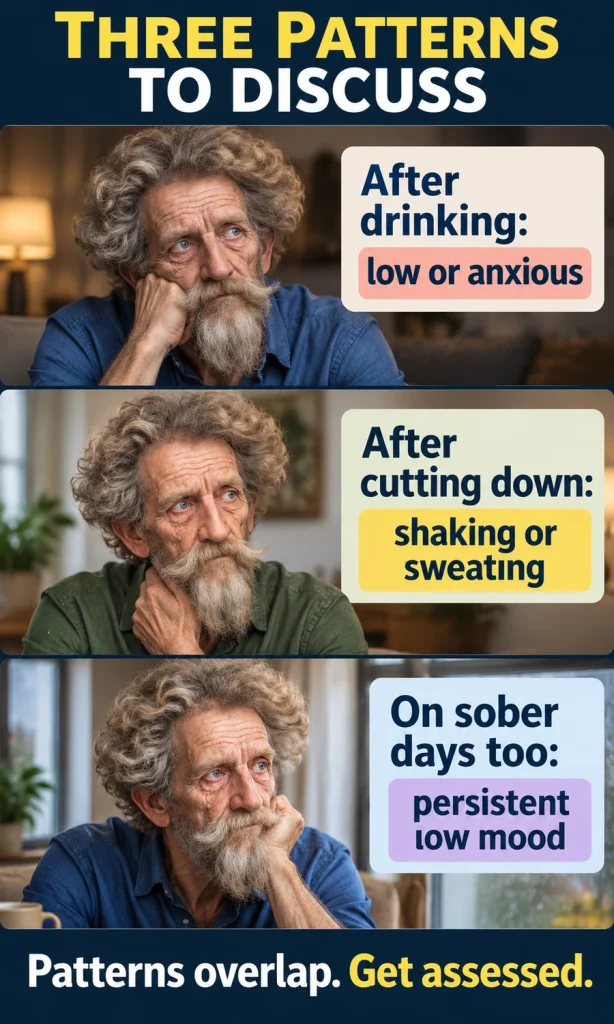
Possible withdrawal needs particular care when shaking, sweating, nausea or a racing heartbeat appear after a missed drink or substantial reduction. Previous withdrawal seizures or severe confusion are especially important to disclose. Do not use somebody else’s drinking amount, or your ability to walk and talk, as evidence that stopping alone is safe.
Seek medical help promptly if withdrawal is possible, and use emergency care for severe or rapidly worsening symptoms. The NHS alcohol-use disorder guidance warns that sudden cessation can be dangerous with dependence. Our deeper explanation of common alcohol withdrawal symptoms covers the warning signs without turning a symptom list into a home-detox plan.

Depression becomes a separate assessment question when low mood or loss of interest is persistent, affects daily life, or was present before the drinking pattern. Symptoms most days for around two weeks are a reason to seek assessment, but that is not a waiting rule when distress is severe. The NIMH depression guide describes the wider symptom pattern and available care.
A hangover can last a day or longer, while mood symptoms have no reliable personal countdown. Improvement after alcohol clears does not rule out an underlying problem, and ongoing symptoms do not automatically mean permanent damage. If your main difficulty began after stopping regular drinking, the recovery-and-care question deserves its own assessment.
What can you do today without treating withdrawal yourself?
For ordinary next-day discomfort without suspected withdrawal or emergency signs, choose one small support action rather than trying to force a complete recovery. The aim is to make the next part of the day manageable. A comfort step and a balanced response are supportive practices, not detoxification or treatment for a depressive disorder.
Try one small comfort step
- Sit somewhere safe; postpone driving or other tasks requiring full attention if you feel impaired.
- Sip water if you can swallow normally and keep it down.
- Try a little familiar food if tolerated; do not force a large meal.
- Rest and lower nonessential demands. Ask someone to bring water or food if that is easier.
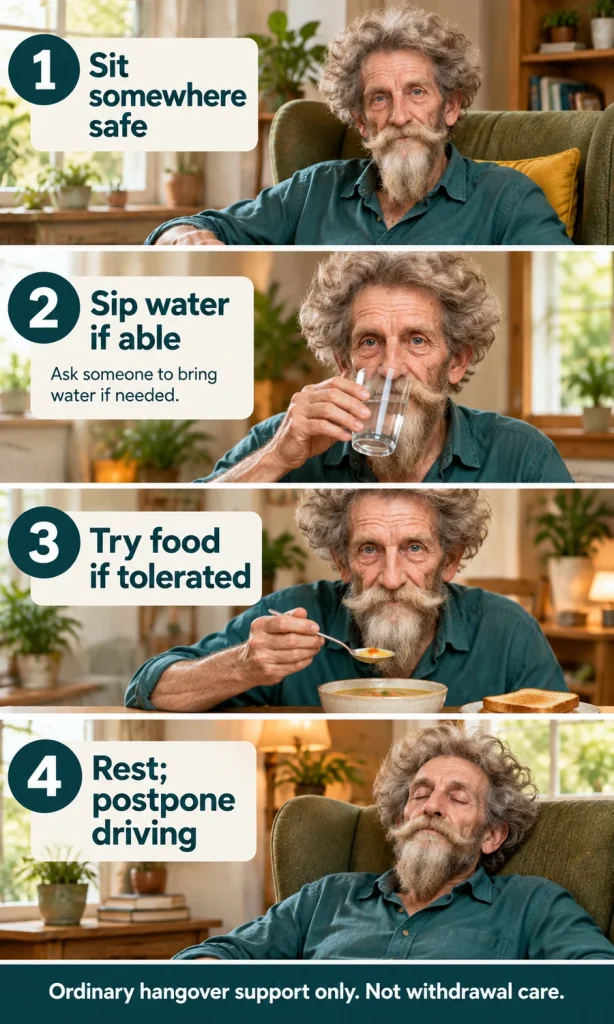
Illustrative example: someone with a headache and low energy sits at the kitchen table, takes a few sips and eats a little toast before resting. The smaller option is asking a trusted person to bring the water. Completion means taking one tolerable step; it does not require feeling happier, and worsening symptoms change the plan.
These are ordinary comfort measures, not a proven hangover cure. Do not add alcohol to chase temporary relief, use borrowed sedatives, or change prescribed medicines yourself. If vomiting prevents fluids, you cannot manage basic care, or you are unsure what medicines are safe, contact a clinician or pharmacist.
Practise a balanced response to next-day self-criticism
Use this when an anxious conclusion keeps repeating and you are well enough to reflect. The exercise adapts the NHS approach to reframing unhelpful thoughts; the drinking-related example and shorter wording are editorial adaptations. It can help you examine an interpretation, but it cannot establish what happened during a memory gap.
- Notice one thought: “Everyone hates me.”
- Check it: “What do I actually know, and what am I assuming?”
- Try a balanced response: “I feel worried; I do not know what others think.”
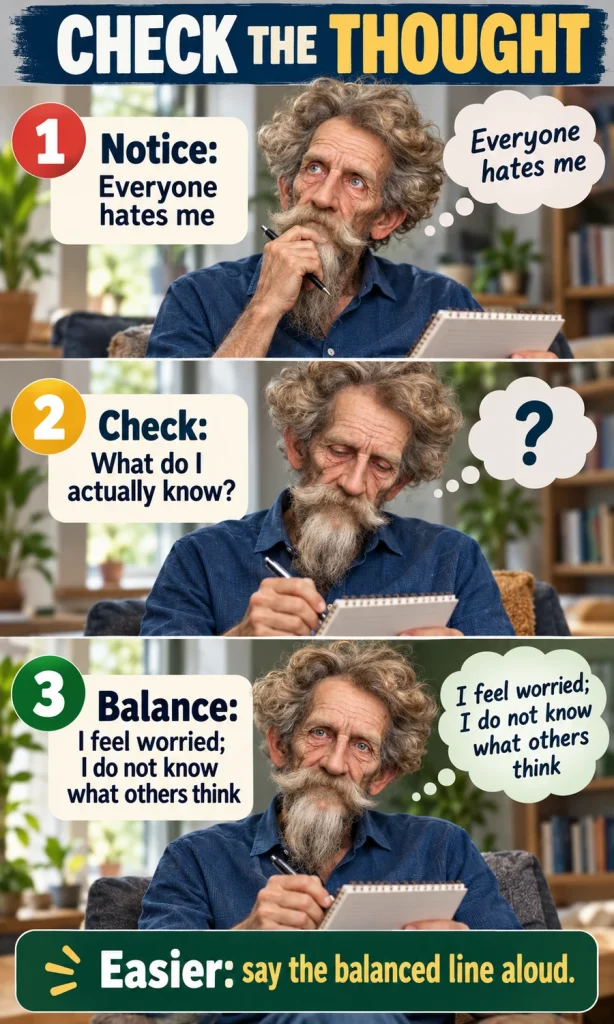
Illustrative example: after a social evening, someone treats an unanswered message as proof of rejection. They recognise that they do not know why the reply is delayed and practise the balanced line once. If checking evidence feels exhausting, just say that line aloud; completing the practice is enough, even if worry remains.
Pause if the exercise turns into another round of interrogation or makes distress worse. You can return to basic support or speak with someone instead of trying harder. Recurrent depressive rumination and overthinking needs a broader approach than repeatedly reviewing one evening.
When should you get help, and what should you say?
Get professional help when the dip keeps recurring, symptoms persist on sober days, or drinking becomes a way to cope with feeling low. Ask sooner when work, eating, sleep, relationships or safety are affected. You do not have to prove whether alcohol or depression came first before requesting care.
Ask for company while you arrange support
- Choose a trusted person who is unlikely to pressure you to drink.
- Send: “I feel low. Can we talk?”
- Agree a check-in, or ask them to call you if starting the conversation is difficult.
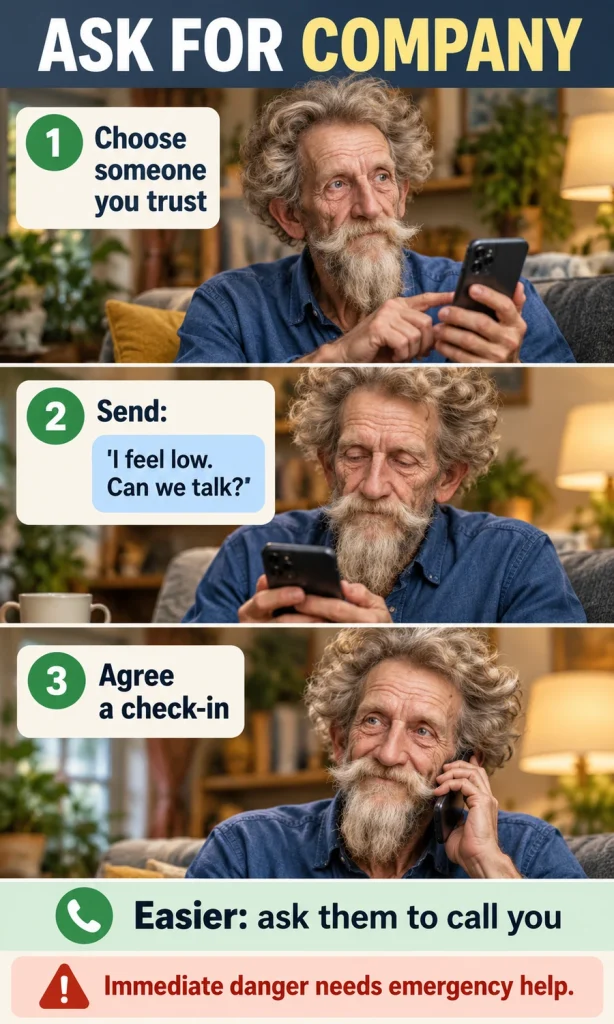
Illustrative example: someone sends the message, and a friend agrees to call that afternoon. The completed action is making contact and agreeing support, not asking a friend to diagnose the problem. This practical sequence adapts NHS advice to stay in touch when depressed; immediate danger still needs emergency help rather than waiting for a reply.
Make the care call
- Say the problem plainly: “Low mood follows drinking, and I want help understanding it.” Mention possible withdrawal immediately if symptoms followed cutting down.
- Share usual intake, drink sizes and strengths, the last drink or reduction, mood timing, medicines and previous withdrawal. Estimates are useful; do not delay contact to create a perfect record.
- Ask what happens next: where and when to be assessed, who to contact while waiting, and which changes need urgent care. Ask a trusted person to help with the call if needed.
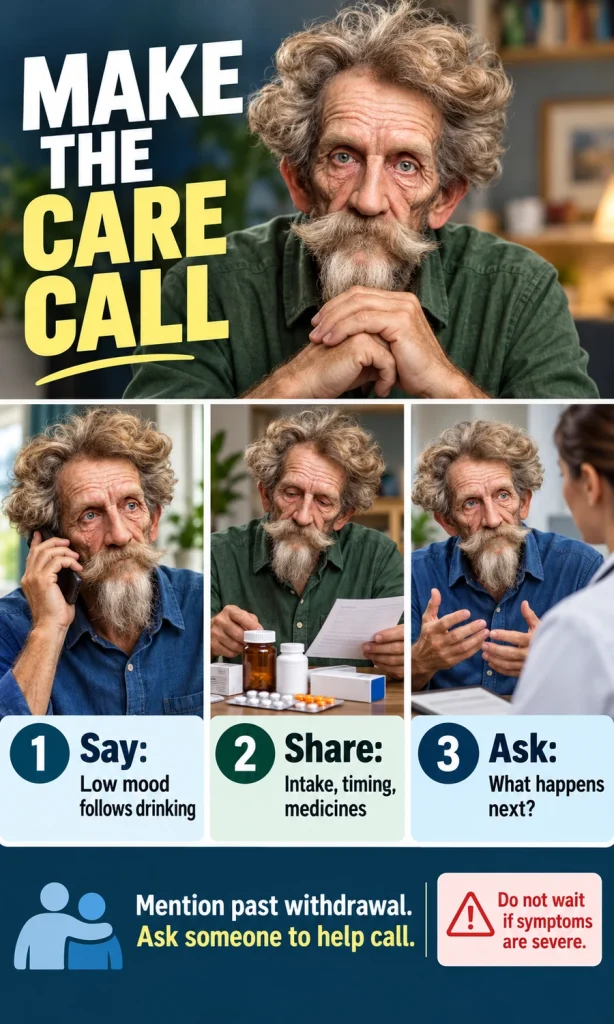
For example, a person whose low mood repeats after weekend drinking calls their clinic and explains that pattern along with symptoms on sober days. They bring their medicine list and describe any previous withdrawal, then confirm the next appointment or assessment. This communication example is an editorial adaptation of alcohol-withdrawal assessment guidance, not a protocol for deciding whether home care is safe.
Treatment may address both mood symptoms and alcohol use, with the plan based on individual needs. Talking therapy, appropriate medicines and alcohol support can play different roles; vitamins, willpower and a fixed sobriety milestone are not substitutes for assessment. The useful next step is a safe conversation about both concerns, rather than waiting for one to disappear before mentioning the other. If symptoms began after stopping, our guide to depression after quitting alcohol explains that care-focused next question.
Frequently asked questions
Does “alcohol is a depressant” mean every drink causes clinical depression?
No. “Depressant” describes alcohol’s slowing effects on central nervous system activity, not a diagnosis of a depressive disorder. Your mood pattern, daily functioning, medical history and alcohol use all matter when a clinician assesses persistent symptoms.
Can switching from spirits to wine prevent the emotional dip?
No type of alcoholic drink reliably prevents low mood afterward. The amount of alcohol, the drinking pattern and individual circumstances matter more than treating one beverage as emotionally safe. If this keeps happening, discuss the pattern rather than relying on a drink swap.
Should I skip an antidepressant after drinking?
Do not skip, stop or change a prescribed medicine on your own. Alcohol can interact with medicines, so ask your prescriber or pharmacist about your exact medication and what to do after drinking. Seek urgent care if you have severe symptoms or an unsafe combination.
Will keeping a mood diary solve this?
A diary is not a treatment. A brief account of drinking, symptom timing and daily impact may help a clinician decide what to assess, but a perfect record is unnecessary. Make contact first when symptoms are concerning.
Choose the next safe step
Alcohol-related low mood can have several contributors, and the timing helps guide the conversation. Possible withdrawal needs medical assessment before coping exercises. For non-urgent discomfort, practise one small support step; recurring, persistent or disabling symptoms deserve professional care.