


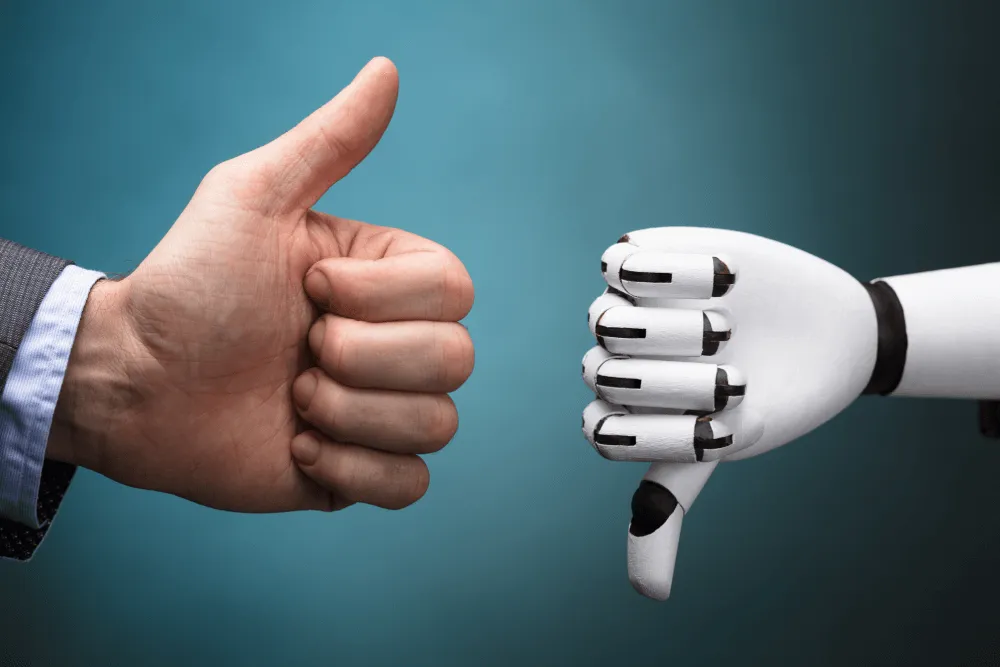

The implications of artificial intelligence for society are far-reaching. Since the 1950s, when Alan Turing asked whether machines can think, the landscape has changed dramatically. Today, AI is impacting economies, societies, and more. We need to understand what it means for us and our world. Let’s take a look at the issues and challenges surrounding AI. In the next few paragraphs, we’ll explore how AI is changing society.
The First Principle: We must recognize that we are living in an era of radically increased data. AI is an invaluable tool in our society, but we should be careful not to misuse it. It is important that we preserve the human agency and dignity of all individuals. We should not treat ourselves like objects or data, as the European Group on Ethics of Science and New Technologies has noted. In the end, the use of AI can benefit people in society.
The Fourth Principle: AI must not be used to discriminate. In society, AI must not create a “race to the top.” We must consider that AI is not autonomous. It does not make decisions for itself. It cannot make decisions for itself. However, it can be designed to make decisions for us. This is crucial because it allows us to be more flexible and adaptable. We must also consider how we use AI.
Public sentiment: In order to make AI useful in our society, we need to acknowledge that its true nature cannot be determined by popular sentiment alone. Rather, we must recognize that AI is a very complex technology. The benefits of AI are vast. We should not limit our vision of AI to public sentiment – this would blind us to the realities of the future. And we must remember that the implementation of AI will also reveal the pitfalls and challenges.
The Second Principle: AI can be used for good governance. When a society uses AI for financial crimes, it can help prevent money laundering and financial crimes. These use cases are legitimate. Governments and financial institutions have a contractual obligation to protect citizens. Moreover, governments and corporations should be aware of the societal implications of using AI for good or bad reasons. We must make sure that these ethical issues do not affect our society.
The Third Principle: If artificial intelligence is used for good, it can be an invaluable tool in our society. It can speed up tasks and make work more convenient. For example, we can train an AI to predict dangers and avoid self-harming. As a result, we can expect that AI will be a valuable tool for our societies. We must also consider its social implications. The potential for such a system’s misuse of data is enormous.
There are several possible paths to a successful implementation of AI. There are two primary approaches to incorporating AI in society: the first is to implement a humanities-based model. Its aims to be a better and more equitable place for all people. This is the most important aspect. A second is to make sure that AI will have a positive effect on the lives of humans. There are four stages of development. Firstly, there are the technological advances that are making artificial intelligence.
The second stage of AI’s development is to develop the capability to mimic human behavior. The goal of this is to create a machine that has a similar ability to mimic human behavior. The third step is to create a culture in which AI is a good thing, but if it is harmful, it can do more harm than good. The first step is to make sure that AI is a safe place for everyone.
The third stage is to create a culture where AI is a part of society. This is not to say that AI can’t do this, but it can’t make the process of making decisions more democratic. It’s just that its use in human-made systems is not the same as that of human-made machines. And, the latter is not just the easiest way to create an artificial society, but also the most effective one.
Did you miss our previous article…
https://expertsguys.com/types-of-reasoning-in-artificial-intelligence/