


Definition – What Is Equity Risk Premium
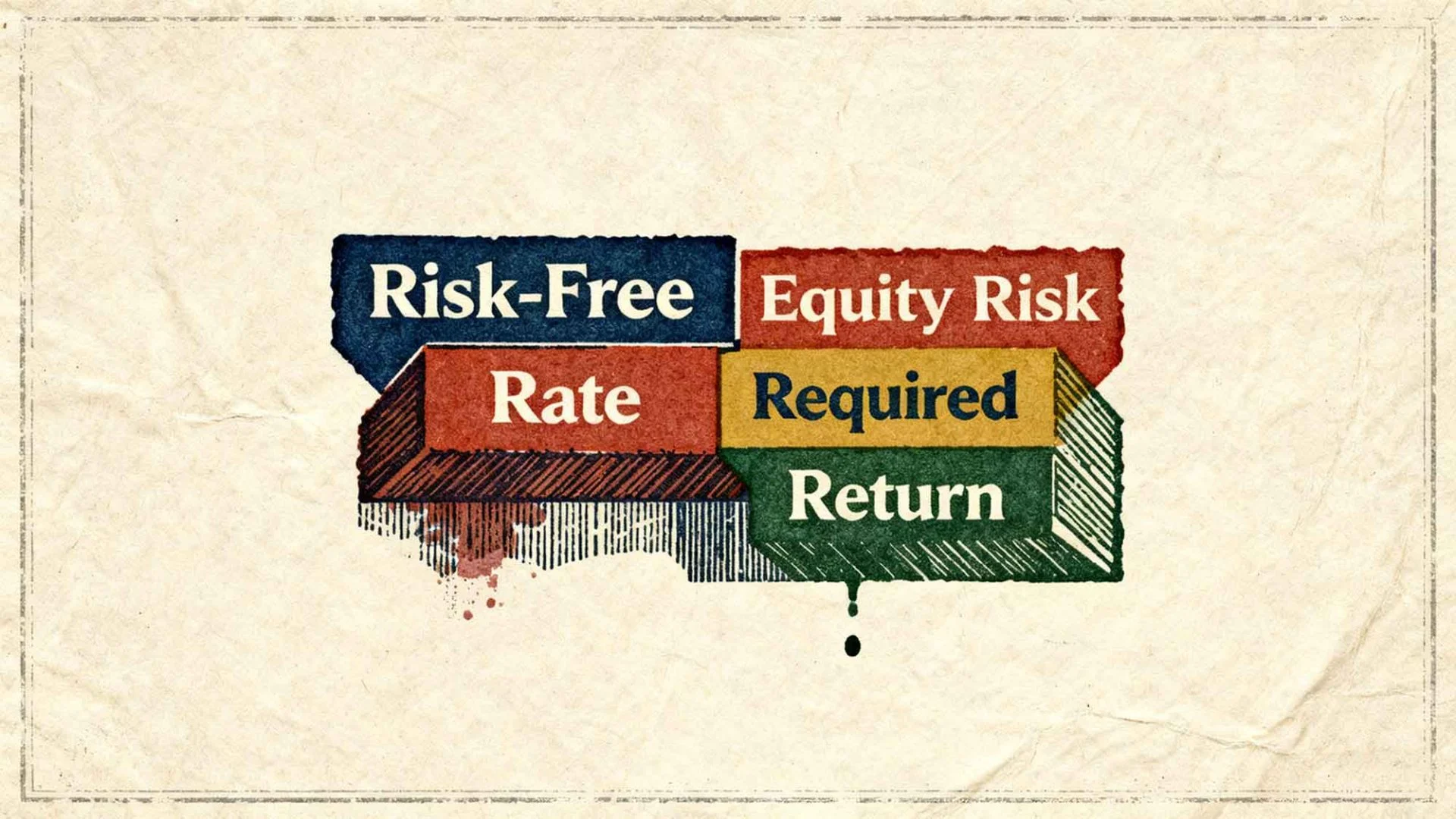
Equity risk premium refers to the additional return investors require above the risk-free rate to compensate for the uncertainty of owning shares. It represents the compensation demanded for exposure to earnings volatility, macroeconomic instability, liquidity fluctuations, and systemic risk.
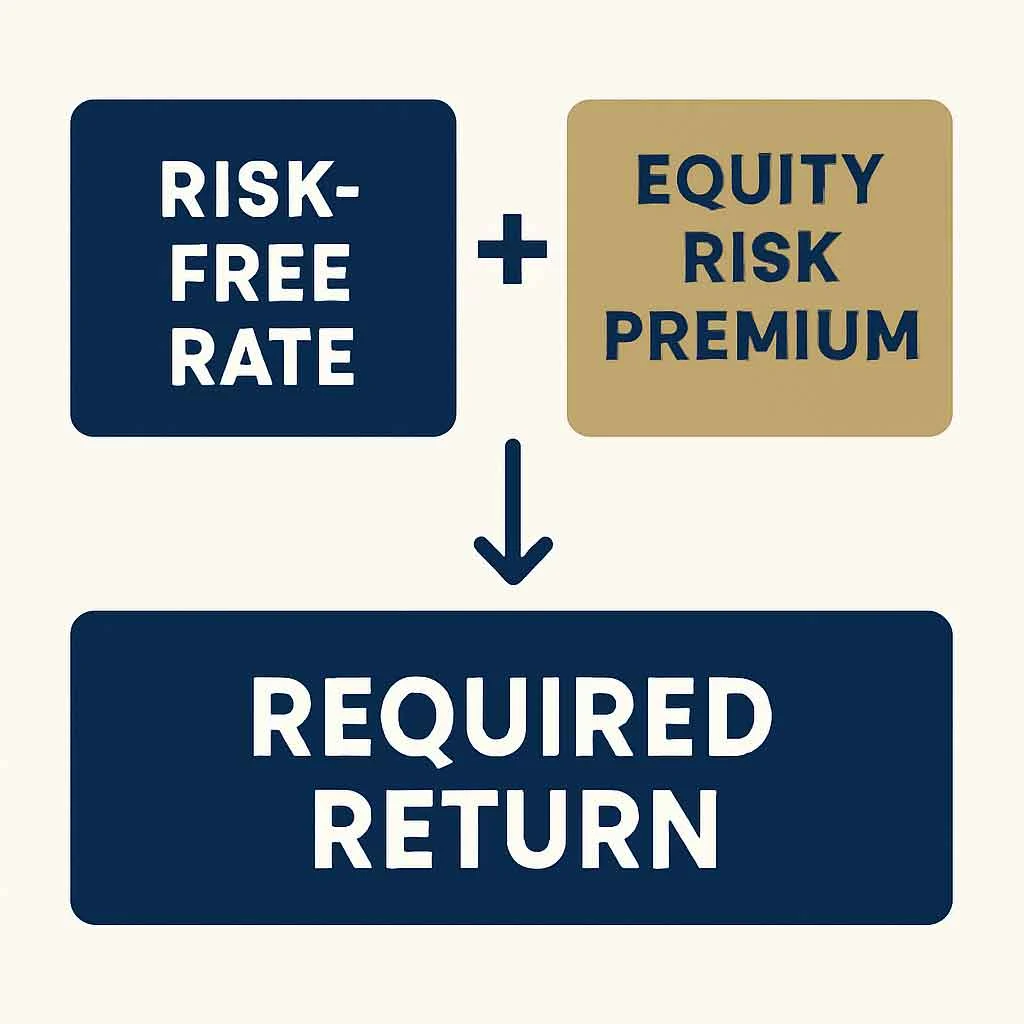
In valuation models, the equity risk premium forms the second component of required return. The first component is the risk-free rate. Together, they determine the discount rate applied to future corporate cash flows.
Unlike fixed income instruments, equities carry no guaranteed return. The equity risk premium reflects that uncertainty. When perceived risk rises, the premium expands. When stability improves, the premium compresses.
The Formula – Where It Fits in Valuation
The structural formula is:
Required Return = Risk-Free Rate + Equity Risk Premium
The equity risk premium therefore functions as the variable compensation component layered on top of the sovereign yield anchor.
If the risk-free rate remains stable but uncertainty increases, the equity risk premium may rise. Required return increases. Equity valuations compress.
If uncertainty declines, the premium may compress even if the risk-free rate remains unchanged.
Understanding this interaction is central to equity valuation mechanics explored in:
Equity Risk Premium – Valuation Mechanics
What Causes the Equity Risk Premium to Change
The equity risk premium is not fixed. It responds to:
- Economic growth expectations
- Financial stability conditions
- Credit spread movements
- Liquidity availability
- Geopolitical uncertainty
- Market volatility
During stable macro periods, investors require less compensation for uncertainty. Premium compresses. Valuation multiples expand.
During stress events, investors demand higher compensation. Premium expands. Multiples contract.
The premium therefore acts as a barometer of systemic confidence.
Equity Risk Premium vs Risk-Free Rate
The risk-free rate reflects baseline time value of money. It is typically approximated by sovereign bond yields. The equity risk premium reflects additional compensation for uncertainty.
The two components move independently across cycles. In some environments, sovereign yields decline while the equity risk premium rises due to crisis conditions. In others, both may rise simultaneously during inflationary tightening.
A deeper structural explanation of sovereign yield anchoring is covered in:
Risk-Free Rate – Structural Market Impact
Equity Risk Premium and Market Cycles
Premium behavior varies by cycle phase.
Tightening phase:
Premium may expand modestly as rates rise.
Crisis phase:
Premium expands sharply due to uncertainty.
Recovery phase:
Premium compresses as stability returns.
Late expansion phase:
Premium may remain compressed while valuations stretch.
Monitoring premium trends provides insight into valuation vulnerability.
Why It Matters for Investors and Analysts
Equity risk premium influences:
- Valuation multiples
- Dividend yield interpretation
- Duration sensitivity
- Sector rotation
- Required return modeling
It determines how much compensation markets demand beyond sovereign baseline.
Interactive modeling of required return sensitivity can be explored inside the:
Frequently Asked Questions
What is equity risk premium in simple terms?
Equity risk premium is the extra return investors require above government bond yields to compensate for the uncertainty of owning shares.
Is equity risk premium the same as expected return?
No. Expected return includes the risk-free rate plus the equity risk premium. The premium represents only the additional compensation for risk.
Why does equity risk premium change?
It changes due to shifts in economic uncertainty, liquidity conditions, volatility, and macro stability expectations.