


Definition – What Is a Credit Spread
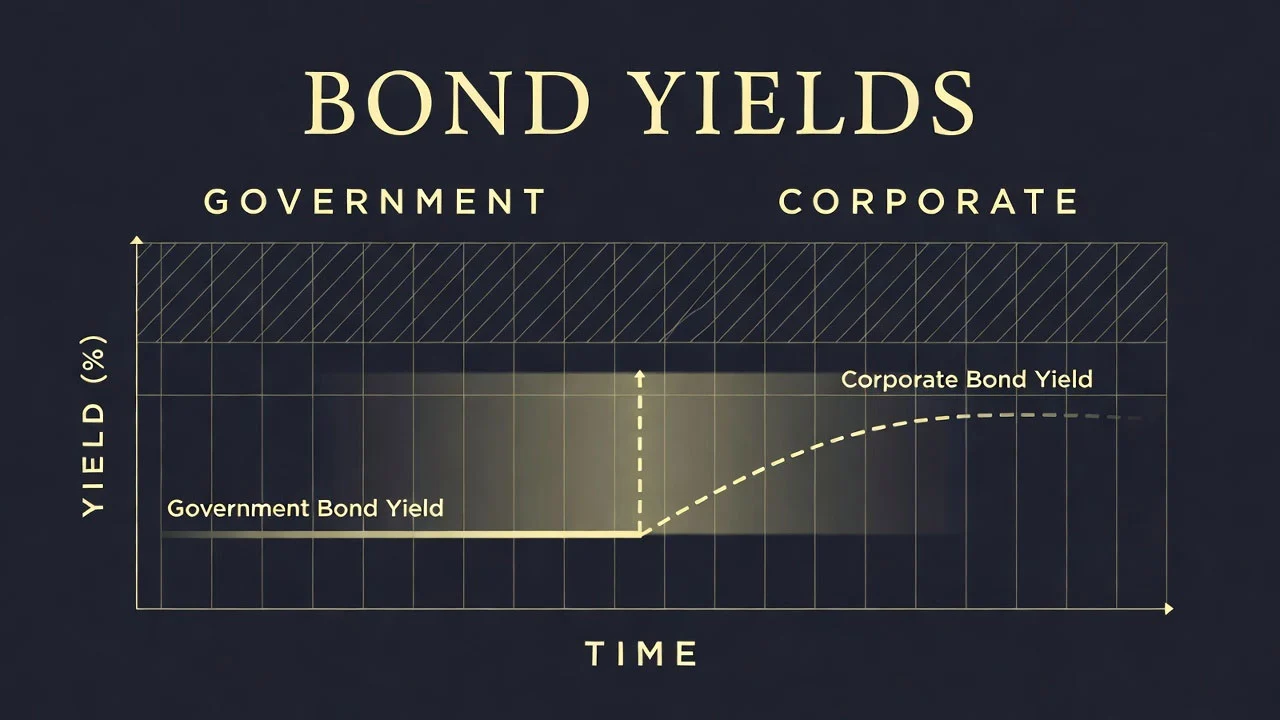
A credit spread is the difference in yield between a corporate bond and a comparable government bond of similar maturity. It represents compensation demanded by investors for bearing default risk.
When economic stability is strong, credit spreads tend to compress. When financial stress rises, spreads widen as investors demand higher compensation for risk.
Credit Spread and Equity Markets
Although credit spreads originate in bond markets, they influence equity valuation through risk perception.
When spreads widen sharply:
- Financial conditions tighten
- Liquidity conditions deteriorate
- Equity risk premium often rises
This interaction links directly to:
What Causes Credit Spreads to Widen
Spreads typically widen during:
- Economic downturns
- Liquidity contractions
- Banking stress events
- Corporate earnings deterioration
They compress during stable growth periods.
Credit spreads therefore act as early indicators of systemic stress.
Investment Grade vs High Yield Spreads
Investment-grade spreads reflect lower default risk.
High-yield spreads reflect higher risk and higher compensation demands.
High-yield spreads are often more volatile and more sensitive to economic expectations.
Why Credit Spreads Matter
Credit spreads influence:
- Corporate financing cost
- Equity risk perception
- Default cycle risk
- Liquidity conditions
- Market stress indicators
They serve as a bridge between fixed income markets and equity valuation.
Frequently Asked Questions
What does a widening credit spread indicate?
A widening credit spread typically indicates rising concern about corporate default risk and tightening financial conditions.
How do credit spreads affect stock markets?
Widening spreads often coincide with rising equity risk premium and increased market volatility.