



Bruce Springsteen discussed severe depression and periods described as emotional breakdowns in his 2018 Esquire interview. “Breakdown” communicates distress but does not identify a medical diagnosis; the useful distinction is between the historical account, the symptoms being described and the support someone needs now. A useful response starts with the current difficulty and a concrete next step, rather than a celebrity comparison.
If you cannot stay safe, have seriously harmed yourself or are in immediate danger, seek emergency help now. Use your local emergency service or nearest emergency department, and ask a trusted person to help you make the connection if possible. Do not wait to decide whether “breakdown” is the correct word.
What did Springsteen mean by “breakdowns”?
The account behind the headline is historical. Michael Hainey’s Esquire interview, published on November 27, 2018, describes a difficult period when Springsteen was 32 and another in his sixties. The later discussion refers back to his memoir, Born to Run, and uses the expression “agitated depression.”
Those details establish the context of the story, rather than a new announcement about his health. The interview also discusses treatment and his efforts to seek help. It does not give readers a complete clinical record, a transferable treatment regimen or grounds to assign him an additional diagnosis.
- Keep the date: this is a discussion of a 2018 interview and earlier experiences.
- Keep the attribution: a personal description tells us what someone reported, not everything a clinician assessed.
- Keep the boundary: the account does not establish Springsteen’s present health or another person’s prognosis.

An episode, a recollection and an interview have different dates
A reported experience can occur long before the interview that describes it, and the interview can be recirculated years later. These dates perform different jobs. An episode date locates the experience, a publication date locates the public account, and today’s date tells you only when you are reading it. Combining them can turn an old recollection into an apparent breaking-news update.
For this article, the important editorial choice is to retain the original event context while focusing on the language used to describe distress. There is no useful reason to retell every family story or creative milestone. Those details can be meaningful in the original interview without being necessary to explain what a reader should understand about the word breakdown.
A second distinction concerns certainty. Remembering a difficult period does not require remembering an exact duration or reconstructing every appointment. A responsible account can acknowledge that a person experienced substantial distress while leaving uncertain details uncertain. Precision means respecting the available evidence, including its limits, rather than making the narrative sound more complete.
What should this account change for a reader?
It can make a familiar expression easier to discuss: someone can feel profoundly overwhelmed without having a precise name for the experience. That is a useful communication lesson. It does not mean that everyone who recognizes part of the description has the same condition, needs the same medication or will follow the same course.
The separate article on why Springsteen’s depression disclosure matters addresses the limits of judging wellbeing through achievement. Here the narrower question is what happens after somebody says they are breaking down: what information is missing, and how can the next exchange become useful?
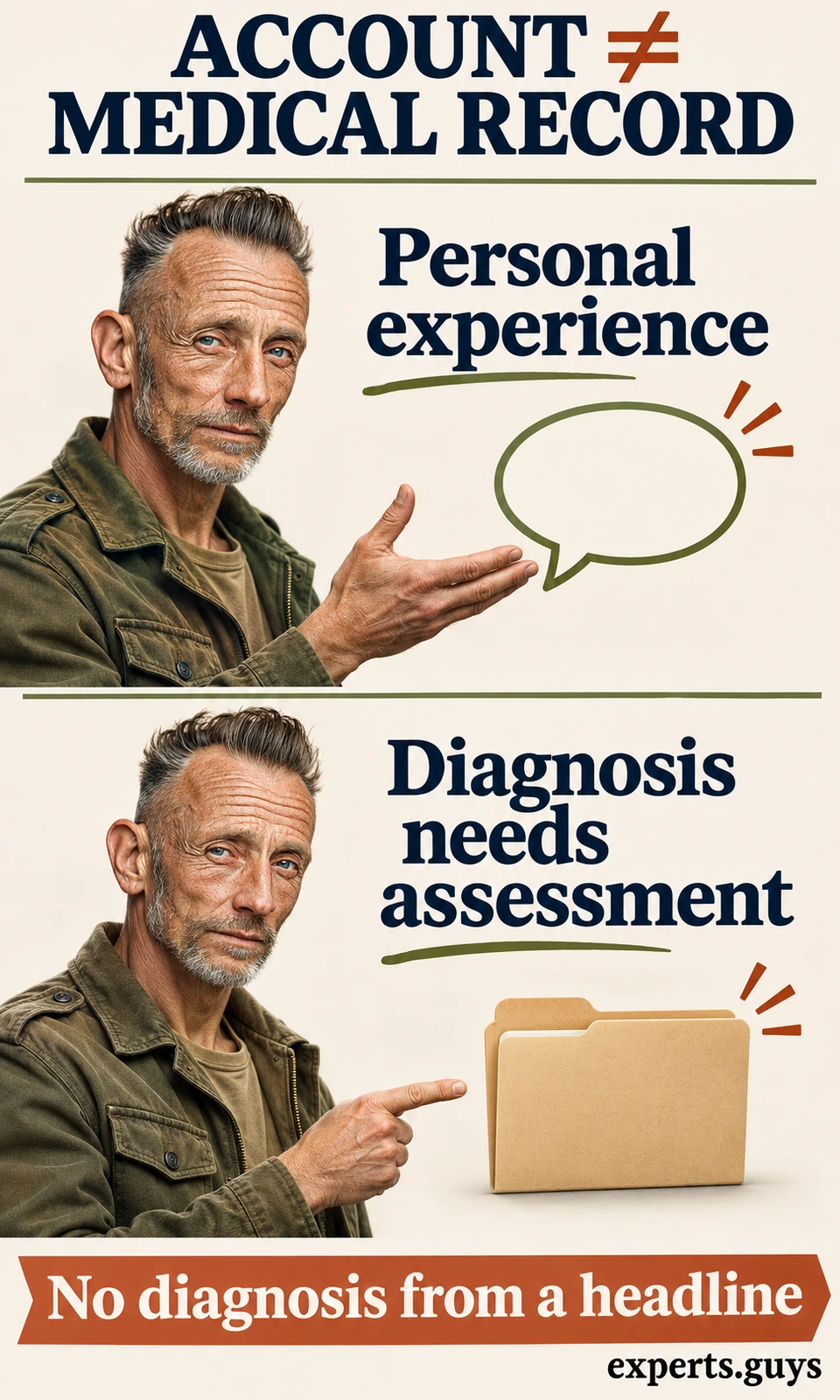
Why is “mental breakdown” not a diagnosis?
“Mental breakdown” and “nervous breakdown” are everyday expressions for distress that feels overwhelming or disrupts ordinary life. Mayo Clinic explains that nervous breakdown is not a medical term. The phrase can signal a serious difficulty, but it does not identify the cause or establish a particular disorder.
That leaves two separate questions. What is the person experiencing, and what needs to happen next? You can help with the second question while the first remains uncertain. For example, someone may need assistance contacting an existing care service or meeting an immediate practical need before they can give a detailed account of what has changed.
| Expression or observation | What remains to clarify | Useful response |
|---|---|---|
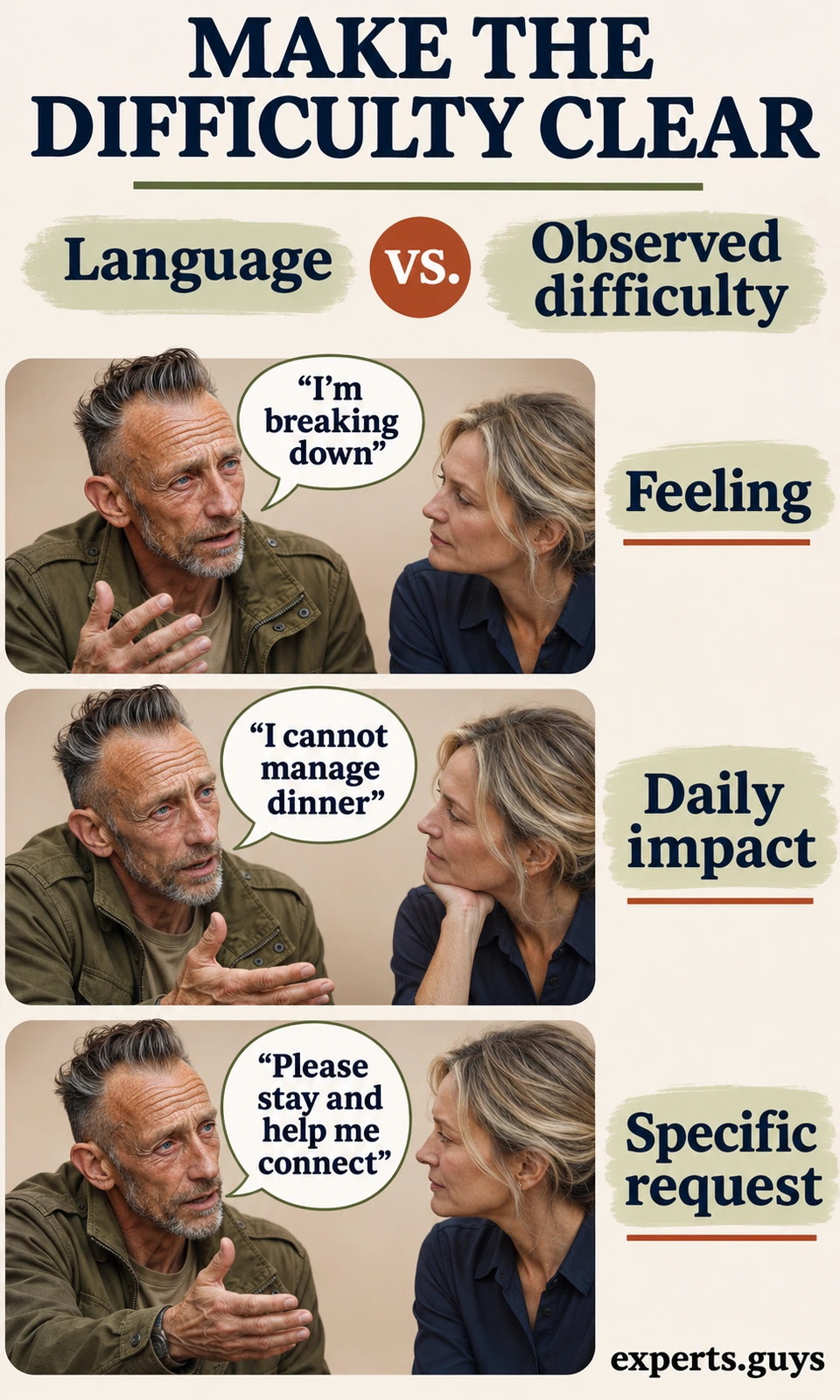
| “I am breaking down.” | What is hard now, and is there immediate danger? | Take it seriously and invite one concrete detail. |
| “I cannot manage dinner.” | Is the obstacle deciding, preparing, eating or something else? | Offer one relevant action rather than a broad lecture. |
| “I cannot keep myself safe.” | How to connect with emergency help now. | Act on the safety concern; do not debate terminology. |
| “I feel restless and desperate.” | Timing, severity, changes from usual and safety. | Help communicate the change promptly; avoid guessing a diagnosis. |
The table is a communication guide, not a screening instrument. The entries do not represent stages, a score or a route every person will follow. Someone may describe a clear difficulty without using dramatic language, while someone else may use the word breakdown before they can explain the practical effect. Neither style should determine whether their concern is heard.
Replace a broad label with an observable difficulty
You do not have to reject the person’s language. An ordinary response is: “When you say breaking down, what is hardest to manage right now?” If that question is too broad, offer one relevant choice rather than a checklist: “Is getting through dinner the difficult part, or is something else more urgent?” Accept correction. The aim is understanding, not completing a script.
A concrete description makes an offer more usable because it reveals an obstacle. “I am not coping” leaves the listener guessing. “I cannot face calling the service alone” identifies where help could fit. This is an editorial communication adaptation, not a validated treatment technique, and the person does not need to explain every symptom before receiving support.
There is a limit to this clarification. If someone describes immediate danger, do not continue narrowing the wording as though a better sentence will resolve it. Similarly, if the person is unable to speak, severely confused or medically unwell, the priority is appropriate help. A useful communication method must remain optional and must never become a test of whether distress is serious enough.
For the broader difference between everyday wording and an assessed condition, see clinical depression versus depression. The distinction here is practical: a label can open the conversation, while a description of the difficulty helps someone respond. Neither replaces assessment when that is needed.
Can depression involve agitation rather than visible stillness?
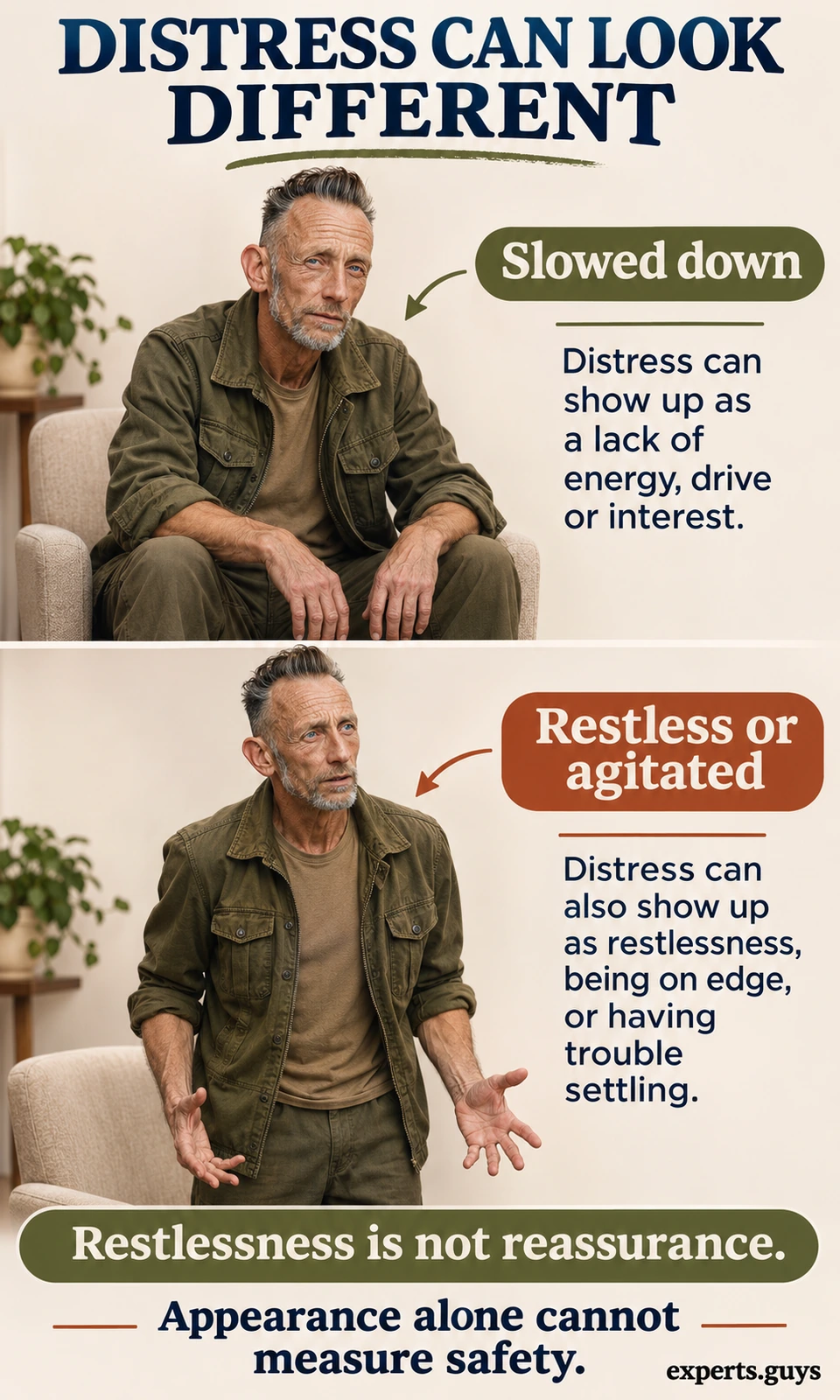
Yes. NIMH’s depression guidance includes restlessness and irritability among possible symptoms, alongside low energy and feeling slowed down. A person’s visible movement therefore cannot tell you how much distress they are experiencing. Restlessness is a reason to understand what has changed, not reassurance that the person has enough energy to be well.
A viewer might interpret pacing as determination, anger or ordinary nervousness. Each is an interpretation rather than an established explanation. The useful observation is narrower: the person is finding it difficult to settle, and this may be different from their usual behavior. Ask what it feels like and communicate the change where appropriate instead of deciding what it proves.
Agitation is also not a synonym for mania. NIMH describes bipolar episodes through patterns of changes in mood, energy, activity and sleep. An isolated expression in an interview cannot establish that pattern. The fuller comparison of unipolar and bipolar depression belongs to a different reader task and should not be turned into speculation about Springsteen.
When speaking about your own experience, describe what actually happened rather than choosing whichever clinical term sounds closest. For example, “I have been unable to settle and this began after a treatment change” gives useful context without announcing a cause. Timing can matter to a clinical conversation even when you do not know why the change occurred.
How can “I’m breaking down” become a concrete request?
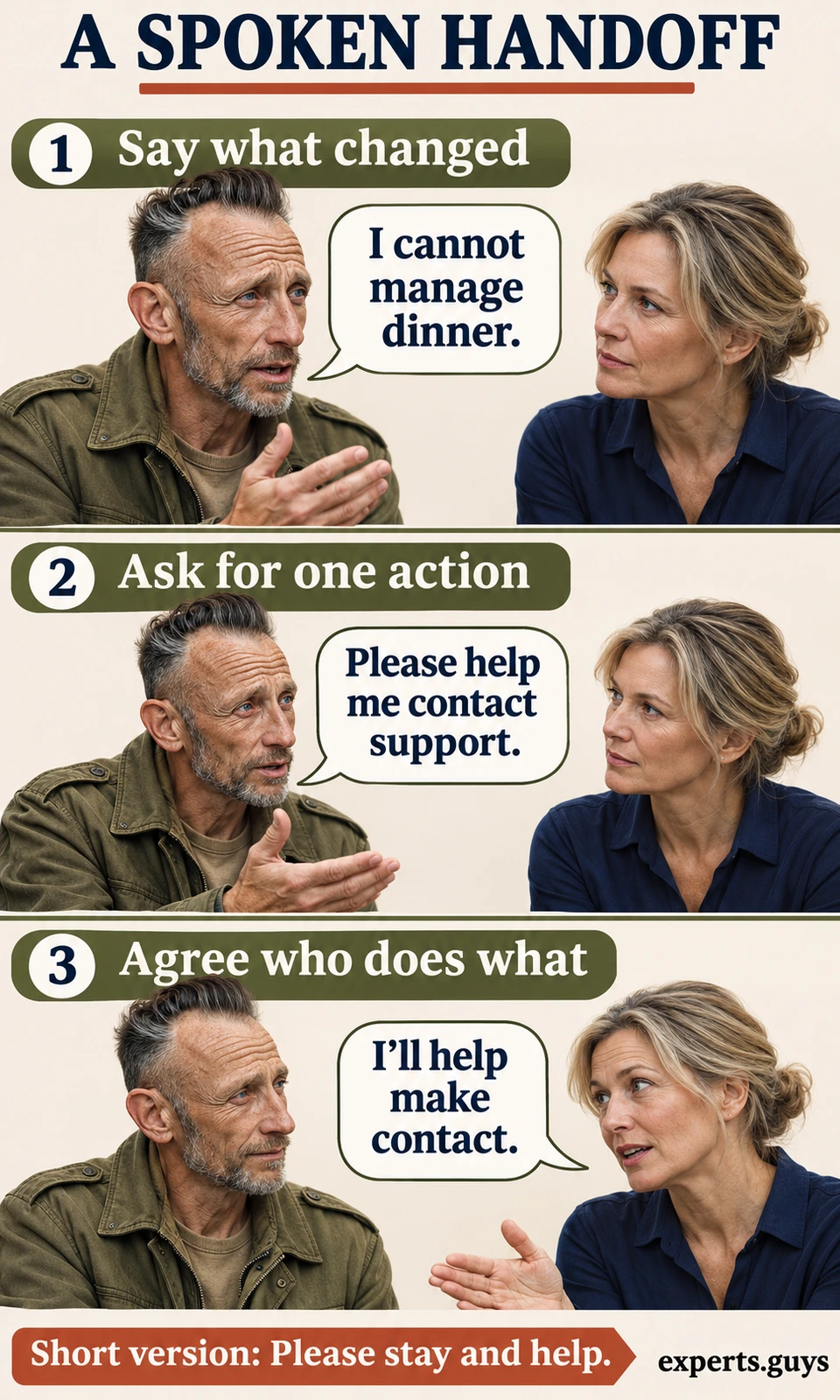
Use a short spoken handoff: describe one current difficulty, ask for one action and agree who will take the next step. This fits a situation where communicating or making contact feels too difficult to manage alone. It is an everyday access and communication adaptation, not a treatment for depression or a reason to postpone urgent help.
Choose a trusted person who is available and safe to approach. You do not need a special room, a worksheet, a timer or a prepared explanation of your history. Stay seated or use an accessible communication method if movement or speech is difficult. If the relationship is unsafe, use a different person or an appropriate service rather than forcing a private conversation.
Use one difficulty, one request and one agreement
- Say what changed. Use a present-tense example: “I cannot manage dinner tonight” or “I cannot make this call alone.” You can say that you are overwhelmed without knowing its cause.
- Ask for one action. Make it something the other person can understand: “Please help me contact my usual service.” Ask for support with the connection rather than expecting them to solve the whole situation.
- Agree who does what next. For example: “You will sit with me while I call; I will explain what I can.” If they are unavailable, identify another contact instead of leaving the request as a general intention.
The useful result is a next action that both people understand. It is not a calmer expression, an immediate improvement in mood or a promise that care will be available at a particular time. The handoff can be worthwhile even if you still feel distressed afterward. It has reduced one communication obstacle, which is a more realistic completion point than feeling better on command.
A worked example: the contact is the obstacle
Consider an illustrative situation, not a documented patient story. Alex has an existing care contact but feels too overwhelmed to begin a conversation. He tells his sister, “I am breaking down.” She could respond with a broad instruction to get help, but that would leave him with the same obstacle: making the contact alone.
Instead, Alex adds, “I need to speak to my usual service, and I cannot begin the call by myself. Will you sit with me and help me start?” His sister agrees to stay for the connection. She asks whether he wants her to begin speaking or simply remain nearby. Alex chooses the smaller role he can manage and remains free to correct what she says.
Suppose the service does not answer. A message being left has not created a confirmed response. Alex and his sister use the service’s stated urgent-access instructions or another appropriate local route if help cannot wait. They do not assume that sending something has transferred responsibility. If safety deteriorates, emergency help takes priority over repeating the original plan.
The example shows why “get help” can be accurate yet incomplete. The missing part may be access, speech, uncertainty about the next step or difficulty managing the connection alone. Assistance is most useful when it addresses that actual barrier. It becomes less useful when it turns into a long discussion about whether Alex should already have been able to do it.
Use an assisted connection when speech is difficult
If you want help making contact, ask the trusted person to handle the mechanical part while you contribute what you can. They might initiate the call, explain that you are present and ask how the service can communicate with you. A call is an access step here, not a mood-tracking exercise; in-person assistance or another accessible contact method can serve the same purpose.
Permission matters. A supporter should ask what you want shared where circumstances allow, describe observations accurately and avoid presenting a guessed diagnosis as fact. They should not impersonate you. The service may need to explain privacy requirements, speak with you directly or use a different arrangement. Those boundaries can be respected without withdrawing practical support.

A lower-effort version is one sentence: “Please stay and help me connect.” You can add details once the connection exists, or let the supporter relay a brief agreed description. If even that is too difficult, a supporter can describe what they have observed and ask an appropriate service for guidance. In an emergency, do not delay necessary help while trying to perfect the wording.
Correct the common failure: a request nobody owns
A vague agreement can sound supportive without changing the next few minutes. “We should do something” leaves both people unsure who is acting. Replace it with an immediate, observable agreement: “I will make the contact with you now,” or “I cannot stay, but I can help you reach somebody who can.” Do not promise availability you cannot provide.
A supporter can also accidentally take over the conversation. If the person can participate, pause and give them a chance to speak. If they correct a detail, accept the correction instead of arguing over whose account is more accurate. The purpose of assistance is to make access possible while preserving as much choice and participation as the situation allows.
Avoid making this sequence another burden. There is no requirement to deliver three polished statements, remember a formula or explain the whole history. One clear request may be enough to begin. The fuller steps are available for someone who finds structure helpful; they are not conditions a distressed person must meet to deserve a response.
When does the situation need urgent help instead?
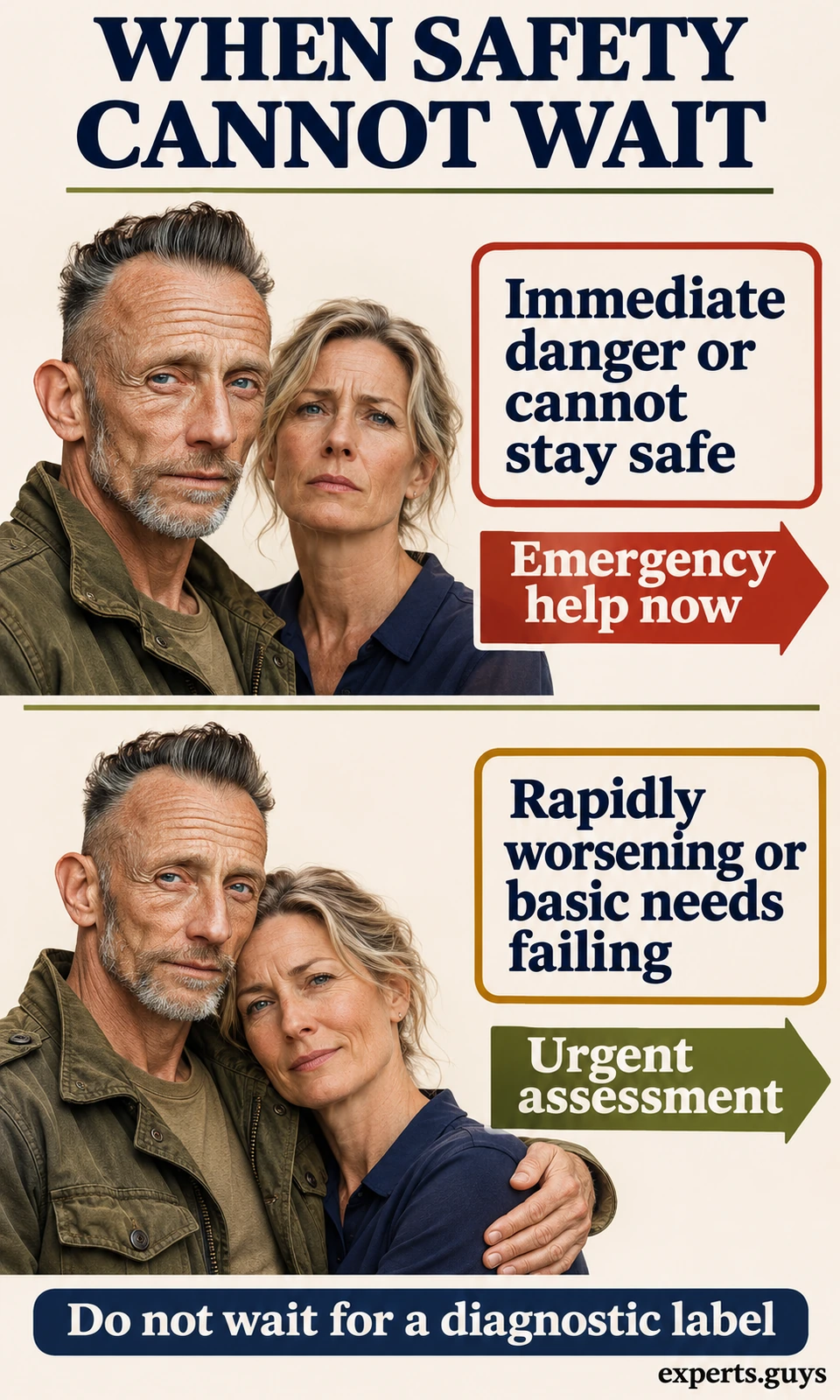
Urgency depends on the present situation, including safety and the ability to meet basic needs, rather than on the word breakdown or resemblance to a celebrity’s story. The NHS urgent mental-health guidance distinguishes a need for urgent assessment from immediate danger. Use the appropriate service where you live; the organization of care differs by country.
Confirm that the next step was actually received
A handoff remains incomplete when nobody knows who is responding. If you have contacted a service, clarify what happens next and what to do if the situation worsens before then. If you are helping someone, make clear whether you are staying for the connection, helping arrange another contact or leaving after a specific agreed step. An unanswered message is not confirmation of support.
This is a checkpoint, not a guarantee. A supporter cannot ensure access, eliminate uncertainty or personally provide clinical care. What they can do is notice when the original action has not produced a usable next step. That observation should prompt a different appropriate route when help cannot wait, rather than repeated reassurance that somebody has probably seen the message.

| Present situation | Priority | What to avoid |
|---|---|---|
| Immediate danger, serious harm or inability to stay safe | Emergency help now through local emergency services or the nearest emergency department. | Waiting for a reply to a routine message. |
| Rapid deterioration or difficulty meeting basic needs | Seek urgent assessment through an appropriate local service; ask someone to assist with contact. | Waiting to see whether the experience fits a label. |
| New or markedly worsening agitation after treatment changes | Contact the treating service promptly and explain the timing and change. | Changing medication yourself to test an explanation. |
| Persistent difficulty without an immediate emergency | Arrange an assessment and use a concrete supported next step. | Treating the absence of crisis as a reason to ignore ongoing difficulty. |
The table does not establish that a person is safe. If the situation is unclear and you are worried, seek real-time advice from an appropriate local service. If there is immediate danger, act on that concern. You do not need to be certain of a diagnosis, prove the cause or wait for a symptom-duration threshold before asking for help.
Treatment changes deserve a specific description
NICE’s depression guidance advises prompt help for concerning changes and review of marked or prolonged agitation, particularly around starting or changing treatment. The useful information is what changed and when. This does not establish that a medicine caused the experience, and it is not an instruction to stop or adjust a prescription yourself.
For example, “I have become much more restless since the change and I am struggling to get through the evening” is clearer than “the medicine is definitely wrong.” The first describes a concern that can be assessed; the second settles a cause before assessment. If there is a safety concern, say so directly rather than burying it inside a general account of side effects.
A family-history discussion can wait until immediate needs have been addressed. If inherited risk is the concern, the separate guide to mental illness in a household explains that context. It should not replace a response to someone who is currently struggling, and it should not become a prediction that their future will repeat a relative’s experience.
Frequently asked questions
Does a breakdown always mean hospitalization?
No. The expression does not specify a diagnosis, severity or care setting. The appropriate response depends on the current situation and assessment. Immediate danger requires emergency help; other serious difficulties may be addressed through different urgent or ongoing services.
Can I ask for help if I cannot explain the cause?
Yes. Describe the difficulty you can identify and the action you need help with. You do not need to resolve whether it is stress, depression, a treatment-related change or something else before seeking support.
What if the first person cannot help me make contact?
Their availability does not determine whether the concern matters. Ask whether they can help reach another trusted person or an appropriate service. If the situation is urgent, use an urgent route rather than waiting for that individual to become available.
Should I use the word breakdown when contacting a service?
You can use the wording that feels natural, then add the clearest present detail you can: what changed, what you cannot manage and whether there is a safety concern. You do not have to replace your own words with clinical terminology.
Choose the next action you can actually use
If the obstacle is explaining yourself, begin with one concrete difficulty. If the obstacle is making contact, ask somebody to help with that connection and agree who will act. If safety is at risk, use emergency help. These are different responses to different needs; none requires you to decide that your experience matches Springsteen’s.
The historical interview can remain a meaningful account without becoming a template for your health. Let the current difficulty determine the next step, and define that step in terms somebody can carry out. A practical agreement is enough to begin; you do not need a complete explanation of your life before asking for it.









