




Family mental illness can mean two different things: a biological family history that affects risk, or the daily experience of sharing a home with someone who is struggling. Neither tells you that your future is fixed. Start by separating what you know about the family history from the practical support, privacy and boundaries your household needs now.
First separate inherited risk from living together
A parent with depression and a housemate with depression raise different questions. The first may be relevant to your own health history; the second affects how you share meals, chores, quiet space and responsibilities. Sometimes both apply, but combining them into one frightening story makes it harder to choose a useful response. You can support a relative without assuming that every difficult feeling in yourself is the beginning of the same illness.
The National Institute of Mental Health's explanation of genes and mental health describes common mental disorders as involving genetic variation alongside life experiences and environment. A close relative's diagnosis can be relevant, but it does not determine whether you will develop that condition. Consumer genetic reports cannot accurately predict an individual's future mental disorder. This makes family history a source of context rather than a personal forecast.
Try this distinction in an ordinary conversation. “My mother has depression” is a piece of family information. “I will become exactly like my mother” is a prediction. “I have stopped eating regularly and cannot manage my usual responsibilities” describes a present difficulty. These statements call for different responses: understanding history, questioning an unsupported conclusion, and addressing a current change. Treating all three as equivalent can either inflate fear or hide a problem that deserves attention.
You also do not need a complete explanation of why an illness developed before improving the way a household works. A family may disagree about causes and still agree that shouting across a bedroom door is unhelpful, that one person needs predictable quiet, and that dinner responsibilities need a temporary adjustment. Practical cooperation does not require a unanimous theory of the family.

What Bruce Springsteen's account can—and cannot—show
Bruce Springsteen has publicly discussed depression and concern about the mental illness he associated with his father. His account can make a familiar fear easier to name: if you have watched a parent suffer, your own distress may feel like evidence that the same future is arriving. Recognition can reduce isolation, but another person's story cannot establish your diagnosis, inherited risk or likely course.
In David Kamp's 2016 interview with Springsteen, the musician described depression, treatment and anxiety about becoming like his father. Those are historical disclosures from a particular interview, not a report of his present health. The useful connection here is the distinction between a person's experience and the fear they attach to family history; it is not a treatment formula to copy.
Keep the comparison limited. A celebrity may have money, access, a supportive partner and an unusual working schedule. Your household may face shift work, financial pressure, limited space, disability or family conflict. A helpful response must fit those conditions. “He kept performing, so you should keep working” would misuse the story. So would assuming that one person's treatment explains what another person should take.
For the separate issue of interpreting public disclosures, the companion article on Springsteen's discussion of depression focuses on what can fairly be learned from a public account. This page addresses your own household: how to offer help without turning family concern into prediction, surveillance or unlimited responsibility.
Use a support conversation instead of an investigation
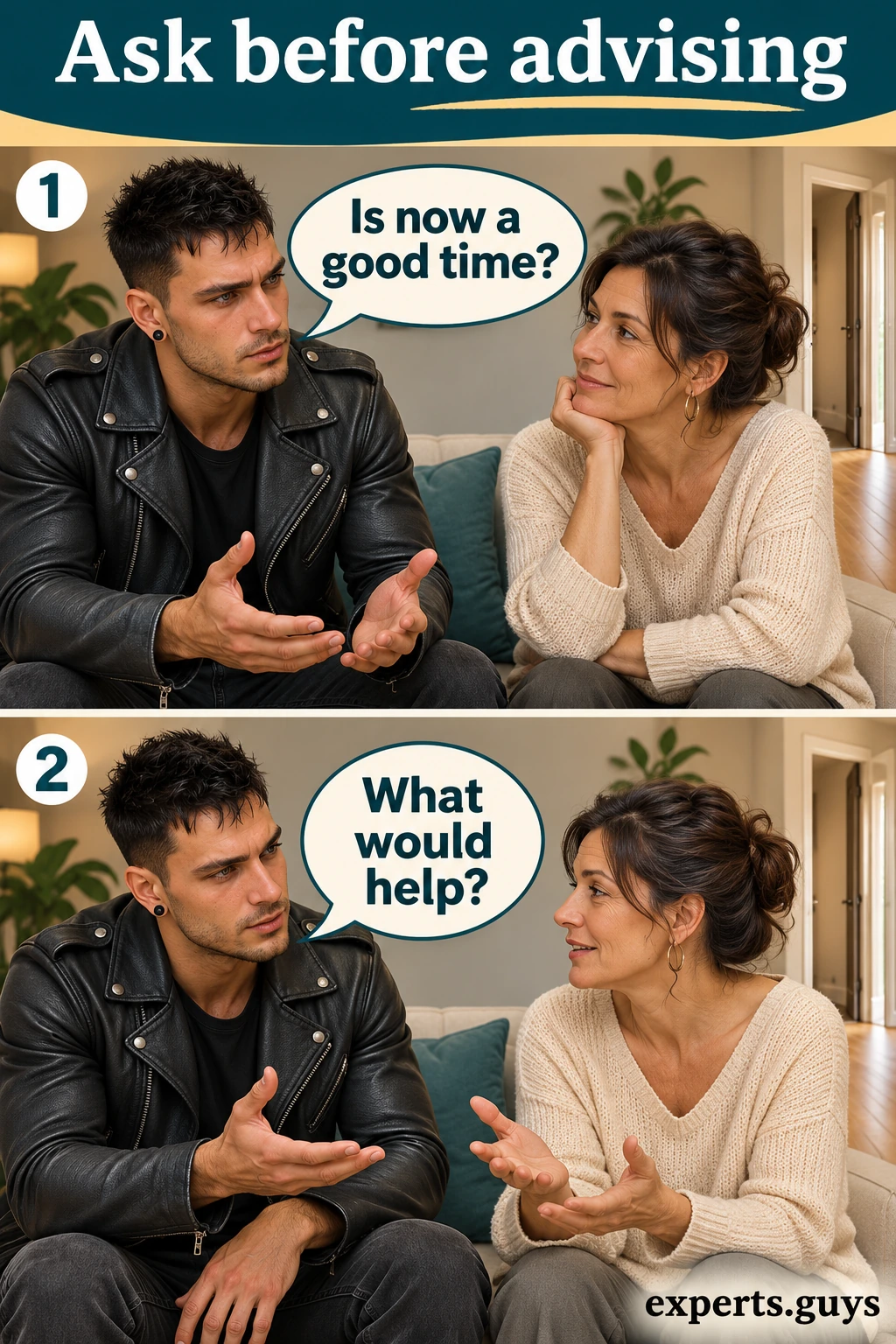
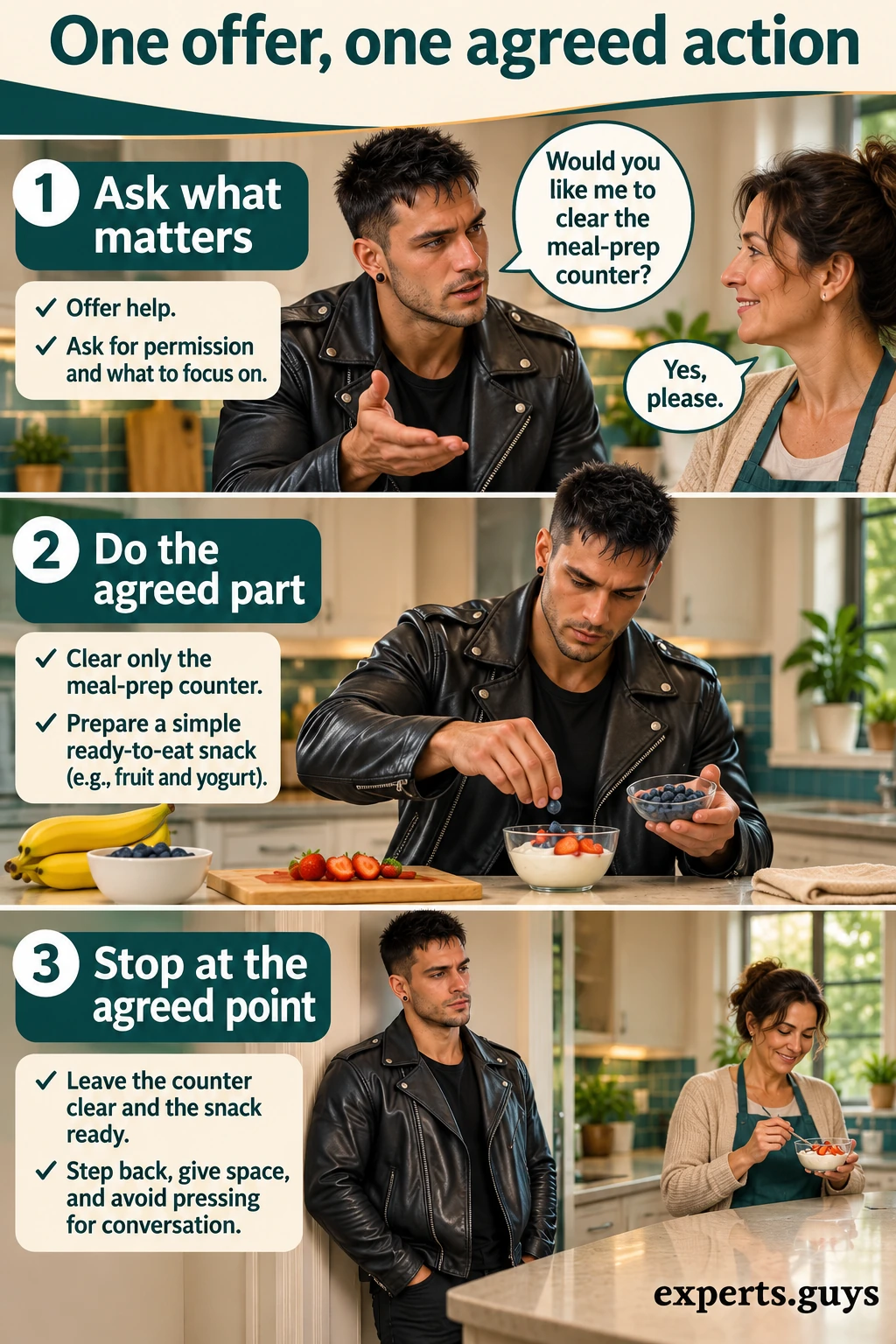
Begin with permission and a concrete observation. Choose a private, reasonably calm moment, stand or sit where the person can comfortably leave, and ask whether they have room for a short conversation. A useful opening is: “Dinner has seemed difficult this week. Would you like help with it, or would you prefer some space?” The question gives the person something understandable to respond to without demanding a full emotional explanation.
Listen to the answer before proposing a cause. “I am exhausted” does not invite a lecture about genetics. “I don't want to talk” does not automatically mean rejection or danger. You can acknowledge the preference and offer a smaller choice: “Would bringing you a meal be useful?” The aim is to learn what support is wanted, not to obtain a confession that proves your suspicion correct.
The American Psychiatric Association's guidance for supporting a loved one encourages listening, expressing concern and helping people connect with support. An ordinary family conversation is not a clinical assessment. Keep your language tied to what you have noticed and what you can offer; avoid announcing a diagnosis based on resemblance to another relative.
A common mistake is asking several questions without leaving room for an answer. “Are you depressed? Are you sleeping? Are you taking something? Why didn't you tell me?” can feel like an interrogation even when the concern is sincere. Replace that sequence with one observation, one invitation and a pause. If spoken conversation is difficult, offer a quieter setting or a trusted communication method rather than forcing eye contact or a long discussion.
The observable result is modest: you asked respectfully, heard a preference, and either agreed on one useful action or left the invitation open. A better mood, a detailed family disclosure and immediate acceptance of treatment are not requirements for the conversation to have been worthwhile. If the discussion becomes hostile, end it calmly and return only when it is safe and useful.
Make help specific enough to accept or decline
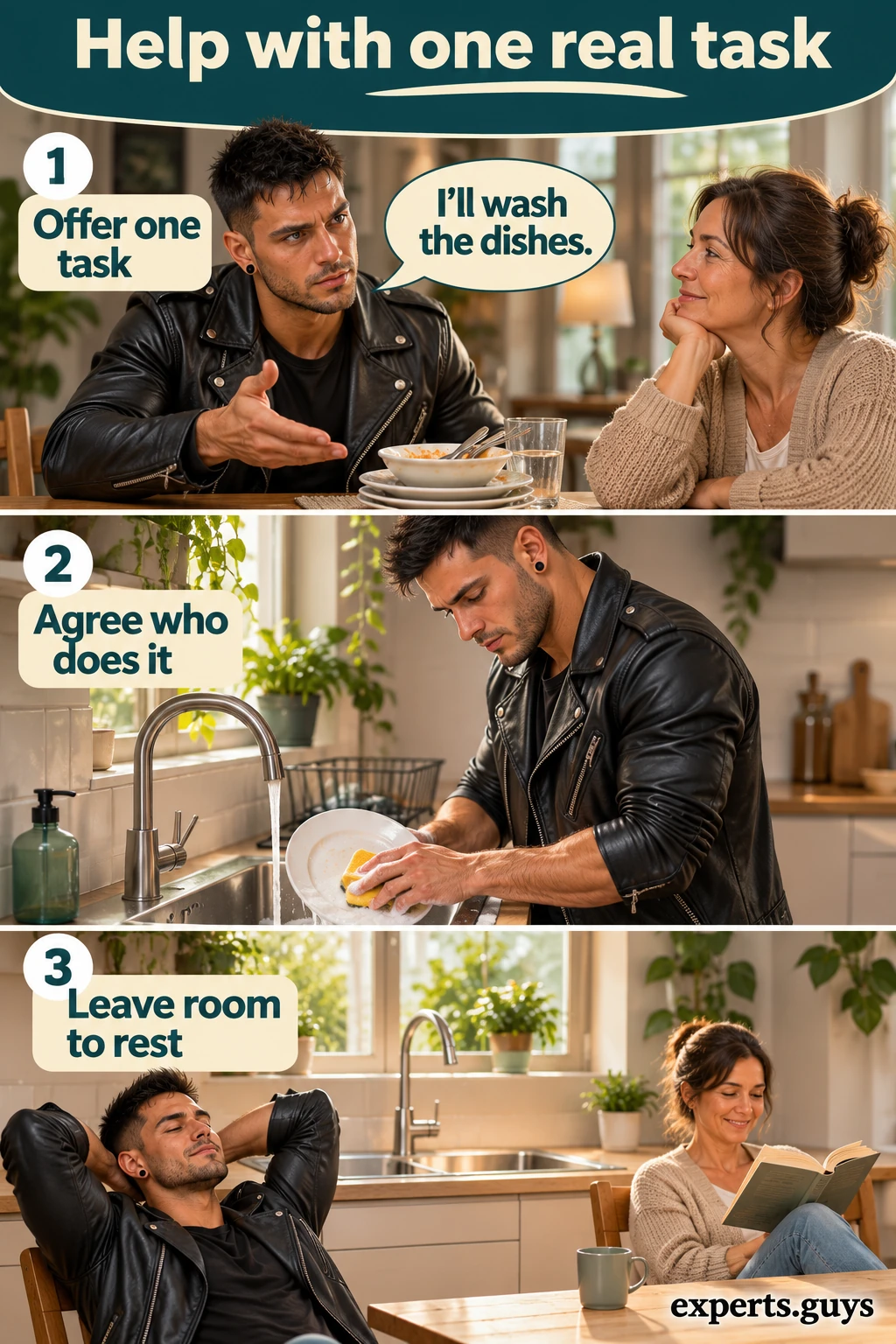
“Let me know if you need anything” sounds generous but transfers the planning work to someone who may already be overwhelmed. A specific offer is easier to evaluate: “I can wash the dishes after dinner,” “I can take the dog out this evening,” or “I can sit with you while you make the call you wanted to make.” Offer an action you can actually complete, with a clear stopping point.
Ask which part would help rather than taking over the whole task. Someone may want company while cooking but dislike another person rearranging their kitchen. They may want transport but prefer to attend an appointment alone. A useful division respects the person's preferences and ability. The goal is to remove a practical obstacle while preserving as much choice as possible.
For a dishwashing handoff, begin with the agreement: you will wash the dishes already in the sink after the meal. Check for fragile or sharp items, use the household's usual safe cleaning method, and leave the sink usable. Do not turn the offer into a surprise inspection of cupboards, a criticism of housekeeping or a demand for conversation. The finished result is clean dishes and one fewer task, not proof that you have changed the illness.
An easier version is to clear only the items needed to make the next meal or load the dishwasher if that is available and accessible. If lifting, standing or hot water is difficult, choose a different contribution that suits your abilities. Support that injures or exhausts the helper is unlikely to remain dependable. A small, repeatable contribution can be more useful than a dramatic rescue followed by resentment.
Explain changes to shared responsibilities without humiliation. “I will handle dishes tonight; we can decide about tomorrow after breakfast” is clearer than “You never do anything anymore.” Temporary arrangements can have a review point without becoming a daily performance test. Avoid linking every ordinary task to whether the person has earned kindness or deserves privacy.
Distinguish support, taking over and supervision
Support leaves room for the person's choices. Taking over removes choices unnecessarily. Supervision may be part of an agreed professional care arrangement, but a worried relative should not invent a surveillance system and call it support. Checking someone's room, messages, food, spending and expression throughout the day can damage trust and still fail to explain what is happening.
| Situation | Useful response | Overreach to avoid |
|---|---|---|
| A meal feels difficult | Offer one meal or an agreed part of preparation | Control every food choice or demand gratitude |
| An appointment feels hard to attend | Offer transport, company or help arranging access if wanted | Insist on entering the consultation |
| A relative declines conversation | Respect the pause and offer another opportunity | Question them repeatedly in front of others |
| You notice a concerning change | Describe the change and ask what support is needed | Declare that they have inherited another relative's diagnosis |
| You are becoming exhausted | Reduce your commitment and share responsibilities | Promise unlimited availability and then disappear |
There will be situations in which people disagree about what help is useful. Keep the disagreement concrete. “I can bring groceries on Saturday, but I cannot come every morning” is a practical limit. “You need me more than you admit” is a claim about the other person's inner life. The first can be negotiated; the second tends to make the relationship a contest over who understands whom.
When someone is already receiving care, ask how they want family involved. They might welcome a relative at an appointment, want help getting there, or prefer to discuss treatment privately. Healthdirect's advice on supporting someone with mental illness emphasizes participation with consent. Concern does not automatically grant unrestricted access to an adult's private health information.
Set boundaries as actions you will take
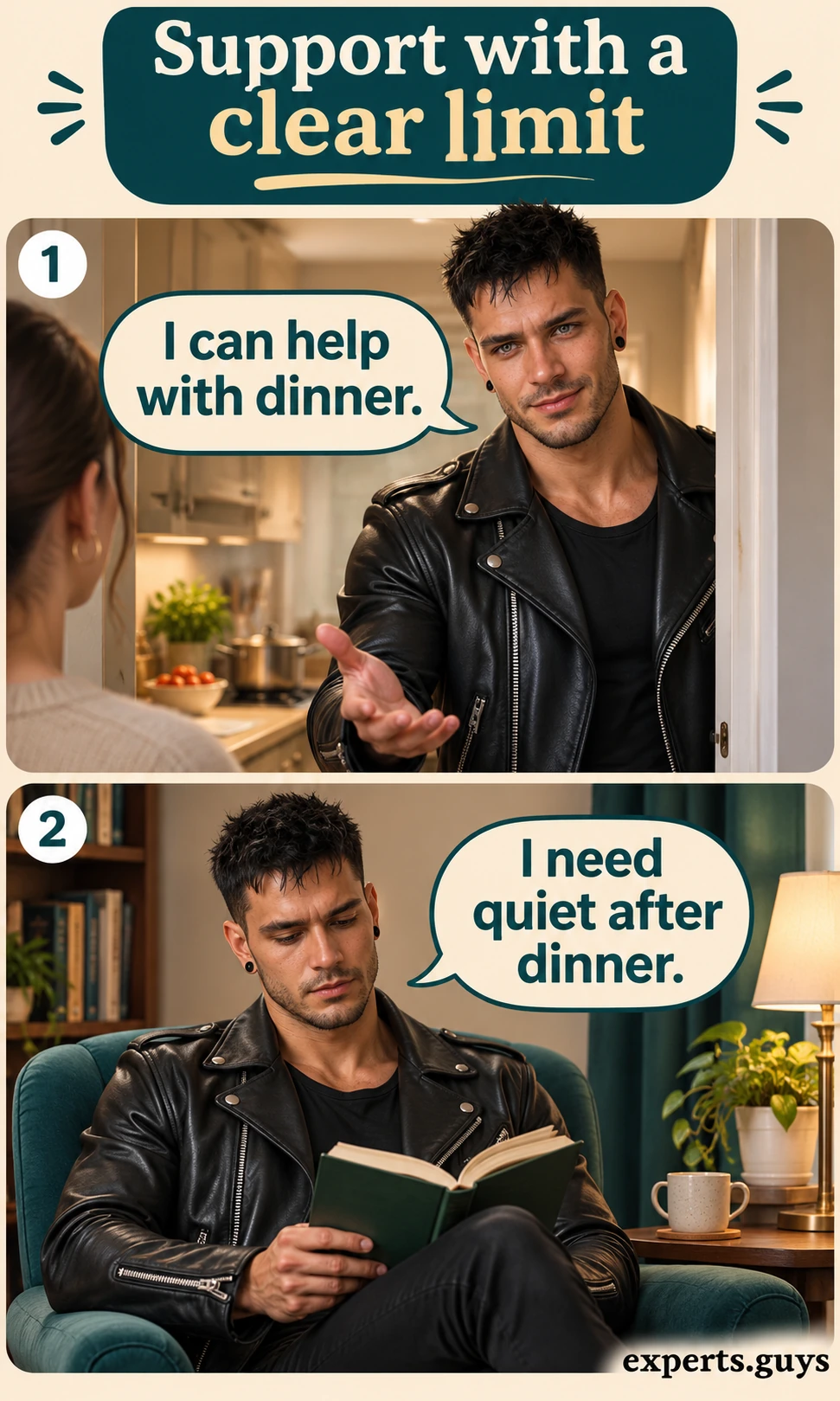
A boundary works best when it describes your own availability or behavior. “I can help with dinner, and I need quiet afterward” gives the other person useful information. “You are not allowed to feel upset after dinner” tries to control an emotional state. The first protects a manageable commitment; the second makes a demand that another person may be unable to meet.
Choose a calm moment to explain the limit. Keep the wording short, say what you can offer, and describe what happens when your capacity ends. For example: “I can talk for a while now. After we eat, I am going to rest in my room.” You do not need to argue that your tiredness is worse than the other person's distress. Both can exist at the same time.
Follow through without theatrical withdrawal. Move to the space you described, stop the nonurgent task, or hand over to another agreed supporter. A limit that is announced repeatedly but never practiced becomes difficult for everyone to understand. Equally, disappearing without explanation can feel punitive. Predictability is more useful than making the boundary sound forceful.
In a crowded home, a separate room may not exist. Adapt the limit to something available: quiet time in a shared space, a change in who handles the next chore, or a period when you are unavailable for nonurgent discussion. If you need essential communication for disability access or caregiving, protect that access while narrowing the optional demands. A boundary should make support sustainable rather than remove basic safety.
Ask about family history without labeling relatives
If you want to understand the family's health history, start with what a relative is comfortable sharing. “Has anyone in the family received treatment for depression or another mental health condition?” is more respectful and informative than “Which side of the family is unstable?” Use the words people know, and accept that older generations may have incomplete information or different terminology.
Separate a known diagnosis from family shorthand. “He had a breakdown” might refer to many different experiences. “She was always difficult” is a judgment, not medical information. You do not need to correct every family story in the moment, but you should avoid treating an uncertain description as a confirmed diagnosis. It is reasonable to say, “We don't know exactly what happened.”
The absence of a known history also has limits. Adoption, estrangement, early deaths, stigma and limited access to care can leave important gaps. A blank family history does not prove that a condition is impossible; a detailed history does not make it inevitable. Your present symptoms and functioning still matter. Nobody needs to solve the entire family tree before asking for help with a current problem.
Keep the purpose clear. You are looking for information that may help you understand health and support needs, not material for a family argument. Do not pressure a relative to disclose trauma or explain another person's private treatment. If a discussion becomes painful or speculative, stop at what is known and return to the practical question you can address today.
Protect privacy without promising dangerous secrecy
Agree on who needs to know what. A relative might want one sibling to know that meals are difficult while keeping treatment details private. Ask before forwarding messages, telling extended family or discussing the situation with neighbors. The person helping with groceries usually does not need the full history. Share the minimum information needed for the agreed task.
Privacy is different from promising that you will never seek help under any circumstances. If someone describes immediate danger to themselves or others, or cannot stay safe, urgent assistance takes priority over keeping the situation within the family. Do not promise secrecy as the price of a conversation. You can say that you will respect privacy while acting if immediate safety is at risk.
Keep this distinction away from everyday disagreements. Refusing a meal, wanting time alone or declining your advice is not by itself an emergency. Using “safety” to justify controlling an adult's ordinary choices can undermine the trust needed for a genuine urgent situation. If you are unsure about a worrying change, seek appropriate advice and describe the actual behavior rather than relying on a family label.

Notice changes without watching every expression
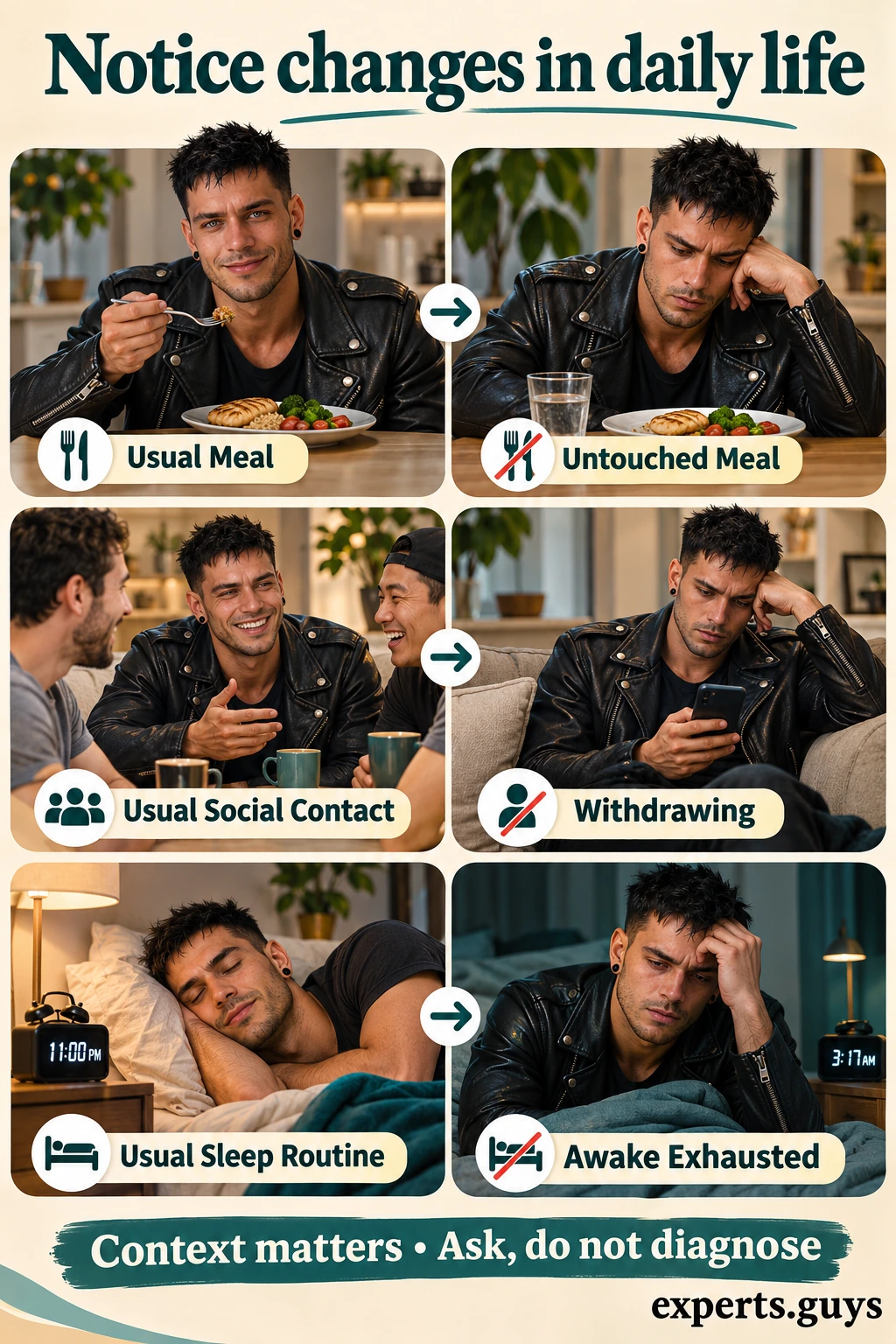
A useful observation concerns a meaningful change in daily life: someone is struggling to eat, missing essential responsibilities, withdrawing from usual contact or sleeping very differently. One quiet evening or an untidy room does not establish a mental disorder. Ask about the pattern and its impact rather than treating a single sign as a verdict.
The NIMH guide to depression explains that depression can affect mood, interest, energy, thinking, sleep and appetite. Diagnosis requires more than a family member recognizing a few familiar features. Physical illness, medication effects, substance use and life events can also matter. Describe what has changed and how much it interferes with living rather than trying to identify the cause from appearance alone.
Compare with the person's own usual life, not an ideal household standard. Someone who has always preferred solitude should not be judged against a highly social sibling. Someone working nights will sleep at different hours. Changes become more informative when you understand the setting. Ask about work, pain, access to food, recent loss or practical stress without assuming that every answer belongs to a psychiatric explanation.
Avoid turning support into repeated testing: “You smiled yesterday, so you cannot be depressed,” or “You didn't smile today, so things are worse.” People can have moments of enjoyment while struggling, and an outwardly productive day does not reveal the full effort involved. A calm question about what was difficult is more useful than trying to read the diagnosis from a face.
When the next step needs more than household help
Household adjustments can reduce friction, but they cannot settle a diagnosis or replace treatment for substantial symptoms. Seek an assessment when changes persist, worsen, or interfere with eating, sleeping, work, relationships or basic self-care. You can make that step more accessible by offering transport, a quieter appointment setting where available, or company if the person wants it.
Be specific about the reason. “You have barely slept and are struggling to manage the day” conveys more than “Our family is like this.” Mention periods of unusually increased energy, much less need for sleep or risky behavior if they have actually occurred; do not reduce every mood problem to depression. The site's explanation of manic depression addresses terminology, but an article cannot determine which condition fits an individual.
If there is immediate danger, a suicide attempt, serious self-harm, severe confusion or an inability to remain safe, contact local emergency services or urgent mental health care. If it is safe to do so, stay nearby while help is arranged. Do not physically confront someone or put yourself at risk. This is a different situation from ordinary reluctance to discuss feelings and should not wait for a family agreement.
Do not share prescriptions, recommend a relative's dose, or change another person's medication because the symptoms look similar. A family connection does not make treatment interchangeable. If the person is already receiving care and something has changed, help them contact the relevant service if wanted, or seek urgent assistance when safety requires it. Your most useful contribution may be making access easier rather than selecting a treatment.
A worked household example
Consider an illustrative household with two adult siblings. One has become overwhelmed by work and is finding meal preparation difficult. The other is frightened because a parent had depression. There is no immediate danger. The practical problem is that dinner is becoming a nightly argument, while the worried sibling keeps asking whether the family illness has returned.
Start by separating the two concerns. The family history may be relevant to an eventual health discussion. Tonight's problem is access to a meal without another confrontation. The supporting sibling asks whether help with food would be welcome and offers one defined contribution: preparing a simple snack from food already available. They do not use the offer to demand an explanation of mood or to compare the sibling with the parent.
After agreement, they clear only the space needed, prepare the food using normal food-safety precautions and leave it where the person has requested. If standing together feels too demanding, the person can remain seated or choose to eat later within safe storage limits. The supporter then stops at the agreed point. They do not expand the task into reorganizing the room, checking medication or announcing the situation to relatives.
The useful result is a meal option and a less adversarial exchange. It is not evidence that the underlying distress has resolved. If the difficulty continues, the next conversation can address assessment or other support using concrete observations. The household has learned a repeatable principle: help should solve a real obstacle without making privacy, autonomy or affection conditional on disclosure.
Keep a family relationship beyond the illness
People still have preferences, humor, skills and ordinary interests when mental illness is part of their life. A household in which every conversation becomes an assessment can feel claustrophobic. Continue offering normal shared activities that the person already enjoys, with room to decline. The invitation matters more than turning participation into a measure of recovery.
The same applies to the supporter. You are allowed relationships, rest and interests outside the caregiving role. If one person has become the only source of practical help, look for a more realistic division of responsibilities with the person's consent where appropriate. Shared support does not have to mean sharing private clinical details. One person can provide transport while another helps with groceries.
You may also need support for your own distress, especially if family history carries painful memories. That does not make the affected relative responsible for reassuring you. Separate your fear of repeating the past from the current person's needs. A trusted person or professional outside the immediate conflict can help you think clearly without turning every family interaction into a discussion of your anxiety.
When the first offer does not work
A declined offer gives you information about fit, not a verdict on the relationship. The person may dislike the proposed meal, want privacy, feel overwhelmed by choices or simply prefer another time. Ask one clarifying question if it is welcome: “Would a different kind of help be easier?” If the answer is still no, leave the offer available without turning it into a negotiation they must win.
Separate disappointment from a practical need that affects everyone. If an unwashed pan prevents anyone from preparing food, the household can agree on how to make the kitchen usable. That agreement does not require proving why the pan was left there. Keep the shared-space issue concrete and avoid using it to reopen every disagreement about effort, gratitude or the past.
If your offer repeatedly expands beyond your capacity, make the next one smaller and clearer. “I can take the shopping home, but I cannot stay this afternoon” is easier to honor than an undefined promise to help all day. You may feel less generous when you name the limit, but a reliable contribution gives the other person something they can actually plan around.
There are also times when your involvement is not the best fit. A relative may communicate more comfortably with a friend, another family member or a professional. If the arrangement is safe and respects their wishes, stepping back can be supportive. You do not need to become the person who hears every detail in order to remain a caring member of the family.
Repair an overstep without demanding reassurance
Concern can lead people to speak too quickly or share information they should have kept private. If that happens, identify the action plainly: “I told your sister without asking. I should have checked with you.” Avoid an explanation so long that the affected person has to comfort you. A useful repair addresses what you did and what you will change.
Then ask what can realistically be corrected. Perhaps you can stop forwarding updates, clarify that a diagnosis was never confirmed, or tell another relative that details are private. Some information cannot be taken back, so do not promise complete reversal. Make the next boundary specific and follow it. Trust is rebuilt through behavior rather than a demand that the person immediately accept your intentions.
The same principle applies when you have repeatedly compared someone with an unwell parent. Acknowledge that the comparison was frightening or unfair, and return to the present person's own experience. You can retain relevant family history without making it the explanation for every disagreement. The correction is not forgetting the past; it is refusing to let an uncertain forecast dominate the current relationship.
These repairs are ordinary relationship practices, not treatments for mental illness. They matter because support depends on being able to disagree, decline and ask for privacy without losing the relationship. A household can be imperfect and still become more dependable when people notice an overstep and change what happens next.
Questions families often leave unresolved
Should I tell every relative about a diagnosis?
No. Ask the person what they want shared and with whom. Practical helpers often need only the information relevant to their task. Immediate safety concerns can require urgent assistance, but ordinary family curiosity does not remove an adult's privacy.
What if my family refuses to discuss mental health history?
Acknowledge that some information may remain unknown. You can still describe your current difficulties, seek assessment when needed and build respectful household support. A complete family history is useful context, not a condition you must meet before receiving help.
Does supporting someone mean agreeing with everything they say?
No. You can recognize distress without endorsing every explanation or accepting harmful behavior. Keep disagreements calm and concrete, state your limits, and prioritize safety when there is an immediate threat.
Can I help if I live elsewhere?
Offer something specific that distance allows, such as arranging agreed practical assistance or being available for a conversation at a realistic time. Ask what is wanted rather than coordinating other people behind the person's back.
Choose the next useful agreement
The strongest starting point is usually one respectful agreement: what help is wanted, who will provide it, and where that commitment ends. Family history can inform care without becoming a forecast, and concern can lead to action without becoming control. A household works better when people can ask for help, decline an offer, protect privacy and recognize when the situation needs more support than relatives can provide.










