



Mental pain is the inner hurt of experiences such as rejection, emptiness or feeling worthless, and it can occur in both borderline personality disorder (BPD) and depression. How intense that pain feels cannot, by itself, tell the conditions apart. A more useful starting point is to describe what happened, what the experience meant to you and how it affects your life, without turning one painful moment into a diagnosis.
If you cannot stay safe or may act on thoughts of harming yourself, seek immediate help through local emergency services or the nearest emergency department. Ask a trusted person to stay with you where possible. You do not need to settle the diagnosis before getting help.
Is mental pain different in BPD and depression?
The experiences overlap, and there is no reliable rule that one diagnosis always hurts more. BPD can involve difficulties with emotion regulation, self-image and relationships; depression can involve persistent low mood or loss of interest alongside other symptoms. Both conditions can occur together, so a comparison should not force someone into an either-or choice.
- Pain describes an experience: “I feel empty” tells someone how you feel.
- A pattern adds context: what happens before, during and between difficult moments helps explain the problem.
- A diagnosis requires assessment: a feeling, online description or research finding cannot supply it on its own.
When you say “it hurts,” the listener may not know whether the hardest part is sadness, a sense of being unwanted, or the urge to escape a conversation. Those are different things to describe even when they arrive together. Naming the difference gives the conversation something more specific to work with than an argument about whether the feeling is “too much.”
| What you describe | Illustrative example | What remains unknown |
|---|---|---|
| Emotion | “I feel hurt and frightened.” | Its cause and diagnosis |
| Meaning | “It feels as if I do not matter.” | Whether that interpretation is accurate |
| Urge | “I want to leave.” | What the person will actually choose to do |
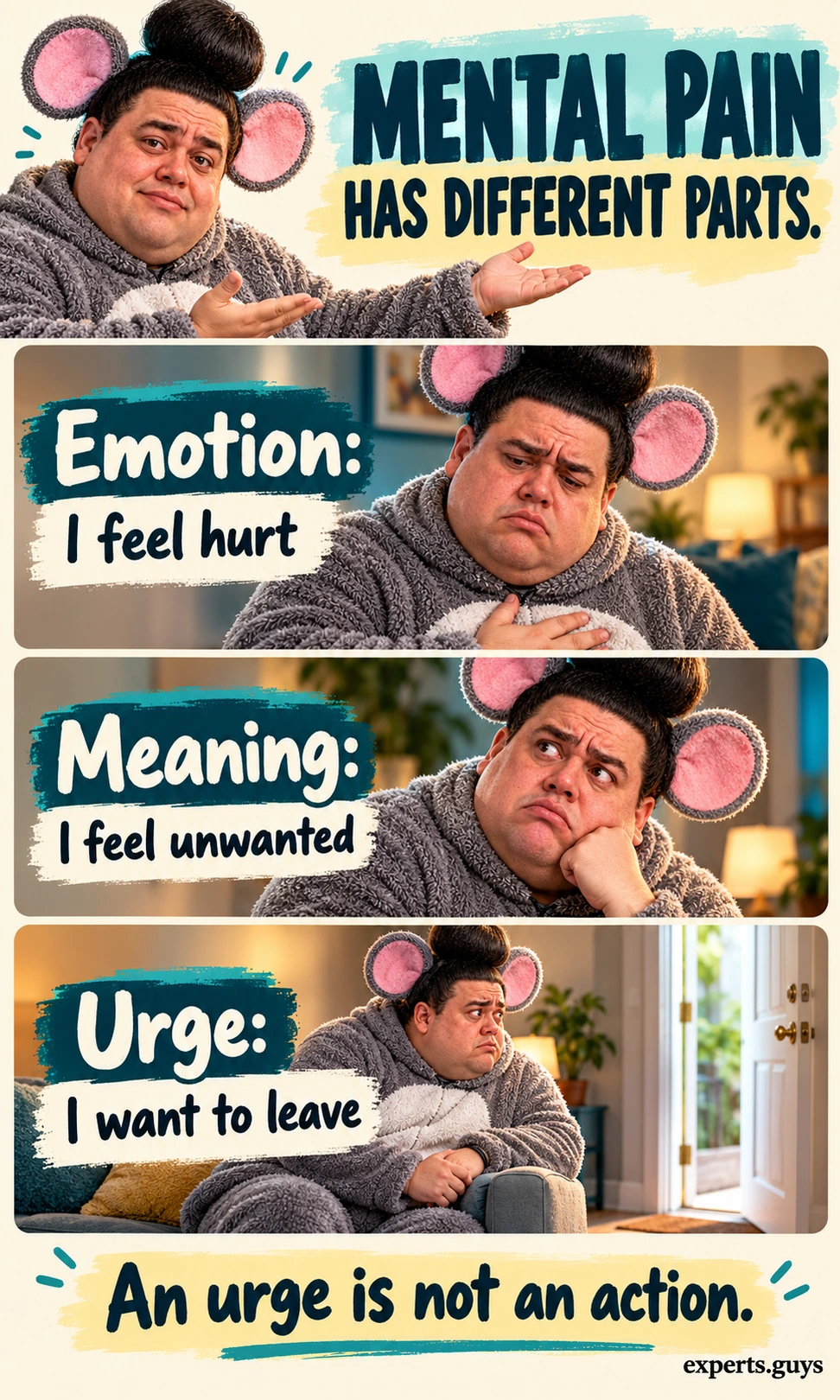
An urge and an action are not interchangeable. You can tell someone that you want to leave without having already decided to end the relationship. Equally, a person listening should not assume that a quiet face means mild distress. Ask about the experience rather than trying to read its severity from appearance.
Context matters because the same sentence can describe different situations. “I feel empty” after a disagreement does not communicate the same history as “I feel empty even during activities I used to enjoy.” Neither sentence establishes a diagnosis, but the difference is worth explaining. The guide to clinical depression and everyday uses of the word depression clarifies why symptom language and a clinical conclusion should stay separate.
What did the mental-pain study actually find?
A 2016 study of mental pain in BPD and depressive disorders compared 57 participants with BPD, 22 with depressive disorders without BPD and 31 healthy controls. Total scores on the Orbach and Mikulincer Mental Pain Scale did not distinguish the two clinical groups. One subscale, called “narcissistic wounds,” showed a difference associated with BPD; it concerned rejection and diminished self-worth, not a diagnosis of narcissistic personality disorder.
The study was small, the groups differed demographically, and its findings describe associations rather than proof of cause. “Healthy controls” was a research comparison category, not a claim that those people never suffered. The result gives researchers a question to investigate; it does not make rejection sensitivity a stand-alone test for an individual.
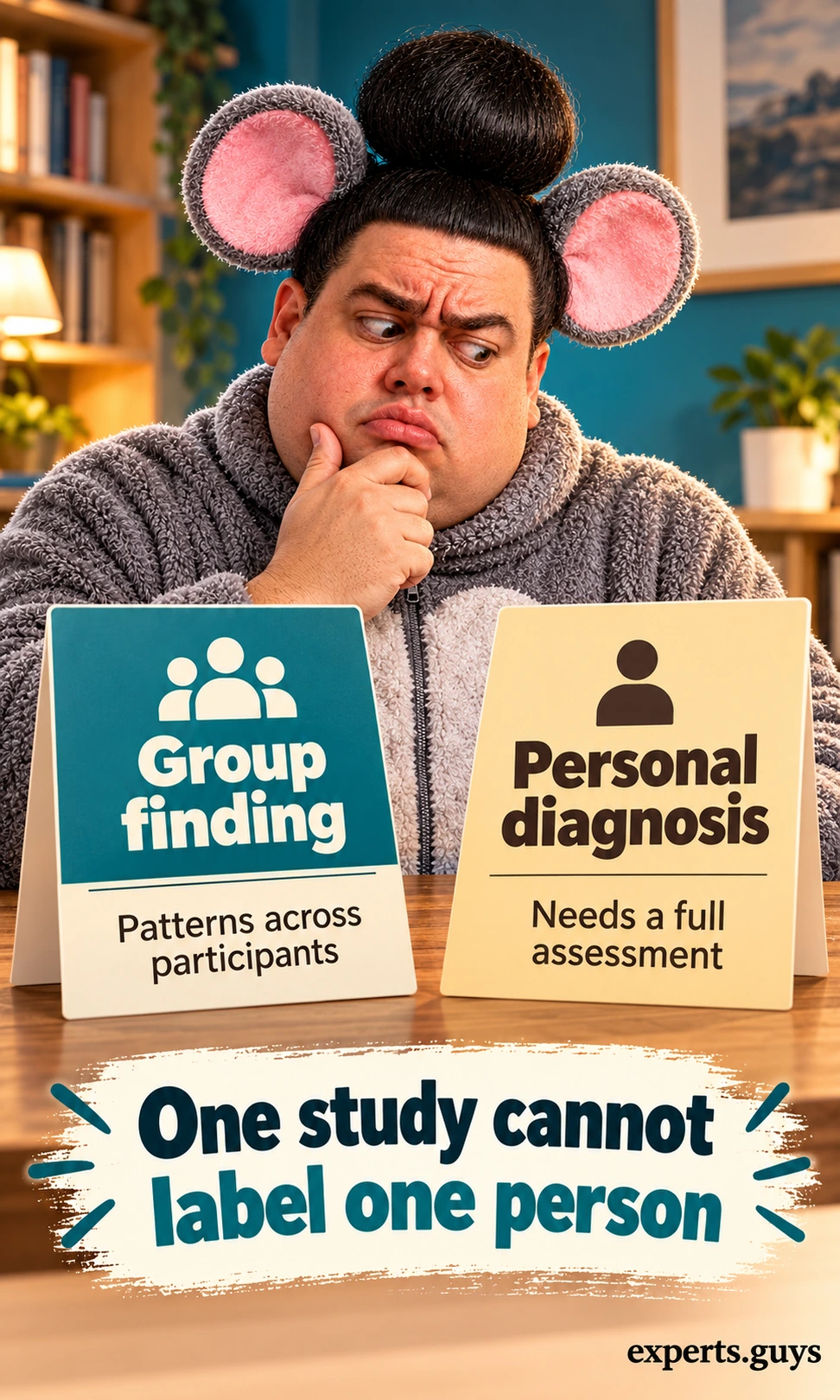
A group result is not a personal verdict
Imagine reading that one group reports a certain experience more often. That does not tell you whether every person in that group has it, whether people outside the group have it, or what explains your own experience. The missing information matters. A memorable phrase in a study can feel personally revealing while still being insufficient to identify a condition.
There is another trap: assuming that a result which does not separate two groups means their lives are identical. A questionnaire captures selected aspects of experience. Similar totals can coexist with different histories, difficulties and support needs. Treat the finding as a limit on what that measurement established, rather than permission to erase those differences.
The useful question for an appointment is therefore not “Does this research phrase prove I have BPD?” It is “Can we look at the pattern behind this pain?” You can describe a recent example from memory. A polished account, score or written diary is not a prerequisite for being taken seriously.
- Before: what was happening when you first noticed the pain?
- Between: does the feeling continue in other situations, including quieter moments?
- Impact: what becomes difficult, such as eating, sleeping, working or staying in a conversation?
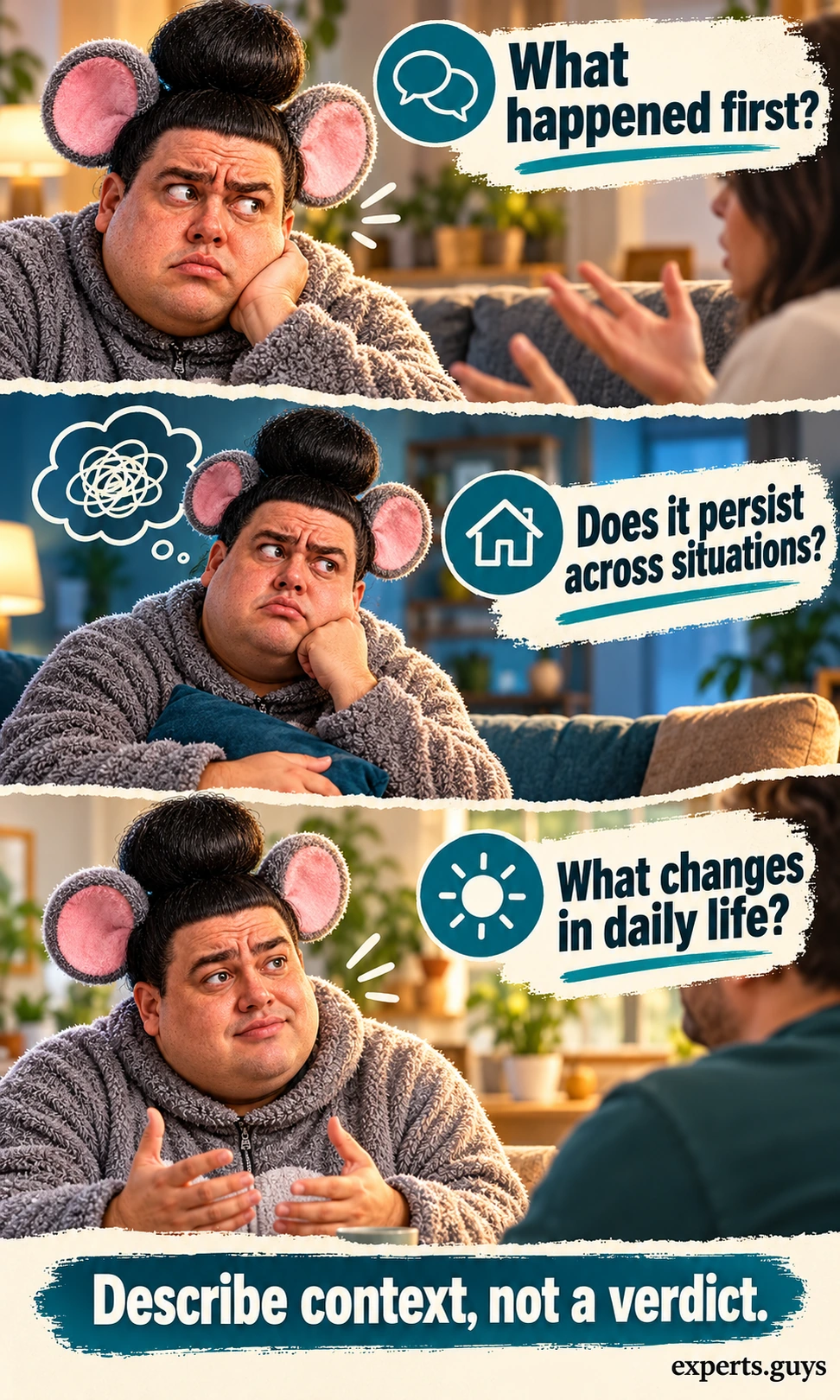
If you cannot remember when it began, say that. Uncertainty is information, too. You might explain, “I noticed it after we argued, but I cannot tell whether it was already there.” That is more accurate than choosing a neat timeline because you think an assessment requires one.
How can you explain rejection-related pain without blaming yourself?
Separate the observable event from the meaning it seemed to carry, then make one clear request for clarification. This is a communication example for an ordinary, safe interaction, not a treatment protocol or a way to determine who is right. Its purpose is to make the hurt understandable without presenting a painful interpretation as an established fact.
Consider a hypothetical situation: someone says, “I need to leave now,” and walks out of the room. The event is that they left. “I do not matter” is the meaning you attached to it. That meaning might feel immediate and convincing, but the event alone does not tell you why they left. The feeling deserves acknowledgment while the explanation remains open.
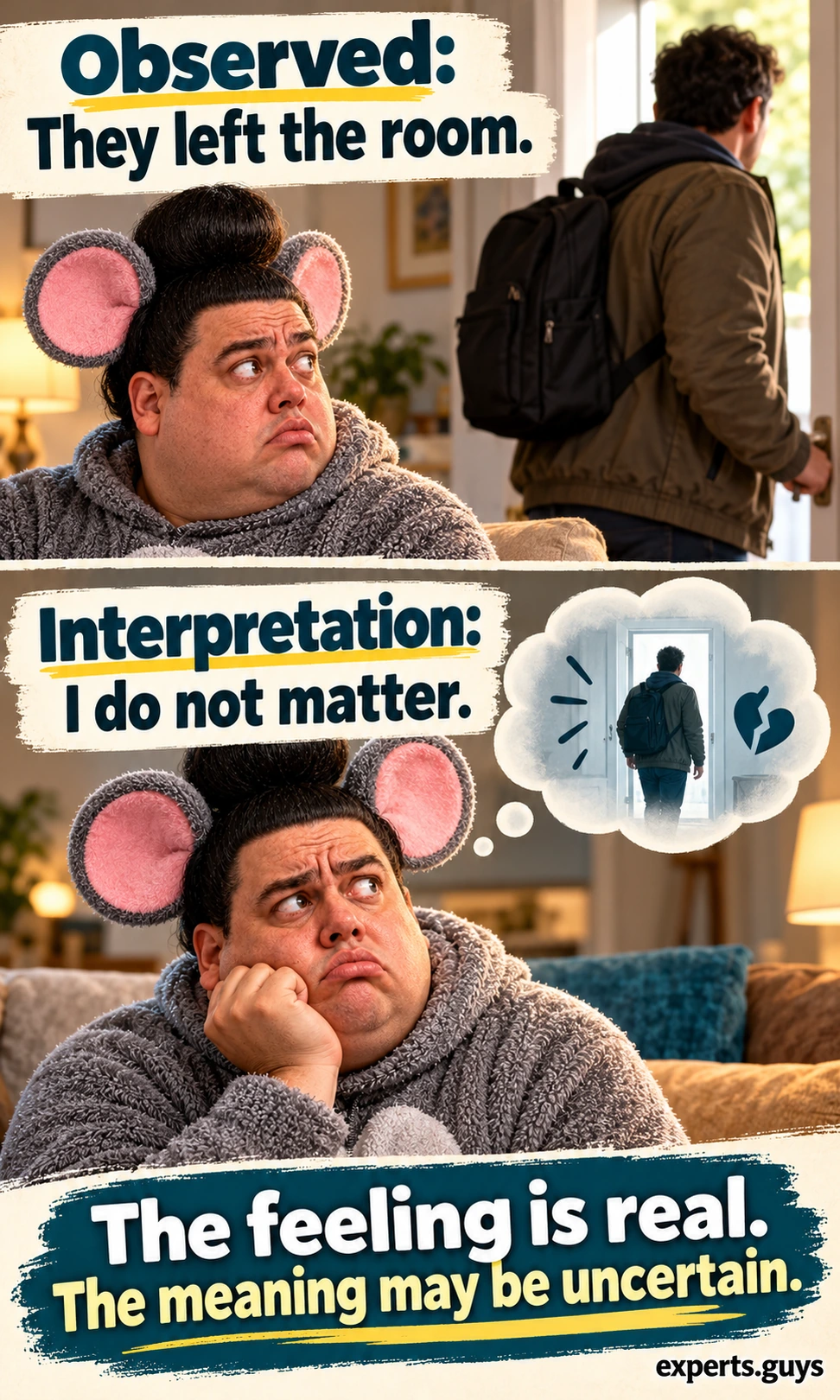
This distinction is not an instruction to dismiss mistreatment. If the person has threatened you, blocked your exit or made the setting unsafe, the priority is safety rather than clarification. Nor do you have to find a generous explanation for a repeated pattern of hurtful behavior. Uncertainty about one event does not cancel what you already know about a relationship.
Try one spoken clarification
Use this when both people can speak safely and the other person is willing to listen. Sit or stand in a comfortable position with enough personal space; you do not need to hold eye contact, touch, or adopt a special posture. If the conversation is already escalating, pause instead of pushing through the sequence.
- Describe one event. Say, “When you left during our conversation…” Keep it to something that could have been observed, rather than “You always abandon me.”
- Name the painful meaning as your experience. Continue, “…I felt as if I did not matter.” This shares the hurt without claiming access to the other person’s intentions.
- Ask one neutral question. Try, “What was happening for you?” Let the person answer before adding another question. You can listen without agreeing with everything they say.
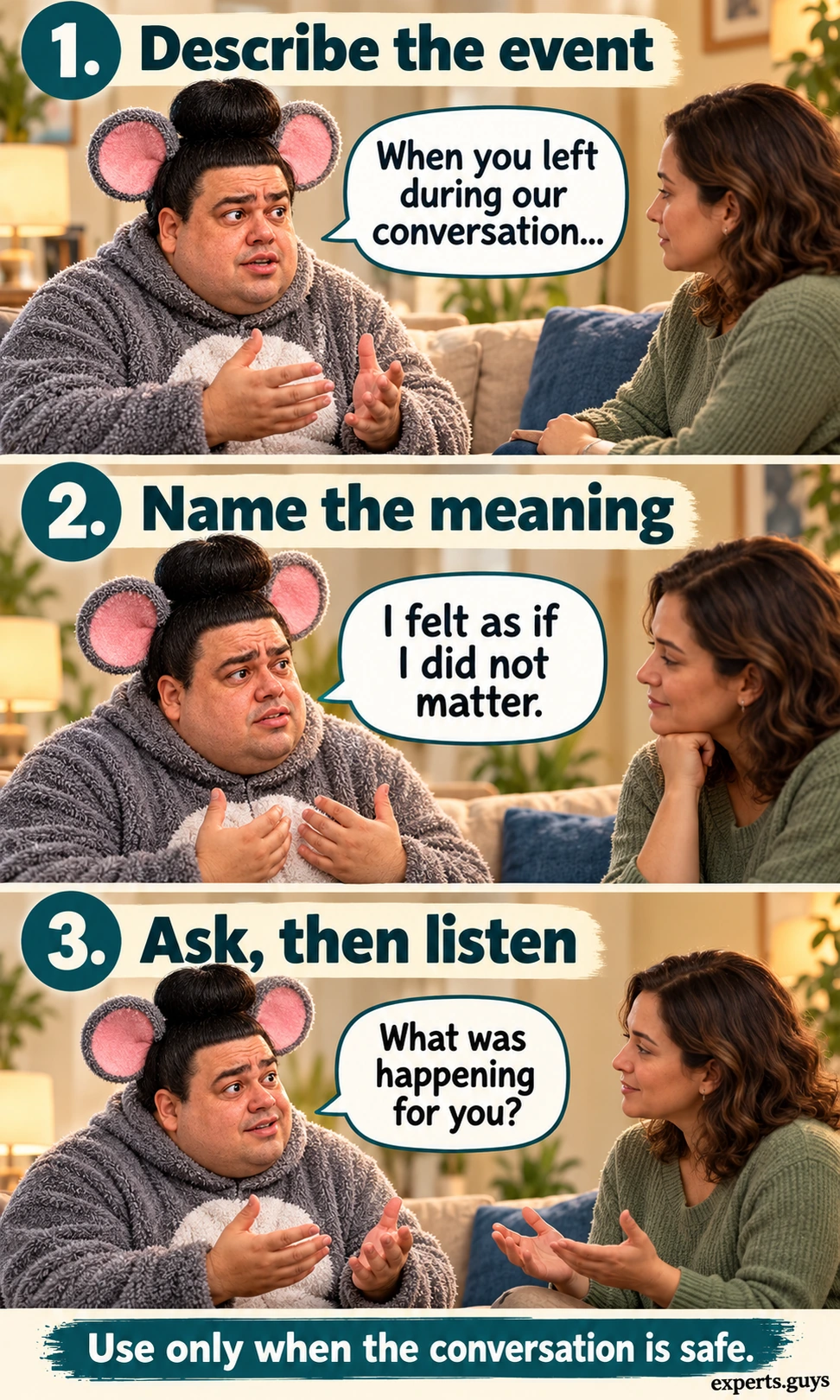
A useful result is a clearer exchange, not instant relief. You may learn that the person had another commitment; you may learn that they were upset; or you may still not know. The conversation has done its immediate job if the event, feeling and question are now distinguishable. It has not failed simply because the pain is still present.
The reasoning is practical: the listener has one event to respond to and can hear what it meant to you without first defending against a claim about their motives. NICE guidance on responding to BPD distress emphasizes a calm, non-threatening approach, acknowledgment and understanding before solutions. The dialogue here adapts those broad communication principles for a safe everyday conversation; it has not been established as a separate therapy.
Make it smaller if words are difficult
If the full sentence is too much, begin with “That hurt. I need a moment.” Remain seated if that is more comfortable, allow a pause, and return to the single event only if you want to continue. The other person can ask whether you want listening or clarification. Silence does not need to be filled with repeated questions.
| Where it gets stuck | A smaller adjustment |
|---|---|
| The question includes a verdict: “Why don’t you care?” | Ask what happened without supplying the motive. |
| Several old disagreements enter at once. | Return to the one event you chose. |
| You cannot continue comfortably. | Say you need a pause; stop the exercise. |
| The interaction feels threatening. | Prioritize safety and support rather than completing the dialogue. |
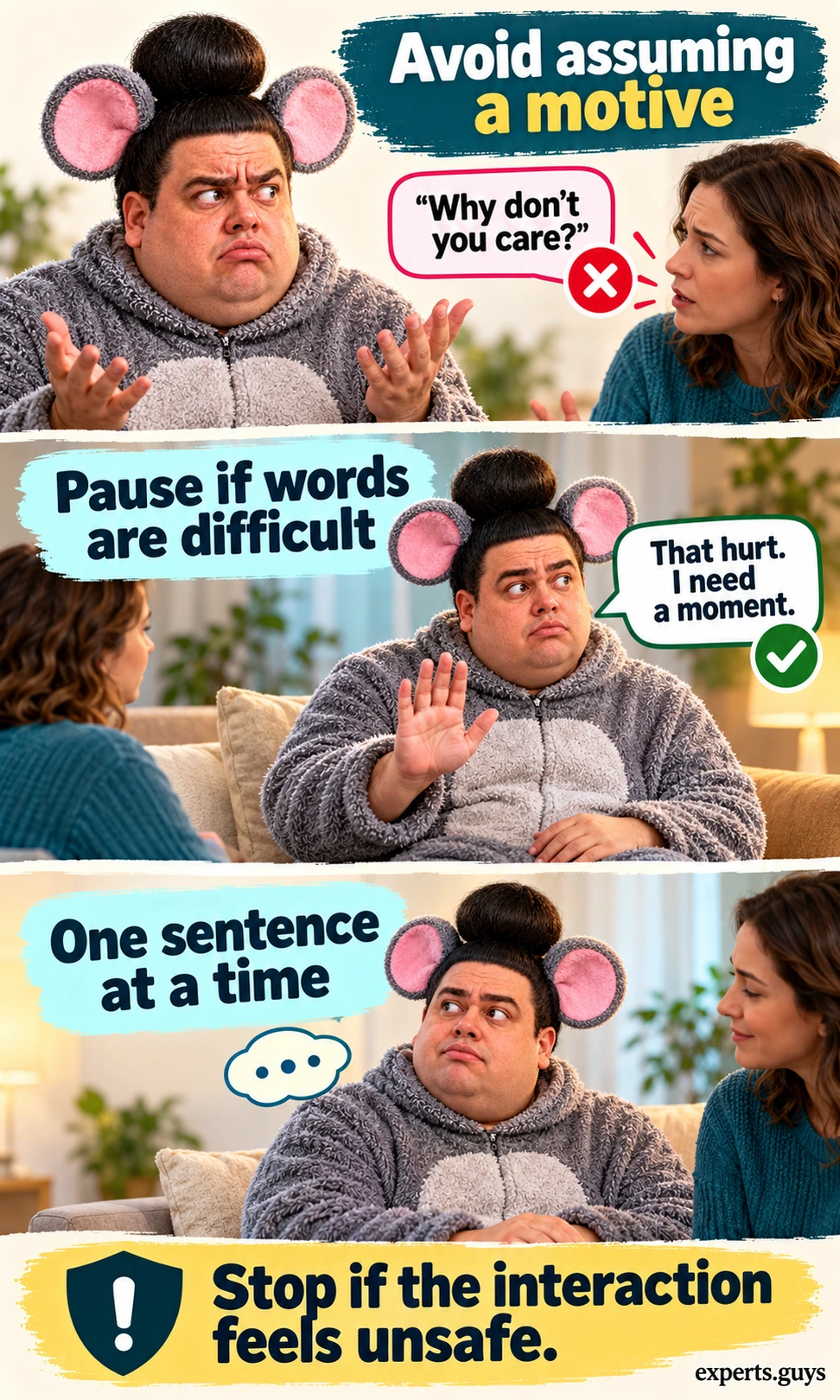
As a listener, you can recognize pain without confirming every conclusion: “I can hear that leaving felt hurtful” is different from agreeing that the person does not matter. Avoid using the exercise to win an argument or instructing someone to “be rational.” It is a way to make room for an explanation, not a demand that either person stop having feelings.
Words such as dysphoria and depression may also enter the conversation. If terminology is getting in the way, the explanation of dysthymia versus dysphoria separates an unpleasant emotional state from a persistent depressive condition. You can still use ordinary words such as hurt, empty or overwhelmed when they describe the experience more clearly.
What changes the next step: context, persistence or safety?
Safety determines urgency; persistence and effects on everyday life help determine the need for a fuller assessment. A single conversation cannot establish whether distress reflects BPD, depression, both, another condition or a difficult life situation. Seek an assessment when the pattern keeps recurring, persists across situations or interferes with daily functioning.
Depression assessment considers a wider symptom pattern, including low mood or loss of interest, duration and impairment. For major depression, symptoms typically occur most of the day, nearly every day, for at least two weeks, but this is not a rule to wait two weeks before seeking help. The NIMH explanation of depression also describes assessment and treatment options.
For BPD, treatment commonly centers on structured psychotherapy. Medicines may be considered for co-occurring conditions or specific targets alongside appropriate care; they are not something to start, stop or change because a research description sounds familiar. The NIMH guide to BPD explains why diagnosis and treatment need an individualized assessment.
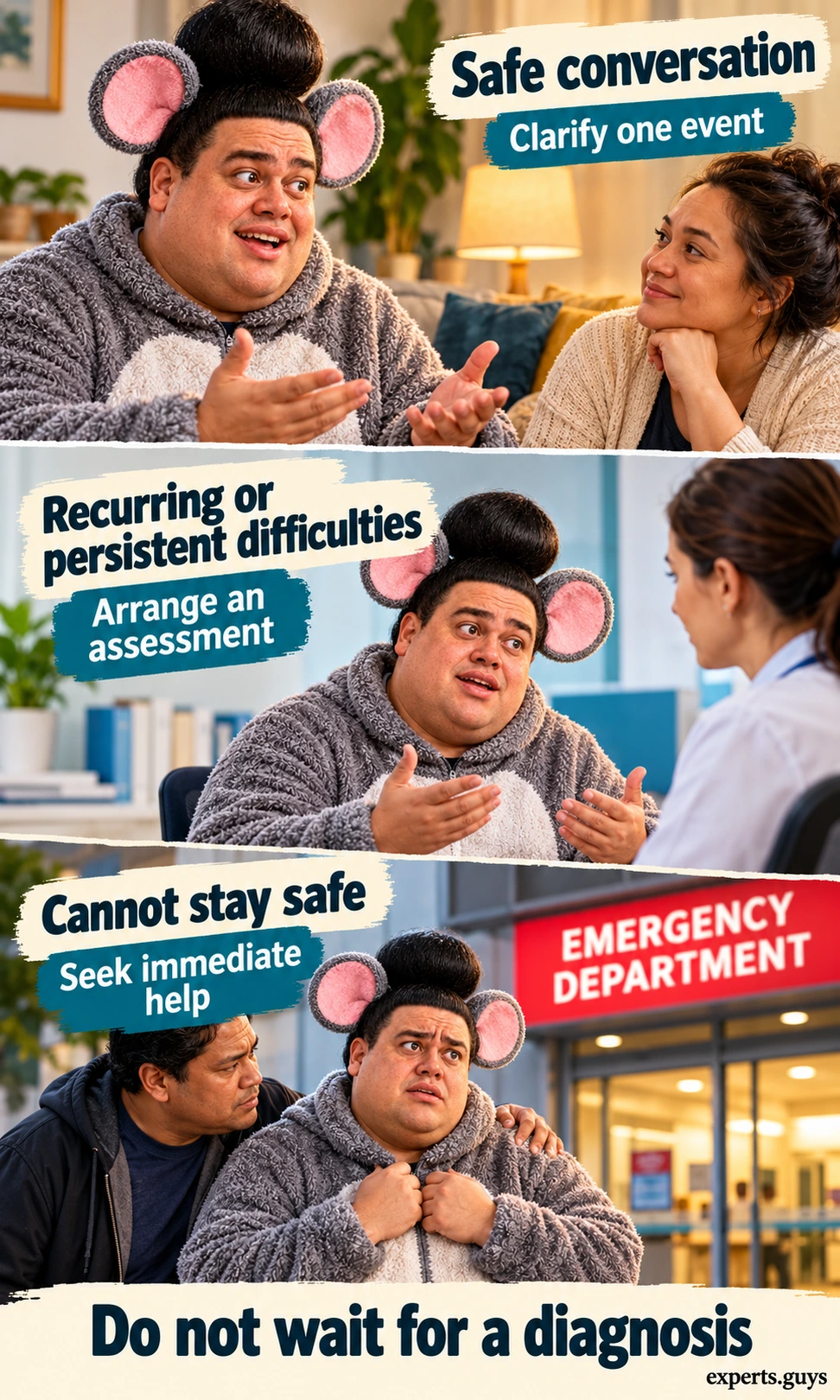
You can make an appointment useful without preparing a perfect history. Explain the difficulty you most want help with and give one recent example, then allow the clinician to ask questions. If finding suitable support is the obstacle, the guide to choosing and starting mental health counseling covers qualifications, fit and practical arrangements.
Do not use a comparison of diagnoses to decide whose suffering deserves attention. Someone with a diagnosis may need support today, and someone without one may also need help. The immediate questions are whether they are safe, what is becoming difficult and what kind of support is appropriate.
Frequently asked questions
Does the term narcissistic wounds mean narcissistic personality disorder?
No. In this study it names a mental-pain subscale concerning rejection and self-worth. A scale label is not a separate personality-disorder diagnosis.
Can I use this article to label a partner?
No. You can describe behavior and its effect on you, but a relationship disagreement and an article cannot establish another person’s diagnosis. Clear boundaries do not require you to assign a clinical label.
Do I have to explain the pain perfectly before asking for help?
No. Start with the part you can describe, even if it is only “I feel overwhelmed and I do not understand why.” A clinician can help clarify the pattern through questions.
What if the other person will not clarify what happened?
You cannot make someone answer. You can stop the exchange, leave the explanation unresolved and decide what boundary you need. Repeatedly asking the same question is not a required part of the exercise.
Does a lighter moment mean the pain was not real?
No. A moment of laughter or relief does not invalidate an earlier painful experience. Describe the broader pattern instead of treating one visible moment as proof for or against a diagnosis.
Your next-step checklist
- Keep a research association separate from a personal diagnosis.
- When it is safe and useful, describe one event, its painful meaning and one clarification question.
- Use the shorter spoken version or pause when continuing is difficult.
- Arrange assessment for persistent or recurring difficulties; seek immediate help when you cannot stay safe.









