

Why Sautéed Summer Squash Tastes Better With High Heat
Summer squash cooks very differently from dense vegetables like potatoes or carrots because it contains a much higher water content.
When cooked too slowly, squash releases moisture faster than it browns.
This often creates:
- soggy texture
- watery surface
- weak caramelization
- diluted flavor
High heat changes the cooking behavior.
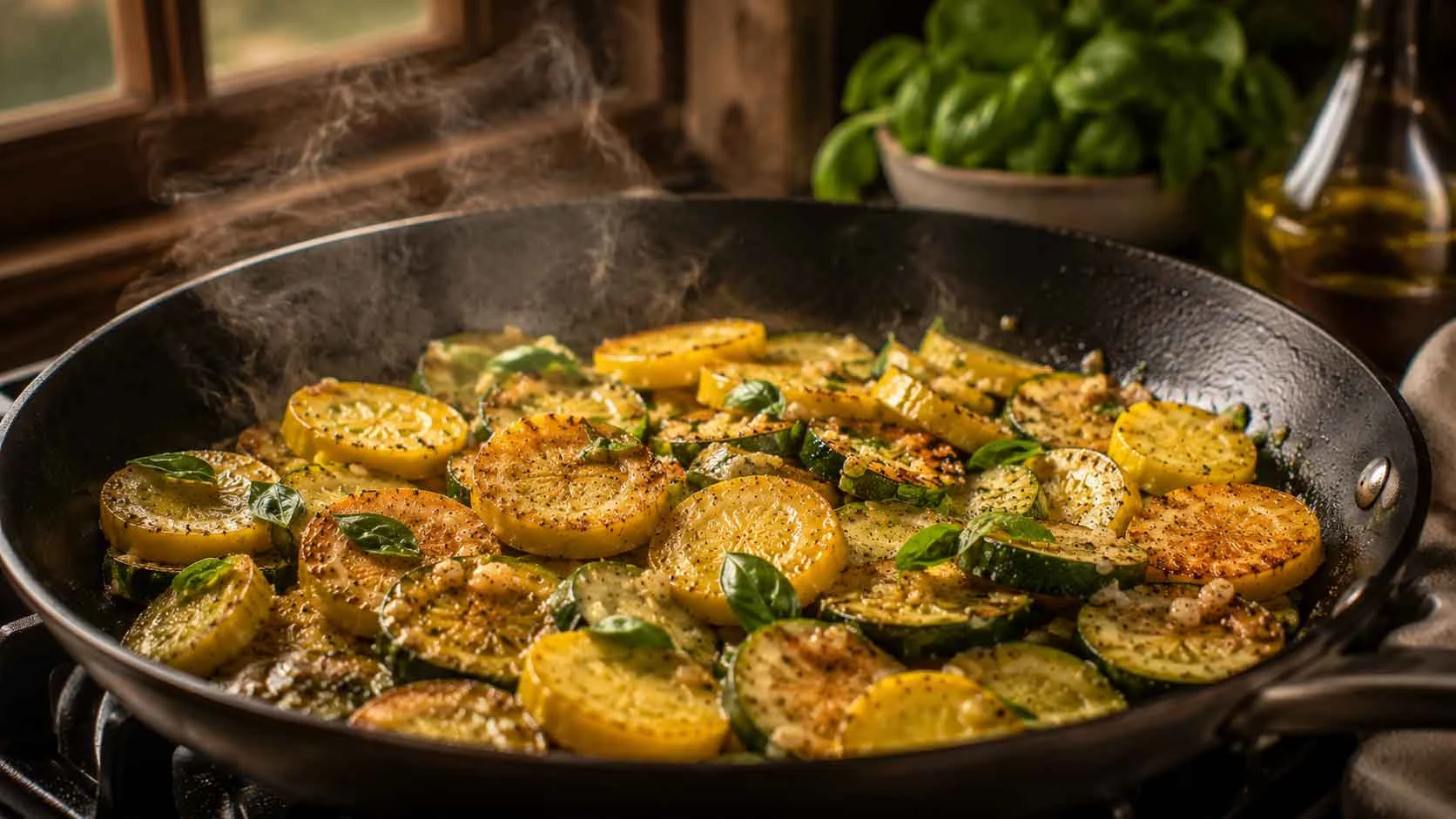
Instead of slowly steaming, the squash surface begins browning faster while some internal moisture remains trapped inside the vegetable structure.
This creates:
- softer center texture
- lightly caramelized edges
- stronger basil aroma
- concentrated garlic flavor
- cleaner vegetable sweetness
The difference is not just seasoning.
The cooking environment changes the final texture significantly.
Why Basil And Garlic Work Well With Summer Squash
Basil and garlic interact differently under heat.
Garlic becomes sweeter and less sharp once sautéed in olive oil.
Fresh basil behaves almost opposite.
Basil loses aroma quickly during aggressive cooking, which is why many sautéed squash recipes add basil near the end instead of at the beginning.
Olive oil also helps distribute garlic and herb oils across the squash surface more evenly.
This creates a lighter Mediterranean-style flavor profile instead of a heavy sauce coating.
Fresh herbs and high-heat cooking also affect grilled food aroma similarly to how Mediterranean herb layering works in this Greek chicken kebab marinade recipe.
Sautéed Summer Squash Ingredients
Simple ingredients work best for sautéed summer squash because the vegetable itself already contains delicate sweetness and moisture.
| Ingredient | Purpose |
|---|---|
| Summer squash | Main vegetable base with mild sweetness. |
| Olive oil | Improves sautéing and carries herb flavor. |
| Garlic | Adds savory aromatic depth. |
| Fresh basil | Adds freshness and herbal aroma. |
| Salt | Enhances vegetable sweetness. |
| Black pepper | Adds mild warmth and balance. |
Equipment Needed
| Equipment | Purpose |
|---|---|
| Large skillet | High heat sautéing |
| Knife | Cutting squash evenly |
| Cutting board | Preparation |
| Wooden spoon or spatula | Stirring vegetables |
Sautéed Summer Squash Recipe
Ingredients
- 2 medium summer squash, sliced
- 2 tablespoons olive oil
- 3 garlic cloves, minced
- 1/4 cup fresh basil, chopped
- 1/2 teaspoon salt
- 1/4 teaspoon black pepper
Step-By-Step Cooking Instructions
Step 1 – Slice The Squash Evenly
Cut the squash into evenly sized slices.
Uneven thickness creates inconsistent cooking because thinner slices soften faster while thicker pieces remain firm.
Medium thickness usually produces the best balance between softness and caramelization.
Step 2 – Heat The Pan Properly
Place a large skillet over medium-high heat.
Allow the pan to fully heat before adding oil.
A weakly heated pan often causes squash to steam instead of sauté.
Step 3 – Sauté The Garlic
Add olive oil and garlic.
Cook for about 30-45 seconds while stirring gently.
Do not brown the garlic too aggressively because burnt garlic becomes bitter quickly.
The garlic aroma should become sweeter once heated.
Step 4 – Add The Squash
Add the sliced squash into the skillet.
Spread the slices across the pan instead of piling them into one dense layer.
Crowded vegetables trap steam and reduce browning.
Step 5 – Cook Until Lightly Caramelized
Sauté for about 6-8 minutes while stirring occasionally.
The squash should become:
- lightly golden
- slightly softened
- still structured
- not mushy
The first batch sometimes browns differently because many home stovetops heat unevenly across the pan surface.
Step 6 – Add Basil Near The End
Add fresh basil during the final minute of cooking.
This helps preserve more herbal aroma.
If basil cooks too long, the flavor becomes flatter and less vibrant.
Step 7 – Rest Briefly Before Serving
Turn off the heat and allow the squash to rest for about 1 minute before serving.
This short resting period helps excess steam settle slightly instead of immediately softening the surface further.
Why Summer Squash Sometimes Turns Watery
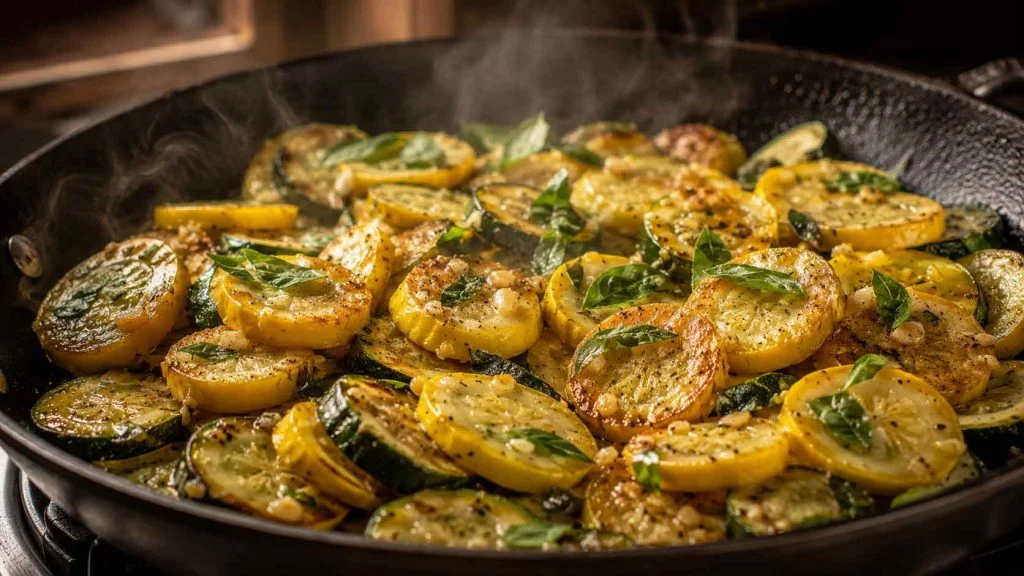
Summer squash contains a high percentage of water naturally.
Several cooking mistakes increase moisture release:
- overcrowding the pan
- low heat cooking
- covering the skillet
- excessive stirring
- cutting slices too thin
High heat and proper spacing help moisture evaporate faster.
This creates stronger browning and more concentrated flavor.
Yellow Squash Vs Zucchini For Sautéing
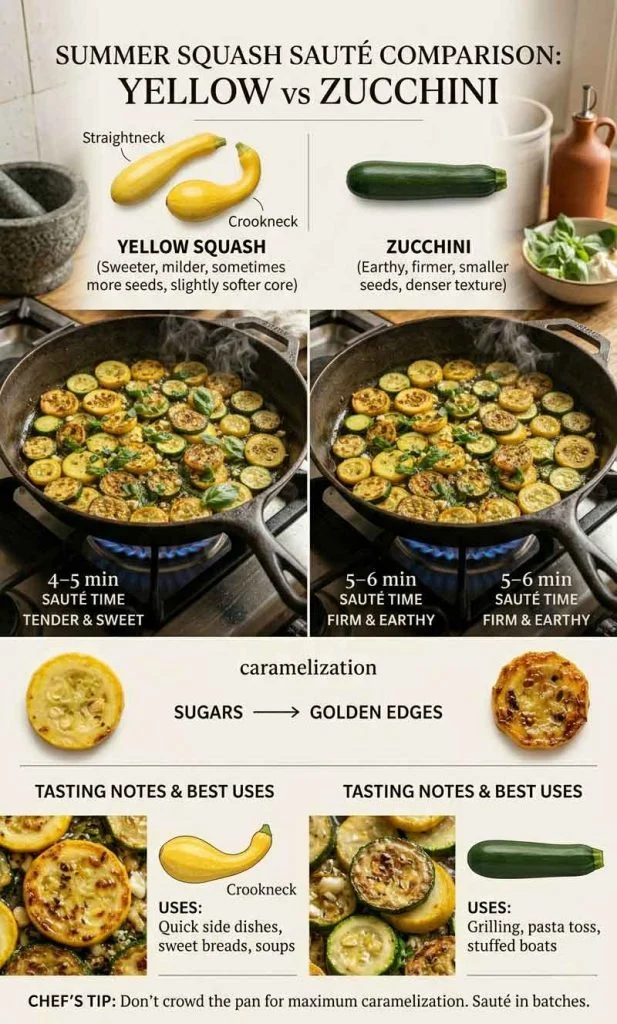
Both vegetables work similarly, but they behave slightly differently during cooking.
| Vegetable | Texture | Cooking Behavior |
|---|---|---|
| Yellow squash | Softer texture | Browns faster and softens earlier |
| Zucchini | Slightly firmer texture | Holds structure slightly longer during sautéing |
Best Proteins To Pair With Sautéed Summer Squash
Sautéed summer squash works best with lighter proteins because the vegetable itself has a softer and fresher flavor profile.
Heavy sauces can overpower the basil and garlic balance.
| Protein | Why It Works | Cooking Style |
|---|---|---|
| Grilled chicken | Balances the lighter vegetable texture | Mediterranean-style grilling |
| Salmon | Adds richer texture contrast | Pan-seared or baked |
| Shrimp | Matches garlic and basil aromatics well | Quick sauté cooking |
| Tofu | Absorbs garlic and herb oils easily | Light pan frying |
Why Garlic Burns Faster Than Squash
Garlic cooks much faster than summer squash because it contains less moisture and smaller surface structure.
This is why garlic is usually sautéed briefly before adding vegetables.
If garlic remains exposed to direct pan heat too long:
- bitterness increases
- aroma becomes harsher
- oil flavor darkens too quickly
Olive oil helps slow the cooking slightly, but timing still matters heavily.
Many watery squash recipes actually begin with overcooked garlic because the pan temperature becomes unstable before the squash releases moisture.
Can You Roast Instead Of Sauté?
Yes.
Roasting creates slightly different texture behavior compared to sautéing.
Instead of fast surface browning from direct pan contact, roasting cooks the squash more evenly through circulating oven heat.
| Cooking Method | Texture Result | Flavor Difference |
|---|---|---|
| Sautéing | Faster browning with softer center | Stronger garlic and oil flavor |
| Roasting | More even softening and drier edges | Sweeter vegetable flavor |
How To Keep Summer Squash From Becoming Mushy
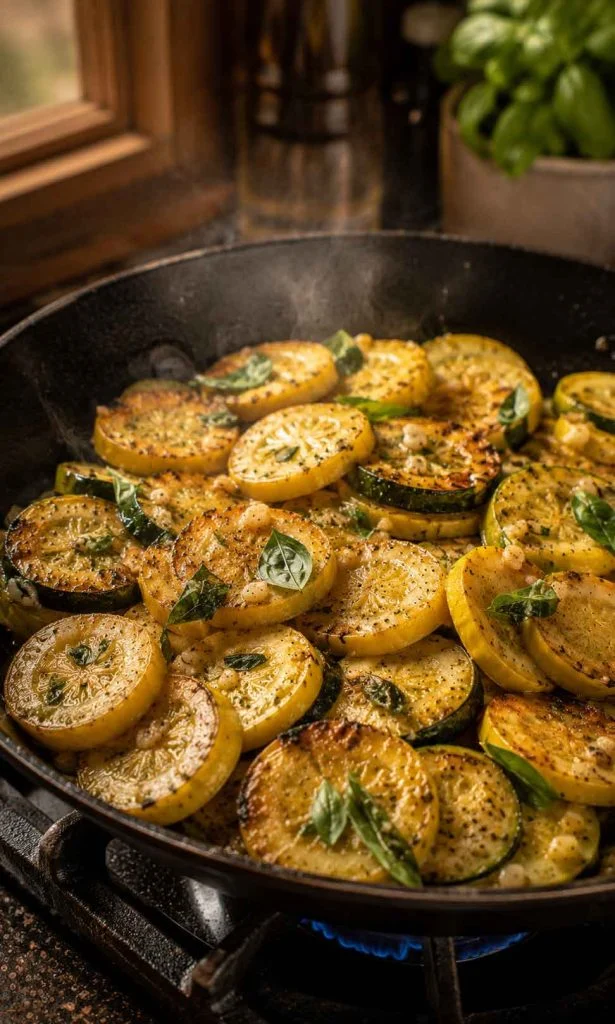
Several small adjustments improve squash texture significantly.
Important Texture Tips
- avoid slicing too thin
- use medium-high heat
- avoid overcrowding
- do not cover the skillet
- stir less frequently
- add basil near the end
- avoid excessive oil
The pan itself also matters.
A larger skillet usually creates better evaporation because moisture spreads across a wider cooking surface.
Why Restaurant Sautéed Vegetables Taste Different
Restaurant sautéed vegetables often taste different because commercial kitchens use:
- stronger burners
- larger pans
- faster evaporation
- higher cooking temperatures
- more consistent pan heat
This creates stronger browning before vegetables release too much water.
Home stovetops usually lose heat faster once vegetables enter the pan.
That temperature drop changes caramelization behavior significantly.
Recipe Details
| Recipe Detail | Amount | Kitchen Note |
|---|---|---|
| Yield | 4 servings | Suitable as side dish or lighter main meal. |
| Prep Time | 10 minutes | Includes slicing and herb preparation. |
| Cook Time | 8-10 minutes | Depends on skillet heat and squash thickness. |
| Total Time | 20 minutes | Quick weeknight vegetable recipe. |
| Cuisine | Mediterranean-inspired | Focused on olive oil, herbs, and lighter vegetable flavor. |
Nutrition Information
| Nutrition Detail | Approximate Amount | Note |
|---|---|---|
| Serving Size | 1 portion | Based on 4 servings total. |
| Calories | 90-130 kcal | Depends on olive oil quantity used. |
| Carbohydrates | 6-8g | Mostly from squash. |
| Fiber | 2g | Varies slightly based on squash size. |
| Fat | 7-9g | Mostly from olive oil. |
| Protein | 1-2g | Naturally low-protein vegetable dish. |
Why Olive Oil Changes The Flavor So Much
Olive oil is not only used to prevent sticking.
It also affects:
- aroma distribution
- browning behavior
- garlic cooking speed
- herb coating
- mouthfeel
Different olive oils create slightly different flavor intensity.
Extra virgin olive oil usually produces:
- stronger peppery flavor
- richer aroma
- deeper Mediterranean taste
Lighter olive oils create a more neutral finish.
The oil itself becomes part of the sauce coating once garlic and basil release their aromatic compounds during cooking.
Can Frozen Squash Be Used?
Yes, but frozen squash behaves differently from fresh squash because freezing damages part of the vegetable cell structure.
Once thawed, frozen squash releases moisture much faster during cooking.
This often creates:
- softer texture
- weaker browning
- faster steaming
- reduced firmness
Fresh squash usually produces better sauté texture.
If using frozen squash:
- thaw completely first
- pat dry with paper towels
- use higher heat
- reduce pan crowding
Why Fresh Basil Works Better Than Dried Basil
Fresh basil contains delicate aromatic oils that create brighter flavor once added near the end of cooking.
Dried basil behaves differently because much of the fresh volatile aroma disappears during drying.
| Basil Type | Flavor Behavior | Best Usage |
|---|---|---|
| Fresh basil | Bright and aromatic | Added near the end of cooking |
| Dried basil | Milder and flatter flavor | Longer simmering recipes |
FAQ
Why does summer squash become watery during sautéing?
Can zucchini replace yellow summer squash?
Why should basil be added near the end?
Can sautéed summer squash be reheated?
Does olive oil affect sautéed squash flavor?
Summer Squash Vs Eggplant For Sautéing
Summer squash and eggplant may look similar in some dishes, but they behave very differently during cooking.
Summer squash contains much more water and softens faster.
Eggplant absorbs oil more aggressively and develops a richer roasted texture.
| Vegetable | Moisture Level | Cooking Result |
|---|---|---|
| Summer squash | High | Lighter texture with faster softening |
| Eggplant | Moderate | Creamier texture with stronger oil absorption |
Why Pan Size Changes Vegetable Texture
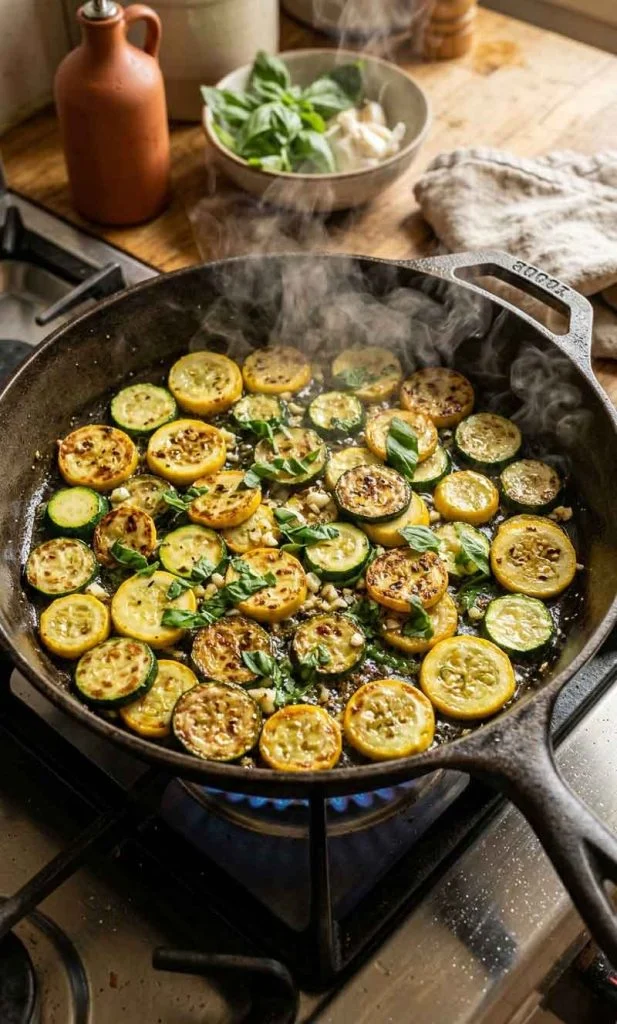
Many people focus only on ingredients, but pan size changes cooking behavior significantly.
A small crowded skillet traps steam quickly.
A wider skillet allows:
- faster evaporation
- stronger browning
- drier surface texture
- more stable heat distribution
This is why restaurant sautéed vegetables often develop better caramelization compared to home cooking with smaller pans.
The vegetables simply have more surface exposure to direct heat.
Can This Recipe Work With Other Herbs?
Yes.
Several herbs pair well with sautéed summer squash because the vegetable itself has a mild flavor base.
Different herbs shift the flavor profile in different directions.
| Herb | Flavor Direction | Best Usage |
|---|---|---|
| Parsley | Fresh and clean | Added after cooking |
| Thyme | Earthier aroma | Works during longer sautéing |
| Oregano | Mediterranean flavor | Pairs well with olive oil |
| Mint | Cooler freshness | Added lightly after cooking |
Why This Recipe Works Well For Quick Weeknight Cooking
This recipe cooks quickly because summer squash softens much faster than dense root vegetables.
Most of the flavor development comes from:
- high heat
- garlic aroma
- olive oil coating
- herb release
- light caramelization
The cooking itself remains relatively simple.
This makes the recipe useful for:
- lighter dinners
- side dishes
- fast vegetable preparation
- Mediterranean meal pairing
- low-effort weeknight cooking
Final Thoughts
Sautéed summer squash with basil and garlic works best when the cooking process focuses on moisture control instead of heavy seasoning.
The main goal is not deep sauce development.
It is balancing:
- evaporation
- browning
- softness
- herb aroma
- garlic sweetness
Small adjustments change the final texture significantly.
Pan size, heat level, squash thickness, and basil timing all affect how the vegetables behave during sautéing.
The recipe itself is simple.
The texture management is where most of the real cooking difference happens.
Can Sautéed Summer Squash Work In Pasta Or Rice Dishes?
Yes.
Sautéed summer squash works well in pasta, rice bowls, grain dishes, and lighter Mediterranean-style meals because the vegetable absorbs garlic and olive oil easily without becoming overwhelmingly heavy.
The softer texture also blends naturally into:
- olive oil pasta
- parmesan pasta bowls
- Mediterranean rice dishes
- quinoa bowls
- vegetable couscous
- grilled chicken rice plates
When mixed into larger dishes, slightly firmer sautéing usually works better because the squash continues softening after combining with hotter ingredients.
Why Restaurant Vegetables Sometimes Taste More Buttery
Many restaurant vegetable dishes taste richer because commercial kitchens often combine olive oil with butter during the final stage of cooking.
Butter adds:
- richer mouthfeel
- slightly sweeter aroma
- faster browning
- deeper coating texture
Restaurants also frequently use larger pans and stronger burners, which increase caramelization speed before vegetables release too much moisture.
This creates stronger roasted flavor compared to lower-heat home sautéing.
Can Sautéed Summer Squash Be Made Ahead?
Yes, but the texture changes slightly after storage because summer squash continues releasing moisture over time.
Freshly cooked squash usually has:
- firmer edges
- stronger basil aroma
- lighter caramelization texture
- less moisture pooling
After refrigeration, the squash softens further because residual steam continues affecting the vegetable structure.
For better reheating results:
- use medium heat instead of high heat
- avoid microwaving too long
- reheat inside a skillet when possible
- add fresh basil after reheating
The aroma becomes fresher again once new basil is added near serving time.
Can Parmesan Cheese Be Added?
Yes.
Parmesan works especially well because its salty umami flavor balances the softer sweetness of sautéed squash.
However, timing matters.
Adding parmesan too early can create:
- oily separation
- uneven coating
- clumping
- excessive saltiness
Most Mediterranean-style squash dishes add parmesan near the end or directly before serving.
| Cheese | Flavor Effect | Best Timing |
|---|---|---|
| Parmesan | Salty umami richness | After cooking |
| Feta | Tangier Mediterranean flavor | Light finishing garnish |
| Mozzarella | Creamier softer texture | Very light usage near serving |
Why Olive Oil Aroma Changes During Cooking
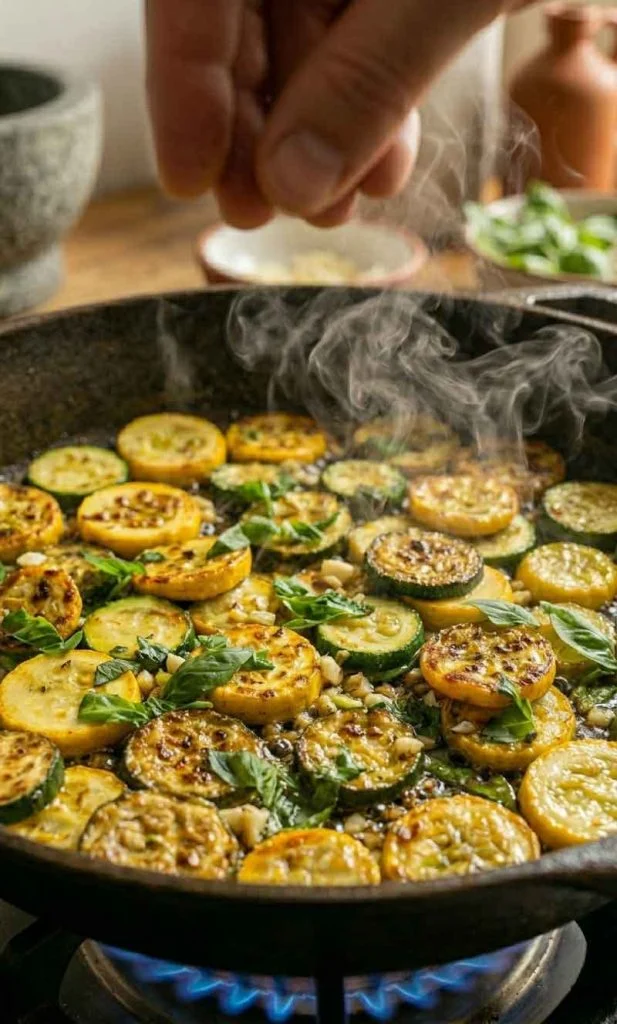
Olive oil aroma evolves as temperature rises.
At lower heat:
- grassy notes stay stronger
- peppery aroma remains fresher
At higher heat:
- nuttier aroma develops
- garlic sweetness increases
- roasted vegetable aroma intensifies
This is why sautéed squash often smells dramatically different after only a few minutes of cooking.
The oil itself becomes part of the flavor structure once garlic and basil release their aromatic compounds into the pan.
What Main Dishes Pair Best With Sautéed Summer Squash?
Sautéed summer squash pairs best with lighter proteins and Mediterranean-style meals because the vegetable itself has delicate texture and mild sweetness.
Popular pairings include:
- grilled chicken
- Greek chicken skewers
- salmon
- garlic shrimp
- Mediterranean rice bowls
- olive oil pasta
- roasted lamb
- herb grilled tofu
The basil and garlic flavor profile also blends naturally with lemon-based dishes and olive oil-focused meals.
Heavier cream sauces usually overpower the lighter squash texture.
Why Summer Squash Tastes Sweeter During Peak Season
Fresh summer squash harvested during peak growing season usually contains:
- higher moisture balance
- thinner skin
- lighter seeds
- cleaner sweetness
- less bitterness
Older squash often develops:
- firmer seeds
- thicker skin
- slightly woodier texture
- more water release during cooking
This is why fresh seasonal squash usually sautés faster and develops better caramelization compared to older oversized squash.
The sweetness also becomes more noticeable once garlic and olive oil begin browning together inside the skillet.
Why Steam Is The Biggest Enemy Of Good Sautéed Squash
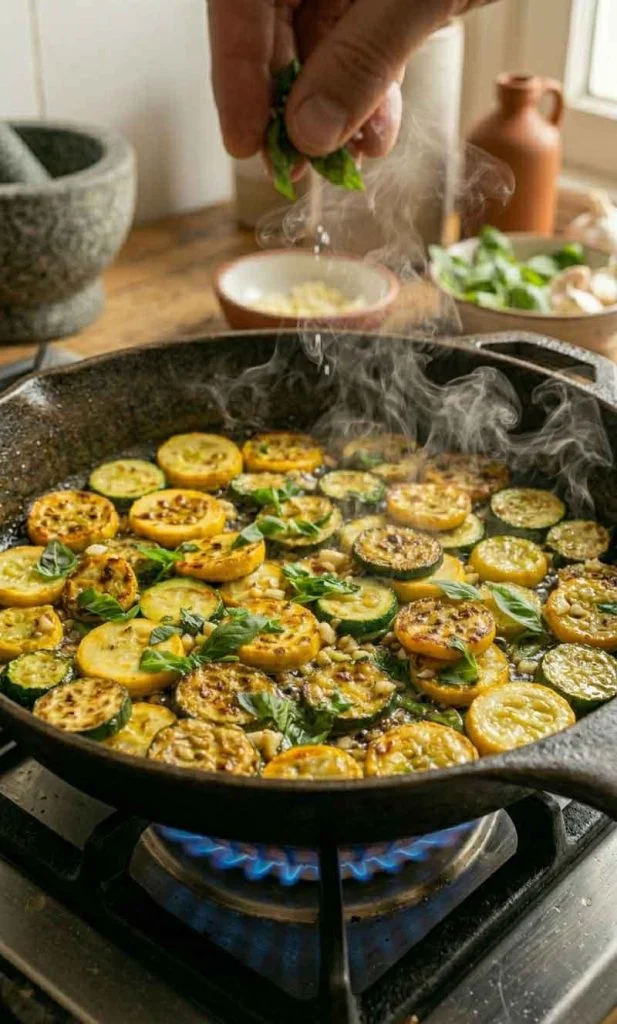
Steam changes the entire cooking environment.
Once moisture becomes trapped inside the skillet:
- browning slows down
- squash softens too quickly
- garlic aroma weakens
- basil becomes flatter
- caramelization reduces
This is why professional kitchens often use:
- wider pans
- higher burners
- faster tossing
- smaller cooking batches
The goal is keeping moisture moving OUT of the pan instead of circulating back onto the vegetables.
Can This Recipe Be Made Spicy?
Yes.
Spice additions work well because summer squash itself has a mild flavor base.
However, aggressive spice levels can overpower the lighter basil aroma.
Balanced additions usually work better.
| Spice Addition | Flavor Effect | Best Usage |
|---|---|---|
| Red pepper flakes | Light heat and sharper finish | Added during garlic sautéing |
| Chili oil | Richer spicy coating | Light finishing drizzle |
| Black pepper | Milder warmth | Added throughout cooking |
Why Simple Vegetable Recipes Are Harder Than They Look
Simple recipes expose cooking mistakes more easily because fewer ingredients hide texture problems.
With sautéed summer squash:
- heat matters
- moisture matters
- timing matters
- pan spacing matters
- basil timing matters
- garlic timing matters
Heavy sauces cannot easily hide:
- watery vegetables
- weak browning
- mushy texture
- burnt garlic
This is why simple Mediterranean vegetable cooking often depends more on cooking control than complicated seasoning.
Sautéed Summer Squash With Basil And Garlic
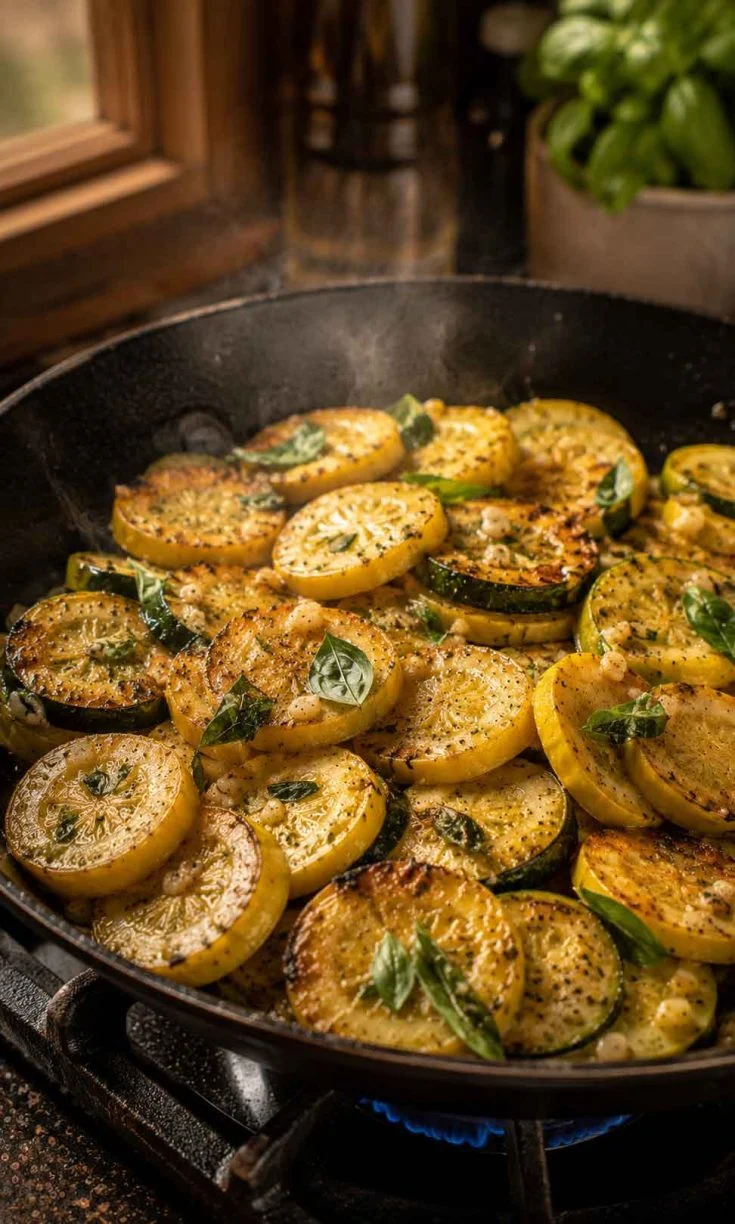
This sautéed summer squash recipe cooks fresh squash with olive oil, garlic, and basil while keeping the texture light instead of watery.
Ingredients
- 2 tablespoons olive oil
- 2 cloves garlic, minced or grated
- 2 medium summer squash, sliced into 1/4-inch thick rounds
- Salt and pepper to taste
- 1/4 cup chopped fresh basil
Instructions
1. Heat the olive oil in a large 10-12 inch skillet over medium heat.
2. Add the garlic and cook for 30-45 seconds, or until fragrant. Do not let the garlic brown too deeply.
3. Add the sliced summer squash to the skillet and season lightly with salt and pepper.
4. Spread the squash into an even layer. Avoid overcrowding the skillet because trapped steam can make the squash watery instead of lightly caramelized.
5. Sauté for 5-6 minutes, stirring occasionally, until the squash is lightly tender with slightly golden edges.
6. If the squash releases moisture, continue cooking until excess liquid evaporates from the pan.
7. Stir in the chopped basil during the final minute of cooking to preserve more fresh herb aroma.
8. Turn off the heat and let the squash rest for about 1 minute before serving.
9. Serve warm while the basil aroma is still fresh and vibrant.
Notes
You can adjust the amount of garlic and basil to your liking. If you don't have fresh basil, you can substitute with dried basil, but reduce the amount to 1-2 teaspoons. You can also add other seasonings, such as red pepper flakes or grated Parmesan cheese, to enhance the flavor. Avoid overcrowding the skillet because trapped steam can make the squash watery instead of lightly caramelized.
Let the squash rest for about 1 minute before serving.
Equipment: Large skillet, Chef's knife, Cutting board, Garlic press or microplane grater, Tongs.
Nutrition Information:
Yield:
4Serving Size:
1Amount Per Serving: Calories: 97 kcalTotal Fat: 7gSaturated Fat: 1gTrans Fat: 0gUnsaturated Fat: 6gCholesterol: 0mgSodium: 76mgCarbohydrates: 8gFiber: 2gSugar: 4gProtein: 2g